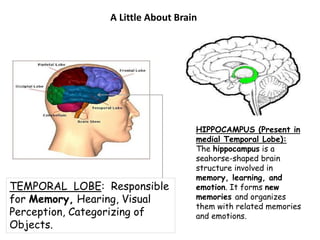
A Little About Brain


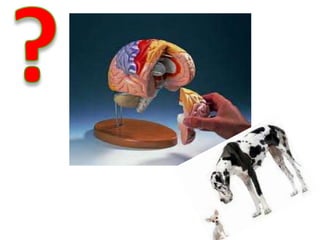
                                    HIPPOCAMPUS (Present in
                                    medial Temporal Lobe):
                                    The hippocampus is a
                                    seahorse-shaped brain
                                    structure involved in
                                    memory, learning, and
TEMPORAL LOBE: Responsible          emotion. It forms new
for Memory, Hearing, Visual         memories and organizes
                                    them with related memories
Perception, Categorizing of         and emotions.
Objects.
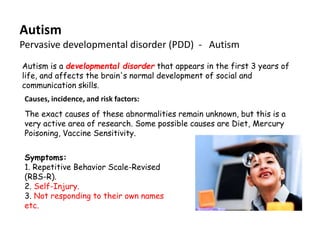
Autism
Pervasive developmental disorder (PDD) - Autism
Autism is a developmental disorder that appears in the first 3 years of
life, and affects the brain's normal development of social and
communication skills.
 Causes, incidence, and risk factors:
 The exact causes of these abnormalities remain unknown, but this is a
 very active area of research. Some possible causes are Diet, Mercury
 Poisoning, Vaccine Sensitivity.


 Symptoms:
 1. Repetitive Behavior Scale-Revised
 (RBS-R).
 2. Self-Injury.
 3. Not responding to their own names
 etc.
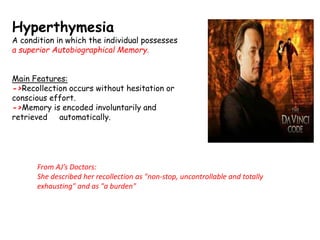
Hyperthymesia
A condition in which the individual possesses
a superior Autobiographical Memory.


Main Features:
->Recollection occurs without hesitation or
conscious effort.
->Memory is encoded involuntarily and
retrieved automatically.


      From AJ’s Doctors:
      She described her recollection as "non-stop, uncontrollable and totally
      exhausting" and as "a burden"
CULTURAL PERSPECTIVE


          AMNESIA
                        SAVANTISM

AGNOSIA


               BRAIN   INJURY
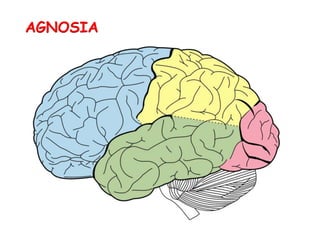
AGNOSIA
AMNESIA
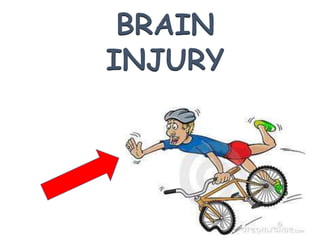
BRAIN
INJURY
SAVANTISM
MEMORY LOSS

Memory loss (amnesia) is unusual forgetfulness. It
may refer to not being able to remember new events,
not being able to recall one or more memories of the
past, or both.

     Memory loss is not an inevitable part of
     the aging process.


        Does your memory loss affect
        your ability to function?
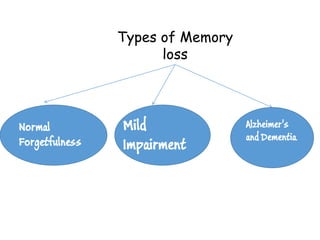
Types of Memory
                      loss


Normal          Mild              Alzheimer's
                                  and Dementia
Forgetfulness   Impairment
Dementia
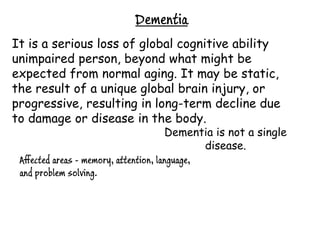
It is a serious loss of global cognitive ability
unimpaired person, beyond what might be
expected from normal aging. It may be static,
the result of a unique global brain injury, or
progressive, resulting in long-term decline due
to damage or disease in the body.
                                        Dementia is not a single
                                               disease.
 Affected areas - memory, attention, language,
 and problem solving.
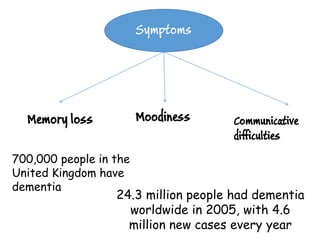
Symptoms


  Memory loss           Moodiness    Communicative
                                     difficulties
700,000 people in the
United Kingdom have
dementia
                  24.3 million people had dementia
                    worldwide in 2005, with 4.6
                    million new cases every year
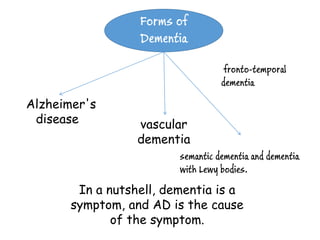
Forms of
                  Dementia

                                    fronto-temporal
                                   dementia

Alzheimer's
 disease          vascular
                  dementia
                         semantic dementia and dementia
                         with Lewy bodies.

        In a nutshell, dementia is a
       symptom, and AD is the cause
              of the symptom.
When dementia appears the higher mental
  functions of the patient are involved
                initially.
    Eventually, in the later stages, the
   person may not know what day of the
   week, month or year it is, he may not
    know where he is, and might not be
    able to identify the people around
                    him.
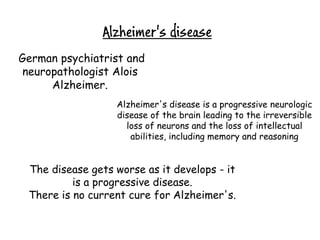
Alzheimer's disease
German psychiatrist and
 neuropathologist Alois
      Alzheimer.
                  Alzheimer's disease is a progressive neurologic
                  disease of the brain leading to the irreversible
                    loss of neurons and the loss of intellectual
                     abilities, including memory and reasoning


 The disease gets worse as it develops - it
          is a progressive disease.
 There is no current cure for Alzheimer's.
Symptoms


difficulty in remembering recent events.


       confusion, irritability and
 aggression, mood swings, trouble with
language, and long-term memory loss.

               And
              Cure…
THANK YOU


SOURCES:
http://en.wikipedia.org/wiki/
http://www.neatorama.com/
http://www.google.co.in/
http://www.googleimages.com

Memory disorders

  • 2.
    A Little AboutBrain HIPPOCAMPUS (Present in medial Temporal Lobe): The hippocampus is a seahorse-shaped brain structure involved in memory, learning, and TEMPORAL LOBE: Responsible emotion. It forms new for Memory, Hearing, Visual memories and organizes them with related memories Perception, Categorizing of and emotions. Objects.
  • 3.
    Autism Pervasive developmental disorder(PDD) - Autism Autism is a developmental disorder that appears in the first 3 years of life, and affects the brain's normal development of social and communication skills. Causes, incidence, and risk factors: The exact causes of these abnormalities remain unknown, but this is a very active area of research. Some possible causes are Diet, Mercury Poisoning, Vaccine Sensitivity. Symptoms: 1. Repetitive Behavior Scale-Revised (RBS-R). 2. Self-Injury. 3. Not responding to their own names etc.
  • 4.
    Hyperthymesia A condition inwhich the individual possesses a superior Autobiographical Memory. Main Features: ->Recollection occurs without hesitation or conscious effort. ->Memory is encoded involuntarily and retrieved automatically. From AJ’s Doctors: She described her recollection as "non-stop, uncontrollable and totally exhausting" and as "a burden"
  • 7.
    CULTURAL PERSPECTIVE AMNESIA SAVANTISM AGNOSIA BRAIN INJURY
  • 8.
  • 9.
  • 10.
  • 11.
  • 15.
    MEMORY LOSS Memory loss(amnesia) is unusual forgetfulness. It may refer to not being able to remember new events, not being able to recall one or more memories of the past, or both. Memory loss is not an inevitable part of the aging process. Does your memory loss affect your ability to function?
  • 16.
    Types of Memory loss Normal Mild Alzheimer's and Dementia Forgetfulness Impairment
  • 17.
    Dementia It is aserious loss of global cognitive ability unimpaired person, beyond what might be expected from normal aging. It may be static, the result of a unique global brain injury, or progressive, resulting in long-term decline due to damage or disease in the body. Dementia is not a single disease. Affected areas - memory, attention, language, and problem solving.
  • 18.
    Symptoms Memoryloss Moodiness Communicative difficulties 700,000 people in the United Kingdom have dementia 24.3 million people had dementia worldwide in 2005, with 4.6 million new cases every year
  • 19.
    Forms of Dementia fronto-temporal dementia Alzheimer's disease vascular dementia semantic dementia and dementia with Lewy bodies. In a nutshell, dementia is a symptom, and AD is the cause of the symptom.
  • 20.
    When dementia appearsthe higher mental functions of the patient are involved initially. Eventually, in the later stages, the person may not know what day of the week, month or year it is, he may not know where he is, and might not be able to identify the people around him.
  • 21.
    Alzheimer's disease German psychiatristand neuropathologist Alois Alzheimer. Alzheimer's disease is a progressive neurologic disease of the brain leading to the irreversible loss of neurons and the loss of intellectual abilities, including memory and reasoning The disease gets worse as it develops - it is a progressive disease. There is no current cure for Alzheimer's.
  • 22.
    Symptoms difficulty in rememberingrecent events. confusion, irritability and aggression, mood swings, trouble with language, and long-term memory loss. And Cure…
  • 23.