Cinematography
Shot types/movement
 Cinematography is the art of photography and camerawork in film-
making.
 When describing different cinematic shot, differentterms are used to
indicate the amount of subjectmatter contained within a frame.
 Extreme long shot or establishing shot can betaken from as much as a
quarter of a mile away and is generally used as a scene- setting,
establishing shot. Itnormally shows an exterior e.g. the outside of a
building or a landscapeand is often used to s how scenes of thrilling
action e.g. in a war film or disaster movie. Shows when and where.
 Wide shot- this is broader shot, showing perhaps parts of the set or
externals- to emphasisesize, scale, the dramatic or epic.
 Crane shots- basically dolly shots in the air. A crane is a useful way of
moving a camera, it can moveup, down, left, right, swooping in on
action or moving diagonally out of it.
 Aerial shot/birds eye view- an exciting variation of a crane shot, usually
taken froma helicopter of a drone. This is often used at the beginning of
a film, in order to establish setting a movement. A helicopter or droneis
like a particularly flexible sortof crane- it can go anywhere, keep up with
anything, move in and out of a scene, and convey real drama and
exhilaration.
 Long shot- it is called a long shot becausethe camera is placed far away
to catch a large area of view. Usually (but not necessarily) the opening
establishing shot of the movie is a long shot. If of a person, wesee all of
them, head to toe.
 Mediumshot- the medium shotis the most common shot used in
movies. The medium shotshould generally contain all the action of the
scene and should be well matched with the flow of the long shot. If of a
person it literally shows from their middle up.
 Close up- this shows very little background, and concentrates ion either
a face or a detail of mise en scene. This shot magnifies the object and
shows theimportance of things be it words written on paper or the
expression on someone’s face. If it is of the eyes it would be to show
they are sad or maybe the mouth to show that they are angry.
 Extreme close up- as its name suggests an extreme version of the close
up generally magnifying beyond what the human eye would experience
in reality.
 Point of view- this is a shot wherewe see what the actor sees through
their own eyes, identification, sympathy with the view or a senseof
discomfort/tension if the point of view is hostile
 Subjective point of view (over the shoulder shot)- this is a shotwhere
we see what the actor sees but not through their own eyes- this puts the
viewer in the scene but as an accomplice to the action.
 Two shot- this shows a conversation/link or reaction between
characters or hero/ villain/ antagonist/ protagonist- a connection,
relationship or conflict.
 Shot/ reverse shot- is whereonecharacter is
shown looking (often off-screen) atanother
character shown looking “back” at the first
character. Since the characters areshown
facing in opposite directions, the viewer
unconsciously assumes thatthey are looking
at each other (the 180 degree rule).
Angles/movement
 Highangle- this shot looks down on the action from a superior position-
the observer dominates, power, higher status
 Low angle- this shotlooks up at the action from below, an inferior
position – the observer is vulnerable, weak and low status
 Pan- a movement which scans a scene horizontally. The camera is placed
on a tripod, which operates as a stationary axis point as the camera is
turned, often to follow a moving objects which is kept in the middle of
the frame
 Tilts- a movement which scans a scan vertically otherwisesimilar to pan.
 Dolly shot- sometimes called a tracking shot. The camera is placed on a
moving vehicle and moves alongsidethe action, generally following a
moving figure or object. Complicated dolly shots will involvea track
being laid on a set for a camera to follow hence the name. The camera
might be mounted on a car
 Hand held shots- thehand held camera can give a jerky/ragged effect,
totally at odds with the organised smoothness of a dolly shot and is
favoured by filmmakers looking for a gritty realism, which involves the
viewer very closely with the scene.
 Zoom/reverse zoom- this is when the camera gets closer to or moves
away fromthe action in a very quick movement. The zoomlens means
that the camera need not be moved, like with a dolly/ tracking shot. This
can suggestsurveillance, voyeurism and intense observation.
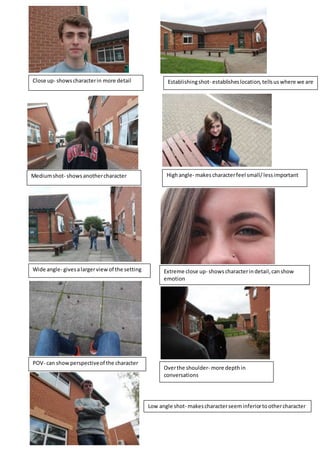
Establishingshot- establisheslocation,tellsus where we areClose up- showscharacterin more detail
Mediumshot- showsanothercharacter Highangle- makescharacterfeel small/lessimportant
Wide angle- givesalargerviewof the setting Extreme close up- showscharacterindetail,canshow
emotion
POV- can showperspectiveof the character
Overthe shoulder- more depthin
conversations
Low angle shot- makescharacterseeminferiortoothercharacter

Cinematography (camera angles and shot types)

  • 1.
    Cinematography Shot types/movement  Cinematographyis the art of photography and camerawork in film- making.  When describing different cinematic shot, differentterms are used to indicate the amount of subjectmatter contained within a frame.  Extreme long shot or establishing shot can betaken from as much as a quarter of a mile away and is generally used as a scene- setting, establishing shot. Itnormally shows an exterior e.g. the outside of a building or a landscapeand is often used to s how scenes of thrilling action e.g. in a war film or disaster movie. Shows when and where.  Wide shot- this is broader shot, showing perhaps parts of the set or externals- to emphasisesize, scale, the dramatic or epic.  Crane shots- basically dolly shots in the air. A crane is a useful way of moving a camera, it can moveup, down, left, right, swooping in on action or moving diagonally out of it.  Aerial shot/birds eye view- an exciting variation of a crane shot, usually taken froma helicopter of a drone. This is often used at the beginning of a film, in order to establish setting a movement. A helicopter or droneis like a particularly flexible sortof crane- it can go anywhere, keep up with anything, move in and out of a scene, and convey real drama and exhilaration.  Long shot- it is called a long shot becausethe camera is placed far away to catch a large area of view. Usually (but not necessarily) the opening establishing shot of the movie is a long shot. If of a person, wesee all of them, head to toe.  Mediumshot- the medium shotis the most common shot used in movies. The medium shotshould generally contain all the action of the scene and should be well matched with the flow of the long shot. If of a person it literally shows from their middle up.  Close up- this shows very little background, and concentrates ion either a face or a detail of mise en scene. This shot magnifies the object and shows theimportance of things be it words written on paper or the expression on someone’s face. If it is of the eyes it would be to show they are sad or maybe the mouth to show that they are angry.
  • 2.
     Extreme closeup- as its name suggests an extreme version of the close up generally magnifying beyond what the human eye would experience in reality.  Point of view- this is a shot wherewe see what the actor sees through their own eyes, identification, sympathy with the view or a senseof discomfort/tension if the point of view is hostile  Subjective point of view (over the shoulder shot)- this is a shotwhere we see what the actor sees but not through their own eyes- this puts the viewer in the scene but as an accomplice to the action.  Two shot- this shows a conversation/link or reaction between characters or hero/ villain/ antagonist/ protagonist- a connection, relationship or conflict.  Shot/ reverse shot- is whereonecharacter is shown looking (often off-screen) atanother character shown looking “back” at the first character. Since the characters areshown facing in opposite directions, the viewer unconsciously assumes thatthey are looking at each other (the 180 degree rule). Angles/movement  Highangle- this shot looks down on the action from a superior position- the observer dominates, power, higher status  Low angle- this shotlooks up at the action from below, an inferior position – the observer is vulnerable, weak and low status  Pan- a movement which scans a scene horizontally. The camera is placed on a tripod, which operates as a stationary axis point as the camera is turned, often to follow a moving objects which is kept in the middle of the frame  Tilts- a movement which scans a scan vertically otherwisesimilar to pan.  Dolly shot- sometimes called a tracking shot. The camera is placed on a moving vehicle and moves alongsidethe action, generally following a moving figure or object. Complicated dolly shots will involvea track being laid on a set for a camera to follow hence the name. The camera might be mounted on a car
  • 3.
     Hand heldshots- thehand held camera can give a jerky/ragged effect, totally at odds with the organised smoothness of a dolly shot and is favoured by filmmakers looking for a gritty realism, which involves the viewer very closely with the scene.  Zoom/reverse zoom- this is when the camera gets closer to or moves away fromthe action in a very quick movement. The zoomlens means that the camera need not be moved, like with a dolly/ tracking shot. This can suggestsurveillance, voyeurism and intense observation.
  • 4.
    Establishingshot- establisheslocation,tellsus wherewe areClose up- showscharacterin more detail Mediumshot- showsanothercharacter Highangle- makescharacterfeel small/lessimportant Wide angle- givesalargerviewof the setting Extreme close up- showscharacterindetail,canshow emotion POV- can showperspectiveof the character Overthe shoulder- more depthin conversations Low angle shot- makescharacterseeminferiortoothercharacter