Genre Research
Camera Shots
Mis-en-scene
Sound
Editing
Camera Shots
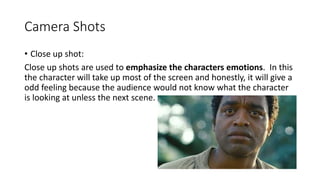
• Close up shot:
Close up shots are used to emphasize the characters emotions. In this
the character will take up most of the screen and honestly, it will give a
odd feeling because the audience would not know what the character
is looking at unless the next scene.
Camera Shots
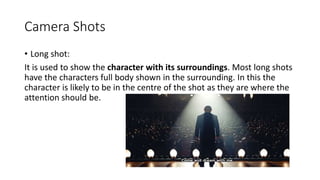
• Long shot:
It is used to show the character with its surroundings. Most long shots
have the characters full body shown in the surrounding. In this the
character is likely to be in the centre of the shot as they are where the
attention should be.
Camera Shots
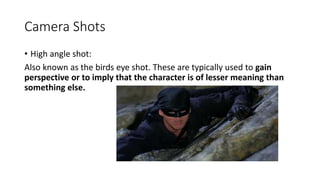
• High angle shot:
Also known as the birds eye shot. These are typically used to gain
perspective or to imply that the character is of lesser meaning than
something else.
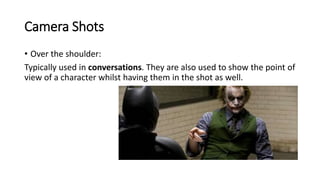
Camera Shots
• Over the shoulder:
Typically used in conversations. They are also used to show the point of
view of a character whilst having them in the shot as well.
Mis-en-scene
In Dramas, most of the time natural lighting is used because it portrays
a realistic atmosphere. However in some cases, high key lighting is used
in vibrant scenes to portray happiness. Colors can also give certain
themes to it and it can also be used to add dramatic effect to a
sequence. For example, Blue calls to mind feelings of calmness or
serenity. Red evokes emotions ranging from feelings of warmth and
comfort to feelings of anger and hostility. Green evokes a feeling of
abundance and is associated with refreshment and peace, rest and
security.
Sound
There are many types of sound used in genre drama.
• Diegetic Sound is any sound or music that happens inside the world
of the story.
• Non Diegetic Sound is any sound or music that takes place outside
the world of the story
• Incidental music is used to add emotion or rhythm to a drama.
• Ambient sound is the natural sound where the recording took place.
• Theme tunes are used over opening titles of TV Dramas.
Editing
• Faces
Many scenes open with the faces of their main characters. It helps us
to experience the scene from their perspective and helps us
understand their mood and mindset
Editing
• Observations
It’s important to help the audience understand how the scene affects
the characters. These events may influence their future actions or
transformations.
Editing
• Reactions
Sometimes the main character observes something in the scene and
then reacts immediately. This is similar to an observation sequence but
instead of cutting back to their face, we cut back to some sort of action.
Editing
• Vulnerabilities
Vulnerabilities engender empathy from the audience. By reminding the
audience of the characters weaknesses, we renew their connection
with the character and remind them of the stakes.

Genre Research

  • 1.
  • 2.
    Camera Shots • Closeup shot: Close up shots are used to emphasize the characters emotions. In this the character will take up most of the screen and honestly, it will give a odd feeling because the audience would not know what the character is looking at unless the next scene.
  • 3.
    Camera Shots • Longshot: It is used to show the character with its surroundings. Most long shots have the characters full body shown in the surrounding. In this the character is likely to be in the centre of the shot as they are where the attention should be.
  • 4.
    Camera Shots • Highangle shot: Also known as the birds eye shot. These are typically used to gain perspective or to imply that the character is of lesser meaning than something else.
  • 5.
    Camera Shots • Overthe shoulder: Typically used in conversations. They are also used to show the point of view of a character whilst having them in the shot as well.
  • 6.
    Mis-en-scene In Dramas, mostof the time natural lighting is used because it portrays a realistic atmosphere. However in some cases, high key lighting is used in vibrant scenes to portray happiness. Colors can also give certain themes to it and it can also be used to add dramatic effect to a sequence. For example, Blue calls to mind feelings of calmness or serenity. Red evokes emotions ranging from feelings of warmth and comfort to feelings of anger and hostility. Green evokes a feeling of abundance and is associated with refreshment and peace, rest and security.
  • 7.
    Sound There are manytypes of sound used in genre drama. • Diegetic Sound is any sound or music that happens inside the world of the story. • Non Diegetic Sound is any sound or music that takes place outside the world of the story • Incidental music is used to add emotion or rhythm to a drama. • Ambient sound is the natural sound where the recording took place. • Theme tunes are used over opening titles of TV Dramas.
  • 8.
    Editing • Faces Many scenesopen with the faces of their main characters. It helps us to experience the scene from their perspective and helps us understand their mood and mindset
  • 9.
    Editing • Observations It’s importantto help the audience understand how the scene affects the characters. These events may influence their future actions or transformations.
  • 10.
    Editing • Reactions Sometimes themain character observes something in the scene and then reacts immediately. This is similar to an observation sequence but instead of cutting back to their face, we cut back to some sort of action.
  • 11.
    Editing • Vulnerabilities Vulnerabilities engenderempathy from the audience. By reminding the audience of the characters weaknesses, we renew their connection with the character and remind them of the stakes.