MDC ADVISING PHILOSOPHY 
AND MODEL 
December 1, 2014 
Senior Advisor Training 
1
2 
The MDC Student Pathway 
Integrated academic and student services support 
from high school through graduation/transfer 
Focus to date: curriculum pathways and new advising models
COLLEGE-WIDE GOAL 
Key Performance Indicators 
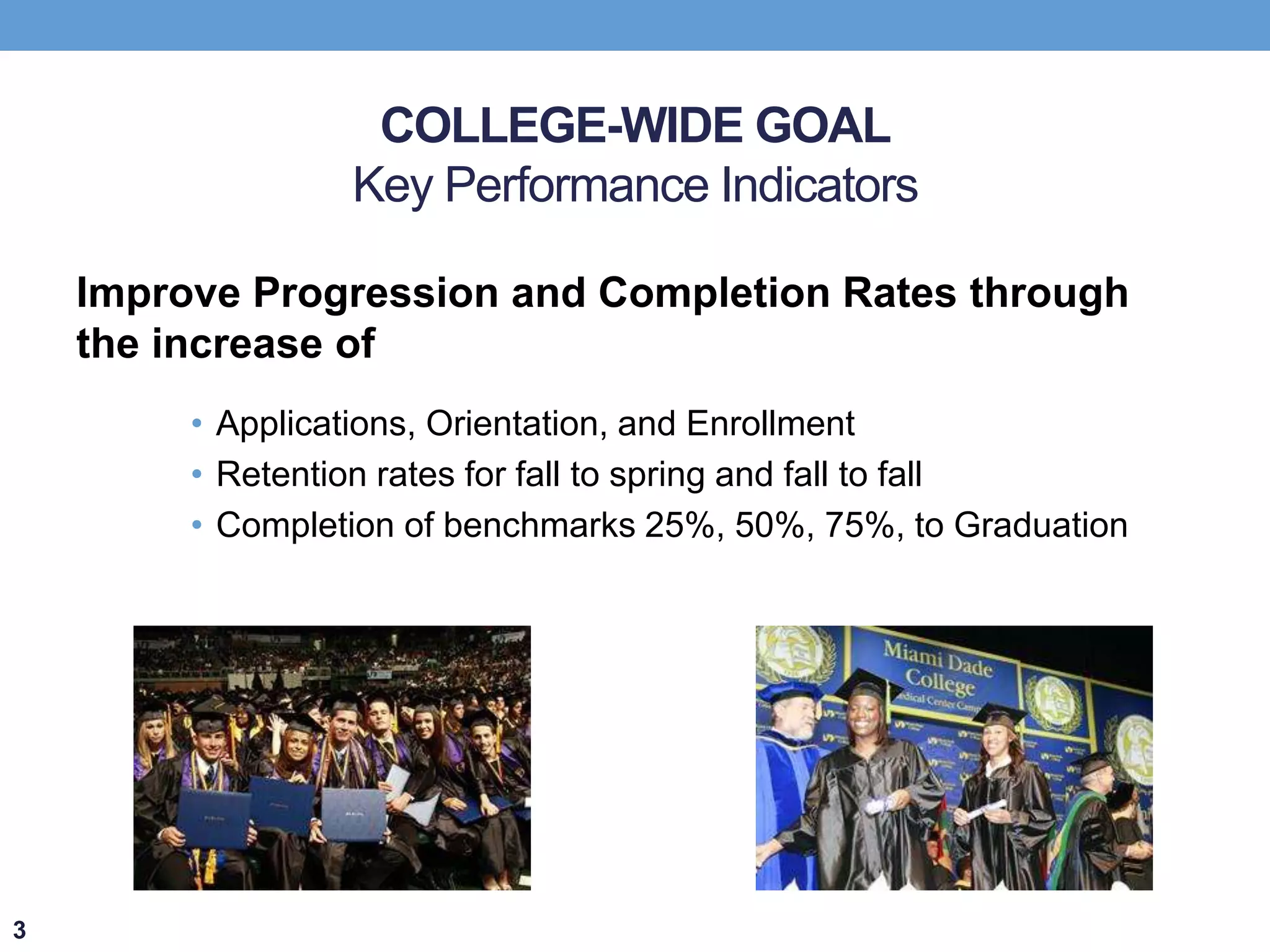
Improve Progression and Completion Rates through 
the increase of 
• Applications, Orientation, and Enrollment 
• Retention rates for fall to spring and fall to fall 
• Completion of benchmarks 25%, 50%, 75%, to Graduation 
3
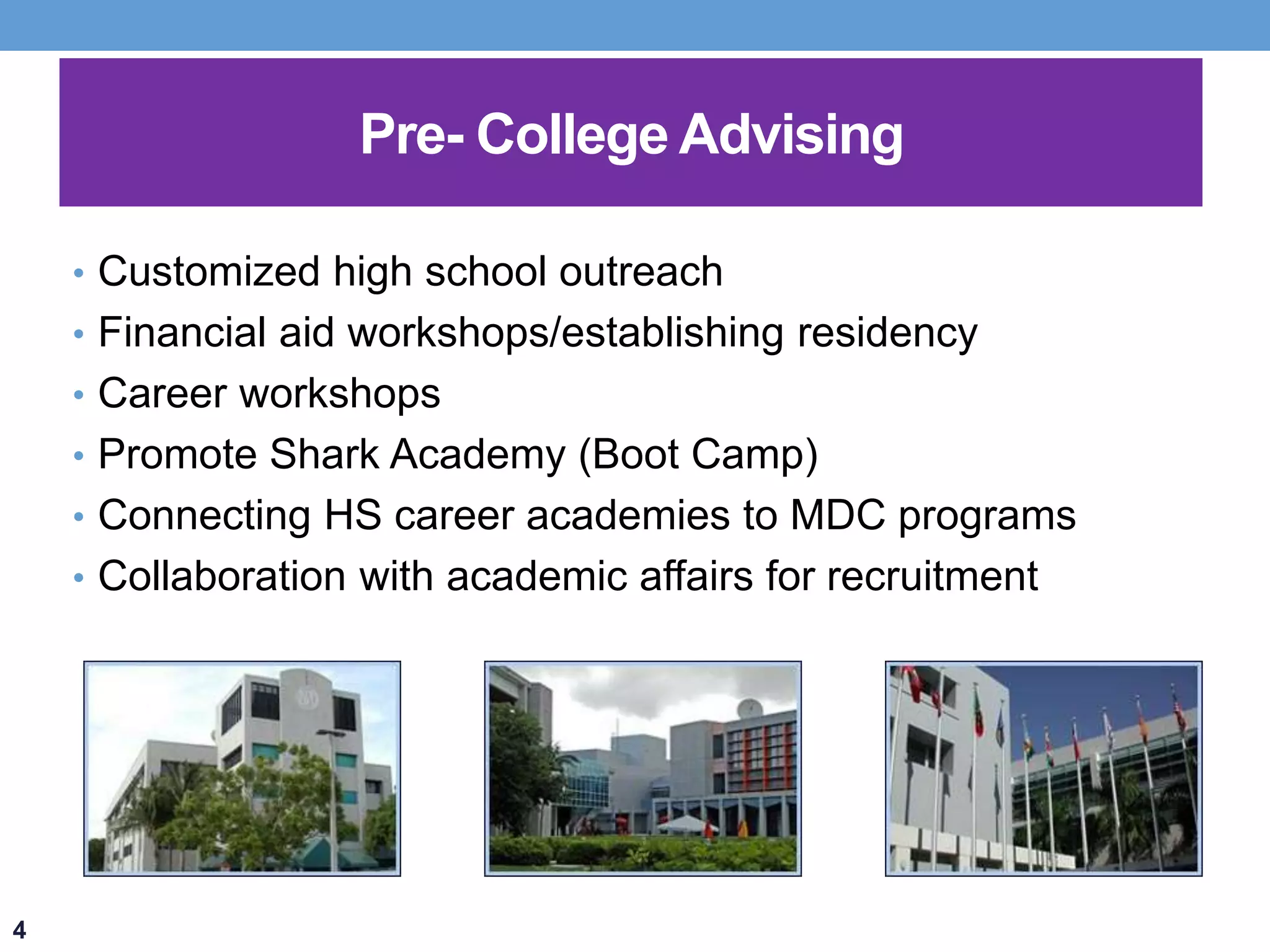
Pre- College Advising 
• Customized high school outreach 
• Financial aid workshops/establishing residency 
• Career workshops 
• Promote Shark Academy (Boot Camp) 
• Connecting HS career academies to MDC programs 
• Collaboration with academic affairs for recruitment 
4
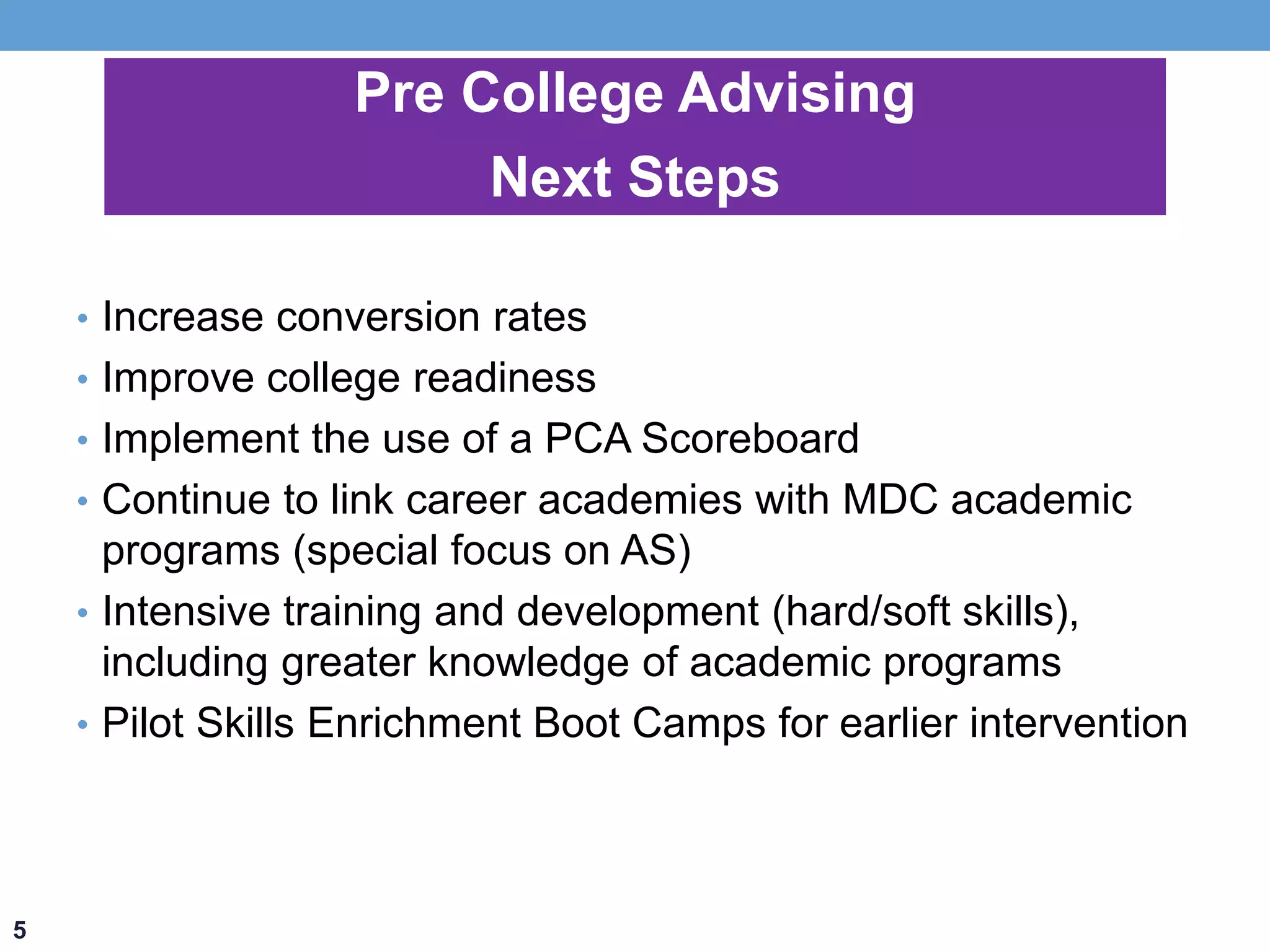
• Increase conversion rates 
• Improve college readiness 
• Implement the use of a PCA Scoreboard 
• Continue to link career academies with MDC academic 
programs (special focus on AS) 
• Intensive training and development (hard/soft skills), 
including greater knowledge of academic programs 
• Pilot Skills Enrichment Boot Camps for earlier intervention 
5 
Pre College Advising 
Next Steps
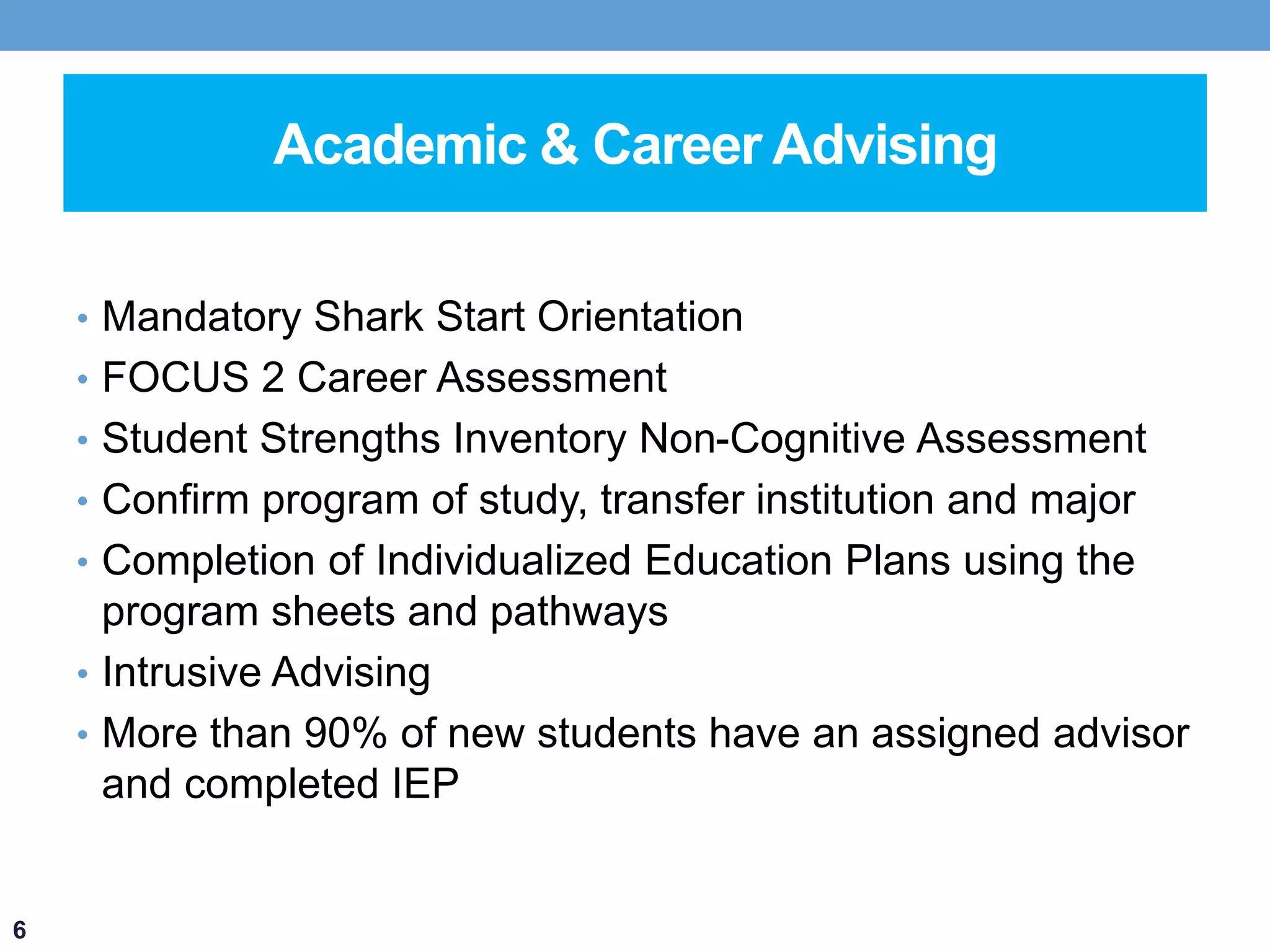
Academic & Career Advising 
• Mandatory Shark Start Orientation 
• FOCUS 2 Career Assessment 
• Student Strengths Inventory Non-Cognitive Assessment 
• Confirm program of study, transfer institution and major 
• Completion of Individualized Education Plans using the 
program sheets and pathways 
• Intrusive Advising 
• More than 90% of new students have an assigned advisor 
and completed IEP 
6
7 
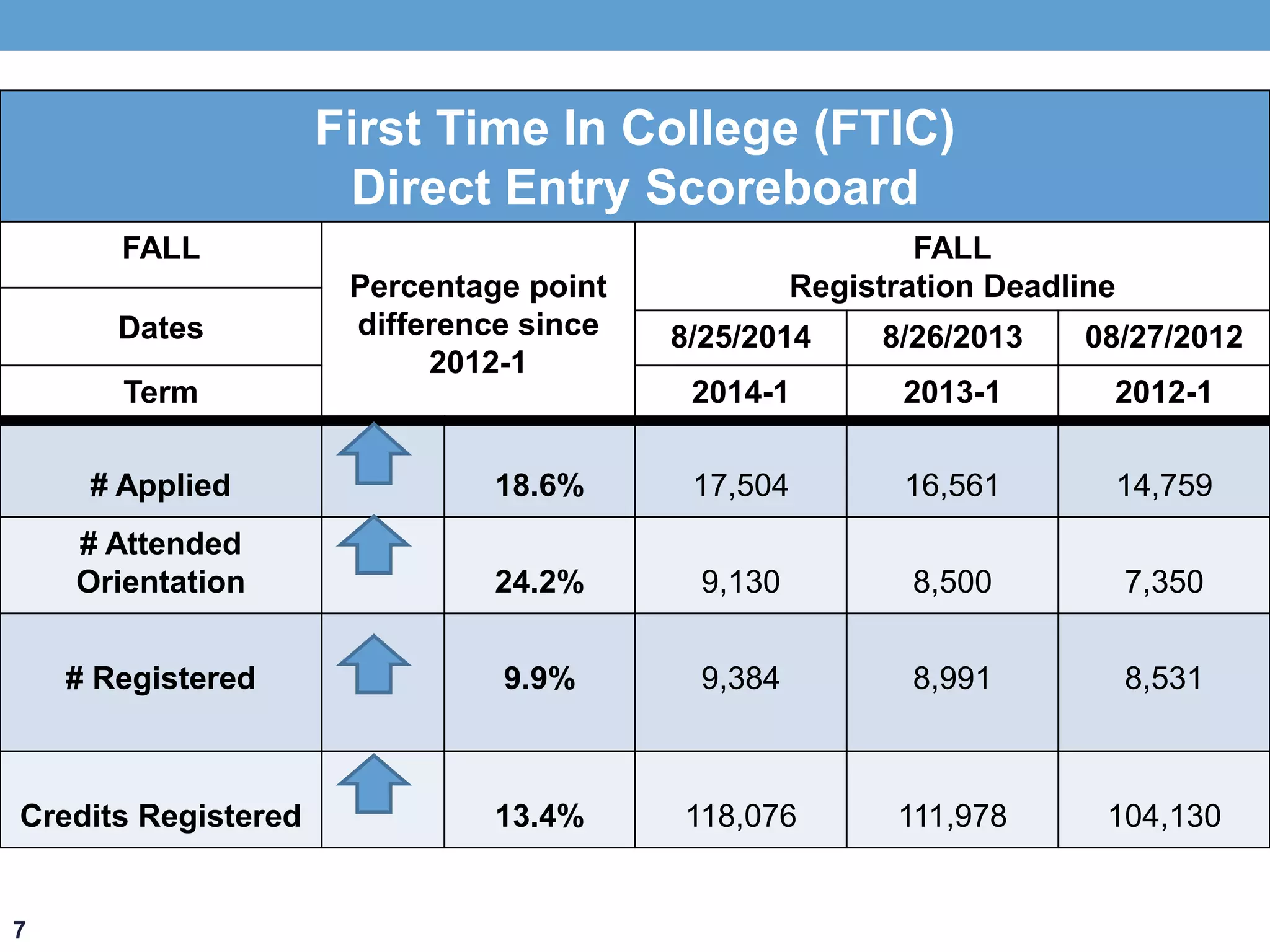
First Time In College (FTIC) 
Direct Entry Scoreboard 
FALL 
Percentage point 
difference since 
2012-1 
FALL 
Registration Deadline 
Dates 8/25/2014 8/26/2013 08/27/2012 
Term 2014-1 2013-1 2012-1 
# Applied 18.6% 17,504 16,561 14,759 
# Attended 
Orientation 24.2% 9,130 8,500 7,350 
# Registered 9.9% 9,384 8,991 8,531 
Credits Registered 13.4% 118,076 111,978 104,130
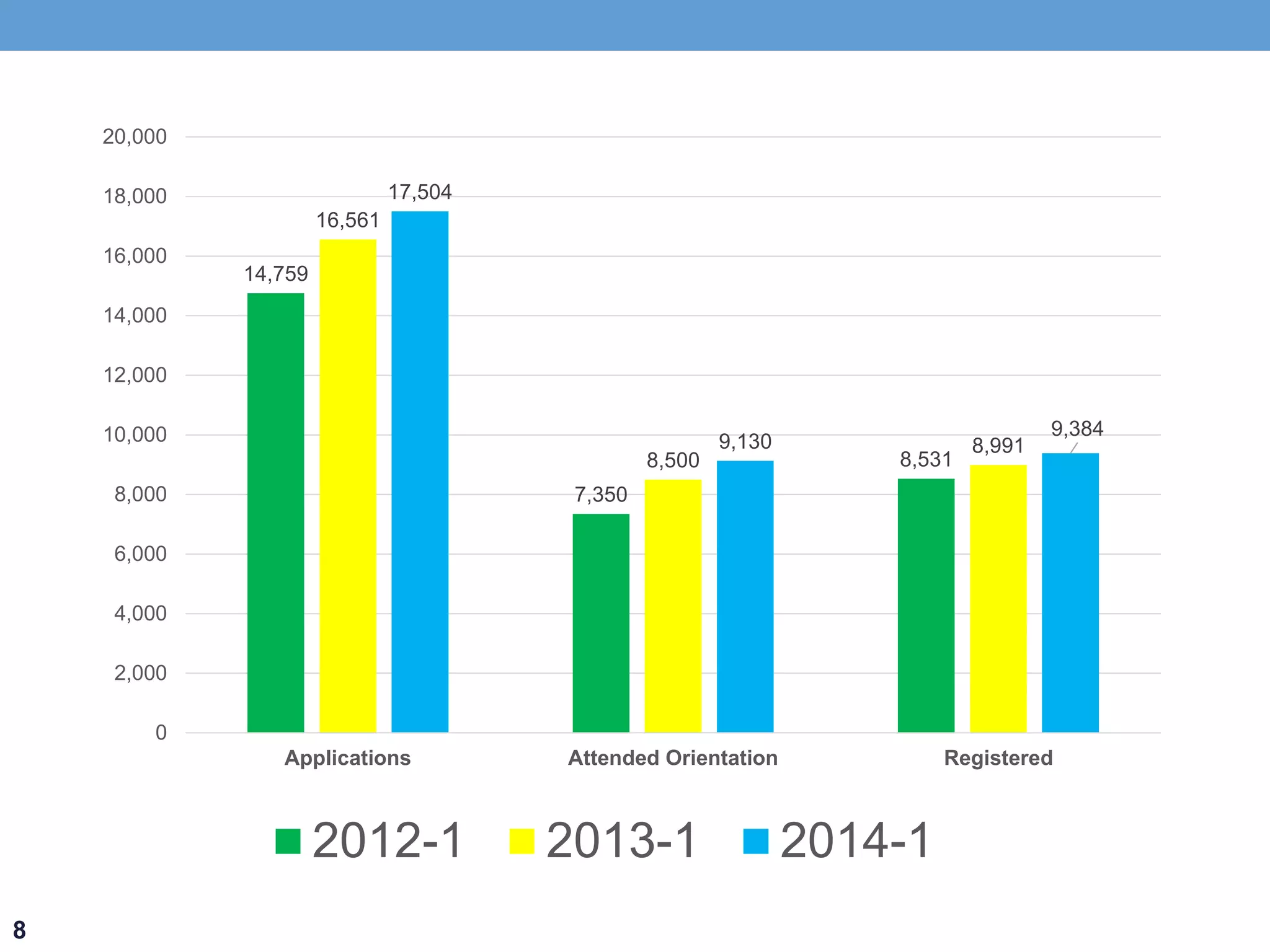
14,759 
7,350 
8,531 
16,561 
8,500 
8,991 
17,504 
9,130 
9,384 
20,000 
18,000 
16,000 
14,000 
12,000 
10,000 
8,000 
6,000 
4,000 
2,000 
0 
Applications Attended Orientation Registered 
2012-1 2013-1 2014-1 
8
Academic & Career Advising 
Next Steps 
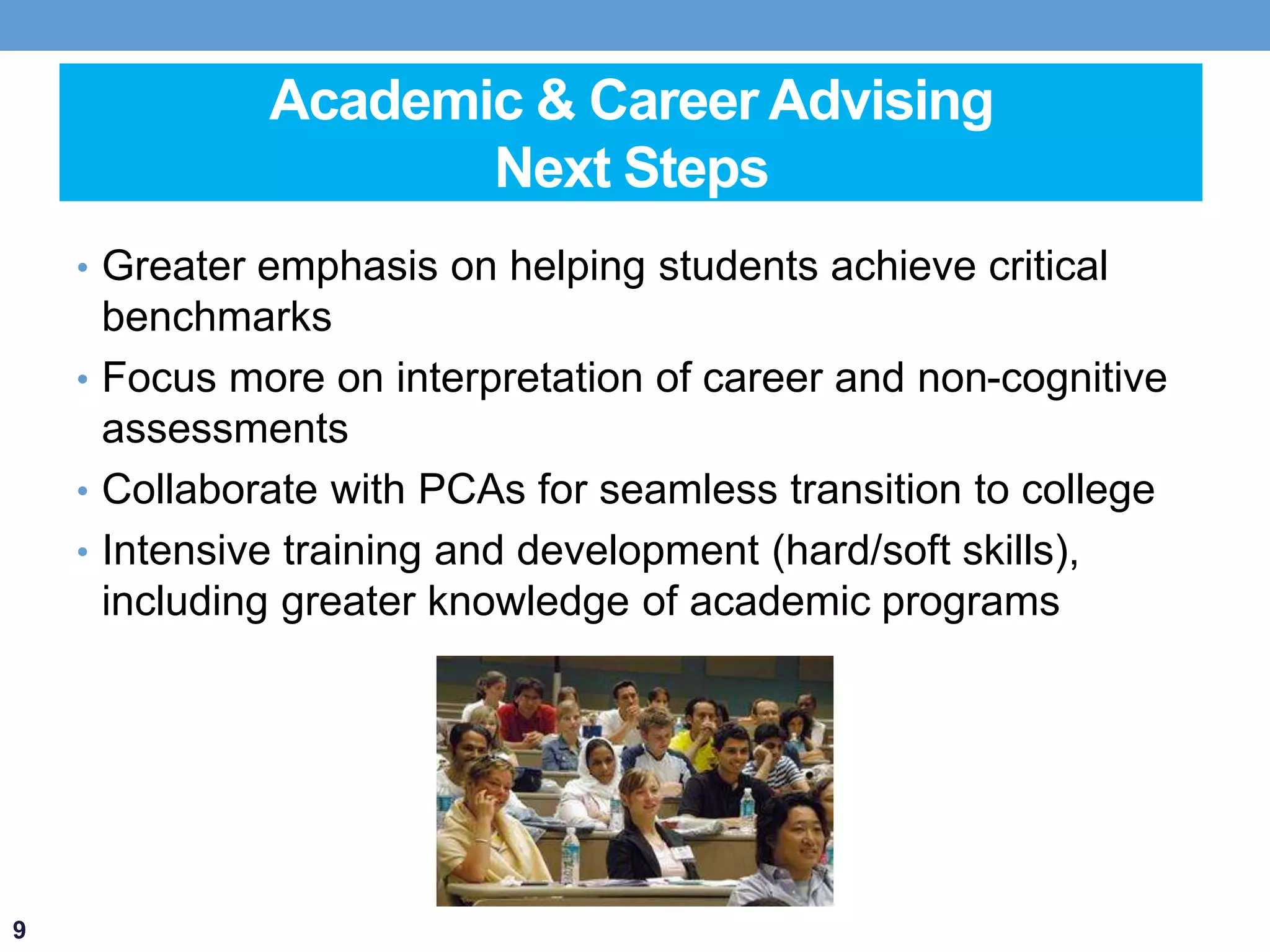
• Greater emphasis on helping students achieve critical 
benchmarks 
• Focus more on interpretation of career and non-cognitive 
assessments 
• Collaborate with PCAs for seamless transition to college 
• Intensive training and development (hard/soft skills), 
including greater knowledge of academic programs 
9
Coaching & Mentoring 
• Provide academic and support resources 
• Promote internship and service learning 
• Conduct academic progress reviews 
• Modify IEPs if students fail course(s) or changes program 
of study 
• Offer transfer and career planning 
• Serve as mentors 
• Participate in intensive training and development 
10
Coaching & Mentoring 
Next Steps 
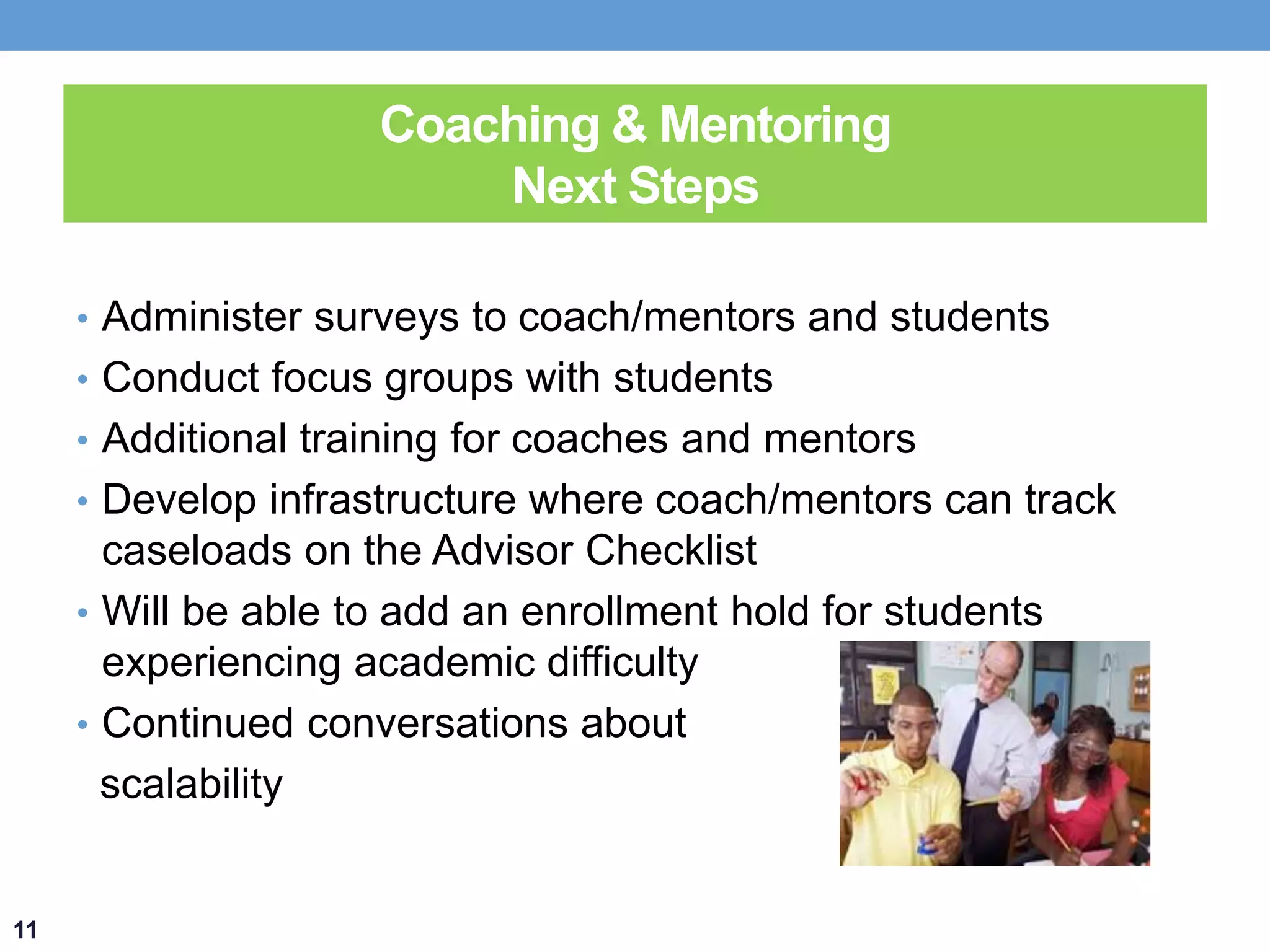
• Administer surveys to coach/mentors and students 
• Conduct focus groups with students 
• Additional training for coaches and mentors 
• Develop infrastructure where coach/mentors can track 
caseloads on the Advisor Checklist 
• Will be able to add an enrollment hold for students 
experiencing academic difficulty 
• Continued conversations about 
scalability 
11
Retention Rates 
FTIC direct entry credit degree-seeking students 
Fall to Fall Rates Increased 1.31% 
Fall 2011-1 to Fall 2012-1 71.01% 
Fall 2012-1 to Fall 2013-1 72.32% 
12
Undergraduate Program Pathways (UPP) 
• At least 43 curriculum pathways have been 
developed/refined by the faculty teams 
• 27 program pathways have been approved by the ALC 
• Approval process has been implemented 
1. Faculty teams develop pathway with support from SAI team 
2. Academic Dean presents to ALC for approval 
3. ALC sends back for revisions or approves 
4. If approved, pathways is placed electronically on the “Shark 
Start Employee Toolkit” 
5. Advisors use the pathways to develop the IEP 
13
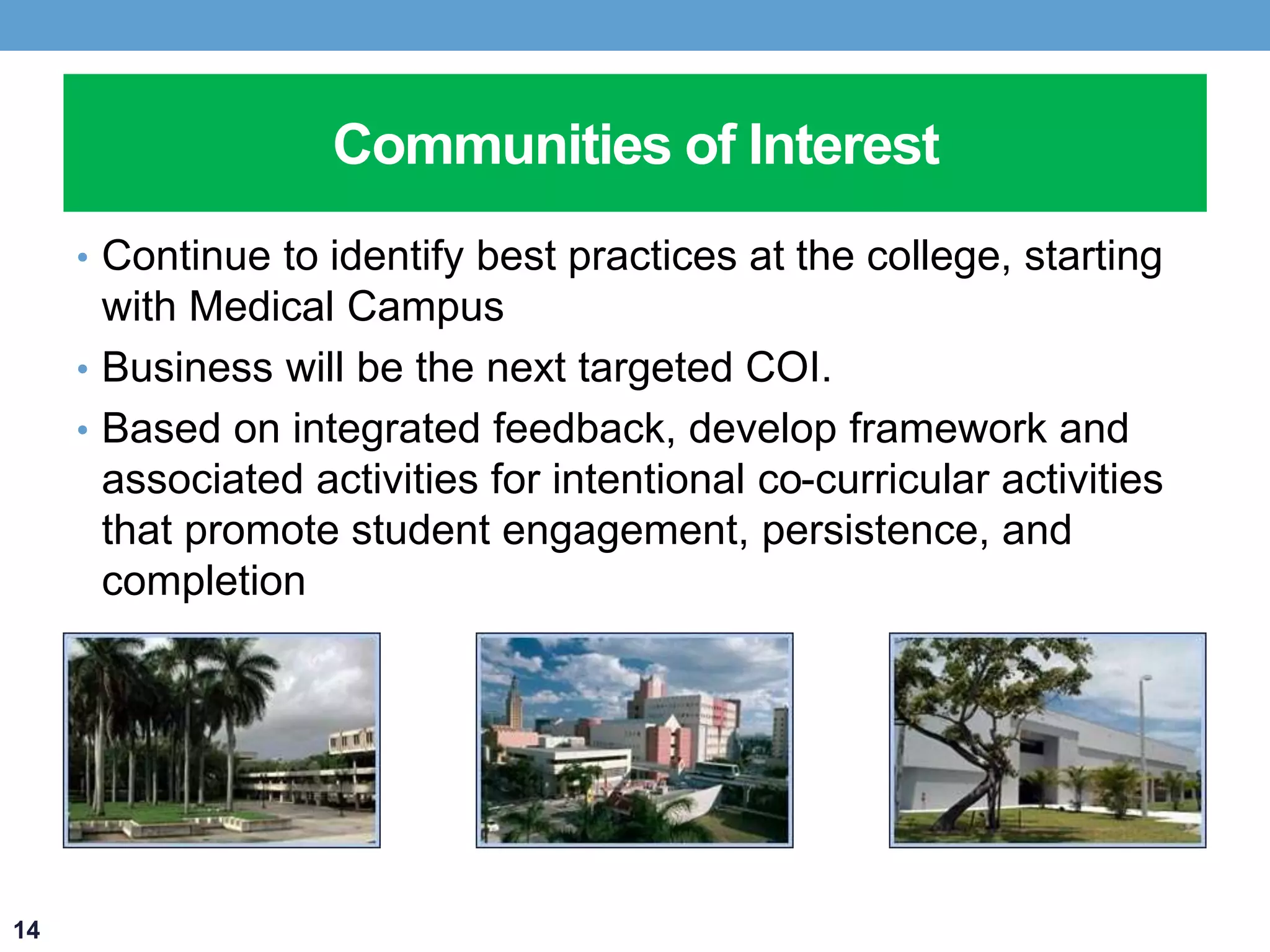
Communities of Interest 
• Continue to identify best practices at the college, starting 
with Medical Campus 
• Business will be the next targeted COI. 
• Based on integrated feedback, develop framework and 
associated activities for intentional co-curricular activities 
that promote student engagement, persistence, and 
completion 
14
IT TAKES A VILLAGE….. 
As a Senior Academic Advisor, how will 
you help students reach their academic 
and career goals? 
15

MDC Advising Philosophy and Model

  • 1.
    MDC ADVISING PHILOSOPHY AND MODEL December 1, 2014 Senior Advisor Training 1
  • 2.
    2 The MDCStudent Pathway Integrated academic and student services support from high school through graduation/transfer Focus to date: curriculum pathways and new advising models
  • 3.
    COLLEGE-WIDE GOAL KeyPerformance Indicators Improve Progression and Completion Rates through the increase of • Applications, Orientation, and Enrollment • Retention rates for fall to spring and fall to fall • Completion of benchmarks 25%, 50%, 75%, to Graduation 3
  • 4.
    Pre- College Advising • Customized high school outreach • Financial aid workshops/establishing residency • Career workshops • Promote Shark Academy (Boot Camp) • Connecting HS career academies to MDC programs • Collaboration with academic affairs for recruitment 4
  • 5.
    • Increase conversionrates • Improve college readiness • Implement the use of a PCA Scoreboard • Continue to link career academies with MDC academic programs (special focus on AS) • Intensive training and development (hard/soft skills), including greater knowledge of academic programs • Pilot Skills Enrichment Boot Camps for earlier intervention 5 Pre College Advising Next Steps
  • 6.
    Academic & CareerAdvising • Mandatory Shark Start Orientation • FOCUS 2 Career Assessment • Student Strengths Inventory Non-Cognitive Assessment • Confirm program of study, transfer institution and major • Completion of Individualized Education Plans using the program sheets and pathways • Intrusive Advising • More than 90% of new students have an assigned advisor and completed IEP 6
  • 7.
    7 First TimeIn College (FTIC) Direct Entry Scoreboard FALL Percentage point difference since 2012-1 FALL Registration Deadline Dates 8/25/2014 8/26/2013 08/27/2012 Term 2014-1 2013-1 2012-1 # Applied 18.6% 17,504 16,561 14,759 # Attended Orientation 24.2% 9,130 8,500 7,350 # Registered 9.9% 9,384 8,991 8,531 Credits Registered 13.4% 118,076 111,978 104,130
  • 8.
    14,759 7,350 8,531 16,561 8,500 8,991 17,504 9,130 9,384 20,000 18,000 16,000 14,000 12,000 10,000 8,000 6,000 4,000 2,000 0 Applications Attended Orientation Registered 2012-1 2013-1 2014-1 8
  • 9.
    Academic & CareerAdvising Next Steps • Greater emphasis on helping students achieve critical benchmarks • Focus more on interpretation of career and non-cognitive assessments • Collaborate with PCAs for seamless transition to college • Intensive training and development (hard/soft skills), including greater knowledge of academic programs 9
  • 10.
    Coaching & Mentoring • Provide academic and support resources • Promote internship and service learning • Conduct academic progress reviews • Modify IEPs if students fail course(s) or changes program of study • Offer transfer and career planning • Serve as mentors • Participate in intensive training and development 10
  • 11.
    Coaching & Mentoring Next Steps • Administer surveys to coach/mentors and students • Conduct focus groups with students • Additional training for coaches and mentors • Develop infrastructure where coach/mentors can track caseloads on the Advisor Checklist • Will be able to add an enrollment hold for students experiencing academic difficulty • Continued conversations about scalability 11
  • 12.
    Retention Rates FTICdirect entry credit degree-seeking students Fall to Fall Rates Increased 1.31% Fall 2011-1 to Fall 2012-1 71.01% Fall 2012-1 to Fall 2013-1 72.32% 12
  • 13.
    Undergraduate Program Pathways(UPP) • At least 43 curriculum pathways have been developed/refined by the faculty teams • 27 program pathways have been approved by the ALC • Approval process has been implemented 1. Faculty teams develop pathway with support from SAI team 2. Academic Dean presents to ALC for approval 3. ALC sends back for revisions or approves 4. If approved, pathways is placed electronically on the “Shark Start Employee Toolkit” 5. Advisors use the pathways to develop the IEP 13
  • 14.
    Communities of Interest • Continue to identify best practices at the college, starting with Medical Campus • Business will be the next targeted COI. • Based on integrated feedback, develop framework and associated activities for intentional co-curricular activities that promote student engagement, persistence, and completion 14
  • 15.
    IT TAKES AVILLAGE….. As a Senior Academic Advisor, how will you help students reach their academic and career goals? 15