Composite Materials:
                          trends and challenges

                                  Ignaas Verpoest
                              Composite Materials Group,
              Department Metallurgy and Materials Engineering, K.U.Leuven
                                         and
                      Sirris-Leuven Composites Application Lab


IV/20100429                                                                 1
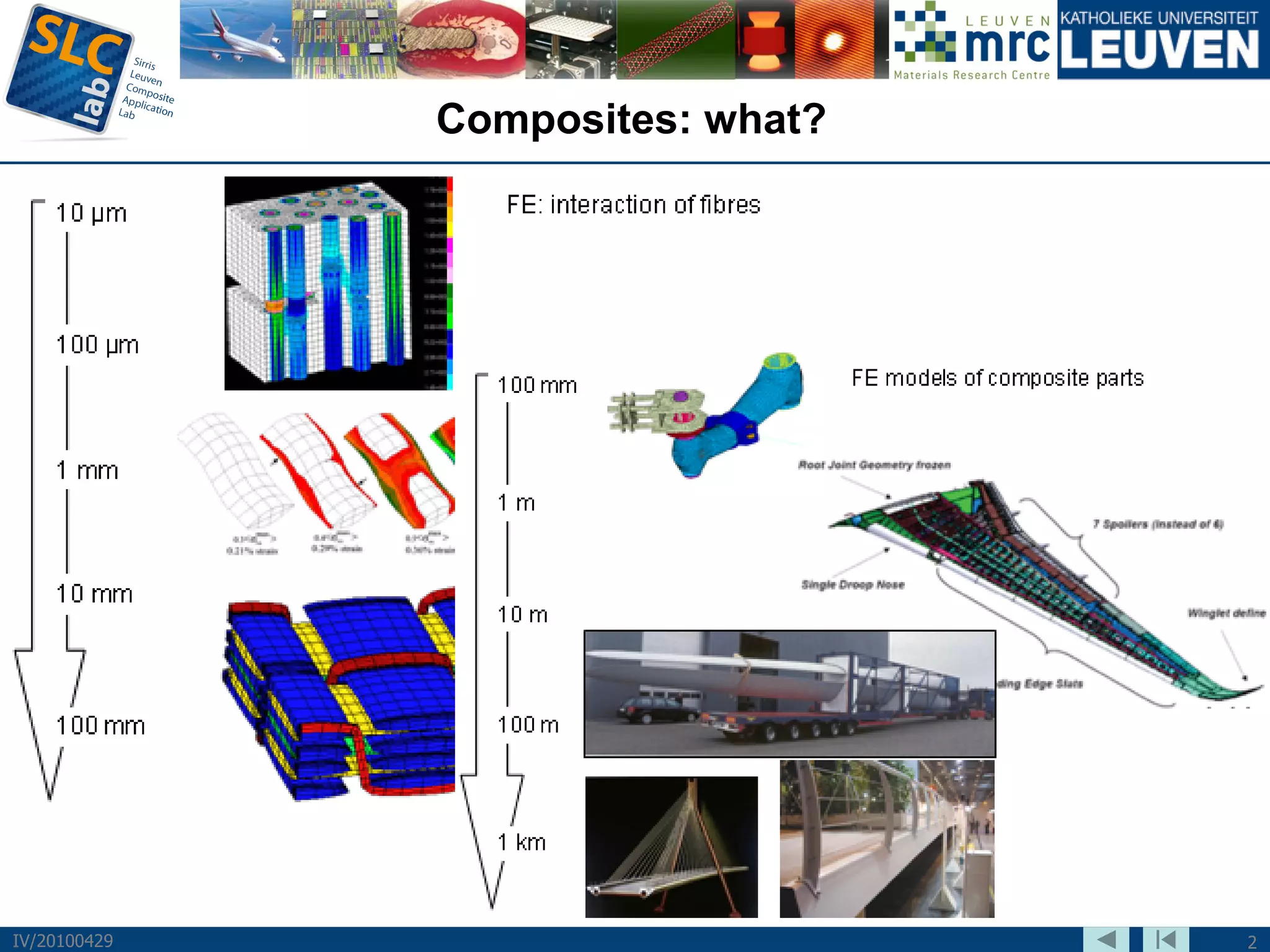
Composites: what?


IV/20100429                       2
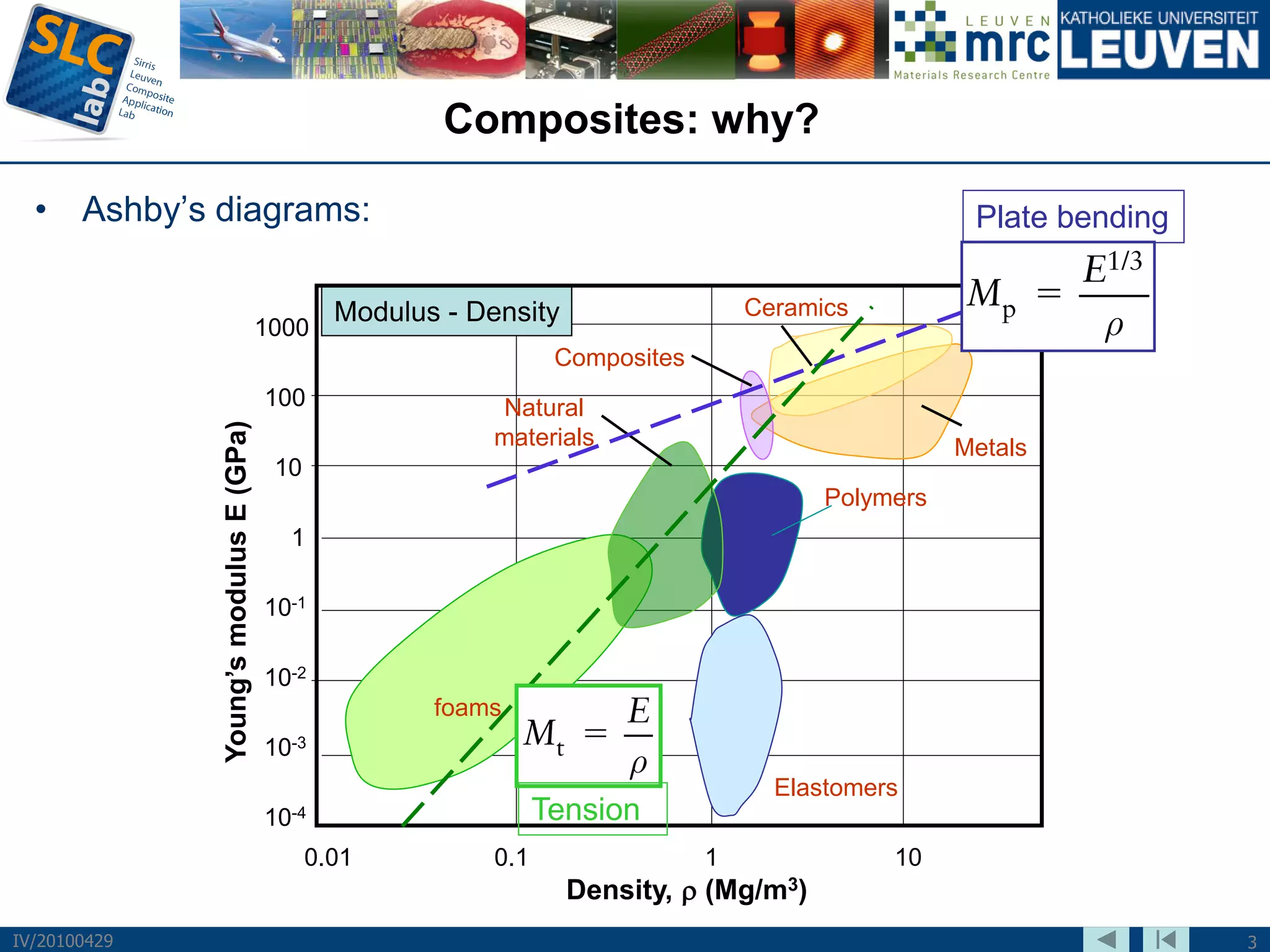
Composites: why?

  • Ashby’s diagrams:                                                                                Plate bending

                                               Modulus - Density                   Ceramics
                                   1000
                                                                  Composites
                                        100                Natural
              Young’s modulus E (GPa)


                                                           materials                                Metals
                                        10
                                                                                         Polymers
                                          1

                                        10-1

                                        10-2
                                                      foams
                                        10-3
                                                                                     Elastomers
                                        10-4                     Tension
                                             0.01          0.1                 1              10
                                                                   Density, ρ (Mg/m3)
IV/20100429                                                                                                          3
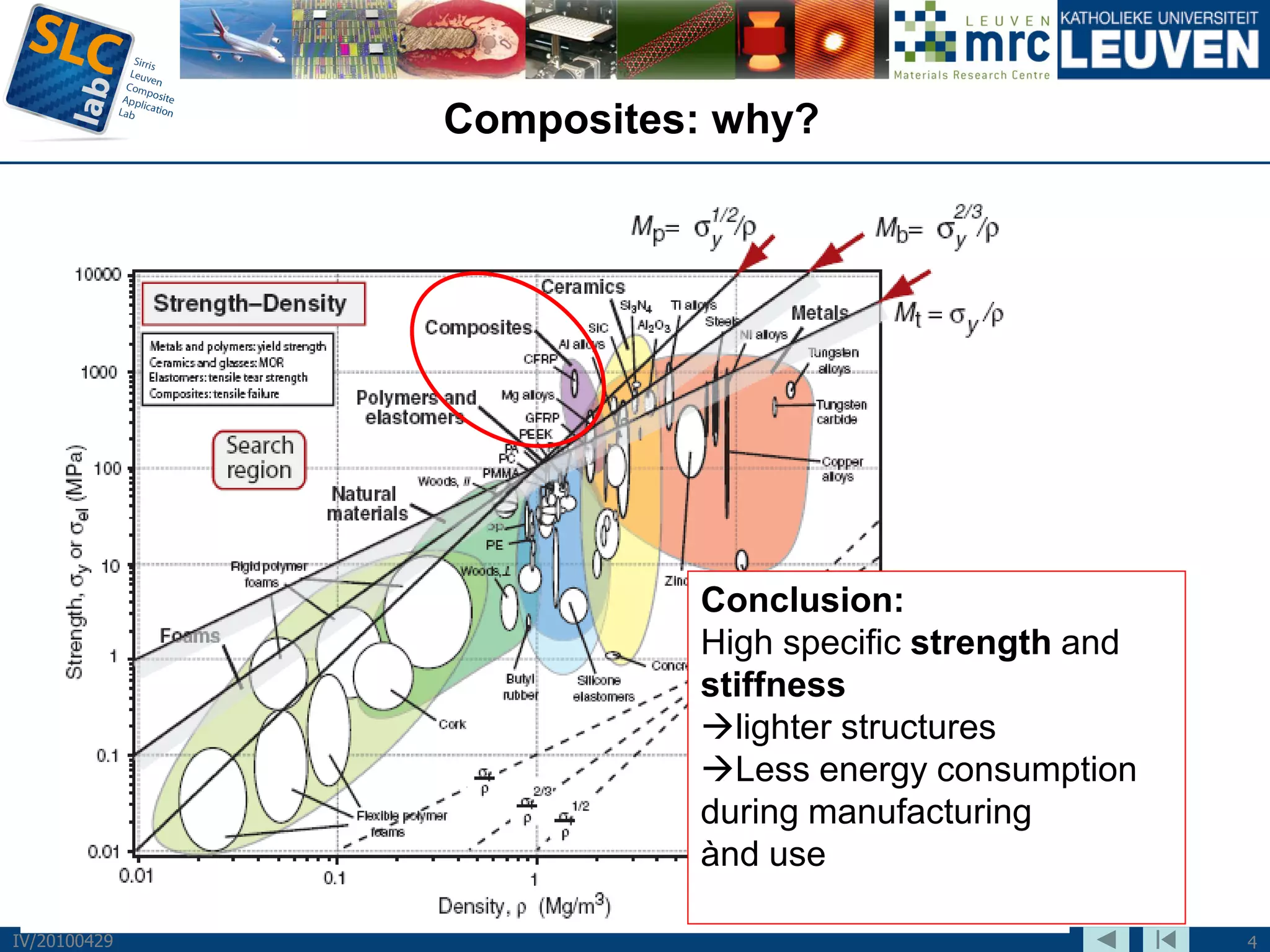
Composites: why?


                        Conclusion:
                        High specific strength and
                        stiffness
                        lighter structures
                        Less energy consumption
                        during manufacturing
                        ànd use

IV/20100429                                          4
Composites: how important?

  • Annual production of fibres for composites (estimations):
         –    Glass fibres:       250.000 ton
         –    Carbon fibres:       30.000 ton
         –    Natural fibres:      40.000 ton
         –    …compared to
               • Steel:       800.000.000 ton
               • Polymers: 120.000.000 ton


  • Annual growth rates of (some) composite applications
         – thermoplastic matrix composites : 8 % (now 37% market share)
         – closed moulding (RTM, RTM-light, infusion): 13 % yearly (now 10 % market
           share in EU)
         – Aerospace structures:     +11% p.a.
         – Wind energy composites: +16 % p.a.


IV/20100429                                                                           5
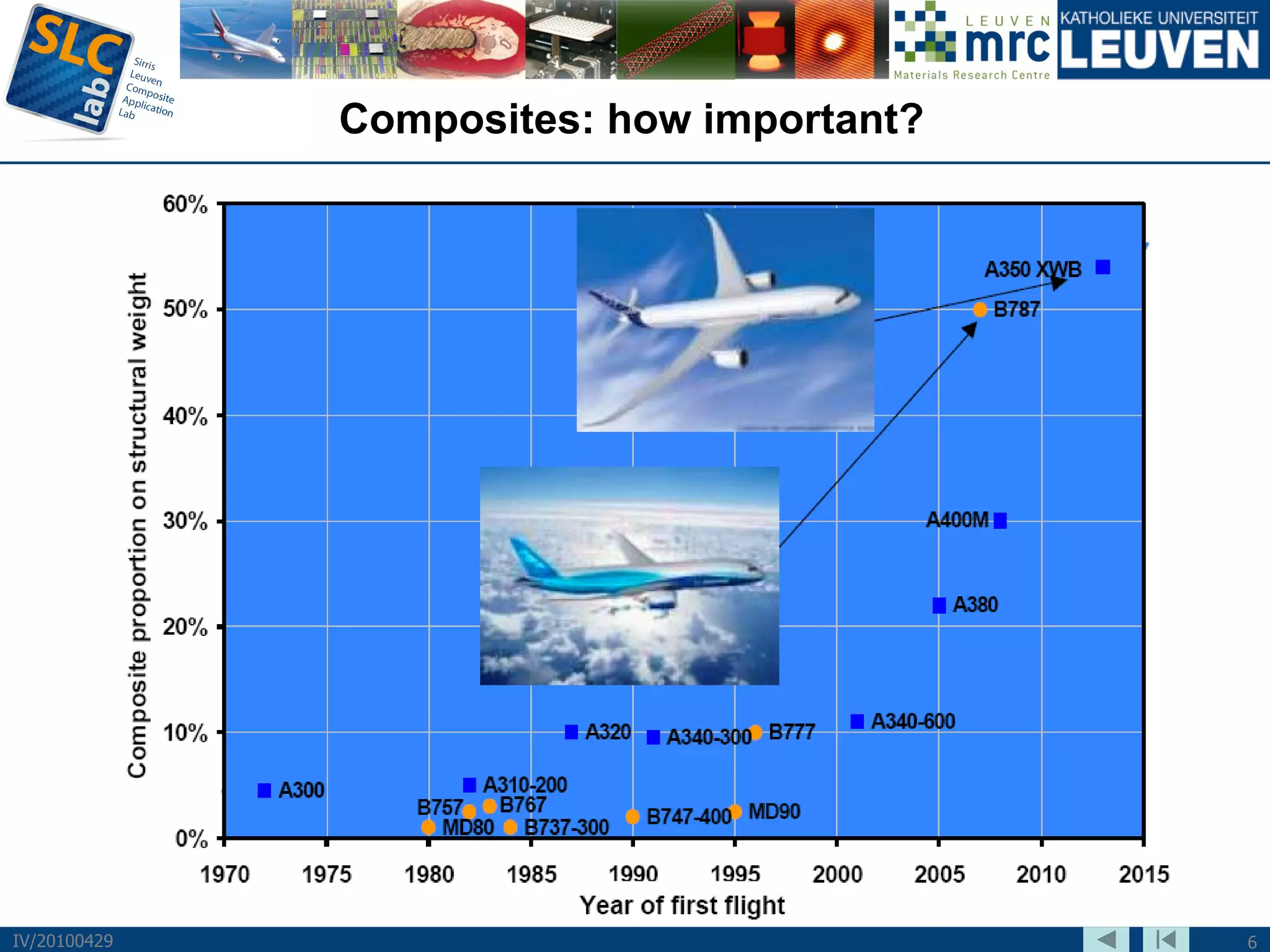
Composites: how important?


IV/20100429                                6
Trends and challenges

  TRENDS                               CHALLENGES
  1. Proliferation of carbon fibres

  2. Intelligent fibre architectures

  3. Sustainable composites

  4. Automated manufacturing

  5. Recycling

  6. …and nano?


IV/20100429                                         7
Trend 1: the proliferation of carbon fibres

  • Carbon fibres:
         – started in aerospace in ’80s
         – Developed into sports and industrial applications in ’90’s
         – Are now penetrating into ‘high volume applications’ because of
             • Long term perspective for stable costs (possibly decreasing)
             • Strong emphasis on sustainable, hence low energy consumption
               products

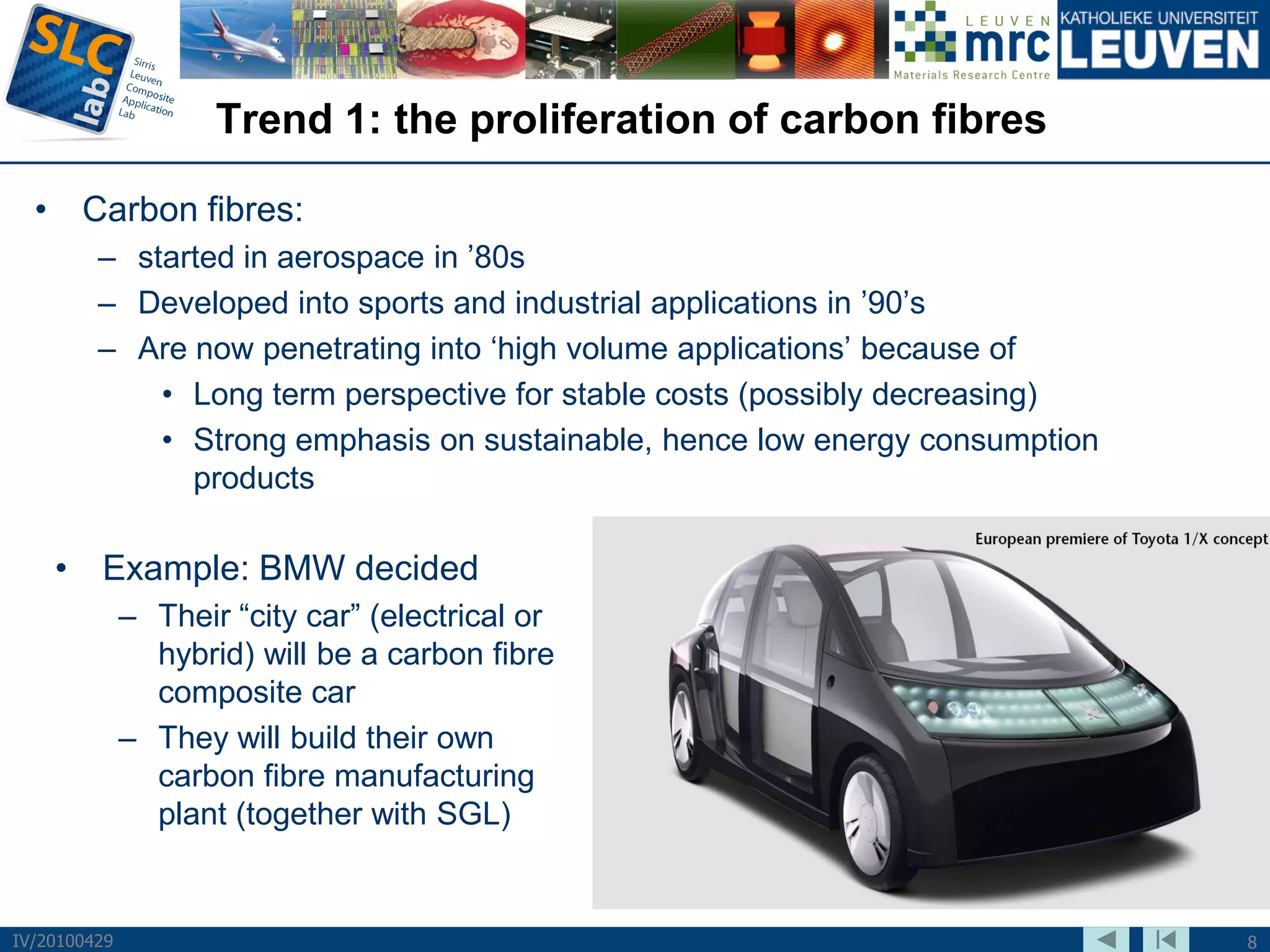
    • Example: BMW decided
              – Their “city car” (electrical or
                hybrid) will be a carbon fibre
                composite car
              – They will build their own
                carbon fibre manufacturing
                plant (together with SGL)


IV/20100429                                                                   8
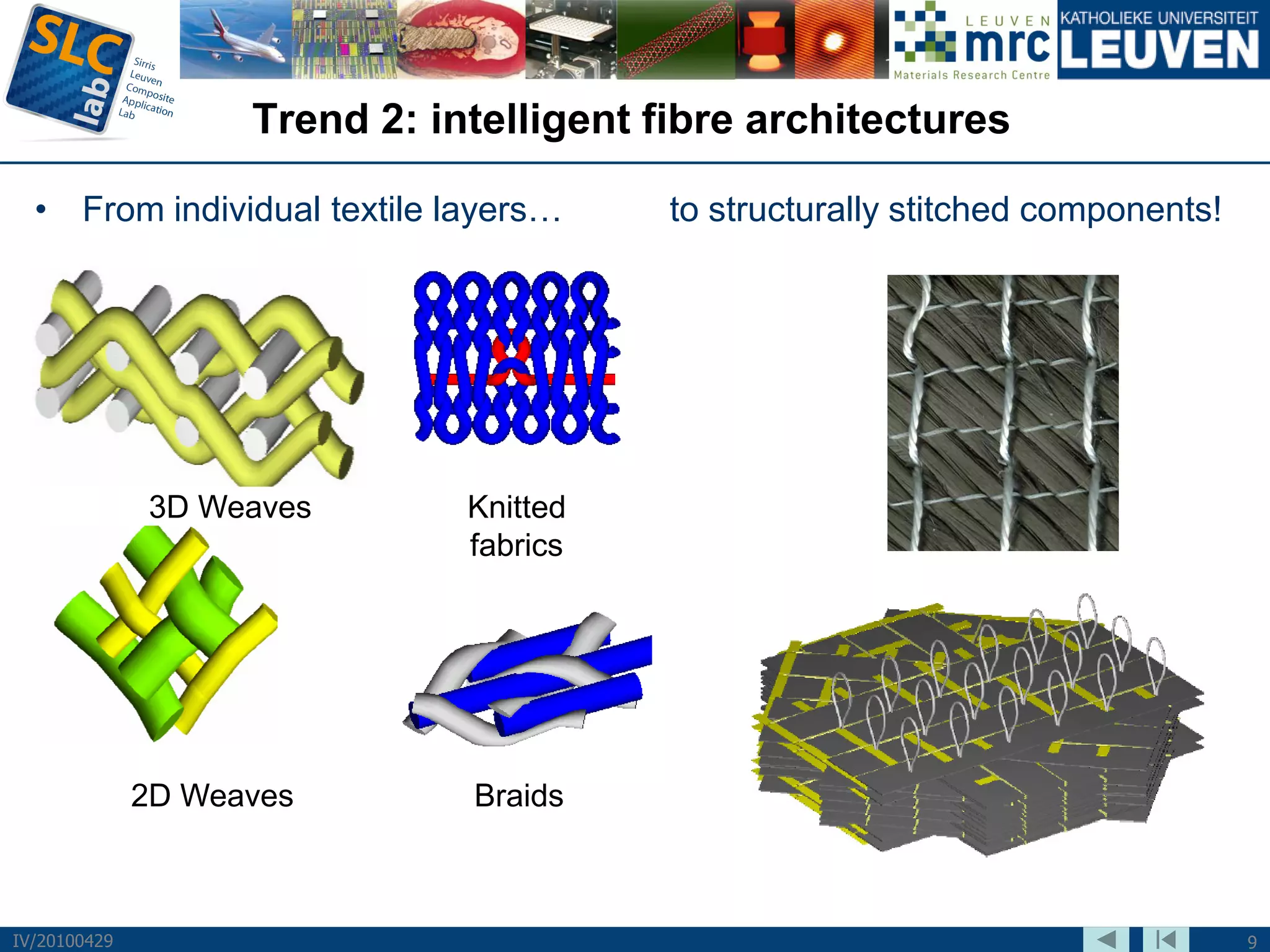
Trend 2: intelligent fibre architectures

  • From individual textile layers…       to structurally stitched components!


              3D Weaves        Knitted
                               fabrics


              2D Weaves        Braids


IV/20100429                                                                      9
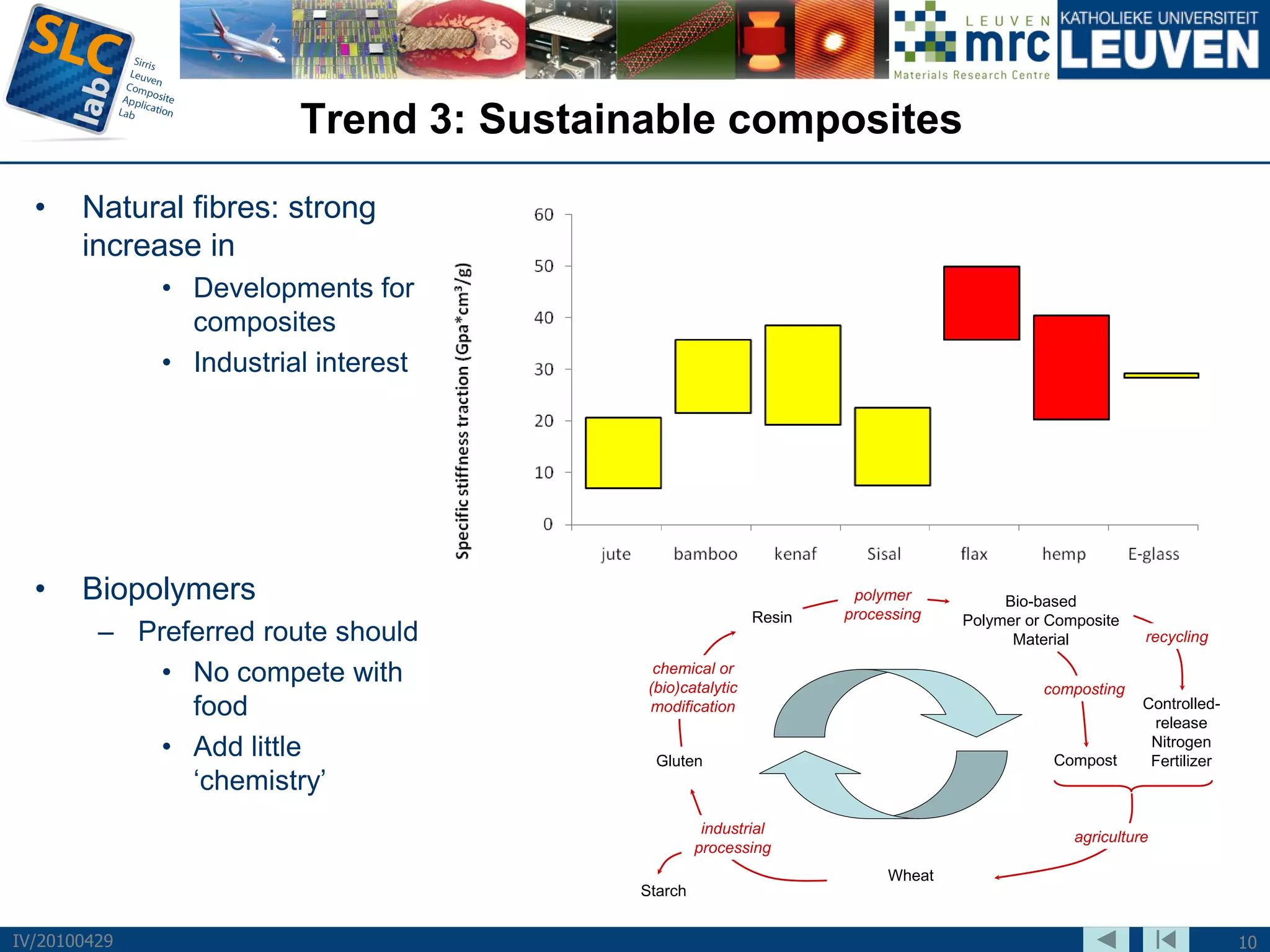
Trend 3: Sustainable composites
  •    Natural fibres: strong
       increase in
              • Developments for
                composites
              • Industrial interest


  •    Biopolymers                                                 polymer          Bio-based
                                                          Resin   processing   Polymer or Composite
         – Preferred route should                                                    Material          recycling

             • No compete with            chemical or
                                         (bio)catalytic                                  composting
               food                      modification                                                  Controlled-
                                                                                                        release
             • Add little                 Gluten                                          Compost
                                                                                                        Nitrogen
                                                                                                        Fertilizer
               ‘chemistry’
                                                  industrial
                                                                                             agriculture
                                                 processing
                                                                       Wheat
                                        Starch


IV/20100429                                                                                                          10
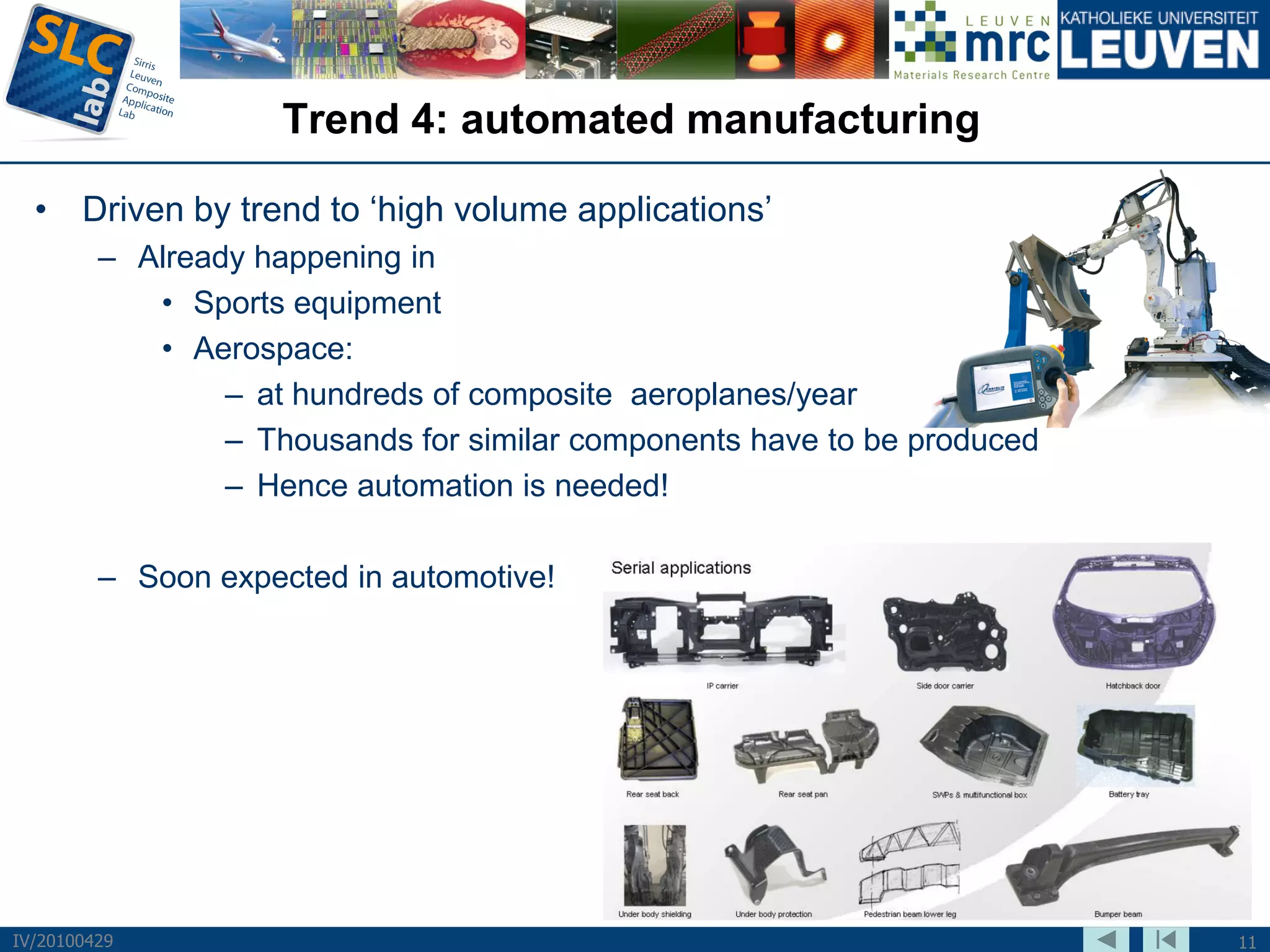
Trend 4: automated manufacturing

  • Driven by trend to ‘high volume applications’
         – Already happening in
            • Sports equipment
            • Aerospace:
                 – at hundreds of composite aeroplanes/year
                 – Thousands for similar components have to be produced
                 – Hence automation is needed!

         – Soon expected in automotive!


IV/20100429                                                               11
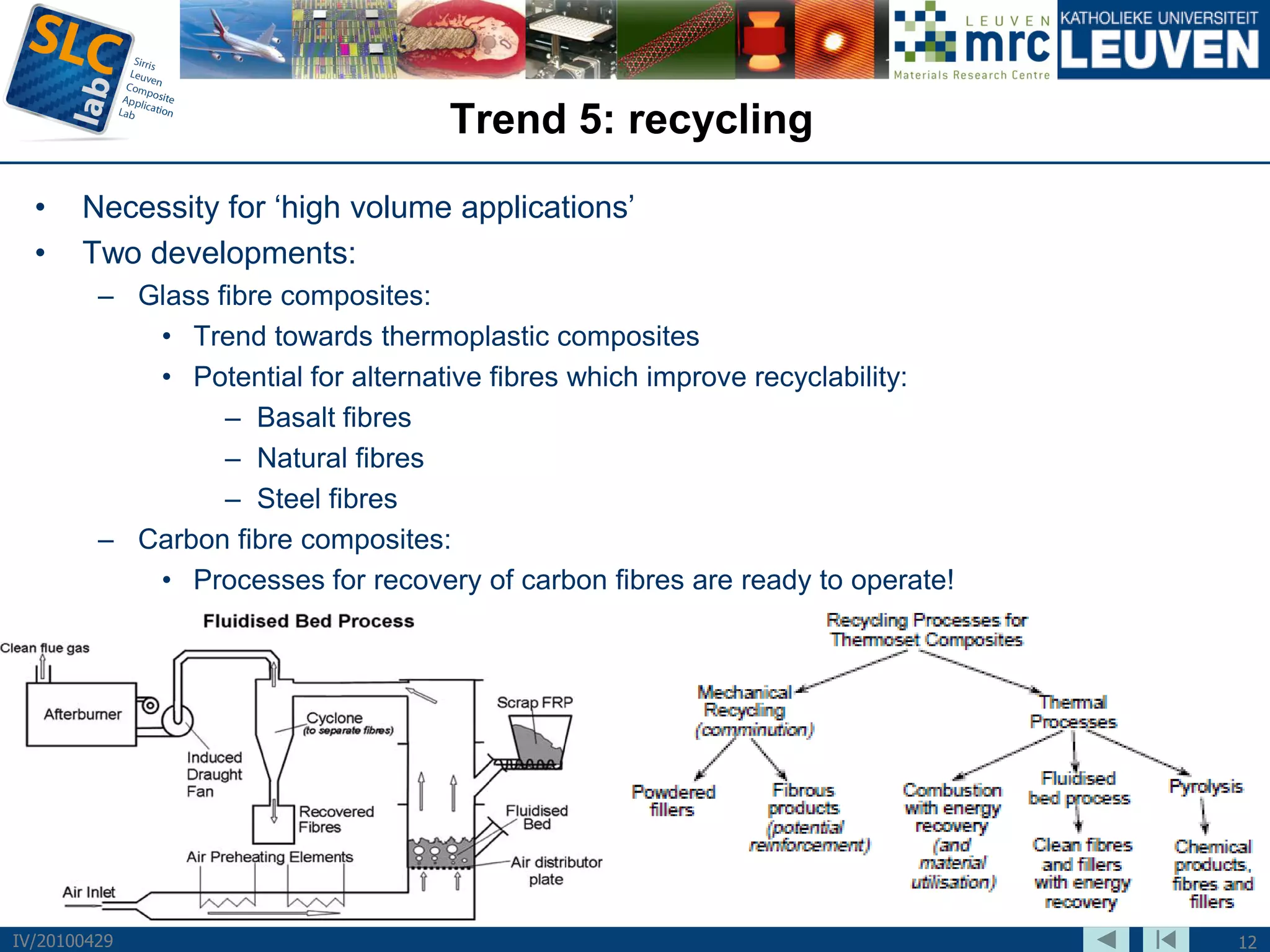
Trend 5: recycling
  •    Necessity for ‘high volume applications’
  •    Two developments:
         – Glass fibre composites:
            • Trend towards thermoplastic composites
            • Potential for alternative fibres which improve recyclability:
                  – Basalt fibres
                  – Natural fibres
                  – Steel fibres
         – Carbon fibre composites:
            • Processes for recovery of carbon fibres are ready to operate!


IV/20100429                                                                   12
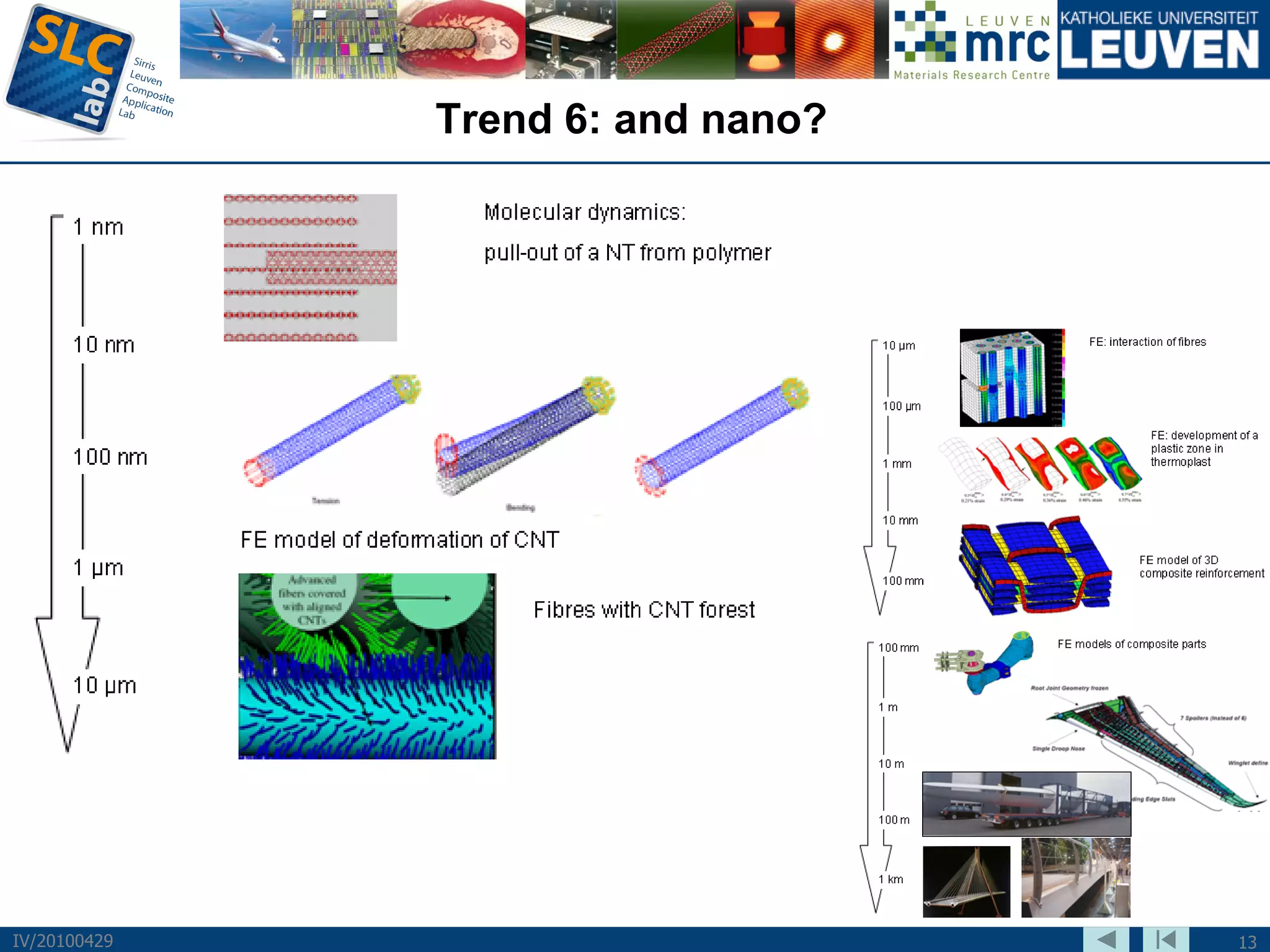
Trend 6: and nano?


IV/20100429                        13
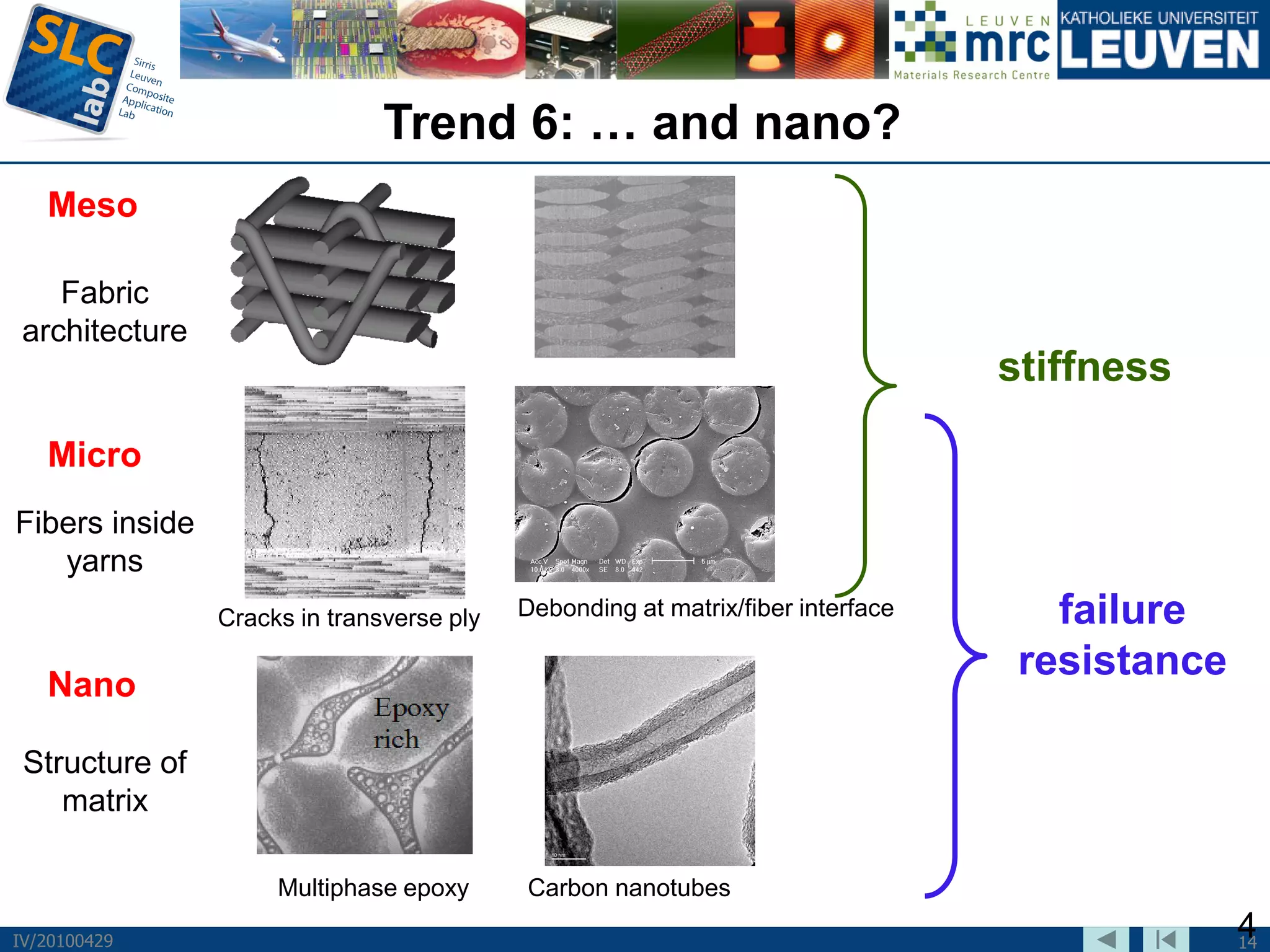
Trend 6: … and nano?
   Meso

    Fabric
 architecture
                                                                                 stiffness

   Micro
Fibers inside
   yarns
                Cracks in transverse ply   Debonding at matrix/fiber interface      failure
                                                                                  resistance
   Nano

 Structure of
    matrix

                     Multiphase epoxy      Carbon nanotubes

IV/20100429
                                                                                               4
                                                                                               14
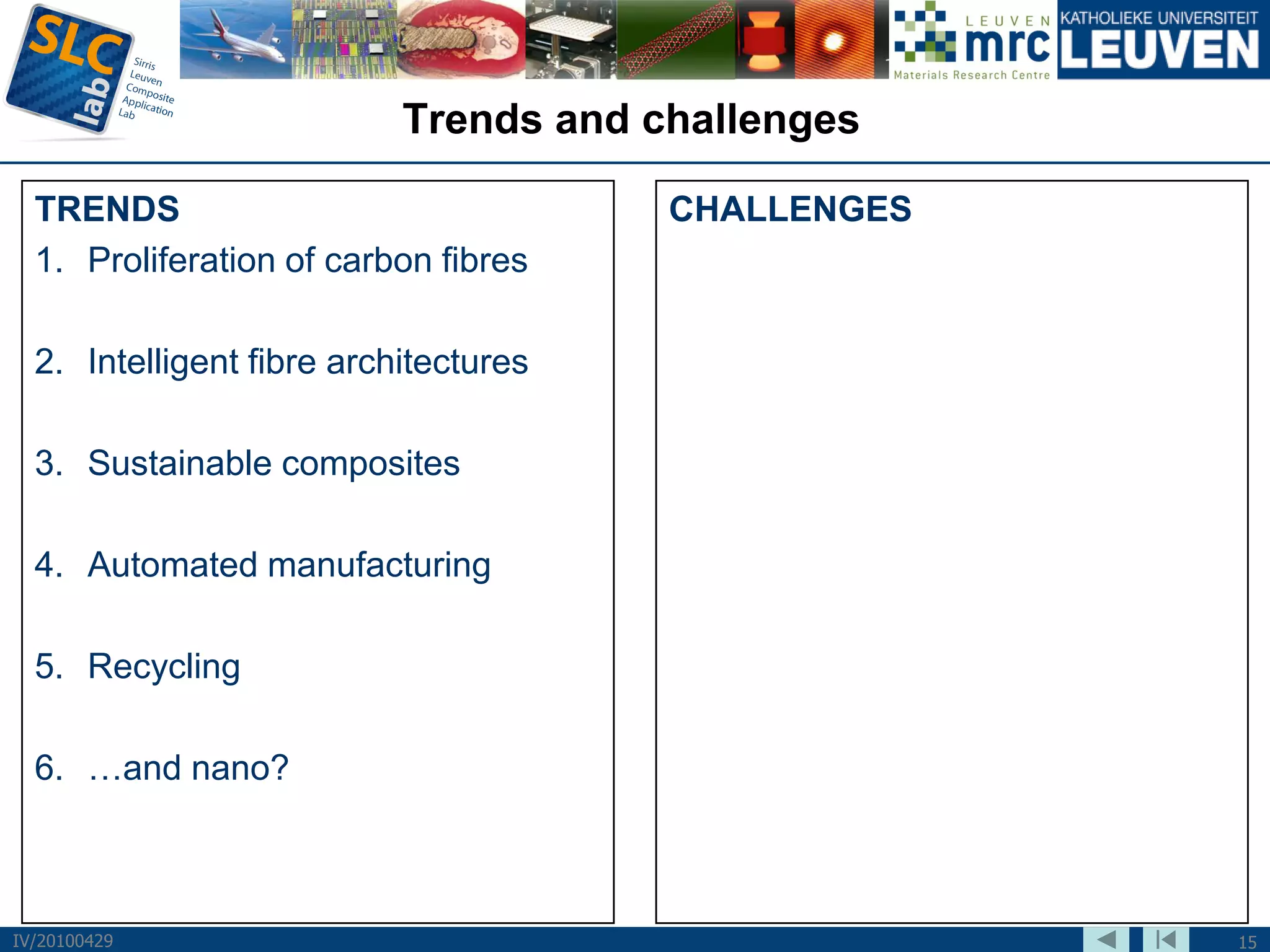
Trends and challenges

  TRENDS                               CHALLENGES
  1. Proliferation of carbon fibres

  2. Intelligent fibre architectures

  3. Sustainable composites

  4. Automated manufacturing

  5. Recycling

  6. …and nano?


IV/20100429                                         15

Sirris Materials Day 2010 K.U.Leuven - SLC - Compostie materials, trends and challenges

  • 1.
    Composite Materials: trends and challenges Ignaas Verpoest Composite Materials Group, Department Metallurgy and Materials Engineering, K.U.Leuven and Sirris-Leuven Composites Application Lab IV/20100429 1
  • 2.
  • 3.
    Composites: why? • Ashby’s diagrams: Plate bending Modulus - Density Ceramics 1000 Composites 100 Natural Young’s modulus E (GPa) materials Metals 10 Polymers 1 10-1 10-2 foams 10-3 Elastomers 10-4 Tension 0.01 0.1 1 10 Density, ρ (Mg/m3) IV/20100429 3
  • 4.
    Composites: why? Conclusion: High specific strength and stiffness lighter structures Less energy consumption during manufacturing ànd use IV/20100429 4
  • 5.
    Composites: how important? • Annual production of fibres for composites (estimations): – Glass fibres: 250.000 ton – Carbon fibres: 30.000 ton – Natural fibres: 40.000 ton – …compared to • Steel: 800.000.000 ton • Polymers: 120.000.000 ton • Annual growth rates of (some) composite applications – thermoplastic matrix composites : 8 % (now 37% market share) – closed moulding (RTM, RTM-light, infusion): 13 % yearly (now 10 % market share in EU) – Aerospace structures: +11% p.a. – Wind energy composites: +16 % p.a. IV/20100429 5
  • 6.
  • 7.
    Trends and challenges TRENDS CHALLENGES 1. Proliferation of carbon fibres 2. Intelligent fibre architectures 3. Sustainable composites 4. Automated manufacturing 5. Recycling 6. …and nano? IV/20100429 7
  • 8.
    Trend 1: theproliferation of carbon fibres • Carbon fibres: – started in aerospace in ’80s – Developed into sports and industrial applications in ’90’s – Are now penetrating into ‘high volume applications’ because of • Long term perspective for stable costs (possibly decreasing) • Strong emphasis on sustainable, hence low energy consumption products • Example: BMW decided – Their “city car” (electrical or hybrid) will be a carbon fibre composite car – They will build their own carbon fibre manufacturing plant (together with SGL) IV/20100429 8
  • 9.
    Trend 2: intelligentfibre architectures • From individual textile layers… to structurally stitched components! 3D Weaves Knitted fabrics 2D Weaves Braids IV/20100429 9
  • 10.
    Trend 3: Sustainablecomposites • Natural fibres: strong increase in • Developments for composites • Industrial interest • Biopolymers polymer Bio-based Resin processing Polymer or Composite – Preferred route should Material recycling • No compete with chemical or (bio)catalytic composting food modification Controlled- release • Add little Gluten Compost Nitrogen Fertilizer ‘chemistry’ industrial agriculture processing Wheat Starch IV/20100429 10
  • 11.
    Trend 4: automatedmanufacturing • Driven by trend to ‘high volume applications’ – Already happening in • Sports equipment • Aerospace: – at hundreds of composite aeroplanes/year – Thousands for similar components have to be produced – Hence automation is needed! – Soon expected in automotive! IV/20100429 11
  • 12.
    Trend 5: recycling • Necessity for ‘high volume applications’ • Two developments: – Glass fibre composites: • Trend towards thermoplastic composites • Potential for alternative fibres which improve recyclability: – Basalt fibres – Natural fibres – Steel fibres – Carbon fibre composites: • Processes for recovery of carbon fibres are ready to operate! IV/20100429 12
  • 13.
    Trend 6: andnano? IV/20100429 13
  • 14.
    Trend 6: …and nano? Meso Fabric architecture stiffness Micro Fibers inside yarns Cracks in transverse ply Debonding at matrix/fiber interface failure resistance Nano Structure of matrix Multiphase epoxy Carbon nanotubes IV/20100429 4 14
  • 15.
    Trends and challenges TRENDS CHALLENGES 1. Proliferation of carbon fibres 2. Intelligent fibre architectures 3. Sustainable composites 4. Automated manufacturing 5. Recycling 6. …and nano? IV/20100429 15