Downloaded 403 times
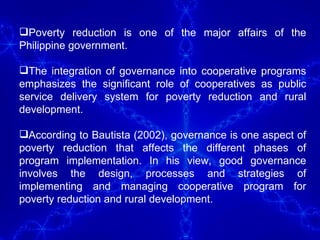
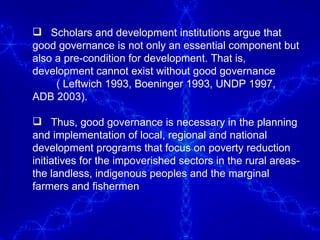
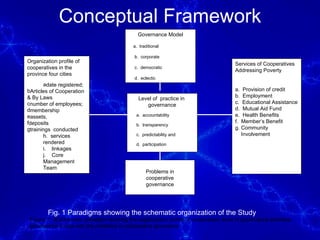
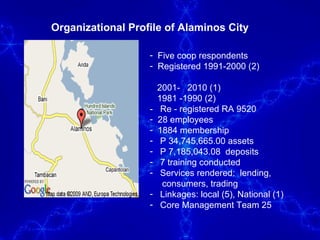
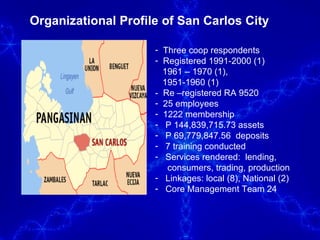
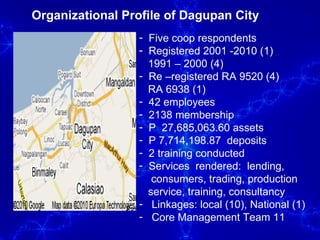
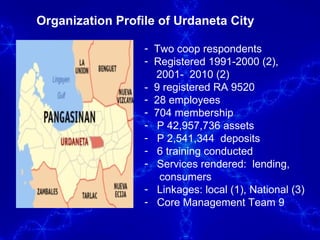
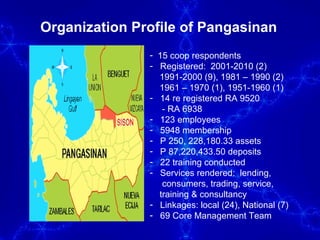
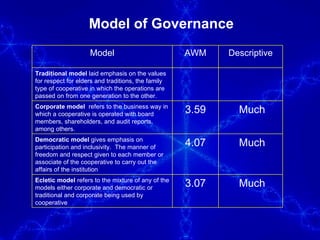
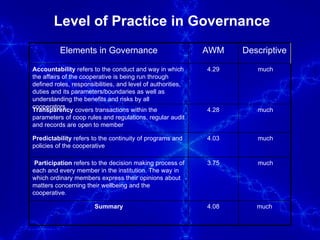
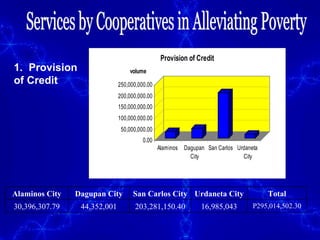
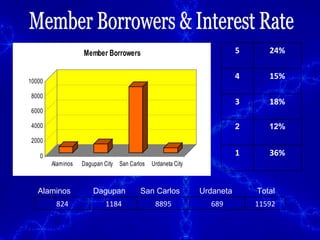
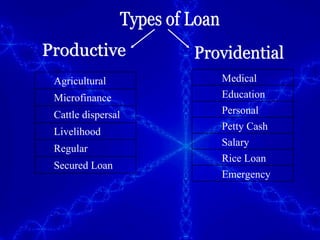
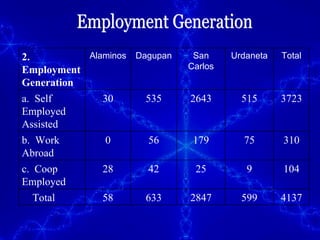
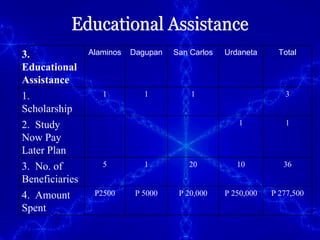
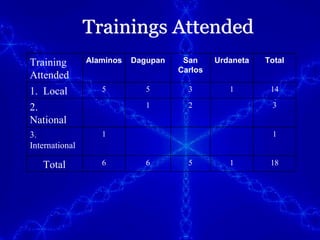
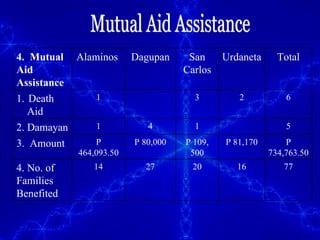

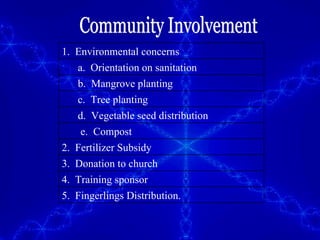
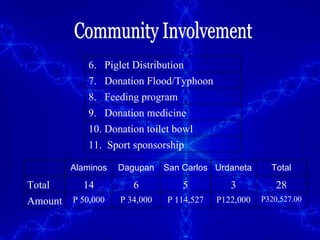
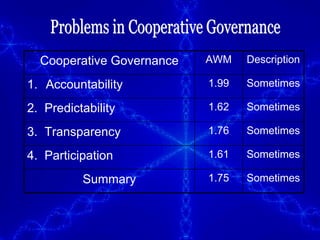


This document summarizes a master's thesis on cooperative governance and poverty alleviation in the Pangasinan province of the Philippines. It provides background on the role of cooperatives in poverty reduction efforts and good governance principles. The study examines 15 cooperatives across 4 cities in Pangasinan, analyzing their organizational profiles, governance models employed, services that address poverty, and challenges faced. Key findings include details on the cooperatives' registrations, memberships, assets, services offered, and management structures. The democratic and eclectic governance models were found to be most commonly used. Accountability and transparency were identified as strengths in the cooperatives' governance practices.


