MASS MEASURING
INSTRUMENT
As per FBISE Chapter 1
Mass Measuring Instrument
◦ The instruments that are used to
measure, the mass of different
objects are called mass
measuring instruments.
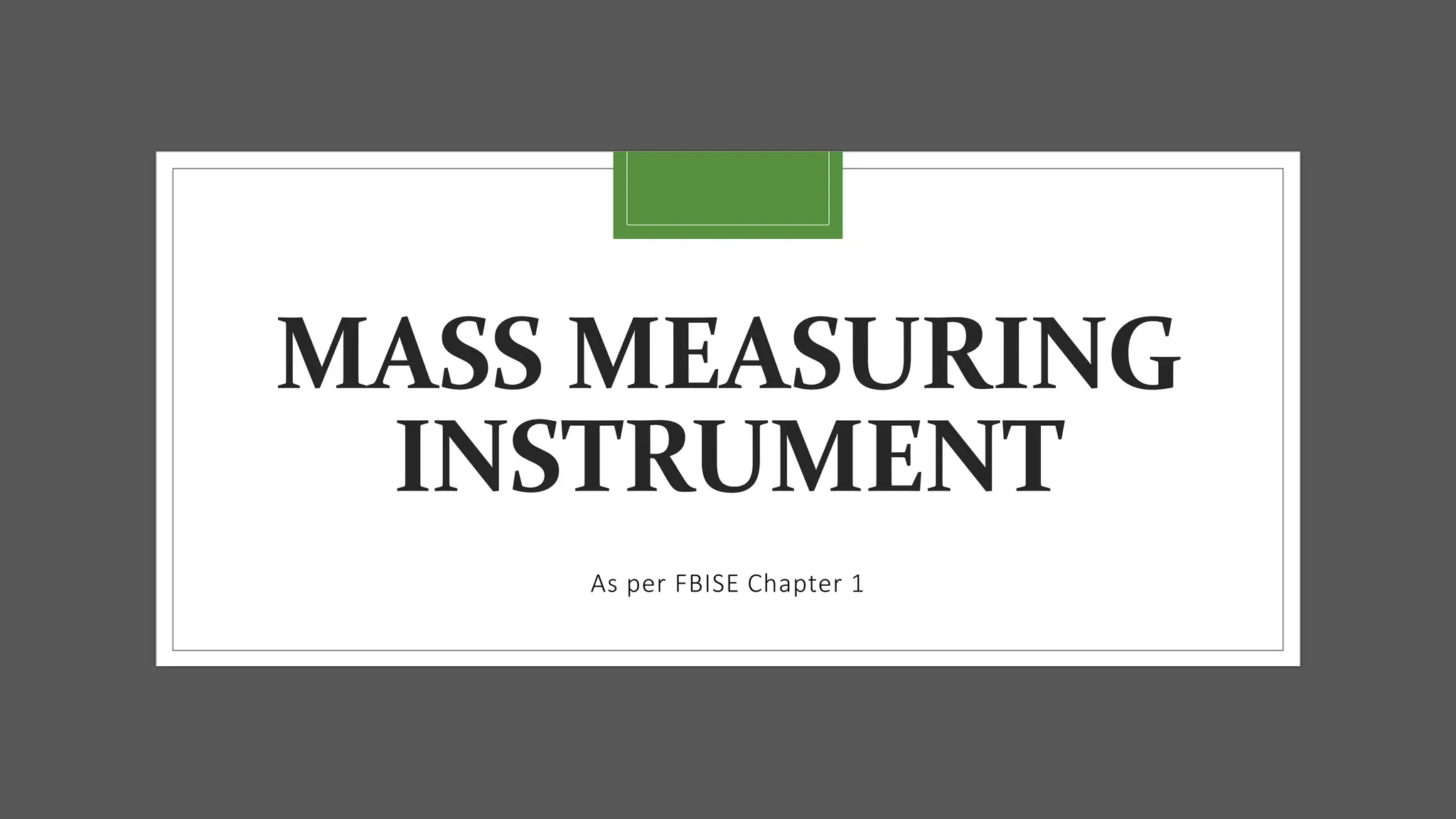
◦ Pots were used to measure grain
in various parts of the world in
the ancient times.
Mass Measuring Instrument
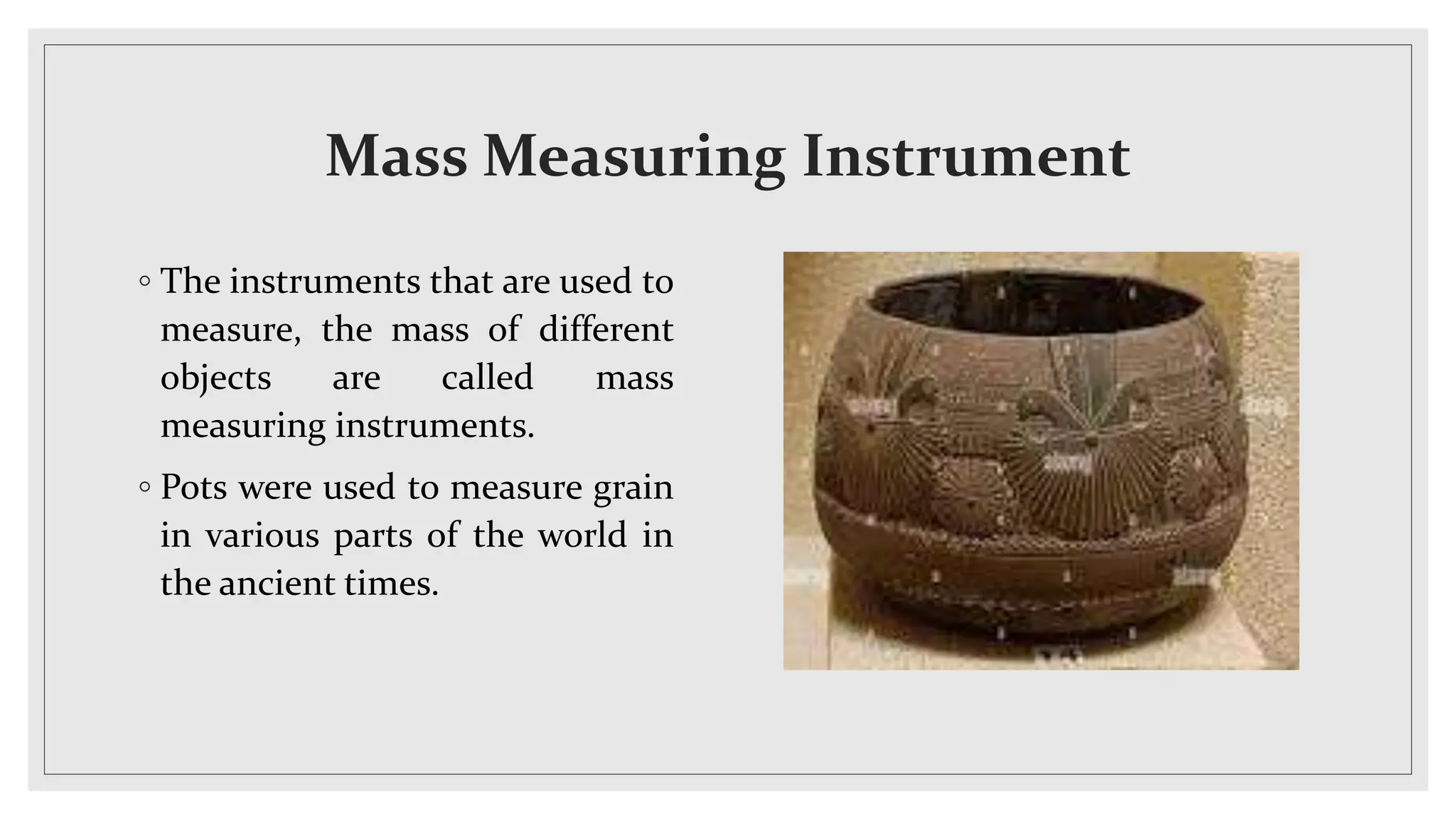
◦ However, balances were also in
use by Greeks and Romans such
as beam balance. In a beam
balance, the unknown mass is
placed in one pan and is
balanced by putting known
masses in the other pan.
Mass Measuring Instrument
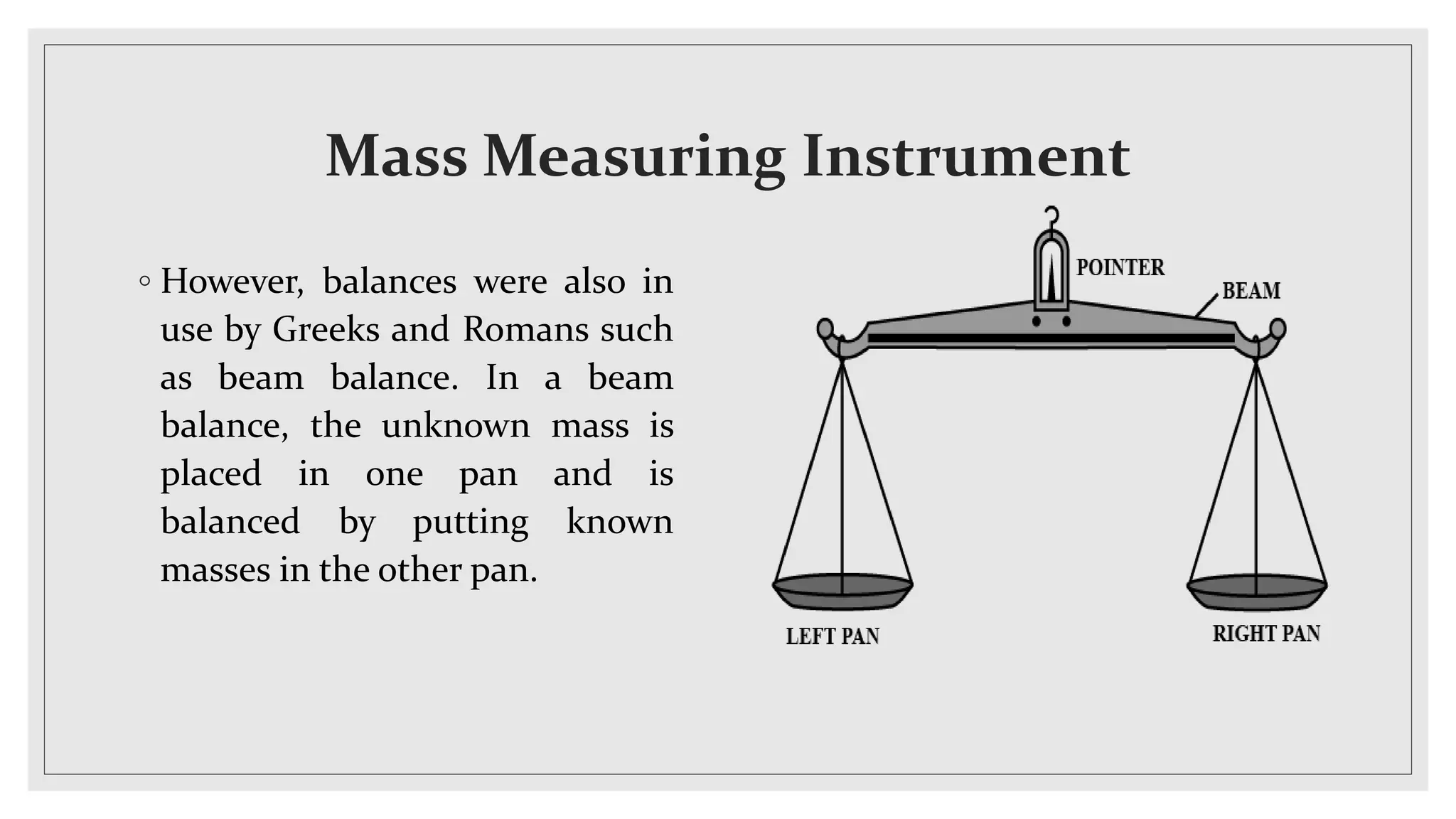
◦ Today we use many types of
mechanical and electronic
balances. Such as physical
balance, lever balance,
Electronic Balance etc.
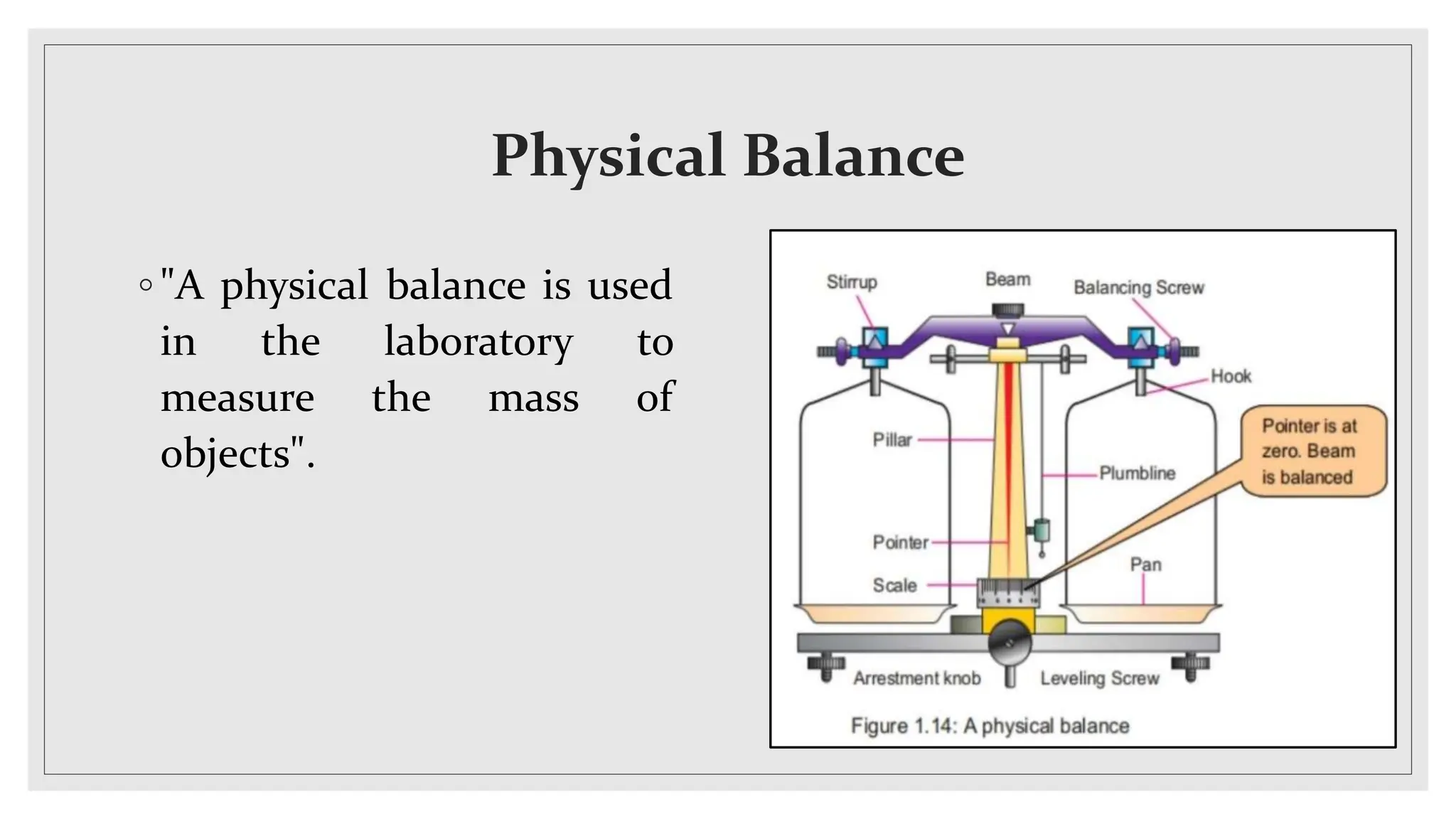
Physical Balance
◦ "A physical balance is used
in the laboratory to
measure the mass of
objects".
Physical Balance
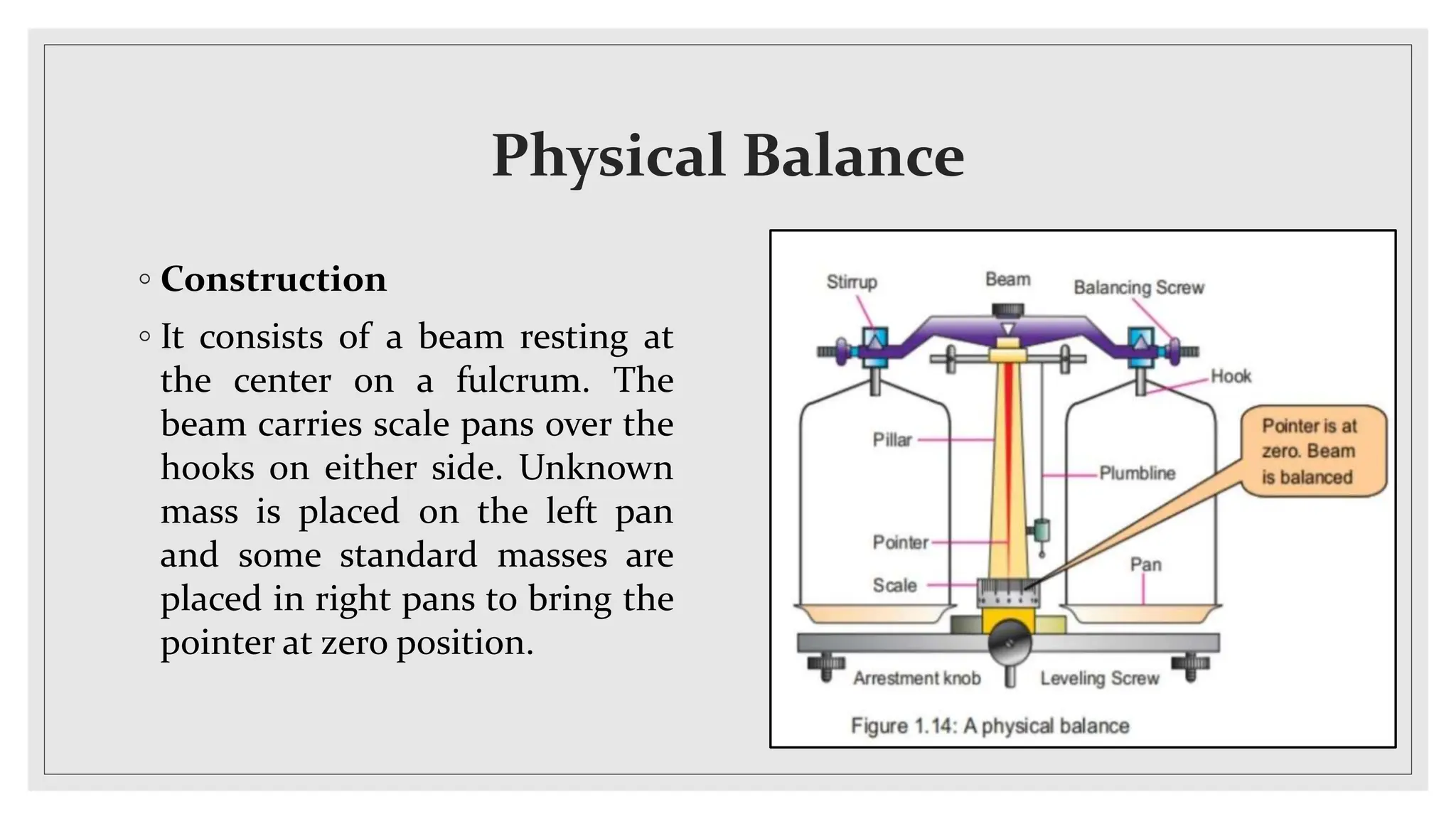
◦ Construction
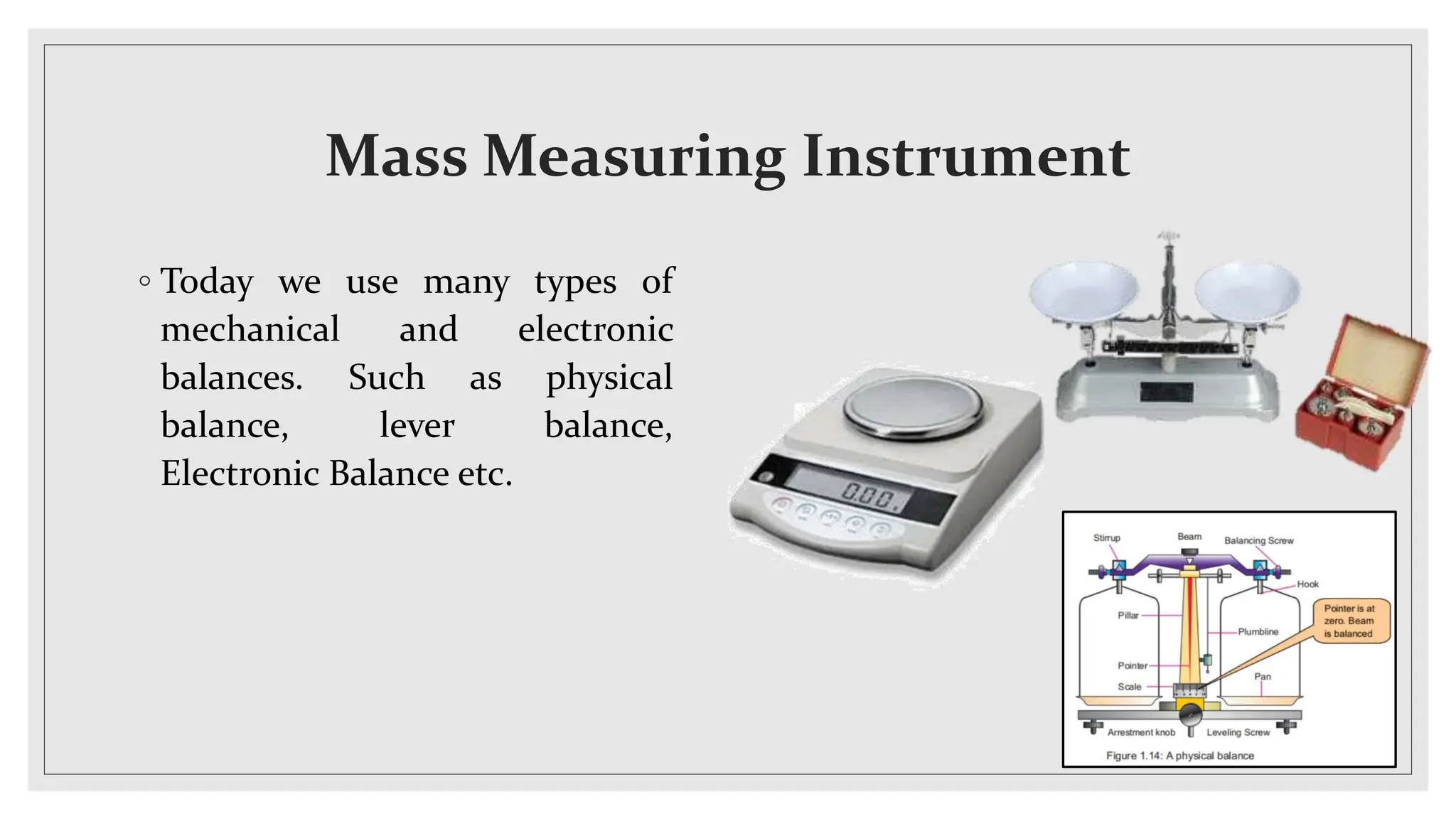
◦ It consists of a beam resting at
the center on a fulcrum. The
beam carries scale pans over the
hooks on either side. Unknown
mass is placed on the left pan
and some standard masses are
placed in right pans to bring the
pointer at zero position.
Physical Balance
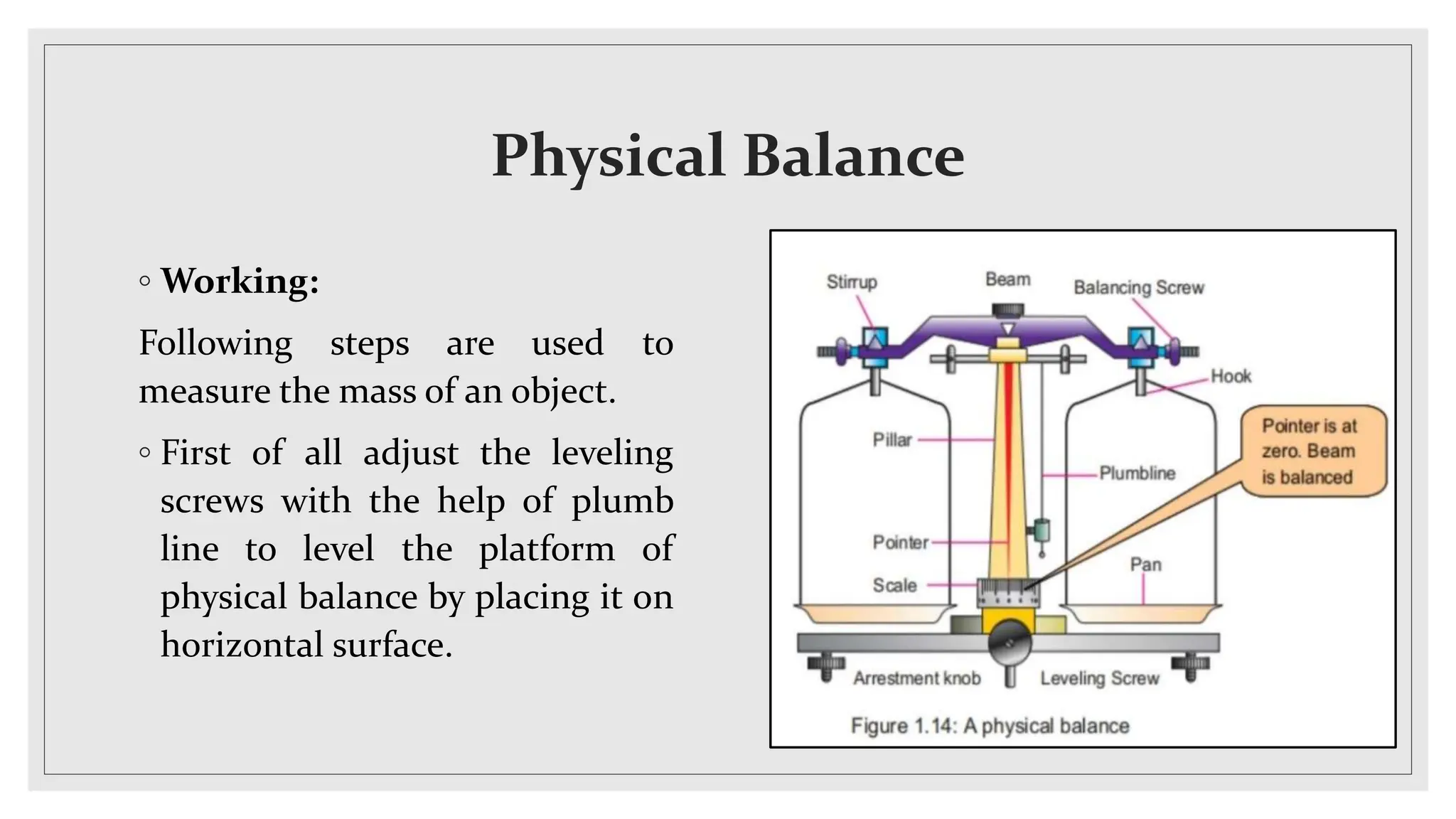
◦ Working:
Following steps are used to
measure the mass of an object.
◦ First of all adjust the leveling
screws with the help of plumb
line to level the platform of
physical balance by placing it on
horizontal surface.
Physical Balance
◦ Working:
◦ Raise the beam by turning the
arresting knob clockwise.
Balance the pans by screw level
and bring the pointer at zero.
◦ Bring beam back on its support
by knob. Place the given object
(stone) on its left pan.
Physical Balance
◦ Working:
◦ Place standard masses in the
right pan. Raise the beam. Lower
the beam if its pointer is not at
zero.
◦ Repeat adding or removing
standard masses in the right pan
till the pointer rests at zero
position.
Physical Balance
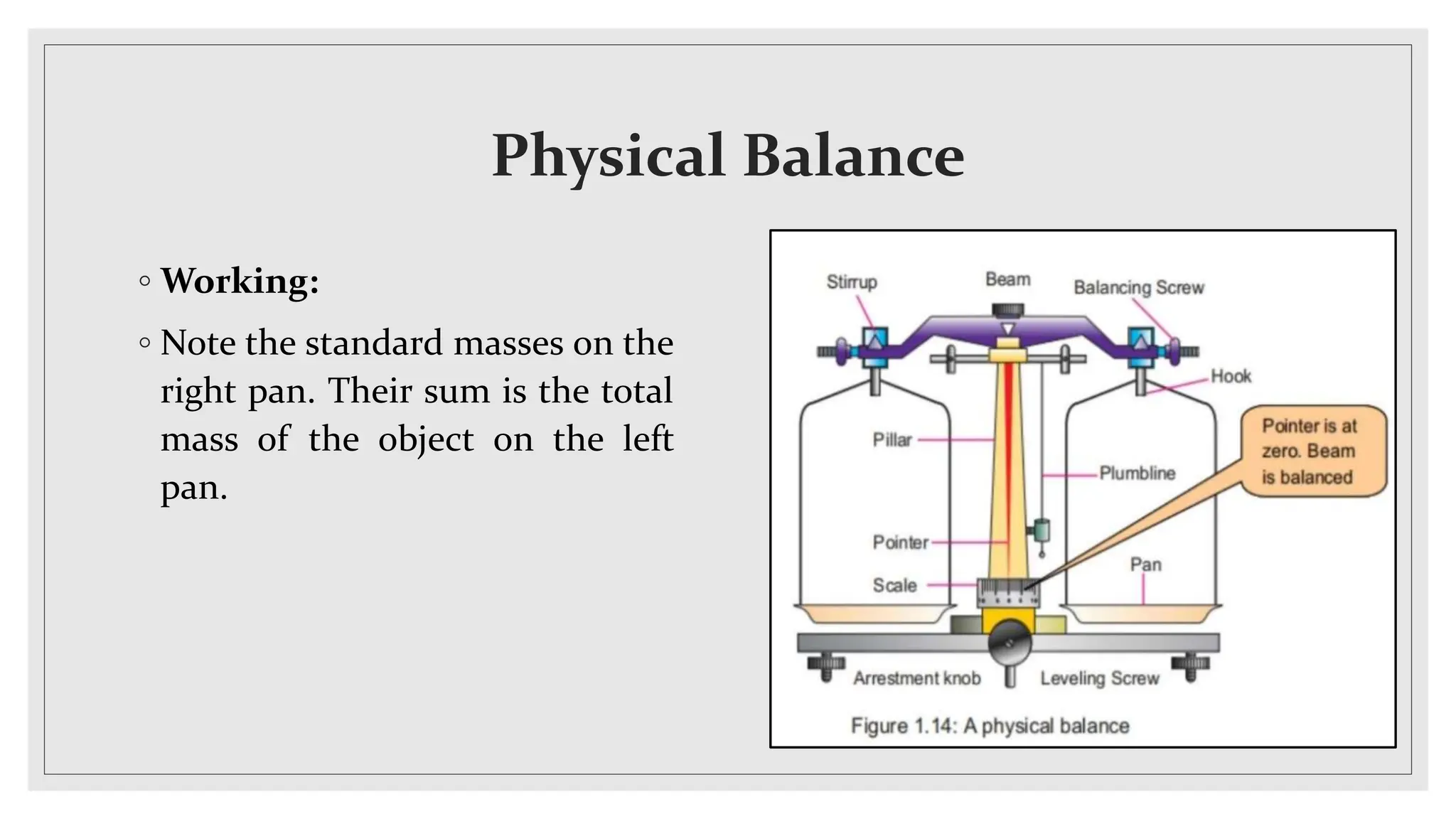
◦ Working:
◦ Note the standard masses on the
right pan. Their sum is the total
mass of the object on the left
pan.
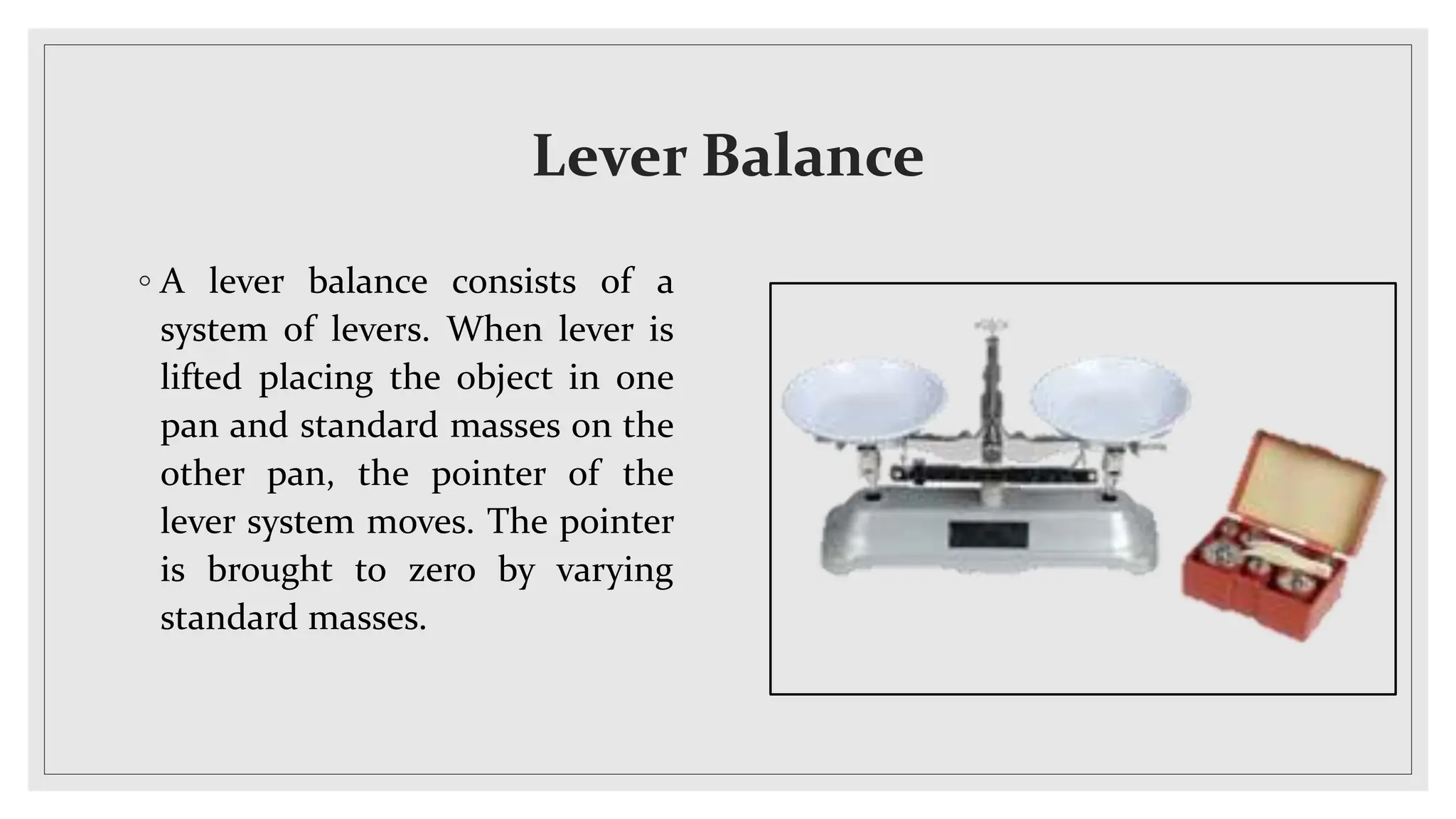
Lever Balance
◦ A lever balance consists of a
system of levers. When lever is
lifted placing the object in one
pan and standard masses on the
other pan, the pointer of the
lever system moves. The pointer
is brought to zero by varying
standard masses.
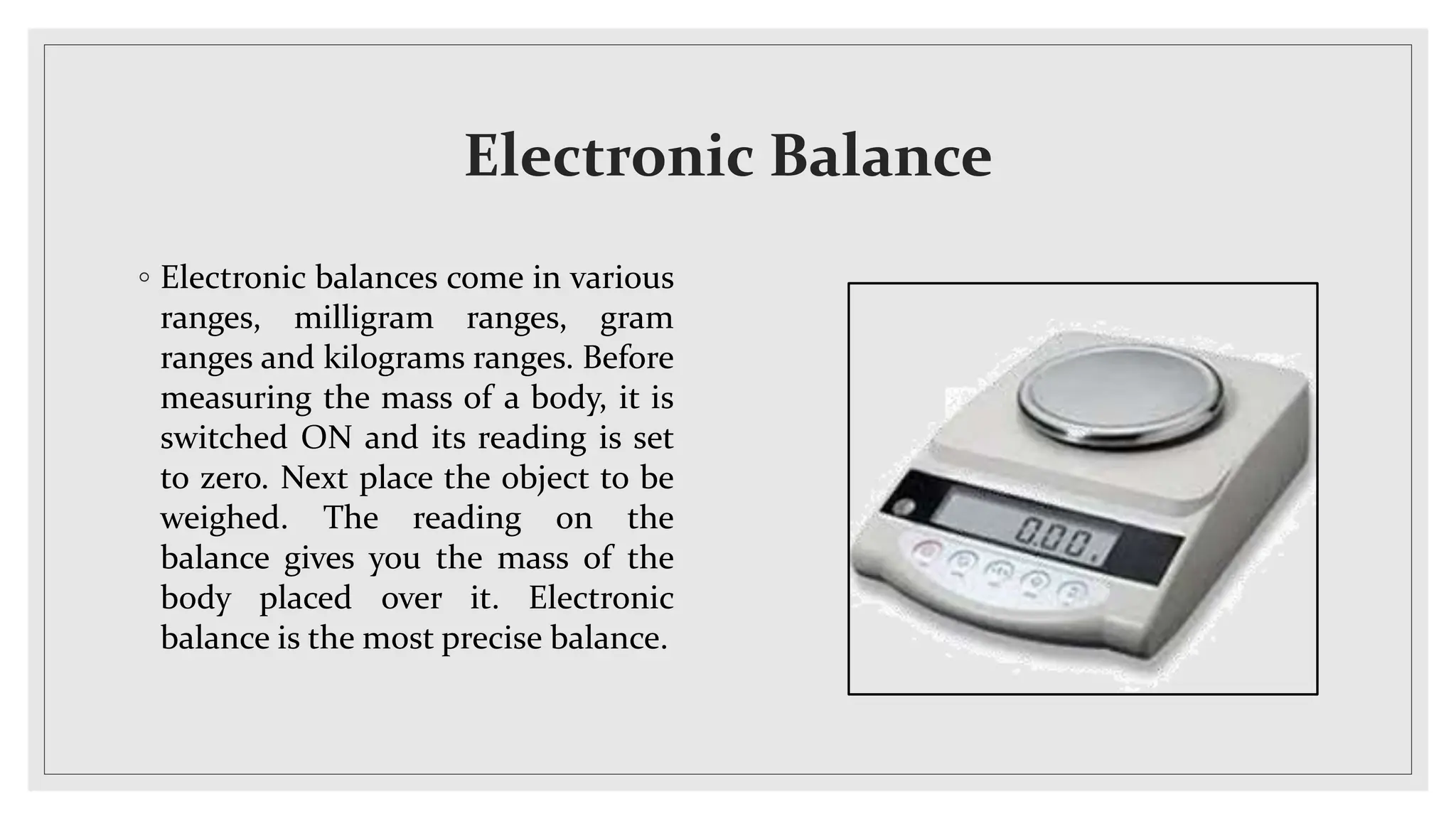
Electronic Balance
◦ Electronic balances come in various
ranges, milligram ranges, gram
ranges and kilograms ranges. Before
measuring the mass of a body, it is
switched ON and its reading is set
to zero. Next place the object to be
weighed. The reading on the
balance gives you the mass of the
body placed over it. Electronic
balance is the most precise balance.

Mass Measuring Instruments in chapter.pptx

  • 1.
  • 2.
    Mass Measuring Instrument ◦The instruments that are used to measure, the mass of different objects are called mass measuring instruments. ◦ Pots were used to measure grain in various parts of the world in the ancient times.
  • 3.
    Mass Measuring Instrument ◦However, balances were also in use by Greeks and Romans such as beam balance. In a beam balance, the unknown mass is placed in one pan and is balanced by putting known masses in the other pan.
  • 4.
    Mass Measuring Instrument ◦Today we use many types of mechanical and electronic balances. Such as physical balance, lever balance, Electronic Balance etc.
  • 5.
    Physical Balance ◦ "Aphysical balance is used in the laboratory to measure the mass of objects".
  • 6.
    Physical Balance ◦ Construction ◦It consists of a beam resting at the center on a fulcrum. The beam carries scale pans over the hooks on either side. Unknown mass is placed on the left pan and some standard masses are placed in right pans to bring the pointer at zero position.
  • 7.
    Physical Balance ◦ Working: Followingsteps are used to measure the mass of an object. ◦ First of all adjust the leveling screws with the help of plumb line to level the platform of physical balance by placing it on horizontal surface.
  • 8.
    Physical Balance ◦ Working: ◦Raise the beam by turning the arresting knob clockwise. Balance the pans by screw level and bring the pointer at zero. ◦ Bring beam back on its support by knob. Place the given object (stone) on its left pan.
  • 9.
    Physical Balance ◦ Working: ◦Place standard masses in the right pan. Raise the beam. Lower the beam if its pointer is not at zero. ◦ Repeat adding or removing standard masses in the right pan till the pointer rests at zero position.
  • 10.
    Physical Balance ◦ Working: ◦Note the standard masses on the right pan. Their sum is the total mass of the object on the left pan.
  • 11.
    Lever Balance ◦ Alever balance consists of a system of levers. When lever is lifted placing the object in one pan and standard masses on the other pan, the pointer of the lever system moves. The pointer is brought to zero by varying standard masses.
  • 12.
    Electronic Balance ◦ Electronicbalances come in various ranges, milligram ranges, gram ranges and kilograms ranges. Before measuring the mass of a body, it is switched ON and its reading is set to zero. Next place the object to be weighed. The reading on the balance gives you the mass of the body placed over it. Electronic balance is the most precise balance.