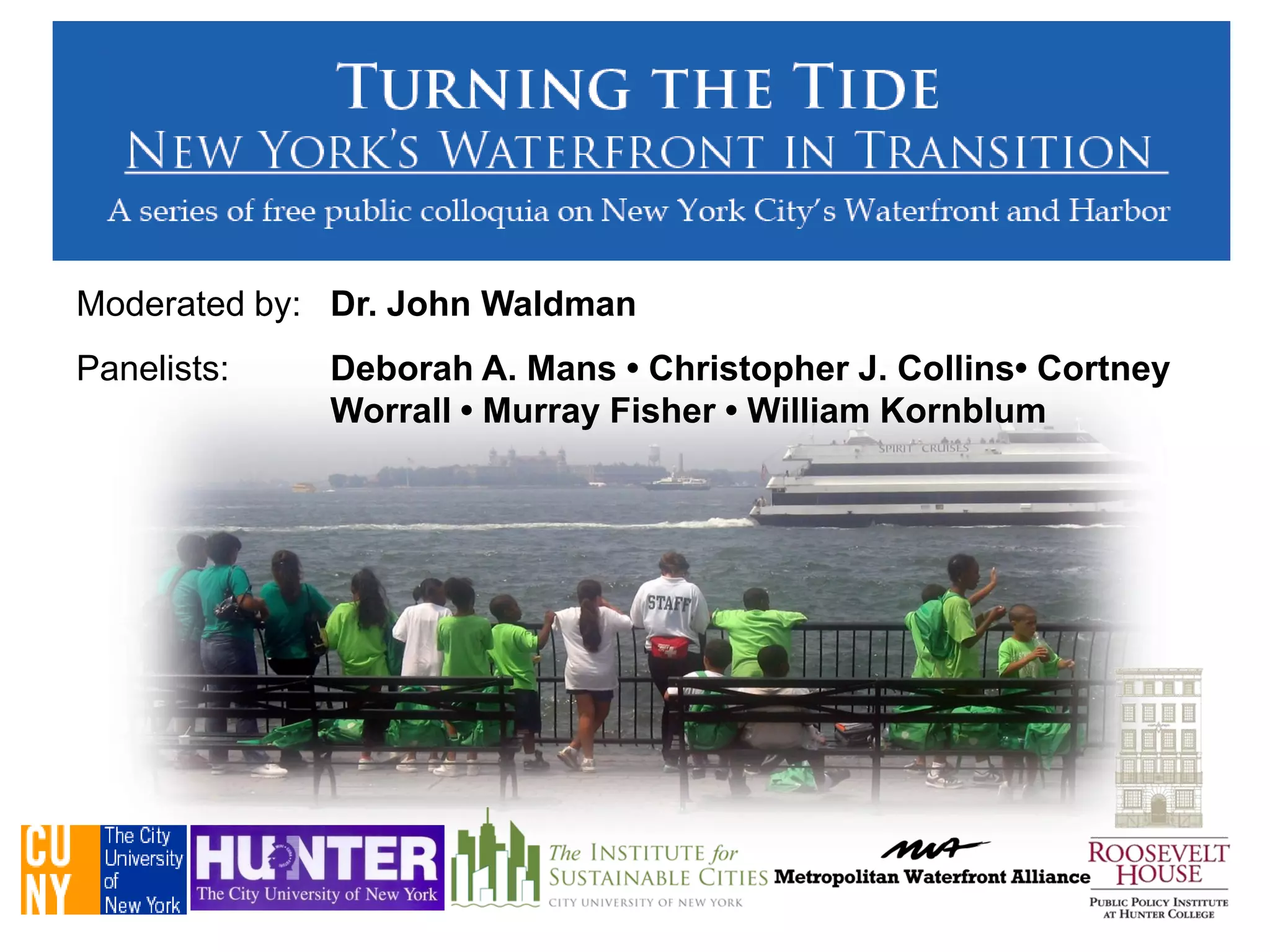

Moderated by: Dr. John Waldman
Panelists:   Deborah A. Mans • Christopher J. Collins• Cortney
             Worrall • Murray Fisher • William Kornblum
Deborah A. Mans
New York/New Jersey Baykeeper
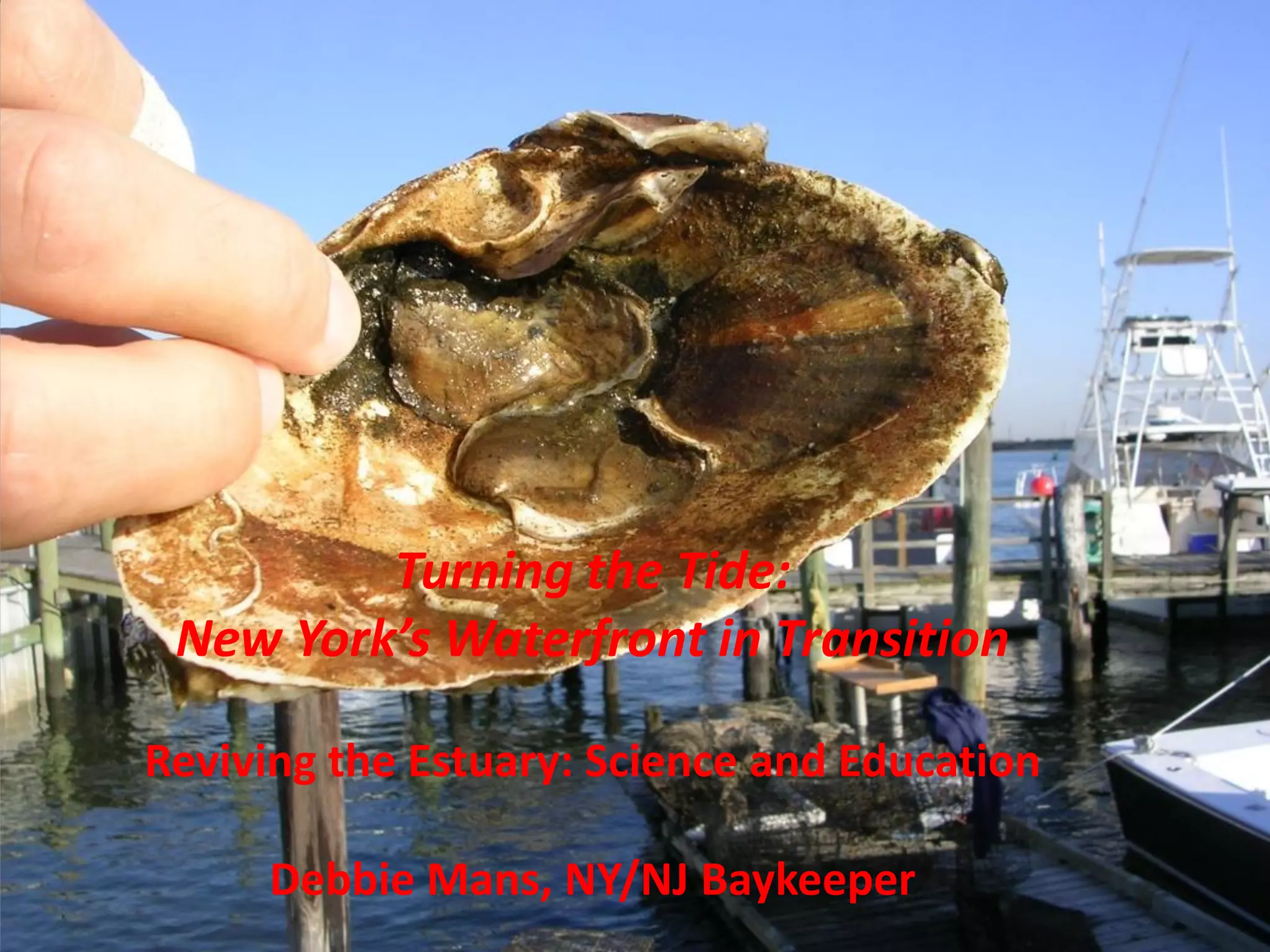
Turning the Tide:
 New York’s Waterfront in Transition

Reviving the Estuary: Science and Education

     Debbie Mans, NY/NJ Baykeeper
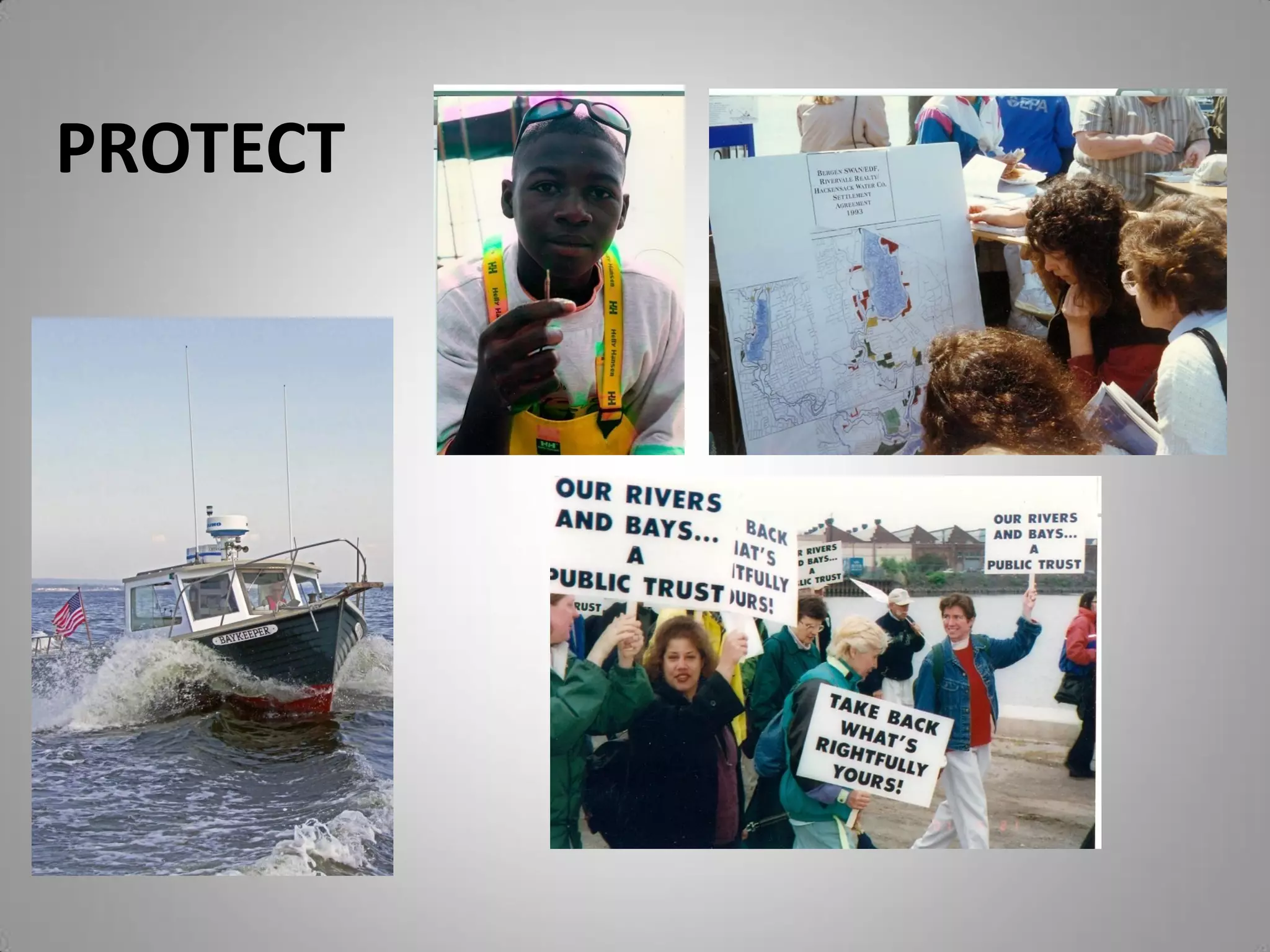
PROTECT
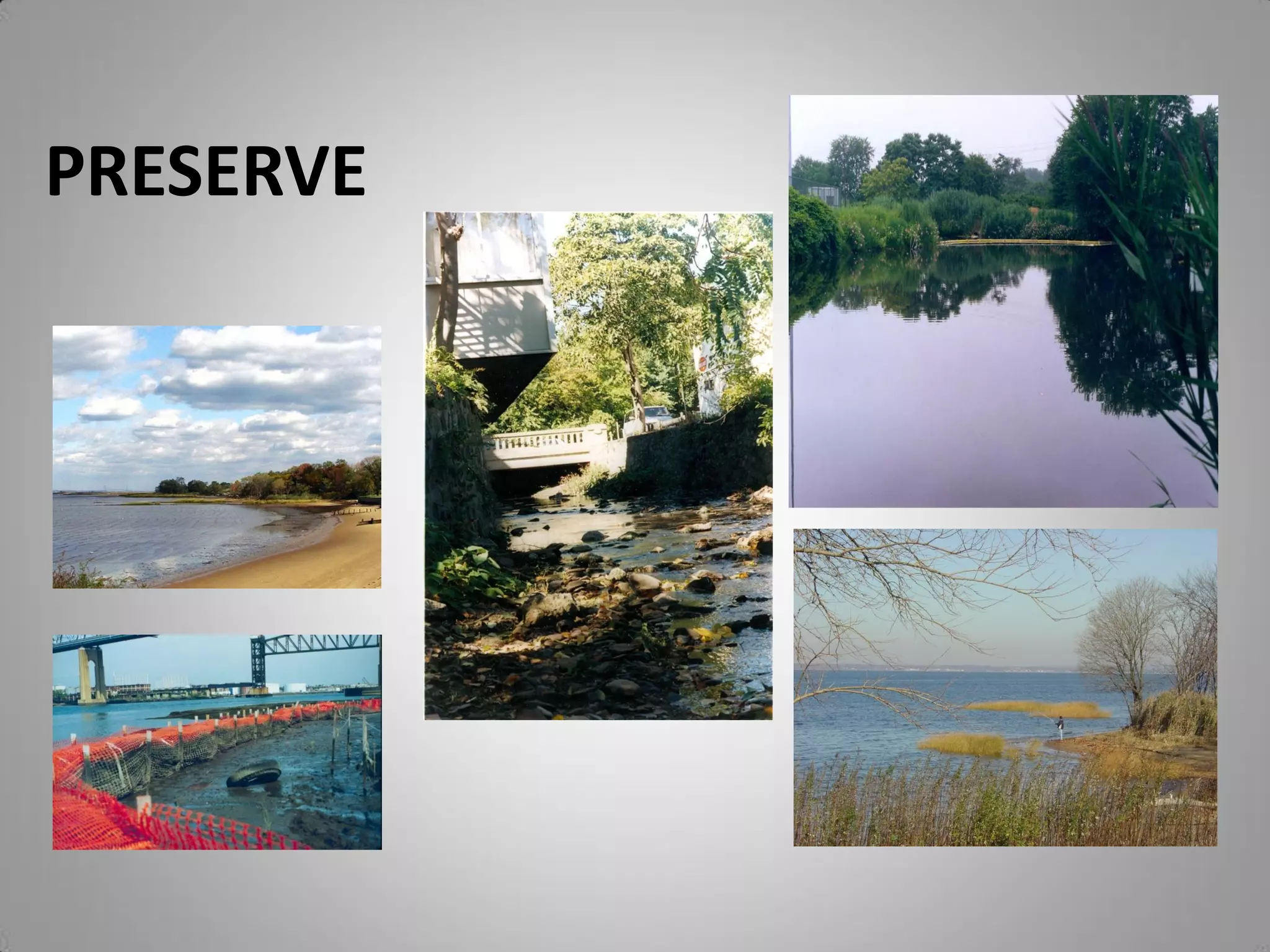
PRESERVE
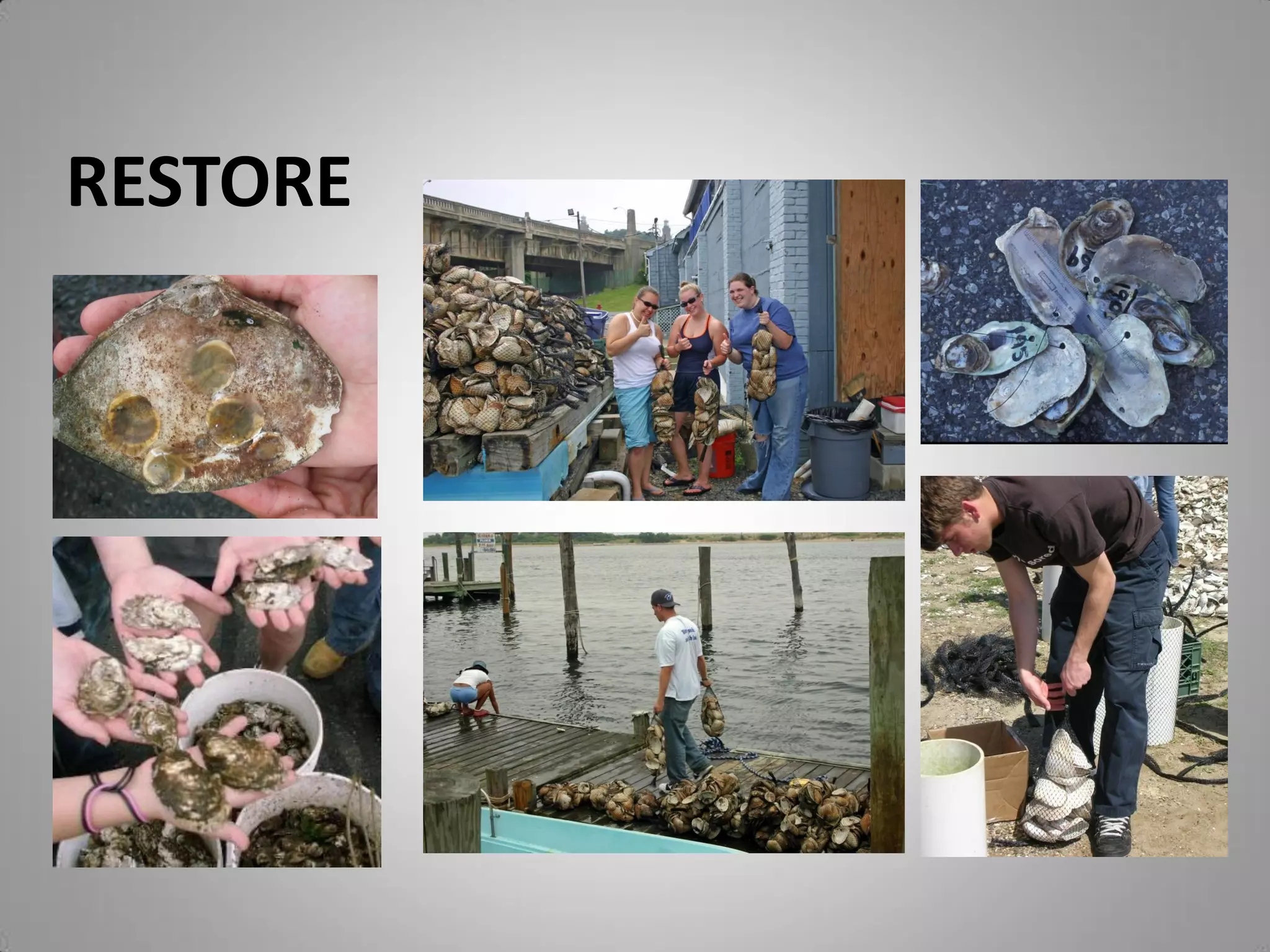
RESTORE
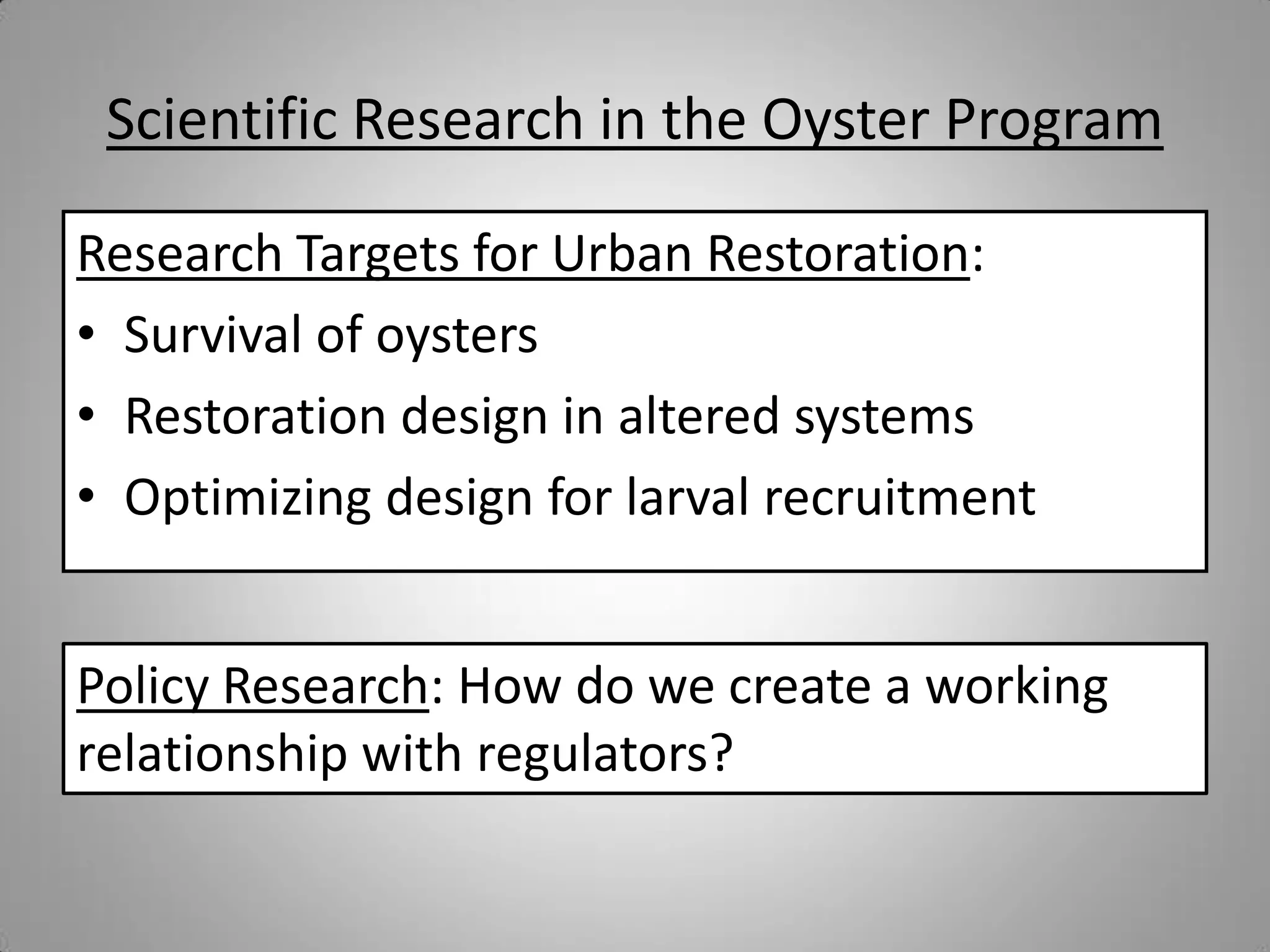
Scientific Research in the Oyster Program

Research Targets for Urban Restoration:
• Survival of oysters
• Restoration design in altered systems
• Optimizing design for larval recruitment


Policy Research: How do we create a working
relationship with regulators?
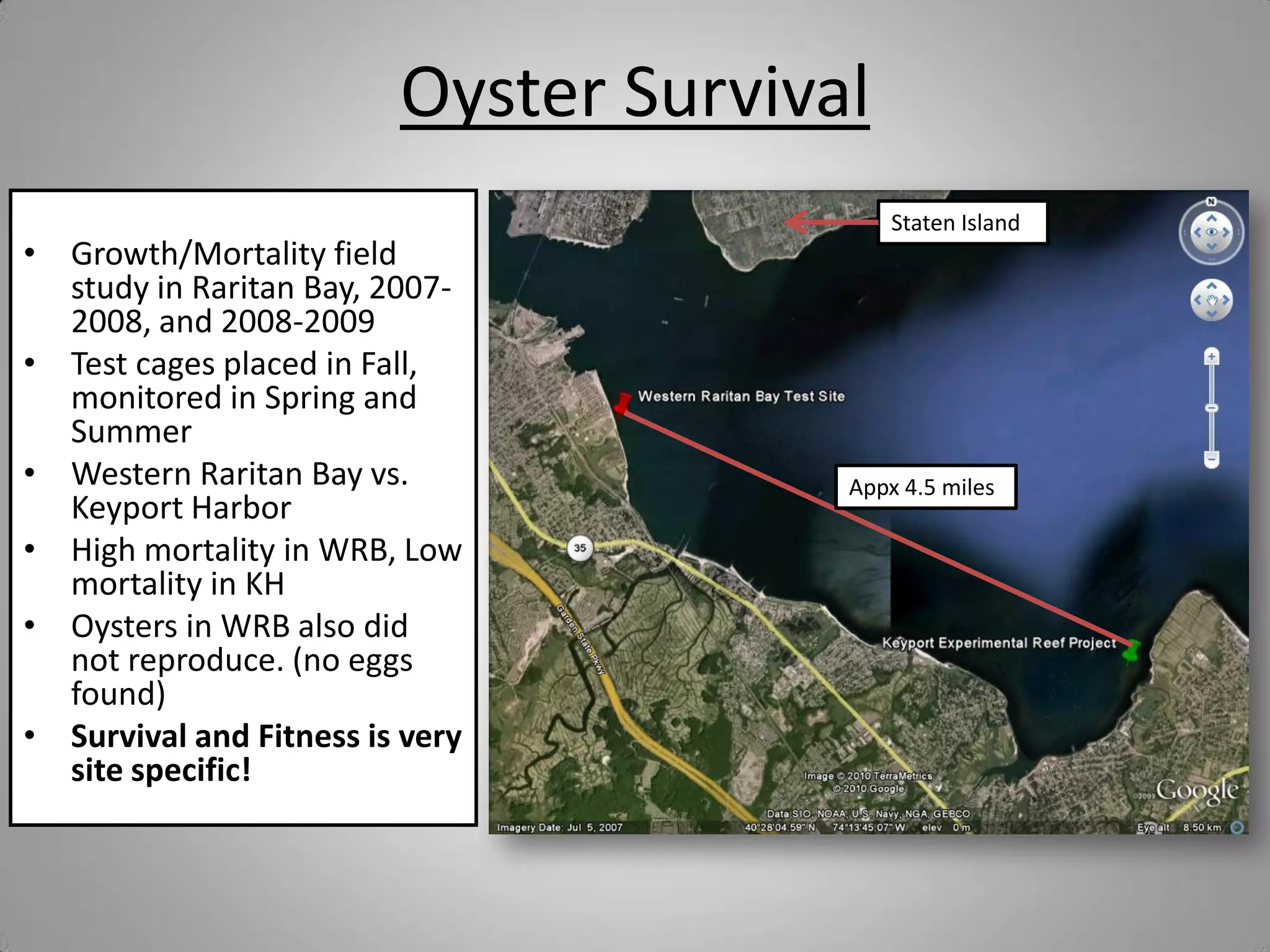
Oyster Survival
                                           Staten Island
• Growth/Mortality field
  study in Raritan Bay, 2007-
  2008, and 2008-2009
• Test cages placed in Fall,
  monitored in Spring and
  Summer
• Western Raritan Bay vs.              Appx 4.5 miles
  Keyport Harbor
• High mortality in WRB, Low
  mortality in KH
• Oysters in WRB also did
  not reproduce. (no eggs
  found)
• Survival and Fitness is very
  site specific!
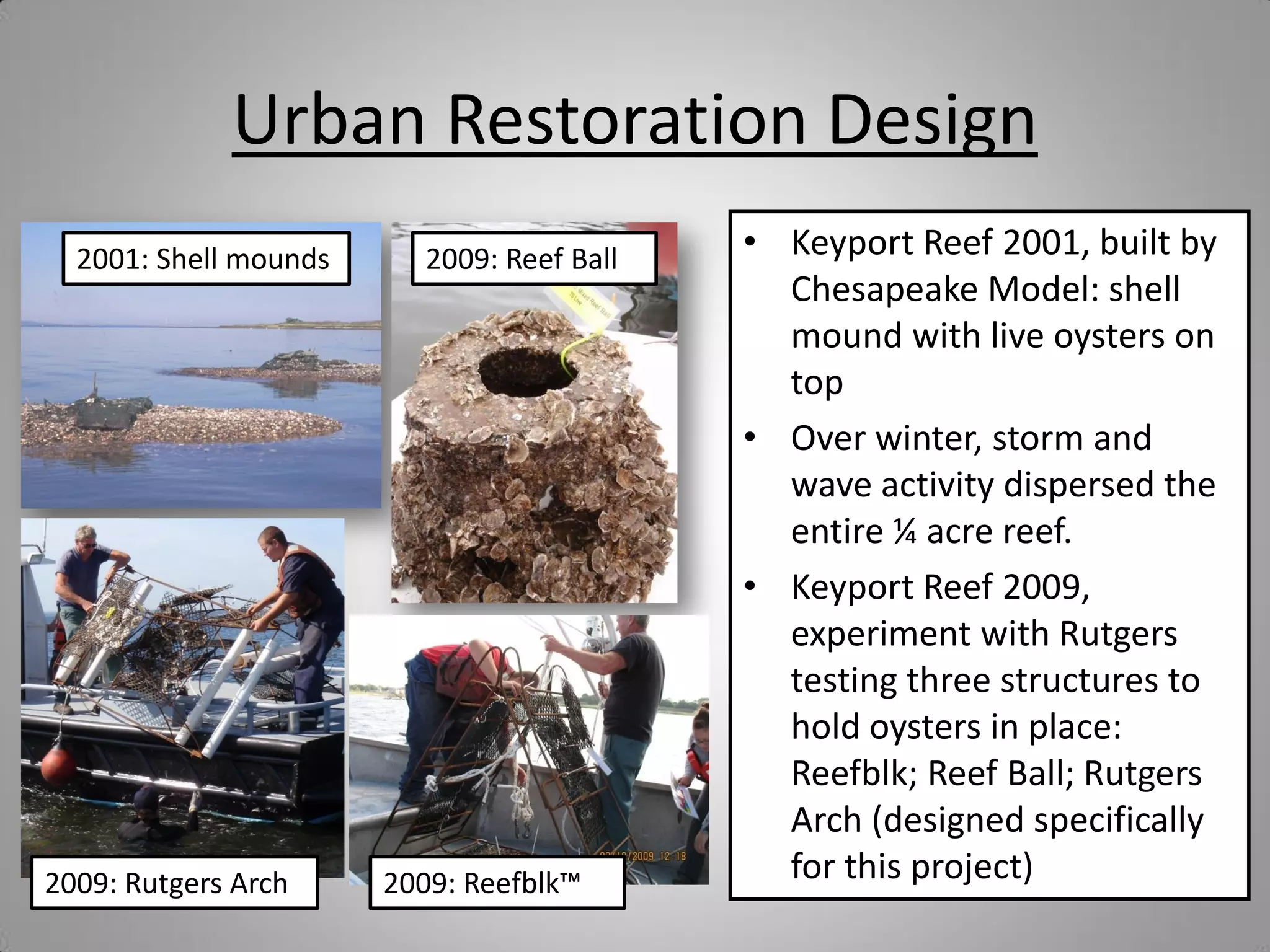
Urban Restoration Design
  2001: Shell mounds     2009: Reef Ball   • Keyport Reef 2001, built by
                                             Chesapeake Model: shell
                                             mound with live oysters on
                                             top
                                           • Over winter, storm and
                                             wave activity dispersed the
                                             entire ¼ acre reef.
                                           • Keyport Reef 2009,
                                             experiment with Rutgers
                                             testing three structures to
                                             hold oysters in place:
                                             Reefblk; Reef Ball; Rutgers
                                             Arch (designed specifically
2009: Rutgers Arch     2009: Reefblk™        for this project)
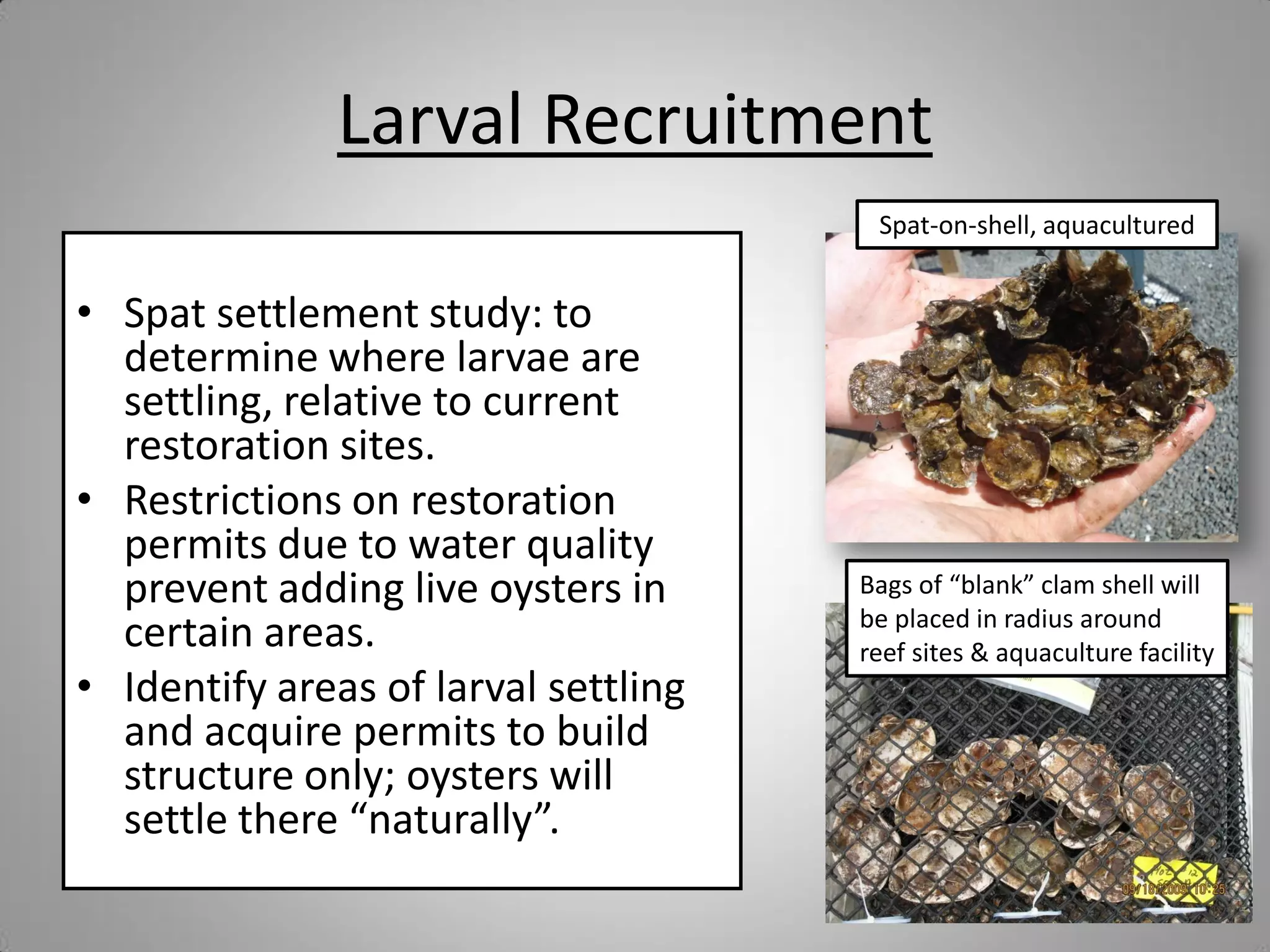
Larval Recruitment
                                       Spat-on-shell, aquacultured


• Spat settlement study: to
  determine where larvae are
  settling, relative to current
  restoration sites.
• Restrictions on restoration
  permits due to water quality
  prevent adding live oysters in      Bags of “blank” clam shell will
                                      be placed in radius around
  certain areas.                      reef sites & aquaculture facility
• Identify areas of larval settling
  and acquire permits to build
  structure only; oysters will
  settle there “naturally”.
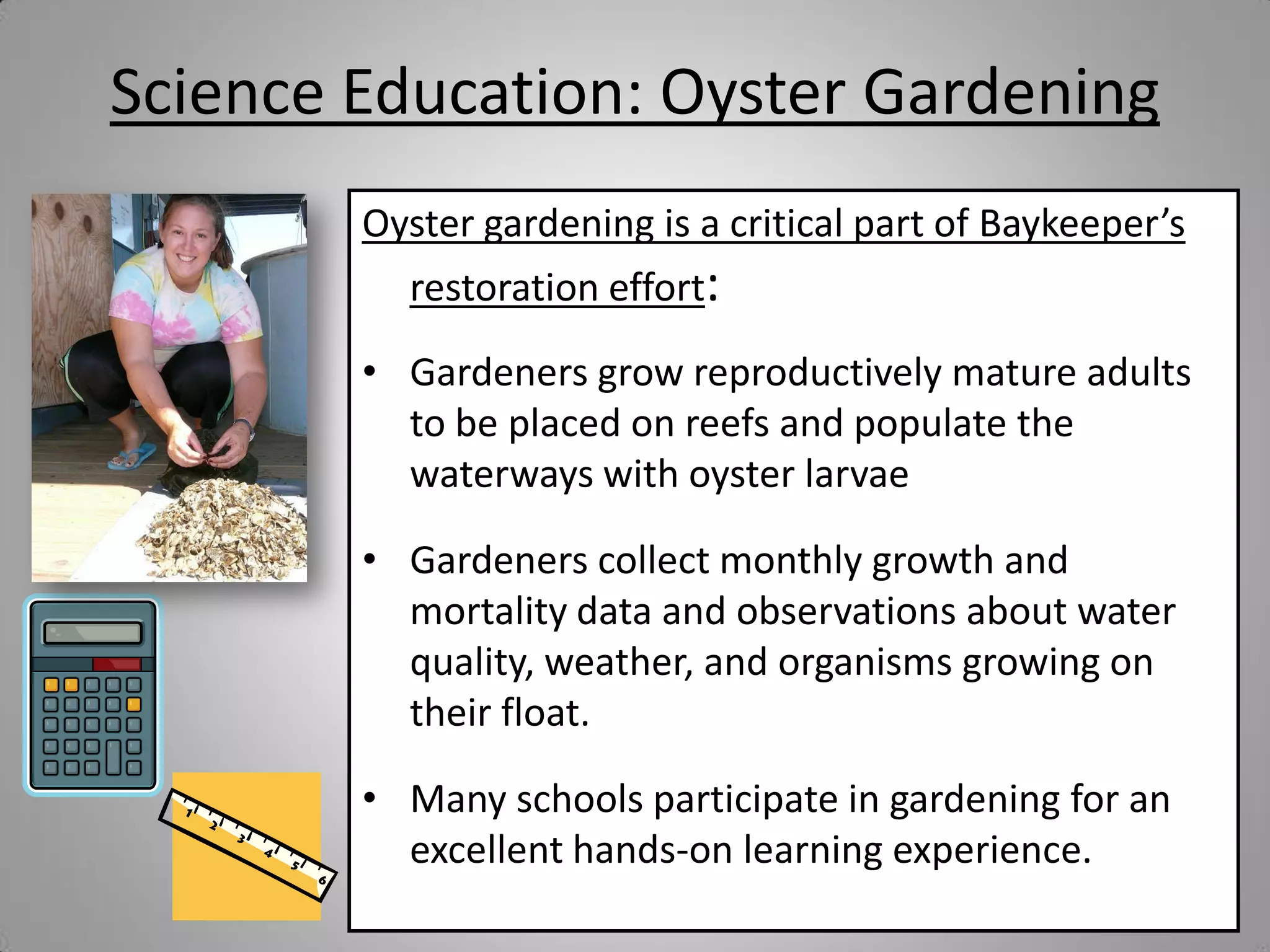
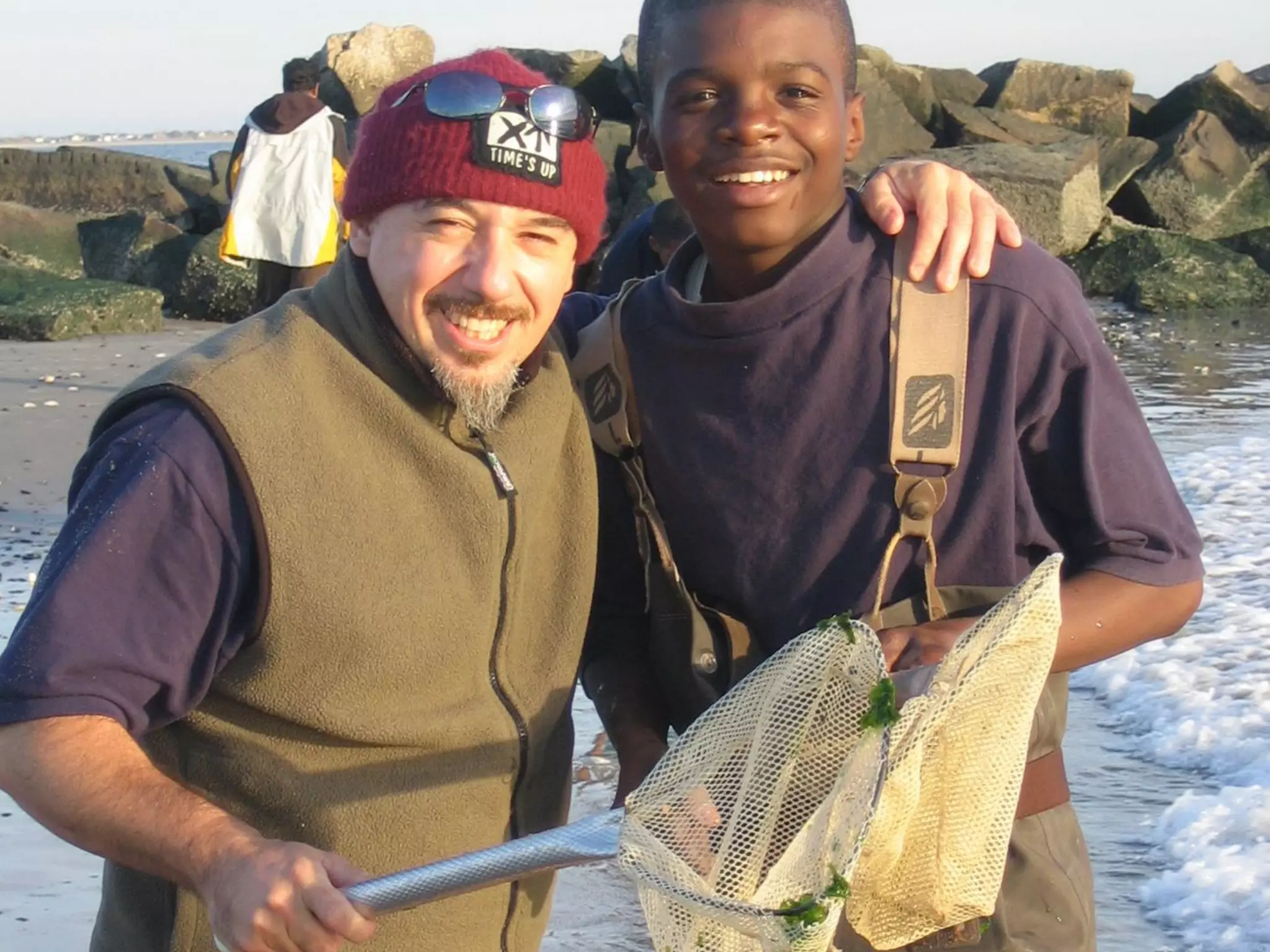
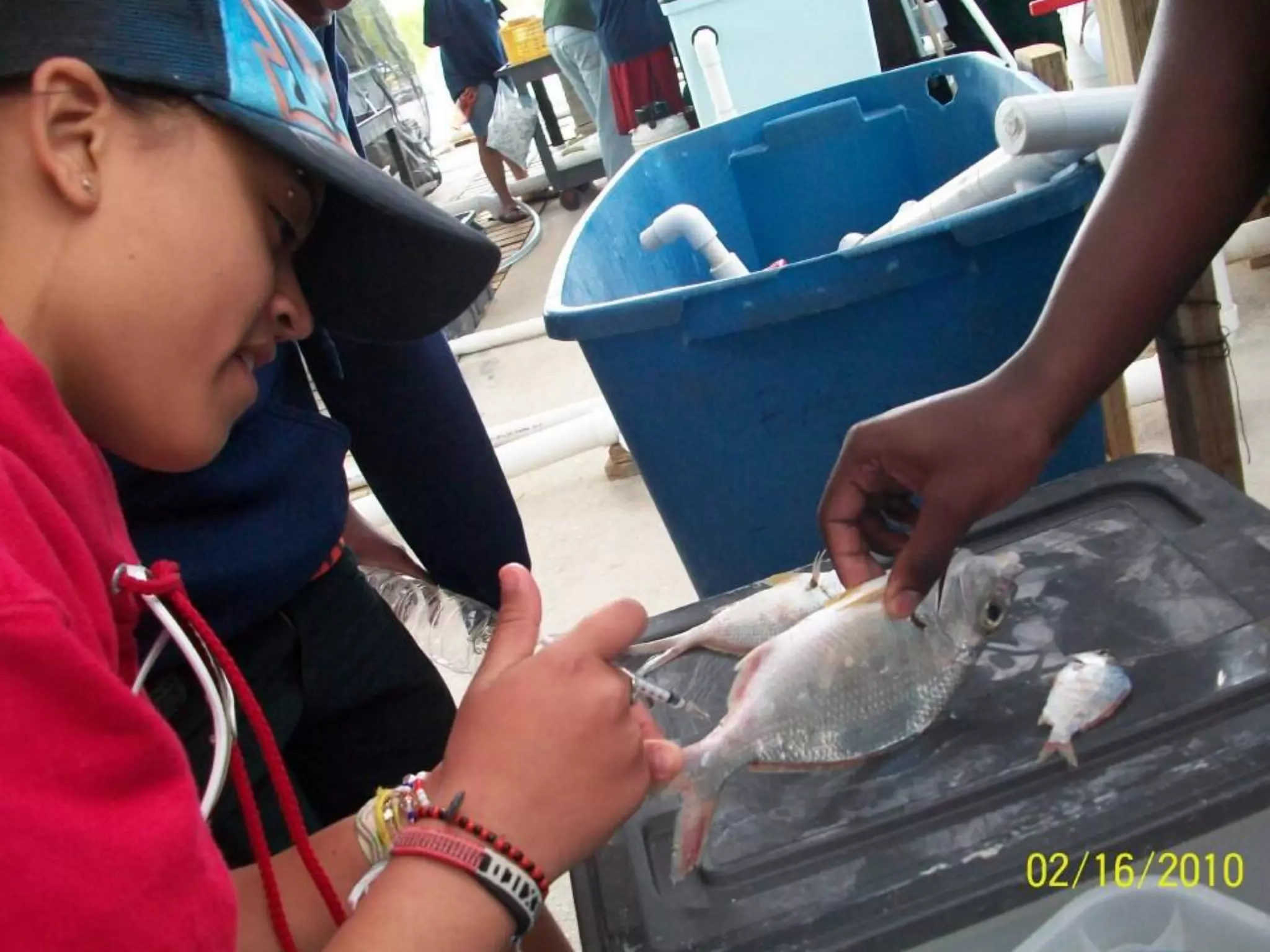
Science Education: Oyster Gardening
        Oyster gardening is a critical part of Baykeeper’s
          restoration effort:

        • Gardeners grow reproductively mature adults
          to be placed on reefs and populate the
          waterways with oyster larvae

        • Gardeners collect monthly growth and
          mortality data and observations about water
          quality, weather, and organisms growing on
          their float.

        • Many schools participate in gardening for an
          excellent hands-on learning experience.
Interdisciplinary Science
Oyster gardening experience provides opportunities for
  education in many disciplines:
   – Math & Statistics: measuring and calculating averages, percentages, change in
      rate over time
   – Biology: observation of oyster health, anatomy and function of oysters, oyster life
      cycle
   – Ecology: observing interactions of organisms within the garden, identifying
      predators vs. prey, symbiotic/parasitic relationships
   – Chemistry: water quality monitoring          can be conducted in addition to the growth
      and mortality measurements
   – Engineering & Physics: some locations require innovative ways to set up the
      garden and/or protect from vandalism, fast water, or other risks
   – History: oysters played a vital role in the history of New York City and Northern NJ
   – Economics: comparing the value of reefs as an industry vs. a natural
      resource; supply & demand; crash of the oyster industry in the HRE
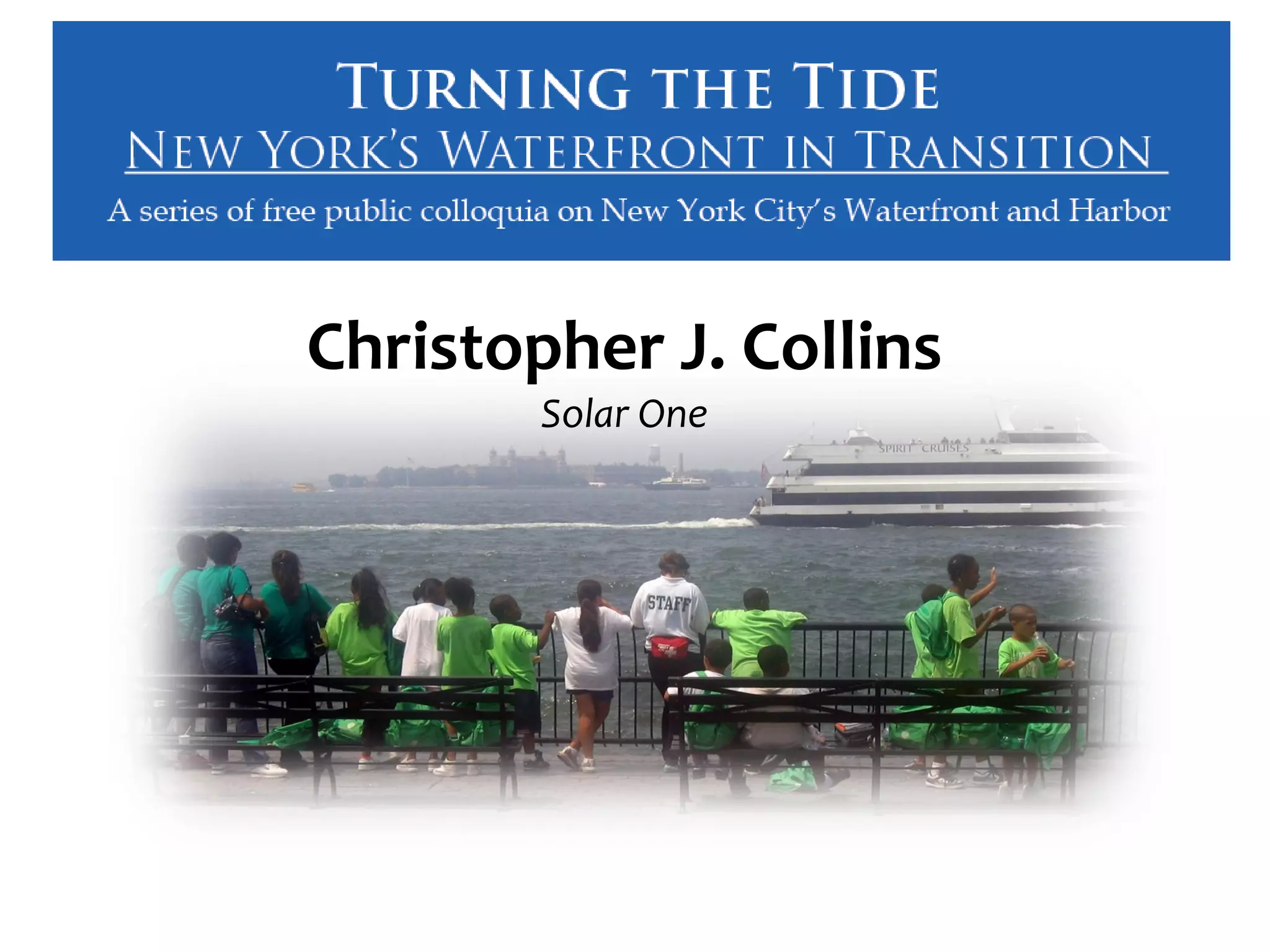
Christopher J. Collins
        Solar One
Solar One Presentation

     April 28, 2010
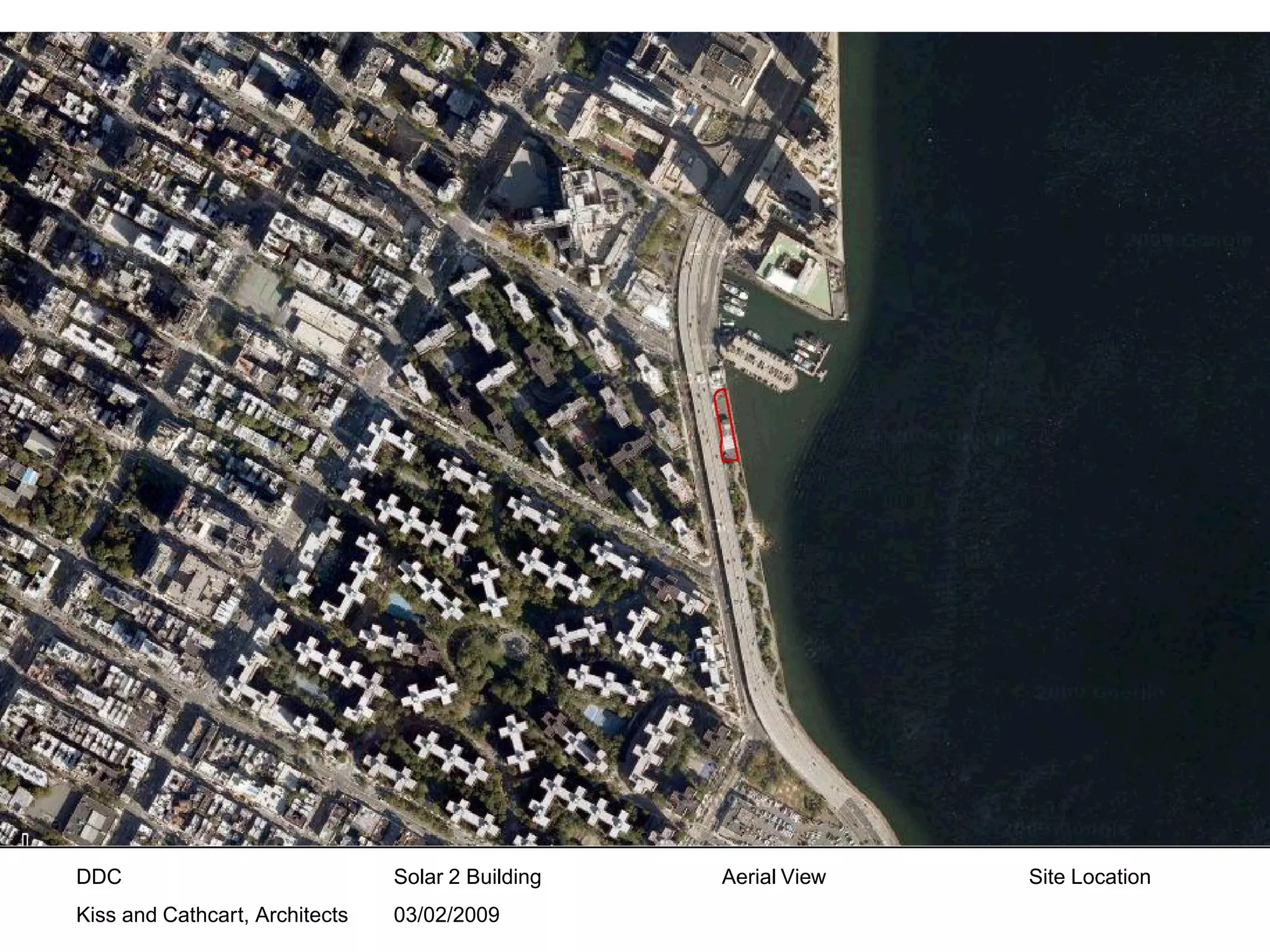
DDC                             Solar 2 Building   Aerial View   Site Location
Kiss and Cathcart, Architects   03/02/2009
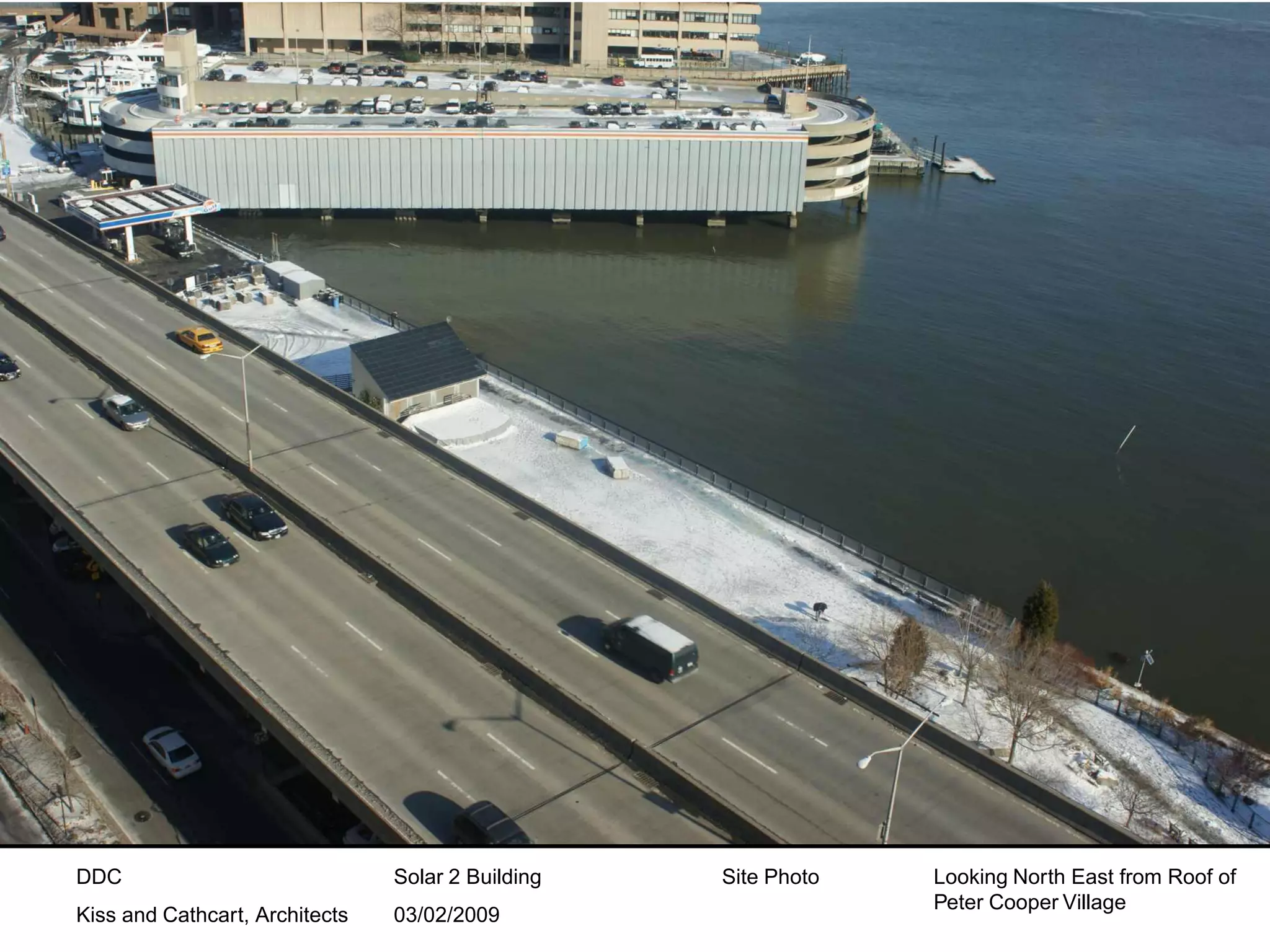
DDC                             Solar 2 Building   Site Photo   Looking North East from Roof of
                                                                Peter Cooper Village
Kiss and Cathcart, Architects   03/02/2009
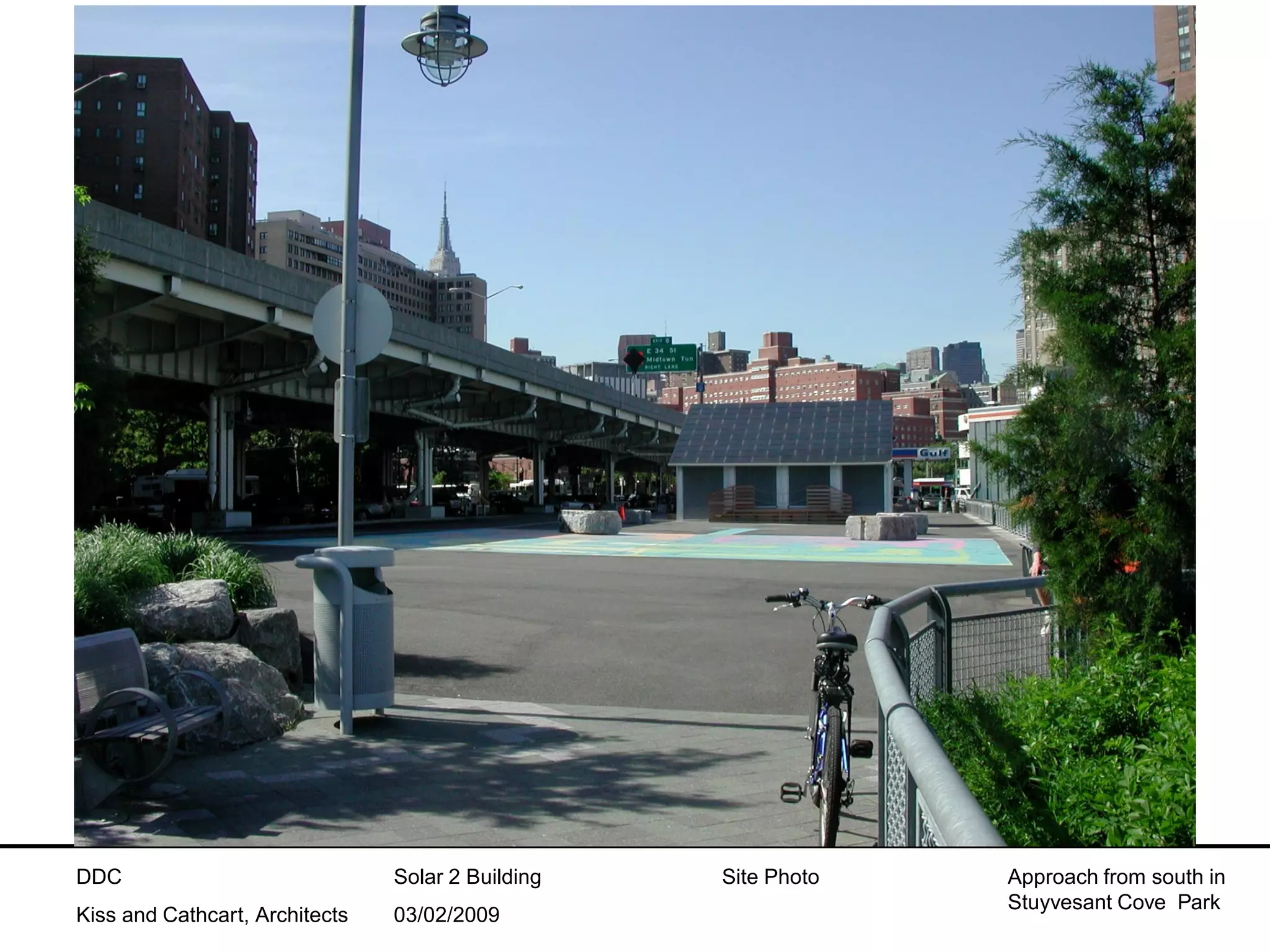
DDC                             Solar 2 Building   Site Photo   Approach from south in
                                                                Stuyvesant Cove Park
Kiss and Cathcart, Architects   03/02/2009
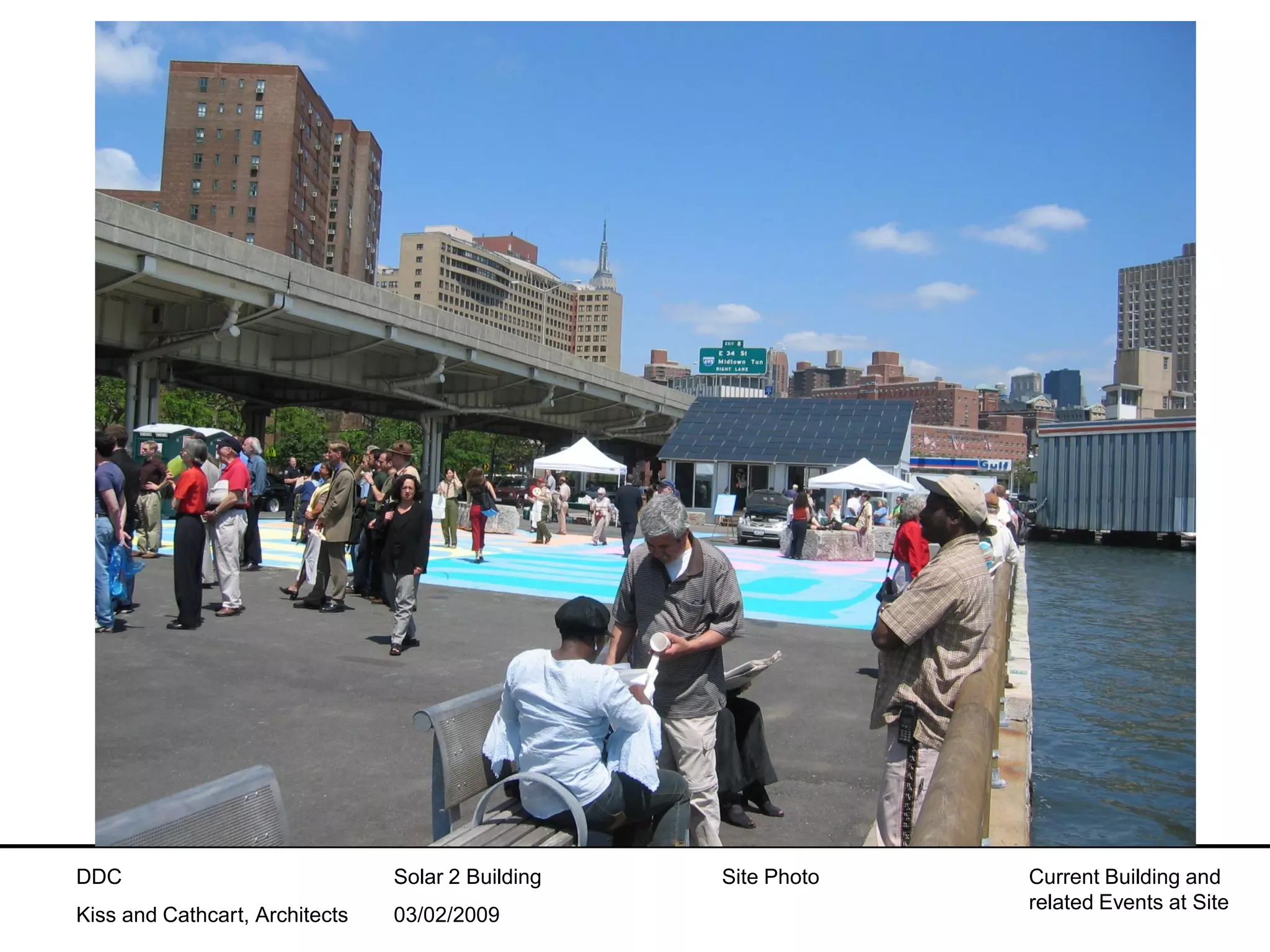
DDC                             Solar 2 Building   Site Photo   Current Building and
                                                                related Events at Site
Kiss and Cathcart, Architects   03/02/2009
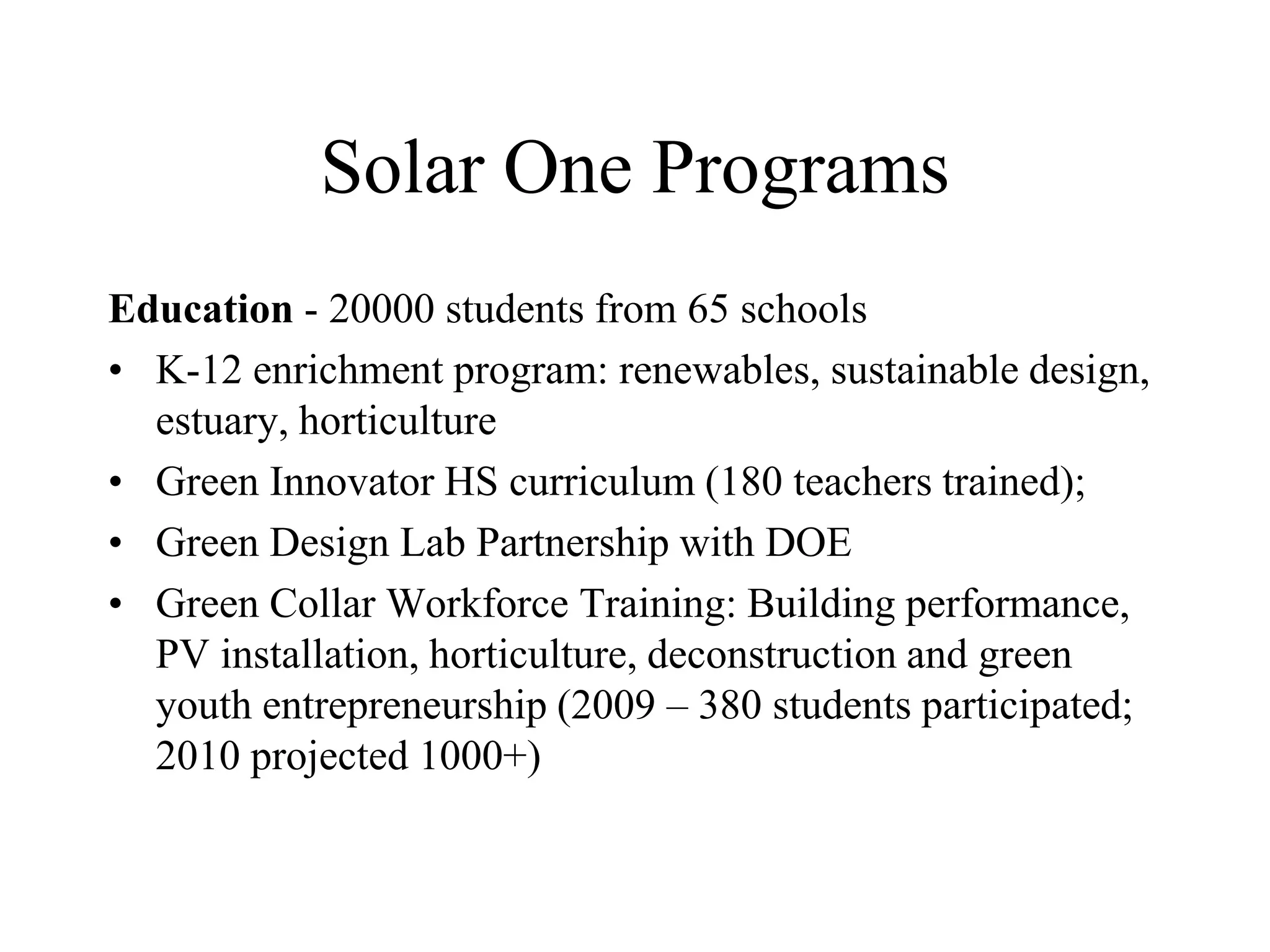
Solar One Programs
Education - 20000 students from 65 schools
• K-12 enrichment program: renewables, sustainable design,
  estuary, horticulture
• Green Innovator HS curriculum (180 teachers trained);
• Green Design Lab Partnership with DOE
• Green Collar Workforce Training: Building performance,
  PV installation, horticulture, deconstruction and green
  youth entrepreneurship (2009 – 380 students participated;
  2010 projected 1000+)
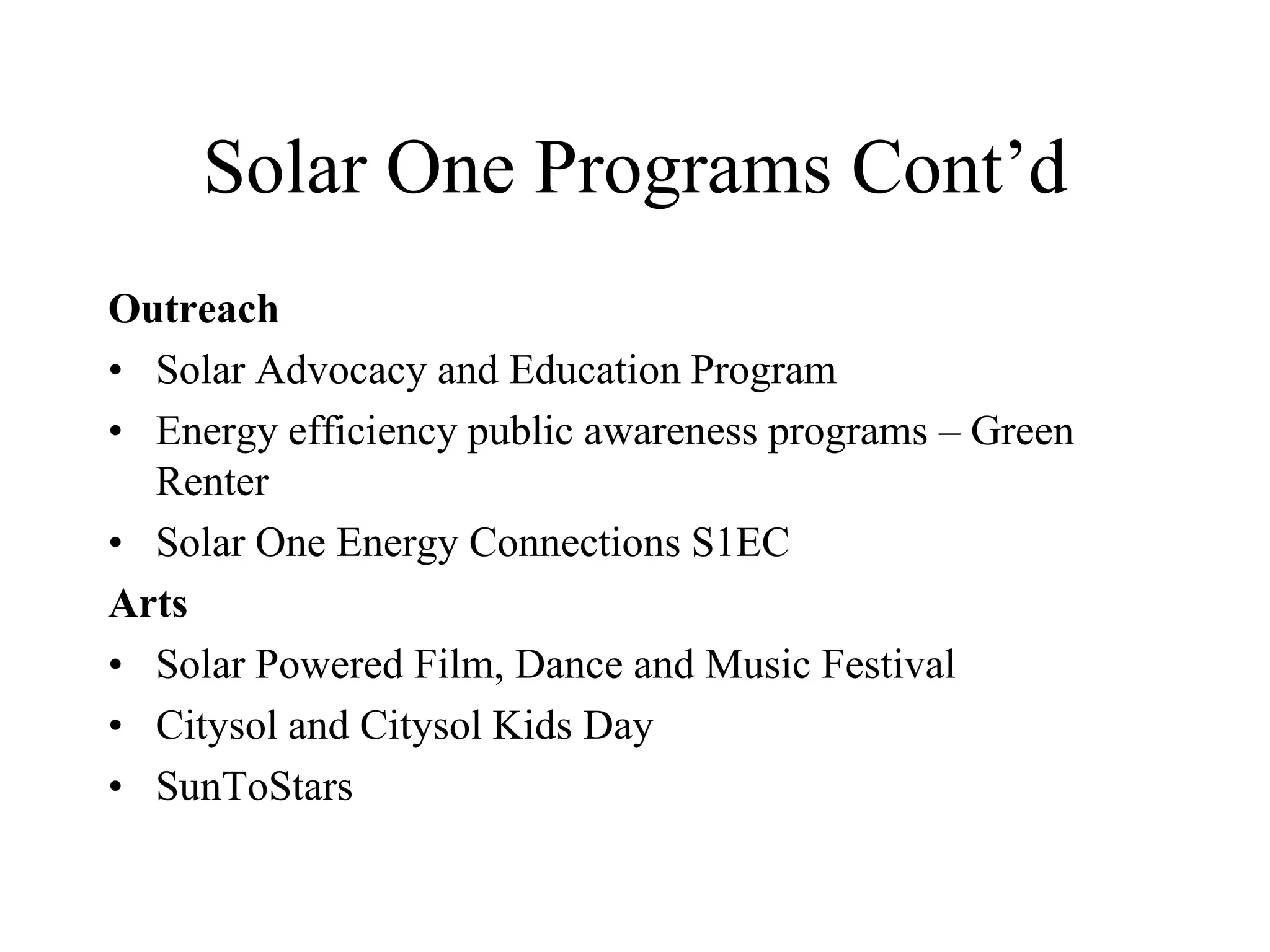
Solar One Programs Cont’d
Outreach
• Solar Advocacy and Education Program
• Energy efficiency public awareness programs – Green
  Renter
• Solar One Energy Connections S1EC
Arts
• Solar Powered Film, Dance and Music Festival
• Citysol and Citysol Kids Day
• SunToStars
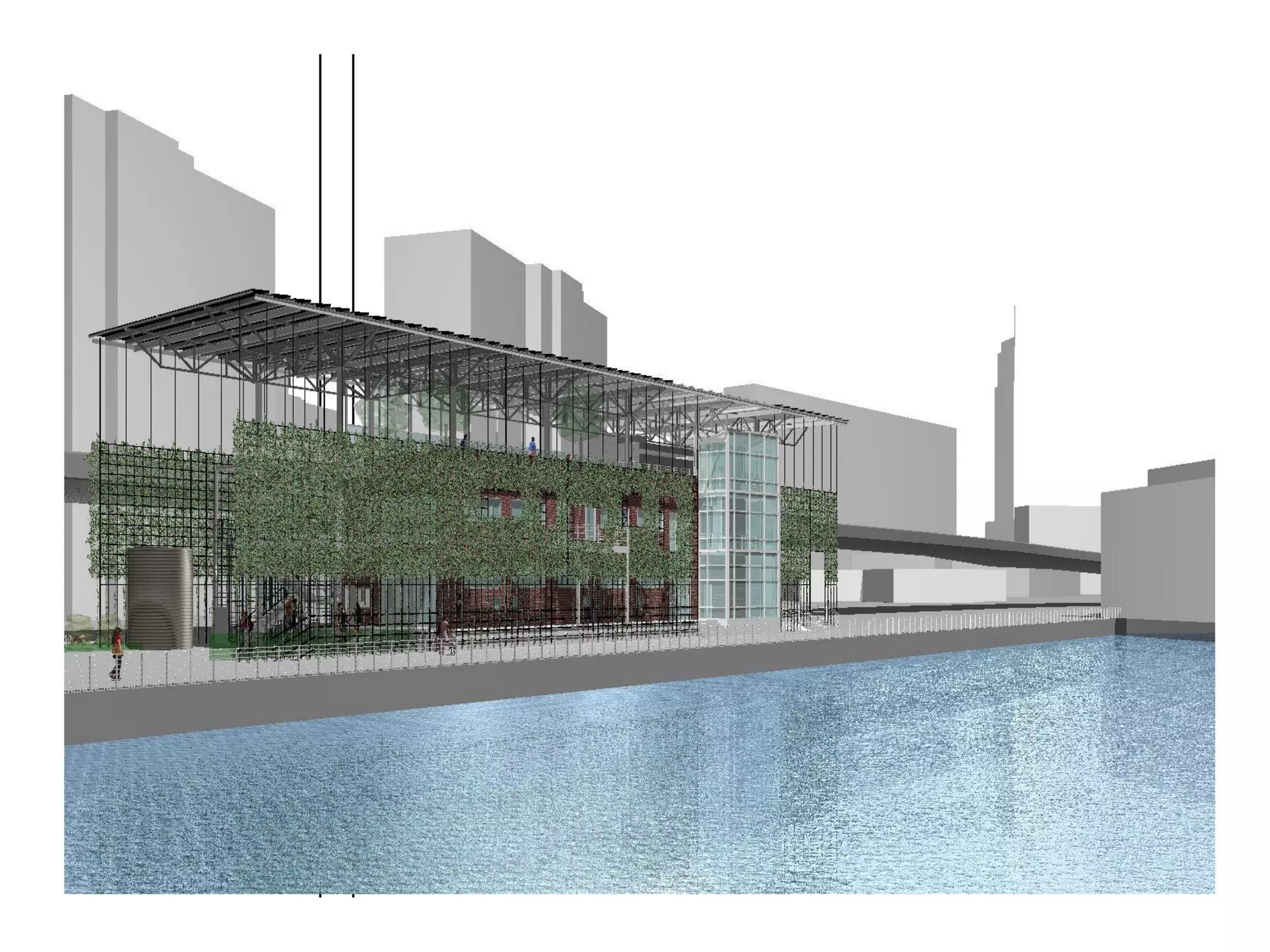
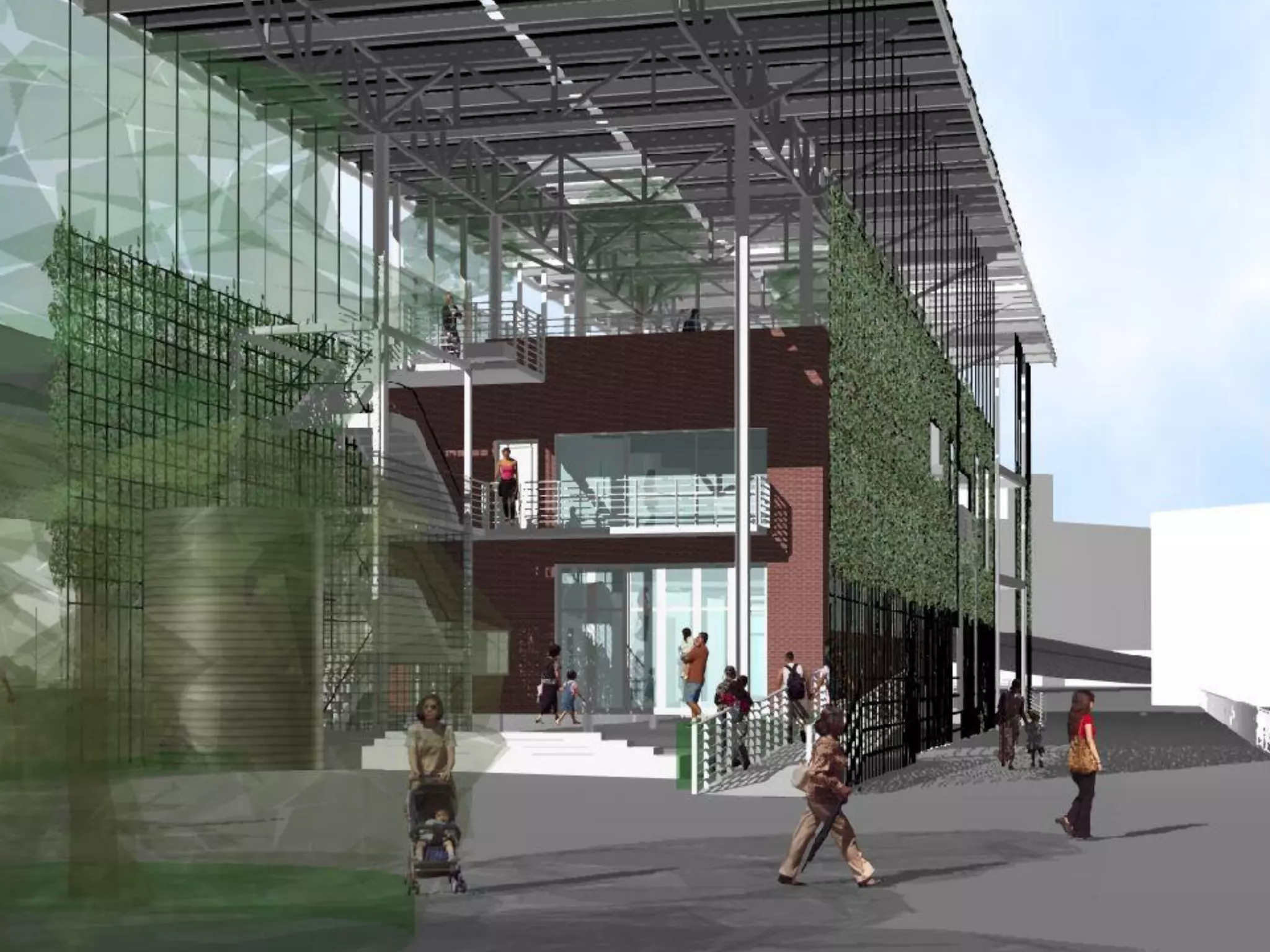
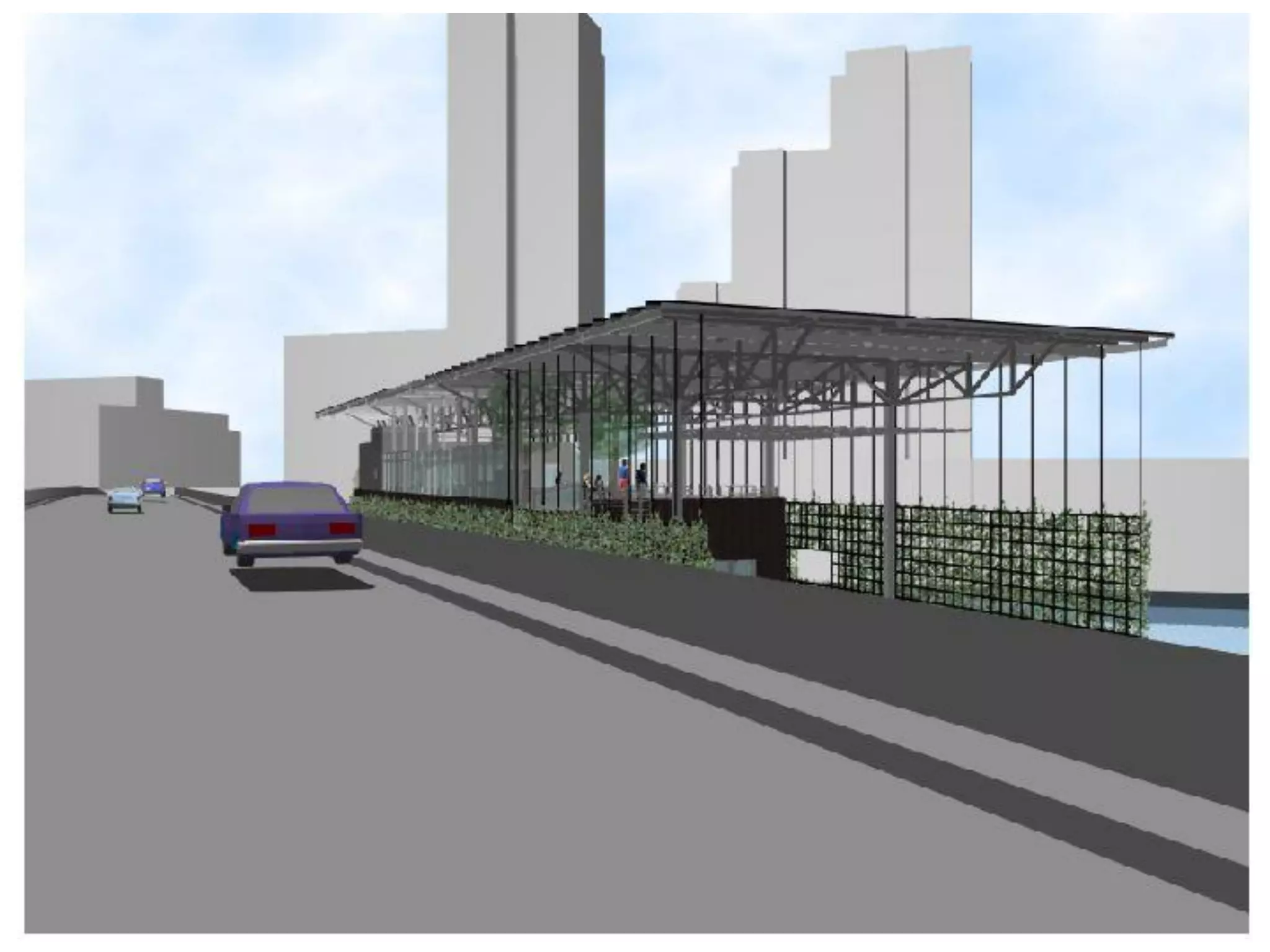
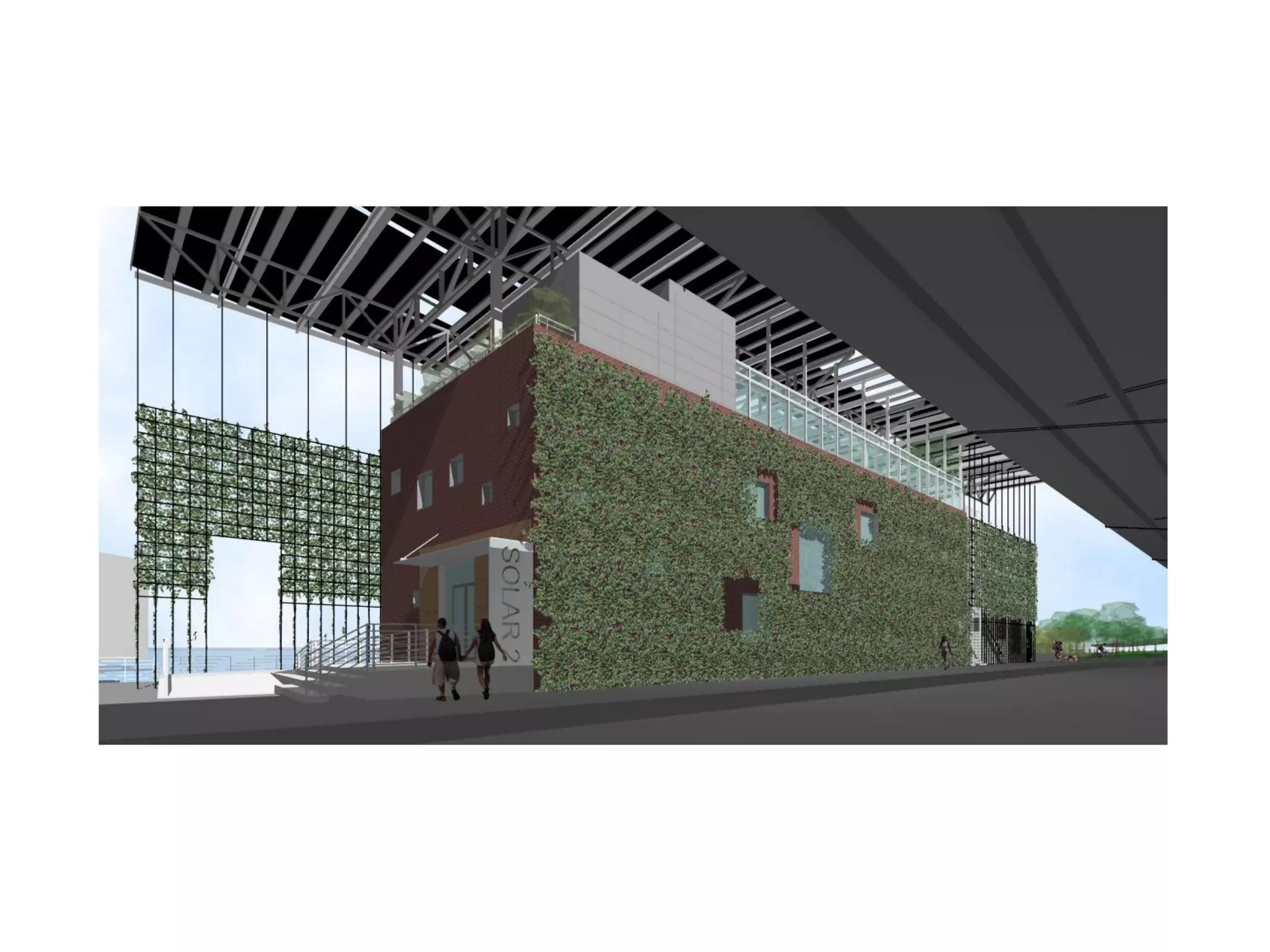
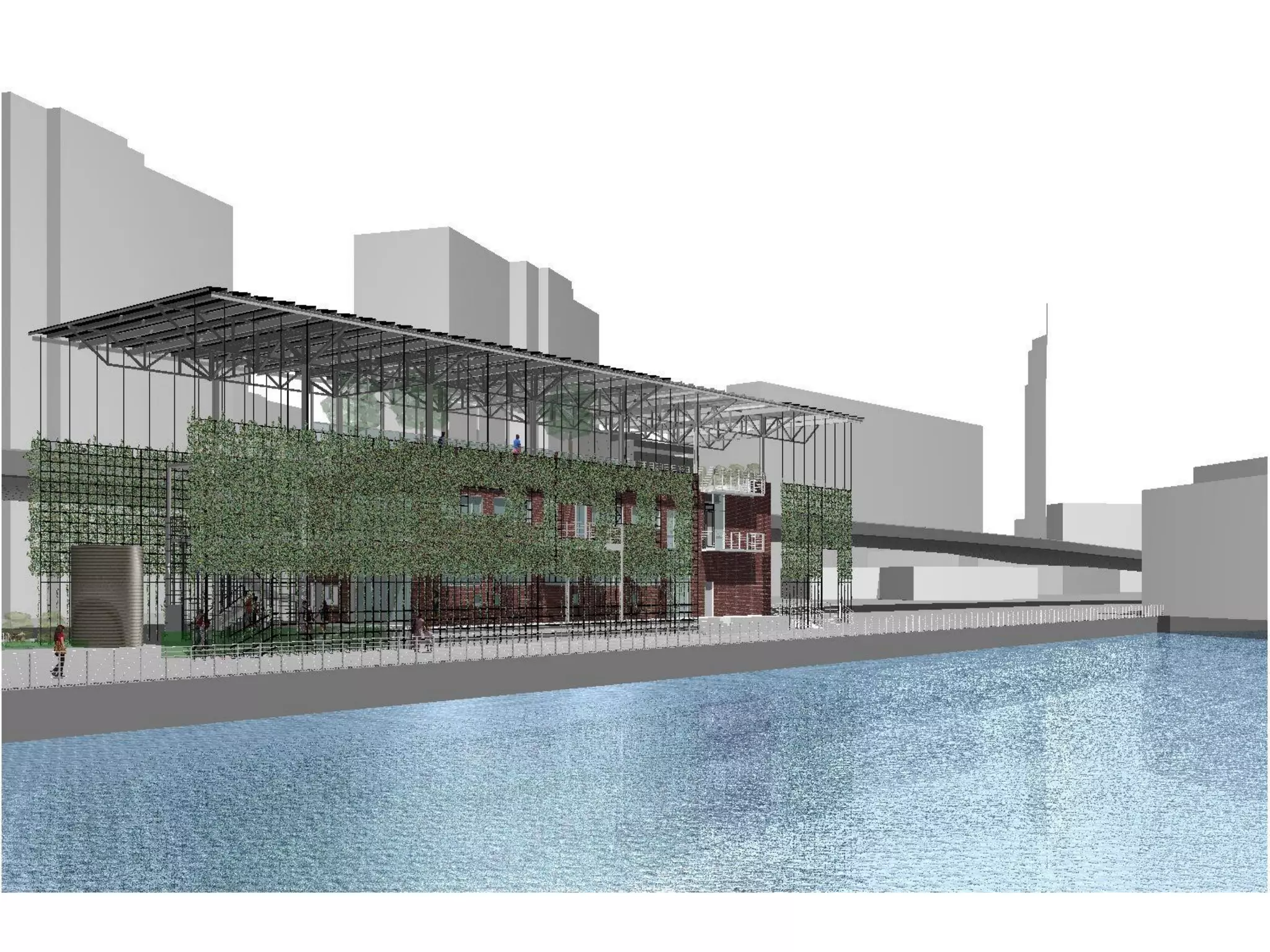
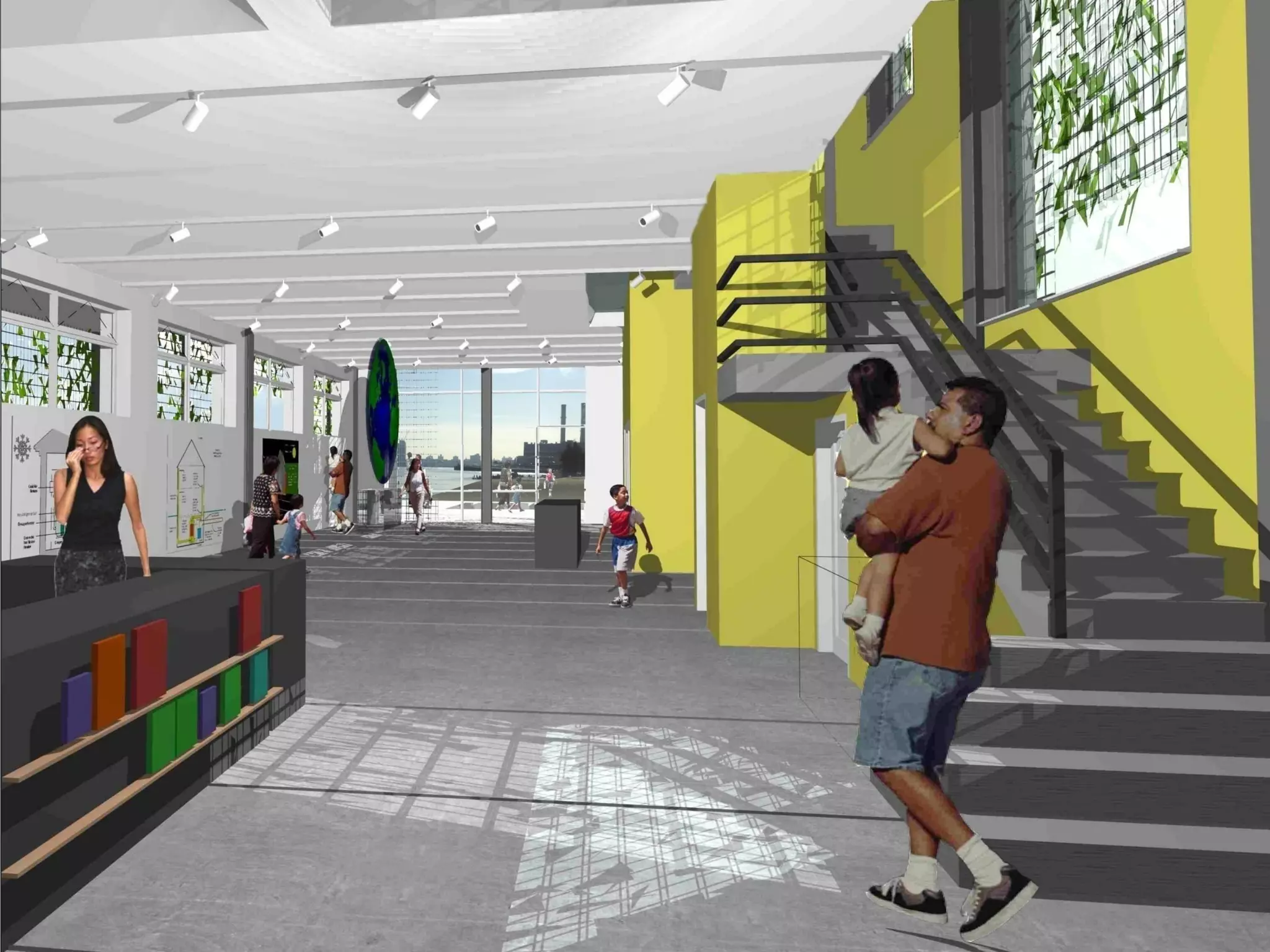
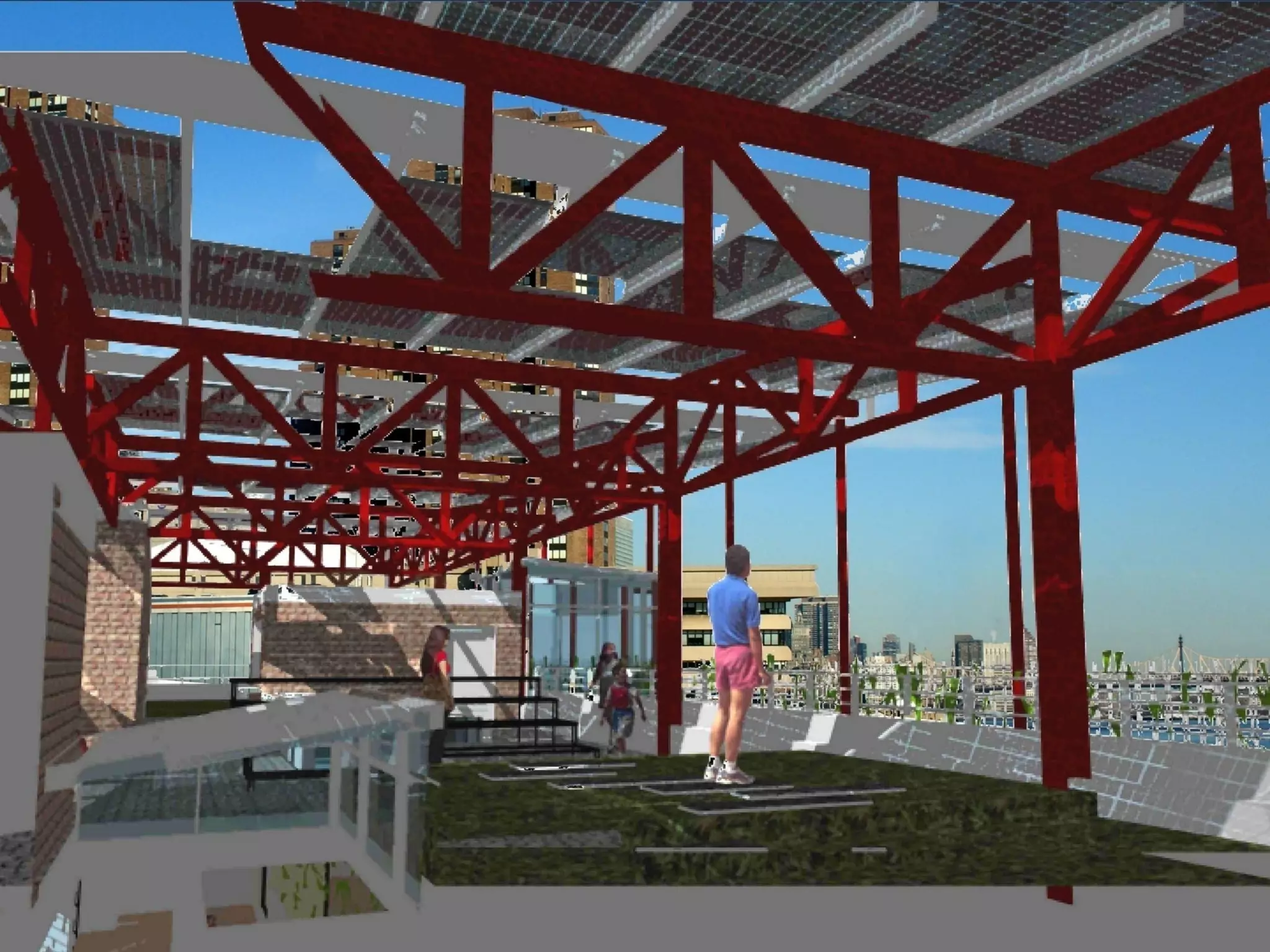
Solar 2
• NYC’s first carbon neutral, net zero energy building –
  building generates all of the energy it uses from the
  92.6kW PV solar array on its roof
• First building of its kind in the Northeast
• Addresses the issues of climate change, energy
  independence and CO2 emissions
• Living building
• A place to articulate the goals and aims of the City’s
  PlaNYC
• Expanded programs
• Cutting edge exhibits
Solar 2 Timeline – “Shovel
             Ready” Project
•   Completed schematic design January 2009
•   Design development completed March 2009
•   Construction drawings completed Q1 2010
•   Bidding and contracts negotiations - Fall 2010
•   Start construction – Early 2011

NOTE: Project will generate 100-120 construction related
  union jobs for one year. Working with DEC for
  accelerated site remediation by Con Ed which will create
  yet additional jobs.
Broad Political Support
Solar 2 has secured broad political support with
  funding from:
• Mayor Bloomberg (PlaNYC Initiative)
• Congresswoman Carolyn Maloney
• State Senator Tom Duane
• Borough President Scott Stringer
• NYC Council Speaker Christine Quinn
• NYC Council member Dan Garodnick
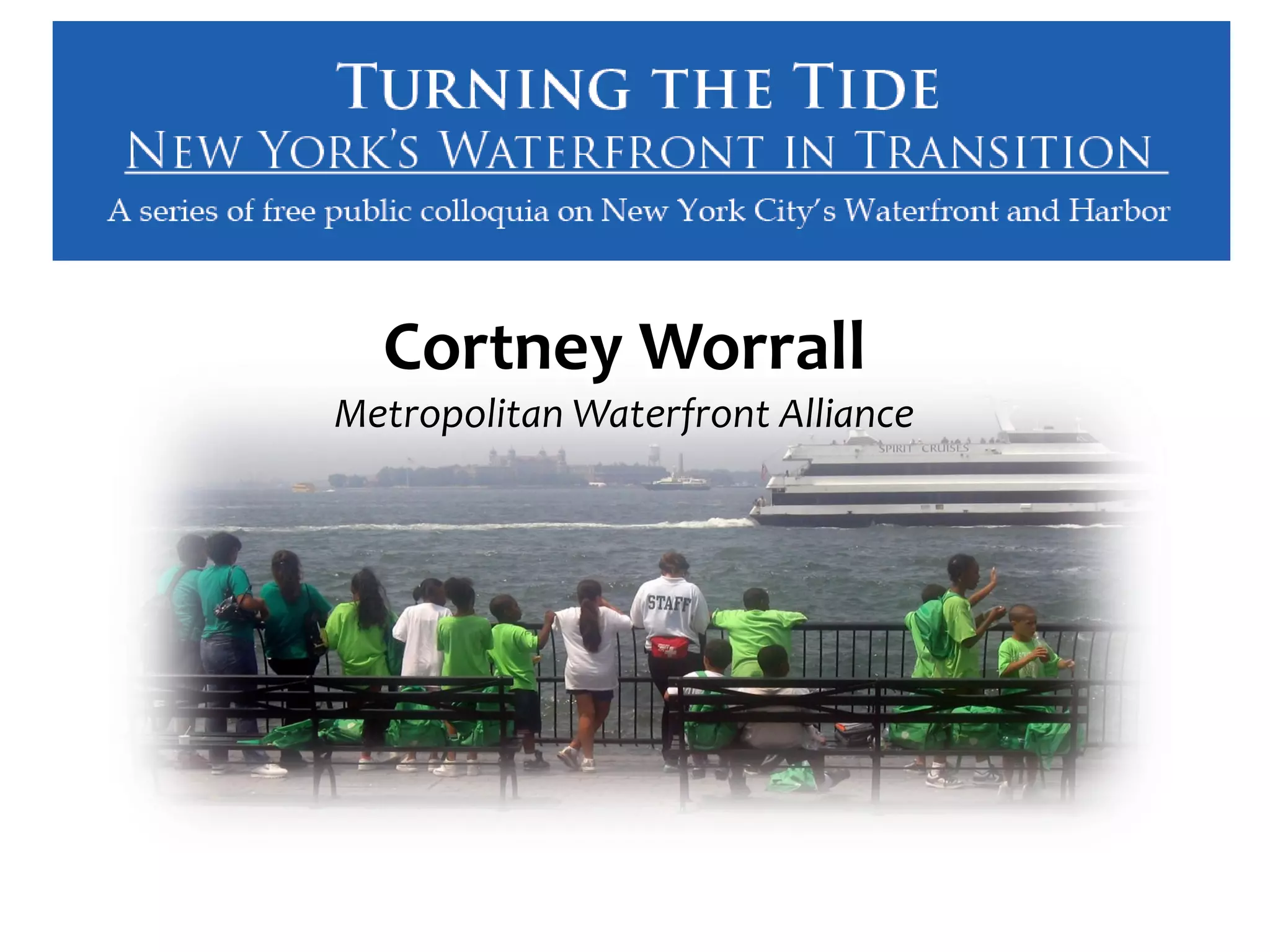
Cortney Worrall
Metropolitan Waterfront Alliance
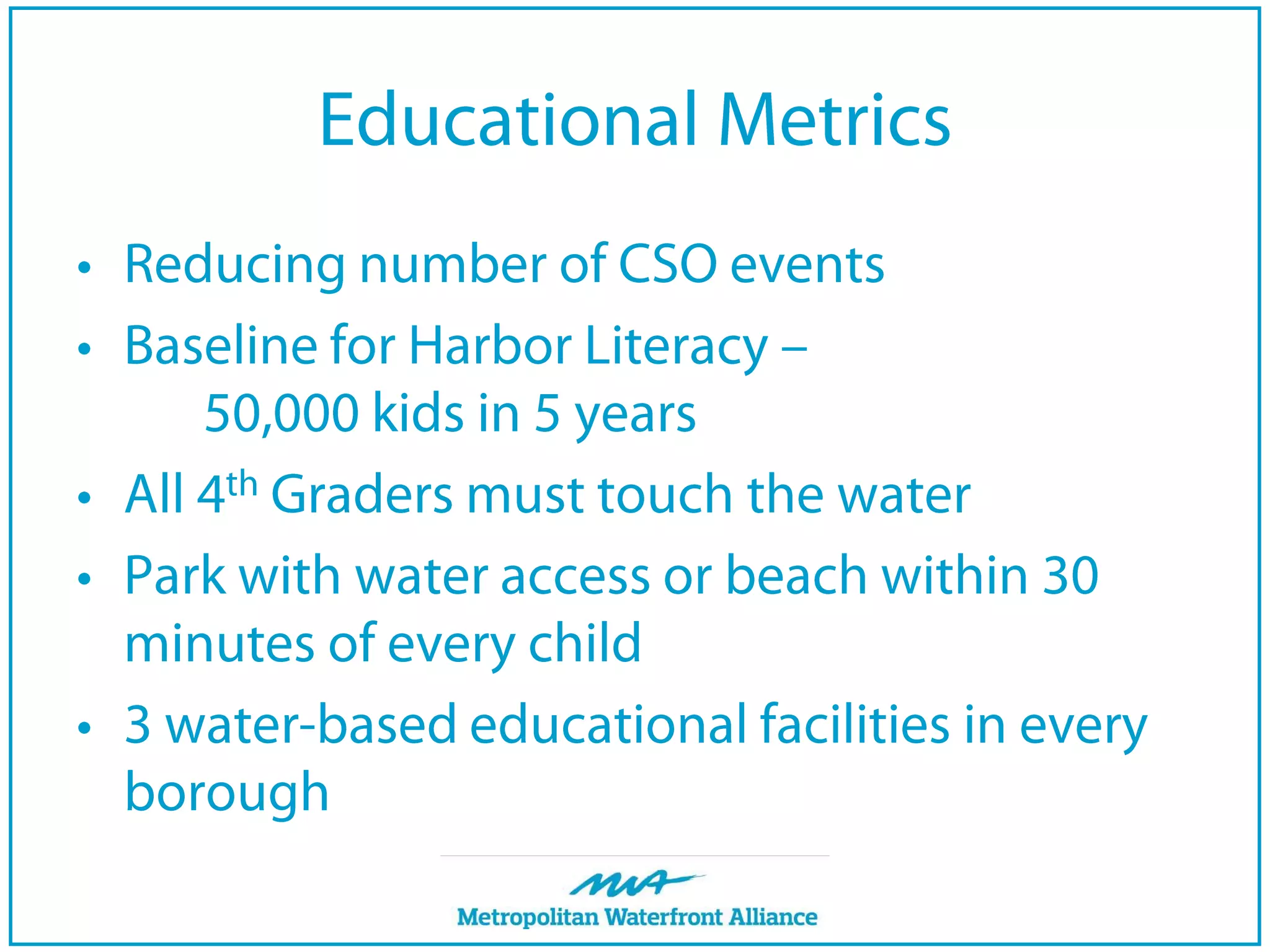
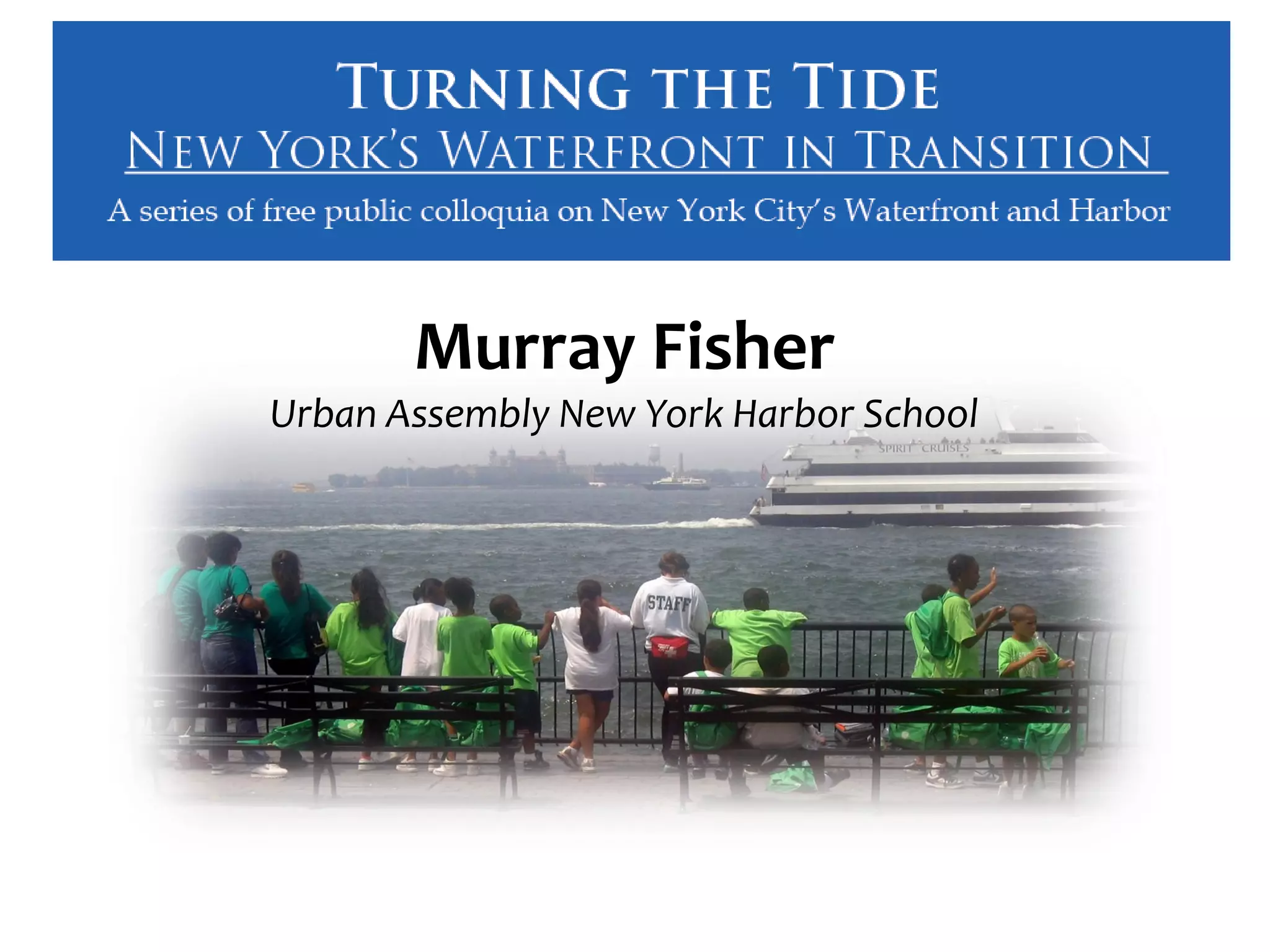
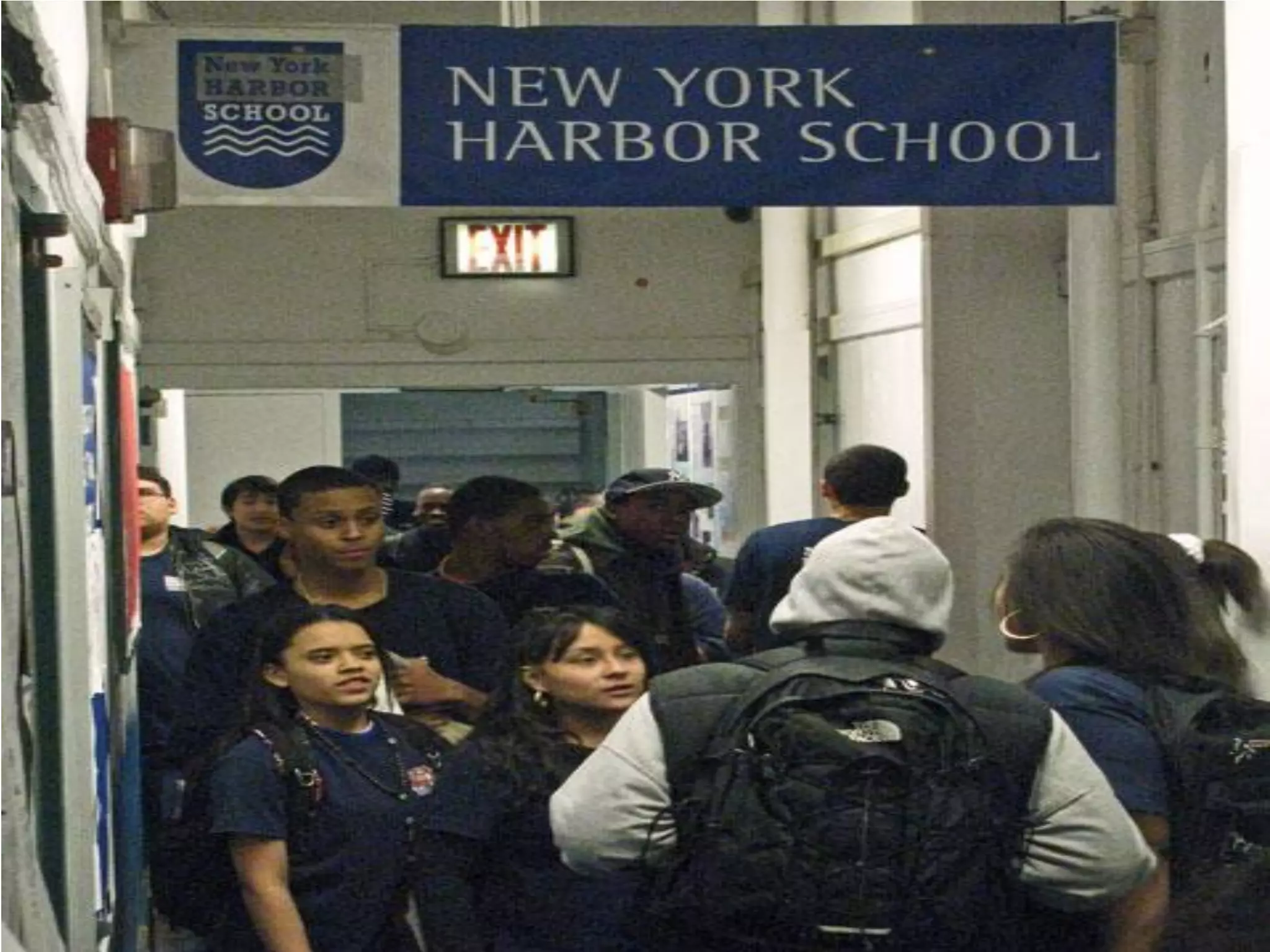
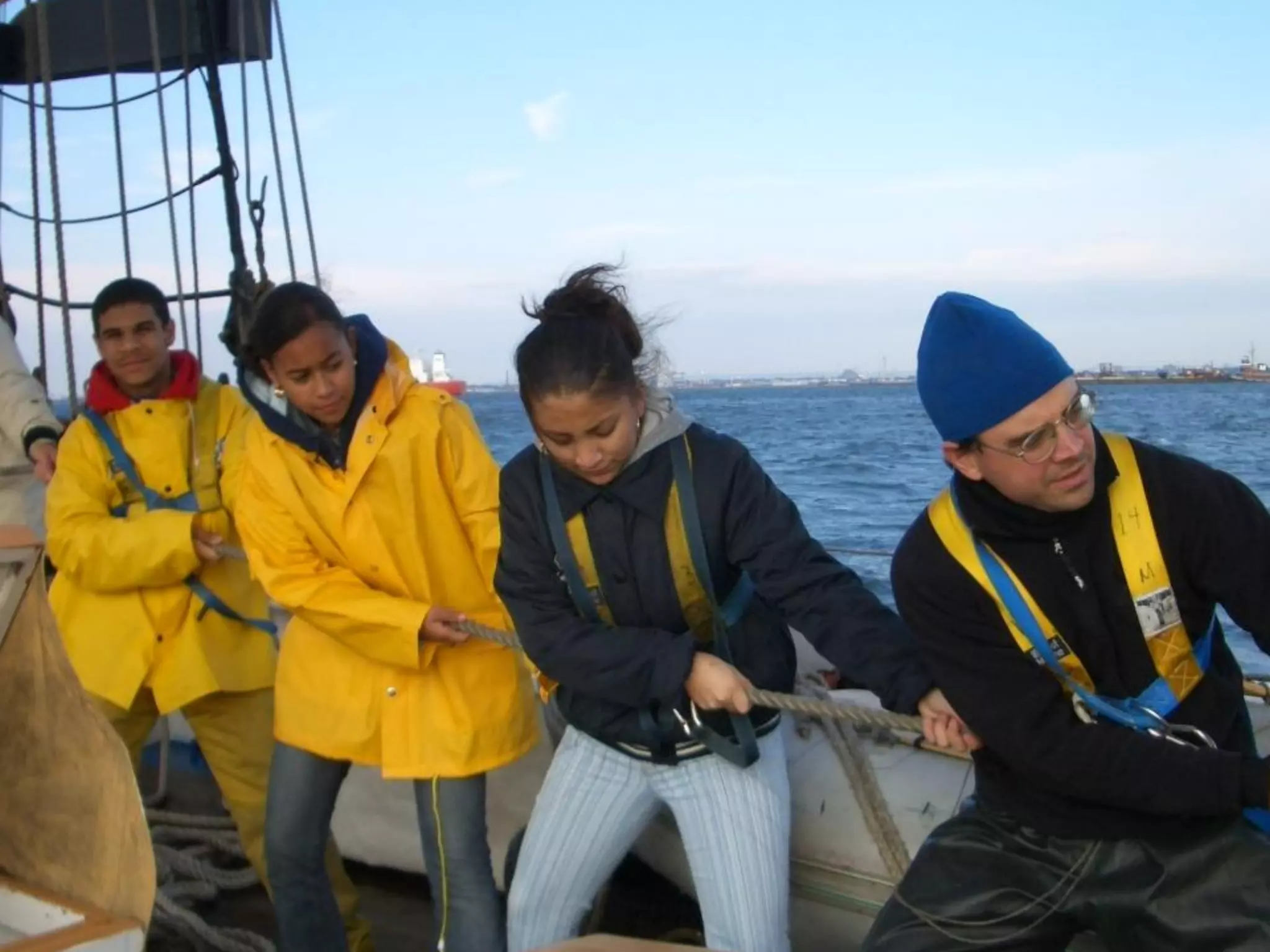
Murray Fisher
Urban Assembly New York Harbor School
Marine Science
Marine Technology
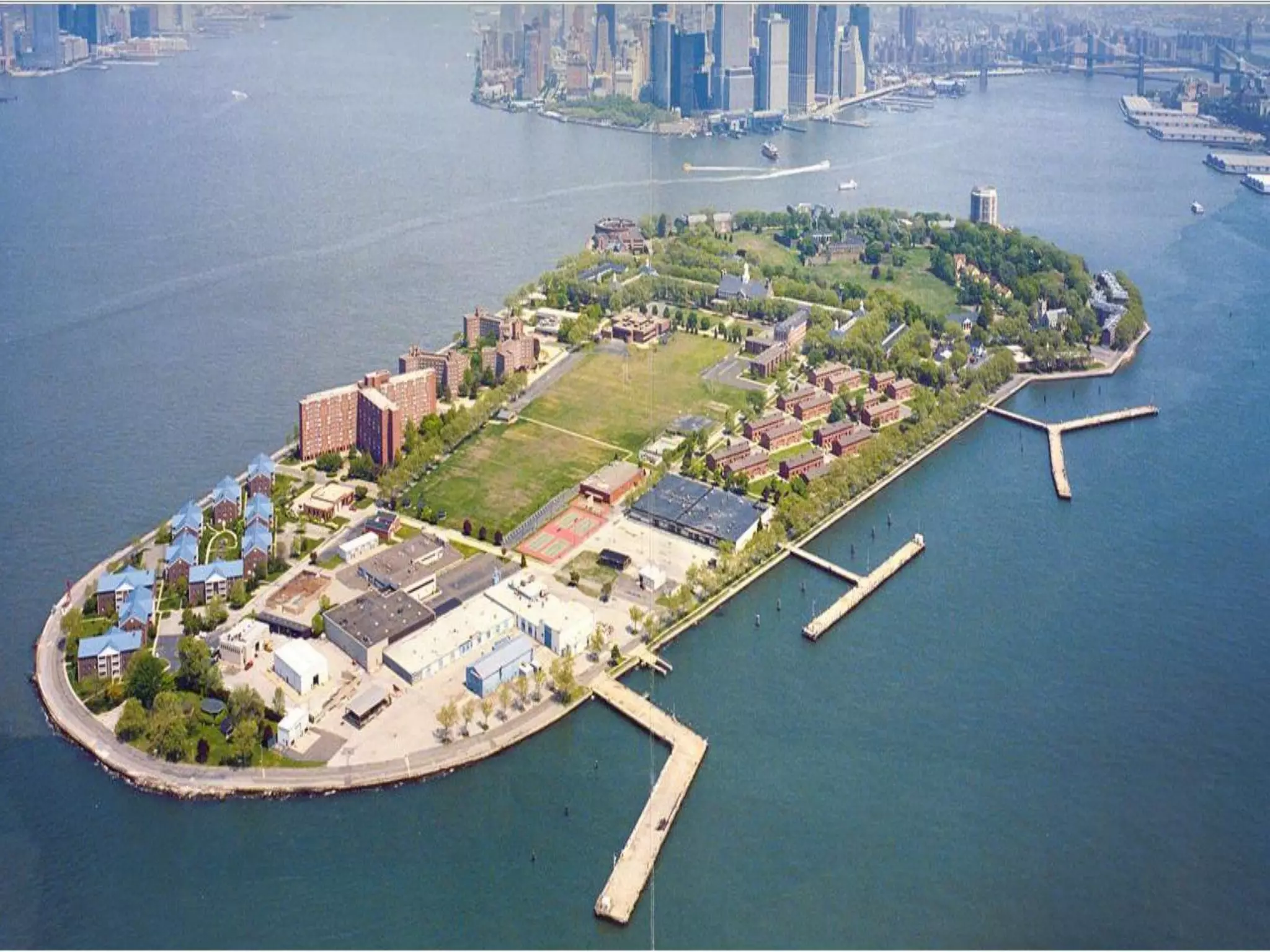
Governors Island
Building 550
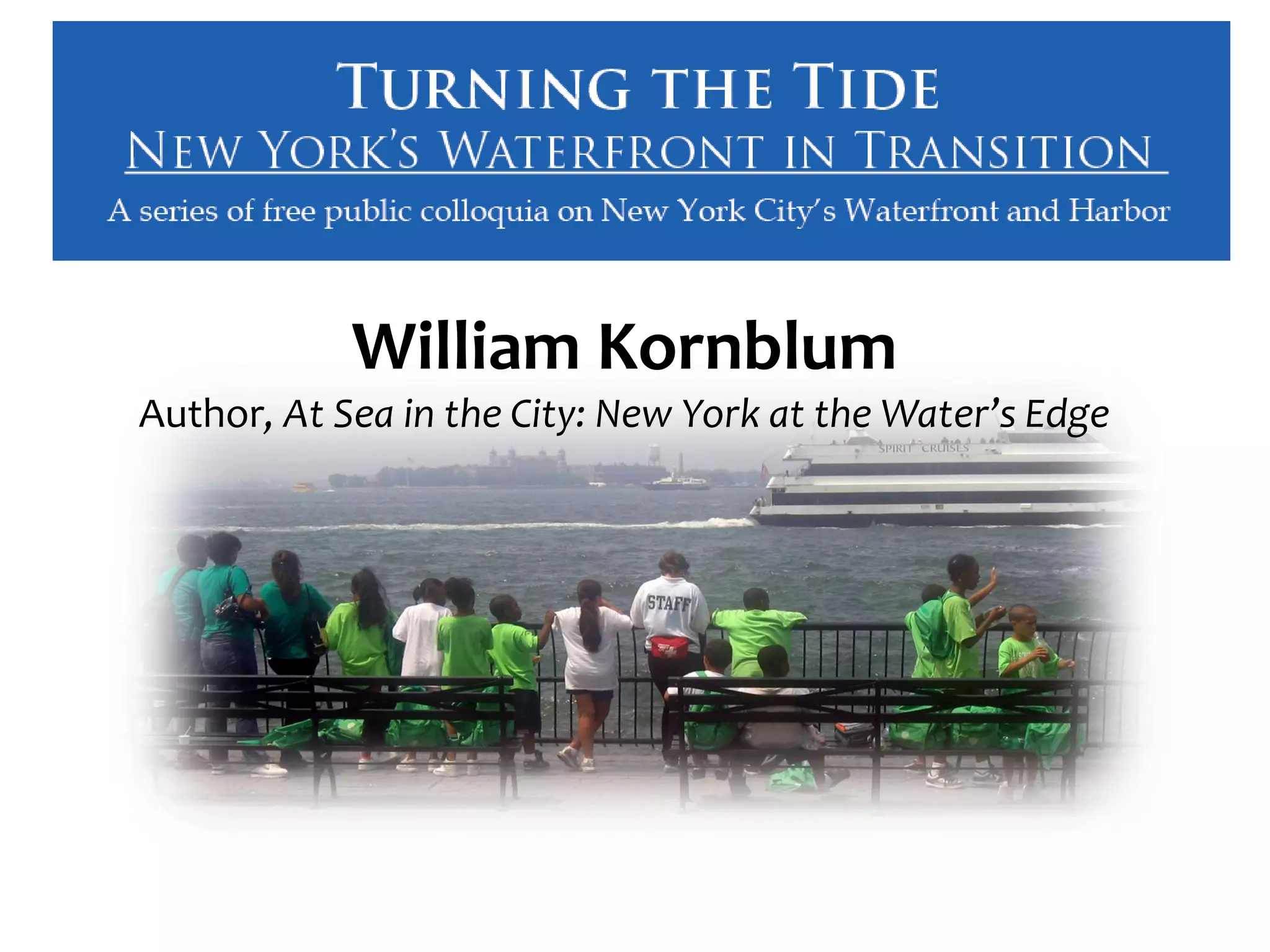
William Kornblum
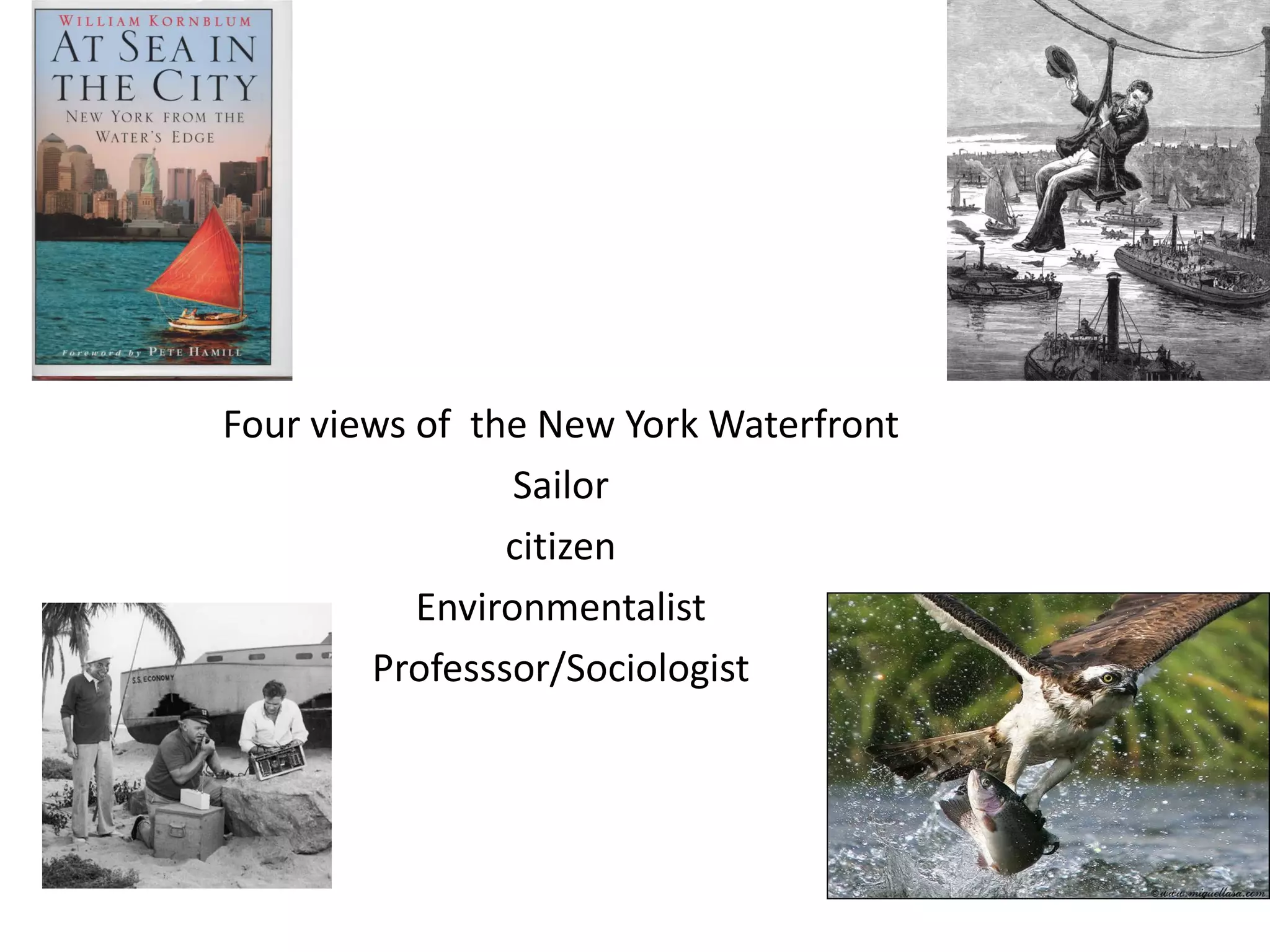
Author, At Sea in the City: New York at the Water’s Edge
Four views of the New York Waterfront
                 Sailor
                citizen
           Environmentalist
        Professsor/Sociologist
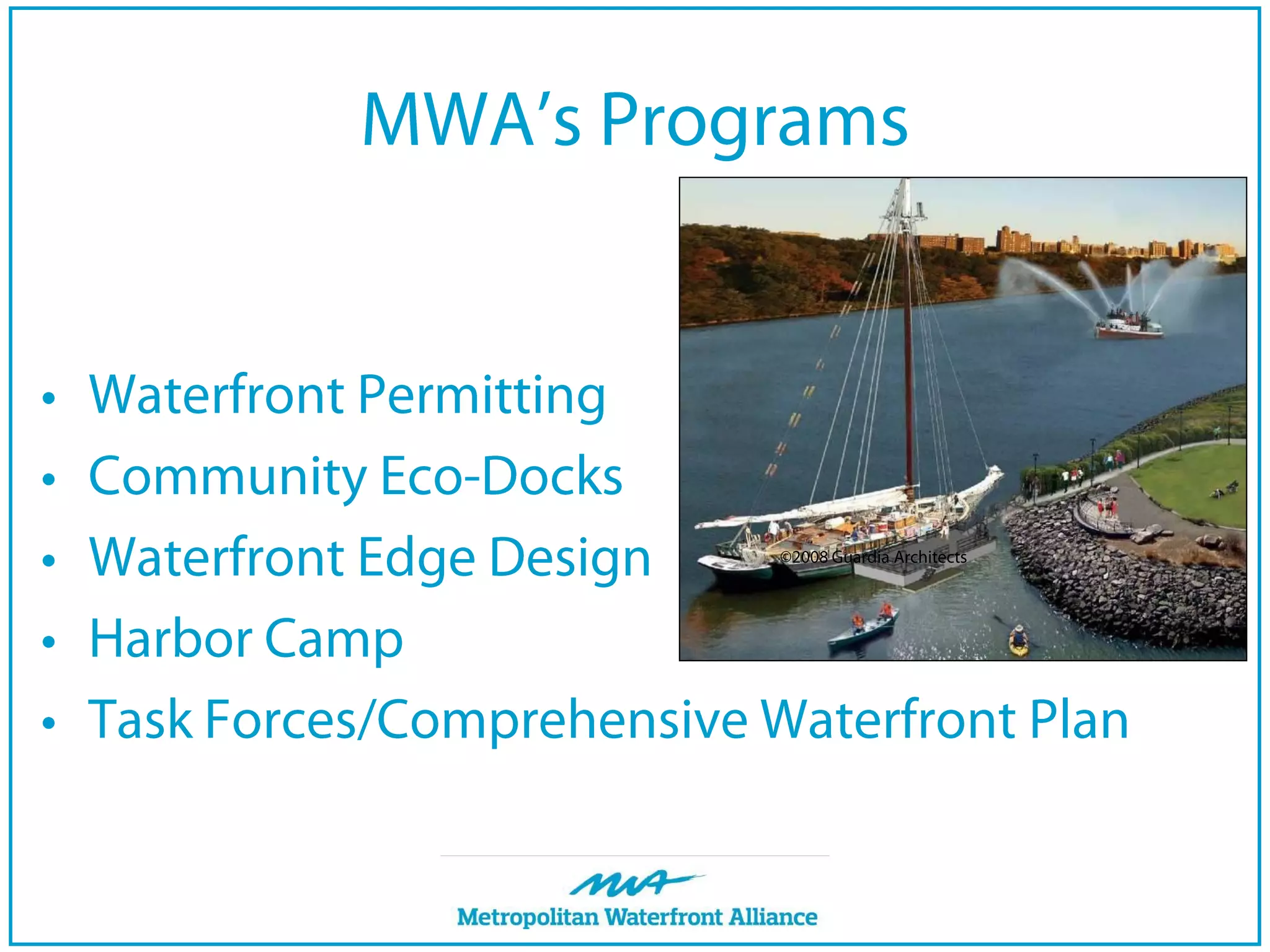
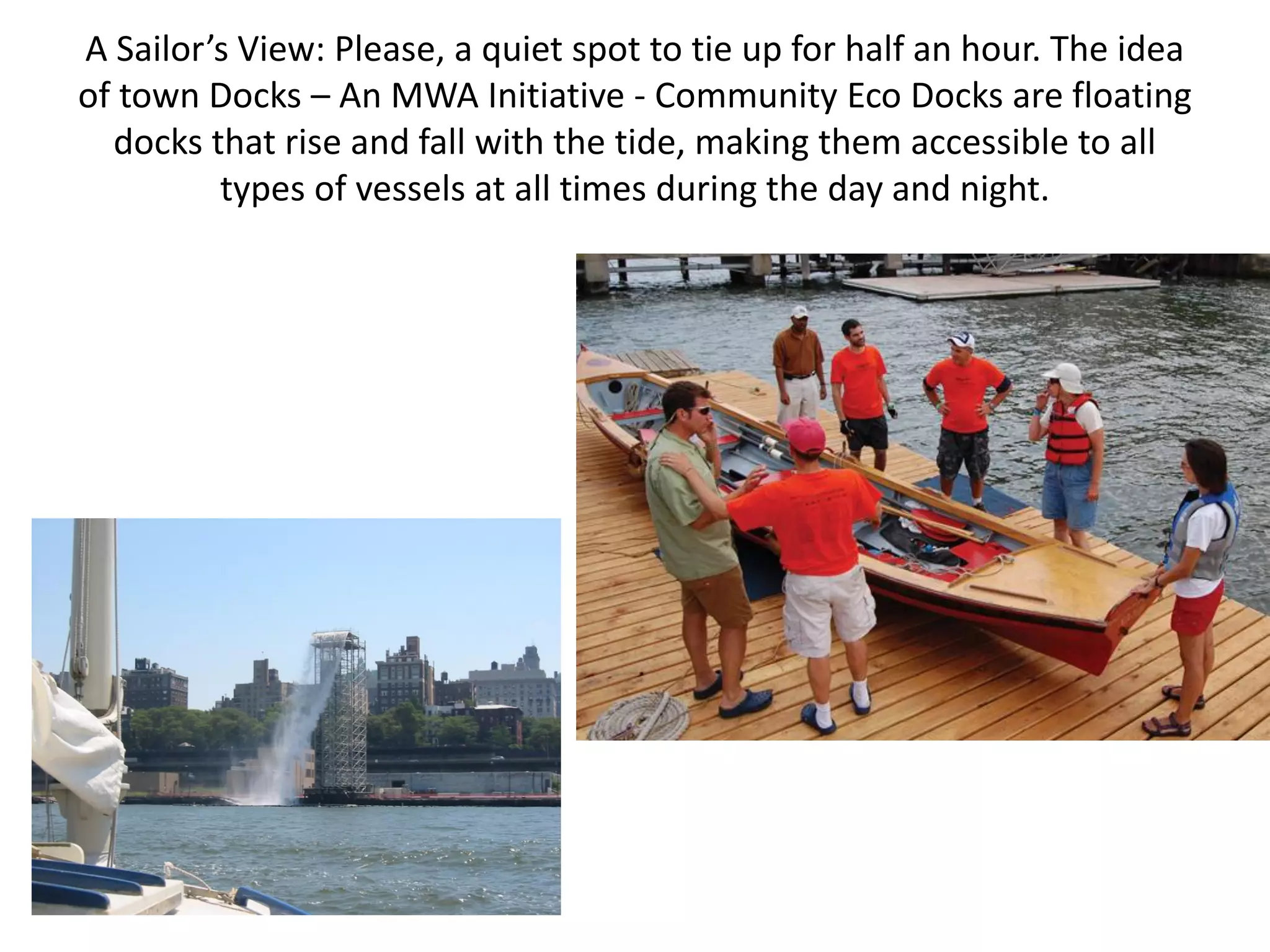
A Sailor’s View: Please, a quiet spot to tie up for half an hour. The idea
of town Docks – An MWA Initiative - Community Eco Docks are floating
  docks that rise and fall with the tide, making them accessible to all
         types of vessels at all times during the day and night.
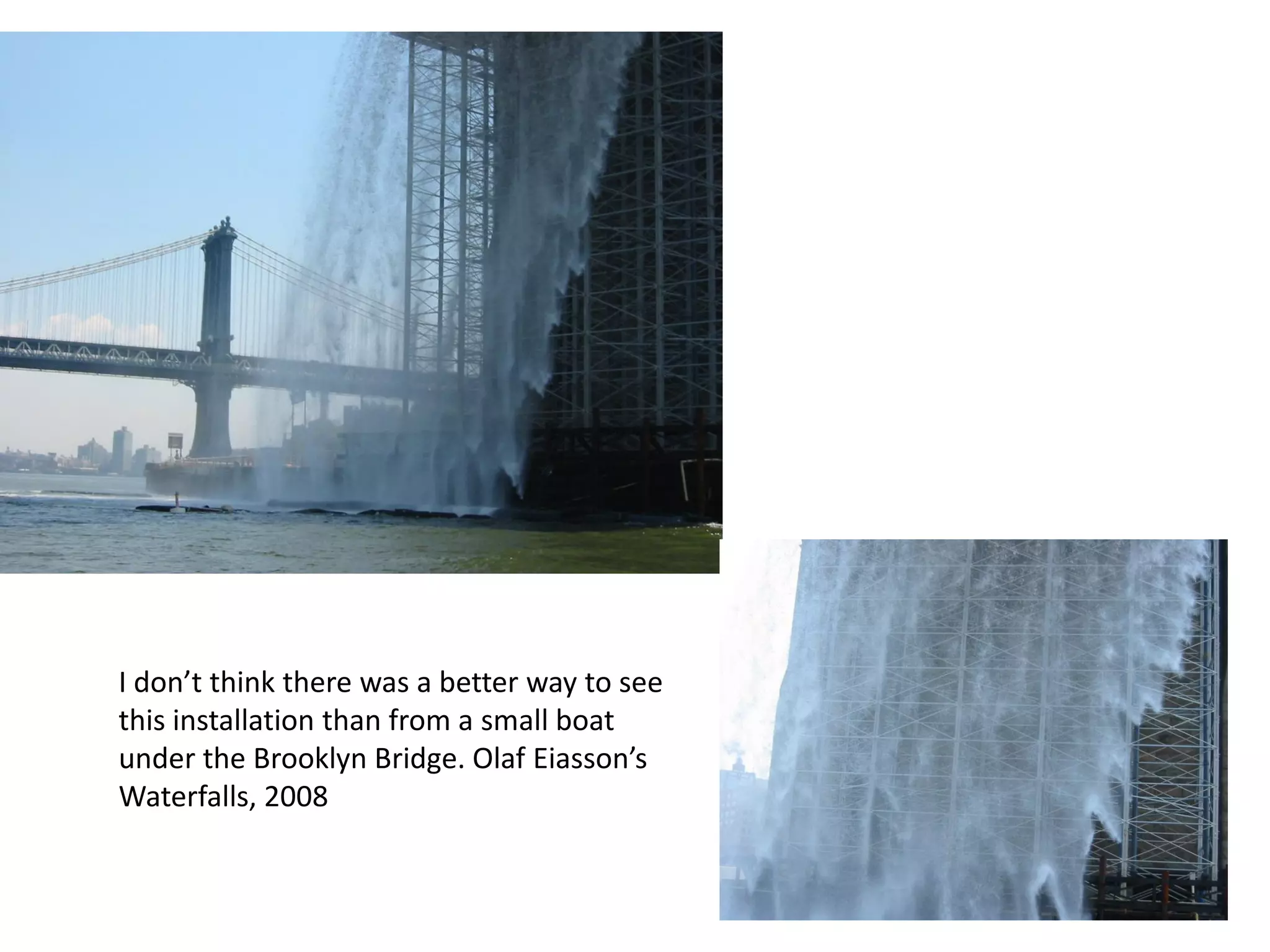
I don’t think there was a better way to see
this installation than from a small boat
under the Brooklyn Bridge. Olaf Eiasson’s
Waterfalls, 2008
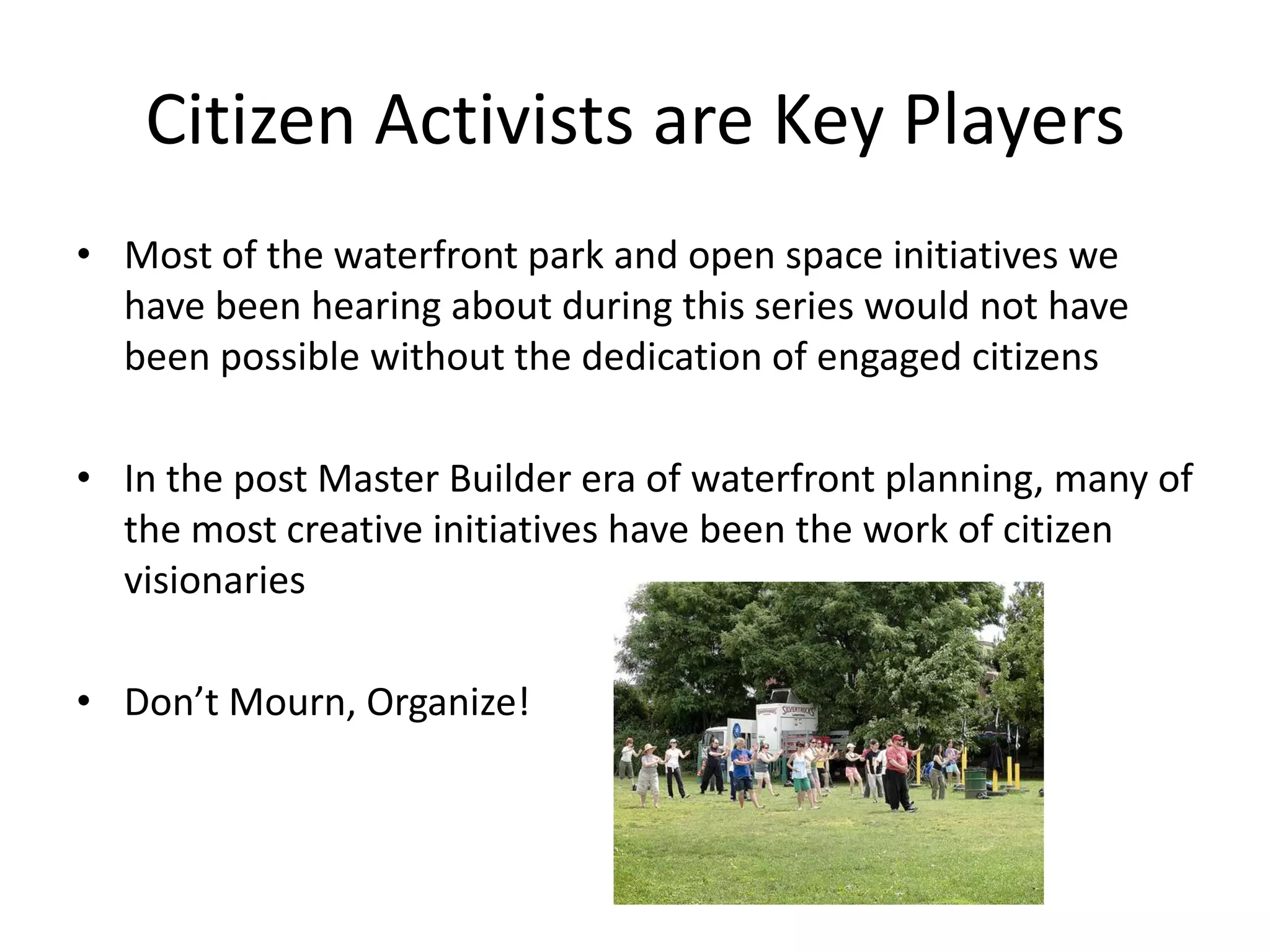
Citizen Activists are Key Players
• Most of the waterfront park and open space initiatives we
  have been hearing about during this series would not have
  been possible without the dedication of engaged citizens

• In the post Master Builder era of waterfront planning, many of
  the most creative initiatives have been the work of citizen
  visionaries

• Don’t Mourn, Organize!
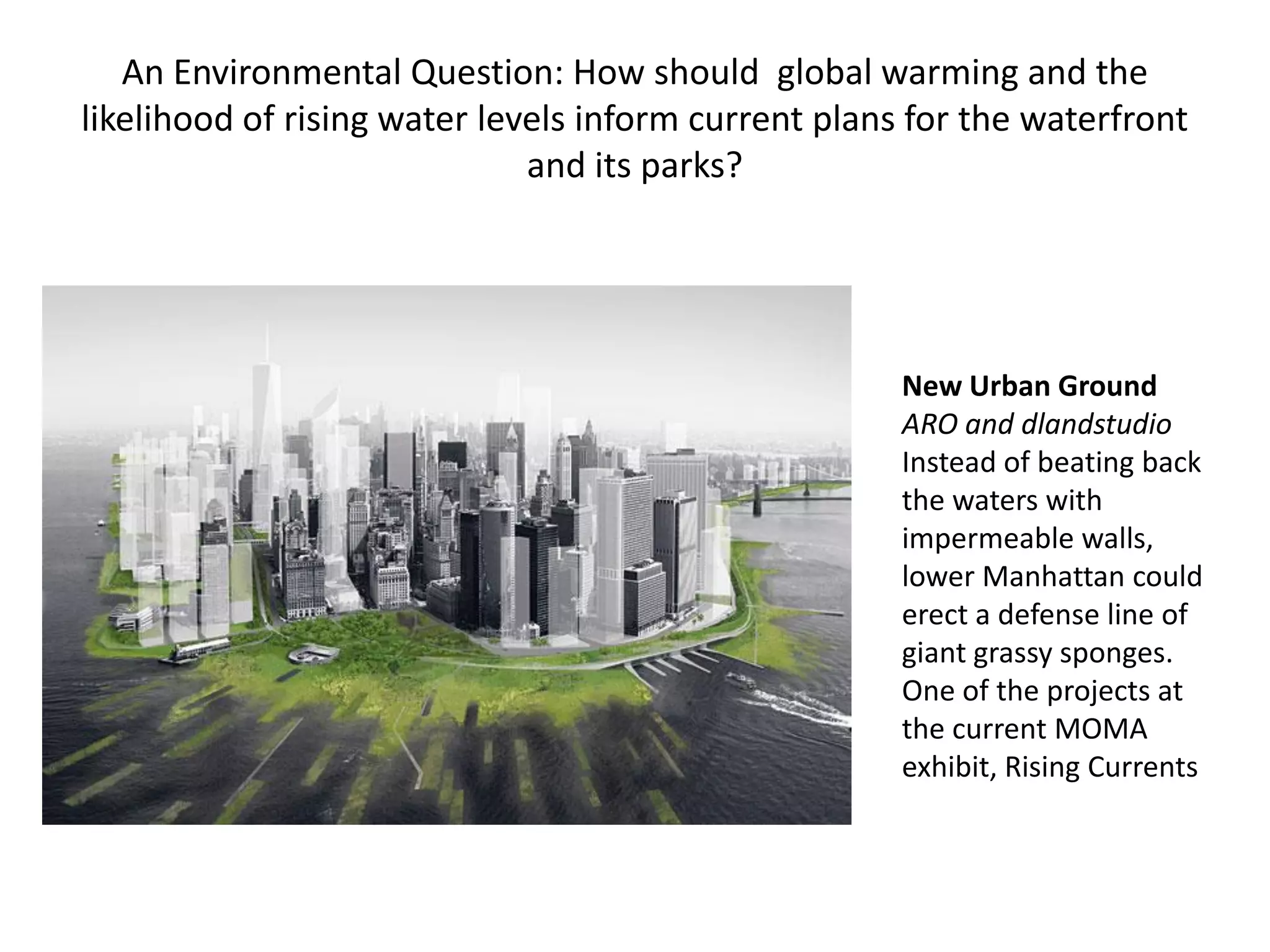
An Environmental Question: How should global warming and the
likelihood of rising water levels inform current plans for the waterfront
                              and its parks?


                                                      New Urban Ground
                                                      ARO and dlandstudio
                                                      Instead of beating back
                                                      the waters with
                                                      impermeable walls,
                                                      lower Manhattan could
                                                      erect a defense line of
                                                      giant grassy sponges.
                                                      One of the projects at
                                                      the current MOMA
                                                      exhibit, Rising Currents
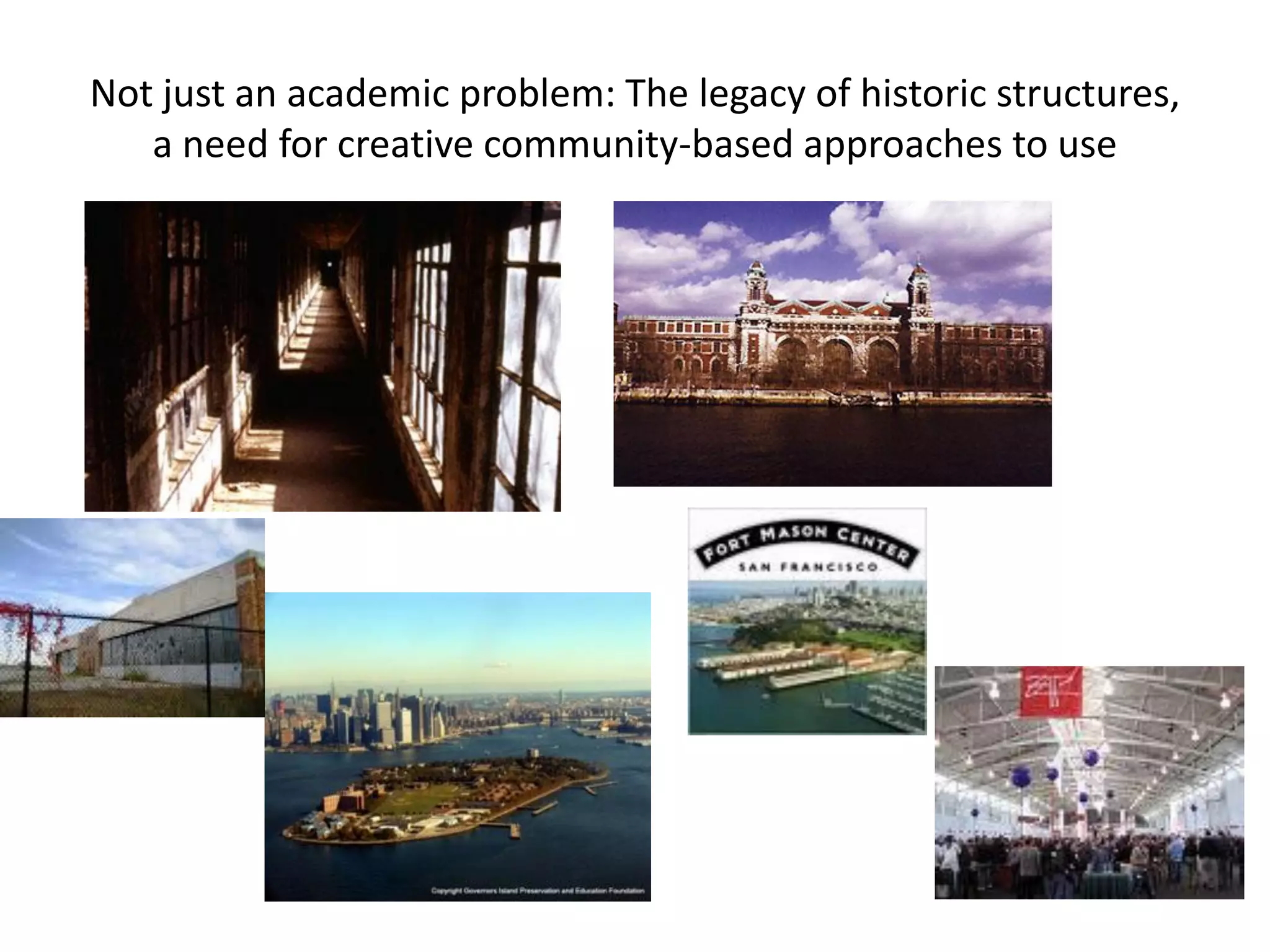
Not just an academic problem: The legacy of historic structures,
   a need for creative community-based approaches to use

Turning the Tide: Reviving the Estuary: Science, Politics, and Education

  • 1.
    Moderated by: Dr.John Waldman Panelists: Deborah A. Mans • Christopher J. Collins• Cortney Worrall • Murray Fisher • William Kornblum
  • 2.
    Deborah A. Mans NewYork/New Jersey Baykeeper
  • 3.
    Turning the Tide: New York’s Waterfront in Transition Reviving the Estuary: Science and Education Debbie Mans, NY/NJ Baykeeper
  • 4.
  • 5.
  • 6.
  • 7.
    Scientific Research inthe Oyster Program Research Targets for Urban Restoration: • Survival of oysters • Restoration design in altered systems • Optimizing design for larval recruitment Policy Research: How do we create a working relationship with regulators?
  • 8.
    Oyster Survival Staten Island • Growth/Mortality field study in Raritan Bay, 2007- 2008, and 2008-2009 • Test cages placed in Fall, monitored in Spring and Summer • Western Raritan Bay vs. Appx 4.5 miles Keyport Harbor • High mortality in WRB, Low mortality in KH • Oysters in WRB also did not reproduce. (no eggs found) • Survival and Fitness is very site specific!
  • 9.
    Urban Restoration Design 2001: Shell mounds 2009: Reef Ball • Keyport Reef 2001, built by Chesapeake Model: shell mound with live oysters on top • Over winter, storm and wave activity dispersed the entire ¼ acre reef. • Keyport Reef 2009, experiment with Rutgers testing three structures to hold oysters in place: Reefblk; Reef Ball; Rutgers Arch (designed specifically 2009: Rutgers Arch 2009: Reefblk™ for this project)
  • 10.
    Larval Recruitment Spat-on-shell, aquacultured • Spat settlement study: to determine where larvae are settling, relative to current restoration sites. • Restrictions on restoration permits due to water quality prevent adding live oysters in Bags of “blank” clam shell will be placed in radius around certain areas. reef sites & aquaculture facility • Identify areas of larval settling and acquire permits to build structure only; oysters will settle there “naturally”.
  • 11.
    Science Education: OysterGardening Oyster gardening is a critical part of Baykeeper’s restoration effort: • Gardeners grow reproductively mature adults to be placed on reefs and populate the waterways with oyster larvae • Gardeners collect monthly growth and mortality data and observations about water quality, weather, and organisms growing on their float. • Many schools participate in gardening for an excellent hands-on learning experience.
  • 12.
    Interdisciplinary Science Oyster gardeningexperience provides opportunities for education in many disciplines: – Math & Statistics: measuring and calculating averages, percentages, change in rate over time – Biology: observation of oyster health, anatomy and function of oysters, oyster life cycle – Ecology: observing interactions of organisms within the garden, identifying predators vs. prey, symbiotic/parasitic relationships – Chemistry: water quality monitoring can be conducted in addition to the growth and mortality measurements – Engineering & Physics: some locations require innovative ways to set up the garden and/or protect from vandalism, fast water, or other risks – History: oysters played a vital role in the history of New York City and Northern NJ – Economics: comparing the value of reefs as an industry vs. a natural resource; supply & demand; crash of the oyster industry in the HRE
  • 13.
  • 14.
  • 15.
    DDC Solar 2 Building Aerial View Site Location Kiss and Cathcart, Architects 03/02/2009
  • 16.
    DDC Solar 2 Building Site Photo Looking North East from Roof of Peter Cooper Village Kiss and Cathcart, Architects 03/02/2009
  • 17.
    DDC Solar 2 Building Site Photo Approach from south in Stuyvesant Cove Park Kiss and Cathcart, Architects 03/02/2009
  • 18.
    DDC Solar 2 Building Site Photo Current Building and related Events at Site Kiss and Cathcart, Architects 03/02/2009
  • 19.
    Solar One Programs Education- 20000 students from 65 schools • K-12 enrichment program: renewables, sustainable design, estuary, horticulture • Green Innovator HS curriculum (180 teachers trained); • Green Design Lab Partnership with DOE • Green Collar Workforce Training: Building performance, PV installation, horticulture, deconstruction and green youth entrepreneurship (2009 – 380 students participated; 2010 projected 1000+)
  • 20.
    Solar One ProgramsCont’d Outreach • Solar Advocacy and Education Program • Energy efficiency public awareness programs – Green Renter • Solar One Energy Connections S1EC Arts • Solar Powered Film, Dance and Music Festival • Citysol and Citysol Kids Day • SunToStars
  • 21.
    Solar 2 • NYC’sfirst carbon neutral, net zero energy building – building generates all of the energy it uses from the 92.6kW PV solar array on its roof • First building of its kind in the Northeast • Addresses the issues of climate change, energy independence and CO2 emissions • Living building • A place to articulate the goals and aims of the City’s PlaNYC • Expanded programs • Cutting edge exhibits
  • 29.
    Solar 2 Timeline– “Shovel Ready” Project • Completed schematic design January 2009 • Design development completed March 2009 • Construction drawings completed Q1 2010 • Bidding and contracts negotiations - Fall 2010 • Start construction – Early 2011 NOTE: Project will generate 100-120 construction related union jobs for one year. Working with DEC for accelerated site remediation by Con Ed which will create yet additional jobs.
  • 30.
    Broad Political Support Solar2 has secured broad political support with funding from: • Mayor Bloomberg (PlaNYC Initiative) • Congresswoman Carolyn Maloney • State Senator Tom Duane • Borough President Scott Stringer • NYC Council Speaker Christine Quinn • NYC Council member Dan Garodnick
  • 31.
  • 32.
  • 65.
    Murray Fisher Urban AssemblyNew York Harbor School
  • 72.
  • 73.
  • 76.
  • 78.
  • 79.
    William Kornblum Author, AtSea in the City: New York at the Water’s Edge
  • 80.
    Four views ofthe New York Waterfront Sailor citizen Environmentalist Professsor/Sociologist
  • 81.
    A Sailor’s View:Please, a quiet spot to tie up for half an hour. The idea of town Docks – An MWA Initiative - Community Eco Docks are floating docks that rise and fall with the tide, making them accessible to all types of vessels at all times during the day and night.
  • 82.
    I don’t thinkthere was a better way to see this installation than from a small boat under the Brooklyn Bridge. Olaf Eiasson’s Waterfalls, 2008
  • 83.
    Citizen Activists areKey Players • Most of the waterfront park and open space initiatives we have been hearing about during this series would not have been possible without the dedication of engaged citizens • In the post Master Builder era of waterfront planning, many of the most creative initiatives have been the work of citizen visionaries • Don’t Mourn, Organize!
  • 84.
    An Environmental Question:How should global warming and the likelihood of rising water levels inform current plans for the waterfront and its parks? New Urban Ground ARO and dlandstudio Instead of beating back the waters with impermeable walls, lower Manhattan could erect a defense line of giant grassy sponges. One of the projects at the current MOMA exhibit, Rising Currents
  • 85.
    Not just anacademic problem: The legacy of historic structures, a need for creative community-based approaches to use