• The marine or ocean environment covers over 70% of
our planet (i.e. 139 million square miles, or 360 million
square kilometers)
• They include the seas, bays, estuaries, and coastal
waters
• Contain 97% of the earth’s water
• Marine ecosystems hold 80% of all life on the planet
What is the Marine Environment?
Marine and Coastal Ecosystem Species Diversity
SEAGRASSES
481 species
worldwide w/ 16
species found in
the Philippines,
2nd highest in
terms of
seagrass
species richness
in the world.
REEF AND
REEF-
ASSOCIATED
FISHES
3,053 species of
fish found in the
Philippines with
1,658 species
associated with
coral reefs
CORALS
845 species of
scleractinian
(stony) corals in
the world with 500
species found in
the Philippines, 12
species are
endemic; 50+
species of soft
corals
MANGROVES
370 species in
the world with
42 species
found in the
Philippines
(Source: State of the Coral Triangle-Philippines 2014)
• Most of the earth’s oxygen is a product of photosynthesis in
ocean organisms
• The fresh water on the earth’s surface comes from the oceans
• The ocean moderates the earth’s climate and affects the weather
• Coral reefs remove carbon dioxide from the atmosphere and are
thus important for the mitigation of global warming (CI,2008)
Importance of Marine & Coastal Environment
• Sources of food and livelihood
• Coastline protection during typhoons
and storm surges
• Habitat, feeding & nursery grounds of
many marine life species
• New sources of anti-cancer medicines
derived from sponges, cone snail,
bryozoans, tunicates & sea cucumber
Importance of Marine & Coastal Environment
• Human-Activities
Pollution
of nearshore waters
from domestic waste,
oil and gas from boats
and ships, and the
accumulation of solid
waste in shallow
areas
Excessive siltation/
sedimentation
due to improper mining,
agriculture, or forestry
practices
Threats to Marine & Coastal Environment
Coastal development
and reclamation for
development of shore
facilities
• Human-Activities
Fishpond
Development
Mangroves are being
removed to give way to
the construction of
fishpond
Excessive Harvesting
of marine and coastal
resources, such as,
mangroves for firewood
& fences; sand and coral
rubbles for construction.
Threats to Marine & Coastal Environment
Destructive Fishing
Blast fishing,
“Muro-ami fishing”
Use of Cyanide,
Trawling & other illegal
fishing methods
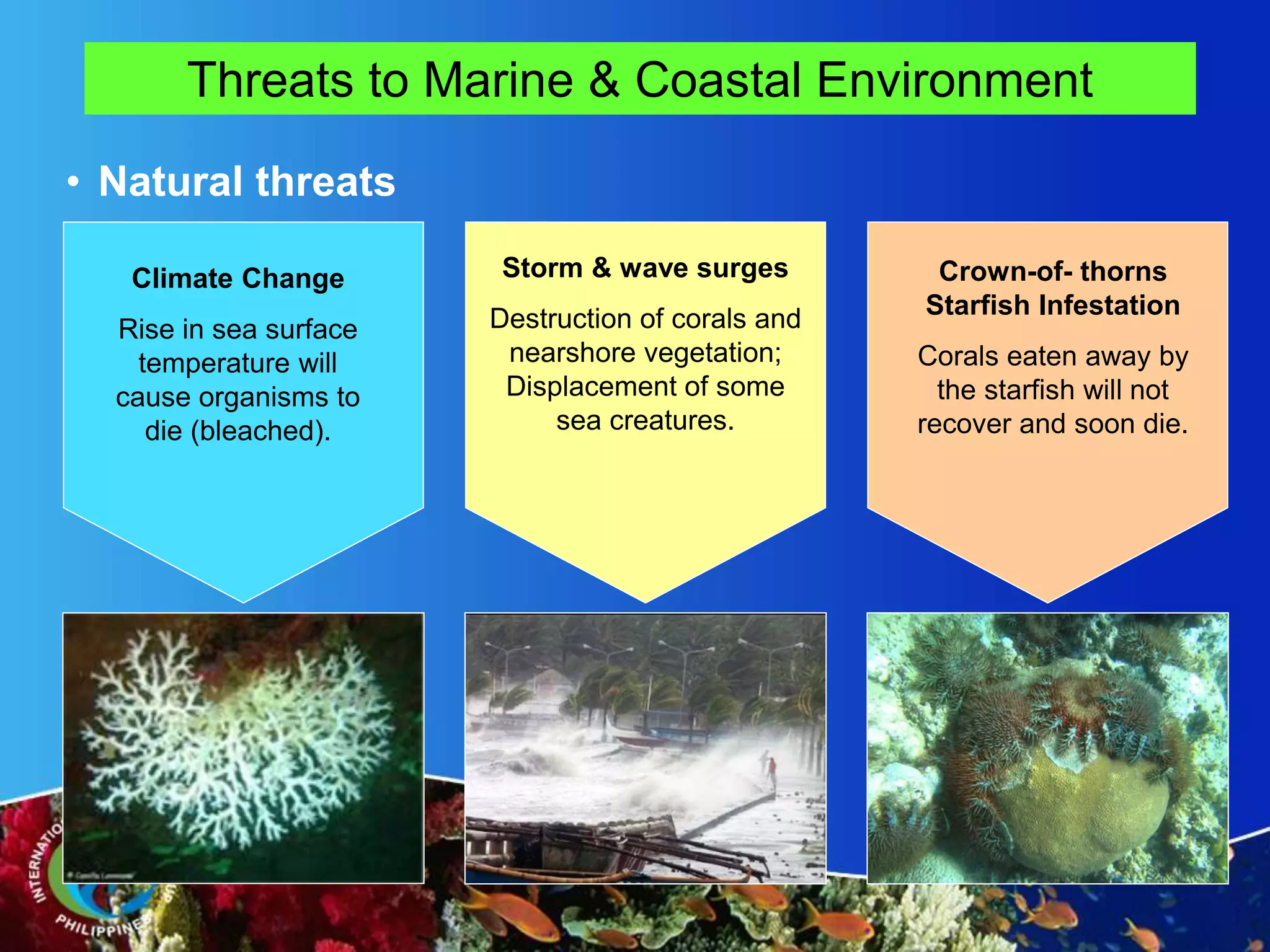
• Natural threats
Crown-of- thorns
Starfish Infestation
Corals eaten away by
the starfish will not
recover and soon die.
Storm & wave surges
Destruction of corals and
nearshore vegetation;
Displacement of some
sea creatures.
Threats to Marine & Coastal Environment
Climate Change
Rise in sea surface
temperature will
cause organisms to
die (bleached).
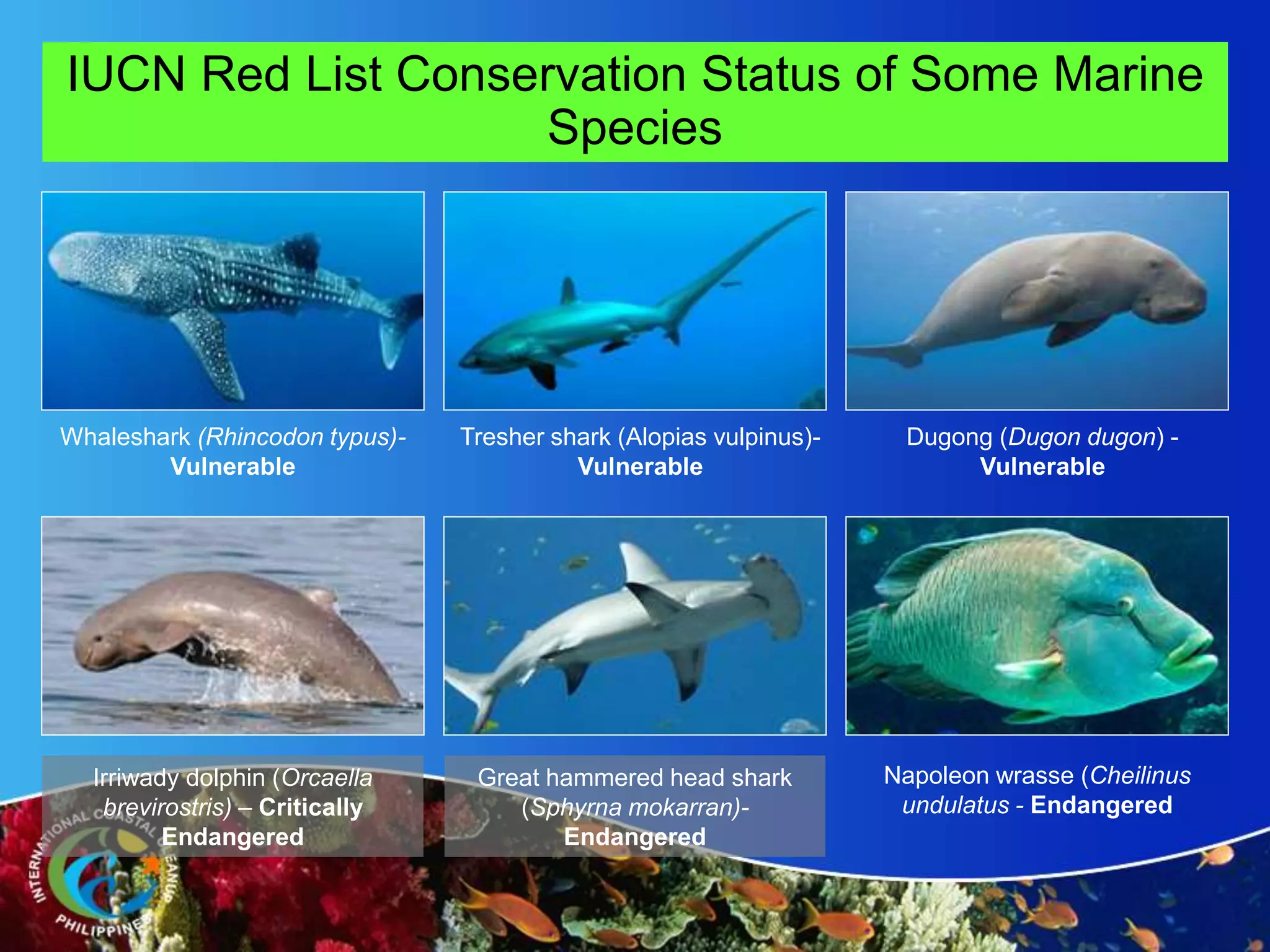
IUCN Red List Conservation Status of Some Marine
Species
Whaleshark (Rhincodon typus)-
Vulnerable
Tresher shark (Alopias vulpinus)-
Vulnerable
Dugong (Dugon dugon) -
Vulnerable
Irriwady dolphin (Orcaella
brevirostris) – Critically
Endangered
Great hammered head shark
(Sphyrna mokarran)-
Endangered
Napoleon wrasse (Cheilinus
undulatus - Endangered
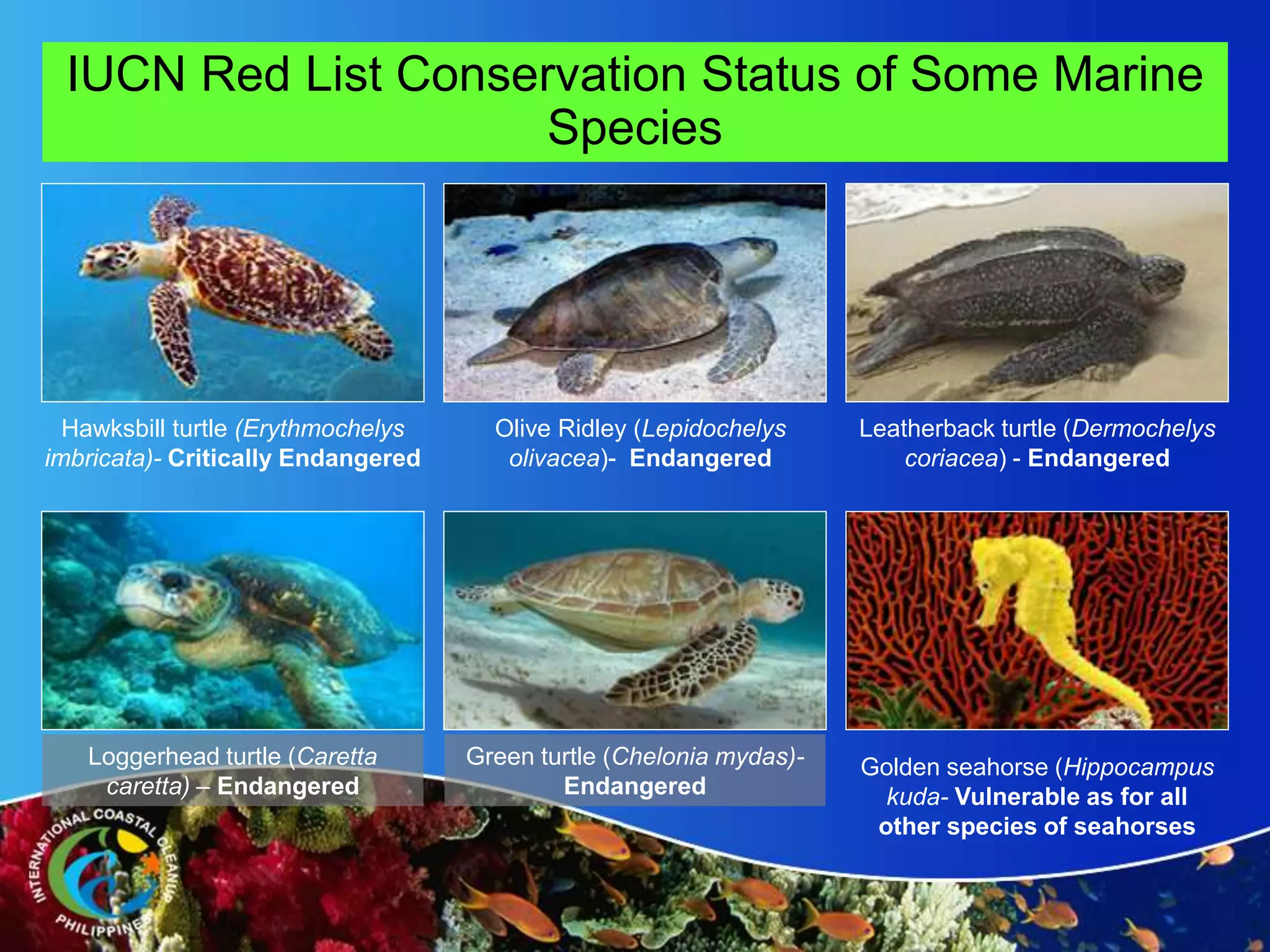
Hawksbill turtle (Erythmochelys
imbricata)- Critically Endangered
Olive Ridley (Lepidochelys
olivacea)- Endangered
Leatherback turtle (Dermochelys
coriacea) - Endangered
Loggerhead turtle (Caretta
caretta) – Endangered
Green turtle (Chelonia mydas)-
Endangered
Golden seahorse (Hippocampus
kuda- Vulnerable as for all
other species of seahorses
IUCN Red List Conservation Status of Some Marine
Species
What Can you Do for the Marine
Environment?
• Learn about the marine environment
• Participate in any environmental events and activities
(See next slide for the Calendar of Events)
• Volunteer with an organization that works to protect the
ocean
• Be mindful of your own environment. Litter and
pollutants can end up in the ocean and harm marine
wildlife
• Practice what you have learned and share them to
others
11. Philippine Eagle Week (June 4-10)
12. World Day to Combat
Desertification (Jun 17)
13. National Arbor Day (Jun 25)
14. International Coastal Cleanup (3rd
Saturday of September/ or any day
from September up to October)
15. International Ozone Day (Sep 16)
16. National Tamaraw Month (Whole
Month of October)
17. International Lead Poisoning
Prevention Week (Oct 20-26)
18. National Clean Air Month / National
Environmental Awareness Month
(Whole Month of November)
19. National Climate Change
Consciousness Week (Nov 19-25)
1. World Wetlands Day (Feb 2)
2. World Wildlife Day (Mar 3)
3. International Day of Forests
(March 21)
4. World Water Day (March 22)
5. Philippine Water Week (4th Week
of March)
6. Earth Hour (4th or Last Saturday
of March)
7. Philippine Earth Month (Whole
Month of April)
8. International Earth Day (Apr 22)
9. National Ocean Month (Whole
Month of May)
10. International Day for Biological
Diversity (May 22)
Calendar of Environmental Events

Protecting the marine environment

  • 2.
    • The marineor ocean environment covers over 70% of our planet (i.e. 139 million square miles, or 360 million square kilometers) • They include the seas, bays, estuaries, and coastal waters • Contain 97% of the earth’s water • Marine ecosystems hold 80% of all life on the planet What is the Marine Environment?
  • 3.
    Marine and CoastalEcosystem Species Diversity SEAGRASSES 481 species worldwide w/ 16 species found in the Philippines, 2nd highest in terms of seagrass species richness in the world. REEF AND REEF- ASSOCIATED FISHES 3,053 species of fish found in the Philippines with 1,658 species associated with coral reefs CORALS 845 species of scleractinian (stony) corals in the world with 500 species found in the Philippines, 12 species are endemic; 50+ species of soft corals MANGROVES 370 species in the world with 42 species found in the Philippines (Source: State of the Coral Triangle-Philippines 2014)
  • 4.
    • Most ofthe earth’s oxygen is a product of photosynthesis in ocean organisms • The fresh water on the earth’s surface comes from the oceans • The ocean moderates the earth’s climate and affects the weather • Coral reefs remove carbon dioxide from the atmosphere and are thus important for the mitigation of global warming (CI,2008) Importance of Marine & Coastal Environment
  • 5.
    • Sources offood and livelihood • Coastline protection during typhoons and storm surges • Habitat, feeding & nursery grounds of many marine life species • New sources of anti-cancer medicines derived from sponges, cone snail, bryozoans, tunicates & sea cucumber Importance of Marine & Coastal Environment Importance of Marine & Coastal Environment
  • 6.
    • Human-Activities Pollution of nearshorewaters from domestic waste, oil and gas from boats and ships, and the accumulation of solid waste in shallow areas Excessive siltation/ sedimentation due to improper mining, agriculture, or forestry practices Threats to Marine & Coastal Environment Coastal development and reclamation for development of shore facilities
  • 7.
    • Human-Activities Fishpond Development Mangroves arebeing removed to give way to the construction of fishpond Excessive Harvesting of marine and coastal resources, such as, mangroves for firewood & fences; sand and coral rubbles for construction. Threats to Marine & Coastal Environment Destructive Fishing Blast fishing, “Muro-ami fishing” Use of Cyanide, Trawling & other illegal fishing methods
  • 8.
    • Natural threats Crown-of-thorns Starfish Infestation Corals eaten away by the starfish will not recover and soon die. Storm & wave surges Destruction of corals and nearshore vegetation; Displacement of some sea creatures. Threats to Marine & Coastal Environment Climate Change Rise in sea surface temperature will cause organisms to die (bleached).
  • 9.
    IUCN Red ListConservation Status of Some Marine Species Whaleshark (Rhincodon typus)- Vulnerable Tresher shark (Alopias vulpinus)- Vulnerable Dugong (Dugon dugon) - Vulnerable Irriwady dolphin (Orcaella brevirostris) – Critically Endangered Great hammered head shark (Sphyrna mokarran)- Endangered Napoleon wrasse (Cheilinus undulatus - Endangered
  • 10.
    Hawksbill turtle (Erythmochelys imbricata)-Critically Endangered Olive Ridley (Lepidochelys olivacea)- Endangered Leatherback turtle (Dermochelys coriacea) - Endangered Loggerhead turtle (Caretta caretta) – Endangered Green turtle (Chelonia mydas)- Endangered Golden seahorse (Hippocampus kuda- Vulnerable as for all other species of seahorses IUCN Red List Conservation Status of Some Marine Species
  • 11.
    What Can youDo for the Marine Environment?
  • 12.
    • Learn aboutthe marine environment • Participate in any environmental events and activities (See next slide for the Calendar of Events) • Volunteer with an organization that works to protect the ocean • Be mindful of your own environment. Litter and pollutants can end up in the ocean and harm marine wildlife • Practice what you have learned and share them to others
  • 13.
    11. Philippine EagleWeek (June 4-10) 12. World Day to Combat Desertification (Jun 17) 13. National Arbor Day (Jun 25) 14. International Coastal Cleanup (3rd Saturday of September/ or any day from September up to October) 15. International Ozone Day (Sep 16) 16. National Tamaraw Month (Whole Month of October) 17. International Lead Poisoning Prevention Week (Oct 20-26) 18. National Clean Air Month / National Environmental Awareness Month (Whole Month of November) 19. National Climate Change Consciousness Week (Nov 19-25) 1. World Wetlands Day (Feb 2) 2. World Wildlife Day (Mar 3) 3. International Day of Forests (March 21) 4. World Water Day (March 22) 5. Philippine Water Week (4th Week of March) 6. Earth Hour (4th or Last Saturday of March) 7. Philippine Earth Month (Whole Month of April) 8. International Earth Day (Apr 22) 9. National Ocean Month (Whole Month of May) 10. International Day for Biological Diversity (May 22) Calendar of Environmental Events