By Sudeepta Manna
13A91M0028
1
marketing and logistic interface
LEARNING OBJECTIVES
 To familiarize with basic concepts of logistics and supply
chain management
 To understand recent evolvement of logistics
 To understand the reasons for its recent growth in
importance
 To understand the importance of IT in logistics
SCM
-2
DicksonChiu2006
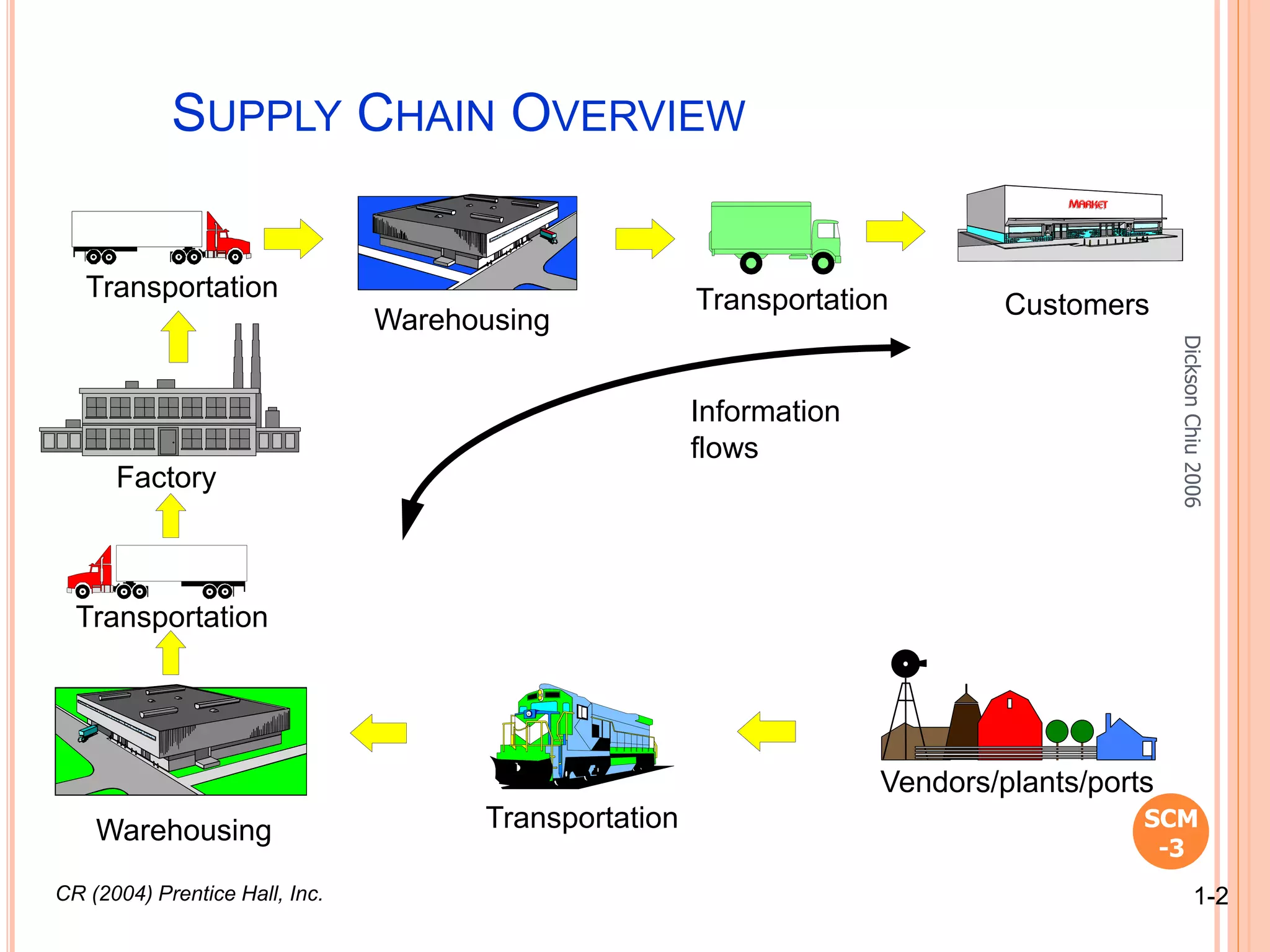
SUPPLY CHAIN OVERVIEW
SCM
-3
DicksonChiu2006
CR (2004) Prentice Hall, Inc. 1-2
Warehousing
Warehousing
Transportation
Transportation
Vendors/plants/ports
Transportation
Factory
Transportation Customers
Information
flows
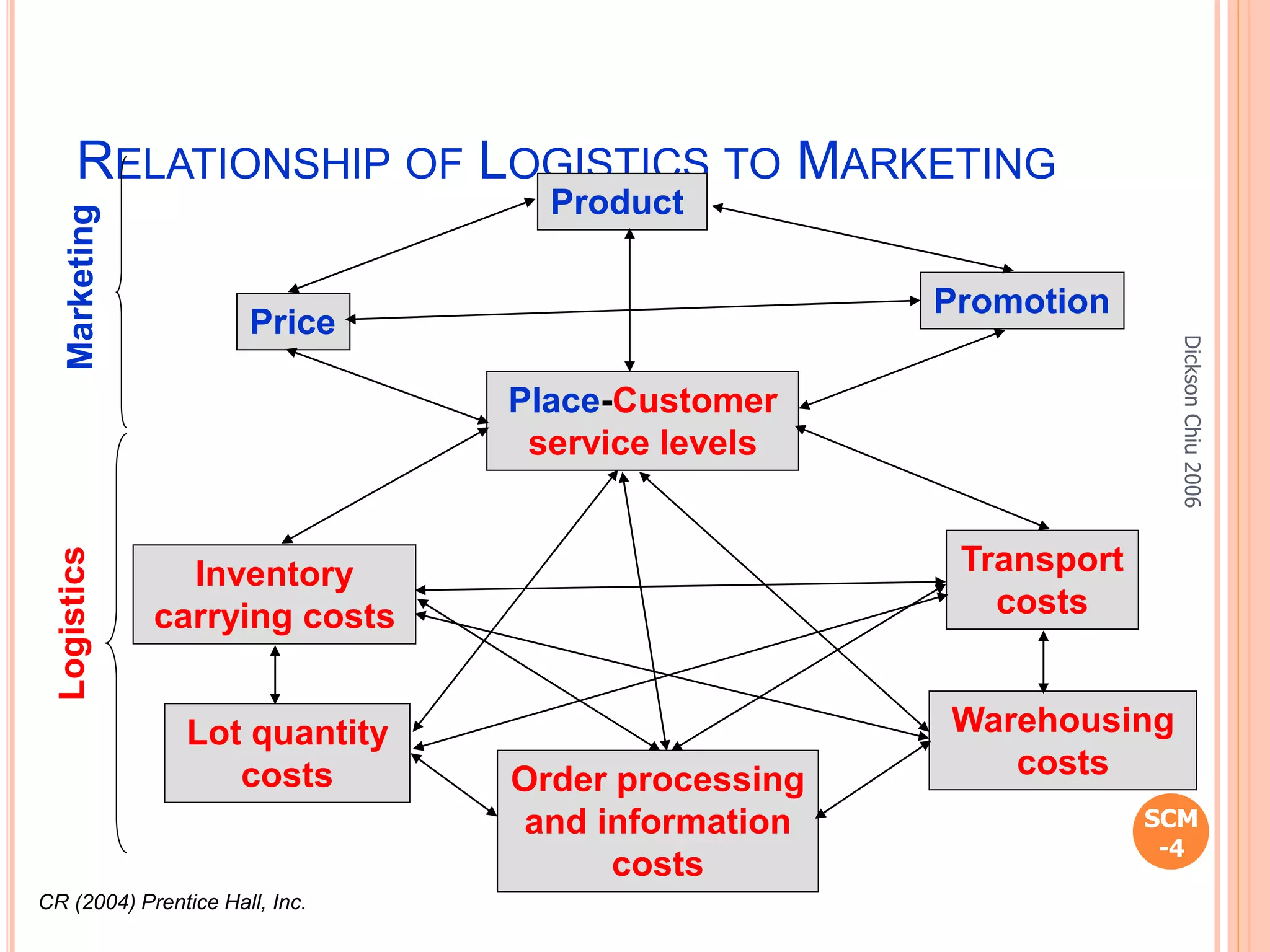
RELATIONSHIP OF LOGISTICS TO MARKETING
SCM
-4
DicksonChiu2006
Product
Price
Promotion
Place-Customer
service levels
Inventory
carrying costs
Lot quantity
costs Order processing
and information
costs
Transport
costs
Warehousing
costs
Logistics
CR (2004) Prentice Hall, Inc.
LOGISTICS IN THE FIRM:
THE MICRO DIMENSION
 Logistics Interfaces with Marketing: The
Marketing Mix – Four Ps
 Price
 Product
 Promotion
 Place
Chapter2
5
ManagementofBusinessLogistics,7thEd.
LOGISTICS IN THE FIRM:
PRICE
 Carrier pricing
 Generally, since the larger the shipment, the
cheaper the transportation rate, shipment sizes
should be tailored to the carrier’s vehicle
capacity where possible.
 Matching schedules
 Quantity discounts should be tied to carrier
quantity discounts.
 Volume relationships
 Volumes sold will affect inventory requirements.
Chapter2
6
ManagementofBusinessLogistics,7thEd.
LOGISTICS IN THE FIRM:
PRODUCT
 Consumer packaging
 Generally, since the size, shape, weight and other
physical characteristics of the product impact on its
storage, transportation and handling, the logistics
managers should be included in any decisions
regarding these product traits.
 A minor correction in any of the above could
conceivably cost (or save) millions of dollars in
logistical costs.
 Logistics costs are not necessarily paramount, but
they need to be considered in the decision making
process.
Chapter2
7
ManagementofBusinessLogistics,7thEd.
LOGISTICS IN THE FIRM:
PROMOTION
 Push versus pull
 The most important factor is that the logistics
division is aware of any changes in demand
patterns so that it can plan for any
consequences.
 Pull strategies tend to be more erratic.
 Push strategies tend to more predictable.
 Channel competition
 The more popular a product, the easier it is to
persuade channel members to promote your
product.
Chapter2
8
ManagementofBusinessLogistics,7thEd.
LOGISTICS IN THE FIRM:
PLACE
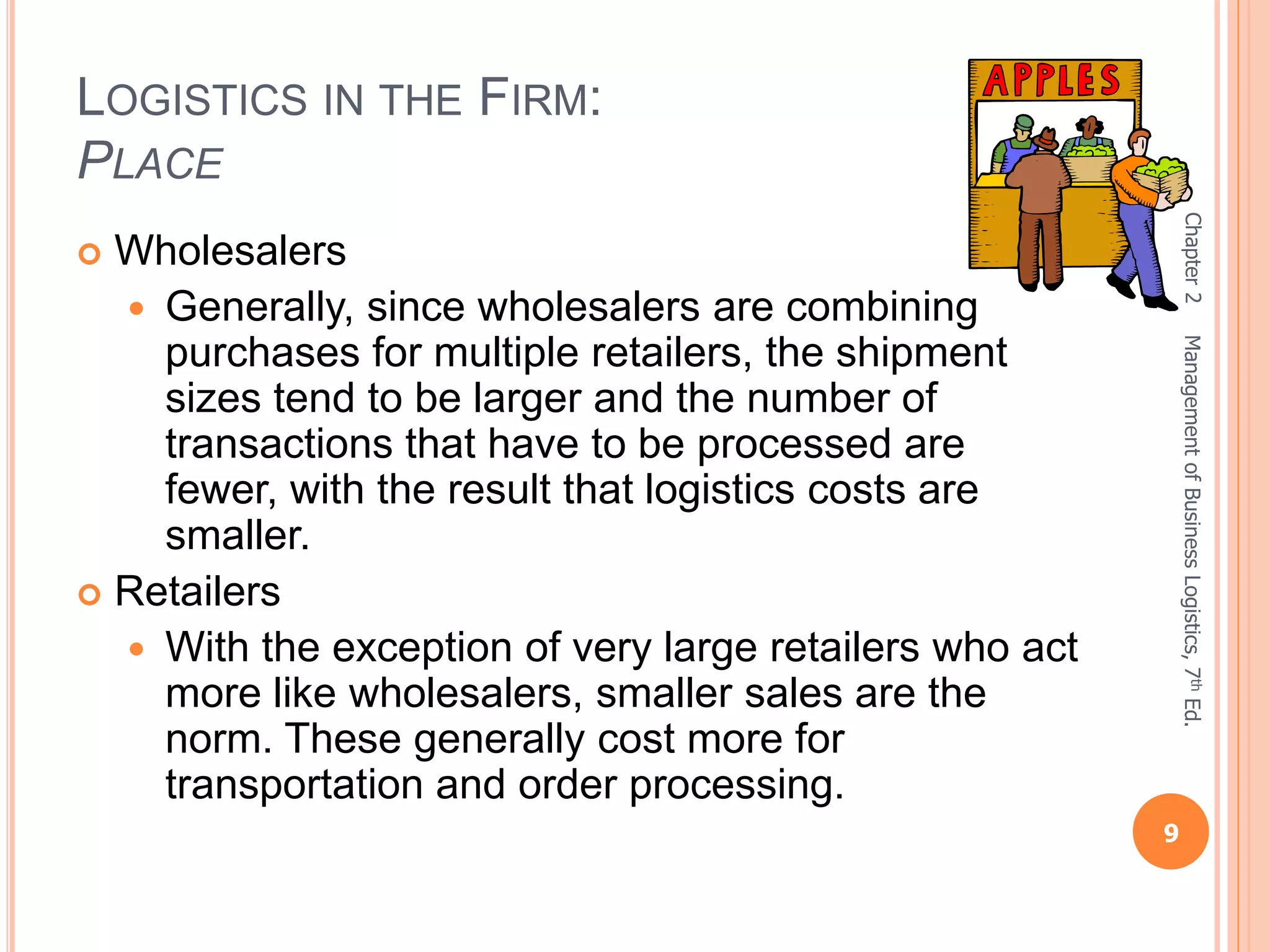
 Wholesalers
 Generally, since wholesalers are combining
purchases for multiple retailers, the shipment
sizes tend to be larger and the number of
transactions that have to be processed are
fewer, with the result that logistics costs are
smaller.
 Retailers
 With the exception of very large retailers who act
more like wholesalers, smaller sales are the
norm. These generally cost more for
transportation and order processing.
Chapter2
9
ManagementofBusinessLogistics,7thEd.
LOGISTICS ACTIVITIES
 Transportation
 Storage
 Packaging
 Materials handling
 Order fulfillment
 Forecasting
Chapter2
10
ManagementofBusinessLogistics,7thEd.
 Production planning
 Purchasing
 Customer service
 Site location
 Other activities
THANK YOU

marketing and logistic interface

  • 1.
  • 2.
    LEARNING OBJECTIVES  Tofamiliarize with basic concepts of logistics and supply chain management  To understand recent evolvement of logistics  To understand the reasons for its recent growth in importance  To understand the importance of IT in logistics SCM -2 DicksonChiu2006
  • 3.
    SUPPLY CHAIN OVERVIEW SCM -3 DicksonChiu2006 CR(2004) Prentice Hall, Inc. 1-2 Warehousing Warehousing Transportation Transportation Vendors/plants/ports Transportation Factory Transportation Customers Information flows
  • 4.
    RELATIONSHIP OF LOGISTICSTO MARKETING SCM -4 DicksonChiu2006 Product Price Promotion Place-Customer service levels Inventory carrying costs Lot quantity costs Order processing and information costs Transport costs Warehousing costs Logistics CR (2004) Prentice Hall, Inc.
  • 5.
    LOGISTICS IN THEFIRM: THE MICRO DIMENSION  Logistics Interfaces with Marketing: The Marketing Mix – Four Ps  Price  Product  Promotion  Place Chapter2 5 ManagementofBusinessLogistics,7thEd.
  • 6.
    LOGISTICS IN THEFIRM: PRICE  Carrier pricing  Generally, since the larger the shipment, the cheaper the transportation rate, shipment sizes should be tailored to the carrier’s vehicle capacity where possible.  Matching schedules  Quantity discounts should be tied to carrier quantity discounts.  Volume relationships  Volumes sold will affect inventory requirements. Chapter2 6 ManagementofBusinessLogistics,7thEd.
  • 7.
    LOGISTICS IN THEFIRM: PRODUCT  Consumer packaging  Generally, since the size, shape, weight and other physical characteristics of the product impact on its storage, transportation and handling, the logistics managers should be included in any decisions regarding these product traits.  A minor correction in any of the above could conceivably cost (or save) millions of dollars in logistical costs.  Logistics costs are not necessarily paramount, but they need to be considered in the decision making process. Chapter2 7 ManagementofBusinessLogistics,7thEd.
  • 8.
    LOGISTICS IN THEFIRM: PROMOTION  Push versus pull  The most important factor is that the logistics division is aware of any changes in demand patterns so that it can plan for any consequences.  Pull strategies tend to be more erratic.  Push strategies tend to more predictable.  Channel competition  The more popular a product, the easier it is to persuade channel members to promote your product. Chapter2 8 ManagementofBusinessLogistics,7thEd.
  • 9.
    LOGISTICS IN THEFIRM: PLACE  Wholesalers  Generally, since wholesalers are combining purchases for multiple retailers, the shipment sizes tend to be larger and the number of transactions that have to be processed are fewer, with the result that logistics costs are smaller.  Retailers  With the exception of very large retailers who act more like wholesalers, smaller sales are the norm. These generally cost more for transportation and order processing. Chapter2 9 ManagementofBusinessLogistics,7thEd.
  • 10.
    LOGISTICS ACTIVITIES  Transportation Storage  Packaging  Materials handling  Order fulfillment  Forecasting Chapter2 10 ManagementofBusinessLogistics,7thEd.  Production planning  Purchasing  Customer service  Site location  Other activities
  • 11.