A process of dividing the total market for a good
or service into several smaller groups, such that
the members of each group are similar with
respect to the factors that influence demand.
Objective of Market segmentation
• Knowledge of attractive marketing
opportunities
• Facilitates selection of target market
• Facilitates determination of product mix
• Selection of suitable channels
• Assessment of strengths and weakness
• Helps in effective marketing program
1. Identification of market segments
2. Development of profiles for each segment
3. Evaluation of market segments
4. Selection of target market
5. Development of positioning strategy
6. Establishment of a marketing plan and
program
Levels of market
segmentation
1.MassMarketing
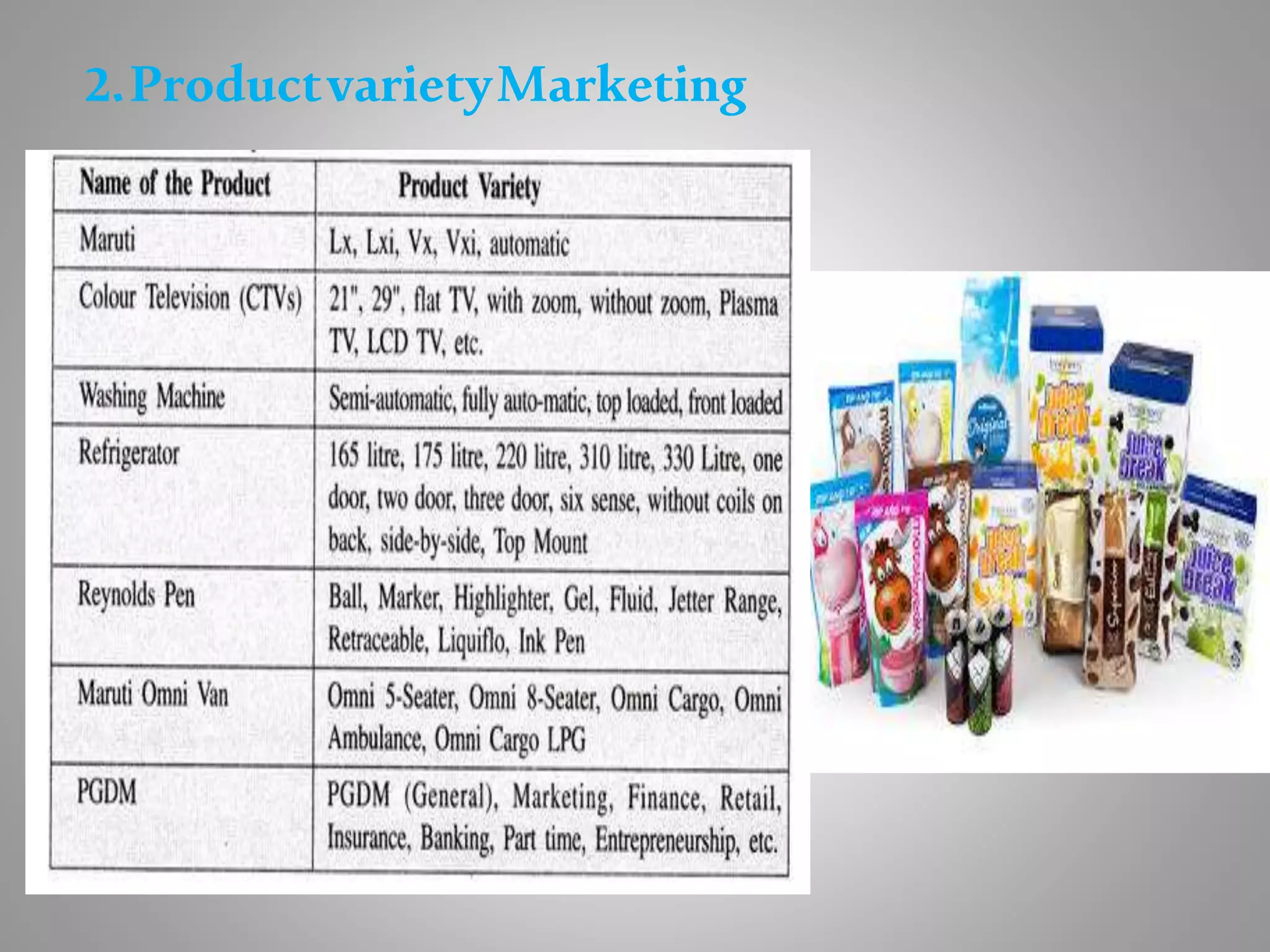
2.ProductvarietyMarketing
3.Target
Marketing
4.Niche
Marketing
5.Customized
Marketing
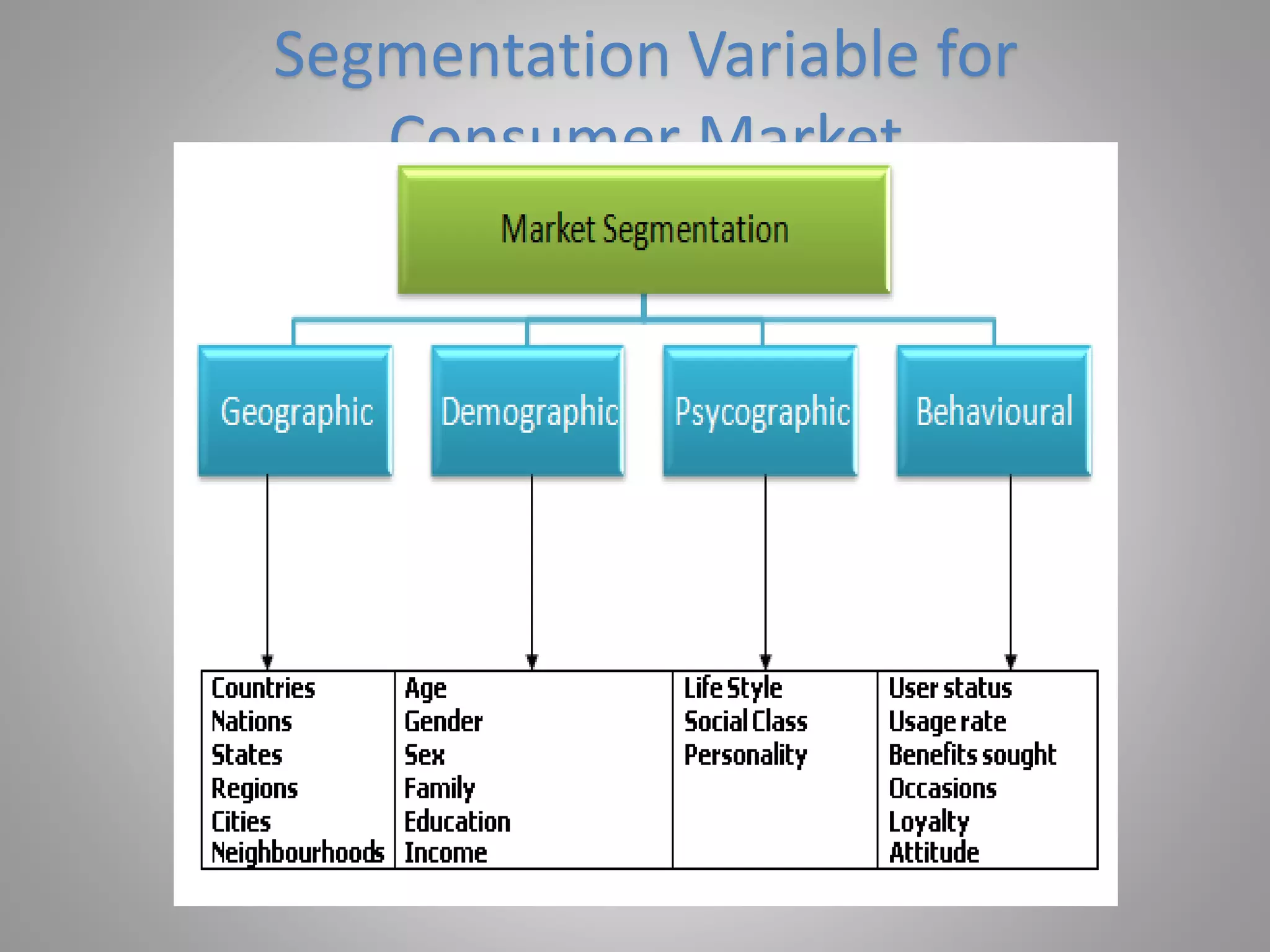
Segmentation Variable for
Consumer Market
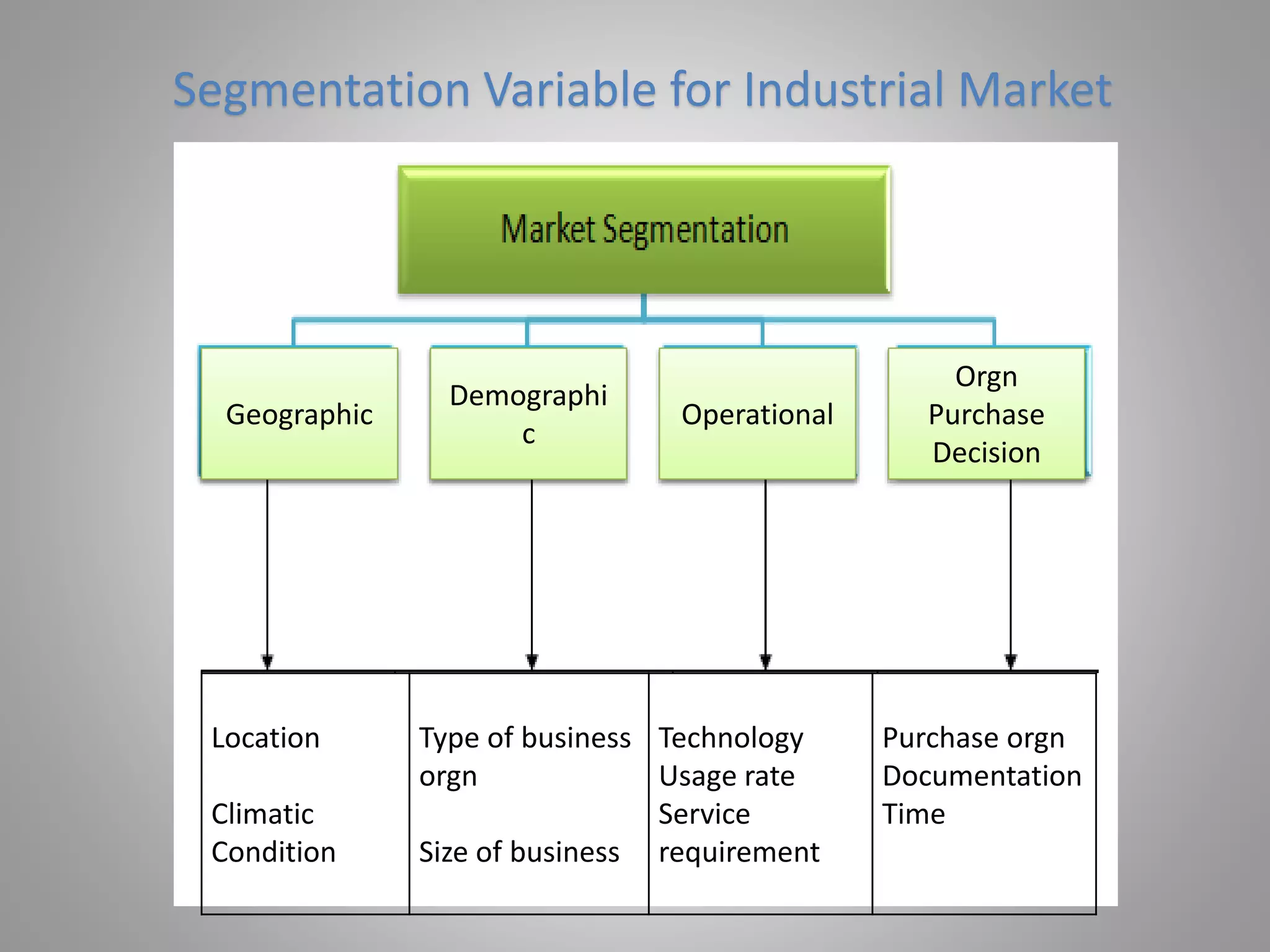
Operational
Orgn
Purchase
Decision
Geographic
Demographi
c
Segmentation Variable for Industrial Market
Location
Climatic
Condition
Type of business
orgn
Size of business
Technology
Usage rate
Service
requirement
Purchase orgn
Documentation
Time
Targeted marketing is the process of
identifying customers and
promoting products and services via
mediums that are likely to reach
those potential customers. Target
Marketing involves breaking a
market into segments and then
concentrating your marketing efforts
on one or a few key segments.
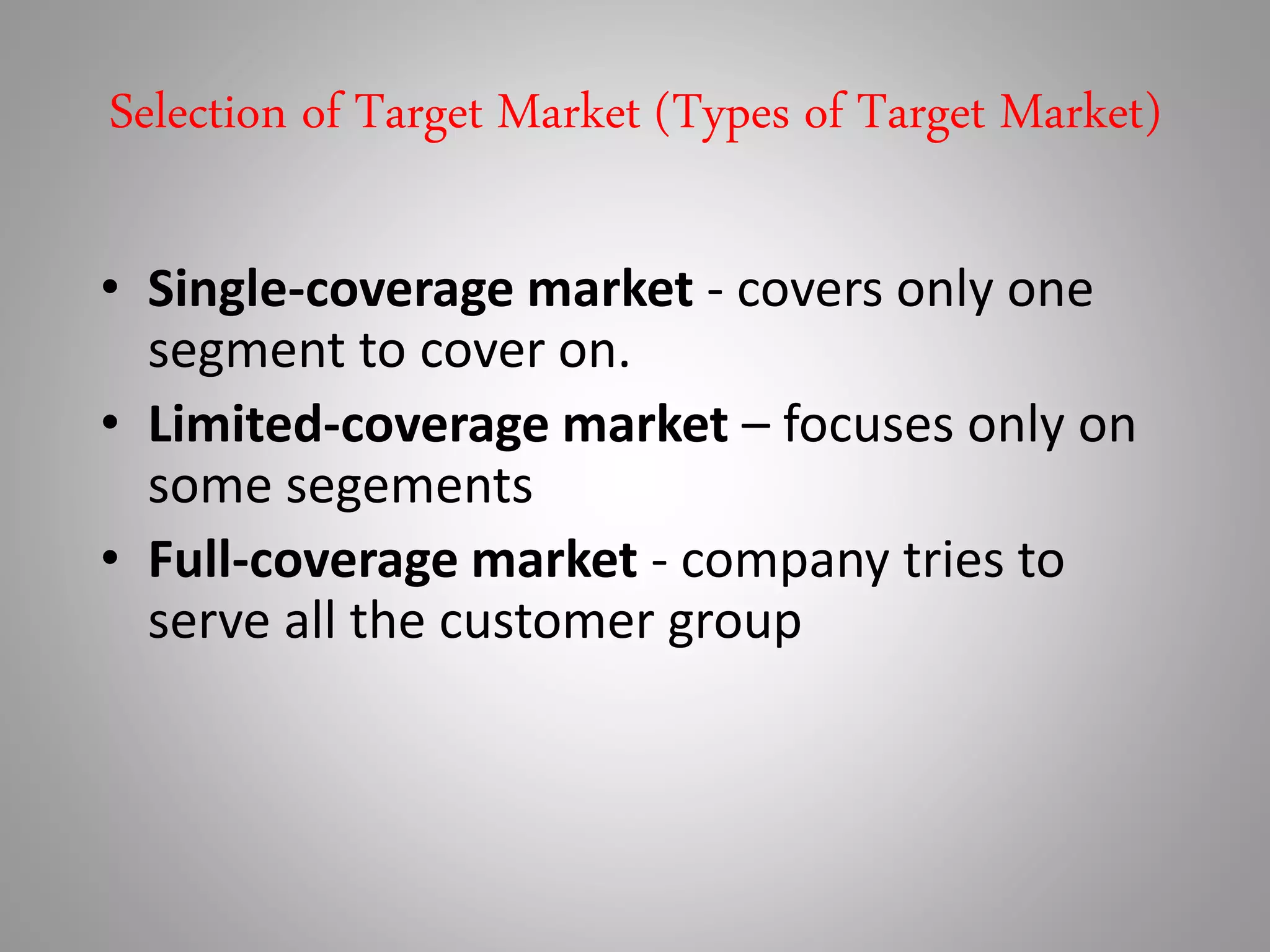
Selection of Target Market (Types of Target Market)
• Single-coverage market - covers only one
segment to cover on.
• Limited-coverage market – focuses only on
some segements
• Full-coverage market - company tries to
serve all the customer group
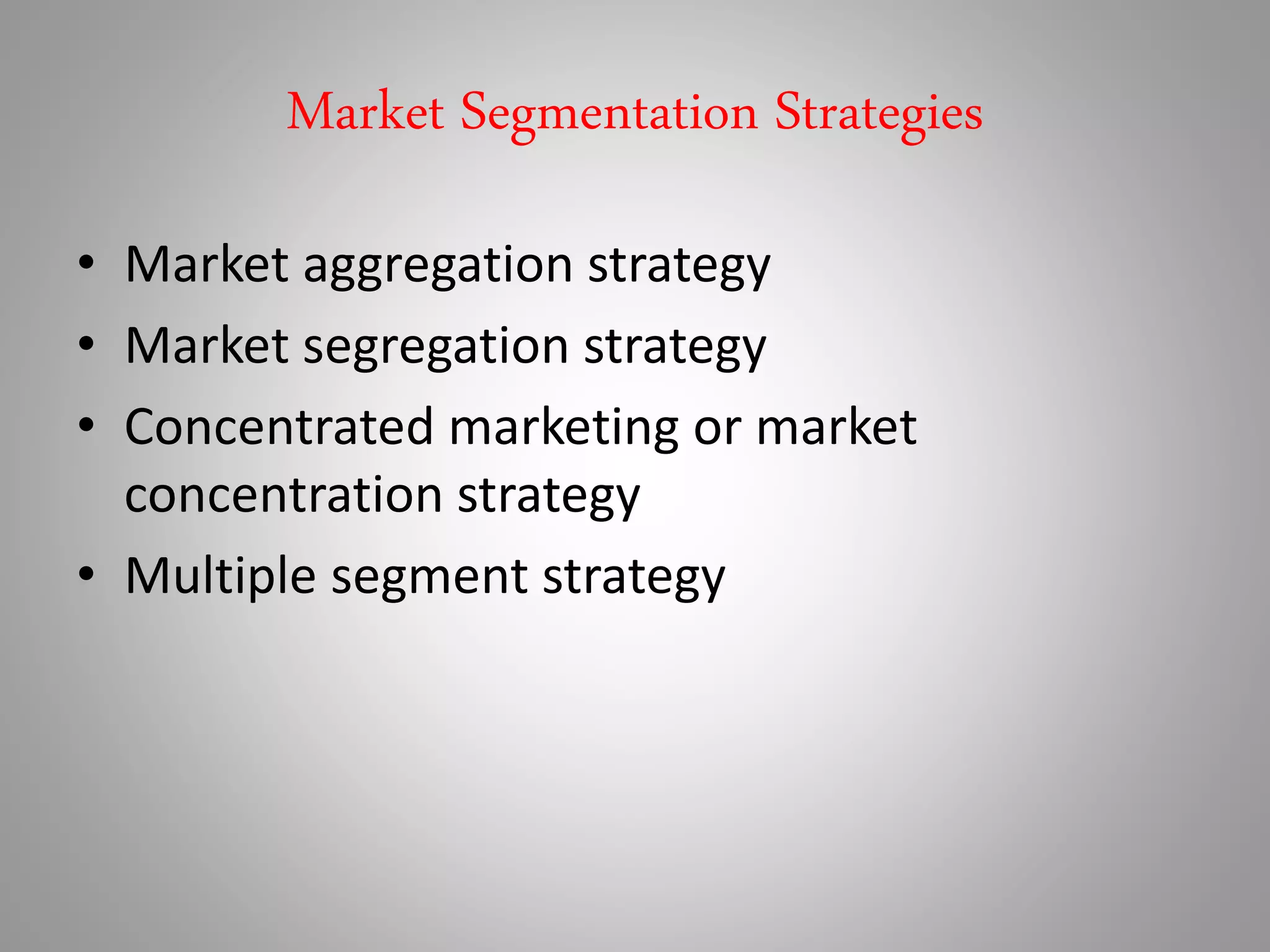
Market Segmentation Strategies
• Market aggregation strategy
• Market segregation strategy
• Concentrated marketing or market
concentration strategy
• Multiple segment strategy
1. Segment size and growth
2. Segment structural attractiveness
The five threat analysis for evaluation of the
market segments’ are:
a. Threat of intense segment rivalry
b. Threat of new entrants
c. Threat of substitute products
d. Threat of buying power of customers
e. Threat of bargaining power of suppliers
3. Organizational objectives and resources
It involves careful and through analysis of the market
segments that look attractive from the point of view of size,
growth and long-run profit potentials. It involves analysis of
following aspects:
 Estimate of total demand for the product in the segment
 The market share of competitors
 The relative strength of the competitors in relation to
product-service offers, quality, price, customer loyalty,
distribution network, etc.
 The organization’s resources to meet the challenges in
the market segment.
 Possible marketing mix alternatives to be implemented
in the segment
1. Single segment coverage
2. Multi-segment coverage
3. Product specialization
4. Market specialization
5. Full market coverage
6. Niche marketing
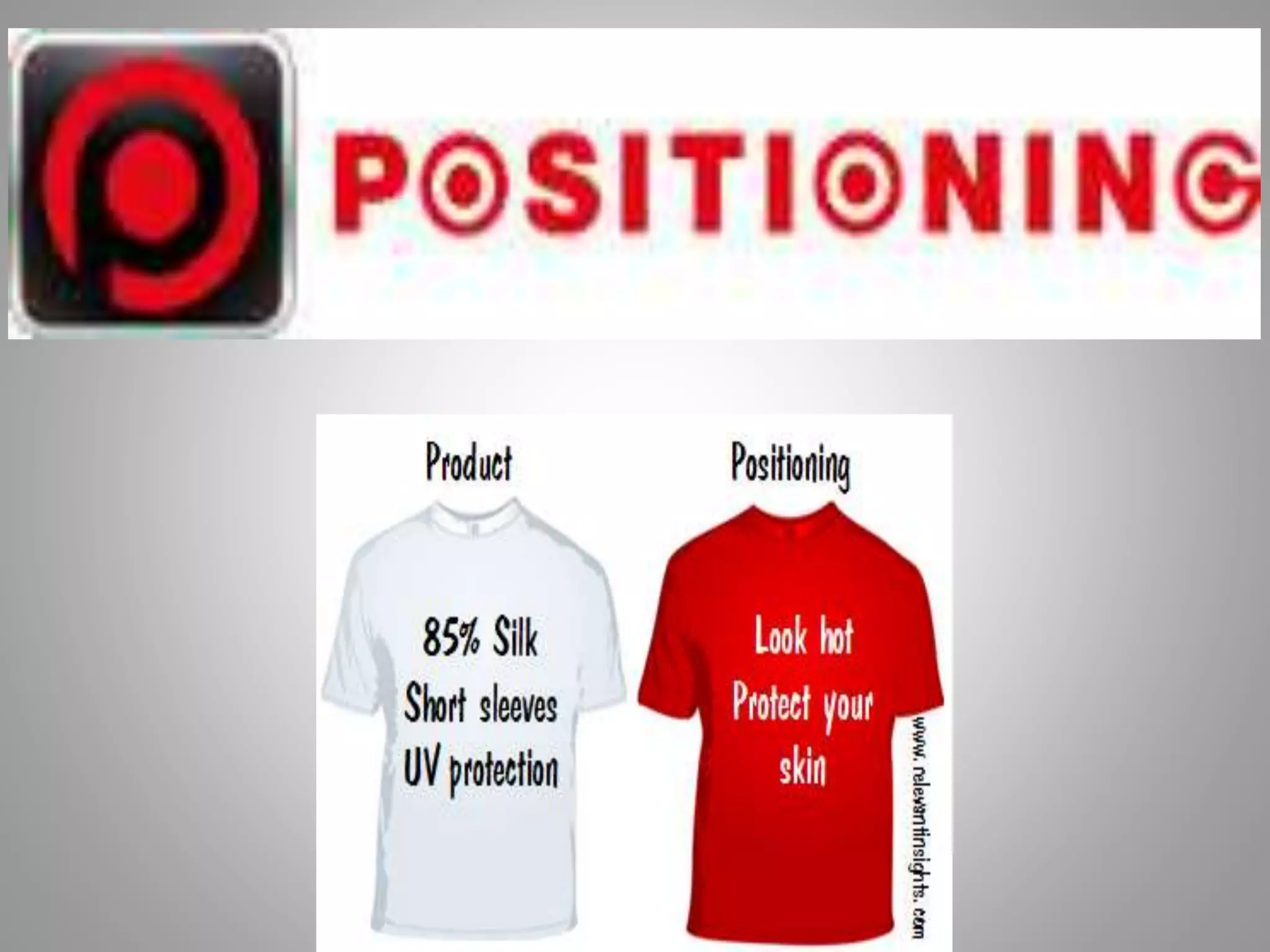
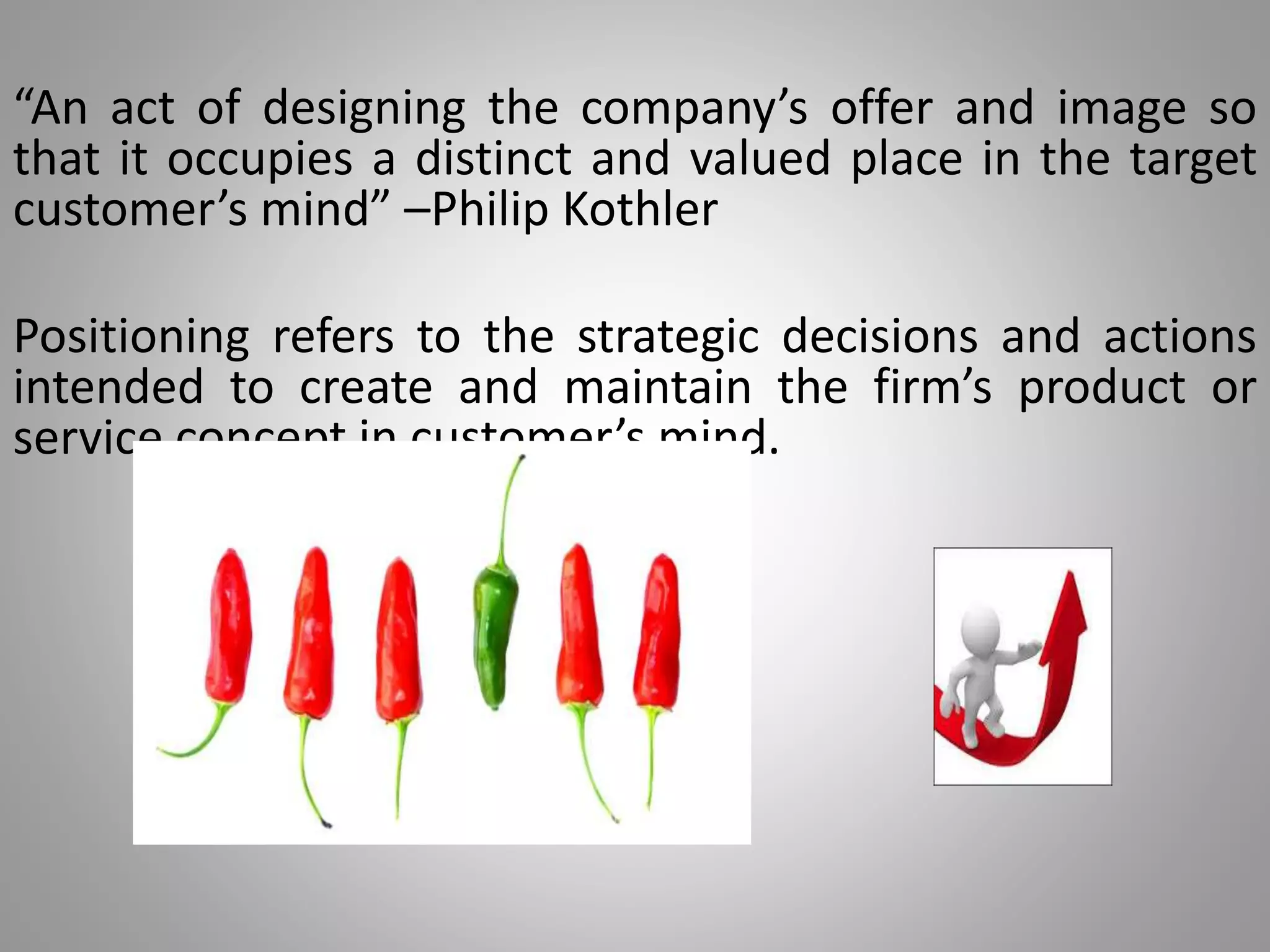
“An act of designing the company’s offer and image so
that it occupies a distinct and valued place in the target
customer’s mind” –Philip Kothler
Positioning refers to the strategic decisions and actions
intended to create and maintain the firm’s product or
service concept in customer’s mind.
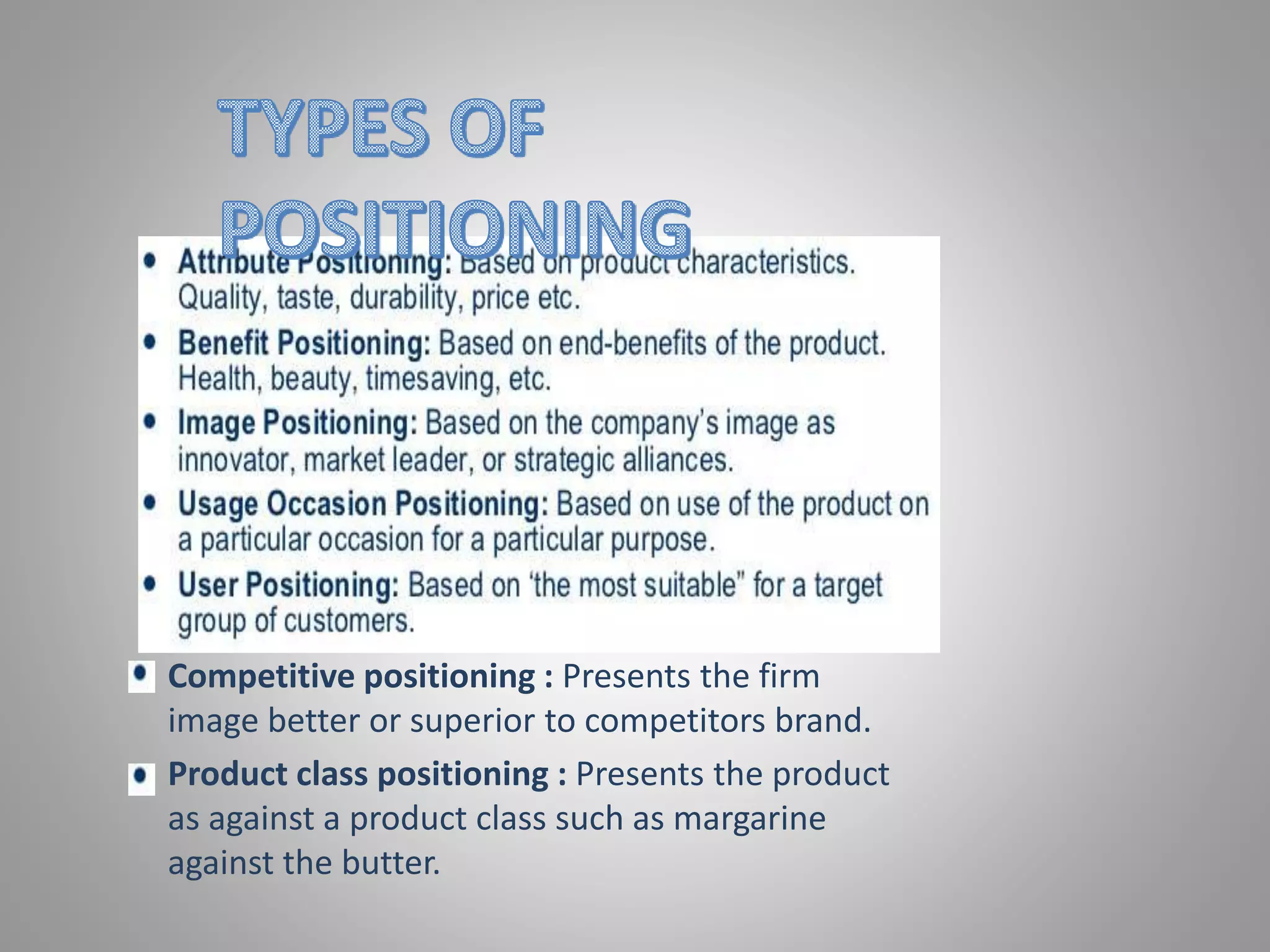
Competitive positioning : Presents the firm
image better or superior to competitors brand.
Product class positioning : Presents the product
as against a product class such as margarine
against the butter.
1. Identification of the actual competition
2. Determination of how the competitors are
perceived and evaluated
3. Determination of the competitors’ position in
the market
4. Analysis of the customers’ objective
preferences, tastes, problems, needs, etc.
5. Selection of the best position
6. Monitoring the position
Market segmentation & positioning

Market segmentation & positioning

  • 1.
    A process ofdividing the total market for a good or service into several smaller groups, such that the members of each group are similar with respect to the factors that influence demand.
  • 2.
    Objective of Marketsegmentation • Knowledge of attractive marketing opportunities • Facilitates selection of target market • Facilitates determination of product mix • Selection of suitable channels • Assessment of strengths and weakness • Helps in effective marketing program
  • 4.
    1. Identification ofmarket segments 2. Development of profiles for each segment 3. Evaluation of market segments 4. Selection of target market 5. Development of positioning strategy 6. Establishment of a marketing plan and program
  • 5.
  • 6.
  • 7.
  • 8.
  • 9.
  • 10.
  • 11.
    Operational Orgn Purchase Decision Geographic Demographi c Segmentation Variable forIndustrial Market Location Climatic Condition Type of business orgn Size of business Technology Usage rate Service requirement Purchase orgn Documentation Time
  • 12.
    Targeted marketing isthe process of identifying customers and promoting products and services via mediums that are likely to reach those potential customers. Target Marketing involves breaking a market into segments and then concentrating your marketing efforts on one or a few key segments.
  • 13.
    Selection of TargetMarket (Types of Target Market) • Single-coverage market - covers only one segment to cover on. • Limited-coverage market – focuses only on some segements • Full-coverage market - company tries to serve all the customer group
  • 14.
    Market Segmentation Strategies •Market aggregation strategy • Market segregation strategy • Concentrated marketing or market concentration strategy • Multiple segment strategy
  • 15.
    1. Segment sizeand growth 2. Segment structural attractiveness The five threat analysis for evaluation of the market segments’ are: a. Threat of intense segment rivalry b. Threat of new entrants c. Threat of substitute products d. Threat of buying power of customers e. Threat of bargaining power of suppliers 3. Organizational objectives and resources
  • 16.
    It involves carefuland through analysis of the market segments that look attractive from the point of view of size, growth and long-run profit potentials. It involves analysis of following aspects:  Estimate of total demand for the product in the segment  The market share of competitors  The relative strength of the competitors in relation to product-service offers, quality, price, customer loyalty, distribution network, etc.  The organization’s resources to meet the challenges in the market segment.  Possible marketing mix alternatives to be implemented in the segment
  • 17.
    1. Single segmentcoverage 2. Multi-segment coverage 3. Product specialization 4. Market specialization 5. Full market coverage 6. Niche marketing
  • 19.
    “An act ofdesigning the company’s offer and image so that it occupies a distinct and valued place in the target customer’s mind” –Philip Kothler Positioning refers to the strategic decisions and actions intended to create and maintain the firm’s product or service concept in customer’s mind.
  • 20.
    Competitive positioning :Presents the firm image better or superior to competitors brand. Product class positioning : Presents the product as against a product class such as margarine against the butter.
  • 21.
    1. Identification ofthe actual competition 2. Determination of how the competitors are perceived and evaluated 3. Determination of the competitors’ position in the market 4. Analysis of the customers’ objective preferences, tastes, problems, needs, etc. 5. Selection of the best position 6. Monitoring the position