

MARKET RESEARCH
for PRODUCT DEVELOPMENT
AUTHOR: ELENA TRAN
HTTPS://WWW.LINKEDIN.COM/IN/ELENATRAN90
26/08/15
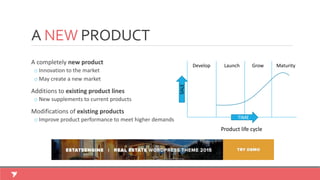
A NEW PRODUCT
A completely new product
o Innovation to the market
o May create a new market
Additions to existing product lines
o New supplements to current products
Modifications of existing products
o Improve product performance to meet higher demands
Product life cycle
Develop Launch Grow Maturity
TIME
SALE
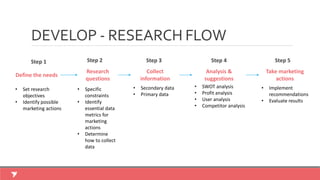
DEVELOP - RESEARCH FLOW
Define the needs
• Set research
objectives
• Identify possible
marketing actions
Research
questions
• Specific
constraints
• Identify
essential data
metrics for
marketing
actions
• Determine
how to collect
data
Collect
information
• Secondary data
• Primary data
Analysis &
suggestions
• SWOT analysis
• Profit analysis
• User analysis
• Competitor analysis
Take marketing
actions
• Implement
recommendations
• Evaluate results
Step 1 Step 2 Step 3 Step 4 Step 5
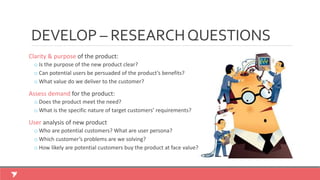
Clarity & purpose of the product:
o Is the purpose of the new product clear?
o Can potential users be persuaded of the product’s benefits?
o What value do we deliver to the customer?
Assess demand for the product:
o Does the product meet the need?
o What is the specific nature of target customers’ requirements?
User analysis of new product
o Who are potential customers? What are user persona?
o Which customer’s problems are we solving?
o How likely are potential customers buy the product at face value?
DEVELOP – RESEARCHQUESTIONS
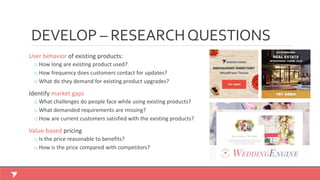
User behavior of existing products:
o How long are existing product used?
o How frequency does customers contact for updates?
o What do they demand for existing product upgrades?
Identify market gaps
o What challenges do people face while using existing products?
o What demanded requirements are missing?
o How are current customers satisfied with the existing products?
Value-based pricing
o Is the price reasonable to benefits?
o How is the price compared with competitors?
DEVELOP – RESEARCHQUESTIONS
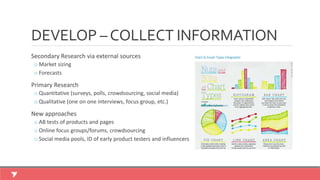
Secondary Research via external sources
o Market sizing
o Forecasts
Primary Research
o Quantitative (surveys, polls, crowdsourcing, social media)
o Qualitative (one on one interviews, focus group, etc.)
New approaches
o AB tests of products and pages
o Online focus groups/forums, crowdsourcing
o Social media pools, ID of early product testers and influencers
DEVELOP –COLLECT INFORMATION
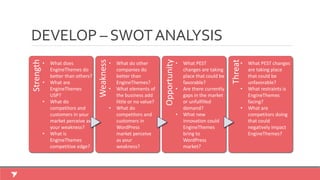
Strength
Weakness
Opportunity
Threat
DEVELOP – SWOTANALYSIS
• What does
EngineThemes do
better than others?
• What are
EngineThemes
USP?
• What do
competitors and
customers in your
market perceive as
your weakness?
• What is
EngineThemes
competitive edge?
• What PEST changes
are taking place
that could be
unfavorable?
• What restraints is
EngineThemes
facing?
• What are
competitors doing
that could
negatively impact
EngineThemes?
• What do other
companies do
better than
EngineThemes?
• What elements of
the business add
little or no value?
• What do
competitors and
customers in
WordPress
market perceive
as your
weakness?
• What PEST
changes are taking
place that could be
favorable?
• Are there currently
gaps in the market
or unfulfilled
demand?
• What new
innovation could
EngineThemes
bring to
WordPress
market?
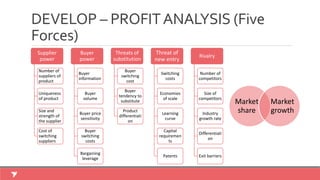
DEVELOP – PROFITANALYSIS (Five
Forces)
Supplier
power
Number of
suppliers of
product
Uniqueness
of product
Size and
strength of
the supplier
Cost of
switching
suppliers
Buyer
power
Buyer
information
Buyer
volume
Buyer price
sensitivity
Buyer
switching
costs
Bargaining
leverage
Threats of
substitution
Buyer
switching
cost
Buyer
tendency to
substitute
Product
differentiati
on
Threat of
new entry
Switching
costs
Economies
of scale
Learning
curve
Capital
requiremen
ts
Patents
Rivalry
Number of
competitors
Size of
competitors
Industry
growth rate
Differentiati
on
Exit barriers
Market
share
Market
growth
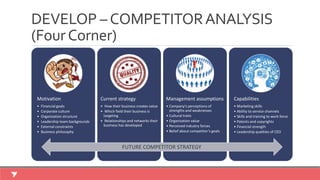
DEVELOP –COMPETITORANALYSIS
(FourCorner)
Motivation
• Financial goals
• Corporate culture
• Organization structure
• Leadership team backgrounds
• External constraints
• Business philosophy
Current strategy
• How their business creates value
• Which field their business is
targeting
• Relationships and networks their
business has developed
Management assumptions
• Company’s perceptions of
strengths and weaknesses
• Cultural traits
• Organization value
• Perceived industry forces
• Belief about competitor’s goals
Capabilities
• Marketing skills
• Ability to service channels
• Skills and training to work force
• Patents and copyrights
• Financial strength
• Leadership qualities of CEO
FUTURE COMPETITOR STRATEGY

Market Research Flow & Methodologies

  • 1.
    MARKET RESEARCH for PRODUCTDEVELOPMENT AUTHOR: ELENA TRAN HTTPS://WWW.LINKEDIN.COM/IN/ELENATRAN90 26/08/15
  • 2.
    A NEW PRODUCT Acompletely new product o Innovation to the market o May create a new market Additions to existing product lines o New supplements to current products Modifications of existing products o Improve product performance to meet higher demands Product life cycle Develop Launch Grow Maturity TIME SALE
  • 3.
    DEVELOP - RESEARCHFLOW Define the needs • Set research objectives • Identify possible marketing actions Research questions • Specific constraints • Identify essential data metrics for marketing actions • Determine how to collect data Collect information • Secondary data • Primary data Analysis & suggestions • SWOT analysis • Profit analysis • User analysis • Competitor analysis Take marketing actions • Implement recommendations • Evaluate results Step 1 Step 2 Step 3 Step 4 Step 5
  • 4.
    Clarity & purposeof the product: o Is the purpose of the new product clear? o Can potential users be persuaded of the product’s benefits? o What value do we deliver to the customer? Assess demand for the product: o Does the product meet the need? o What is the specific nature of target customers’ requirements? User analysis of new product o Who are potential customers? What are user persona? o Which customer’s problems are we solving? o How likely are potential customers buy the product at face value? DEVELOP – RESEARCHQUESTIONS
  • 5.
    User behavior ofexisting products: o How long are existing product used? o How frequency does customers contact for updates? o What do they demand for existing product upgrades? Identify market gaps o What challenges do people face while using existing products? o What demanded requirements are missing? o How are current customers satisfied with the existing products? Value-based pricing o Is the price reasonable to benefits? o How is the price compared with competitors? DEVELOP – RESEARCHQUESTIONS
  • 6.
    Secondary Research viaexternal sources o Market sizing o Forecasts Primary Research o Quantitative (surveys, polls, crowdsourcing, social media) o Qualitative (one on one interviews, focus group, etc.) New approaches o AB tests of products and pages o Online focus groups/forums, crowdsourcing o Social media pools, ID of early product testers and influencers DEVELOP –COLLECT INFORMATION
  • 7.
    Strength Weakness Opportunity Threat DEVELOP – SWOTANALYSIS •What does EngineThemes do better than others? • What are EngineThemes USP? • What do competitors and customers in your market perceive as your weakness? • What is EngineThemes competitive edge? • What PEST changes are taking place that could be unfavorable? • What restraints is EngineThemes facing? • What are competitors doing that could negatively impact EngineThemes? • What do other companies do better than EngineThemes? • What elements of the business add little or no value? • What do competitors and customers in WordPress market perceive as your weakness? • What PEST changes are taking place that could be favorable? • Are there currently gaps in the market or unfulfilled demand? • What new innovation could EngineThemes bring to WordPress market?
  • 8.
    DEVELOP – PROFITANALYSIS(Five Forces) Supplier power Number of suppliers of product Uniqueness of product Size and strength of the supplier Cost of switching suppliers Buyer power Buyer information Buyer volume Buyer price sensitivity Buyer switching costs Bargaining leverage Threats of substitution Buyer switching cost Buyer tendency to substitute Product differentiati on Threat of new entry Switching costs Economies of scale Learning curve Capital requiremen ts Patents Rivalry Number of competitors Size of competitors Industry growth rate Differentiati on Exit barriers Market share Market growth
  • 9.
    DEVELOP –COMPETITORANALYSIS (FourCorner) Motivation • Financialgoals • Corporate culture • Organization structure • Leadership team backgrounds • External constraints • Business philosophy Current strategy • How their business creates value • Which field their business is targeting • Relationships and networks their business has developed Management assumptions • Company’s perceptions of strengths and weaknesses • Cultural traits • Organization value • Perceived industry forces • Belief about competitor’s goals Capabilities • Marketing skills • Ability to service channels • Skills and training to work force • Patents and copyrights • Financial strength • Leadership qualities of CEO FUTURE COMPETITOR STRATEGY