Market Analysis and Surveying
E.M. Erasmus, MA
January 28,
2014
Roadmap
• Why do Market Analysis?
• Market Analysis Grid
• Research Process
• Low-Budget/DIY Market Analysis
• Some Helpful Tips and Resources
• Final Thoughts
Why do Market Analysis?
• A key part of developing your business
strategy
• Both first-time entrepreneurs and existing
companies need market information for
new products and services.
Why do Market Analysis?
Marketing Analysis can be used to:
• Identify & Assess Opportunities
• Examine Market Segments
• Select Target Markets
• Plan & Implement Marketing Mixes
• Evaluate Marketing Performance
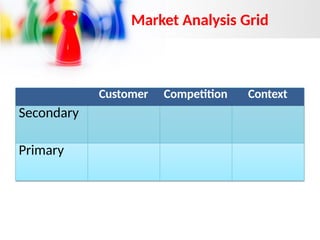
Market Analysis Grid
Customer Competition Context
Secondary
Primary
CUSTOMER ANALYSIS
After first identifying your market, you will
then need to select a target market to be
the focus of your company’s efforts.
Target Market and Customer
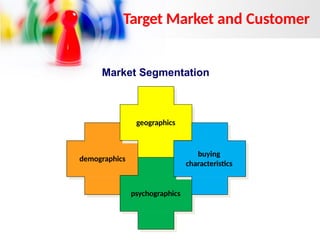
• Consumer market segmentation is
based on geographics, demographics,
psychographics, and buying
characteristics.
• A business can select and serve
multiple
market segments.
Target Market and Customer
Market Segmentation
demographics
geographics
psychographics
buying
characteristics
Target Market and Customer
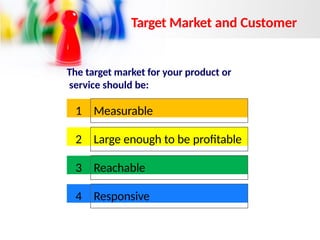
The target market for your product or
service should be:
Measurable
Large enough to be profitable
Reachable
Responsive
1
2
3
4
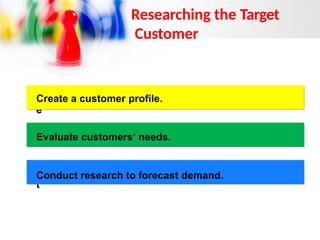
Creat
e
Evaluate
Forecas
t
Create a customer profile.
Evaluate customers’ needs.
Conduct research to forecast demand.
Researching the Target
Customer
Creating a customer profile (personas) is the
first step in targeting your marketing efforts.
• Age, gender, lifestyle
• Purchasing power
• Purchasing process
• Frequency of purchase, etc.
Creating a Customer
Profile
In order to provide what the customer wants,
you should prepare a customer needs analysis:
that is a list of features and benefits of your
good or service that the customers value
Evaluating Customers’
Needs
Several methods can be used to forecast
demand:
Use historical analogy.
Interview prospective customers and
intermediaries.
Go into limited supply.
Forecasting Demand
• Usually, competing products and
services are already established in the
market.
• To succeed, you must be able to capture
market share by differentiating your
business.
The Competition
Many entrepreneurial companies succeed
by studying the competition to define a
niche in the market.
The Competition
The Competition
Create a profile of direct and indirect
competitors in the market:
• Who are they?
• What makes them successful?
• What are their weaknesses?
• How will they react to new market
entrants?
BUSINESS CONTEXT (ENVIRONMENT)
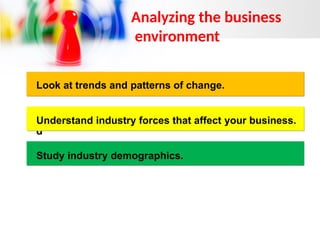
Look
Understan
d
Study
Look at trends and patterns of change.
Understand industry forces that affect your business.
Study industry demographics.
Analyzing the business
environment
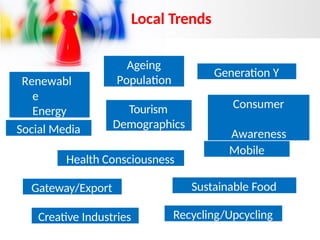
Local Trends
Renewabl
e
Energy
Ageing
Population
Tourism
Demographics
Social Media
Mobile
Gateway/Export
Generation Y
Recycling/Upcycling
Consumer
Awareness
Creative Industries
Sustainable Food
Health Consciousness
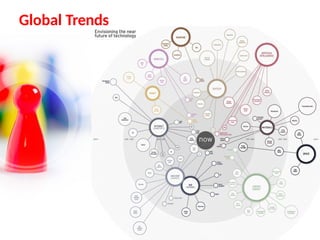
Global Trends
Global Trends
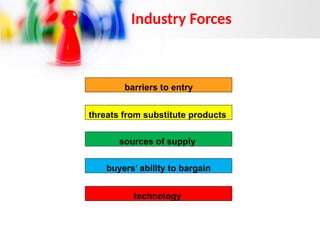
barriers to entry
threats from substitute products
sources of supply
buyers’ ability to bargain
technology
Industry Forces
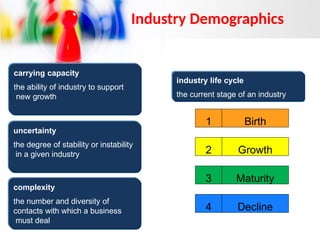
carrying capacity
the ability of industry to support
new growth
uncertainty
the degree of stability or instability
in a given industry
complexity
the number and diversity of
contacts with which a business
must deal
1
2
3
4
Birth
Growth
Maturity
Decline
industry life cycle
the current stage of an industry
Industry Demographics
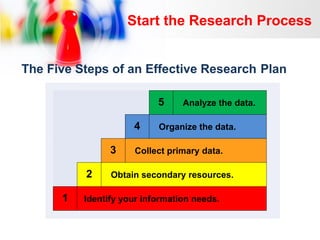
5 Analyze the data.
4 Organize the data.
3 Collect primary data.
2 Obtain secondary resources.
1 Identify your information needs.
Start the Research Process
The Five Steps of an Effective Research Plan
Research secondary data before
researching primary sources because it is
easily obtained and inexpensive.
Start the Research Process
The most common methods of gathering
primary data are:
• observation
• interviews
• surveys
Start the Research Process
LOW-BUDGET/DIY MARKET ANALYSIS
Low-Budget Market Analysis
& Surveying
• Use social media
• Talk to potential customers
• Visit your (potential) competitor
• Attend lectures and workshops (UA, KvK, etc.)
• Make use of UA students to conduct research
• Research and project reports database UA
Rule of Thumb
• The larger your investment,
the more extensive your
market analysis should be.
RESOURCES AND TIPS
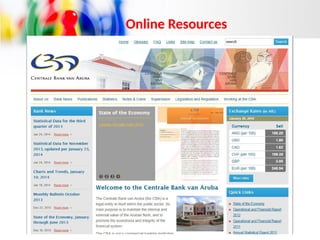
Online Resources
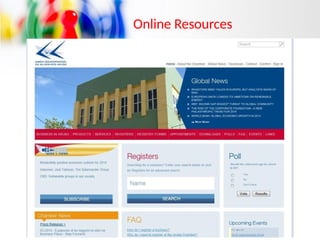
Online Resources
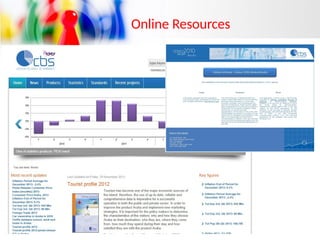
Online Resources
Online resources
• http://www.marketresearchworld.net/
• http://www.bizstats.com/
• http://www.markettools.com/KnowledgeCenter
• http://www.sba.gov
• http://freeonlinesurveys.com/
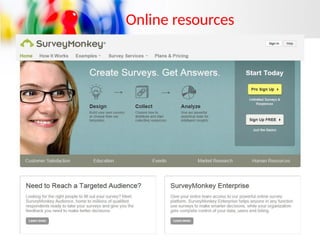
• http://www.surveymonkey.com/
Online resources
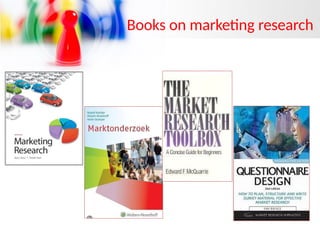
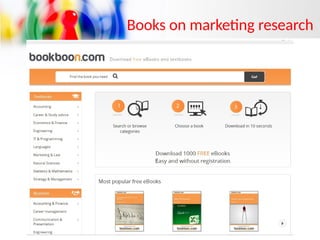
Books on marketing research
• Methodology: should be good enough,
not (scientifically) perfect;
• Make marketing research a habit;
• Don’t just rely on family and friends;
• Don’t just collect data…do something
with it!;
• Know your industry…inside and
Sharing some wisdom
Always Remember
• Market Analysis & Surveying is a tool.
• It assists entrepreneurs in their
decision making.
• IT IS NOT A REPLACEMENT FOR
ENTREPRENEURIAL JUDGEMENT!!
Final thoughts…
“He who asks is a fool for five minutes.
He who does not ask is a fool
forever.”
~ Chinese proverb
entrep lesson :Intro market analysis.pptx

entrep lesson :Intro market analysis.pptx

  • 1.
    Market Analysis andSurveying E.M. Erasmus, MA January 28, 2014
  • 2.
    Roadmap • Why doMarket Analysis? • Market Analysis Grid • Research Process • Low-Budget/DIY Market Analysis • Some Helpful Tips and Resources • Final Thoughts
  • 3.
    Why do MarketAnalysis? • A key part of developing your business strategy • Both first-time entrepreneurs and existing companies need market information for new products and services.
  • 4.
    Why do MarketAnalysis? Marketing Analysis can be used to: • Identify & Assess Opportunities • Examine Market Segments • Select Target Markets • Plan & Implement Marketing Mixes • Evaluate Marketing Performance
  • 5.
    Market Analysis Grid CustomerCompetition Context Secondary Primary
  • 6.
  • 7.
    After first identifyingyour market, you will then need to select a target market to be the focus of your company’s efforts. Target Market and Customer
  • 8.
    • Consumer marketsegmentation is based on geographics, demographics, psychographics, and buying characteristics. • A business can select and serve multiple market segments. Target Market and Customer
  • 9.
  • 10.
    Target Market andCustomer The target market for your product or service should be: Measurable Large enough to be profitable Reachable Responsive 1 2 3 4
  • 11.
    Creat e Evaluate Forecas t Create a customerprofile. Evaluate customers’ needs. Conduct research to forecast demand. Researching the Target Customer
  • 12.
    Creating a customerprofile (personas) is the first step in targeting your marketing efforts. • Age, gender, lifestyle • Purchasing power • Purchasing process • Frequency of purchase, etc. Creating a Customer Profile
  • 13.
    In order toprovide what the customer wants, you should prepare a customer needs analysis: that is a list of features and benefits of your good or service that the customers value Evaluating Customers’ Needs
  • 14.
    Several methods canbe used to forecast demand: Use historical analogy. Interview prospective customers and intermediaries. Go into limited supply. Forecasting Demand
  • 16.
    • Usually, competingproducts and services are already established in the market. • To succeed, you must be able to capture market share by differentiating your business. The Competition
  • 17.
    Many entrepreneurial companiessucceed by studying the competition to define a niche in the market. The Competition
  • 18.
    The Competition Create aprofile of direct and indirect competitors in the market: • Who are they? • What makes them successful? • What are their weaknesses? • How will they react to new market entrants?
  • 19.
  • 20.
    Look Understan d Study Look at trendsand patterns of change. Understand industry forces that affect your business. Study industry demographics. Analyzing the business environment
  • 21.
    Local Trends Renewabl e Energy Ageing Population Tourism Demographics Social Media Mobile Gateway/Export GenerationY Recycling/Upcycling Consumer Awareness Creative Industries Sustainable Food Health Consciousness
  • 22.
  • 23.
  • 24.
    barriers to entry threatsfrom substitute products sources of supply buyers’ ability to bargain technology Industry Forces
  • 25.
    carrying capacity the abilityof industry to support new growth uncertainty the degree of stability or instability in a given industry complexity the number and diversity of contacts with which a business must deal 1 2 3 4 Birth Growth Maturity Decline industry life cycle the current stage of an industry Industry Demographics
  • 27.
    5 Analyze thedata. 4 Organize the data. 3 Collect primary data. 2 Obtain secondary resources. 1 Identify your information needs. Start the Research Process The Five Steps of an Effective Research Plan
  • 28.
    Research secondary databefore researching primary sources because it is easily obtained and inexpensive. Start the Research Process
  • 29.
    The most commonmethods of gathering primary data are: • observation • interviews • surveys Start the Research Process
  • 30.
  • 31.
    Low-Budget Market Analysis &Surveying • Use social media • Talk to potential customers • Visit your (potential) competitor • Attend lectures and workshops (UA, KvK, etc.) • Make use of UA students to conduct research • Research and project reports database UA
  • 32.
    Rule of Thumb •The larger your investment, the more extensive your market analysis should be.
  • 33.
  • 34.
  • 35.
  • 36.
  • 37.
    Online resources • http://www.marketresearchworld.net/ •http://www.bizstats.com/ • http://www.markettools.com/KnowledgeCenter • http://www.sba.gov • http://freeonlinesurveys.com/ • http://www.surveymonkey.com/
  • 38.
  • 39.
  • 40.
  • 41.
    • Methodology: shouldbe good enough, not (scientifically) perfect; • Make marketing research a habit; • Don’t just rely on family and friends; • Don’t just collect data…do something with it!; • Know your industry…inside and Sharing some wisdom
  • 42.
    Always Remember • MarketAnalysis & Surveying is a tool. • It assists entrepreneurs in their decision making. • IT IS NOT A REPLACEMENT FOR ENTREPRENEURIAL JUDGEMENT!!
  • 43.
    Final thoughts… “He whoasks is a fool for five minutes. He who does not ask is a fool forever.” ~ Chinese proverb