Managing Pediatric Covid 19
Patients on Ventilator
Prof. (Dr.) Smriti Arora
Amity College of Nursing
Amity University Haryana
smritiamit@msn.com
INTRODUCTION
• Coronavirus disease 2019 (COVID-19)- viral respiratory illness caused
by severe acute respiratory syndrome coronavirus 2 (SARS-CoV-2), a
single-stranded RNA virus that most likely originated in bats.
• MOT- person-to-person via close contact (the virus can be transferred
from the hands to the eyes, nose, or mouth) and respiratory droplets
(produced when an infected person coughs or sneezes). SARS CoV-2
can remain viable on various surfaces for hours to days
• No evidence of vertical transmission or transmission via breastfeeding.
• Transmission from asymptomatic or mildly symptomatic carriers or
during the incubation period is between 1-14 days (mean 5 days), ;
95% of patients develop symptoms up to 12.5 days after exposure.
• Thus quarantine period- 14 days after exposure
INTRODUCTION
• Pediatric coronavirus disease – 19 (COVID-19) infection is relatively
mild when compared to adults, and children are reported to have a
better prognosis.
• Mortality in children appears rare.
• The coronavirus disease mainly starts with a respiratory illness and
about 5%-16% require intensive care management for ARDS and
multi-organ dysfunction.
• Children account for about 1%- 2% of the total cases, and 6% of these
fall under severe or critical category requiring PICU
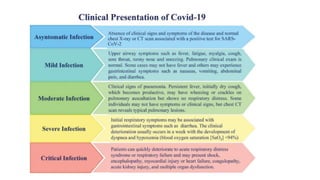
Clinical Course
• The most common presentation is short H/O prodrome with myalgias,
malaise, cough and low-grade fever. As per the case series from
China, only 40-70% of the pediatric patients have fever as an initial
presentation.
• During the 2nd week of illness- progression of the disease gradually
leads to difficulty in breathing.
• Reports from China have suggested that it takes an average of 8 days
for the development of dyspnea and 9 days for the onset of
pneumonia/pneumonitis
Clinical Presentation
• Fever
• Cough
• Nasal congestion or rhinorrhea
• Sore throat
• Shortness of breath
• Diarrhea
• Nausea or vomiting
• Fatigue
• Headache
• Myalgia
• Poor feeding or poor appetite, rashes
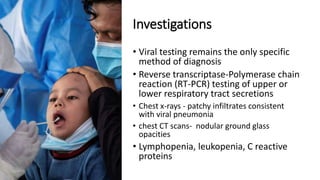
Investigations
• Viral testing remains the only specific
method of diagnosis
• Reverse transcriptase-Polymerase chain
reaction (RT-PCR) testing of upper or
lower respiratory tract secretions
• Chest x-rays - patchy infiltrates consistent
with viral pneumonia
• chest CT scans- nodular ground glass
opacities
• Lymphopenia, leukopenia, C reactive
proteins
Differential Diagnosis
The clinical presentation of COVID-19 overlaps with other infections like
• influenza
• respiratory syncytial virus (RSV), adenovirus, human meta-
pneumovirus
• non COVID-19 coronavirus
• atypical organisms (mycoplasma, chlamydia) and bacterial infections.
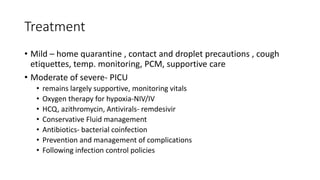
Treatment
• Mild – home quarantine , contact and droplet precautions , cough
etiquettes, temp. monitoring, PCM, supportive care
• Moderate of severe- PICU
• remains largely supportive, monitoring vitals
• Oxygen therapy for hypoxia-NIV/IV
• HCQ, azithromycin, Antivirals- remdesivir
• Conservative Fluid management
• Antibiotics- bacterial coinfection
• Prevention and management of complications
• Following infection control policies
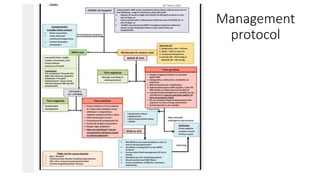
Management
protocol
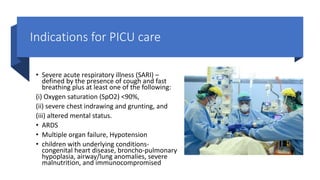
Indications for PICU care
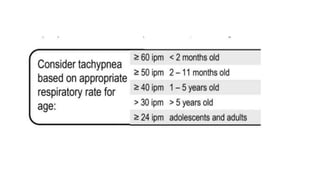
• Severe acute respiratory illness (SARI) –
defined by the presence of cough and fast
breathing plus at least one of the following:
(i) Oxygen saturation (SpO2) <90%,
(ii) severe chest indrawing and grunting, and
(iii) altered mental status.
• ARDS
• Multiple organ failure, Hypotension
• children with underlying conditions-
congenital heart disease, broncho-pulmonary
hypoplasia, airway/lung anomalies, severe
malnutrition, and immunocompromised
MANAGEMENT OF HYPOXEMIC RESPIRATORY
FAILURE
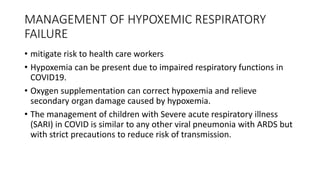
• mitigate risk to health care workers
• Hypoxemia can be present due to impaired respiratory functions in
COVID19.
• Oxygen supplementation can correct hypoxemia and relieve
secondary organ damage caused by hypoxemia.
• The management of children with Severe acute respiratory illness
(SARI) in COVID is similar to any other viral pneumonia with ARDS but
with strict precautions to reduce risk of transmission.
Protection From Aerosol
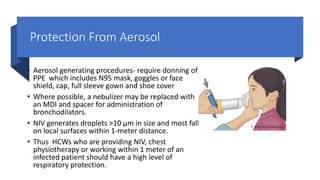
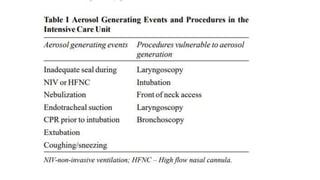
• Aerosol generating procedures- require donning of
PPE which includes N95 mask, goggles or face
shield, cap, full sleeve gown and shoe cover
• Where possible, a nebulizer may be replaced with
an MDI and spacer for administration of
bronchodilators.
• NIV generates droplets >10 µm in size and most fall
on local surfaces within 1-meter distance.
• Thus HCWs who are providing NIV, chest
physiotherapy or working within 1 meter of an
infected patient should have a high level of
respiratory protection.
PPE
Oxygen Therapy
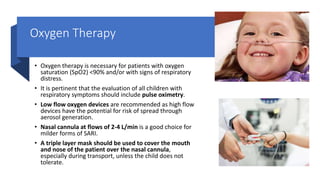
• Oxygen therapy is necessary for patients with oxygen
saturation (SpO2) <90% and/or with signs of respiratory
distress.
• It is pertinent that the evaluation of all children with
respiratory symptoms should include pulse oximetry.
• Low flow oxygen devices are recommended as high flow
devices have the potential for risk of spread through
aerosol generation.
• Nasal cannula at flows of 2-4 L/min is a good choice for
milder forms of SARI.
• A triple layer mask should be used to cover the mouth
and nose of the patient over the nasal cannula,
especially during transport, unless the child does not
tolerate.
Heated Humidified High Flow Nasal
Cannula (HHHFNC/HFNC)
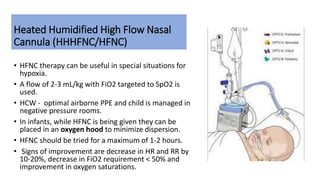
• HFNC therapy can be useful in special situations for
hypoxia.
• A flow of 2-3 mL/kg with FiO2 targeted to SpO2 is
used.
• HCW - optimal airborne PPE and child is managed in
negative pressure rooms.
• In infants, while HFNC is being given they can be
placed in an oxygen hood to minimize dispersion.
• HFNC should be tried for a maximum of 1-2 hours.
• Signs of improvement are decrease in HR and RR by
10-20%, decrease in FiO2 requirement < 50% and
improvement in oxygen saturations.
Non-invasive Ventilation
• Routine use of NIV is not recommended in COVID19.
• It should be used only in selected patients with hypoxemic respiratory
failure.
• Ideally, negative pressure single rooms are preferable for patients on NIV.
• However, in an outbreak of such a magnitude, some professional societies
recommend keeping a distance of at least two meters between two beds.
• Due to the high percentage of failure with NIV and the rapid progression of
the hypoxemic failure due to COVID-19, all patients receiving NIV need a
clear plan for treatment failure.
NIV
• PaO2/FiO2is a sensitive and accurate indicator of oxygenation
function on NIV and can be used to define the severity of ARDS once
the patient has been on a PEEP of 5 cm for a minimum of 30 minutes.
• Invasive ventilation must be considered if PaO2/FiO2 ratio is below
300.
• The most recent WHO interim guidance on management of the novel-
CoV recommends the use of NIV for mild cases of ARDS without
hemodynamic instability.
NIV
NIV
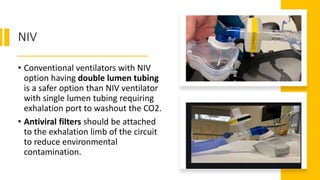
• Conventional ventilators with NIV
option having double lumen tubing
is a safer option than NIV ventilator
with single lumen tubing requiring
exhalation port to washout the CO2.
• Antiviral filters should be attached
to the exhalation limb of the circuit
to reduce environmental
contamination.
Bubble CPAP
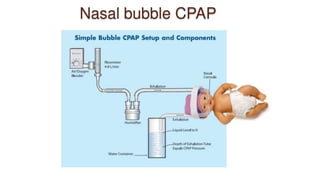
• Indication - where both non-invasive and invasive mechanical
ventilation are not available, bubble nasal CPAP may be used for
newborns and children with severe hypoxemia as these are readily
available alternative in resource-limited settings.
• To minimize environmental contamination the infant could be placed
in an oxygen hood to reduce droplets.
• These patients should be on continuous monitoring and cared for by
experienced personnel capable of performing ET intubation in case
the patient acutely deteriorates or does not improve after a short trial
(about 2 hours).
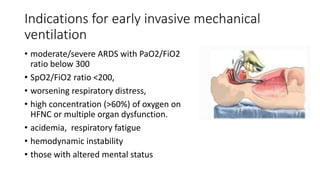
Indications for early invasive mechanical
ventilation
• moderate/severe ARDS with PaO2/FiO2
ratio below 300
• SpO2/FiO2 ratio <200,
• worsening respiratory distress,
• high concentration (>60%) of oxygen on
HFNC or multiple organ dysfunction.
• acidemia, respiratory fatigue
• hemodynamic instability
• those with altered mental status
Intubation
• During the previous SARS epidemics in China and Singapore, infection
rates were higher in doctors and nurses carrying out endotracheal
intubation [relative risk (95% CI)-13.3 (2.99–54.04)].
• In an observational study of influenza-A and influenza-B in exhaled
breath, viral RNA was seen in one-third of infected patients and 99%
of particles had a diameter of approximately 125 nm (0.125 µm).
RSI-Intubation Preparation
Preparation
• Prepare the plan, ready the equipment and set-up the ventilator prior to
intubation.
• 3 personnel- airway operator, airway assist and a nurse for medication.
• The most experienced person should intubate to ensure minimum number
of attempts to decrease aerosol generation.
• Wherever possible, use disposable equipment.
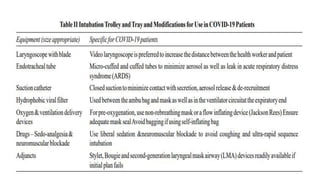
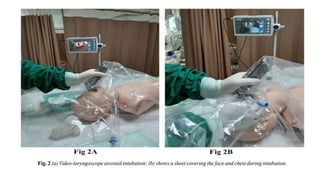
• Video laryngoscopy is ideal to protect the intubating HCW from operating
too close to the airway.
• If equipment or expertise is not available, take measures to reduce droplets
during the procedure using a plastic sheet .
Pre-medication
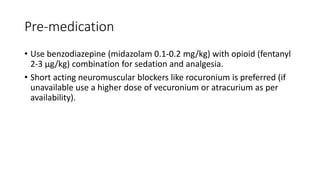
• Use benzodiazepine (midazolam 0.1-0.2 mg/kg) with opioid (fentanyl
2-3 µg/kg) combination for sedation and analgesia.
• Short acting neuromuscular blockers like rocuronium is preferred (if
unavailable use a higher dose of vecuronium or atracurium as per
availability).
Pre-oxygenation:
• After a quick assessment for anatomically difficult airway, pre-
oxygenation is carried out with non-rebreathing mask (NRM) or tight-
fitting face mask attached to a self-inflating ambu-bag with 100%
oxygen for 5 minutes.
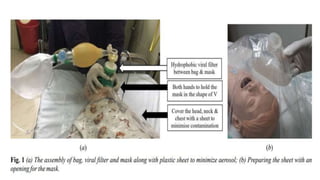
• A hydrophobic viral filter between the mask and ambu-bag is
recommended and some units cover the head, neck and chest with
transparent plastic apron/sheet to prevent aerosol contamination.
• Avoid BMV to limit aerosol and if needed, use low tidal volume with
lesser breaths.
Intubation
• Cuffed endotracheal tubes (ETT) must be used in all ages and cuff needs to be
inflated immediately following intubation.
• Disposable ventilator circuit with a viral filter attached at the expiratory limb
(between circuit and machine) is used.
• Heat moisture exchanger (HME) is preferred for humidification.
• Ventilator should be in ‘stand-by’ mode and only to be turned on after connected
to the patient.
• Prior to connecting to ventilator, the ETT can be clamped or attached to a viral
filter.
• Closed suction (inline suction catheters) is preferred to prevent aerosol
generation.
• If not available, open suction may be performed with aerosol precautions and
after administering a dose of short acting neuromuscular blocking agent
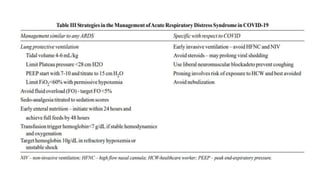
Invasive Mechanical Ventilation
• Lung protective mechanical ventilation (MV) is recommended
strategy for management of acute hypoxemic respiratory failure.
• low tidal volume strategy (4-8mL/kg), limiting plateau pressures to 10
mm Hg).
• Permissive hypercapnia is well tolerated and may reduce volu-trauma.
• Viral filters should be utilized and
• circuits should be maintained for as long as allowable (as opposed to
routine changes).
Prone Ventilation
• Prone ventilation is a recommended strategy in adults.
• However, in children and resource-limited setting, due to limited
availability of HCWs and PPEs, it may not be possible to prone the
child and may unnecessarily increase the risk of infection to the
healthcare workers
Fluid Management
• To reduce pulmonary exudation and improve oxygenation, the fluid
balance should be strictly controlled while ensuring adequate end-
organ perfusion.
• Crystalloids preferred over colloids
• Fluid restriction to 70-80% maintenance is necessary to prevent fluid
overload.
• Vasoactive - epinephrine
PICU care
• Co- infections – secondary bacterial pneumonia a, broad spectrum
antibiotics
• Acute kidney injury – Renal Replacement therapy
• Myocarditis - Cardiogenic shock with elevations in hypersensitive
Tropnonin-I have been seen in 12% of patients. Management includes
inodilators like milrinone, diuretics, immunomodulators
(methylprednisolone and IVIG) and circulatory support with ECMO
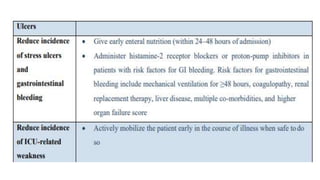
Strategies to Prevent Ventilator-Associated
Pneumonia (VAP)
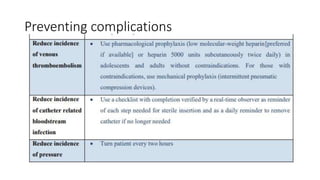
Preventing complications
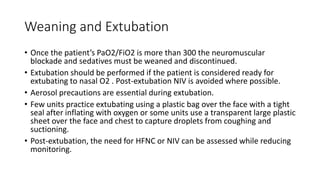
Weaning and Extubation
• Once the patient’s PaO2/FiO2 is more than 300 the neuromuscular
blockade and sedatives must be weaned and discontinued.
• Extubation should be performed if the patient is considered ready for
extubating to nasal O2 . Post-extubation NIV is avoided where possible.
• Aerosol precautions are essential during extubation.
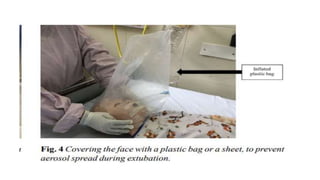
• Few units practice extubating using a plastic bag over the face with a tight
seal after inflating with oxygen or some units use a transparent large plastic
sheet over the face and chest to capture droplets from coughing and
suctioning.
• Post-extubation, the need for HFNC or NIV can be assessed while reducing
monitoring.
Infection control
• In ICU setting, disinfection of high–touch surfaces like monitors, ventilator
screen, other equipment, resuscitation trolleys etc are essential and need
to be carried out q 4 hours.
• Surface decontamination- Alcohol (e.g. isopropyl 70% or ethyl alcohol 70%)
can be used to wipe down surfaces where the use of bleach is not suitable
for e.g. Mobiles, laptops, keys, pens etc.
• Disinfection – Freshly prepared1% sodium hypochlorite should be used as a
disinfectant for cleaning and disinfection with at least 10 minute contact
period.
• Aerosol – Ensure room disinfection within 20 minutes of any procedure
generating aerosol.
• Social distancing – Maintain at least 1 meter distance unless required for
examination or procedure.
• Contact and droplet precautions – minimize direct contact, ensure hand
hygiene, and cough etiquette.
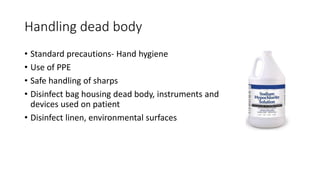
Handling dead body
• Standard precautions- Hand hygiene
• Use of PPE
• Safe handling of sharps
• Disinfect bag housing dead body, instruments and
devices used on patient
• Disinfect linen, environmental surfaces
Specific nursing care/role
• Daily assessing temperature, RR, spO2
• Administering antivirals, antibiotics
• Avoid high flow O2, NIV, nebulized medications
• Fluid management- continuous infusion preferred over boluses
• No crowding in PICU
• Following hand hygiene, infection control policies, disinfection , BMW Mx
• Maintaining 1 m distance between 2 beds
• Aerosol precautions
• Training of other staff
• Self care
Challenges :
• Lack of PPE kits , ventilators, infrastructure, designated ICUs
• PPE – difficulty in cannulation, talking
• Long hours , shortage of manpower
• BMW
• Ethical dilemmas – justified distribution of resources
• Fear of spread to their families
• Anxiety
• No treatment, No vaccination
Managing challenges
• Patience
• Knowledge
• Compassion
• Take care of your own health
• Stress and burn out – talk to friend, family members, mediation, yoga
• Sick – inform and seek early treatment, prophylactic drugs (HCQ)
CONCLUSION
• SARI is the most common presentation of COVID-19 and requires intensive
care support.
• Low flow oxygen devices are preferred to high flow devices to prevent
aerosol generation.
• Early intubation and mechanical ventilation are recommended to delay
progression and need for emergent intubation, which poses significantly
higher risk of transmission of infection to HCW.
• Avoid routine use of HFNC and NIV. If necessary, a full PPE with aerosol
precautions.
• Management of ARDS - lung protective ventilation with liberal sedation-
analgesia and avoidance of steroids.
Summary
• the cornerstone of management is supportive therapy including
adequate nutrition and calorie intake
• fluid and electrolyte management
• oxygen supplementation
• Treating underlying pathology
• Communication with parents and alleviating anxiety is an important
part of management.
References
• MANU SUNDARAM et al . Novel Coronavirus 2019 (2019-nCoV)
Infection: Part II - Respiratory Support in the Pediatric Intensive Care
Unit in Resource-limited Settings INDIAN PEDIATRICS VOLUME
57,APRIL 15, 2020
• https://www.indianpediatrics.net/COVID29.03.2020/SA-00151.pdf
THANK YOU !

Managing pediatric Covid 19 client on ventilator

  • 1.
    Managing Pediatric Covid19 Patients on Ventilator Prof. (Dr.) Smriti Arora Amity College of Nursing Amity University Haryana smritiamit@msn.com
  • 2.
    INTRODUCTION • Coronavirus disease2019 (COVID-19)- viral respiratory illness caused by severe acute respiratory syndrome coronavirus 2 (SARS-CoV-2), a single-stranded RNA virus that most likely originated in bats. • MOT- person-to-person via close contact (the virus can be transferred from the hands to the eyes, nose, or mouth) and respiratory droplets (produced when an infected person coughs or sneezes). SARS CoV-2 can remain viable on various surfaces for hours to days • No evidence of vertical transmission or transmission via breastfeeding. • Transmission from asymptomatic or mildly symptomatic carriers or during the incubation period is between 1-14 days (mean 5 days), ; 95% of patients develop symptoms up to 12.5 days after exposure. • Thus quarantine period- 14 days after exposure
  • 3.
    INTRODUCTION • Pediatric coronavirusdisease – 19 (COVID-19) infection is relatively mild when compared to adults, and children are reported to have a better prognosis. • Mortality in children appears rare. • The coronavirus disease mainly starts with a respiratory illness and about 5%-16% require intensive care management for ARDS and multi-organ dysfunction. • Children account for about 1%- 2% of the total cases, and 6% of these fall under severe or critical category requiring PICU
  • 4.
    Clinical Course • Themost common presentation is short H/O prodrome with myalgias, malaise, cough and low-grade fever. As per the case series from China, only 40-70% of the pediatric patients have fever as an initial presentation. • During the 2nd week of illness- progression of the disease gradually leads to difficulty in breathing. • Reports from China have suggested that it takes an average of 8 days for the development of dyspnea and 9 days for the onset of pneumonia/pneumonitis
  • 5.
    Clinical Presentation • Fever •Cough • Nasal congestion or rhinorrhea • Sore throat • Shortness of breath • Diarrhea • Nausea or vomiting • Fatigue • Headache • Myalgia • Poor feeding or poor appetite, rashes
  • 6.
    Investigations • Viral testingremains the only specific method of diagnosis • Reverse transcriptase-Polymerase chain reaction (RT-PCR) testing of upper or lower respiratory tract secretions • Chest x-rays - patchy infiltrates consistent with viral pneumonia • chest CT scans- nodular ground glass opacities • Lymphopenia, leukopenia, C reactive proteins
  • 7.
    Differential Diagnosis The clinicalpresentation of COVID-19 overlaps with other infections like • influenza • respiratory syncytial virus (RSV), adenovirus, human meta- pneumovirus • non COVID-19 coronavirus • atypical organisms (mycoplasma, chlamydia) and bacterial infections.
  • 9.
    Treatment • Mild –home quarantine , contact and droplet precautions , cough etiquettes, temp. monitoring, PCM, supportive care • Moderate of severe- PICU • remains largely supportive, monitoring vitals • Oxygen therapy for hypoxia-NIV/IV • HCQ, azithromycin, Antivirals- remdesivir • Conservative Fluid management • Antibiotics- bacterial coinfection • Prevention and management of complications • Following infection control policies
  • 10.
  • 11.
    Indications for PICUcare • Severe acute respiratory illness (SARI) – defined by the presence of cough and fast breathing plus at least one of the following: (i) Oxygen saturation (SpO2) <90%, (ii) severe chest indrawing and grunting, and (iii) altered mental status. • ARDS • Multiple organ failure, Hypotension • children with underlying conditions- congenital heart disease, broncho-pulmonary hypoplasia, airway/lung anomalies, severe malnutrition, and immunocompromised
  • 13.
    MANAGEMENT OF HYPOXEMICRESPIRATORY FAILURE • mitigate risk to health care workers • Hypoxemia can be present due to impaired respiratory functions in COVID19. • Oxygen supplementation can correct hypoxemia and relieve secondary organ damage caused by hypoxemia. • The management of children with Severe acute respiratory illness (SARI) in COVID is similar to any other viral pneumonia with ARDS but with strict precautions to reduce risk of transmission.
  • 14.
    Protection From Aerosol •Aerosol generating procedures- require donning of PPE which includes N95 mask, goggles or face shield, cap, full sleeve gown and shoe cover • Where possible, a nebulizer may be replaced with an MDI and spacer for administration of bronchodilators. • NIV generates droplets >10 µm in size and most fall on local surfaces within 1-meter distance. • Thus HCWs who are providing NIV, chest physiotherapy or working within 1 meter of an infected patient should have a high level of respiratory protection.
  • 15.
  • 17.
    Oxygen Therapy • Oxygentherapy is necessary for patients with oxygen saturation (SpO2) <90% and/or with signs of respiratory distress. • It is pertinent that the evaluation of all children with respiratory symptoms should include pulse oximetry. • Low flow oxygen devices are recommended as high flow devices have the potential for risk of spread through aerosol generation. • Nasal cannula at flows of 2-4 L/min is a good choice for milder forms of SARI. • A triple layer mask should be used to cover the mouth and nose of the patient over the nasal cannula, especially during transport, unless the child does not tolerate.
  • 18.
    Heated Humidified HighFlow Nasal Cannula (HHHFNC/HFNC) • HFNC therapy can be useful in special situations for hypoxia. • A flow of 2-3 mL/kg with FiO2 targeted to SpO2 is used. • HCW - optimal airborne PPE and child is managed in negative pressure rooms. • In infants, while HFNC is being given they can be placed in an oxygen hood to minimize dispersion. • HFNC should be tried for a maximum of 1-2 hours. • Signs of improvement are decrease in HR and RR by 10-20%, decrease in FiO2 requirement < 50% and improvement in oxygen saturations.
  • 19.
    Non-invasive Ventilation • Routineuse of NIV is not recommended in COVID19. • It should be used only in selected patients with hypoxemic respiratory failure. • Ideally, negative pressure single rooms are preferable for patients on NIV. • However, in an outbreak of such a magnitude, some professional societies recommend keeping a distance of at least two meters between two beds. • Due to the high percentage of failure with NIV and the rapid progression of the hypoxemic failure due to COVID-19, all patients receiving NIV need a clear plan for treatment failure.
  • 20.
    NIV • PaO2/FiO2is asensitive and accurate indicator of oxygenation function on NIV and can be used to define the severity of ARDS once the patient has been on a PEEP of 5 cm for a minimum of 30 minutes. • Invasive ventilation must be considered if PaO2/FiO2 ratio is below 300. • The most recent WHO interim guidance on management of the novel- CoV recommends the use of NIV for mild cases of ARDS without hemodynamic instability.
  • 21.
  • 22.
    NIV • Conventional ventilatorswith NIV option having double lumen tubing is a safer option than NIV ventilator with single lumen tubing requiring exhalation port to washout the CO2. • Antiviral filters should be attached to the exhalation limb of the circuit to reduce environmental contamination.
  • 23.
    Bubble CPAP • Indication- where both non-invasive and invasive mechanical ventilation are not available, bubble nasal CPAP may be used for newborns and children with severe hypoxemia as these are readily available alternative in resource-limited settings. • To minimize environmental contamination the infant could be placed in an oxygen hood to reduce droplets. • These patients should be on continuous monitoring and cared for by experienced personnel capable of performing ET intubation in case the patient acutely deteriorates or does not improve after a short trial (about 2 hours).
  • 25.
    Indications for earlyinvasive mechanical ventilation • moderate/severe ARDS with PaO2/FiO2 ratio below 300 • SpO2/FiO2 ratio <200, • worsening respiratory distress, • high concentration (>60%) of oxygen on HFNC or multiple organ dysfunction. • acidemia, respiratory fatigue • hemodynamic instability • those with altered mental status
  • 26.
    Intubation • During theprevious SARS epidemics in China and Singapore, infection rates were higher in doctors and nurses carrying out endotracheal intubation [relative risk (95% CI)-13.3 (2.99–54.04)]. • In an observational study of influenza-A and influenza-B in exhaled breath, viral RNA was seen in one-third of infected patients and 99% of particles had a diameter of approximately 125 nm (0.125 µm).
  • 27.
    RSI-Intubation Preparation Preparation • Preparethe plan, ready the equipment and set-up the ventilator prior to intubation. • 3 personnel- airway operator, airway assist and a nurse for medication. • The most experienced person should intubate to ensure minimum number of attempts to decrease aerosol generation. • Wherever possible, use disposable equipment. • Video laryngoscopy is ideal to protect the intubating HCW from operating too close to the airway. • If equipment or expertise is not available, take measures to reduce droplets during the procedure using a plastic sheet .
  • 31.
    Pre-medication • Use benzodiazepine(midazolam 0.1-0.2 mg/kg) with opioid (fentanyl 2-3 µg/kg) combination for sedation and analgesia. • Short acting neuromuscular blockers like rocuronium is preferred (if unavailable use a higher dose of vecuronium or atracurium as per availability).
  • 32.
    Pre-oxygenation: • After aquick assessment for anatomically difficult airway, pre- oxygenation is carried out with non-rebreathing mask (NRM) or tight- fitting face mask attached to a self-inflating ambu-bag with 100% oxygen for 5 minutes. • A hydrophobic viral filter between the mask and ambu-bag is recommended and some units cover the head, neck and chest with transparent plastic apron/sheet to prevent aerosol contamination. • Avoid BMV to limit aerosol and if needed, use low tidal volume with lesser breaths.
  • 33.
    Intubation • Cuffed endotrachealtubes (ETT) must be used in all ages and cuff needs to be inflated immediately following intubation. • Disposable ventilator circuit with a viral filter attached at the expiratory limb (between circuit and machine) is used. • Heat moisture exchanger (HME) is preferred for humidification. • Ventilator should be in ‘stand-by’ mode and only to be turned on after connected to the patient. • Prior to connecting to ventilator, the ETT can be clamped or attached to a viral filter. • Closed suction (inline suction catheters) is preferred to prevent aerosol generation. • If not available, open suction may be performed with aerosol precautions and after administering a dose of short acting neuromuscular blocking agent
  • 34.
    Invasive Mechanical Ventilation •Lung protective mechanical ventilation (MV) is recommended strategy for management of acute hypoxemic respiratory failure. • low tidal volume strategy (4-8mL/kg), limiting plateau pressures to 10 mm Hg). • Permissive hypercapnia is well tolerated and may reduce volu-trauma. • Viral filters should be utilized and • circuits should be maintained for as long as allowable (as opposed to routine changes).
  • 36.
    Prone Ventilation • Proneventilation is a recommended strategy in adults. • However, in children and resource-limited setting, due to limited availability of HCWs and PPEs, it may not be possible to prone the child and may unnecessarily increase the risk of infection to the healthcare workers
  • 37.
    Fluid Management • Toreduce pulmonary exudation and improve oxygenation, the fluid balance should be strictly controlled while ensuring adequate end- organ perfusion. • Crystalloids preferred over colloids • Fluid restriction to 70-80% maintenance is necessary to prevent fluid overload. • Vasoactive - epinephrine
  • 38.
    PICU care • Co-infections – secondary bacterial pneumonia a, broad spectrum antibiotics • Acute kidney injury – Renal Replacement therapy • Myocarditis - Cardiogenic shock with elevations in hypersensitive Tropnonin-I have been seen in 12% of patients. Management includes inodilators like milrinone, diuretics, immunomodulators (methylprednisolone and IVIG) and circulatory support with ECMO
  • 39.
    Strategies to PreventVentilator-Associated Pneumonia (VAP)
  • 40.
  • 42.
    Weaning and Extubation •Once the patient’s PaO2/FiO2 is more than 300 the neuromuscular blockade and sedatives must be weaned and discontinued. • Extubation should be performed if the patient is considered ready for extubating to nasal O2 . Post-extubation NIV is avoided where possible. • Aerosol precautions are essential during extubation. • Few units practice extubating using a plastic bag over the face with a tight seal after inflating with oxygen or some units use a transparent large plastic sheet over the face and chest to capture droplets from coughing and suctioning. • Post-extubation, the need for HFNC or NIV can be assessed while reducing monitoring.
  • 44.
    Infection control • InICU setting, disinfection of high–touch surfaces like monitors, ventilator screen, other equipment, resuscitation trolleys etc are essential and need to be carried out q 4 hours. • Surface decontamination- Alcohol (e.g. isopropyl 70% or ethyl alcohol 70%) can be used to wipe down surfaces where the use of bleach is not suitable for e.g. Mobiles, laptops, keys, pens etc. • Disinfection – Freshly prepared1% sodium hypochlorite should be used as a disinfectant for cleaning and disinfection with at least 10 minute contact period. • Aerosol – Ensure room disinfection within 20 minutes of any procedure generating aerosol. • Social distancing – Maintain at least 1 meter distance unless required for examination or procedure. • Contact and droplet precautions – minimize direct contact, ensure hand hygiene, and cough etiquette.
  • 46.
    Handling dead body •Standard precautions- Hand hygiene • Use of PPE • Safe handling of sharps • Disinfect bag housing dead body, instruments and devices used on patient • Disinfect linen, environmental surfaces
  • 47.
    Specific nursing care/role •Daily assessing temperature, RR, spO2 • Administering antivirals, antibiotics • Avoid high flow O2, NIV, nebulized medications • Fluid management- continuous infusion preferred over boluses • No crowding in PICU • Following hand hygiene, infection control policies, disinfection , BMW Mx • Maintaining 1 m distance between 2 beds • Aerosol precautions • Training of other staff • Self care
  • 48.
    Challenges : • Lackof PPE kits , ventilators, infrastructure, designated ICUs • PPE – difficulty in cannulation, talking • Long hours , shortage of manpower • BMW • Ethical dilemmas – justified distribution of resources • Fear of spread to their families • Anxiety • No treatment, No vaccination
  • 49.
    Managing challenges • Patience •Knowledge • Compassion • Take care of your own health • Stress and burn out – talk to friend, family members, mediation, yoga • Sick – inform and seek early treatment, prophylactic drugs (HCQ)
  • 50.
    CONCLUSION • SARI isthe most common presentation of COVID-19 and requires intensive care support. • Low flow oxygen devices are preferred to high flow devices to prevent aerosol generation. • Early intubation and mechanical ventilation are recommended to delay progression and need for emergent intubation, which poses significantly higher risk of transmission of infection to HCW. • Avoid routine use of HFNC and NIV. If necessary, a full PPE with aerosol precautions. • Management of ARDS - lung protective ventilation with liberal sedation- analgesia and avoidance of steroids.
  • 51.
    Summary • the cornerstoneof management is supportive therapy including adequate nutrition and calorie intake • fluid and electrolyte management • oxygen supplementation • Treating underlying pathology • Communication with parents and alleviating anxiety is an important part of management.
  • 52.
    References • MANU SUNDARAMet al . Novel Coronavirus 2019 (2019-nCoV) Infection: Part II - Respiratory Support in the Pediatric Intensive Care Unit in Resource-limited Settings INDIAN PEDIATRICS VOLUME 57,APRIL 15, 2020 • https://www.indianpediatrics.net/COVID29.03.2020/SA-00151.pdf
  • 53.

Editor's Notes

  • #18 It has been noted that many elderly patients with severe hypoxemia may not have obvious symptoms of respiratory distress [14].
  • #19 Surviving Sepsis Guidelines recommend HFNC in milder cases of adult SARI [17]. However, no such guidelines are there for children.