
Crisostomo, Kathleen Lizette C.
MARKMA
Chapter 10 – Crafting the Brand Positioning
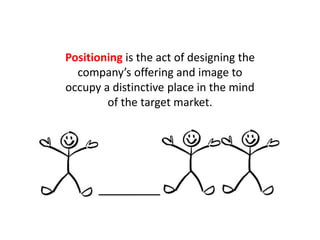
Positioning is the act of designing the
  company’s offering and image to
occupy a distinctive place in the mind
        of the target market.
Defining Associations:
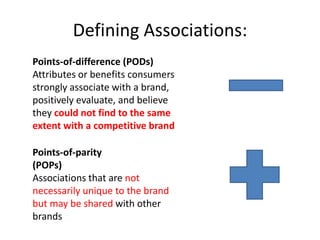
Points-of-difference (PODs)
Attributes or benefits consumers
strongly associate with a brand,
positively evaluate, and believe
they could not find to the same
extent with a competitive brand

Points-of-parity
(POPs)
Associations that are not
necessarily unique to the brand
but may be shared with other
brands
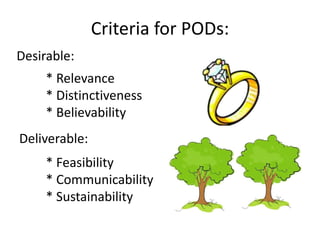
Criteria for PODs:
Desirable:
     * Relevance
     * Distinctiveness
     * Believability
Criteria for PODs:
Desirable:
     * Relevance
     * Distinctiveness
     * Believability
Deliverable:
     * Feasibility
     * Communicability
     * Sustainability
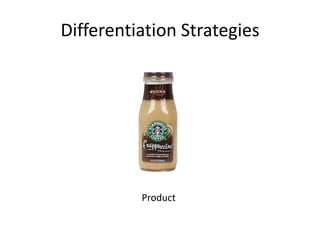
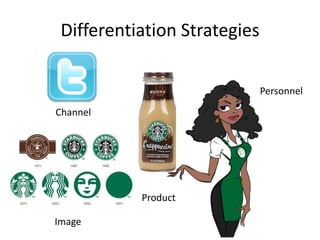
Differentiation Strategies


          Product
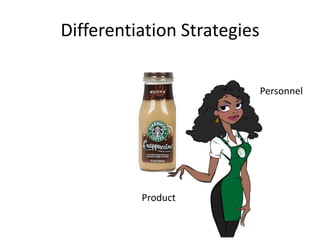
Differentiation Strategies

                             Personnel


          Product
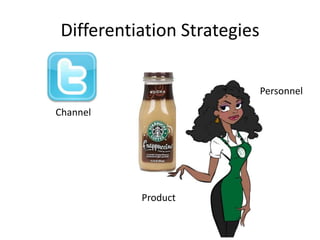
Differentiation Strategies

                             Personnel

Channel


          Product
Differentiation Strategies

                              Personnel

Channel


           Product

Image
Product Life Cycle Claims:
Products have a limited life
Product Life Cycle Claims:
   Products have a limited life

Product sales pass
through distinct stages
each with different
challenges and
opportunities
Product Life Cycle Claims:
   Products have a limited life

Product sales pass
through distinct stages
each with different
challenges and
opportunities
 Profits rise and fall at different
 stages
Product Life Cycle Claims:
   Products have a limited life

Product sales pass
through distinct stages
each with different
challenges and
opportunities
 Profits rise and fall at different
 stages
      Products require different
      strategies in each life cycle
      stage
Product Life Cycle Marketing Strategies

     •Introduction stage
- slow growth in minimal
profits.
-if successful, the product
enters a gross stage
marked by rapid sales
growth and increasing
profits
Product Life Cycle Marketing Strategies

        •Growth Stage
-Improve product quality
     - Add new product
      features, models
    -Enter new markets
  –Increase distribution
          coverage
   - Shift from product-
awareness advertising to
    product-preference
Product Life Cycle Marketing Strategies

       • Maturity Stage
-Improve product quality
     - Add new product
      features, models
    -Enter new markets
  –Increase distribution
          coverage
   - Shift from product-
awareness advertising to
    product-preference
Product Life Cycle Marketing Strategies


                        • Decline stage
                   - Identify the truly weak
                   products and develop a
                  strategy for each or phase
                               out
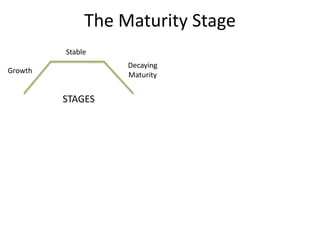
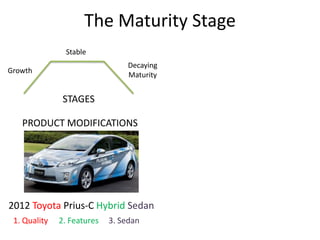
The Maturity Stage
         Stable
                   Decaying
Growth
                   Maturity


         STAGES
The Maturity Stage
               Stable
                                 Decaying
Growth
                                 Maturity


               STAGES

   PRODUCT MODIFICATIONS


2012 Toyota Prius-C Hybrid Sedan
 1. Quality   2. Features   3. Sedan
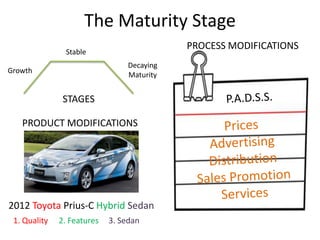
The Maturity Stage
                                            PROCESS MODIFICATIONS
               Stable
                                 Decaying
Growth
                                 Maturity


               STAGES

   PRODUCT MODIFICATIONS


2012 Toyota Prius-C Hybrid Sedan
 1. Quality   2. Features   3. Sedan
Chap 10 – Crafting the Brand Positioning

Chap 10 – Crafting the Brand Positioning

  • 1.
    Crisostomo, Kathleen LizetteC. MARKMA Chapter 10 – Crafting the Brand Positioning
  • 2.
    Positioning is theact of designing the company’s offering and image to occupy a distinctive place in the mind of the target market.
  • 3.
    Defining Associations: Points-of-difference (PODs) Attributesor benefits consumers strongly associate with a brand, positively evaluate, and believe they could not find to the same extent with a competitive brand Points-of-parity (POPs) Associations that are not necessarily unique to the brand but may be shared with other brands
  • 4.
    Criteria for PODs: Desirable: * Relevance * Distinctiveness * Believability
  • 5.
    Criteria for PODs: Desirable: * Relevance * Distinctiveness * Believability Deliverable: * Feasibility * Communicability * Sustainability
  • 6.
  • 7.
    Differentiation Strategies Personnel Product
  • 8.
    Differentiation Strategies Personnel Channel Product
  • 9.
    Differentiation Strategies Personnel Channel Product Image
  • 10.
  • 11.
    Product Life CycleClaims: Products have a limited life
  • 12.
    Product Life CycleClaims: Products have a limited life Product sales pass through distinct stages each with different challenges and opportunities
  • 13.
    Product Life CycleClaims: Products have a limited life Product sales pass through distinct stages each with different challenges and opportunities Profits rise and fall at different stages
  • 14.
    Product Life CycleClaims: Products have a limited life Product sales pass through distinct stages each with different challenges and opportunities Profits rise and fall at different stages Products require different strategies in each life cycle stage
  • 15.
    Product Life CycleMarketing Strategies
  • 16.
    Product Life CycleMarketing Strategies •Introduction stage - slow growth in minimal profits. -if successful, the product enters a gross stage marked by rapid sales growth and increasing profits
  • 17.
    Product Life CycleMarketing Strategies •Growth Stage -Improve product quality - Add new product features, models -Enter new markets –Increase distribution coverage - Shift from product- awareness advertising to product-preference
  • 18.
    Product Life CycleMarketing Strategies • Maturity Stage -Improve product quality - Add new product features, models -Enter new markets –Increase distribution coverage - Shift from product- awareness advertising to product-preference
  • 19.
    Product Life CycleMarketing Strategies • Decline stage - Identify the truly weak products and develop a strategy for each or phase out
  • 20.
    The Maturity Stage Stable Decaying Growth Maturity STAGES
  • 21.
    The Maturity Stage Stable Decaying Growth Maturity STAGES PRODUCT MODIFICATIONS 2012 Toyota Prius-C Hybrid Sedan 1. Quality 2. Features 3. Sedan
  • 22.
    The Maturity Stage PROCESS MODIFICATIONS Stable Decaying Growth Maturity STAGES PRODUCT MODIFICATIONS 2012 Toyota Prius-C Hybrid Sedan 1. Quality 2. Features 3. Sedan