5 Most Common Mistakes and Strategies to Resolve Them

October 28, 2013

Debra Evans
debra_evans00@yahoo.com
http://www.linkedin.com/in/debraevans
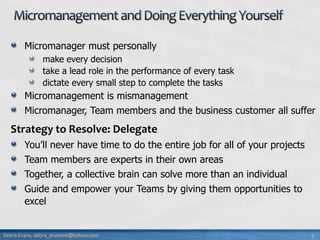
Micromanagement and Doing Everything Yourself
Careless Project Planning

Keeping Project Plans Separated From Each Other
Turning From a Project Secretary Into a Project
Leader

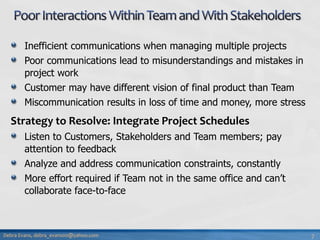
Poor Interactions Within Team and With
Stakeholders
Tactical Applications of Strategies

Debra Evans, debra_evans00@yahoo.com

2
Micromanager must personally
make every decision
take a lead role in the performance of every task
dictate every small step to complete the tasks

Micromanagement is mismanagement
Micromanager, Team members and the business customer all suffer

Strategy to Resolve: Delegate
You’ll never have time to do the entire job for all of your projects
Team members are experts in their own areas
Together, a collective brain can solve more than an individual
Guide and empower your Teams by giving them opportunities to
excel

Debra Evans, debra_evans00@yahoo.com

3
Resist great temptation to immediately dive into doing
Nonexistent, out of date, incomplete or poorly constructed project
plans lead to mistakes in project execution

Failure to monitor and influence project progress may delay
deliverables or cause missing delivery dates

Strategy to Resolve: Keep Your Plans Realistic and Up-to-date
Review, Re-evaluate, Revise, Republish
Team must believe in project's goals and schedule
Be ready to react to unexpected changes and adjust your plans
Consolidate project information and keep related items together

Make project data accessible to the appropriate people

Debra Evans, debra_evans00@yahoo.com

4
Avoid managing multiple projects in separate places, using different
tools for planning and tracking
Hours can be wasted trying to reconcile shared
resources, tasks, schedules and other information
You’ll never have a good idea of the big picture

Strategy to Resolve: Integrate Project Schedules
An integrated project plan will give a bird’s eye view of what’s going
on
Identify major project milestones and their dates
Reflect all the tasks and action items of all projects in shared
location
Tell at a glance what’s going on with projects
Ability to report high level status in minutes instead of hours
Debra Evans, debra_evans00@yahoo.com

5
Beware of only collecting information, updating the plans,
constantly copying information back and forth

Strategy to Resolve: Be a Leader
Provide guidance, instruction, direction and leadership for projects
Inspire a shared common goal by enabling people to feel they have
a real stake in the project
Have familiarity with the PDLC/SDLC to guide Team through
transitions from one stage to the next
Be aware of the technical and business objectives to be achieved by
your projects
Helps determine intra projects priorities
Keeps projects on track to hit goals

Debra Evans, debra_evans00@yahoo.com

6
Inefficient communications when managing multiple projects
Poor communications lead to misunderstandings and mistakes in
project work

Customer may have different vision of final product than Team
Miscommunication results in loss of time and money, more stress

Strategy to Resolve: Integrate Project Schedules
Listen to Customers, Stakeholders and Team members; pay
attention to feedback
Analyze and address communication constraints, constantly
More effort required if Team not in the same office and can’t
collaborate face-to-face

Debra Evans, debra_evans00@yahoo.com

7
Meet 1on1 with Stakeholders, Customers and/or Director of project domain
Higher visibility and impact projects, meet with more senior stakeholders
Understand technical and business gains for eBay as well as prioritization and timelines

Be aware of the wants and needs of Stakeholders and Customers
Be ready to resolve conflicts with Team members’ wants

Set project timelines and schedules as soon as possible
Team will consider projects without a target complete date lower priority
Milestones, checkpoints and deliverables can be determined later
Factor in external dependencies and influences outside your control

Use active listening communication technique product
Structured way to listen, understand, interpret, evaluate what you heard

Collaborate on building schedules and determining deliverables as a Team
Dependencies better be understood and more team buy in

Continuously reassess projects. Tweak as needed
Debra Evans, debra_evans00@yahoo.com

8
Debra Evans, debra_evans00@yahoo.com

9

Managing Multiple Projects: 5 Most Common Mistakes and Strategies to Resolve Them

  • 1.
    5 Most CommonMistakes and Strategies to Resolve Them October 28, 2013 Debra Evans debra_evans00@yahoo.com http://www.linkedin.com/in/debraevans
  • 2.
    Micromanagement and DoingEverything Yourself Careless Project Planning Keeping Project Plans Separated From Each Other Turning From a Project Secretary Into a Project Leader Poor Interactions Within Team and With Stakeholders Tactical Applications of Strategies Debra Evans, debra_evans00@yahoo.com 2
  • 3.
    Micromanager must personally makeevery decision take a lead role in the performance of every task dictate every small step to complete the tasks Micromanagement is mismanagement Micromanager, Team members and the business customer all suffer Strategy to Resolve: Delegate You’ll never have time to do the entire job for all of your projects Team members are experts in their own areas Together, a collective brain can solve more than an individual Guide and empower your Teams by giving them opportunities to excel Debra Evans, debra_evans00@yahoo.com 3
  • 4.
    Resist great temptationto immediately dive into doing Nonexistent, out of date, incomplete or poorly constructed project plans lead to mistakes in project execution Failure to monitor and influence project progress may delay deliverables or cause missing delivery dates Strategy to Resolve: Keep Your Plans Realistic and Up-to-date Review, Re-evaluate, Revise, Republish Team must believe in project's goals and schedule Be ready to react to unexpected changes and adjust your plans Consolidate project information and keep related items together Make project data accessible to the appropriate people Debra Evans, debra_evans00@yahoo.com 4
  • 5.
    Avoid managing multipleprojects in separate places, using different tools for planning and tracking Hours can be wasted trying to reconcile shared resources, tasks, schedules and other information You’ll never have a good idea of the big picture Strategy to Resolve: Integrate Project Schedules An integrated project plan will give a bird’s eye view of what’s going on Identify major project milestones and their dates Reflect all the tasks and action items of all projects in shared location Tell at a glance what’s going on with projects Ability to report high level status in minutes instead of hours Debra Evans, debra_evans00@yahoo.com 5
  • 6.
    Beware of onlycollecting information, updating the plans, constantly copying information back and forth Strategy to Resolve: Be a Leader Provide guidance, instruction, direction and leadership for projects Inspire a shared common goal by enabling people to feel they have a real stake in the project Have familiarity with the PDLC/SDLC to guide Team through transitions from one stage to the next Be aware of the technical and business objectives to be achieved by your projects Helps determine intra projects priorities Keeps projects on track to hit goals Debra Evans, debra_evans00@yahoo.com 6
  • 7.
    Inefficient communications whenmanaging multiple projects Poor communications lead to misunderstandings and mistakes in project work Customer may have different vision of final product than Team Miscommunication results in loss of time and money, more stress Strategy to Resolve: Integrate Project Schedules Listen to Customers, Stakeholders and Team members; pay attention to feedback Analyze and address communication constraints, constantly More effort required if Team not in the same office and can’t collaborate face-to-face Debra Evans, debra_evans00@yahoo.com 7
  • 8.
    Meet 1on1 withStakeholders, Customers and/or Director of project domain Higher visibility and impact projects, meet with more senior stakeholders Understand technical and business gains for eBay as well as prioritization and timelines Be aware of the wants and needs of Stakeholders and Customers Be ready to resolve conflicts with Team members’ wants Set project timelines and schedules as soon as possible Team will consider projects without a target complete date lower priority Milestones, checkpoints and deliverables can be determined later Factor in external dependencies and influences outside your control Use active listening communication technique product Structured way to listen, understand, interpret, evaluate what you heard Collaborate on building schedules and determining deliverables as a Team Dependencies better be understood and more team buy in Continuously reassess projects. Tweak as needed Debra Evans, debra_evans00@yahoo.com 8
  • 9.