Project Management
What is Project Management?
According to the Project Management Institute:
“The application of knowledge, skills, and techniques to execute projects
effectively and efficiently.”
Project Management processes fall into 5 groups:
• Initiating
• Planning
• Executing
• Monitoring and Controlling
• Closing
• Planning and Defining Scope
• Activity Planning and Sequencing
• Resource Planning
• Developing Schedules
• Time Estimating
• Cost Estimating
• Developing a Budget
• Controlling Quality
• Managing Risks and Issues
• Creating Charts and Schedules
• Risk Analysis
• Benefits Realisation
• Scalability, Interoperability and
Portability Analysis
• Documentation
• Team Leadership
• Strategic Influencing
• Customer Liaison
What does a PM do?
A Project Manager (PM) has ultimate responsibility for all project management processes. Specifically,
they do the following:
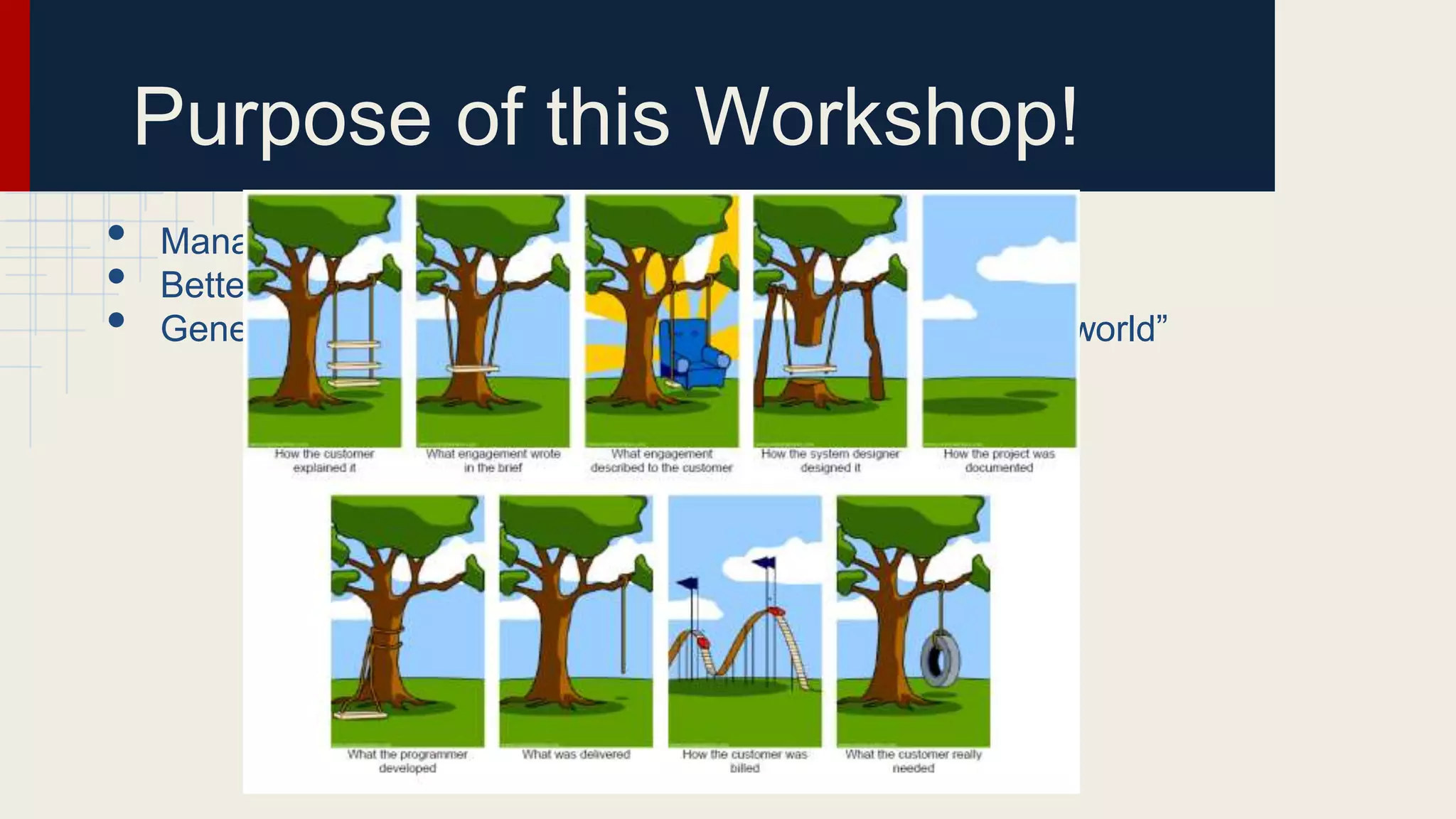
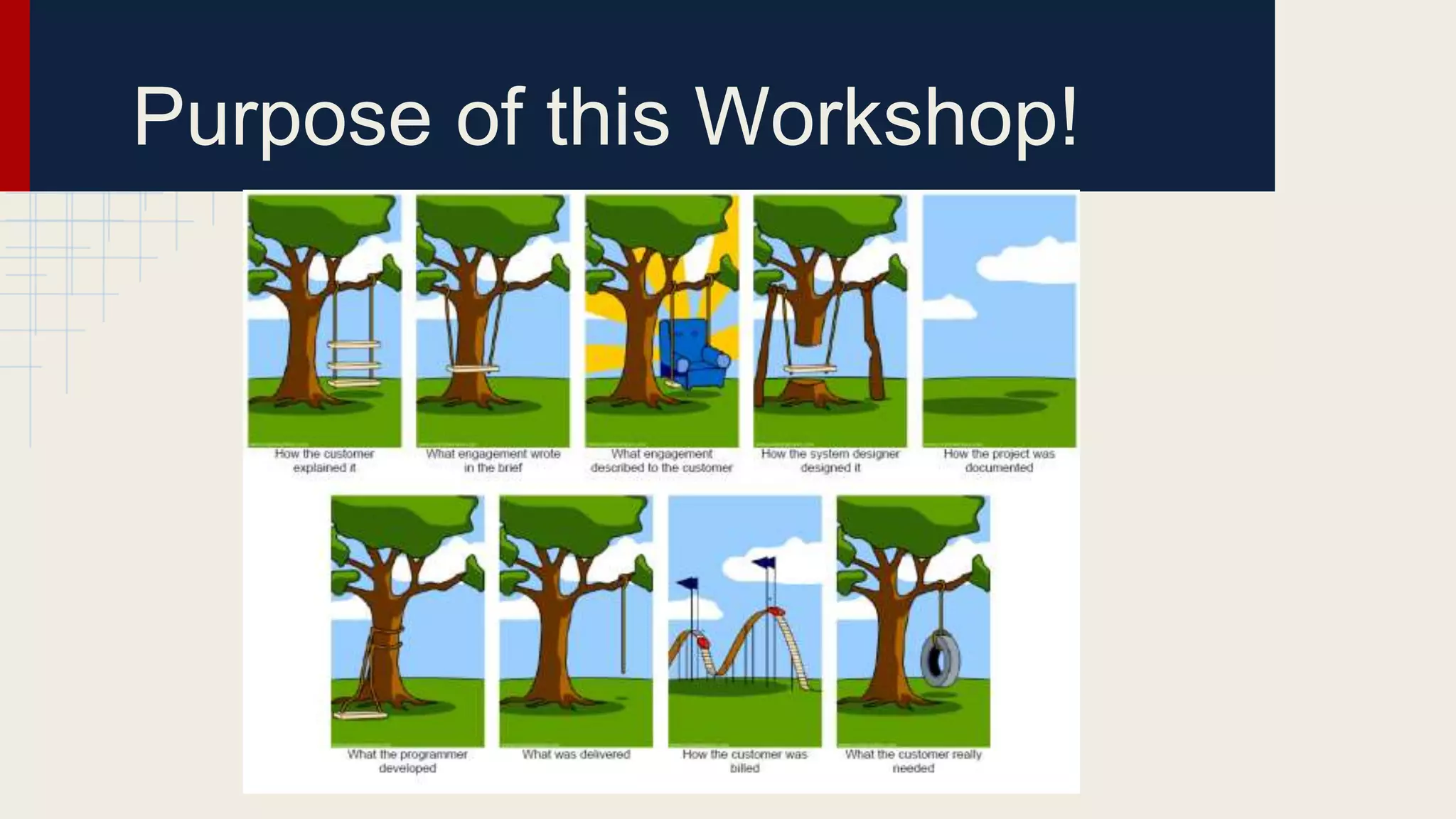
Purpose of this Workshop!
• Manage team projects in classes, work, extra-curriculars
• Better self-management and time management skills
• General overview of how large projects work in the “real world”
Purpose of this Workshop!
Initiating
Define Scope
Scope – A list of specific project goals, deliverables, tasks, costs, resources,
constraints, deadlines, and the major players.
Simple Example:
The outcome for this project is as follows: an easy-to-use web portal where users can upload text (.txt) files for conversion to
Daisy/MP3 audio files which can then be downloaded and stored on SD cards for playback on an economical Daisy Audio
player.
Planned features for the web portal include:
● Record keeping of what files users upload, convert, and download
● Database of files that have been uploaded and converted previously
● Producing an audio file which allows user to skip to different sections in the audio file. These sections are denoted by the
given text file
Planning, Monitoring
and Controlling
Charts and Timelines
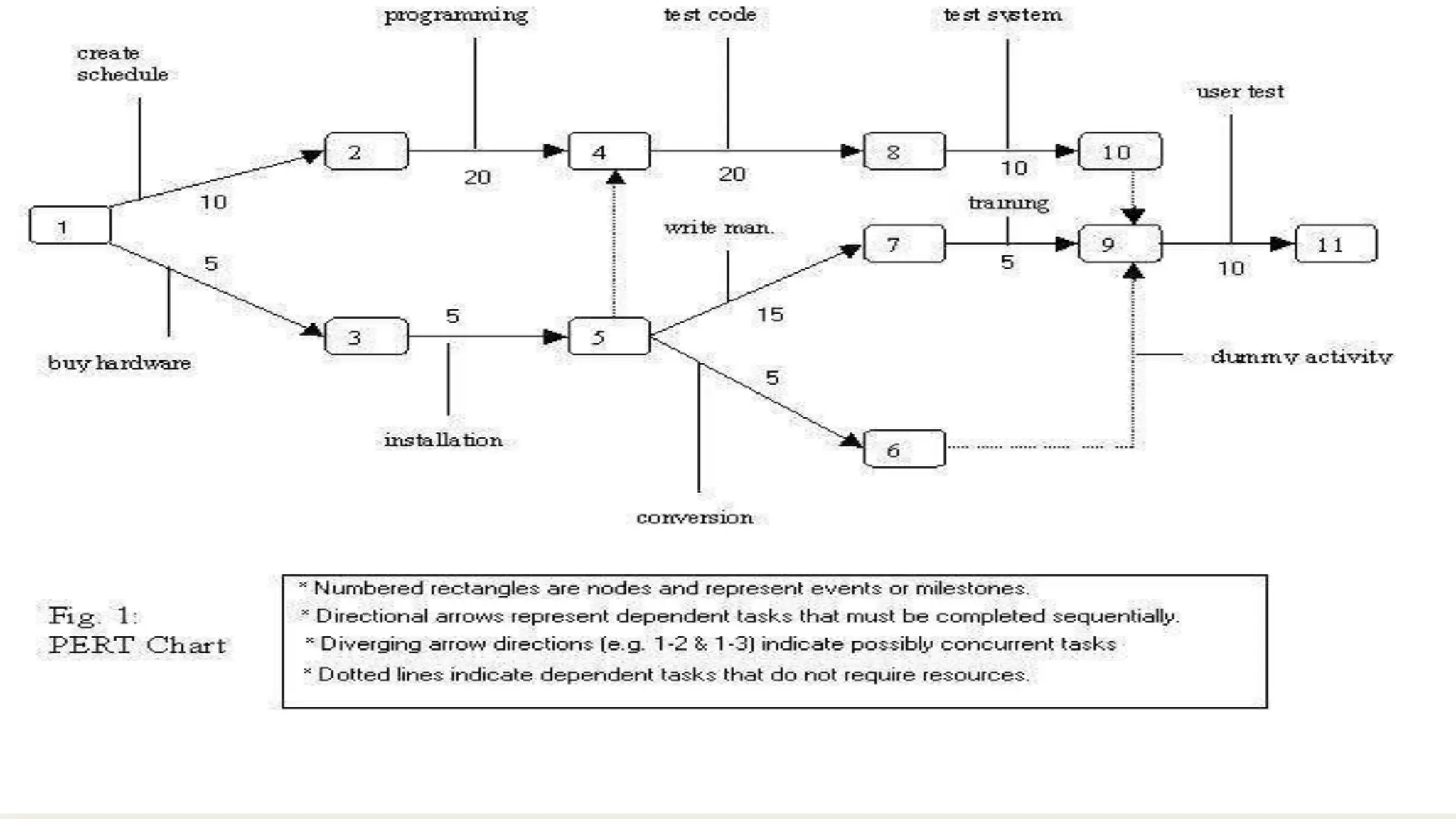
PERT
PERT - Program Evaluation and Review Technique
A graphical representation of the predicted course of a project. Used to
schedule, organize, and coordinate tasks within a project.
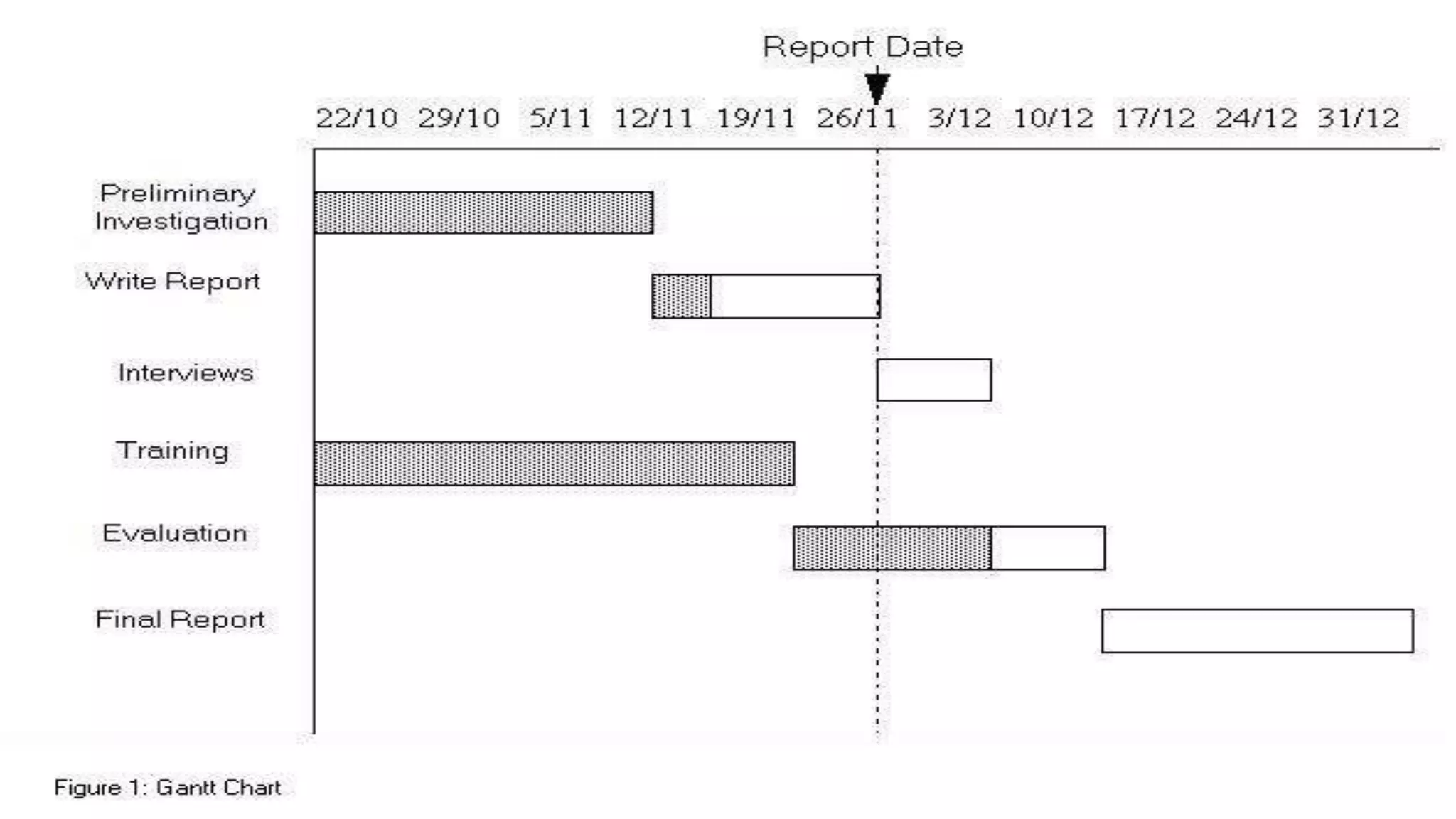
Gantt Chart
A chart in which a series of horizontal lines shows the amount of work done or
production completed in certain periods of time in relation to the amount
planned for those periods.
PERT
• Can see task dependencies
• Emphasizes relationships
between tasks
• Can do CPM analysis
Gantt
• Easier to read project status
• Emphasizes time between tasks
• Shows Big Picture
PERT vs. Gantt
Executing
One step at a time...
Closing
Closing
Only 2 options:
A) All tasks completed
B) Project canceled
In Either Case:
• Evaluate
o Results
o What can we do better next time?
o Next Steps?
• Write a detailed report to sponsors, customers, stakeholders, etc.
• Celebrate!
Conclusion
Take what you just learned
And throw it away! (aka agile project management)
Don’t need to follow every step
Most important thing: Project Scope
A well defined objective = key to success
Activity
Draw a Gantt or PERT chart for the following project scope:
New Software Training Workshop:
With the completion of development of new internal application CoolPMTools,
we now need to plan and execute a workshop to train employees on its use.
We plan to have all employees trained within the next 4 weeks. The life
cycle for this project will be as follows:
• Selection of Workshop Leaders - variable time
• Training of Workshop Leaders - 1-2 weeks
• Workshop Preparation and Practice - 1-2 weeks
• Scheduling of Workshops (at least 1 week in advance of any single
workshop date) - variable time
• Advertising Workshop - variable time
• Workshop Execution (5 separate workshop dates) - variable time
• Workshop Review - 1 day
Questions?

A Short Workshop on Project Management

  • 1.
  • 2.
    What is ProjectManagement? According to the Project Management Institute: “The application of knowledge, skills, and techniques to execute projects effectively and efficiently.” Project Management processes fall into 5 groups: • Initiating • Planning • Executing • Monitoring and Controlling • Closing
  • 3.
    • Planning andDefining Scope • Activity Planning and Sequencing • Resource Planning • Developing Schedules • Time Estimating • Cost Estimating • Developing a Budget • Controlling Quality • Managing Risks and Issues • Creating Charts and Schedules • Risk Analysis • Benefits Realisation • Scalability, Interoperability and Portability Analysis • Documentation • Team Leadership • Strategic Influencing • Customer Liaison What does a PM do? A Project Manager (PM) has ultimate responsibility for all project management processes. Specifically, they do the following:
  • 4.
    Purpose of thisWorkshop! • Manage team projects in classes, work, extra-curriculars • Better self-management and time management skills • General overview of how large projects work in the “real world”
  • 5.
    Purpose of thisWorkshop!
  • 6.
  • 7.
    Define Scope Scope –A list of specific project goals, deliverables, tasks, costs, resources, constraints, deadlines, and the major players. Simple Example: The outcome for this project is as follows: an easy-to-use web portal where users can upload text (.txt) files for conversion to Daisy/MP3 audio files which can then be downloaded and stored on SD cards for playback on an economical Daisy Audio player. Planned features for the web portal include: ● Record keeping of what files users upload, convert, and download ● Database of files that have been uploaded and converted previously ● Producing an audio file which allows user to skip to different sections in the audio file. These sections are denoted by the given text file
  • 8.
  • 9.
    PERT PERT - ProgramEvaluation and Review Technique A graphical representation of the predicted course of a project. Used to schedule, organize, and coordinate tasks within a project.
  • 11.
    Gantt Chart A chartin which a series of horizontal lines shows the amount of work done or production completed in certain periods of time in relation to the amount planned for those periods.
  • 13.
    PERT • Can seetask dependencies • Emphasizes relationships between tasks • Can do CPM analysis Gantt • Easier to read project status • Emphasizes time between tasks • Shows Big Picture PERT vs. Gantt
  • 14.
  • 15.
  • 16.
    Closing Only 2 options: A)All tasks completed B) Project canceled In Either Case: • Evaluate o Results o What can we do better next time? o Next Steps? • Write a detailed report to sponsors, customers, stakeholders, etc. • Celebrate!
  • 17.
    Conclusion Take what youjust learned And throw it away! (aka agile project management) Don’t need to follow every step Most important thing: Project Scope A well defined objective = key to success
  • 18.
    Activity Draw a Ganttor PERT chart for the following project scope: New Software Training Workshop: With the completion of development of new internal application CoolPMTools, we now need to plan and execute a workshop to train employees on its use. We plan to have all employees trained within the next 4 weeks. The life cycle for this project will be as follows: • Selection of Workshop Leaders - variable time • Training of Workshop Leaders - 1-2 weeks • Workshop Preparation and Practice - 1-2 weeks • Scheduling of Workshops (at least 1 week in advance of any single workshop date) - variable time • Advertising Workshop - variable time • Workshop Execution (5 separate workshop dates) - variable time • Workshop Review - 1 day
  • 19.

Editor's Notes

  • #4 so you can see a PM has a lot of responsibilities
  • #7 Initiating the project
  • #8 Part of the Initiation process of PM Different from class projects because the goal/purpose of the project is already defined for you. Most challenging part because this answers WHY DO THIS PROJECT AT ALL? WHAT’S IMPORTANT TO IT’S SUCCESS? Improperly defined scope will cause problems later (internship example) Simple example: sample from the scope of a project I’m currently working on. Details objectives and some of the major deliverables. And here’s an example project keenan made up.
  • #9 Finished scope so you know what tasks need to be done and when what resources are needed for each task who will execute these tasks and deliverables But now team need a little more direction. Can’t just say “here’s the scope, go do it” Planning: particularly focus on importat charts and timelines used in the planning process Monitoring and Controlling: And of course helps with the Monitoring and Making a timeline will keep the project on task and identify critical points for the project D’ing critical points - helpful for crisis management and help you to be flexible if midway through the project you need to adjust timeline
  • #10 In class, because everything established for you, can just make a to do list and cross things off as you go PERT is like a graphical TO-DO LIST helps you see the importance of each task and how tasks relate to each other define how long each task should take -> keeps the project on track Visio, MS Project, Google Drawing
  • #11 Explanation Can calculate using the numbered arcs what’s the earliest or latest you can start or finish a task -> how that affects the overall project
  • #12 Gantt is closer (more recognizable) as a timeline or to-do list than PERT but again helps schedule, organize, and coordinate tasks within a project.
  • #13 Explain chart tasks on y axis time on the y axis time it takes for each tasks can just look at a date and cross things off
  • #14 CPM - critical path method want a good combination of both PERT and Gantt
  • #15 Know the tasks and their deadlines You know your players, now just a matter of managing day-to-day activities working towards completing each task Trello can help with that! explain how I use trello (my made up project, my project from the summer….) how it can be used for normal tasks
  • #17 only 2 options to place your project in the closing stage
  • #18 scope = “living document” everything you need about the project is there, bring it to meetings, show it to stakeholders, etc.