Friendly Tip: Please take notes to better remember concepts
In this video we will
learn about Security
concerns regarding
Vulnerabilities
Core Cyber Security Concepts
Vulnerability :
Vulnerability refers to a flaw
in the system. It's a flaw that
can be taken advantage of by
attackers. Vulnerabilities leave
the system/network open to
attacks
A software vulnerability is a defect in software that could allow an
attacker to gain control of a system. These defects can be because of
the way the software is designed, or because of a flaw in the way that
it’s coded.
An attacker can exploit a software vulnerability to steal or manipulate
sensitive data, join a system to a botnet, install a backdoor, or plant
other types of malware. Also, after penetrating into one network host,
the attacker could use that host to break into other hosts on the same
network.
What Can an Attacker Do with a Software Vulnerability?
A zero-day vulnerability is a flaw in a piece of software that is
unknown to the programmer(s) or vendor(s) responsible for the
application(s). Because the vulnerability isn’t known, there is no
patch available. It's common in legacy platforms and newly
introduced Operating sytems.
Most often, exploits against a zero-day vulnerability are a very
rarely discovered right away. It can often take days or months
before these flaws are found which is what makes these types of
vulnerabilities so dangerous.
Vulnerability Scanning
" It's the process of inspecting
systems and networks for
vulnerabilities, which can be
taken adantage of, to disrupt and
take control of IT infrastructure "
Specialized tools/softwares
known as vulnerability scanners
are used to help administrators
find and address vulnerabilities.
Patch Management :
" Patch Management involves acquiring, testing
and installing patches to fix bugs and remove
vulnerabilities on a computer system "
-> Patch Management Tasks
Maintaining accurate info of available patches
Deciding which patches are appropriate based
on device types
Making sure that Patches are properly installed
System Testing
Documenting every step taken
Note: improper patch
management creates
vulnerabilities
Weak host configurations
Simply put this means weak security controls and policies that pose a
threat to the host device. If the device is running on default settings
without any system hardening or security controls in place, the device
has weak host configurations and it's an easy target/ weak point for
attackers. This includes:
Weak Encryption
Use of devices on Default Settings
Open permissions on devices
Open Ports & Services
Unsecured root/admin accounts
Weak internet protocols
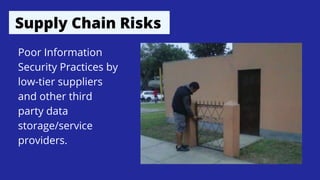
Supply Chain Risks
Poor Information
Security Practices by
low-tier suppliers
and other third
party data
storage/service
providers.
Supply Chain Risks
Use of Compromised
software/hardware
Vulnerability in
supplier systems
Supply Chain Countermeasures
The strength of Supply chain security
is only as strong as it's weakest link.
All parties must be in compliance with
Information security standards.
Robust IT security should be setup
Organizations must be certified of international
standards assuring Cyber Security.
To minimize the risk of Cyber attacks on Supply
chain, following countermeasures should be in
place:
Source:
https://jfrog.com/knowledge-base/software-vulnerability/
https://www.techrepublic.com/article/what-is-a-zero-day-
vulnerability/

Security concerns regarding Vulnerabilities

  • 1.
    Friendly Tip: Pleasetake notes to better remember concepts In this video we will learn about Security concerns regarding Vulnerabilities Core Cyber Security Concepts
  • 2.
    Vulnerability : Vulnerability refersto a flaw in the system. It's a flaw that can be taken advantage of by attackers. Vulnerabilities leave the system/network open to attacks
  • 3.
    A software vulnerabilityis a defect in software that could allow an attacker to gain control of a system. These defects can be because of the way the software is designed, or because of a flaw in the way that it’s coded. An attacker can exploit a software vulnerability to steal or manipulate sensitive data, join a system to a botnet, install a backdoor, or plant other types of malware. Also, after penetrating into one network host, the attacker could use that host to break into other hosts on the same network. What Can an Attacker Do with a Software Vulnerability?
  • 4.
    A zero-day vulnerabilityis a flaw in a piece of software that is unknown to the programmer(s) or vendor(s) responsible for the application(s). Because the vulnerability isn’t known, there is no patch available. It's common in legacy platforms and newly introduced Operating sytems. Most often, exploits against a zero-day vulnerability are a very rarely discovered right away. It can often take days or months before these flaws are found which is what makes these types of vulnerabilities so dangerous.
  • 5.
    Vulnerability Scanning " It'sthe process of inspecting systems and networks for vulnerabilities, which can be taken adantage of, to disrupt and take control of IT infrastructure " Specialized tools/softwares known as vulnerability scanners are used to help administrators find and address vulnerabilities.
  • 6.
    Patch Management : "Patch Management involves acquiring, testing and installing patches to fix bugs and remove vulnerabilities on a computer system " -> Patch Management Tasks Maintaining accurate info of available patches Deciding which patches are appropriate based on device types Making sure that Patches are properly installed System Testing Documenting every step taken Note: improper patch management creates vulnerabilities
  • 7.
    Weak host configurations Simplyput this means weak security controls and policies that pose a threat to the host device. If the device is running on default settings without any system hardening or security controls in place, the device has weak host configurations and it's an easy target/ weak point for attackers. This includes: Weak Encryption Use of devices on Default Settings Open permissions on devices Open Ports & Services Unsecured root/admin accounts Weak internet protocols
  • 8.
    Supply Chain Risks PoorInformation Security Practices by low-tier suppliers and other third party data storage/service providers.
  • 9.
    Supply Chain Risks Useof Compromised software/hardware Vulnerability in supplier systems
  • 10.
    Supply Chain Countermeasures Thestrength of Supply chain security is only as strong as it's weakest link. All parties must be in compliance with Information security standards. Robust IT security should be setup Organizations must be certified of international standards assuring Cyber Security. To minimize the risk of Cyber attacks on Supply chain, following countermeasures should be in place:
  • 11.