Downloaded 62 times

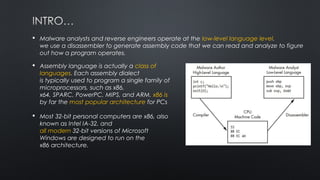
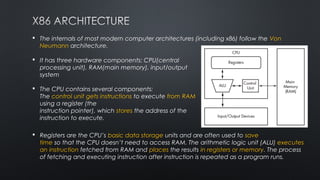

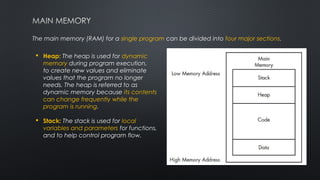
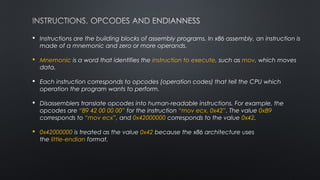

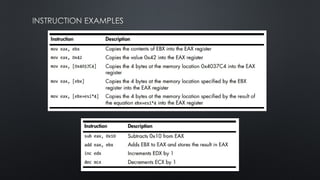

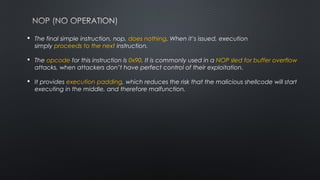

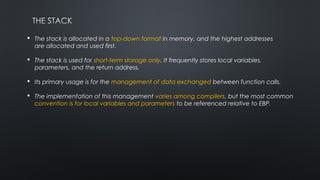

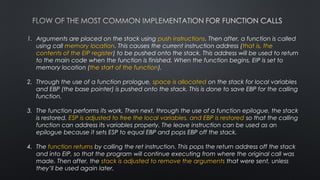

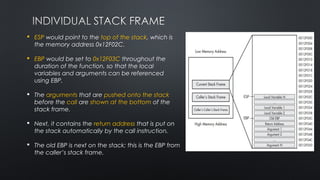
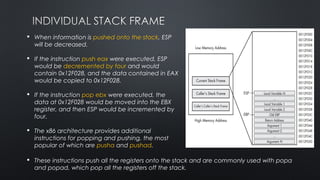
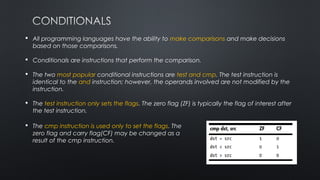


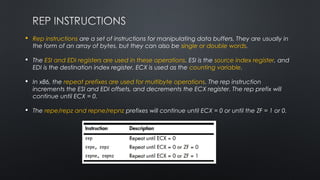


The document discusses key concepts related to x86 assembly language and architecture. It covers topics like: - Assembly language uses mnemonics and opcodes that correspond to CPU instructions. Disassemblers translate opcodes into readable assembly code. - The CPU fetches and executes instructions from memory. It contains components like the ALU, registers are used for storage, and status flags provide information. - Memory is divided into sections for code, data, stack and heap. The stack uses a LIFO structure and is important for function calls and local variables. - Functions have prologues that set up the stack frame, and epilogues that clean it up. Arguments are passed and return addresses stored


