Julien Colomb
Freie Universität Berlin
Björn Brembs
Universität Regensburg
http://brembs.net
Institutions produce
publications, data and software
Dysfunctional scholarly
literature
•
•
•
•
•
•
•
•
•

…it’s like the
web in 1995!

•
•

Limited access
No global search
No functional hyperlinks
No flexible data
visualization
No submission
standards
(Almost) no statistics
No text/data-mining
No effective way to
sort, filter and discover
No scientific impact
analysis
No networking feature
etc.
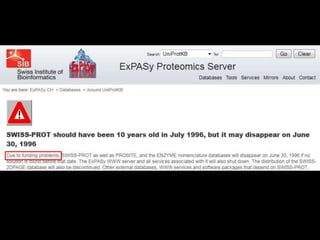
Scientific data in peril
Non-existent software
archives
small data – long tail

Report on Integration of Data and Publications, ODE Report 2011
http://www.alliancepermanentaccess.org/wp-content/plugins/download-monitor/download.php?id=ODE+Report+on+Integration+of+Data+and+Publications

6. Konferenz für Sozial- und Wirtschaftsdaten (6|KSWD) - Wissenschaft 2.0: Open Data als
Kernkomponente von Open Science; Stefan Winkler-Nees, Berlin, 21. Februar 2014
One person is not an
institutional infrastructure
Software to control the experiment and save the data
Software to analyze and visualize the data
The figshare API allows you to push
data to figshare, or pull data out.
This first version is a basic
implementation that allows you to
manage your figshare account or
build applications on top of the
figshare platform and public
research.
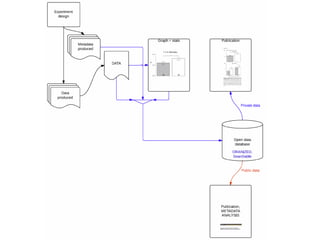
Same type of experiments → same
script
Default: → same categories
→ same tags
→ same authors
→ same links
→ same description
→ One complete article, in one click.
Update the figure:
Higher sample size directly published
while analysed, your boss may see the
results before you do! (or you may see
the results of your student before they
do)
Possibility to make it public and citable
in one click or directly in the R code.
http://dx.doi.org/10.6084/m9.figshare.97792
Making Science Open by Default

Making Science Open by Default

  • 1.
    Julien Colomb Freie UniversitätBerlin Björn Brembs Universität Regensburg http://brembs.net
  • 2.
  • 3.
  • 4.
    • • • • • • • • • …it’s like the webin 1995! • • Limited access No global search No functional hyperlinks No flexible data visualization No submission standards (Almost) no statistics No text/data-mining No effective way to sort, filter and discover No scientific impact analysis No networking feature etc.
  • 5.
  • 10.
  • 13.
    small data –long tail Report on Integration of Data and Publications, ODE Report 2011 http://www.alliancepermanentaccess.org/wp-content/plugins/download-monitor/download.php?id=ODE+Report+on+Integration+of+Data+and+Publications 6. Konferenz für Sozial- und Wirtschaftsdaten (6|KSWD) - Wissenschaft 2.0: Open Data als Kernkomponente von Open Science; Stefan Winkler-Nees, Berlin, 21. Februar 2014
  • 14.
    One person isnot an institutional infrastructure
  • 16.
    Software to controlthe experiment and save the data
  • 17.
    Software to analyzeand visualize the data
  • 25.
    The figshare APIallows you to push data to figshare, or pull data out. This first version is a basic implementation that allows you to manage your figshare account or build applications on top of the figshare platform and public research.
  • 28.
    Same type ofexperiments → same script Default: → same categories → same tags → same authors → same links → same description → One complete article, in one click. Update the figure: Higher sample size directly published while analysed, your boss may see the results before you do! (or you may see the results of your student before they do) Possibility to make it public and citable in one click or directly in the R code.
  • 29.