Björn Brembs
Universität Regensburg
http://brembs.net - @brembs
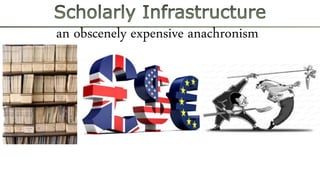
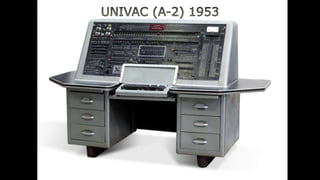
an obscenely expensive anachronism
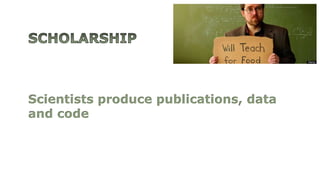
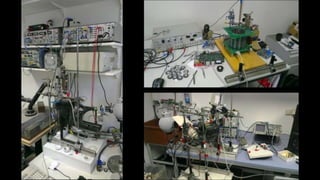
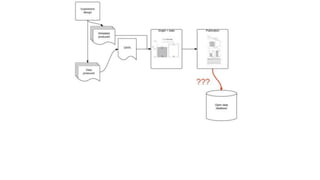
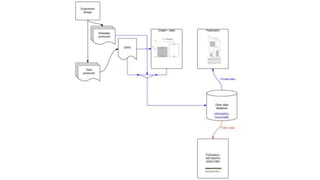
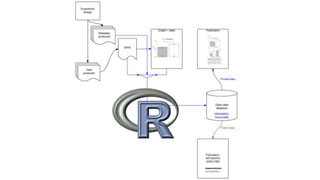
Scientists produce publications, data
and code
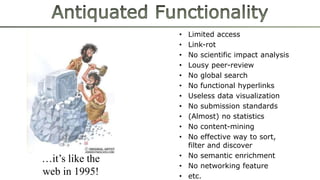
Dysfunctional scholarly literature
• Limited access
• Link-rot
• No scientific impact analysis
• Lousy peer-review
• No global search
• No functional hyperlinks
• Useless data visualization
• No submission standards
• (Almost) no statistics
• No content-mining
• No effective way to sort,
filter and discover
• No semantic enrichment
• No networking feature
• etc.
…it’s like the
web in 1995!
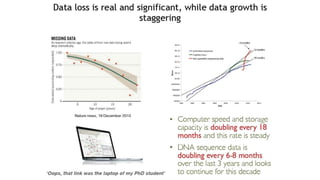
Scientific data in peril
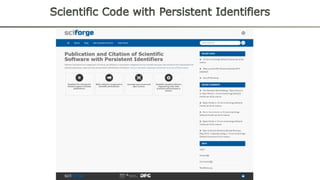
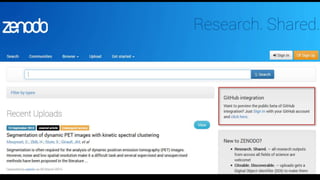
Non-existent software archives
Antiquated and missing functionality
Costs[thousandUS$/article]
Legacy OA (SciELO, Ubiquity, Scholastica, ScienceOpen, etc.)
(Sources: Van Noorden, R. (2013). Open access: The true cost of science publishing. Nature 495, 426–9; Packer, A. L. (2010). The SciELO Open
Access: A Gold Way from the South. Can. J. High. Educ. 39, 111–126)
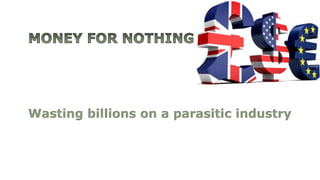
Wasting billions on a parasitic industry
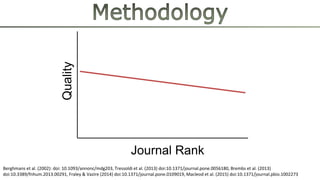
Journal Rank
Quality
Berghmans et al. (2002): doi: 10.1093/annonc/mdg203, Tressoldi et al. (2013) doi:10.1371/journal.pone.0056180, Brembs et al. (2013)
doi:10.3389/fnhum.2013.00291, Fraley & Vazire (2014) doi:10.1371/journal.pone.0109019, Macleod et al. (2015) doi:10.1371/journal.pbio.1002273
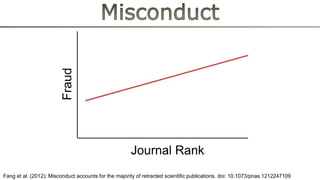
Fang et al. (2012): Misconduct accounts for the majority of retracted scientific publications. doi: 10.1073/pnas.1212247109
Journal Rank
Fraud
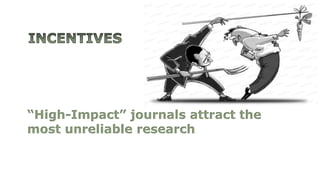
“High-Impact” journals attract the
most unreliable research
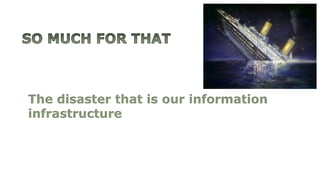
The disaster that is our information
infrastructure
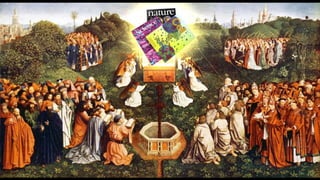
“Thou shalt be open!”
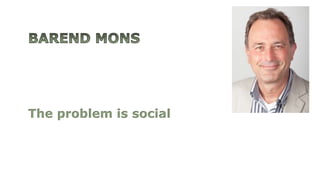
The problem is social
Effortless, low-risk and by default:
FAIR
Software to control the experiment and save the data
Software to analyze and visualize the data
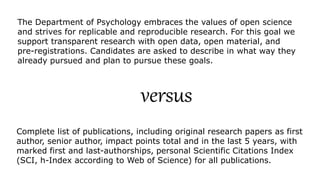
The Department of Psychology embraces the values of open science
and strives for replicable and reproducible research. For this goal we
support transparent research with open data, open material, and
pre-registrations. Candidates are asked to describe in what way they
already pursued and plan to pursue these goals.
Complete list of publications, including original research papers as first
author, senior author, impact points total and in the last 5 years, with
marked first and last-authorships, personal Scientific Citations Index
(SCI, h-Index according to Web of Science) for all publications.
versus
(Sources: Van Noorden, R. (2013). Open access: The true cost of science publishing. doi:10.1038/495426a, Packer, A. L. (2010). The SciELO Open
Access: A Gold Way from the South. Can. J. High. Educ. 39, 111–126)
Potentialforinnovation:9.8bp.a.
Costs[thousandUS$/article]
Legacy SciELO
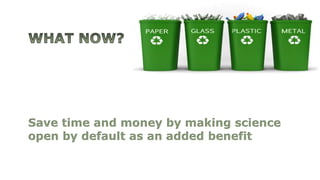
Save time and money by making science
open by default as an added benefit
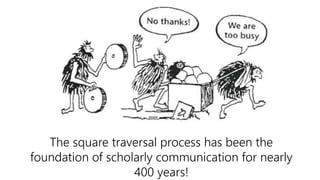
The square traversal process has been the
foundation of scholarly communication for nearly
400 years!

Uphrading the Scholarly Infrastructure

  • 1.
  • 2.
  • 3.
  • 4.
  • 5.
    • Limited access •Link-rot • No scientific impact analysis • Lousy peer-review • No global search • No functional hyperlinks • Useless data visualization • No submission standards • (Almost) no statistics • No content-mining • No effective way to sort, filter and discover • No semantic enrichment • No networking feature • etc. …it’s like the web in 1995!
  • 6.
  • 8.
  • 10.
  • 11.
    Costs[thousandUS$/article] Legacy OA (SciELO,Ubiquity, Scholastica, ScienceOpen, etc.) (Sources: Van Noorden, R. (2013). Open access: The true cost of science publishing. Nature 495, 426–9; Packer, A. L. (2010). The SciELO Open Access: A Gold Way from the South. Can. J. High. Educ. 39, 111–126)
  • 12.
    Wasting billions ona parasitic industry
  • 14.
    Journal Rank Quality Berghmans etal. (2002): doi: 10.1093/annonc/mdg203, Tressoldi et al. (2013) doi:10.1371/journal.pone.0056180, Brembs et al. (2013) doi:10.3389/fnhum.2013.00291, Fraley & Vazire (2014) doi:10.1371/journal.pone.0109019, Macleod et al. (2015) doi:10.1371/journal.pbio.1002273
  • 15.
    Fang et al.(2012): Misconduct accounts for the majority of retracted scientific publications. doi: 10.1073/pnas.1212247109 Journal Rank Fraud
  • 16.
    “High-Impact” journals attractthe most unreliable research
  • 17.
    The disaster thatis our information infrastructure
  • 18.
  • 21.
  • 25.
    Effortless, low-risk andby default: FAIR
  • 27.
    Software to controlthe experiment and save the data
  • 28.
    Software to analyzeand visualize the data
  • 45.
    The Department ofPsychology embraces the values of open science and strives for replicable and reproducible research. For this goal we support transparent research with open data, open material, and pre-registrations. Candidates are asked to describe in what way they already pursued and plan to pursue these goals. Complete list of publications, including original research papers as first author, senior author, impact points total and in the last 5 years, with marked first and last-authorships, personal Scientific Citations Index (SCI, h-Index according to Web of Science) for all publications. versus
  • 48.
    (Sources: Van Noorden,R. (2013). Open access: The true cost of science publishing. doi:10.1038/495426a, Packer, A. L. (2010). The SciELO Open Access: A Gold Way from the South. Can. J. High. Educ. 39, 111–126) Potentialforinnovation:9.8bp.a. Costs[thousandUS$/article] Legacy SciELO
  • 52.
    Save time andmoney by making science open by default as an added benefit
  • 53.
    The square traversalprocess has been the foundation of scholarly communication for nearly 400 years!