Björn Brembs
Universität Regensburg
http://brembs.net
Tone Food
Tone: Conditioned stimulus – CS
Food: Unconditioned Stimulus – US
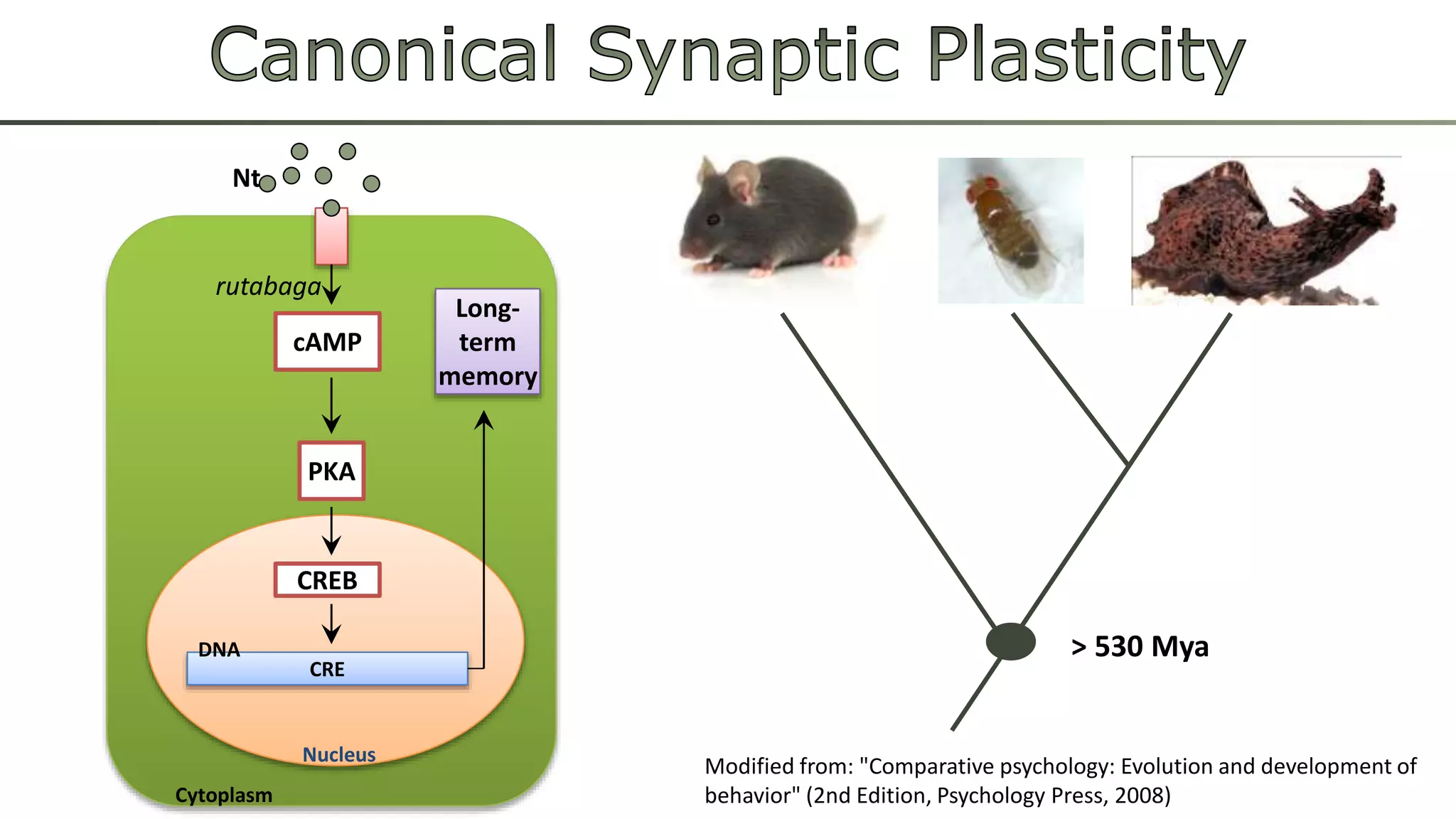
> 530 Mya
CREB
CRE
Long-
term
memory
cAMP
PKA
Cytoplasm
Nucleus
Nt
DNA
rutabaga
Modified from: "Comparative psychology: Evolution and development of
behavior" (2nd Edition, Psychology Press, 2008)
CS US
Tone Food
Lever-
pressing Food
Behavior Reinforcement
> 530 Mya
CREB
CRE
Long-
term
memory
cAMP
PKA
Cytoplasm
Nucleus
Nt
DNA
rutabaga
Modified from: "Comparative psychology: Evolution and development of
behavior" (2nd Edition, Psychology Press, 2008)
Press
FoodLever
CS? US?
Tone Food
Behavioral variability in a constant stimulus
situation:
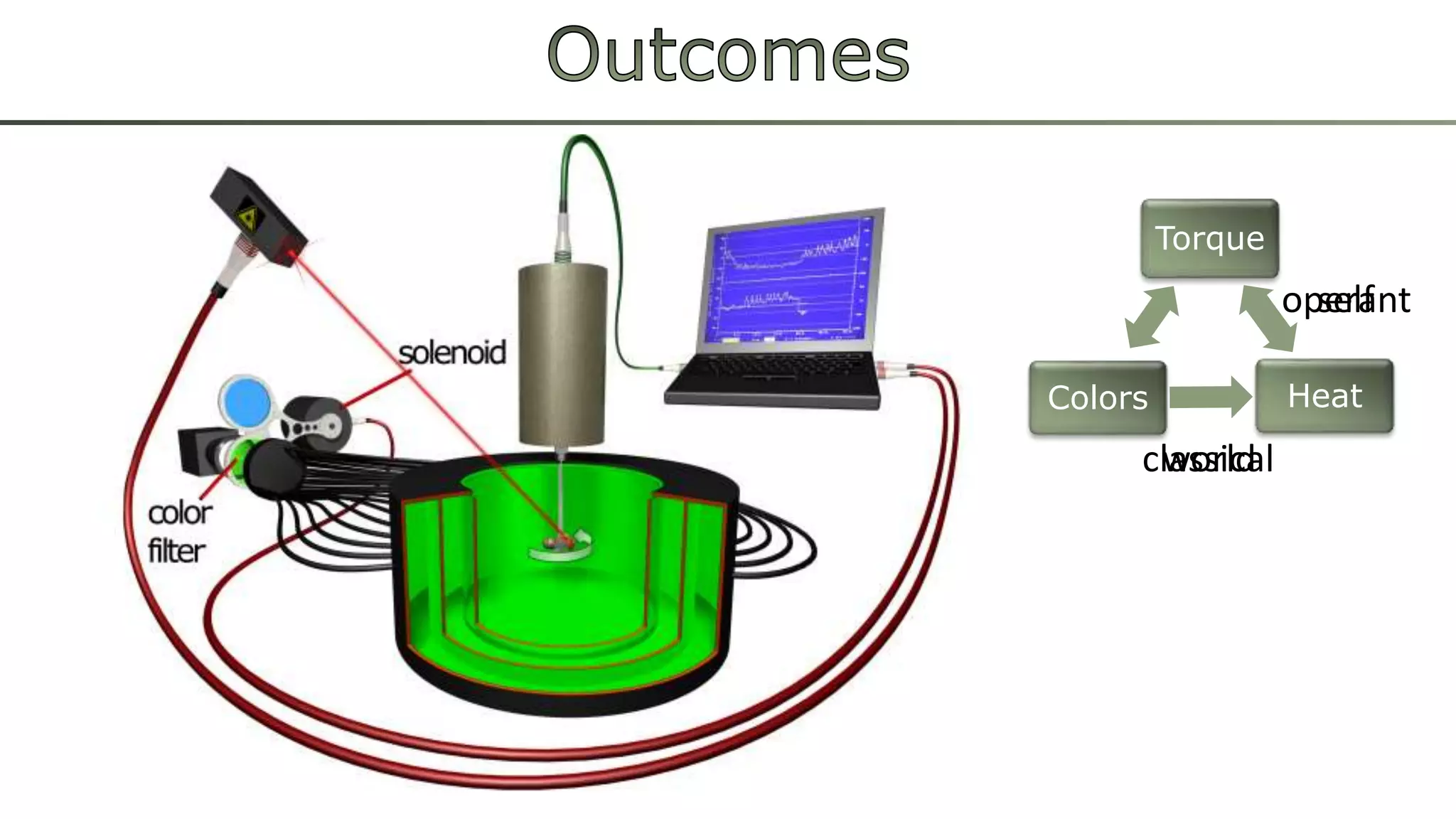
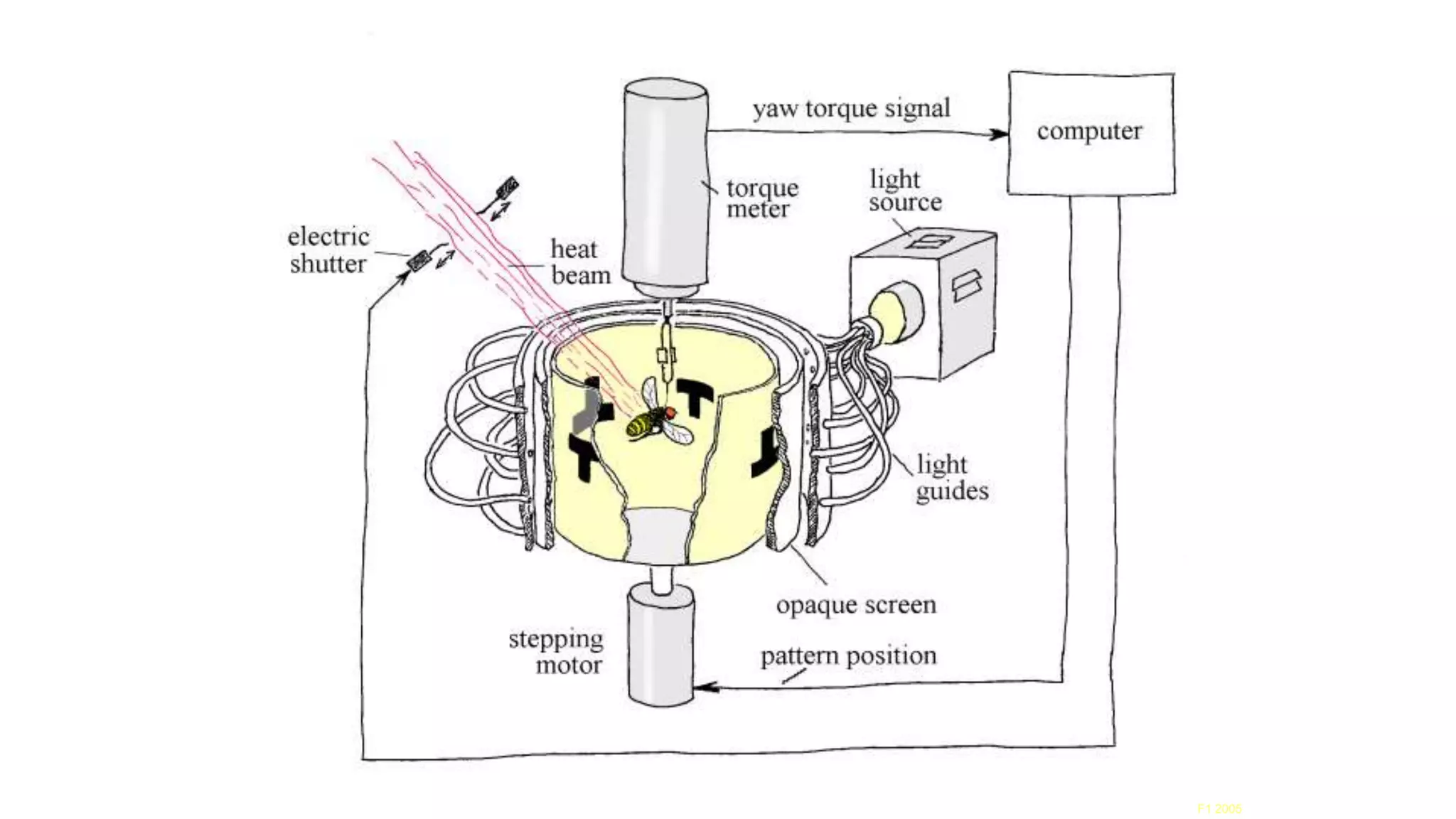
Torque
HeatColors
operant
classical
self
world
> 530 Mya
CREB
CRE
Long-
term
memory
cAMP
PKA
Cytoplasm
Nucleus
Nt
DNA
rutabaga
Modified from: "Comparative psychology: Evolution and development of
behavior" (2nd Edition, Psychology Press, 2008)
Brembs & Plendl (2008)
Torque
HeatColors
Torque
Heat
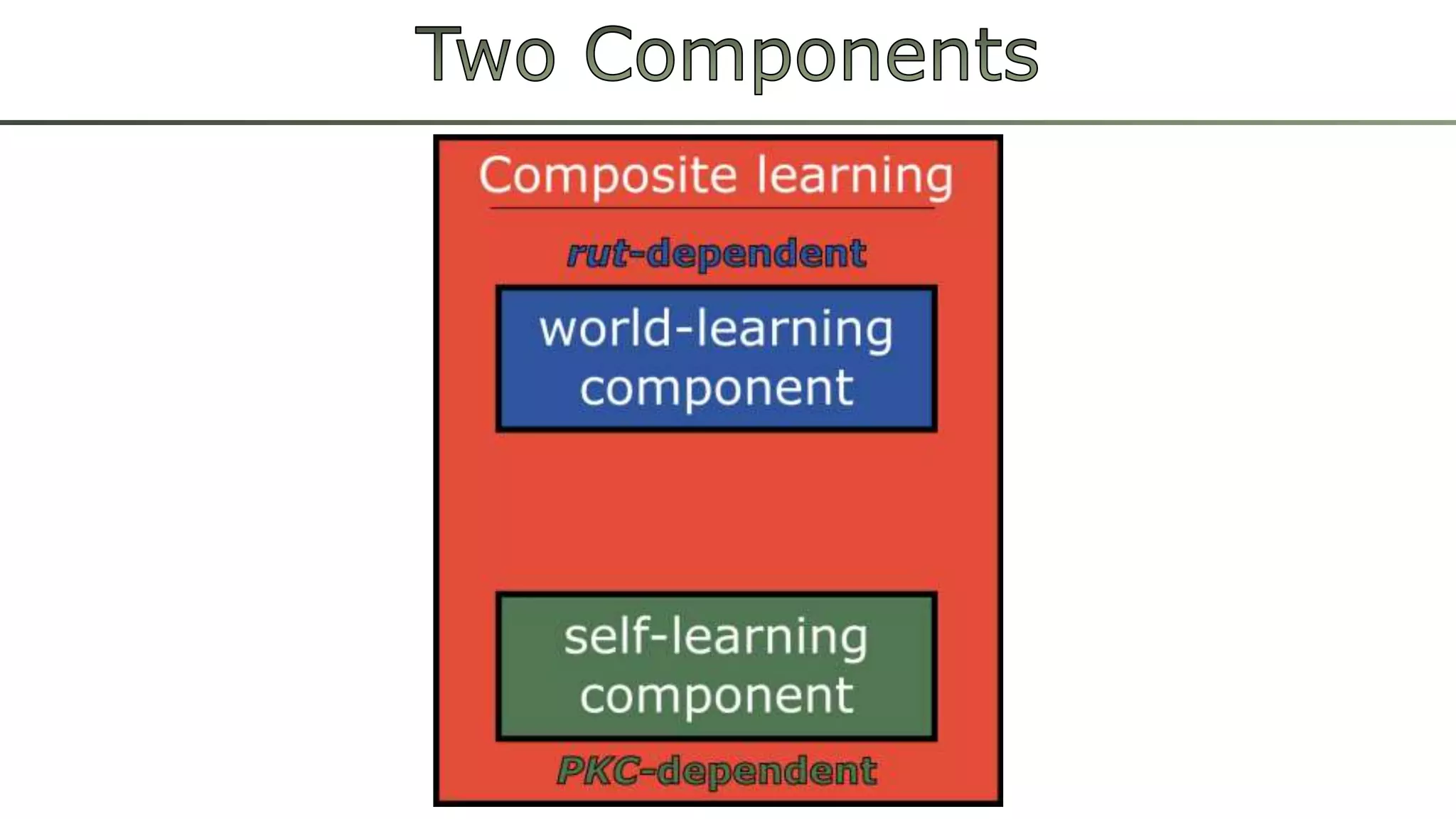
rut-AC dependent
Synaptic Plasticity
Protein
Kinase C
world
self
rut2080 wtb
rut2080 wtb
HS noHS
PKCi PKCi
HS noHS
PKCi PKCi
PKC but not rut-AC involved
in Aplysia self-learning
Aplysia californica
F. Lorenzetti, D. Baxter, J. Byrne (2008): Neuron 59, 815-828
PKC involved in self-motion
learning
Rochefort C, Arabo A, André M, Poucet B, Save E, Rondi-Reig L. (2011) Science
334(6054):385-389
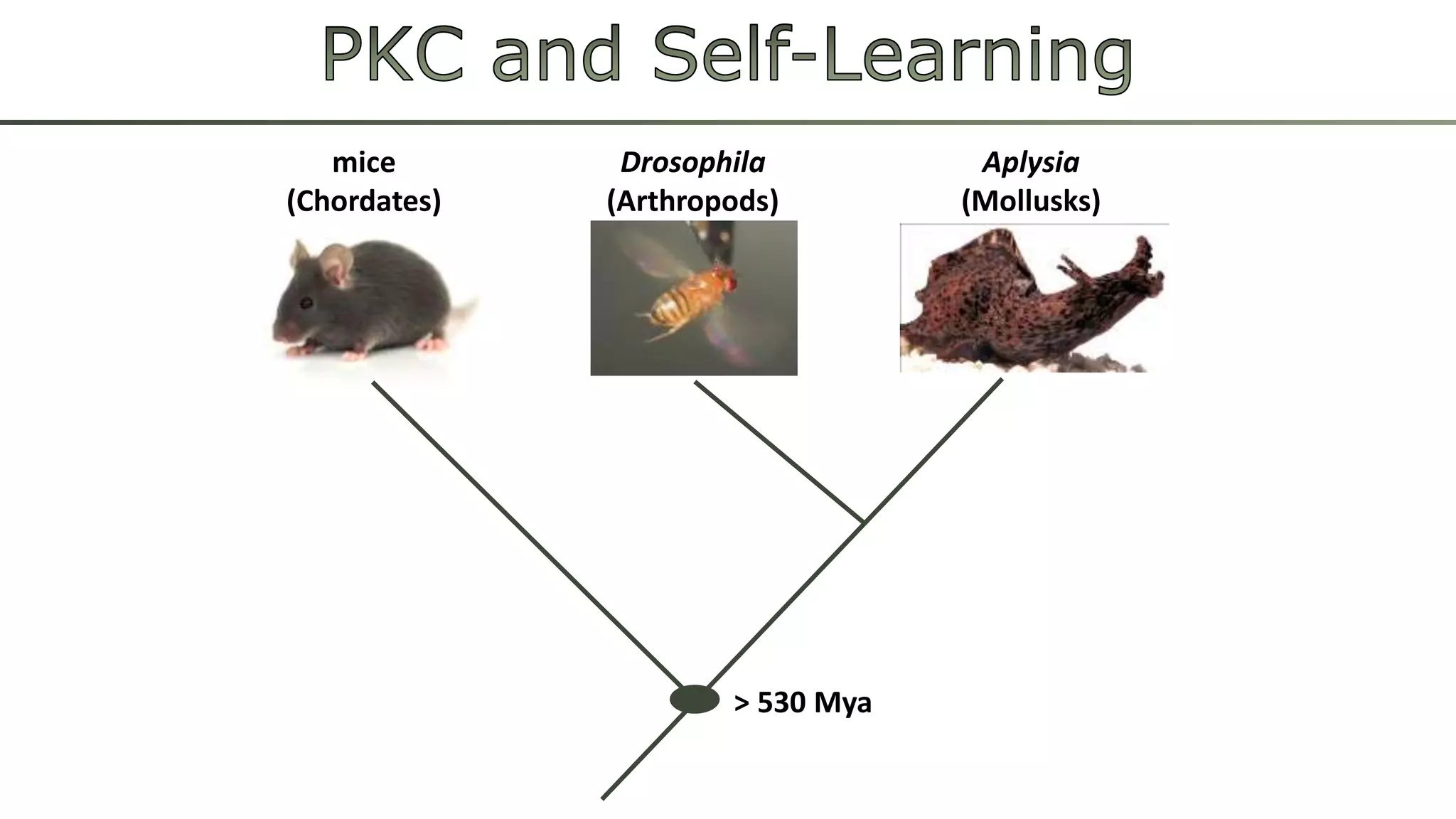
> 530 Mya
Aplysia
(Mollusks)
Drosophila
(Arthropods)
mice
(Chordates)
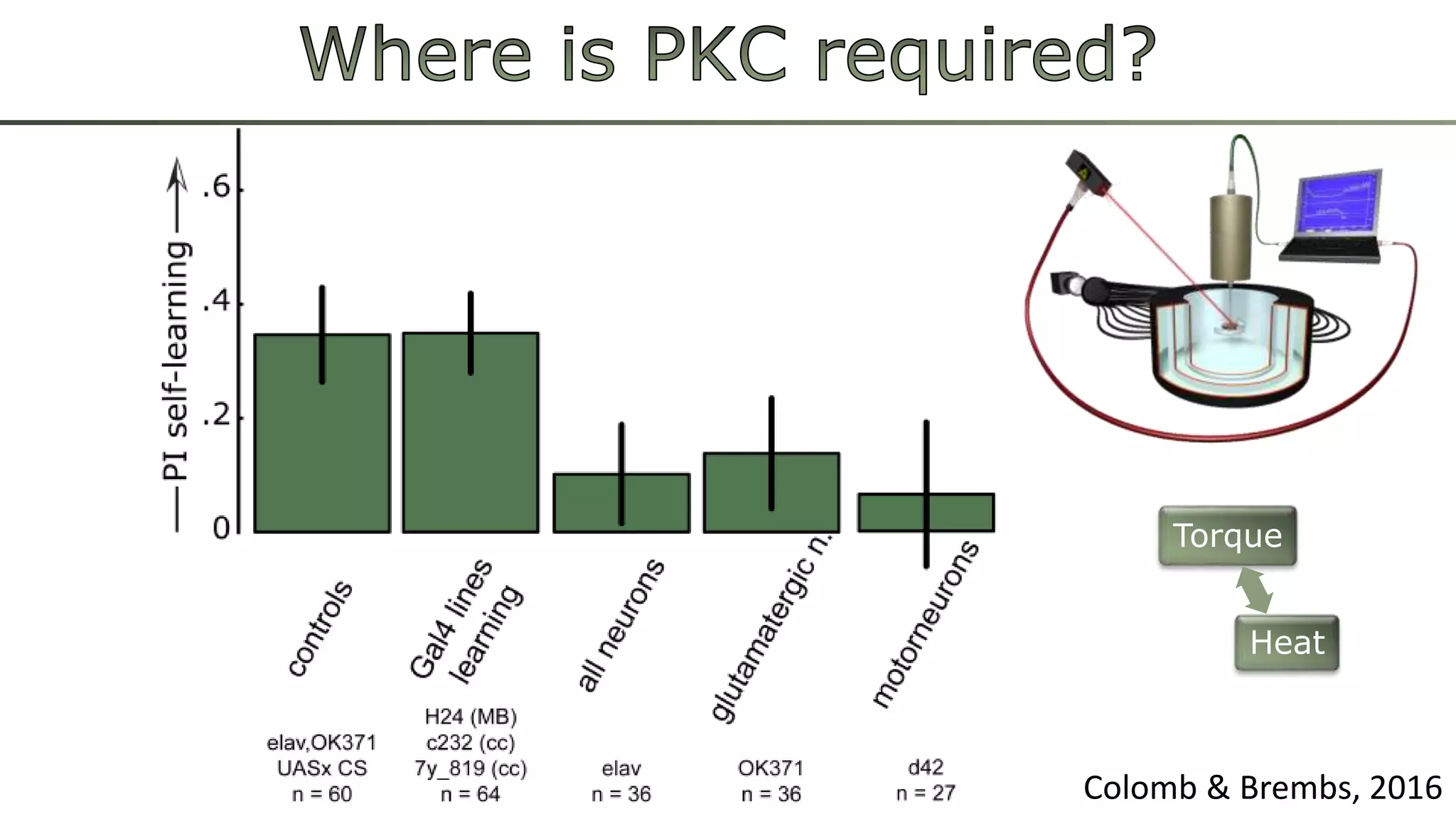
Torque
Heat
Colomb & Brembs, 2016
Action – Outcome Evaluation
Torque
Heat
Generate spontaneous actions (trying out)
Shape behavior by evaluating sensory feedbac
Action – Outcome Evaluation
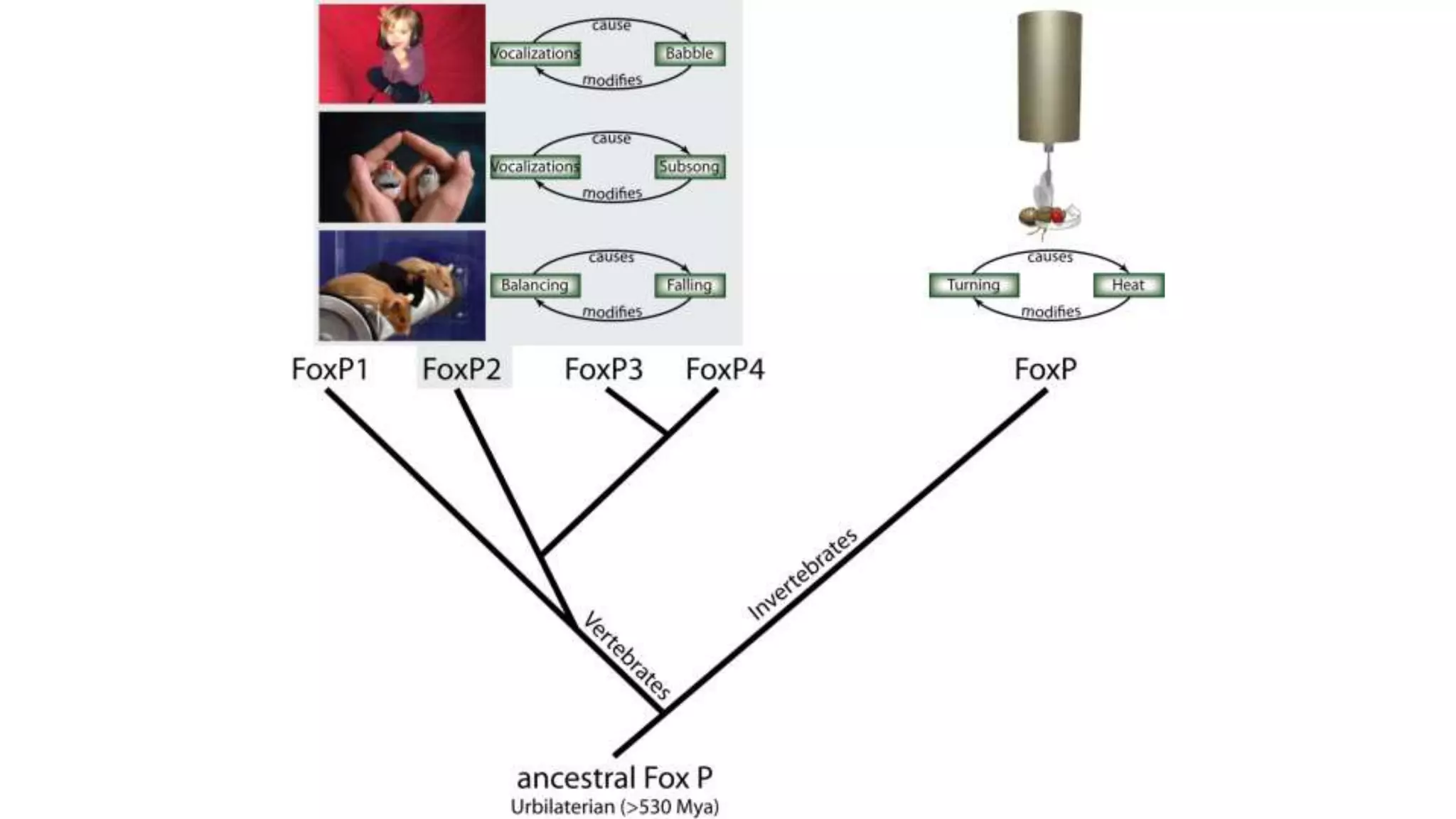
FoxP2
Torque
HeatColors
Torque
Heat
world
self
self
WT FoxP RNAi ctrl.
> 530 Mya
Aplysia
(Mollusks)
Drosophila
(Arthropods)
Humans/mice/birds
(Chordates)
???
cAMP
PKA
Cytoplasm
Nucleus
Nt
DNA
Type II cyclase
PKC
FoxP
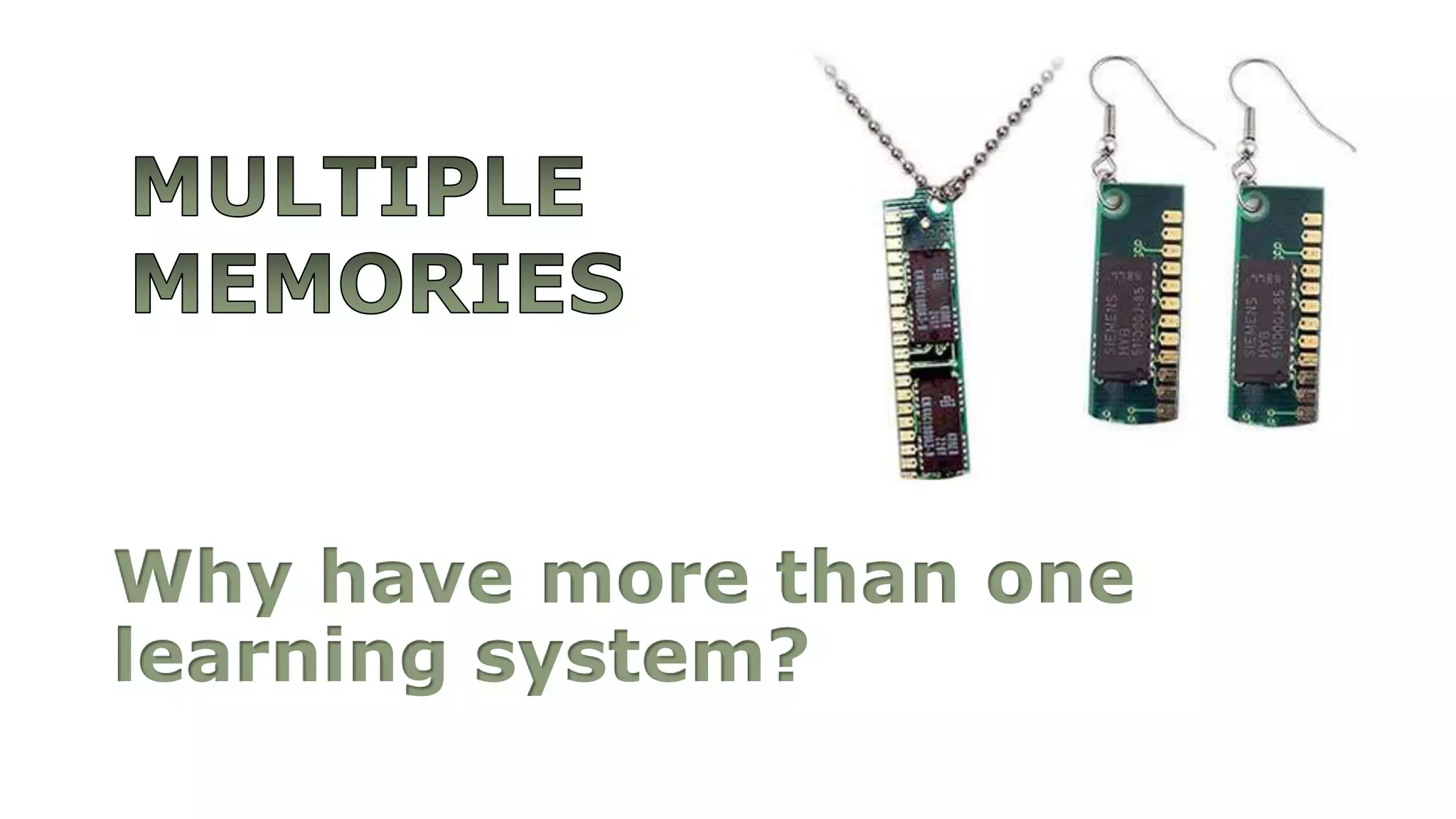
Why have more than one
learning system?
F1 2005
PI = (tc - th) / (tc + th)
Brembs & Heisenberg (2000) L & M
‘Master’: operant
‘Replay’: classical
Training Test
composite:
turning + color
turning
Training Test
composite:
turning + color
turning
WT WT 16min MB
Impaired OK OK
Self-Learning Test
Training Test
composite:
turning + color
turning
color
WT WT 16min MB
Impaired OK OK
Self-Learning Test
WT WT 16min MB
OK Impaired Impaired
World-Learning Test
Training Test
composite:
turning + color
turning
color
WT 8min WT 16min MB
Impaired OK OK
Self-Learning Test
WT 8min WT 16min MB
OK Impaired Impaired
World-Learning Test
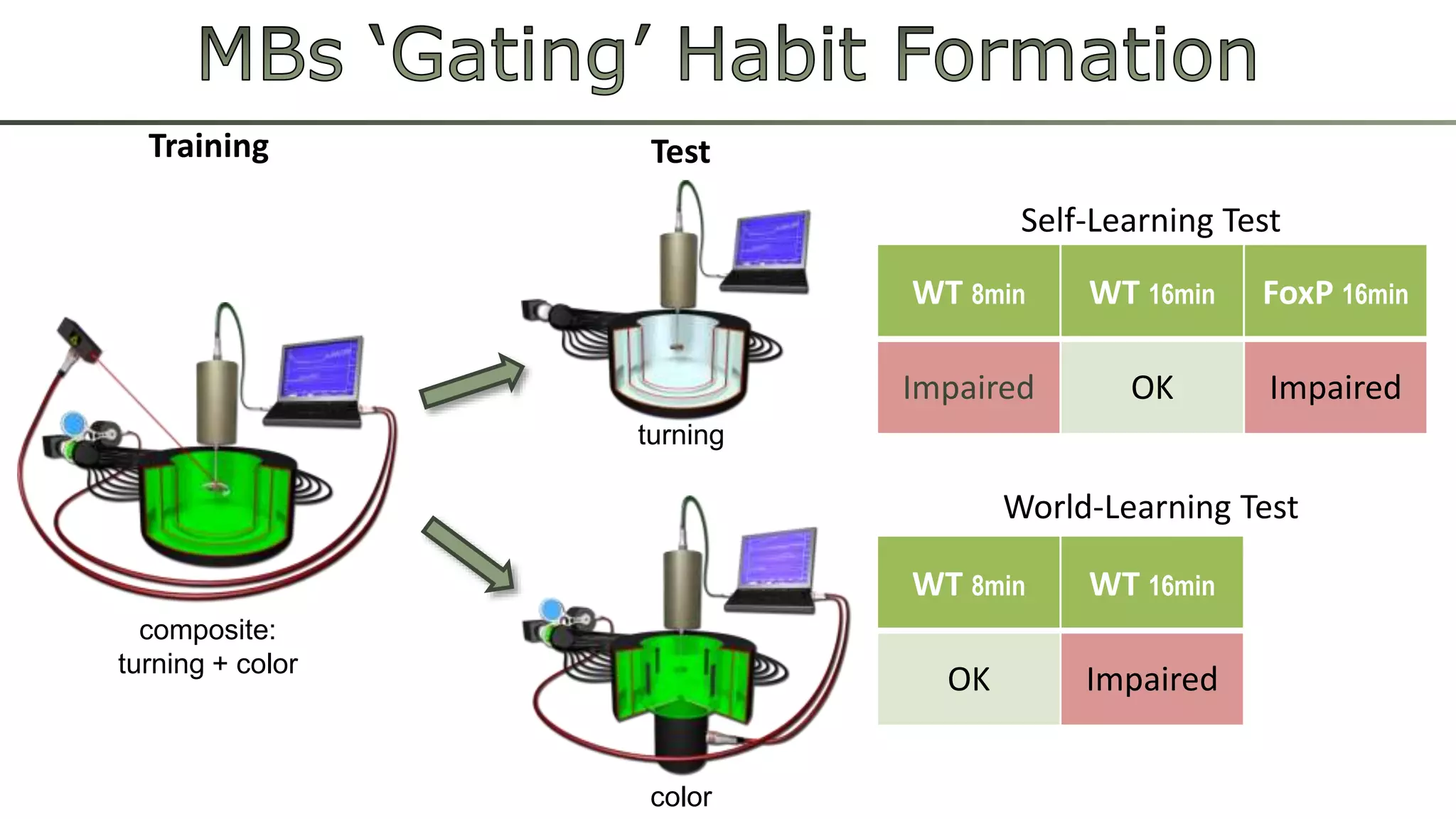
habit formation
Training Test
composite:
turning + color
turning
color
WT 8min WT 16min FoxP 16min
Impaired OK Impaired
Self-Learning Test
WT 8min WT 16min MB
OK Impaired Impaired
World-Learning Test
Training Test
composite:
turning + color
turning
color
WT 8min WT 16min MB 8min
Impaired OK OK
Self-Learning Test
WT 8min WT 16min MB 8min
OK Impaired Impaired
World-Learning Test
Brembs, 2009
MB247 or 17D
driving TNT
Brembs (2009) Curr Biol
Colomb & Brembs (2010) Commun Integr Biol
Brembs (2010) Proc Roy Soc
Brembs (2011) Behav Proc
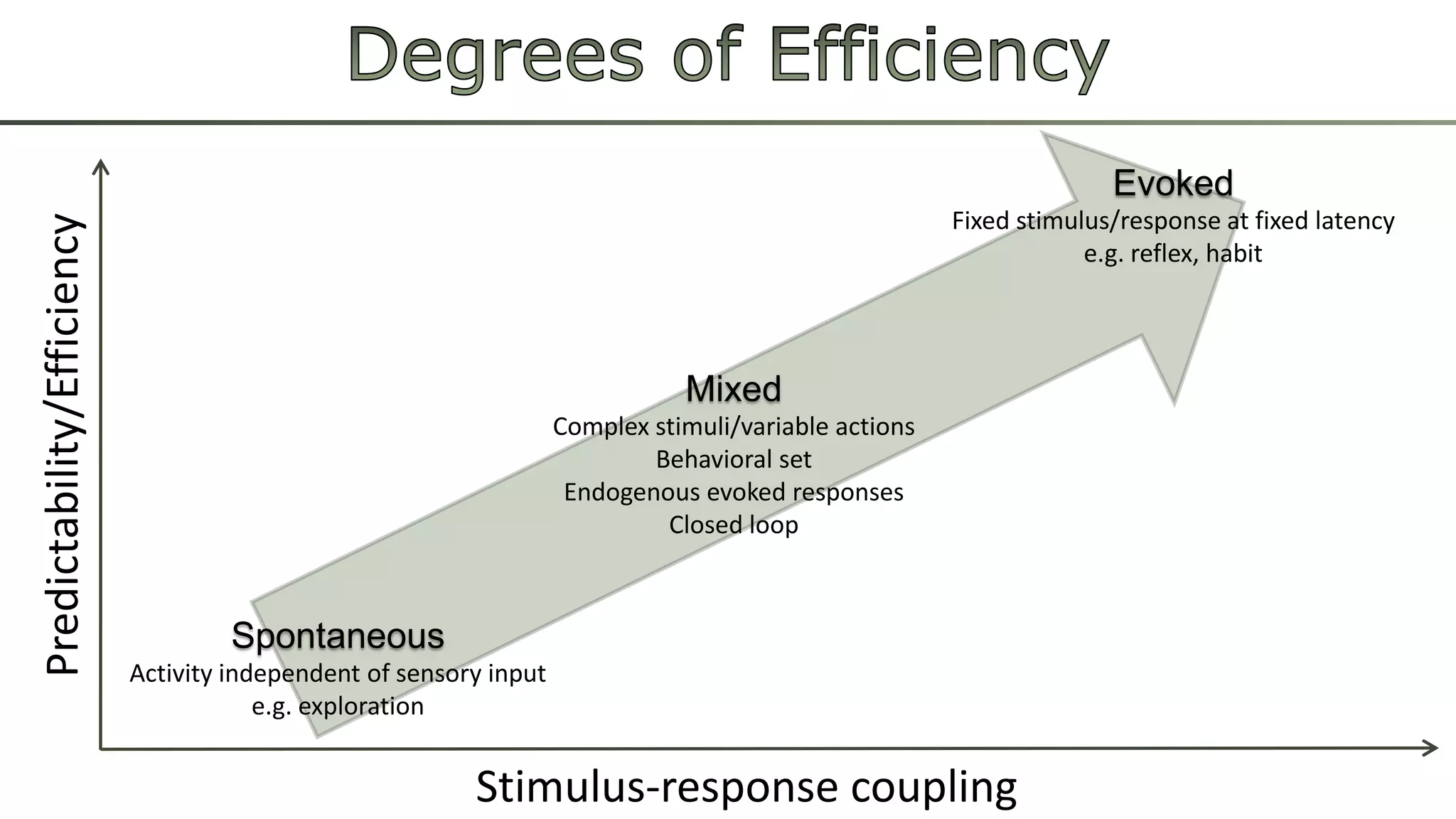
Spontaneous
Activity independent of sensory input
e.g. exploration
Mixed
Complex stimuli/variable actions
Behavioral set
Endogenous evoked responses
Closed loop
Evoked
Fixed stimulus/response at fixed latency
e.g. reflex, habit
Stimulus-response coupling
Predictability
Spontaneous
Activity independent of sensory input
e.g. exploration
Mixed
Complex stimuli/variable actions
Behavioral set
Endogenous evoked responses
Closed loop
Evoked
Fixed stimulus/response at fixed latency
e.g. reflex, habit
Stimulus-response coupling
Predictability/Efficiency
Flexibility
Efficiency
Exploration
Exploitatio
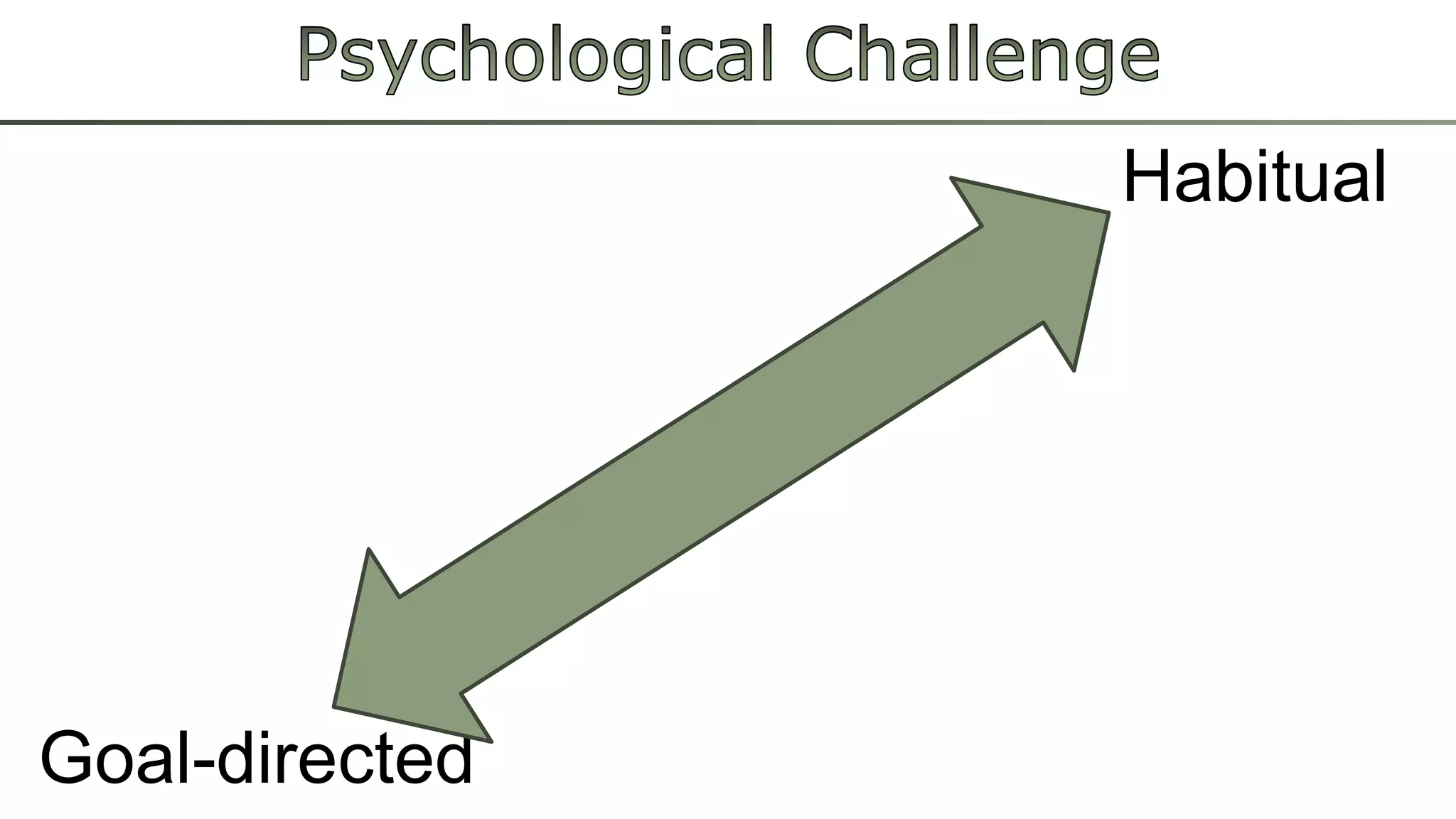
Goal-directed
Habitual
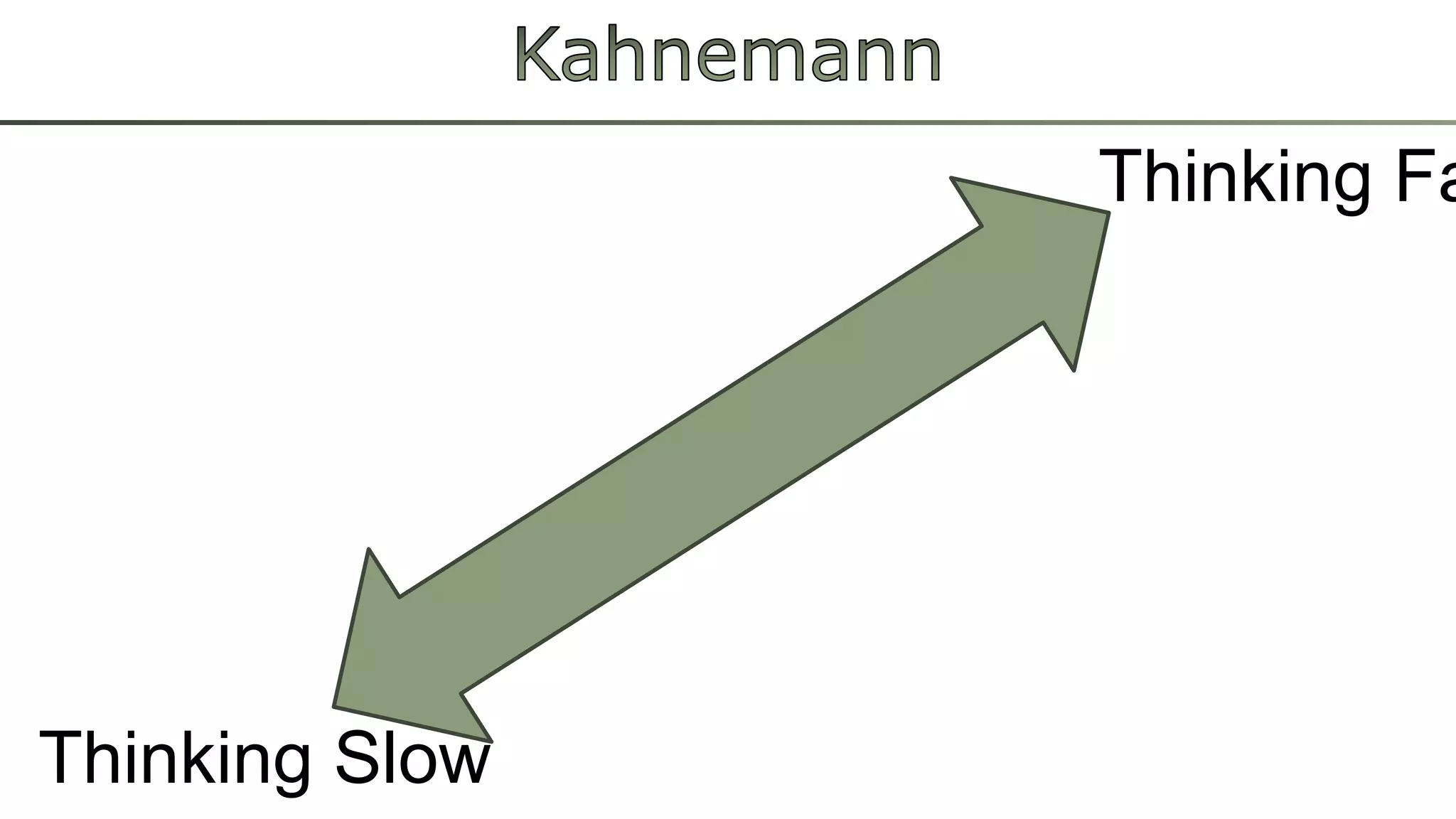
Thinking Slow
Thinking Fa
The evolutionary conserved neurobiology of operant learning

The evolutionary conserved neurobiology of operant learning