
Björn Brembs 
Universität Regensburg 
http://brembs.net
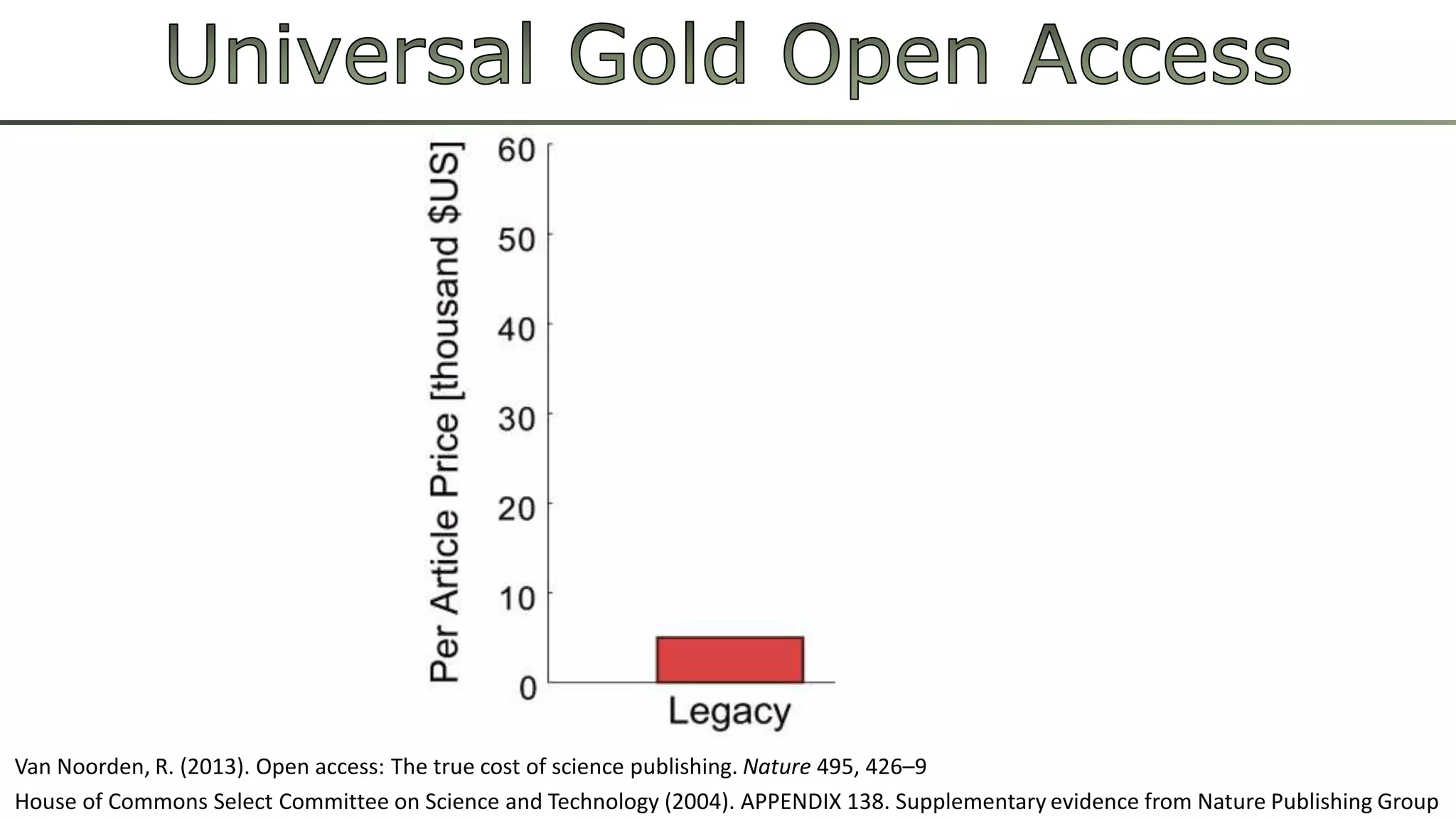
Van Noorden, R. (2013). Open access: The true cost of science publishing. Nature 495, 426–9 
House of Commons Select Committee on Science and Technology (2004). APPENDIX 138. Supplementary evidence from Nature Publishing Group
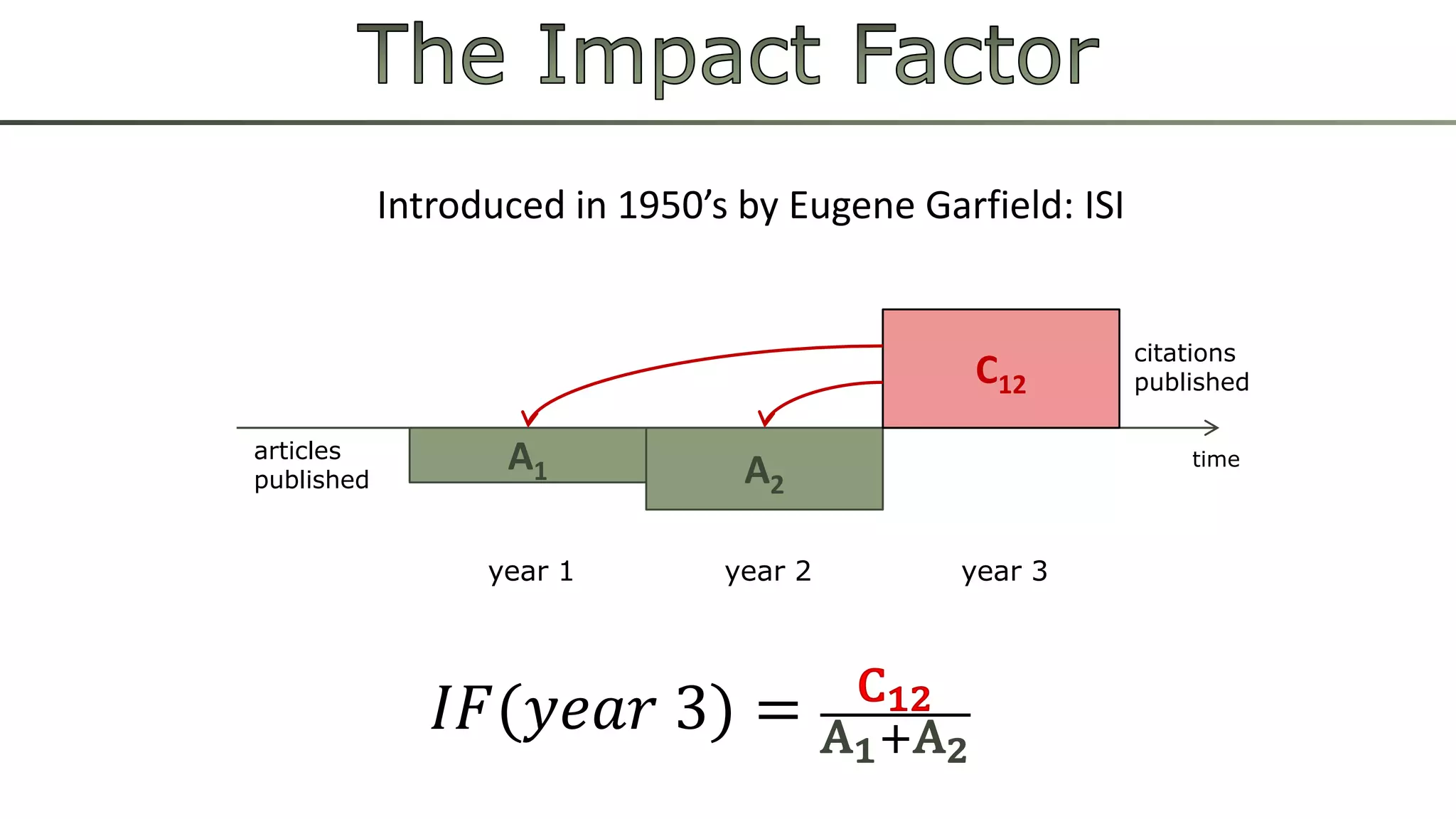
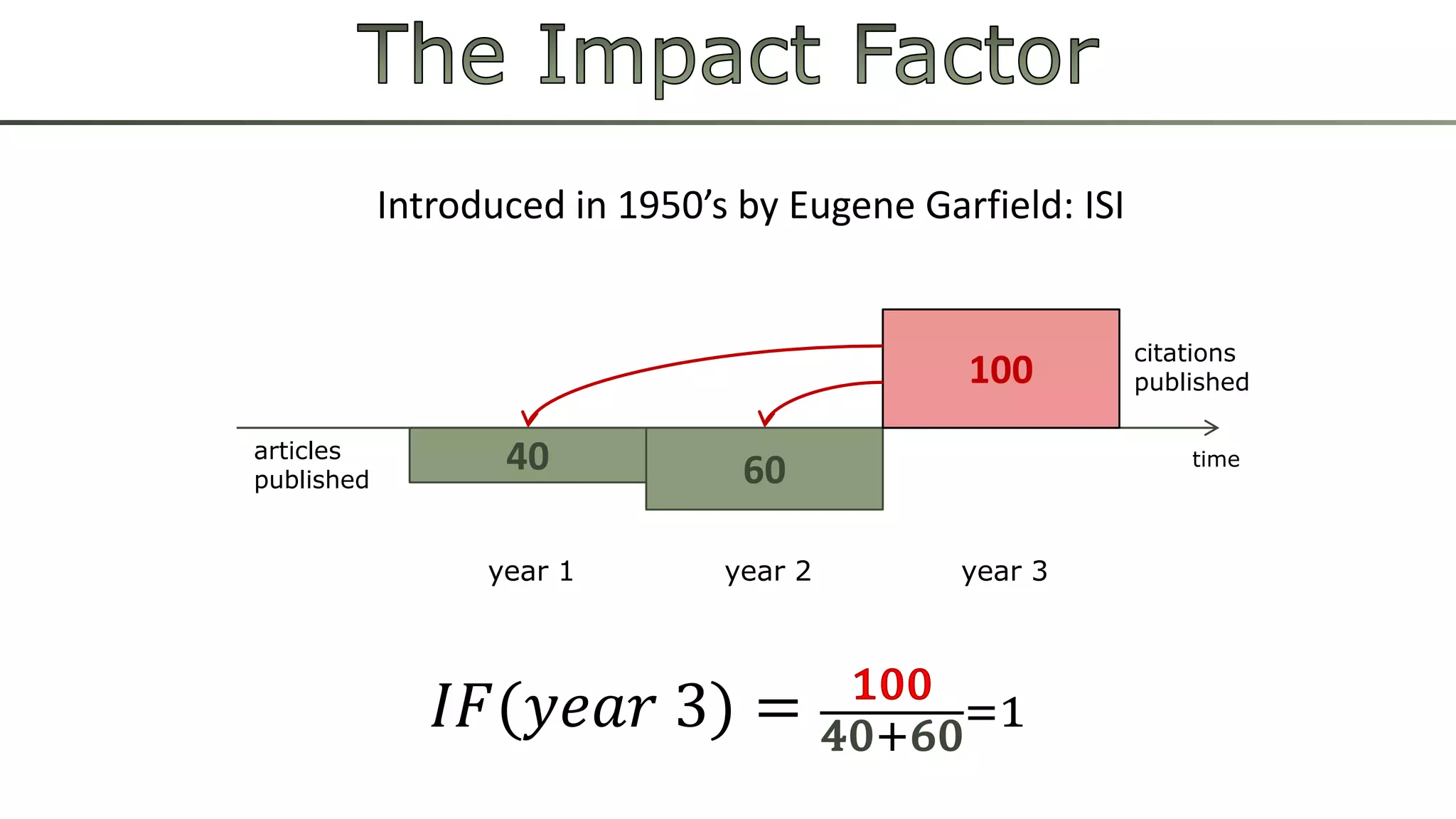
Introduced in 1950’s by Eugene Garfield: ISI 
A1 A2 
C12 
citations 
published 
time 
articles 
published 
year 1 year 2 year 3 
퐼퐹(푦푒푎푟 3) = +
Introduced in 1950’s by Eugene Garfield: ISI 
40 60 
100 
citations 
published 
time 
articles 
published 
year 1 year 2 year 3 
퐼퐹(푦푒푎푟 3) = + 
=1
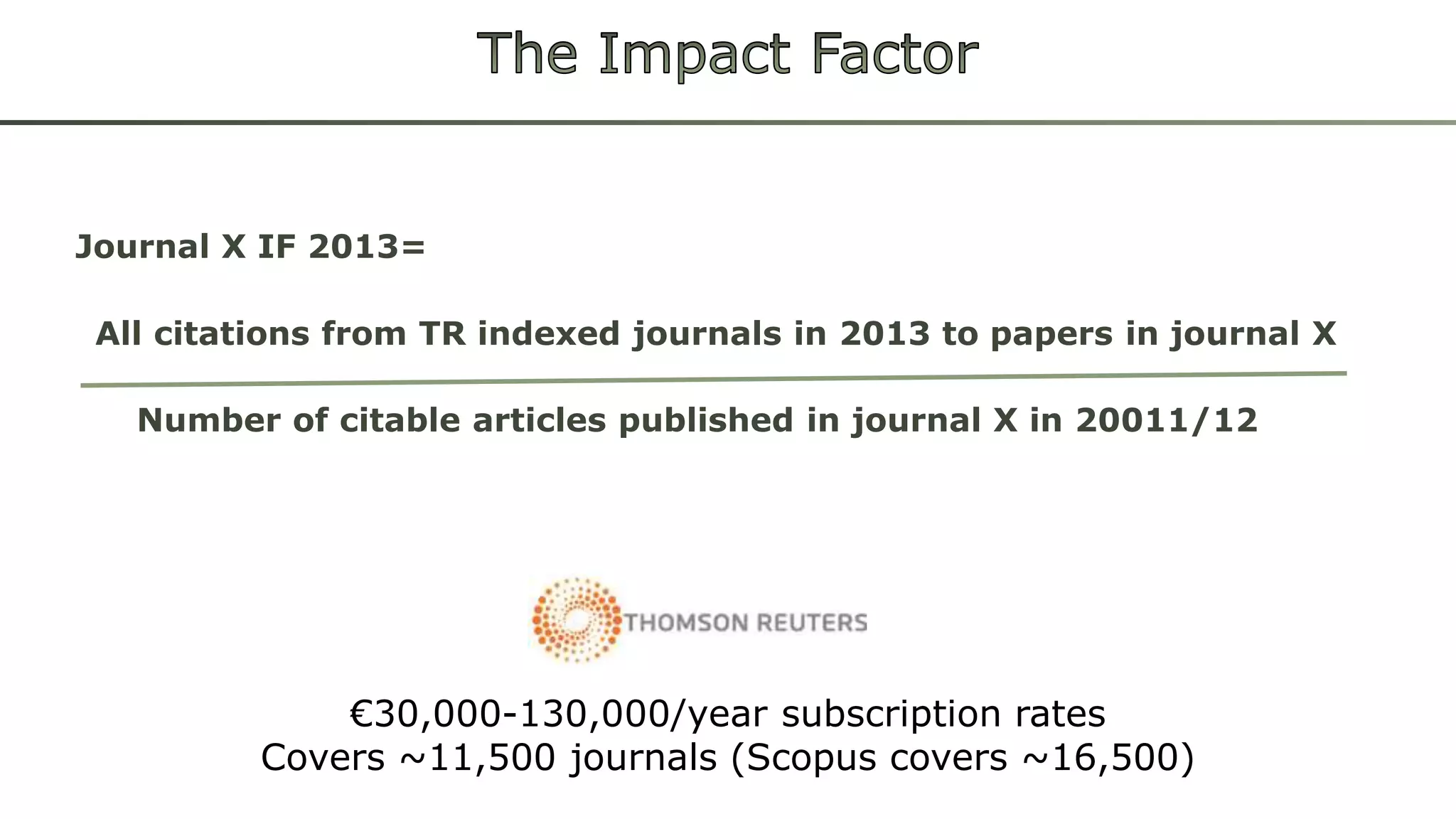
Journal X IF 2013= 
All citations from TR indexed journals in 2013 to papers in journal X 
Number of citable articles published in journal X in 20011/12 
€30,000-130,000/year subscription rates 
Covers ~11,500 journals (Scopus covers ~16,500)
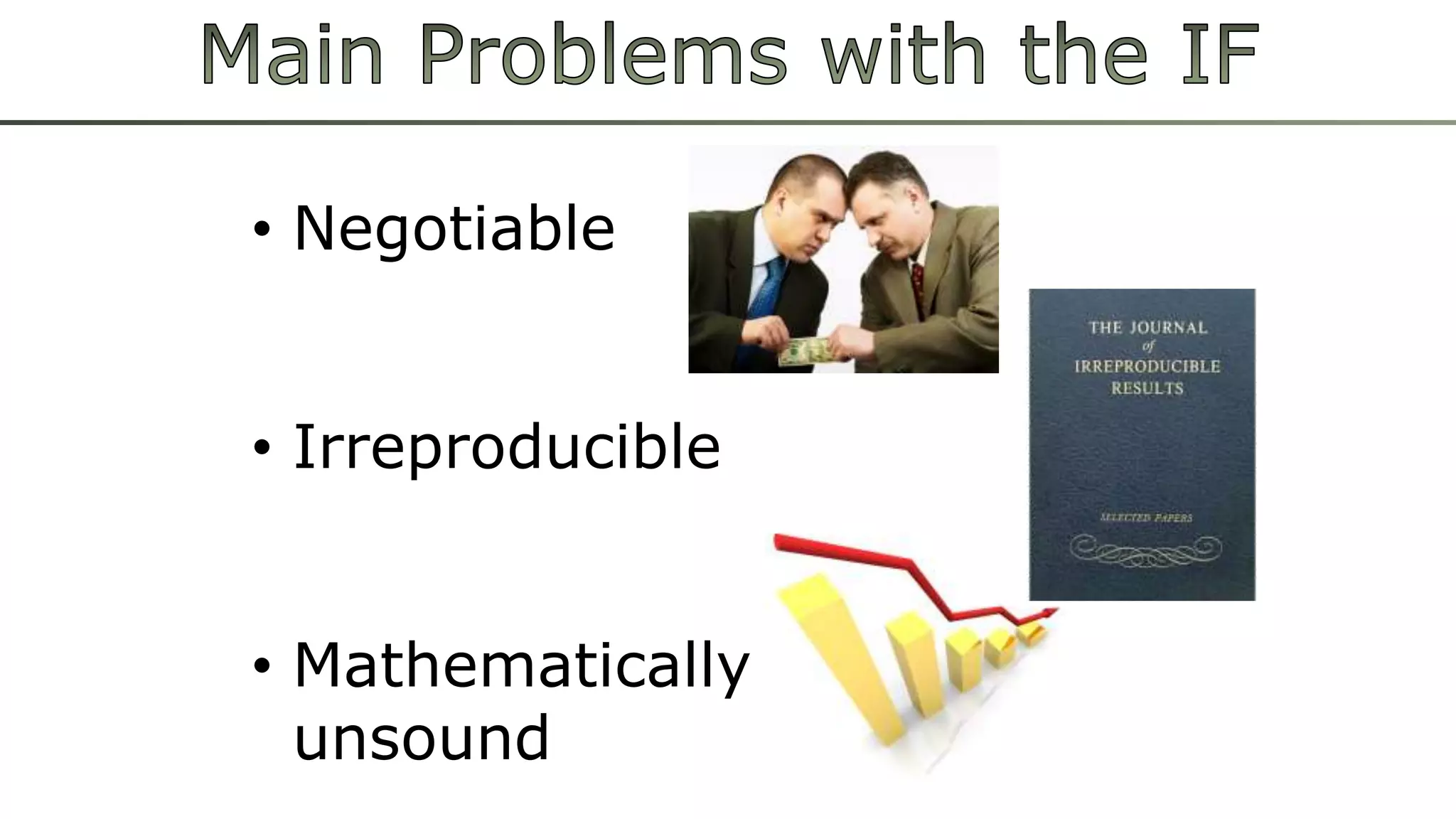
• Negotiable 
• Irreproducible 
• Mathematically 
unsound
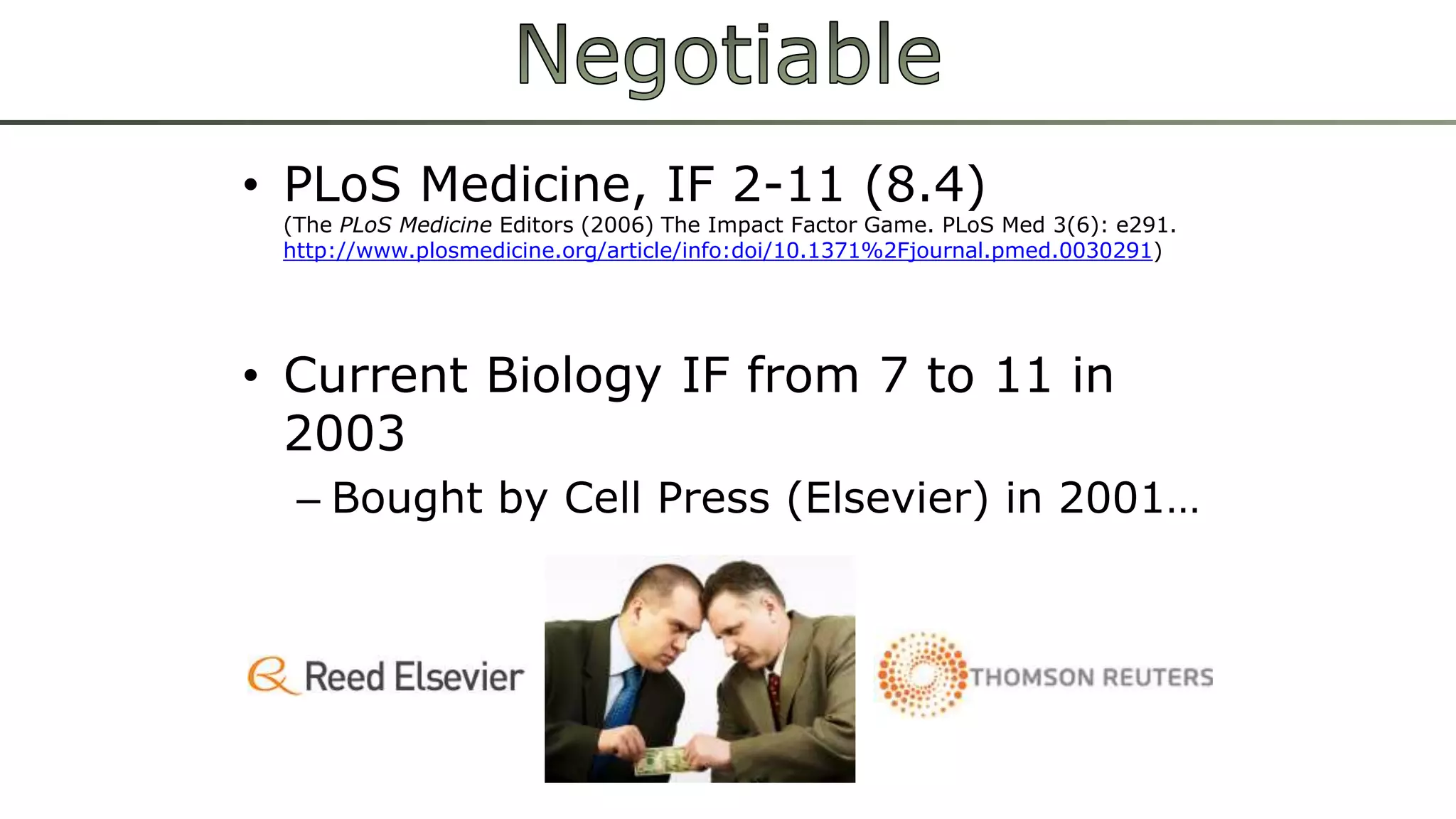
• PLoS Medicine, IF 2-11 (8.4) 
(The PLoS Medicine Editors (2006) The Impact Factor Game. PLoS Med 3(6): e291. 
http://www.plosmedicine.org/article/info:doi/10.1371%2Fjournal.pmed.0030291) 
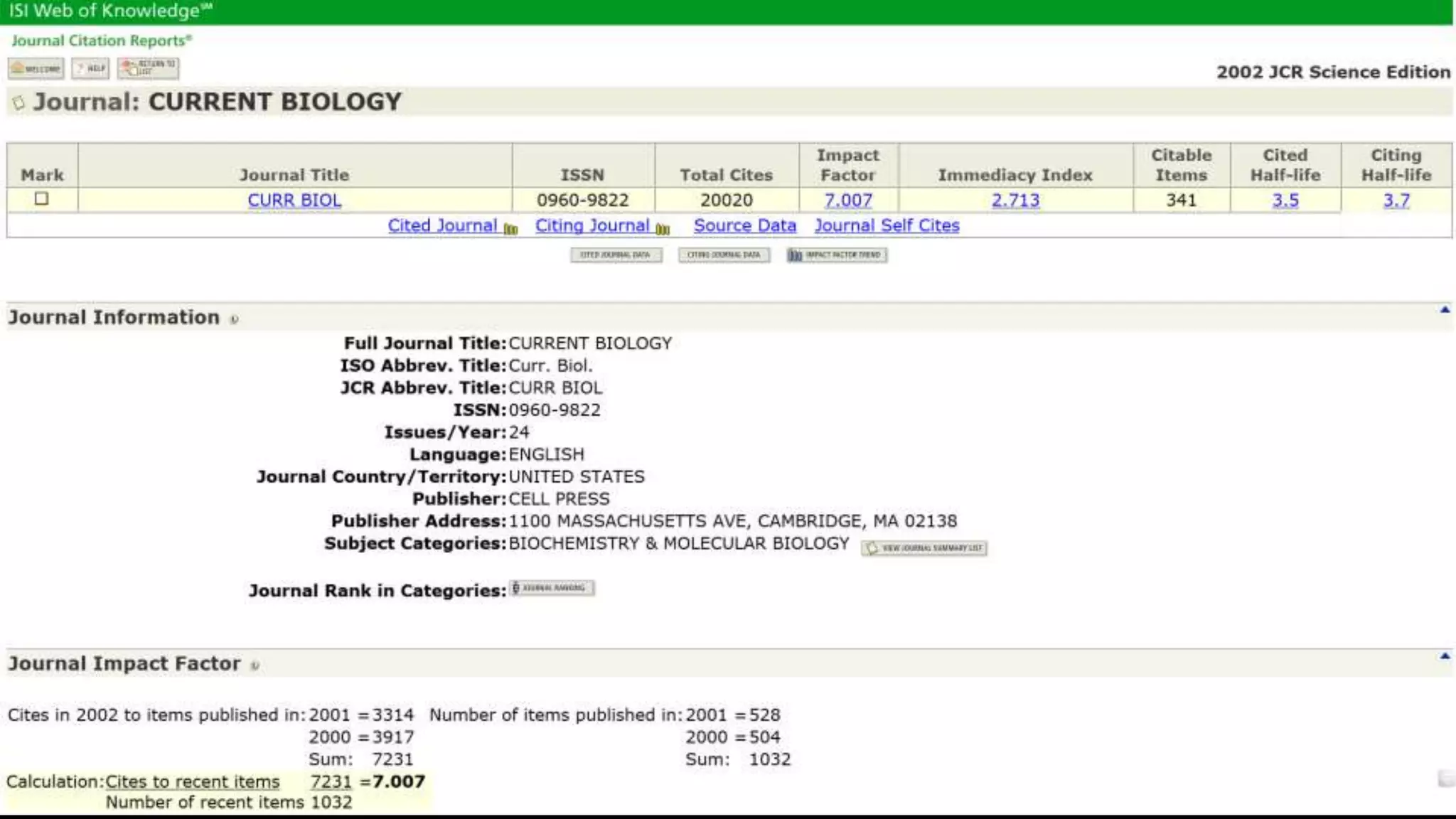
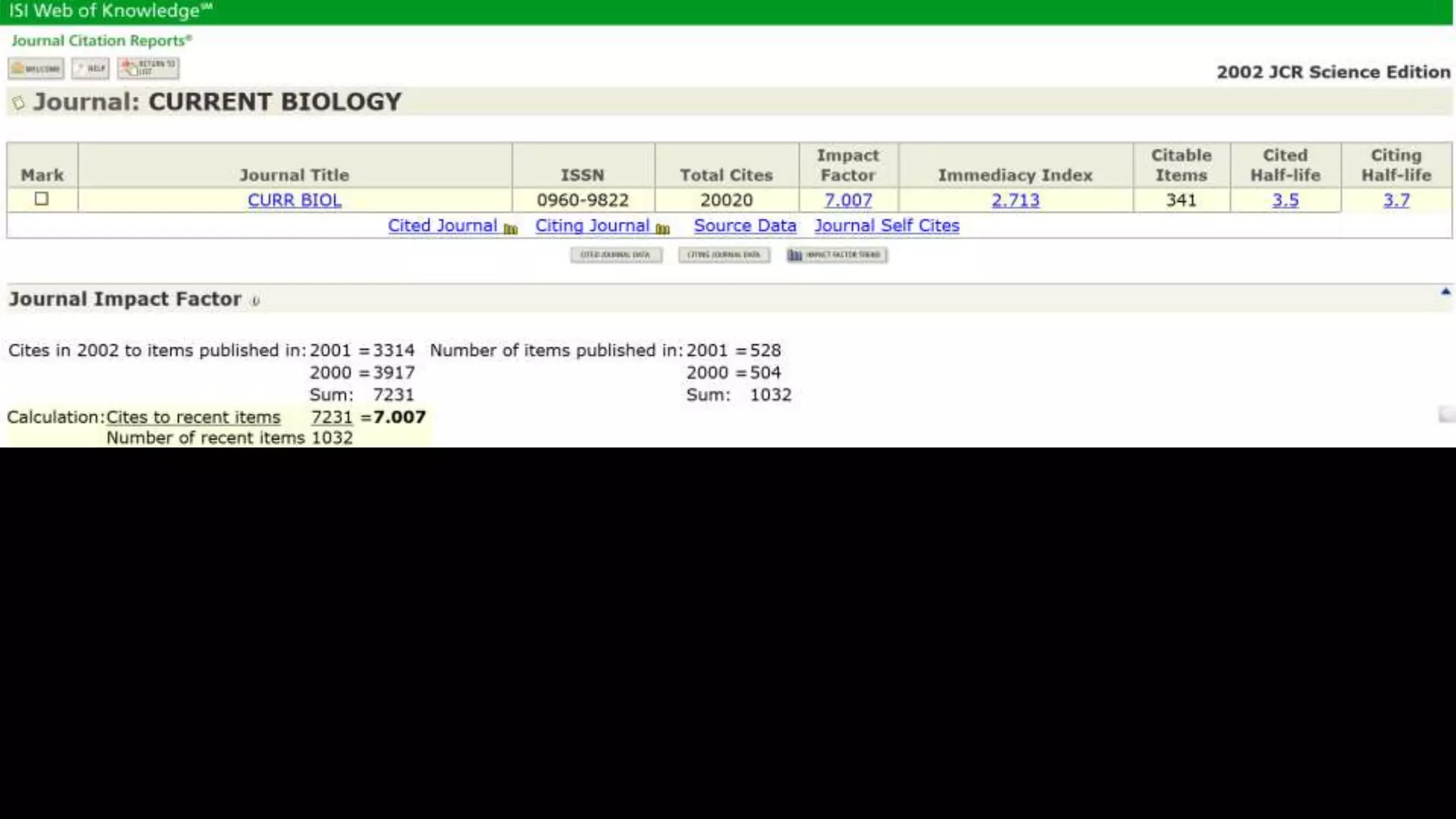
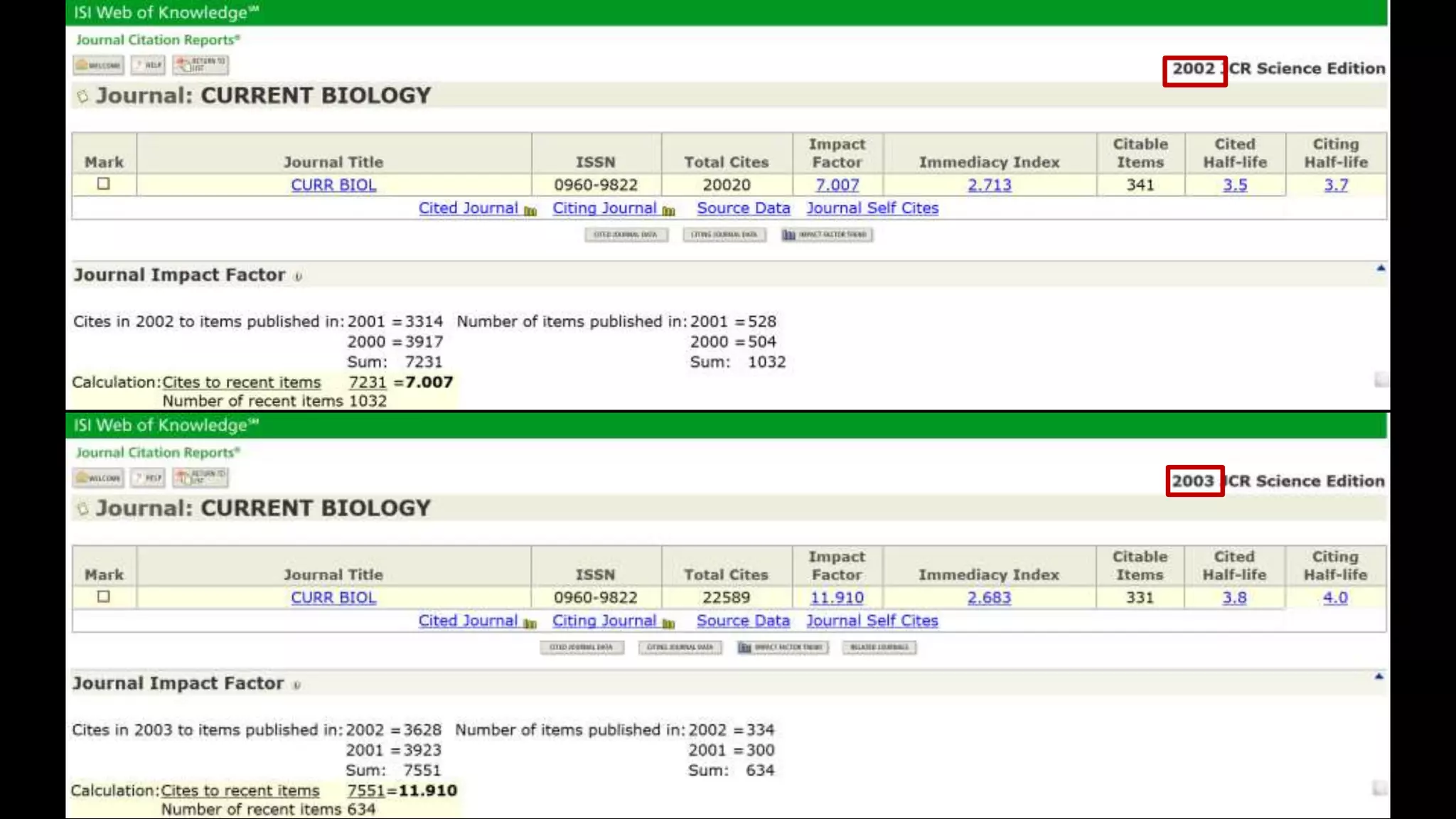
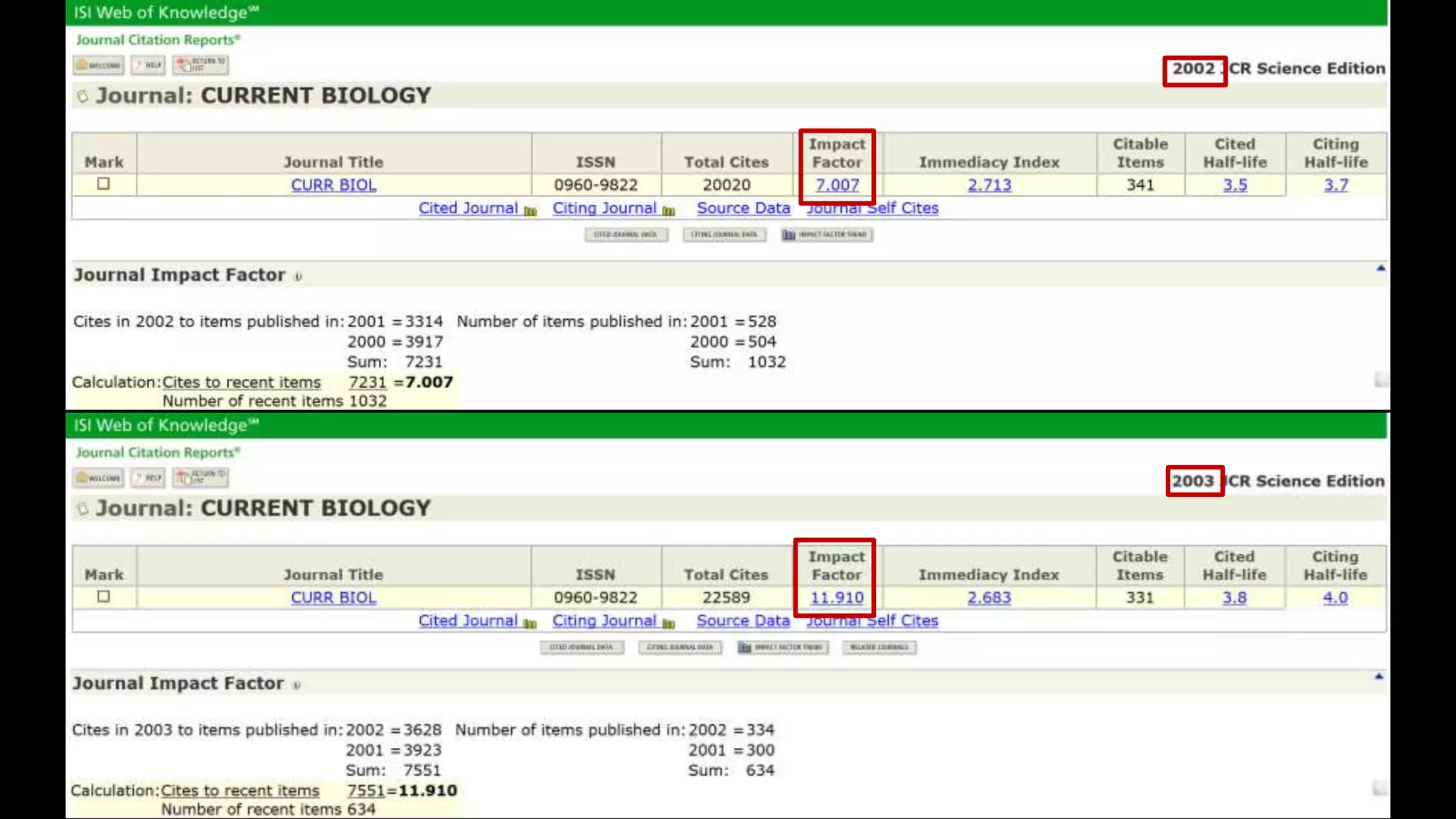
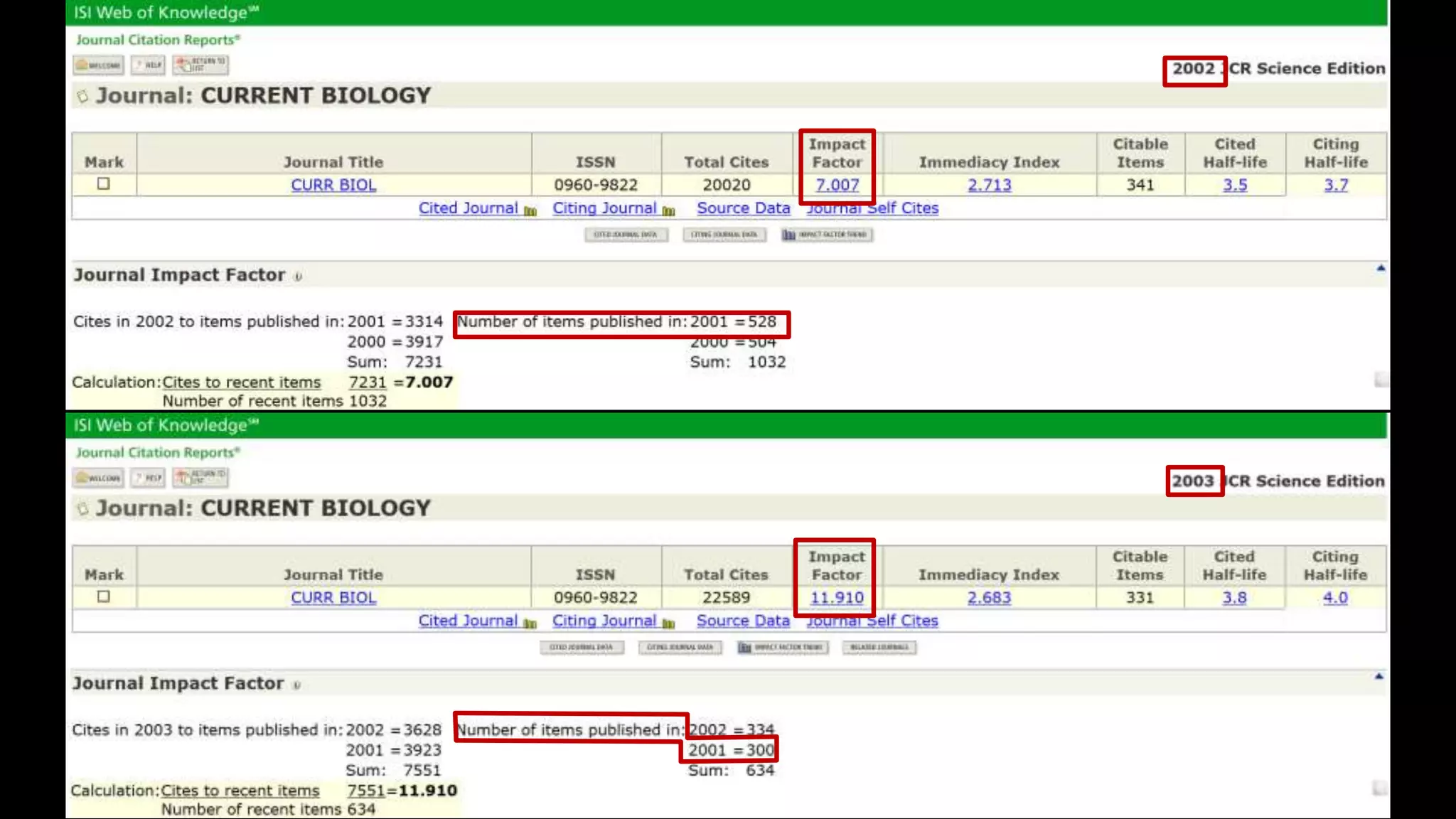
• Current Biology IF from 7 to 11 in 
2003 
– Bought by Cell Press (Elsevier) in 2001…
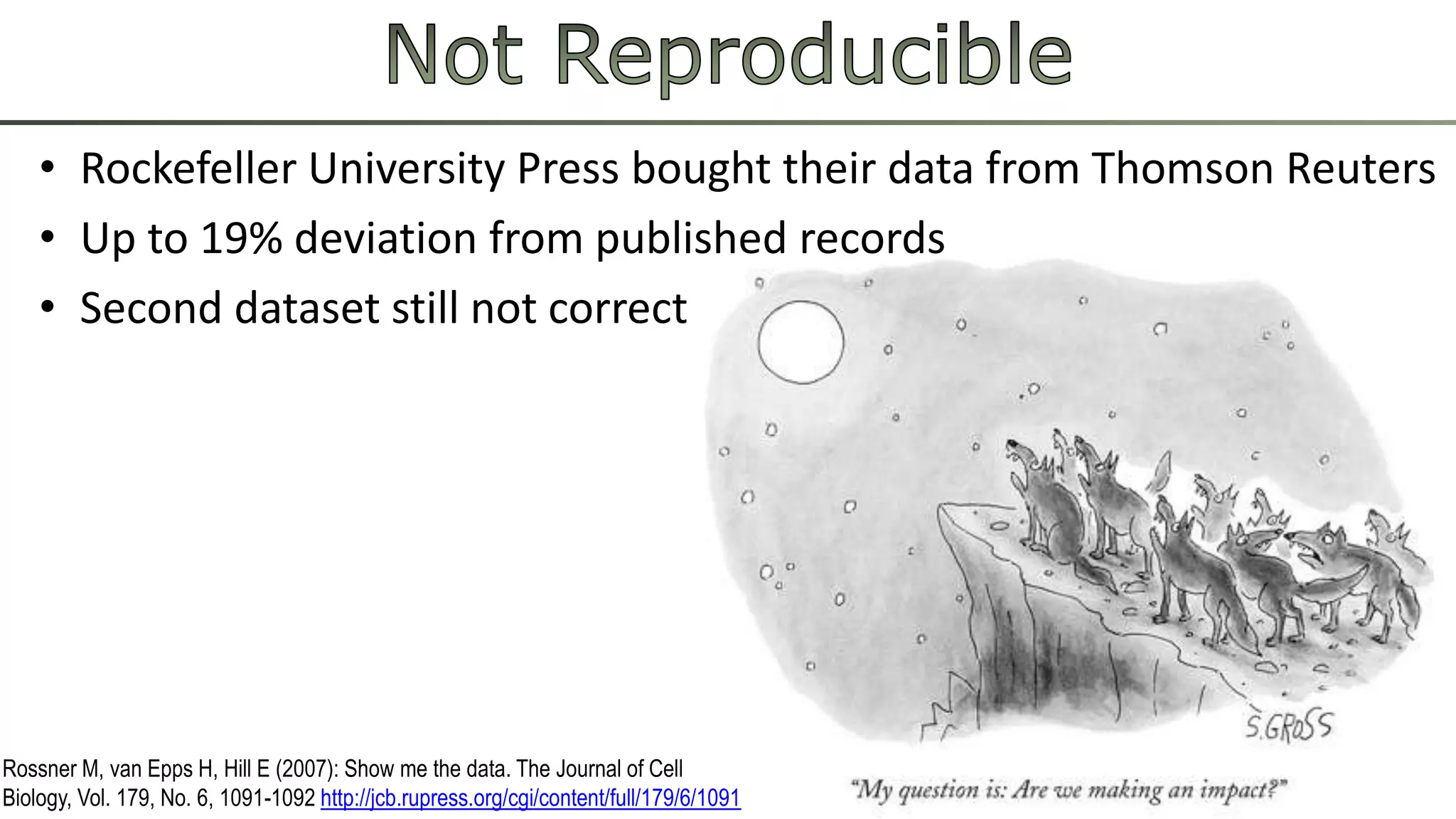
• Rockefeller University Press bought their data from Thomson Reuters 
• Up to 19% deviation from published records 
• Second dataset still not correct 
Rossner M, van Epps H, Hill E (2007): Show me the data. The Journal of Cell 
Biology, Vol. 179, No. 6, 1091-1092 http://jcb.rupress.org/cgi/content/full/179/6/1091
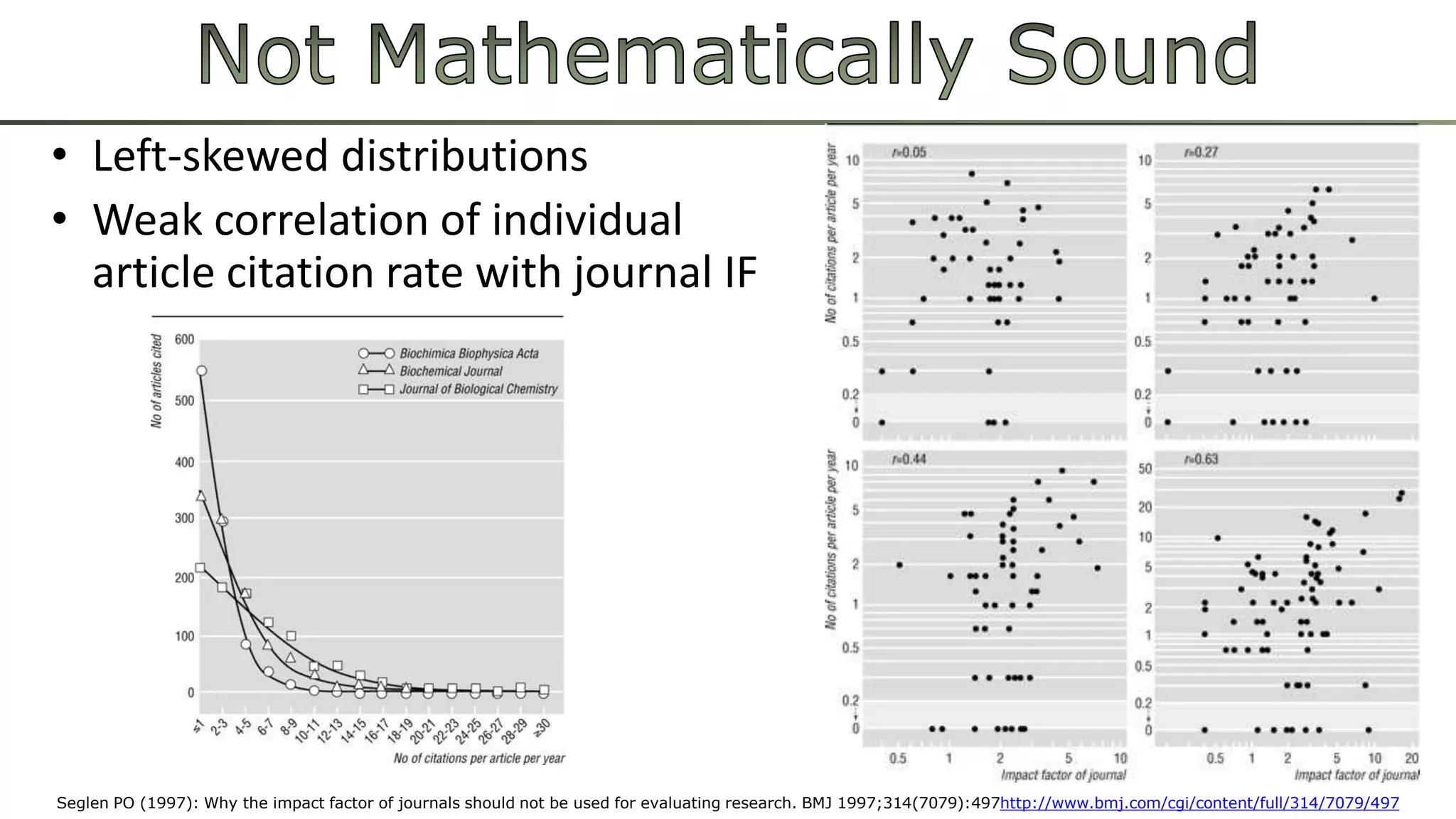
• Left-skewed distributions 
• Weak correlation of individual 
article citation rate with journal IF 
Seglen PO (1997): Why the impact factor of journals should not be used for evaluating research. BMJ 1997;314(7079):497http://www.bmj.com/cgi/content/full/314/7079/497
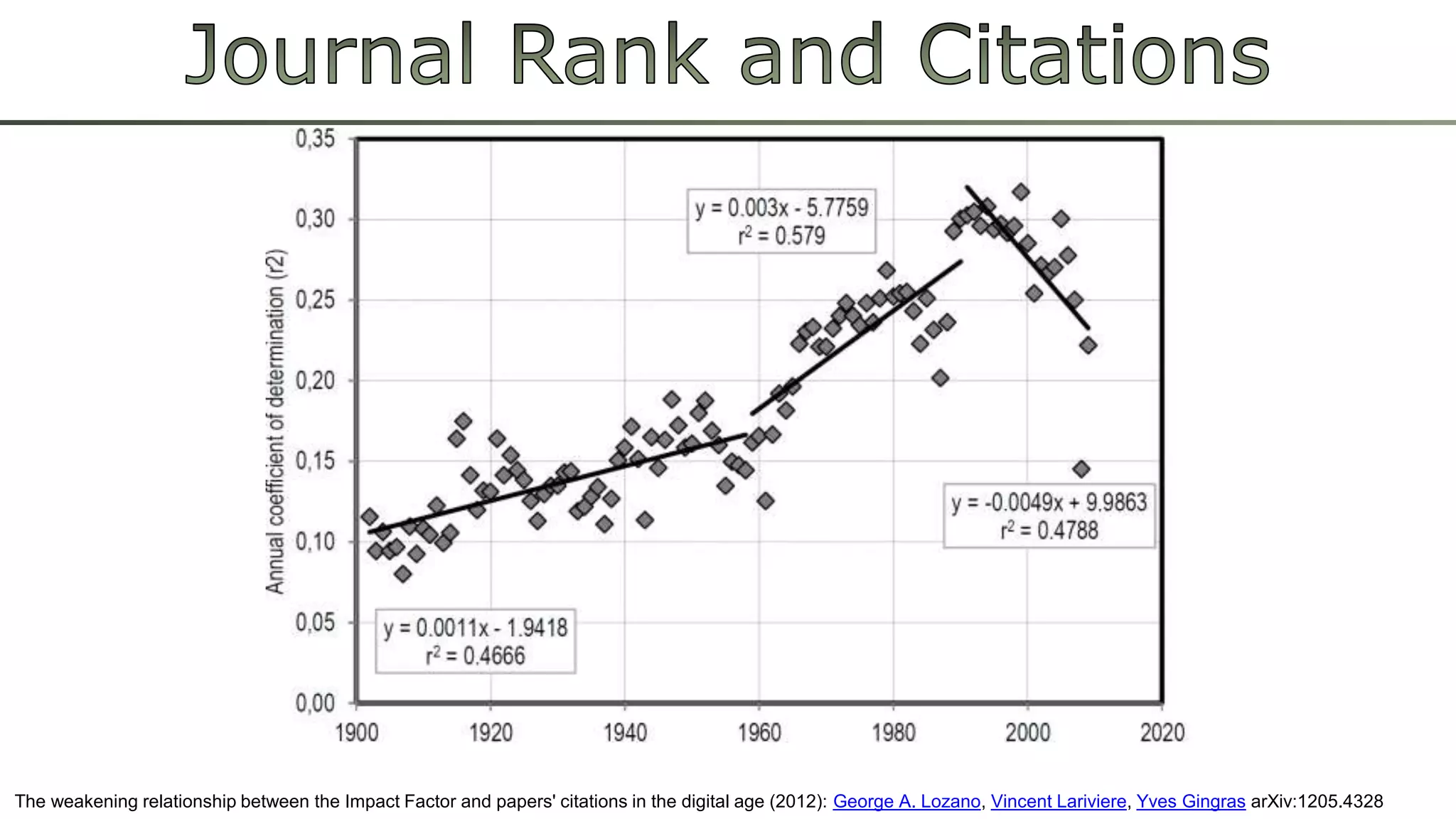
The weakening relationship between the Impact Factor and papers' citations in the digital age (2012): George A. Lozano, Vincent Lariviere, Yves Gingras arXiv:1205.4328
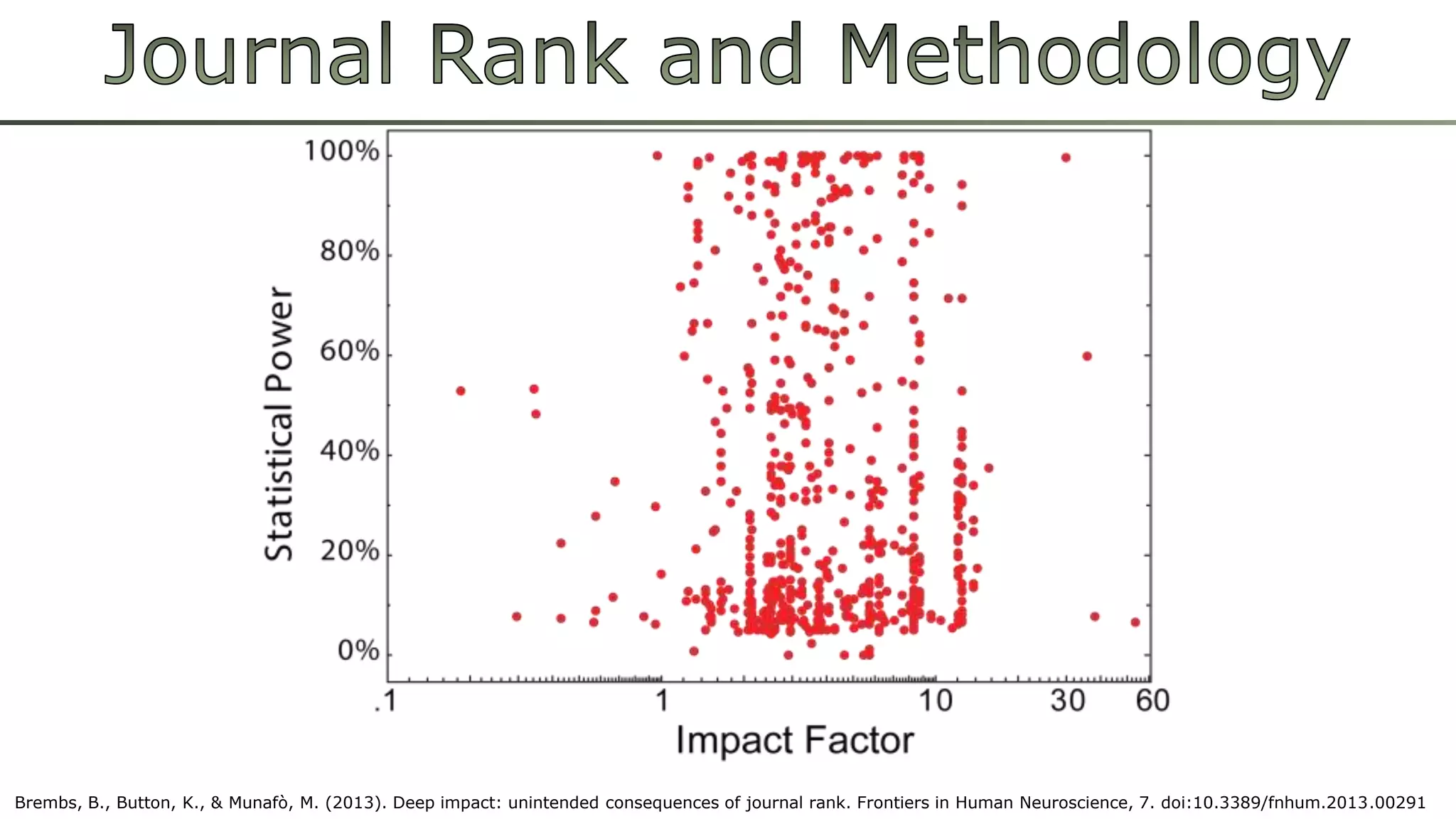
Brembs, B., Button, K., & Munafò, M. (2013). Deep impact: unintended consequences of journal rank. Frontiers in Human Neuroscience, 7. doi:10.3389/fnhum.2013.00291
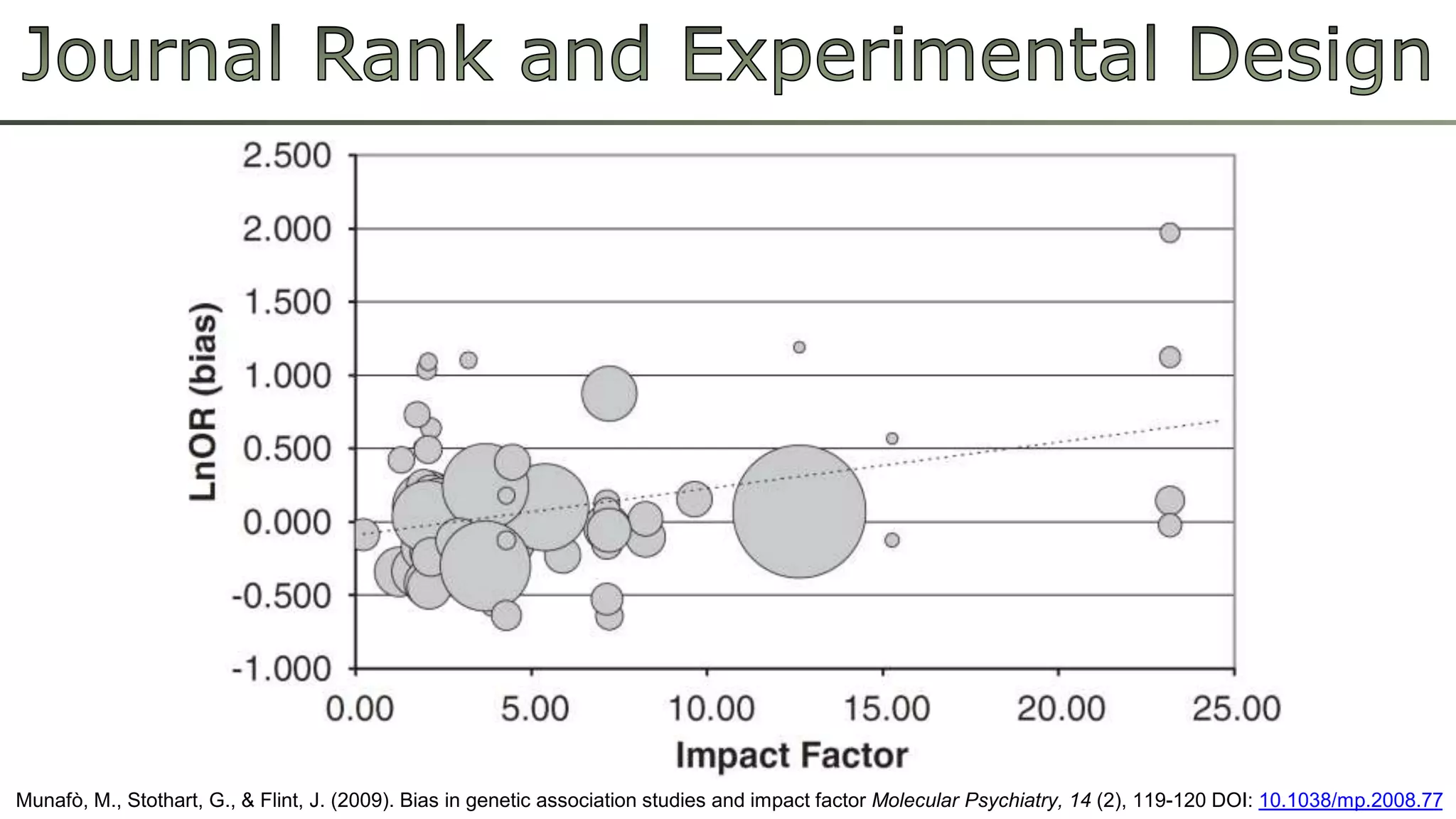
Munafò, M., Stothart, G., & Flint, J. (2009). Bias in genetic association studies and impact factor Molecular Psychiatry, 14 (2), 119-120 DOI: 10.1038/mp.2008.77
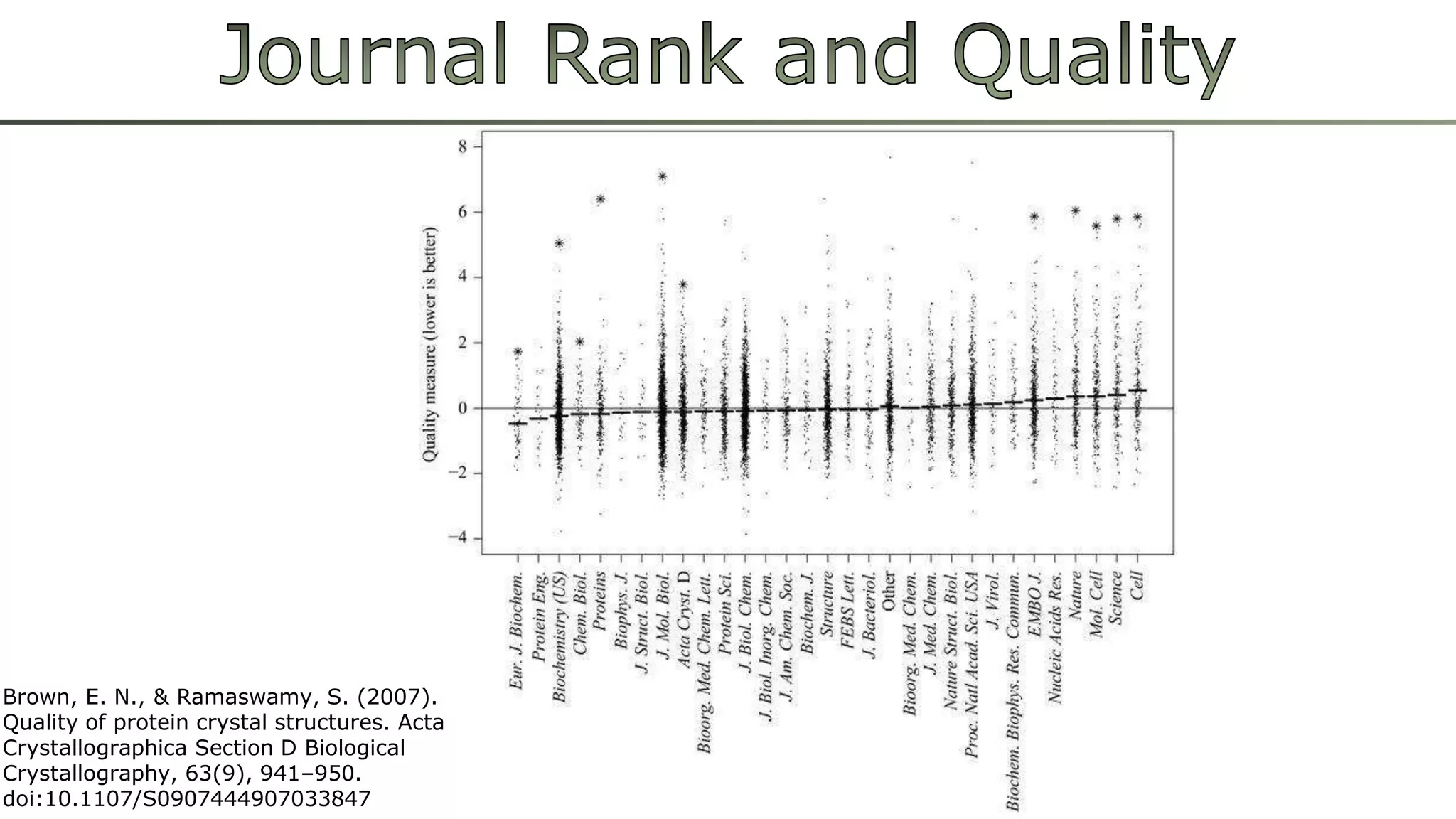
Brown, E. N., & Ramaswamy, S. (2007). 
Quality of protein crystal structures. Acta 
Crystallographica Section D Biological 
Crystallography, 63(9), 941–950. 
doi:10.1107/S0907444907033847
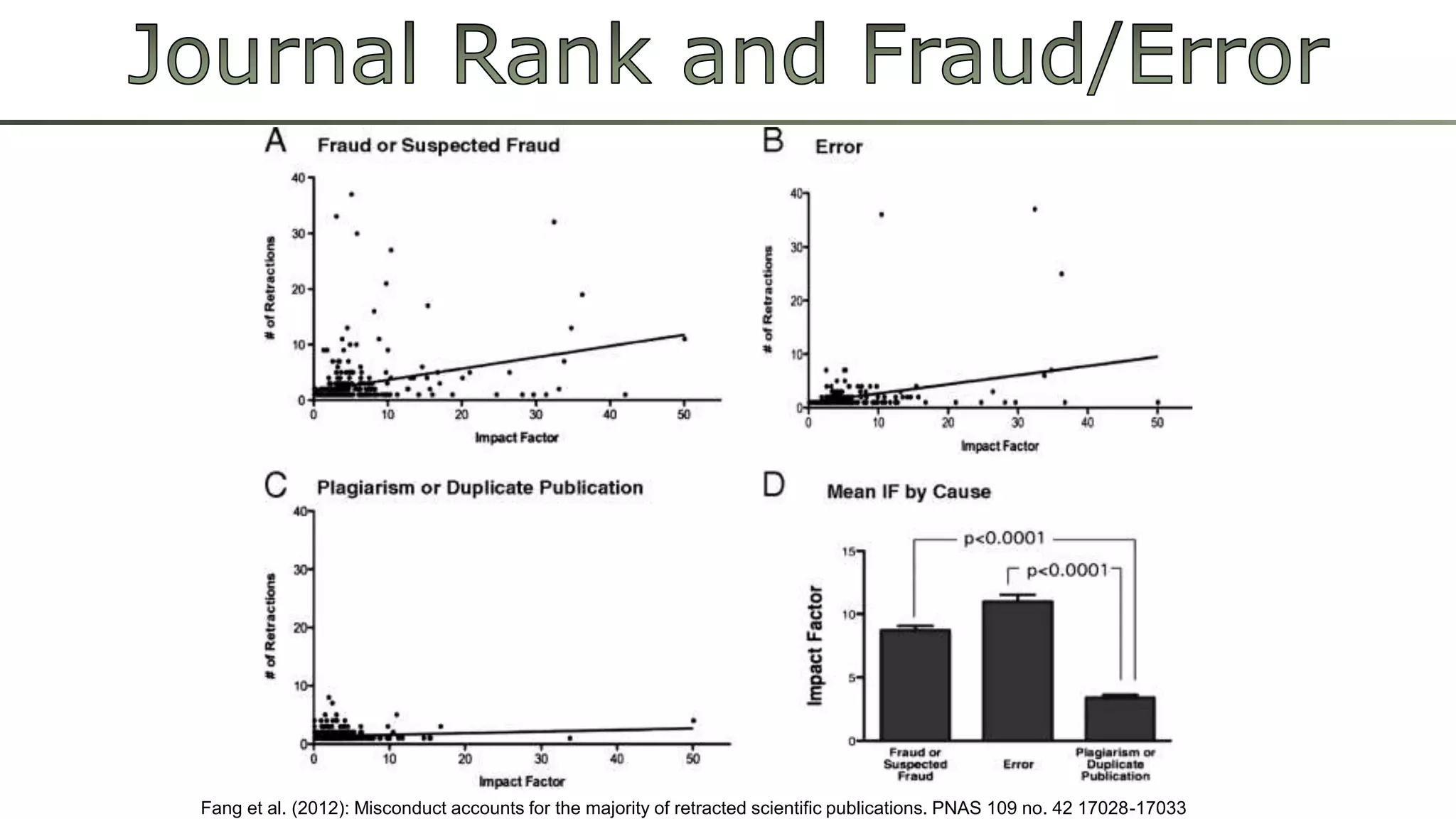
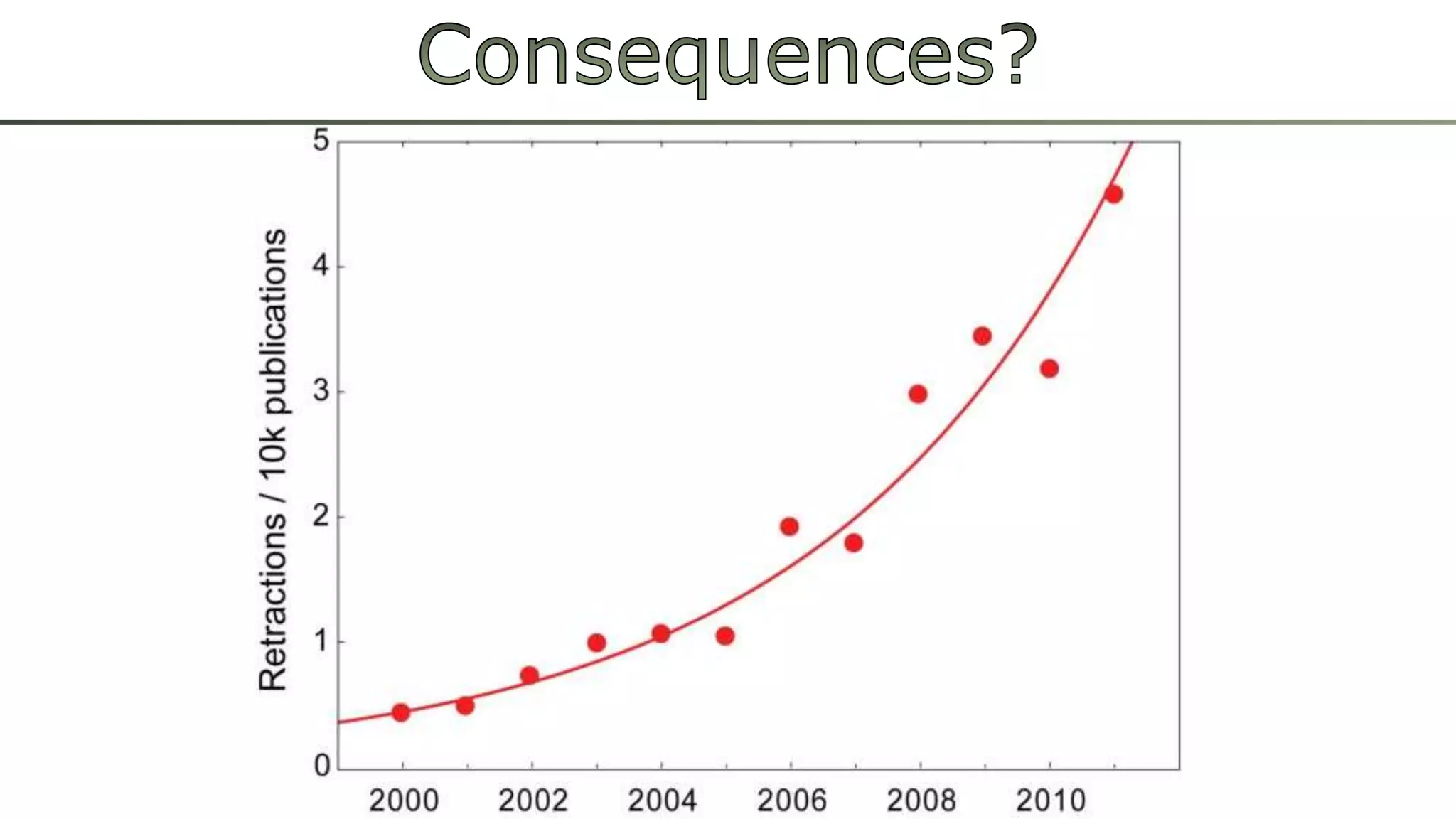
Fang et al. (2012): Misconduct accounts for the majority of retracted scientific publications. PNAS 109 no. 42 17028-17033
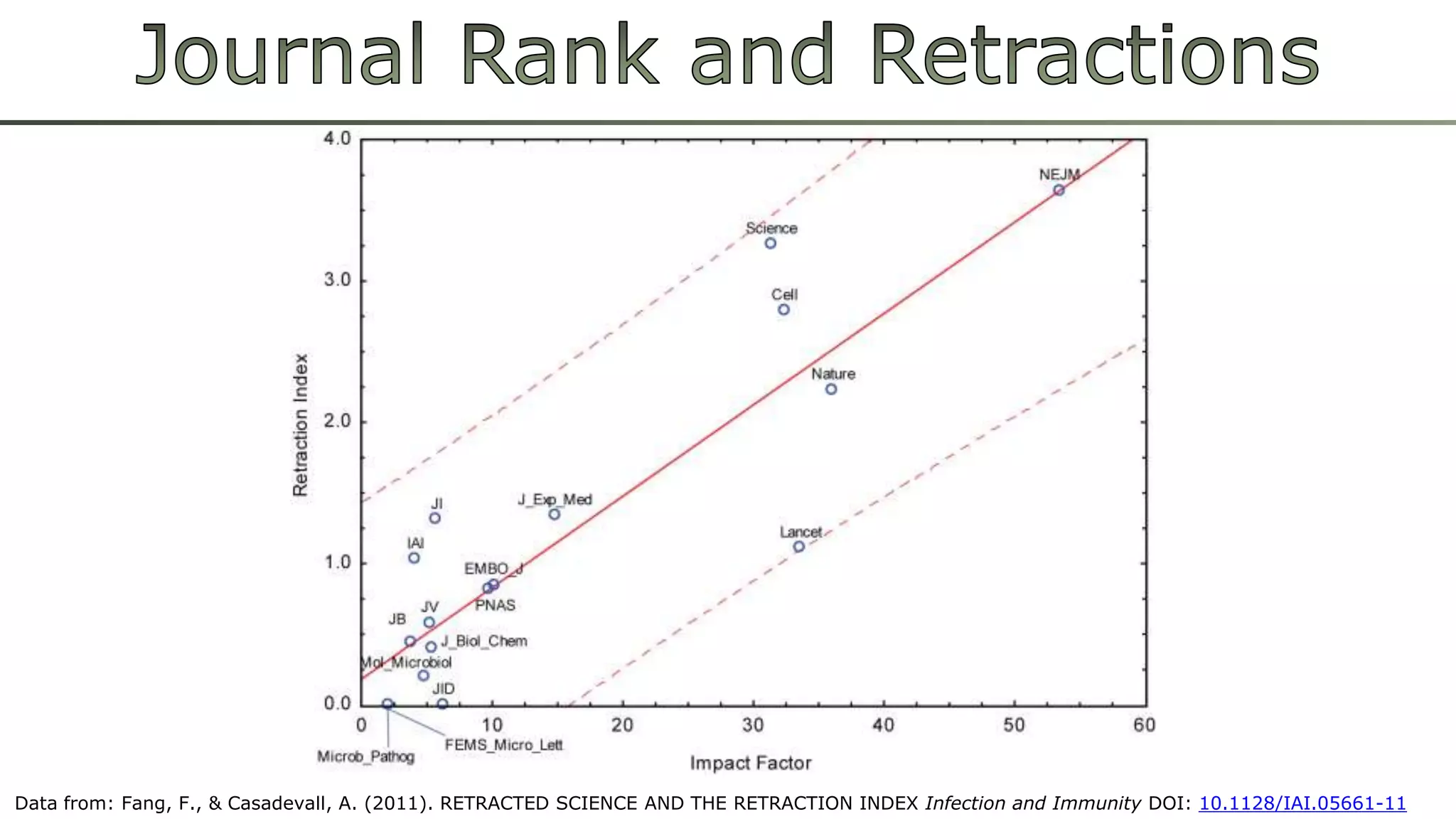
Data from: Fang, F., & Casadevall, A. (2011). RETRACTED SCIENCE AND THE RETRACTION INDEX Infection and Immunity DOI: 10.1128/IAI.05661-11
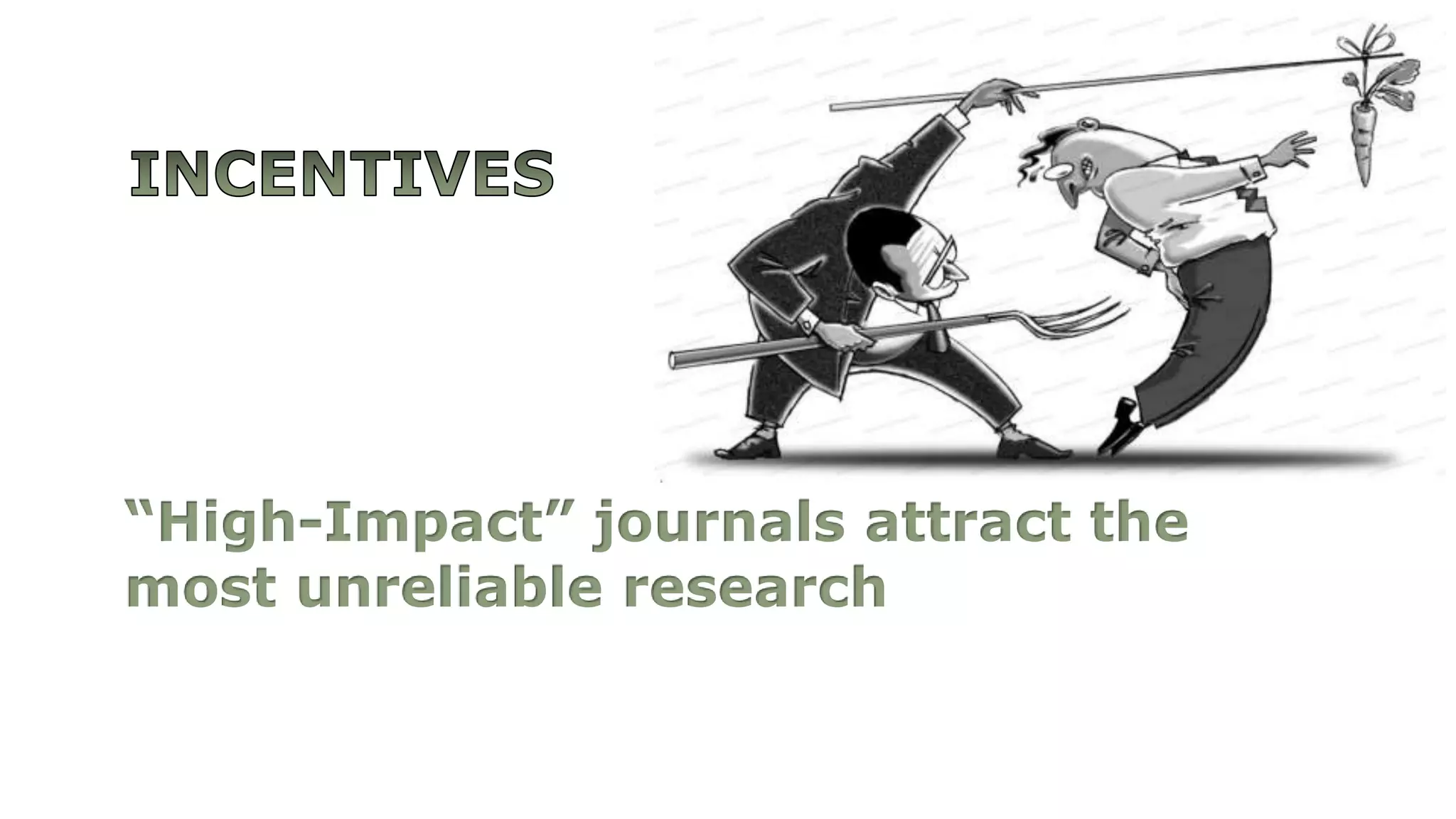
“High-Impact” journals attract the 
most unreliable research
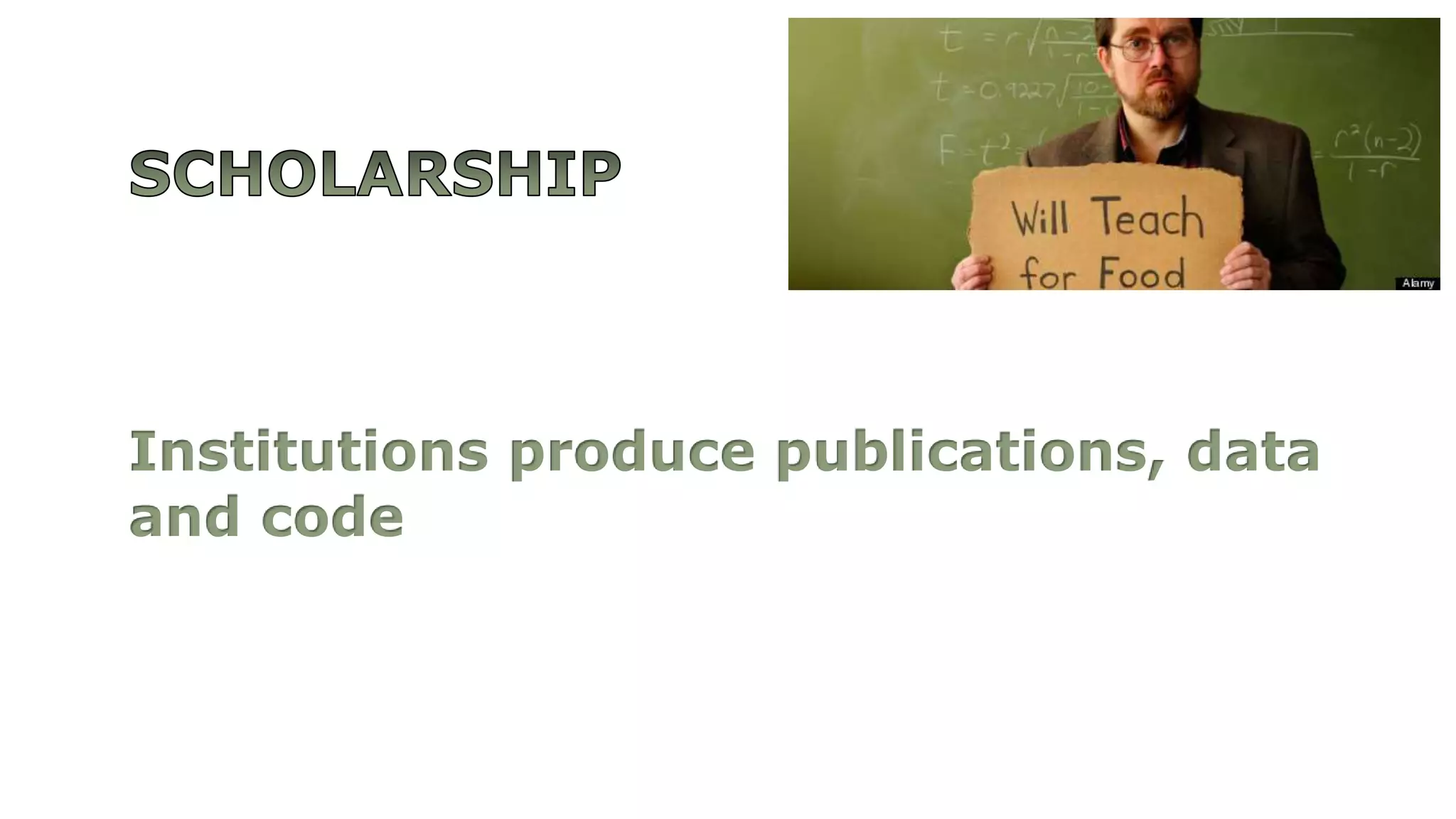
Institutions produce publications, data 
and code
Dysfunctional scholarly literature
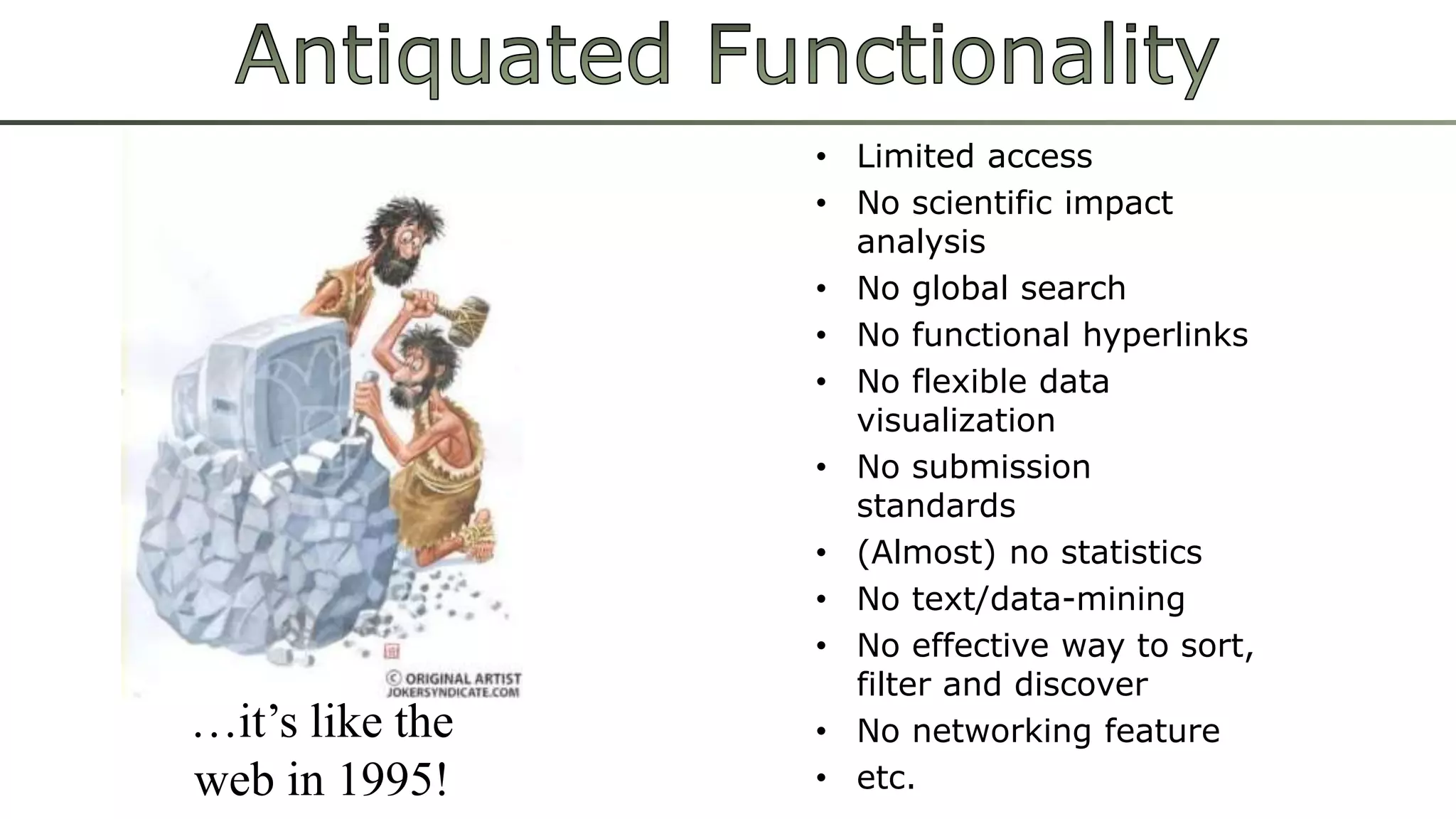
• Limited access 
• No scientific impact 
analysis 
• No global search 
• No functional hyperlinks 
• No flexible data 
visualization 
• No submission 
standards 
• (Almost) no statistics 
• No text/data-mining 
• No effective way to sort, 
filter and discover 
• No networking feature 
• etc. 
…it’s like the 
web in 1995!
Costs [thousand US$/article] 
Legacy SciELO 
(Sources: Van Noorden, R. (2013). Open access: The true cost of science publishing. Nature 495, 426–9; Packer, A. L. (2010). The SciELO Open 
Access: A Gold Way from the South. Can. J. High. Educ. 39, 111–126)
Scientific data in peril
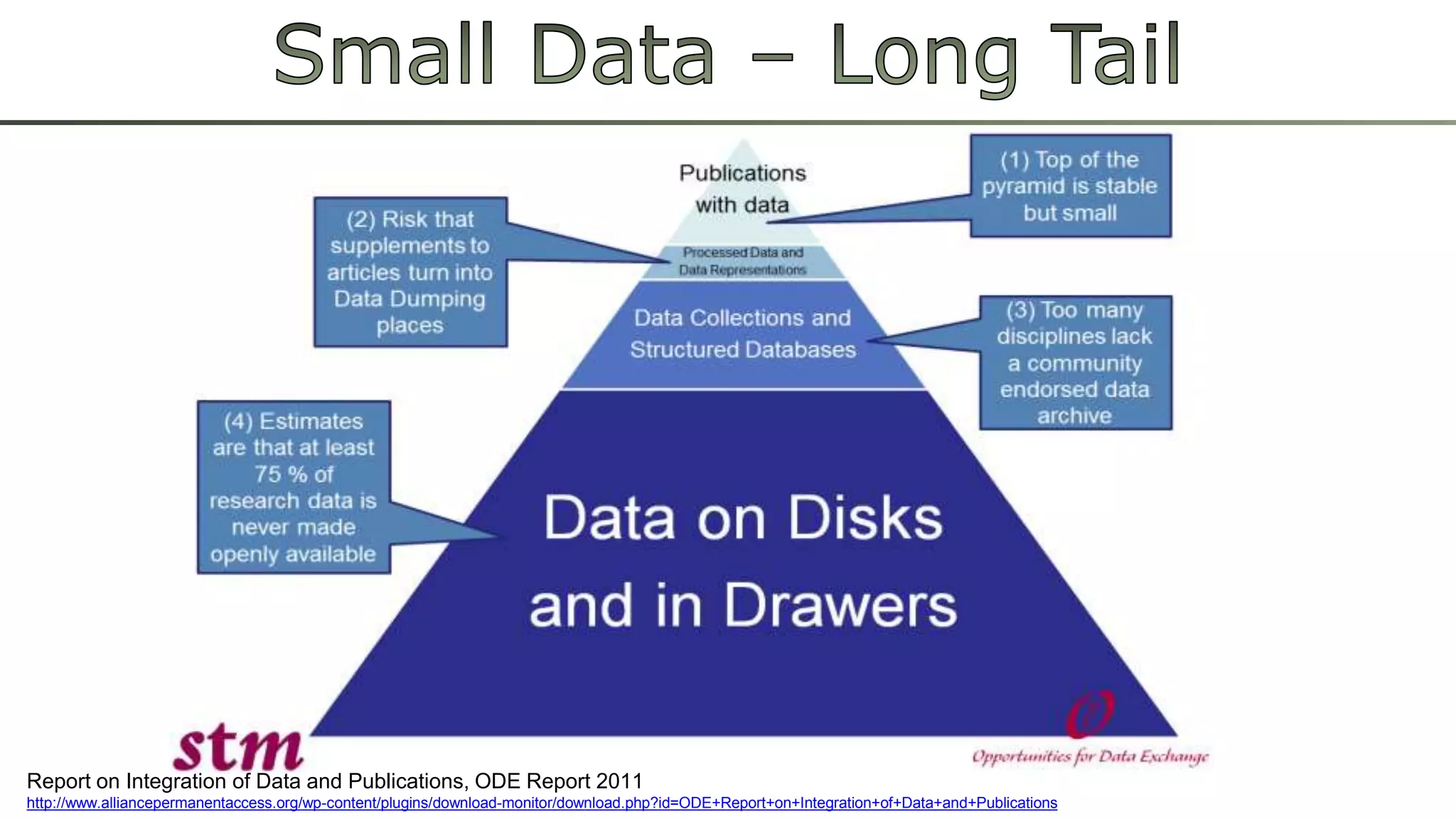
Report on Integration of Data and Publications, ODE Report 2011 
http://www.alliancepermanentaccess.org/wp-content/plugins/download-monitor/download.php?id=ODE+Report+on+Integration+of+Data+and+Publications
Non-existent software archives
The disaster that is our digital 
infrastructure
Science, tear down this paywall!
Potential for innovation: 9.8b p.a. 
Costs [thousand US$/article] 
Legacy SciELO 
(Sources: Van Noorden, R. (2013). Open access: The true cost of science publishing. Nature 495, 426–9; Packer, A. L. (2010). The SciELO Open 
Access: A Gold Way from the South. Can. J. High. Educ. 39, 111–126)
1) Publish in the “Journal of Unreliable Research” 
of your field – or take your chances
2) Publish everything else where publication is 
quick and where it can be widely read
3) Ask your PI what will happen to all the work 
you put into your code & data and how you can 
get as many people as possible to use it
1. Publish in the “Journal of Unreliable 
Research” of your field – or take your chances 
2. Publish everything else where publication is 
quick and where it can be widely read 
3. Ask your PI what will happen to all the work 
you put into your code & data and how you 
can get as many people as possible to use it
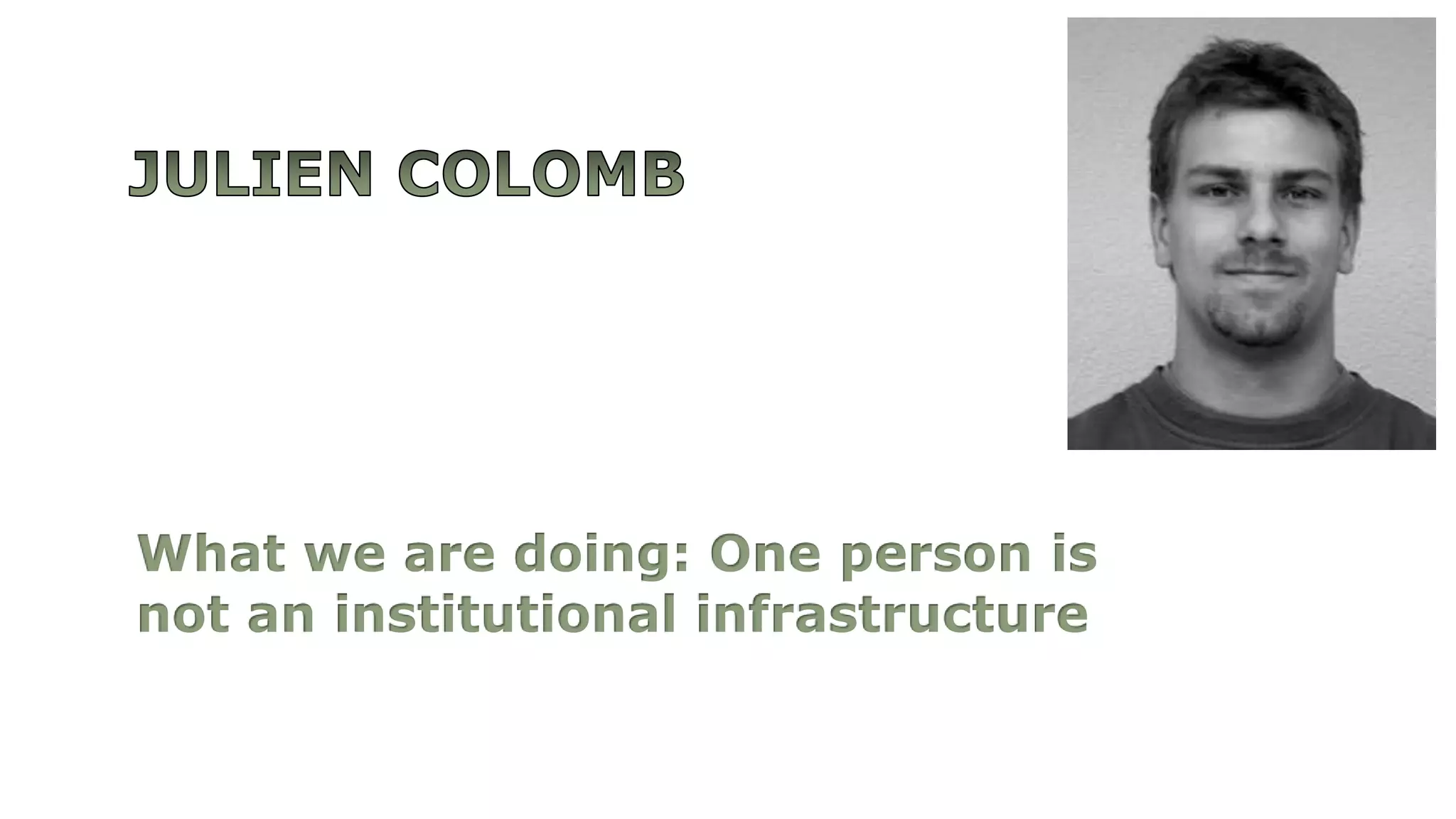
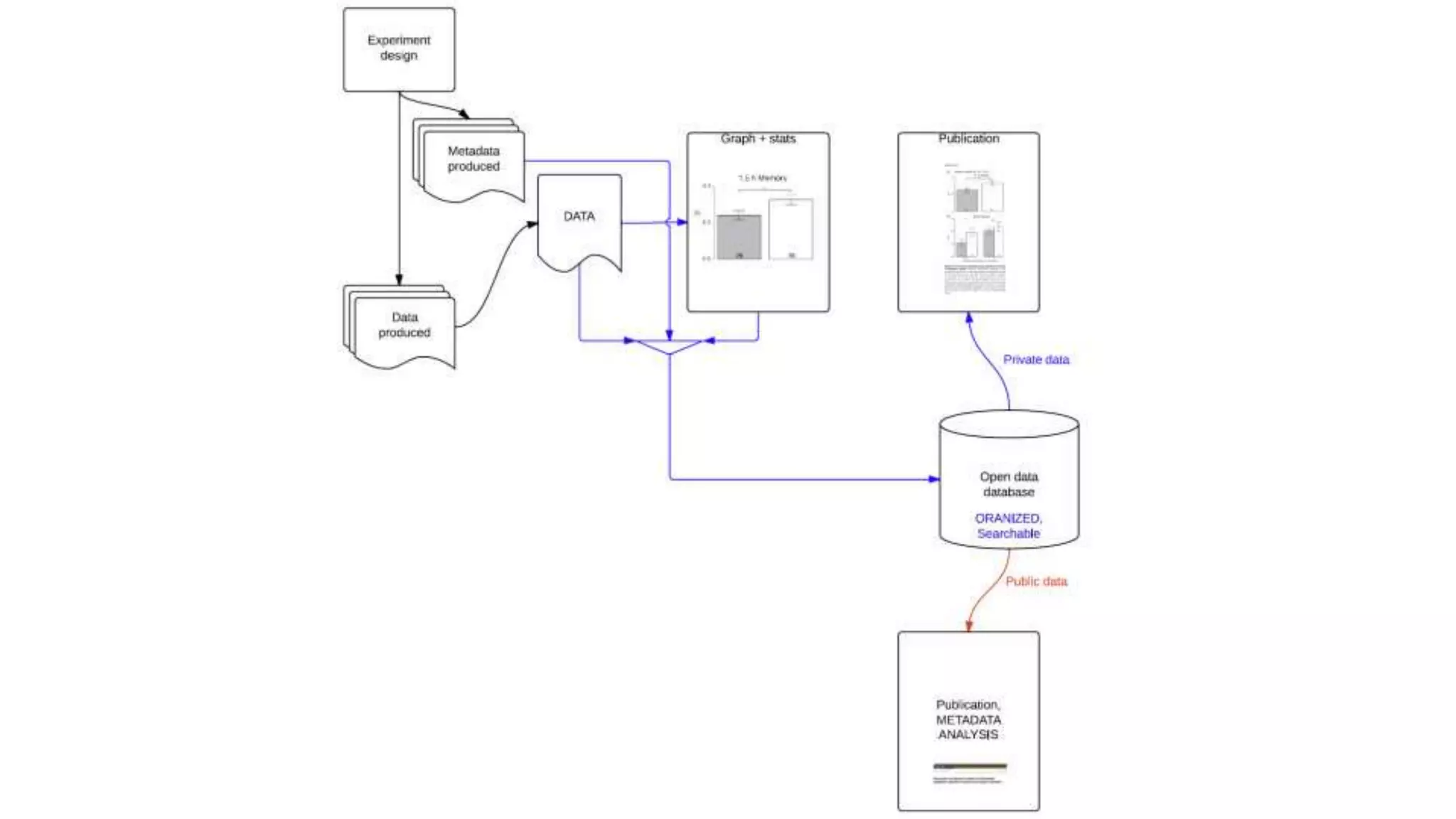
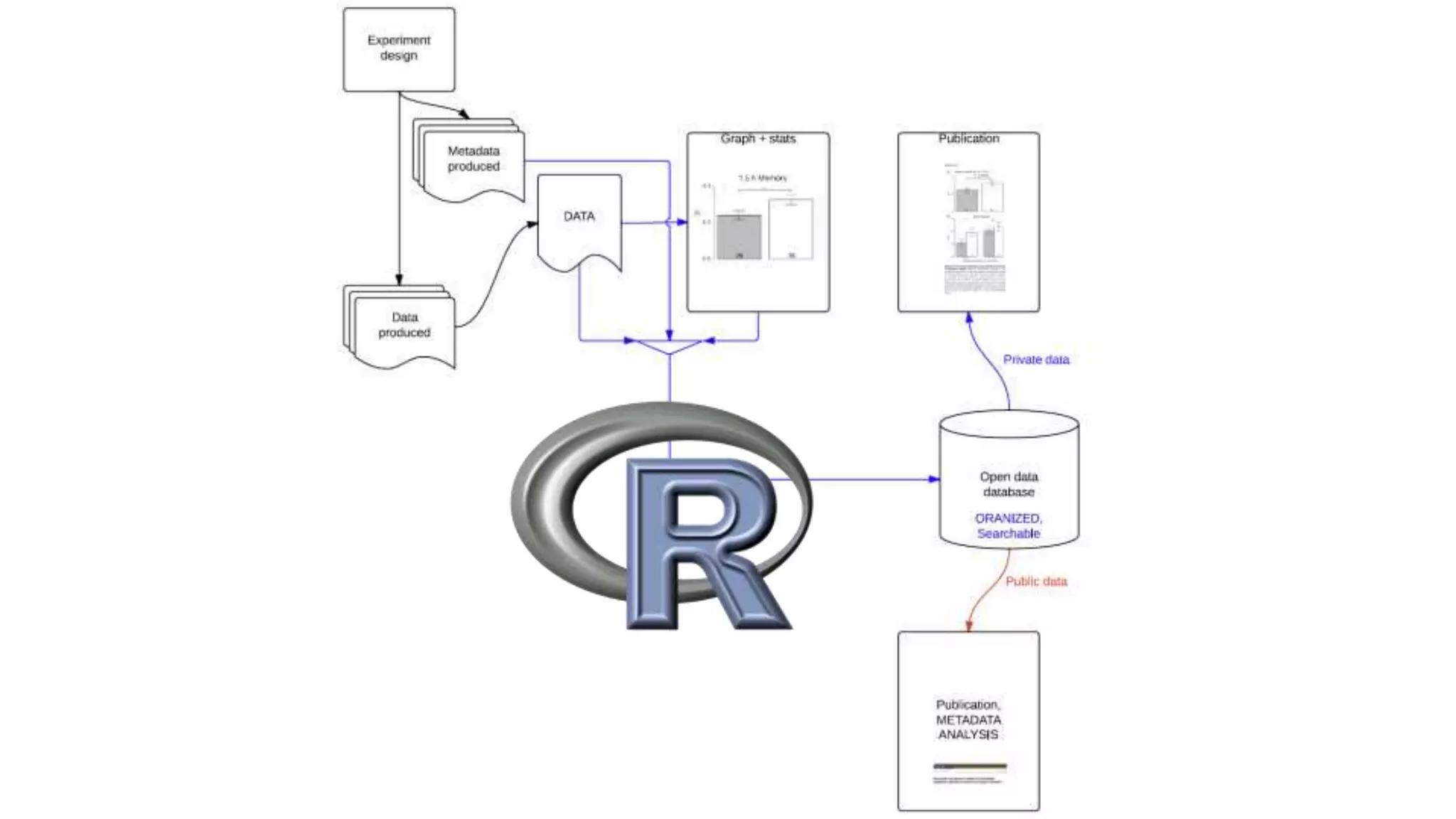
What we are doing: One person is 
not an institutional infrastructure
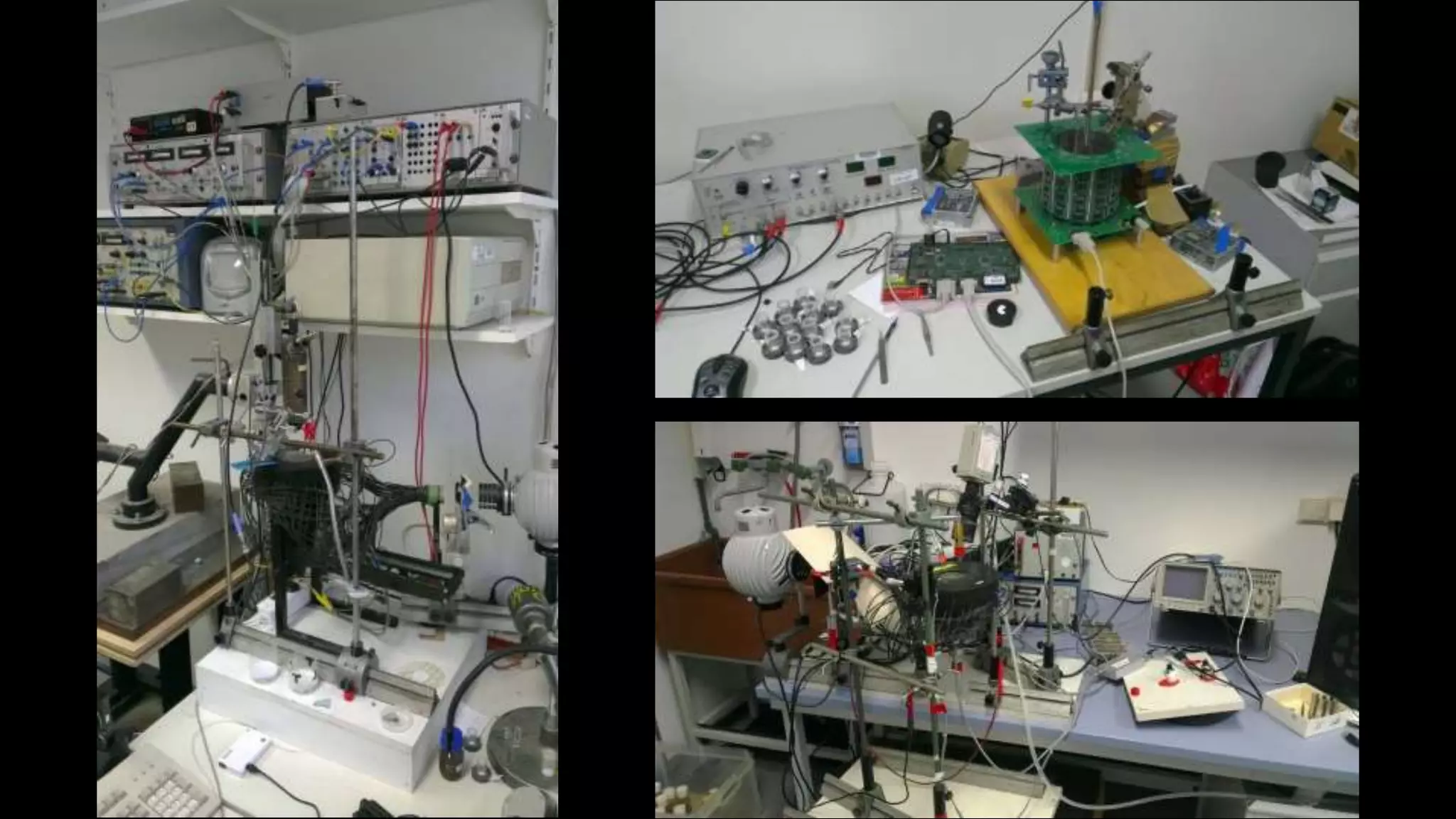
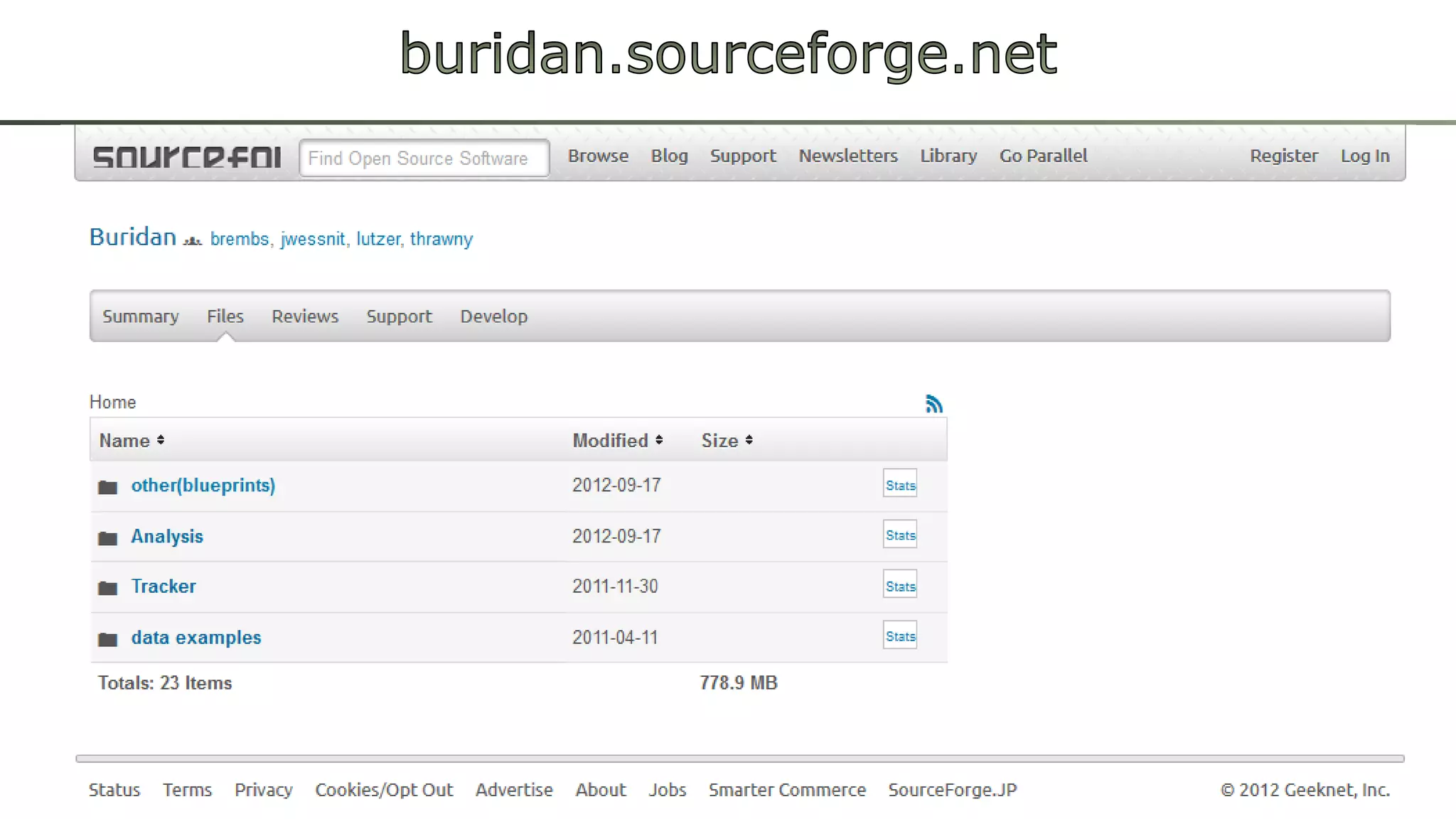
Software to control the experiment and save the data
Software to analyze and visualize the data
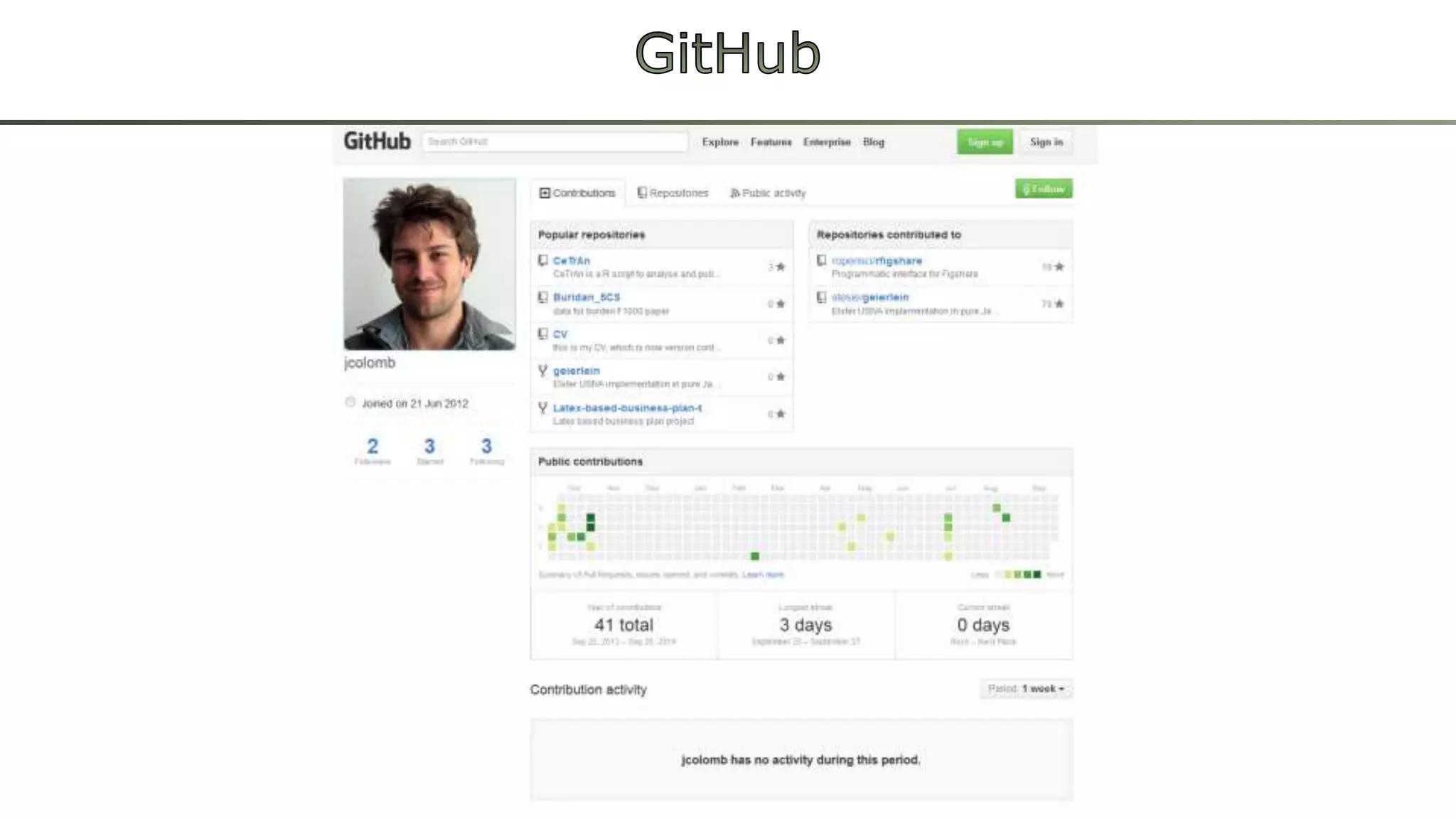
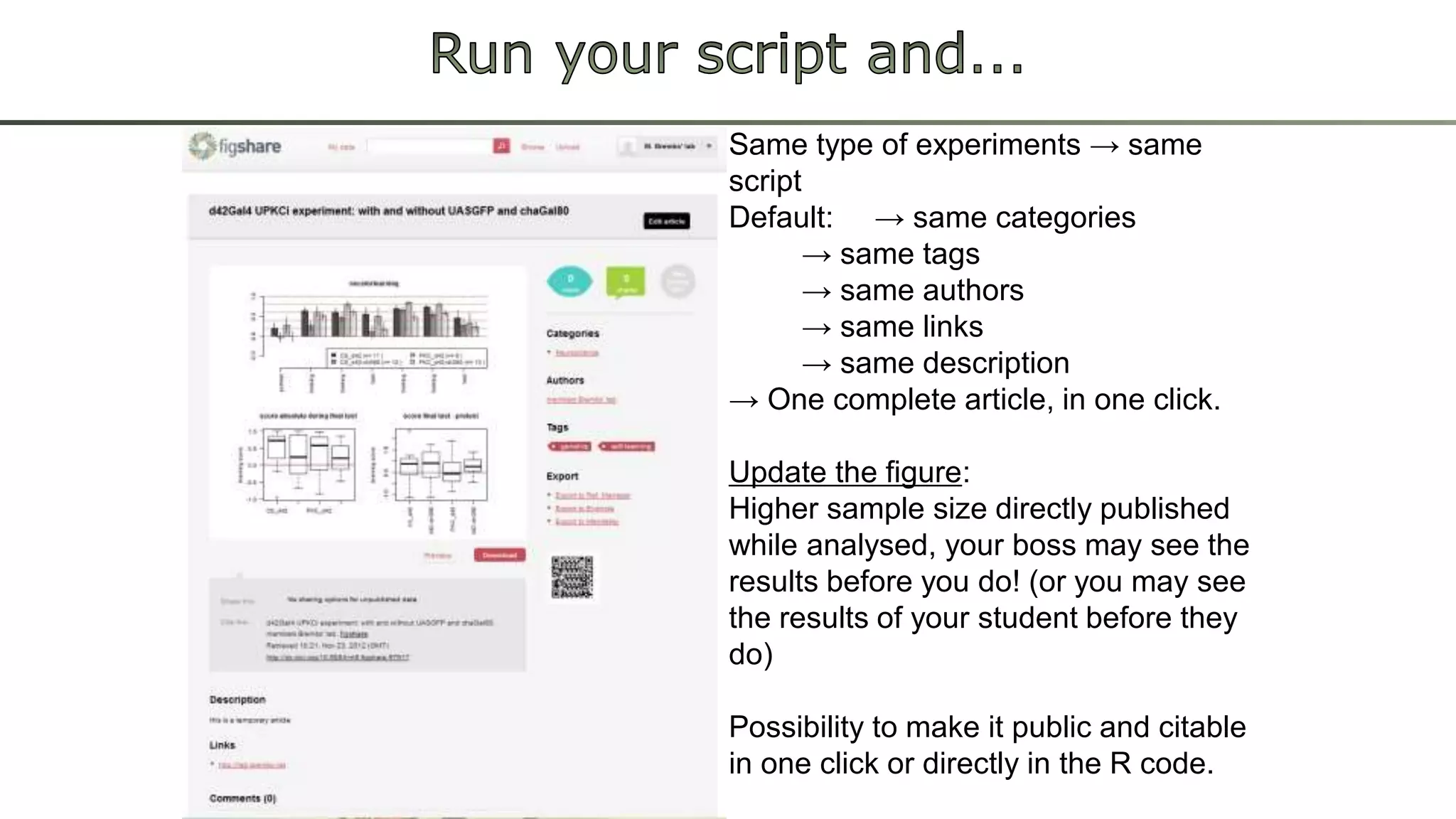
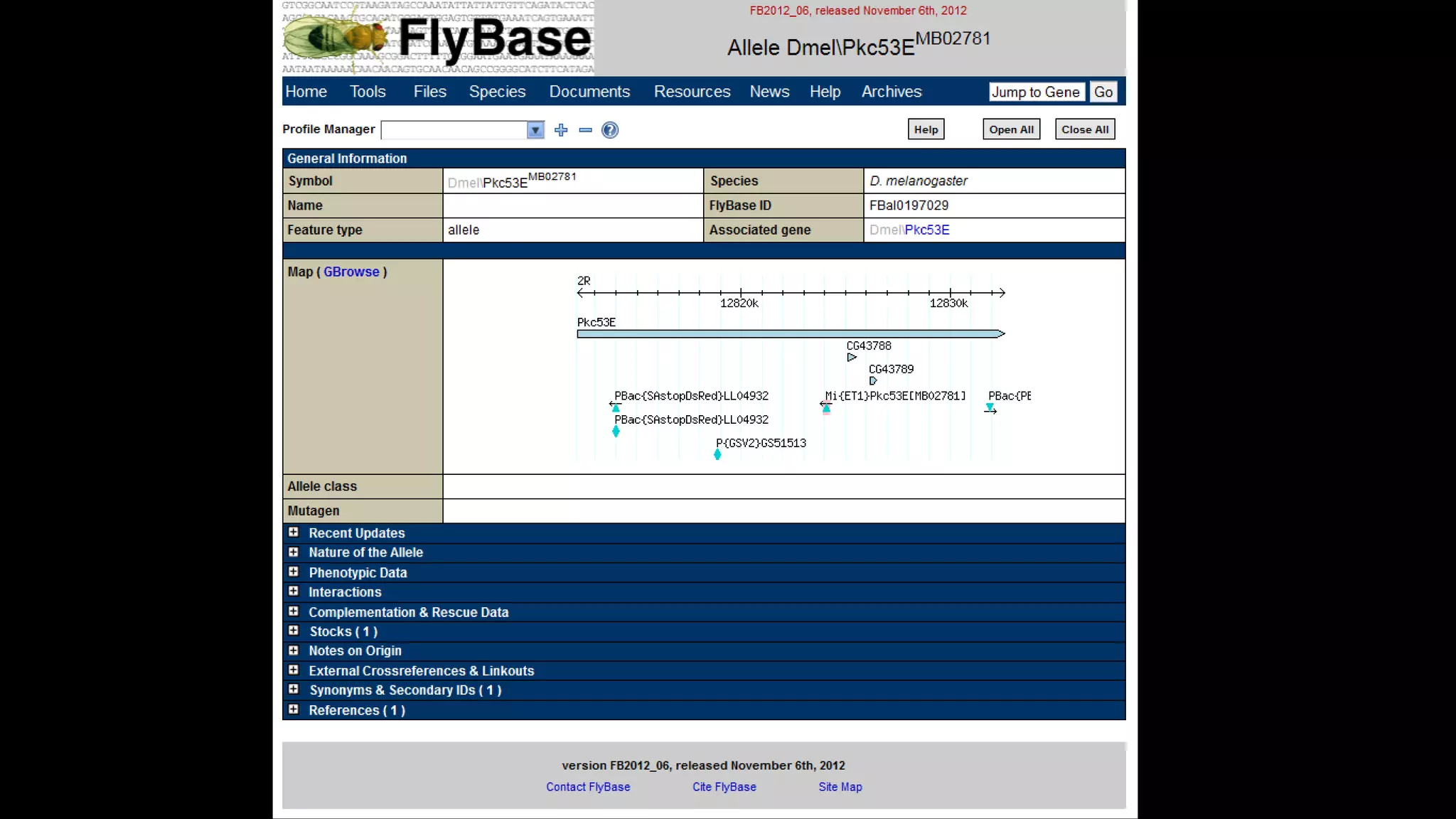
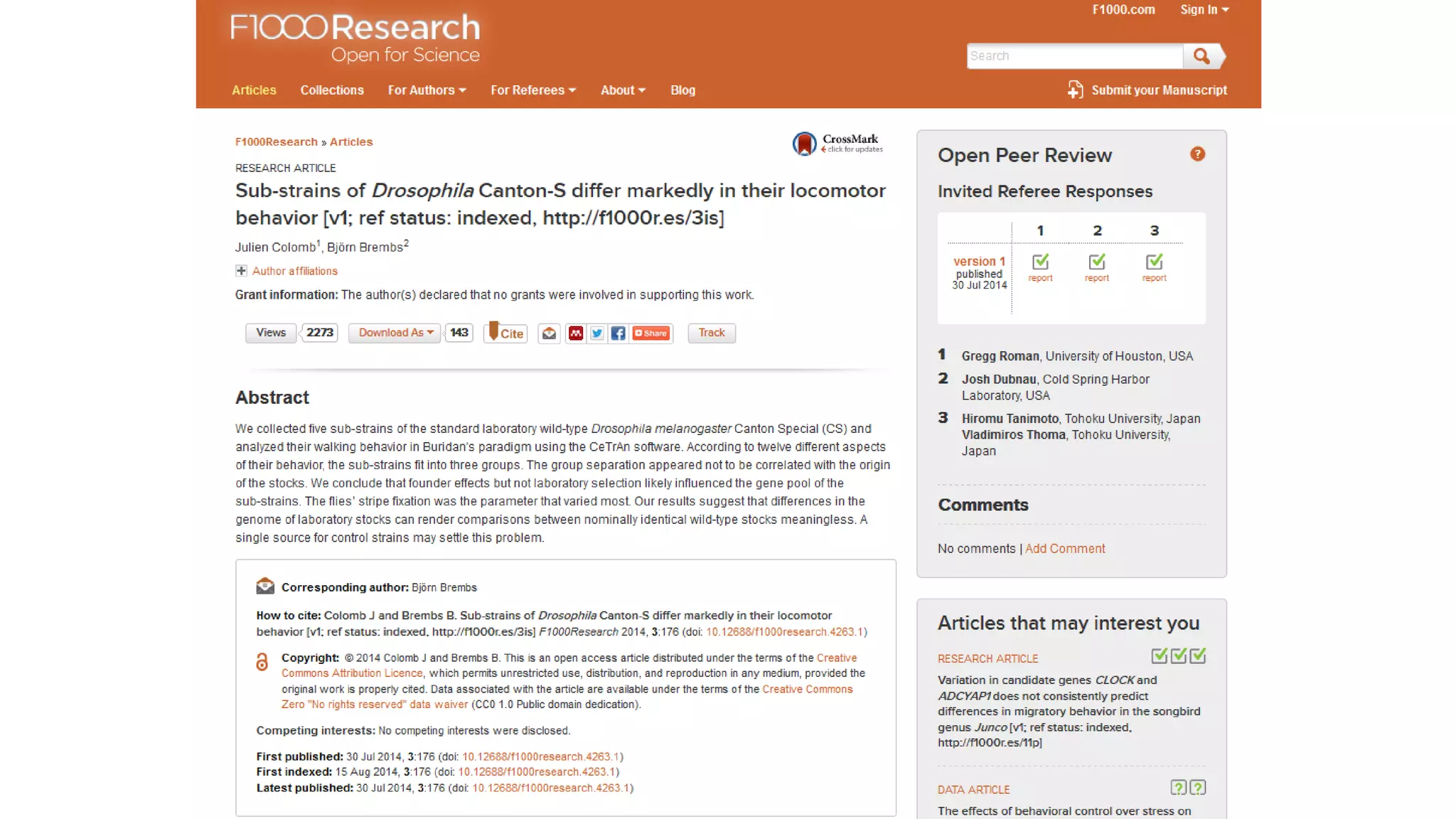
Same type of experiments → same 
script 
Default: → same categories 
→ same tags 
→ same authors 
→ same links 
→ same description 
→ One complete article, in one click. 
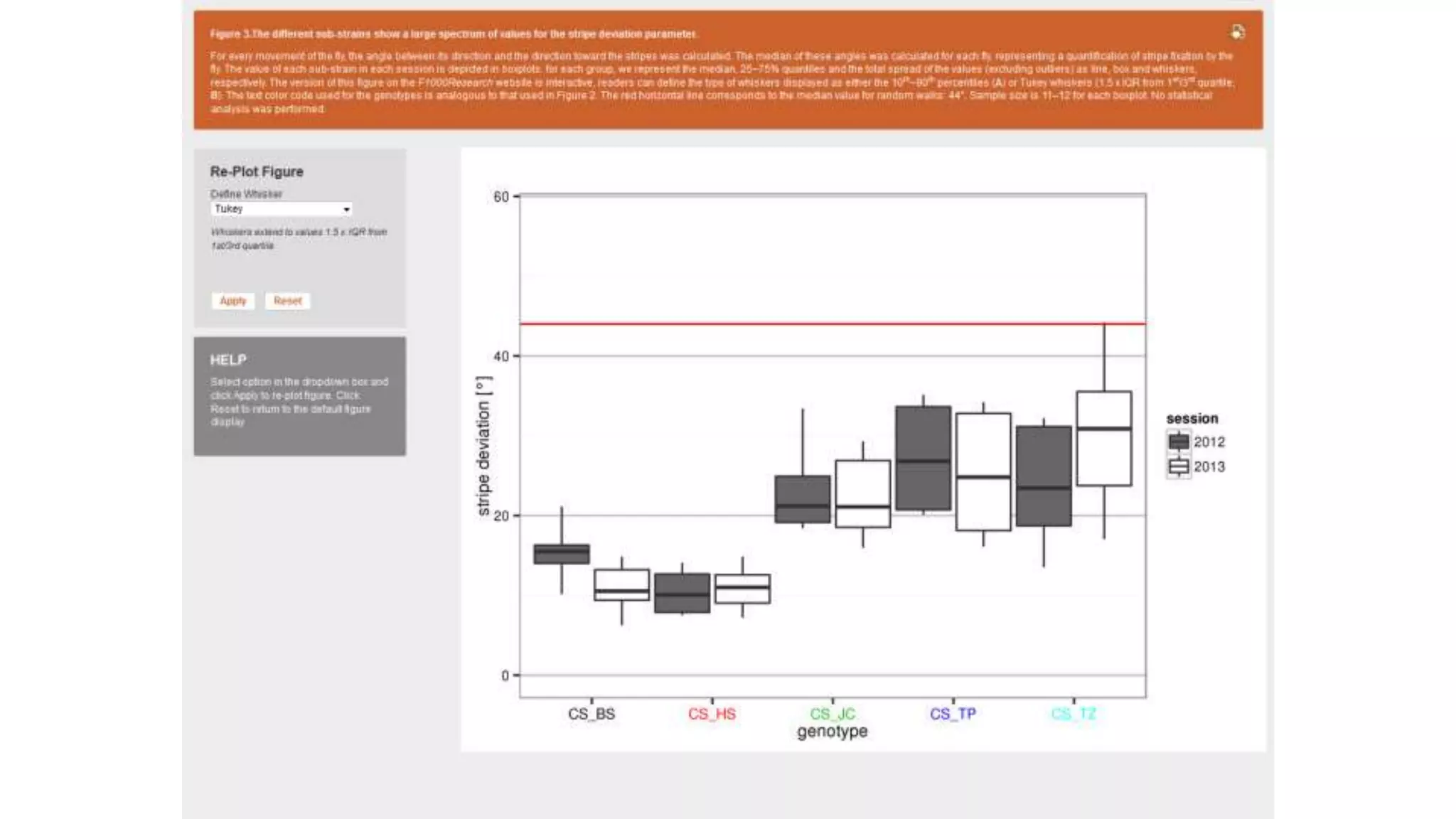
Update the figure: 
Higher sample size directly published 
while analysed, your boss may see the 
results before you do! (or you may see 
the results of your student before they 
do) 
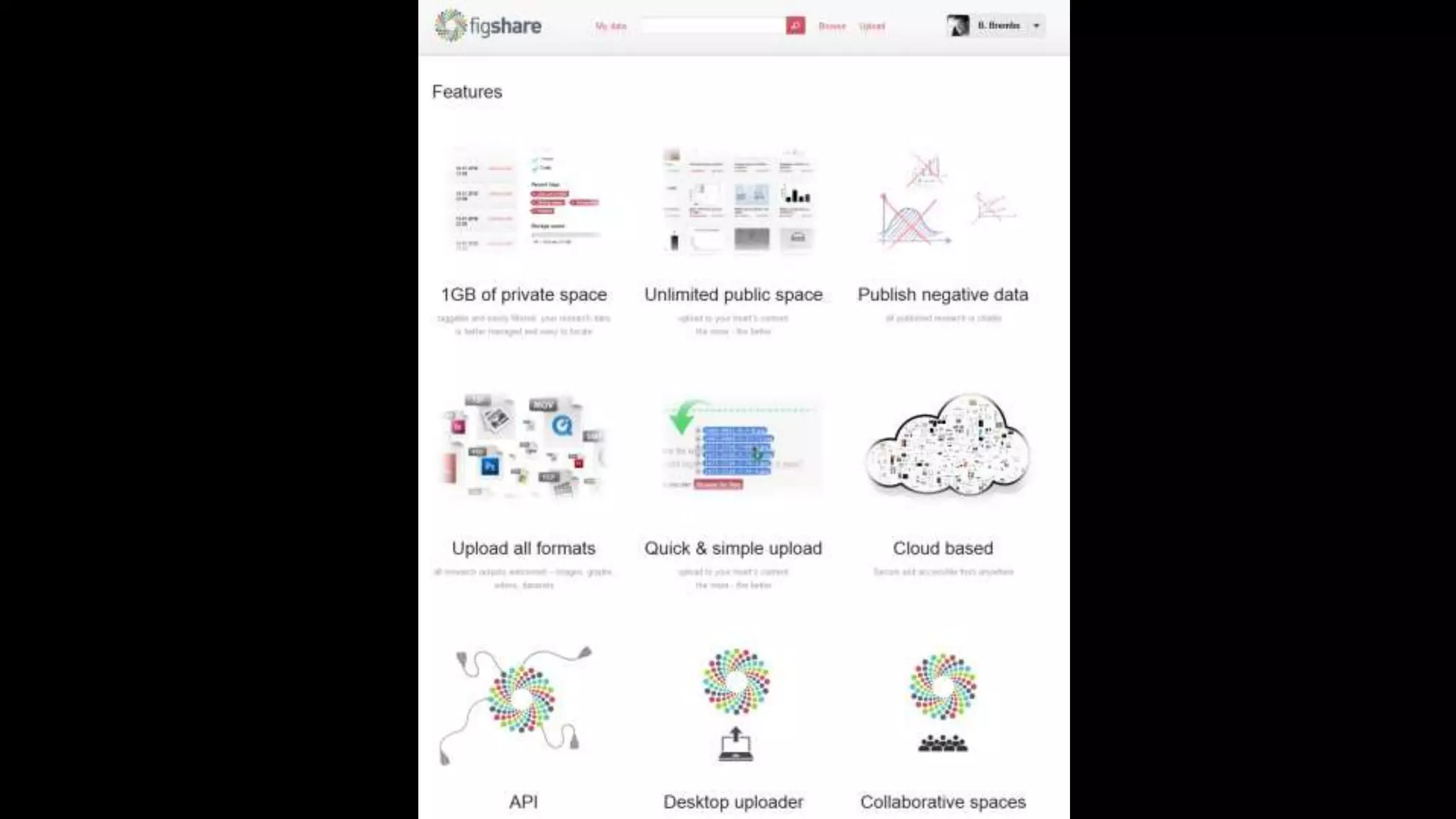
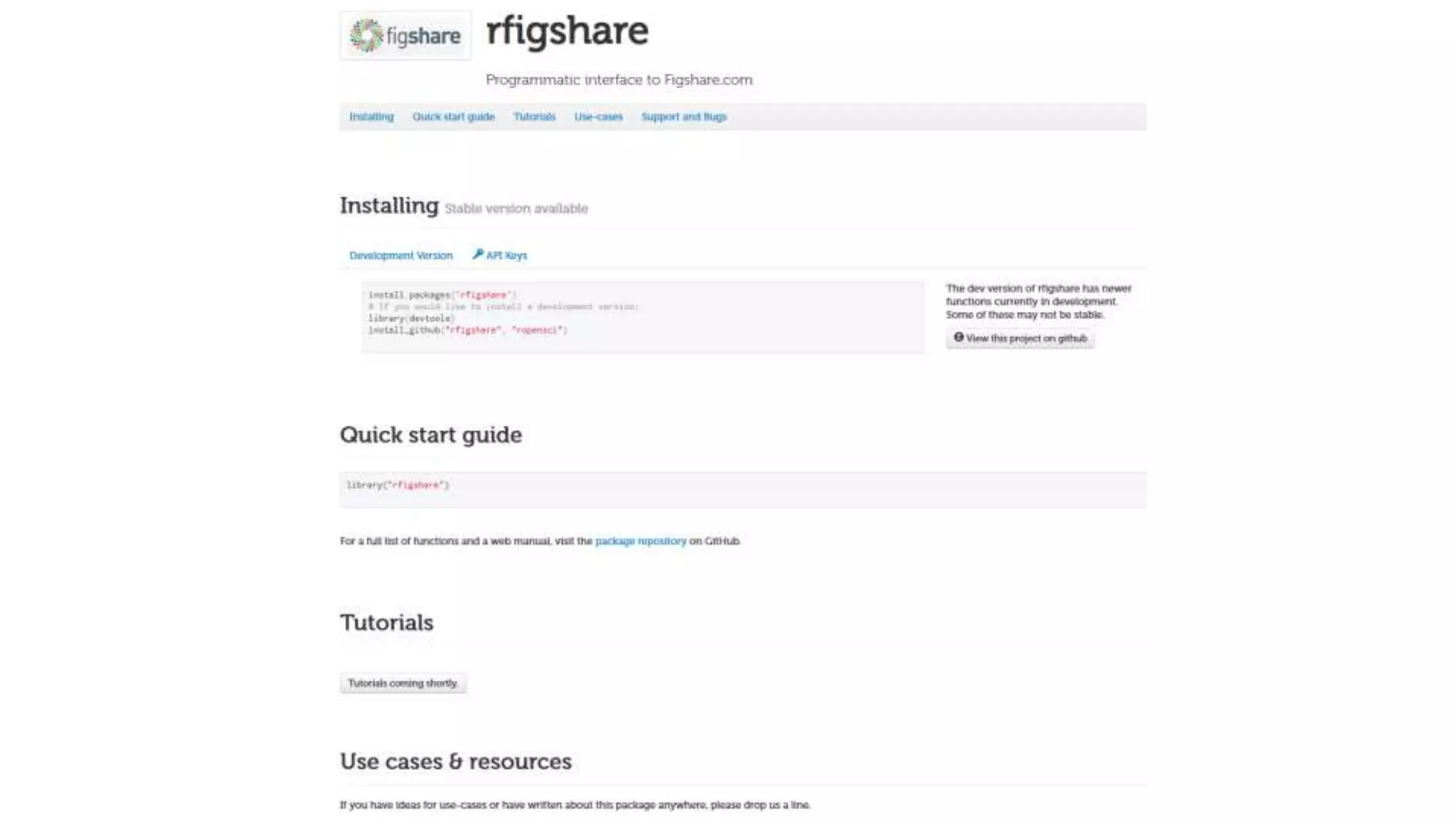
Possibility to make it public and citable 
in one click or directly in the R code.
http://dx.doi.org/10.6084/m9.figshare.97792
If only access were our only infrastructure problem!

If only access were our only infrastructure problem!

  • 1.
    Björn Brembs UniversitätRegensburg http://brembs.net
  • 3.
    Van Noorden, R.(2013). Open access: The true cost of science publishing. Nature 495, 426–9 House of Commons Select Committee on Science and Technology (2004). APPENDIX 138. Supplementary evidence from Nature Publishing Group
  • 4.
    Introduced in 1950’sby Eugene Garfield: ISI A1 A2 C12 citations published time articles published year 1 year 2 year 3 퐼퐹(푦푒푎푟 3) = +
  • 5.
    Introduced in 1950’sby Eugene Garfield: ISI 40 60 100 citations published time articles published year 1 year 2 year 3 퐼퐹(푦푒푎푟 3) = + =1
  • 6.
    Journal X IF2013= All citations from TR indexed journals in 2013 to papers in journal X Number of citable articles published in journal X in 20011/12 €30,000-130,000/year subscription rates Covers ~11,500 journals (Scopus covers ~16,500)
  • 7.
    • Negotiable •Irreproducible • Mathematically unsound
  • 8.
    • PLoS Medicine,IF 2-11 (8.4) (The PLoS Medicine Editors (2006) The Impact Factor Game. PLoS Med 3(6): e291. http://www.plosmedicine.org/article/info:doi/10.1371%2Fjournal.pmed.0030291) • Current Biology IF from 7 to 11 in 2003 – Bought by Cell Press (Elsevier) in 2001…
  • 14.
    • Rockefeller UniversityPress bought their data from Thomson Reuters • Up to 19% deviation from published records • Second dataset still not correct Rossner M, van Epps H, Hill E (2007): Show me the data. The Journal of Cell Biology, Vol. 179, No. 6, 1091-1092 http://jcb.rupress.org/cgi/content/full/179/6/1091
  • 15.
    • Left-skewed distributions • Weak correlation of individual article citation rate with journal IF Seglen PO (1997): Why the impact factor of journals should not be used for evaluating research. BMJ 1997;314(7079):497http://www.bmj.com/cgi/content/full/314/7079/497
  • 16.
    The weakening relationshipbetween the Impact Factor and papers' citations in the digital age (2012): George A. Lozano, Vincent Lariviere, Yves Gingras arXiv:1205.4328
  • 17.
    Brembs, B., Button,K., & Munafò, M. (2013). Deep impact: unintended consequences of journal rank. Frontiers in Human Neuroscience, 7. doi:10.3389/fnhum.2013.00291
  • 18.
    Munafò, M., Stothart,G., & Flint, J. (2009). Bias in genetic association studies and impact factor Molecular Psychiatry, 14 (2), 119-120 DOI: 10.1038/mp.2008.77
  • 19.
    Brown, E. N.,& Ramaswamy, S. (2007). Quality of protein crystal structures. Acta Crystallographica Section D Biological Crystallography, 63(9), 941–950. doi:10.1107/S0907444907033847
  • 20.
    Fang et al.(2012): Misconduct accounts for the majority of retracted scientific publications. PNAS 109 no. 42 17028-17033
  • 21.
    Data from: Fang,F., & Casadevall, A. (2011). RETRACTED SCIENCE AND THE RETRACTION INDEX Infection and Immunity DOI: 10.1128/IAI.05661-11
  • 22.
    “High-Impact” journals attractthe most unreliable research
  • 24.
  • 25.
  • 26.
    • Limited access • No scientific impact analysis • No global search • No functional hyperlinks • No flexible data visualization • No submission standards • (Almost) no statistics • No text/data-mining • No effective way to sort, filter and discover • No networking feature • etc. …it’s like the web in 1995!
  • 27.
    Costs [thousand US$/article] Legacy SciELO (Sources: Van Noorden, R. (2013). Open access: The true cost of science publishing. Nature 495, 426–9; Packer, A. L. (2010). The SciELO Open Access: A Gold Way from the South. Can. J. High. Educ. 39, 111–126)
  • 29.
  • 30.
    Report on Integrationof Data and Publications, ODE Report 2011 http://www.alliancepermanentaccess.org/wp-content/plugins/download-monitor/download.php?id=ODE+Report+on+Integration+of+Data+and+Publications
  • 33.
  • 35.
    The disaster thatis our digital infrastructure
  • 36.
    Science, tear downthis paywall!
  • 38.
    Potential for innovation:9.8b p.a. Costs [thousand US$/article] Legacy SciELO (Sources: Van Noorden, R. (2013). Open access: The true cost of science publishing. Nature 495, 426–9; Packer, A. L. (2010). The SciELO Open Access: A Gold Way from the South. Can. J. High. Educ. 39, 111–126)
  • 42.
    1) Publish inthe “Journal of Unreliable Research” of your field – or take your chances
  • 43.
    2) Publish everythingelse where publication is quick and where it can be widely read
  • 44.
    3) Ask yourPI what will happen to all the work you put into your code & data and how you can get as many people as possible to use it
  • 45.
    1. Publish inthe “Journal of Unreliable Research” of your field – or take your chances 2. Publish everything else where publication is quick and where it can be widely read 3. Ask your PI what will happen to all the work you put into your code & data and how you can get as many people as possible to use it
  • 46.
    What we aredoing: One person is not an institutional infrastructure
  • 48.
    Software to controlthe experiment and save the data
  • 49.
    Software to analyzeand visualize the data
  • 61.
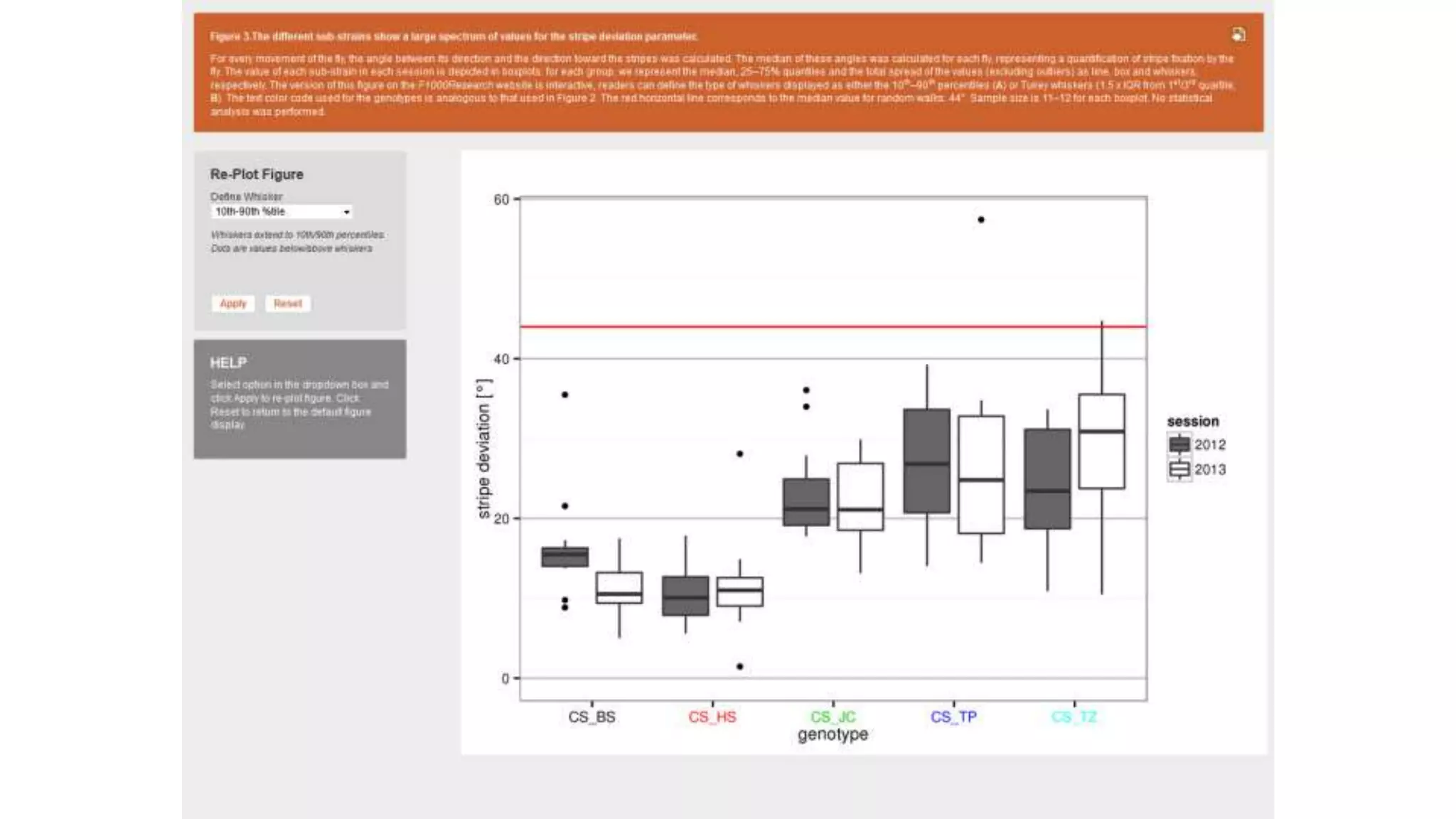
    Same type ofexperiments → same script Default: → same categories → same tags → same authors → same links → same description → One complete article, in one click. Update the figure: Higher sample size directly published while analysed, your boss may see the results before you do! (or you may see the results of your student before they do) Possibility to make it public and citable in one click or directly in the R code.
  • 62.