Björn Brembs
Universität Regensburg - Neurogenetics
http://brembs.net - @brembs
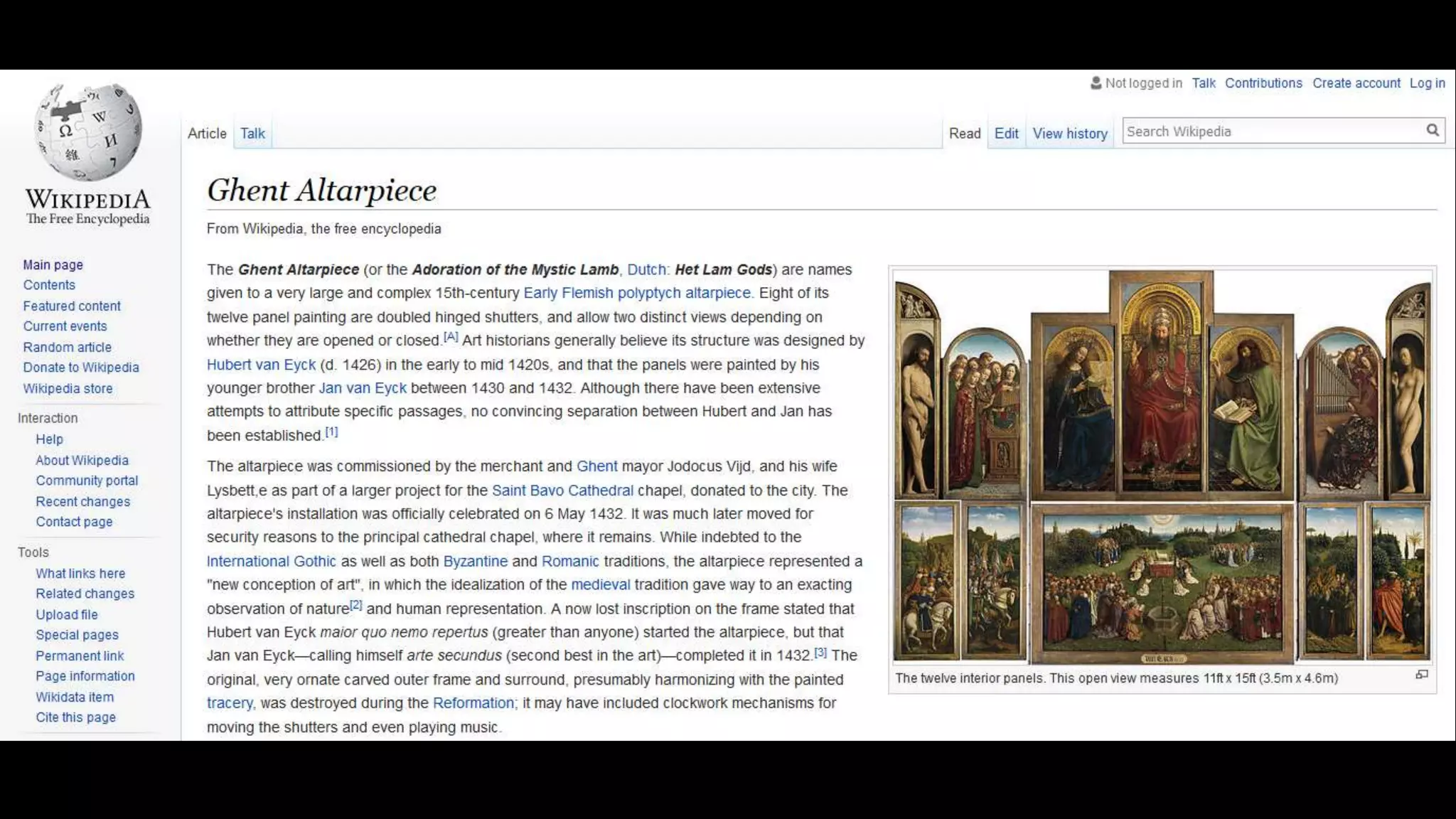
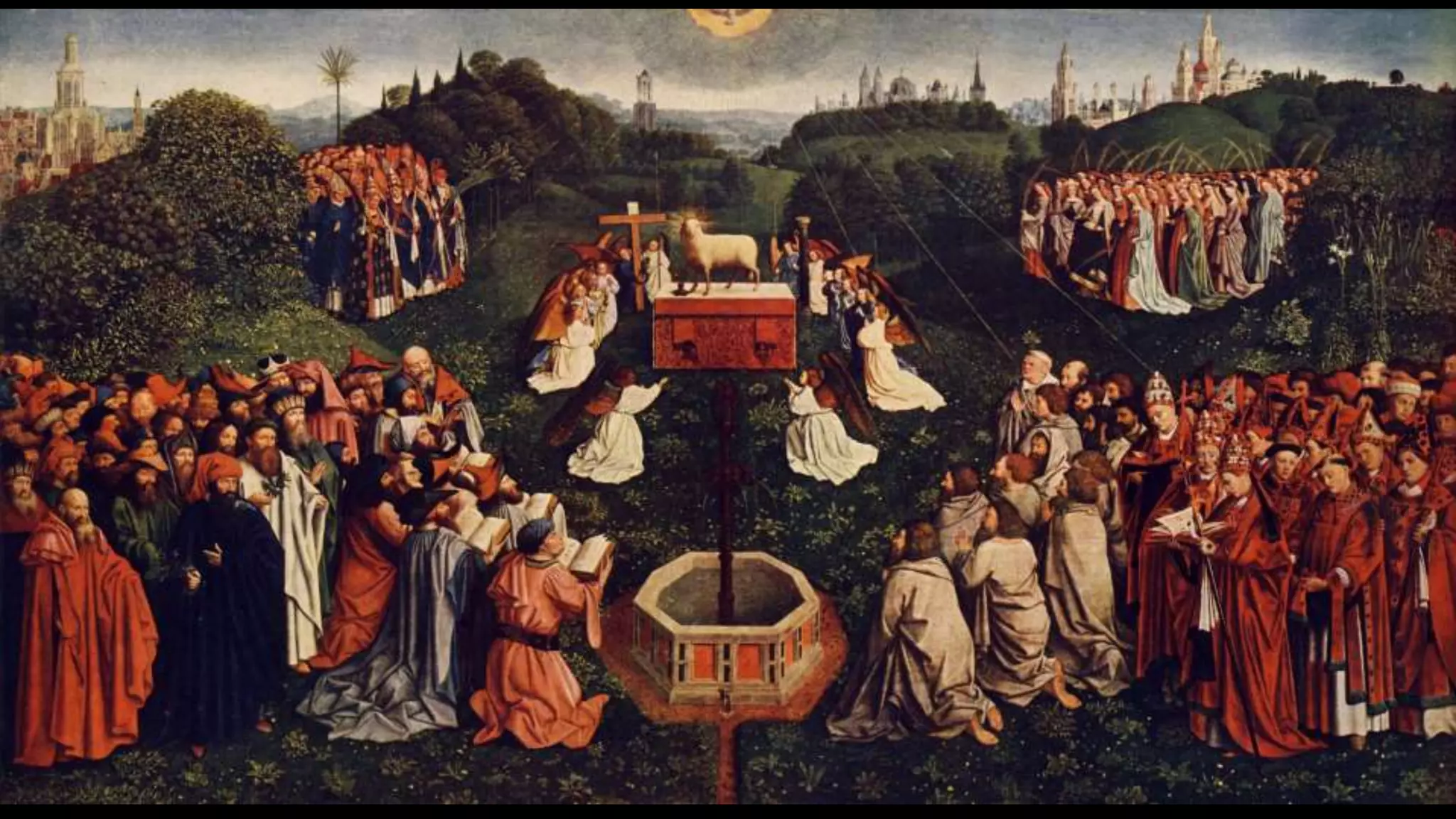
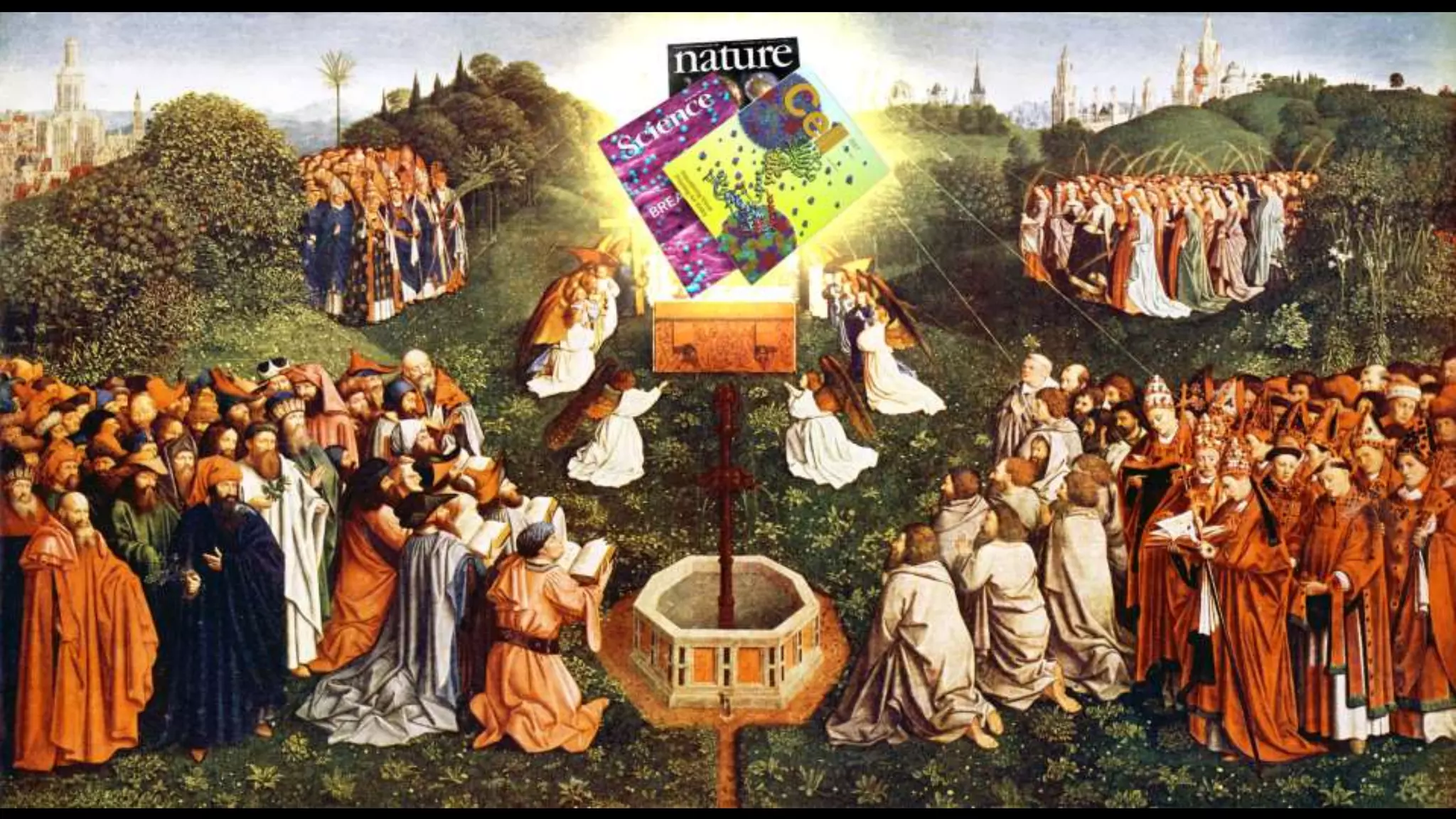
15th century: Adoration of the lamb
21st century: Adoration of the Glam
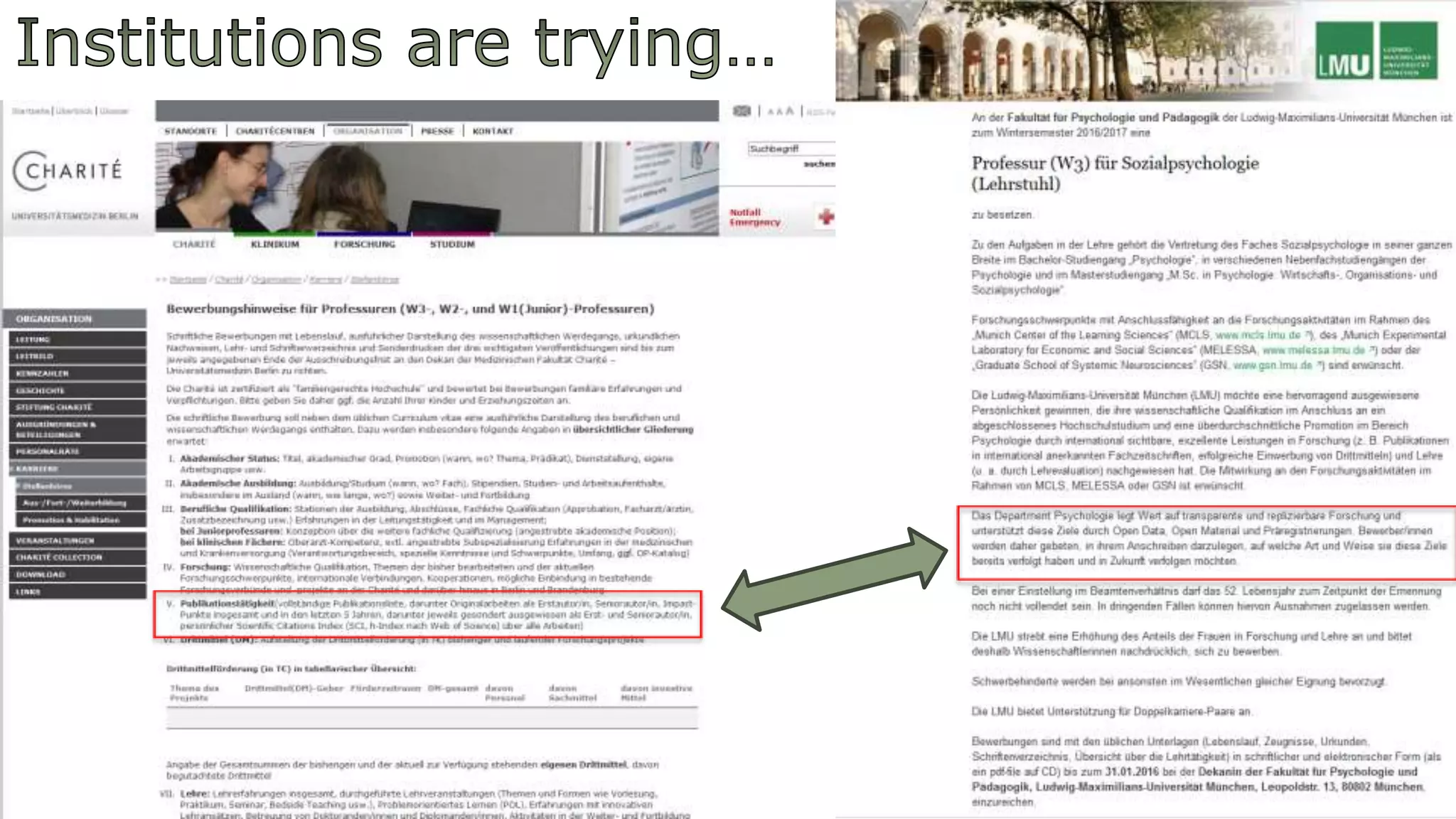
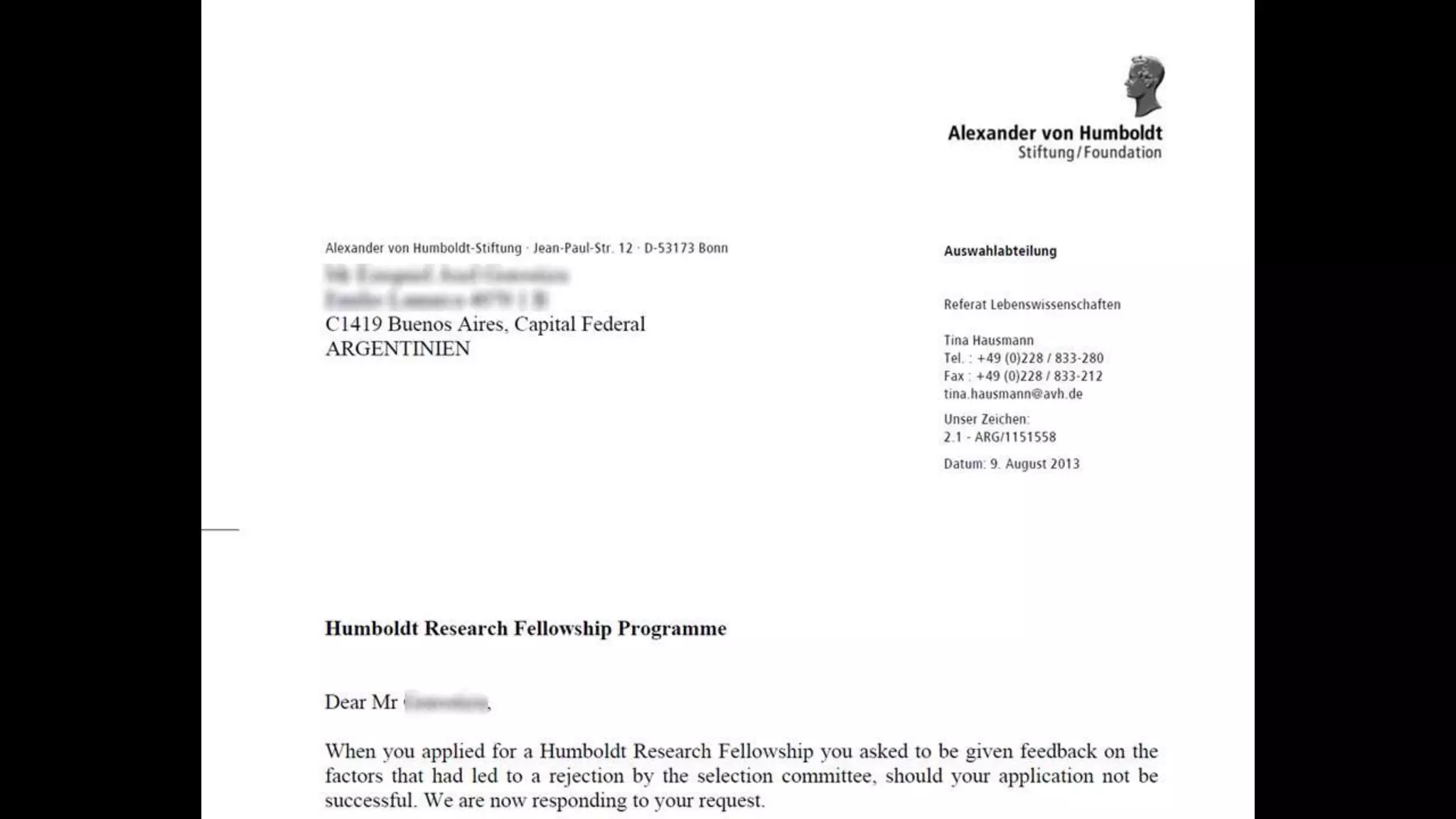
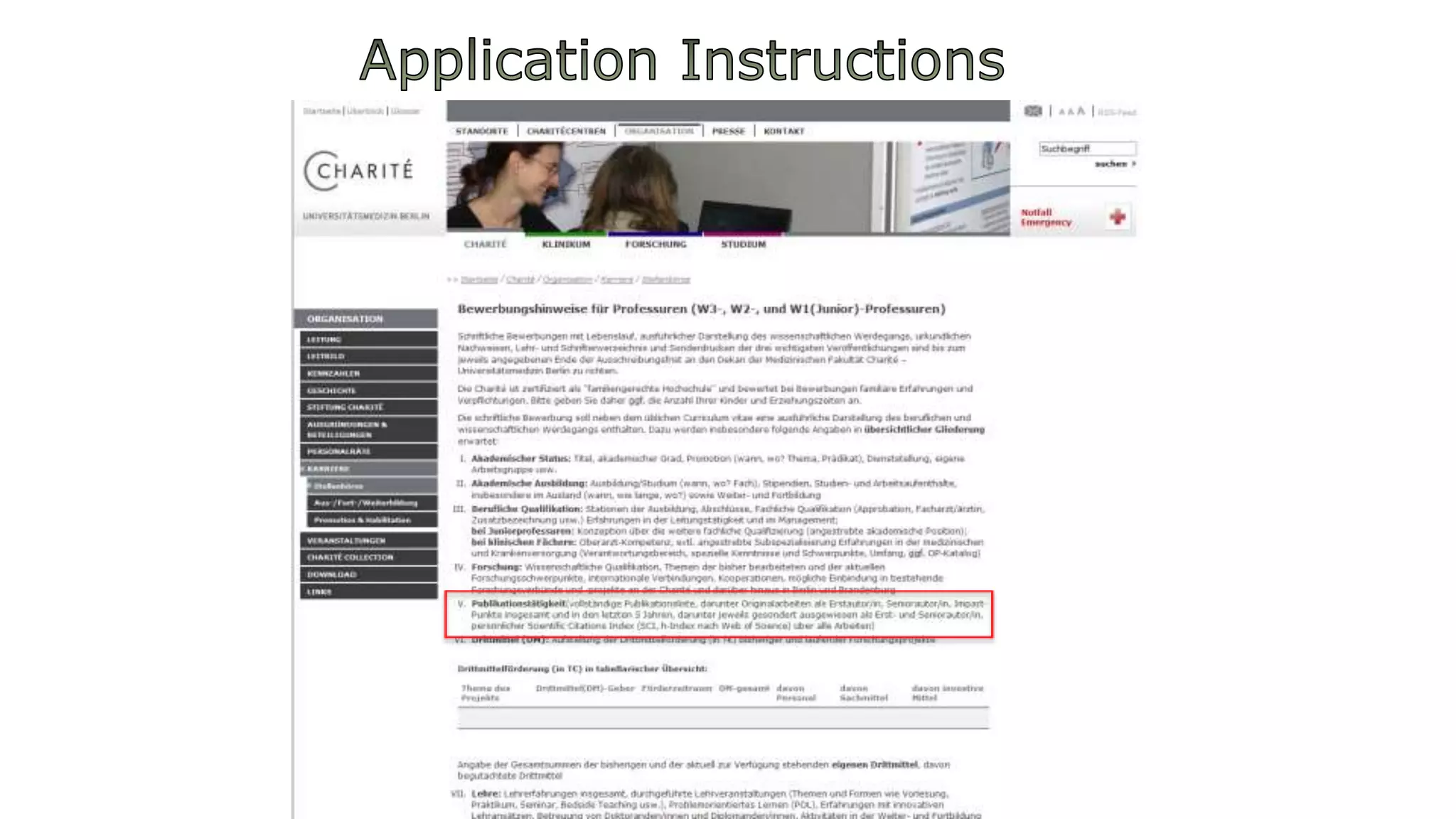
Publikationstätigkeit
(vollständige Publikationsliste, darunter Originalarbeiten als Erstautor/in,
Seniorautor/in, Impact-Punkte insgesamt und in den letzten 5 Jahren,
darunter jeweils gesondert ausgewiesen als Erst- und Seniorautor/in,
persönlicher Scientific Citations Index (SCI, h-Index nach Web of
Science) über alle Arbeiten)
Publications:
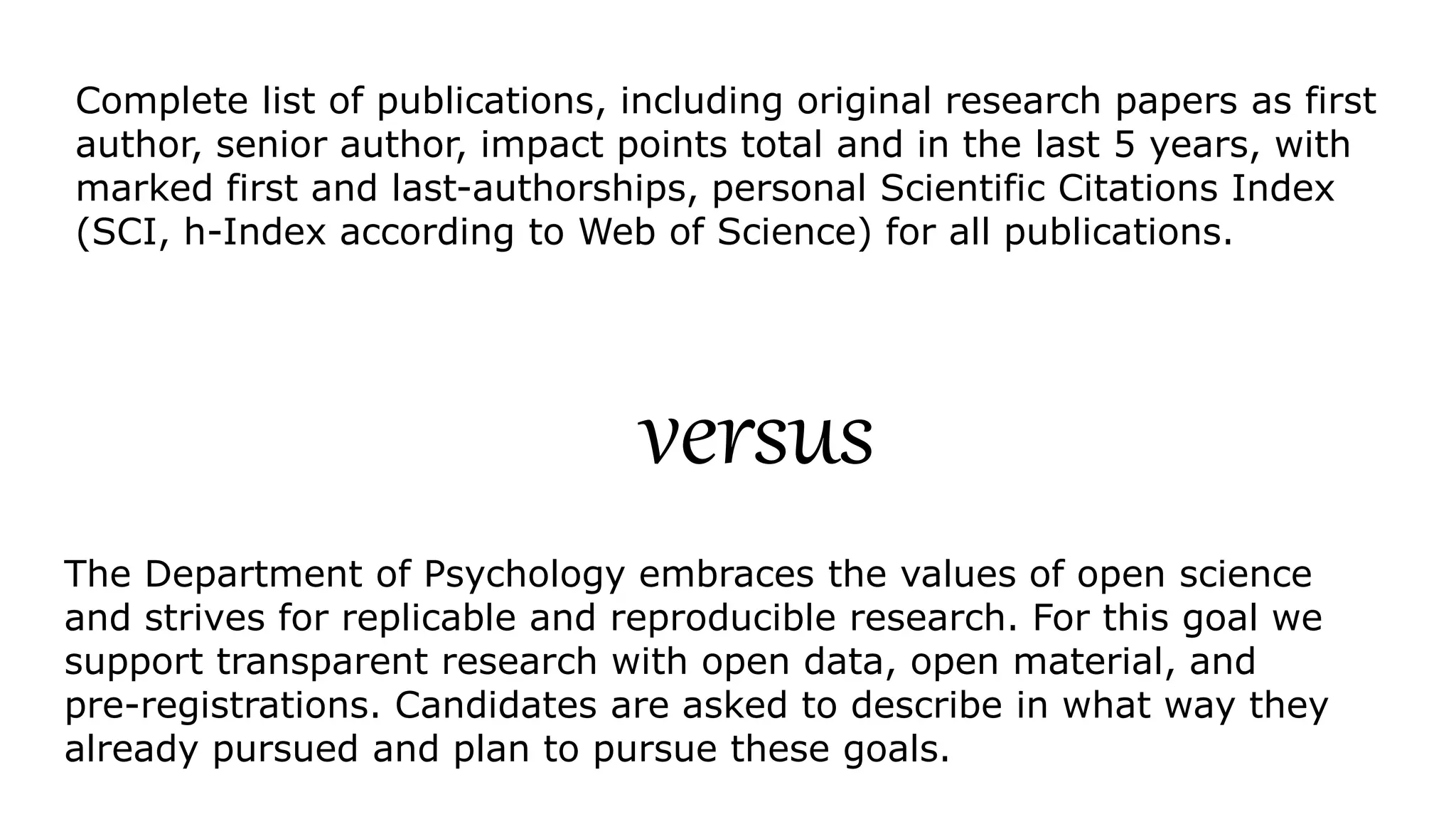
Complete list of publications, including original research papers as first
author, senior author, impact points total and in the last 5 years, with
marked first and last-authorships, personal Scientific Citations Index
(SCI, h-Index according to Web of Science) for all publications.
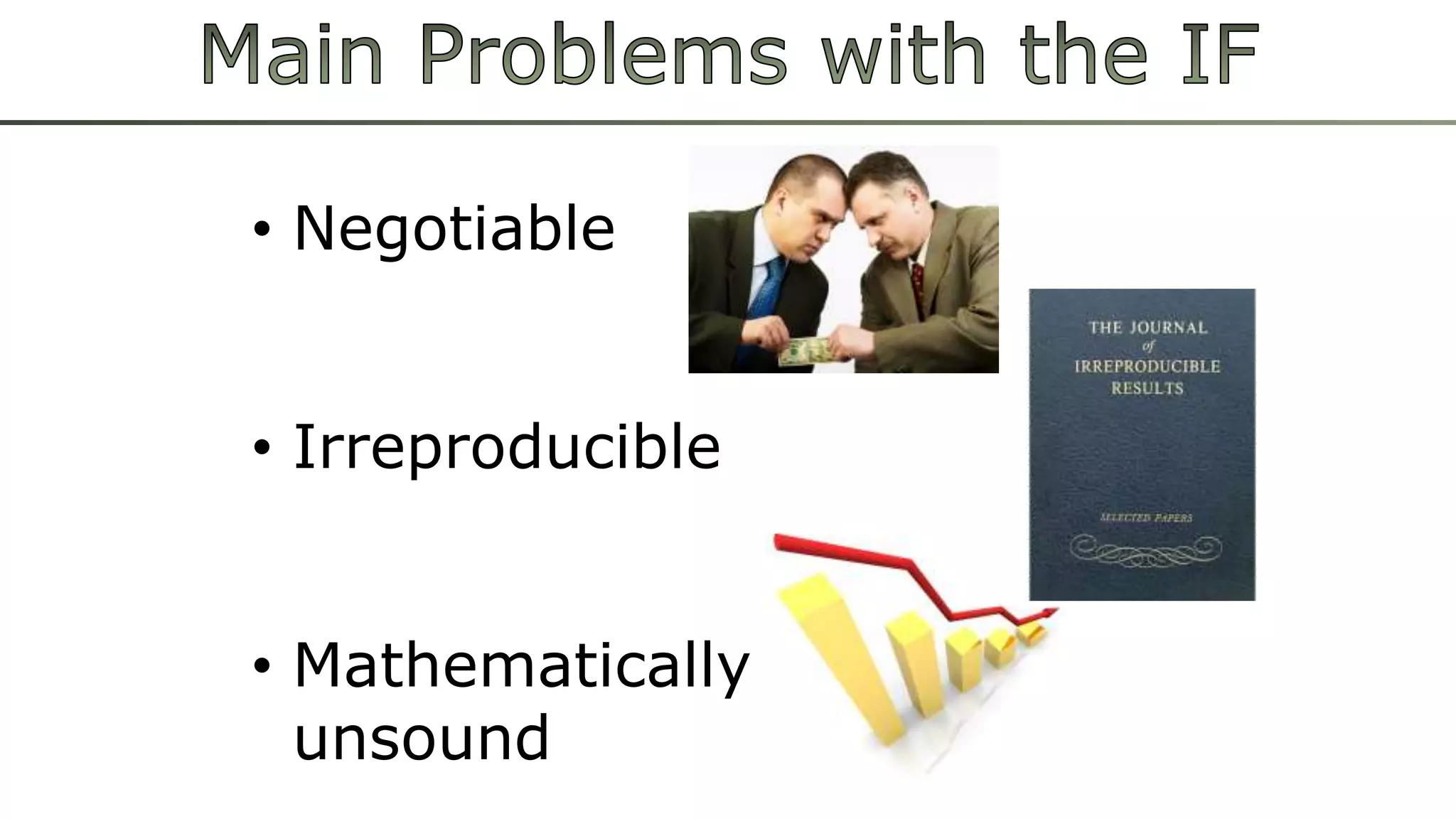
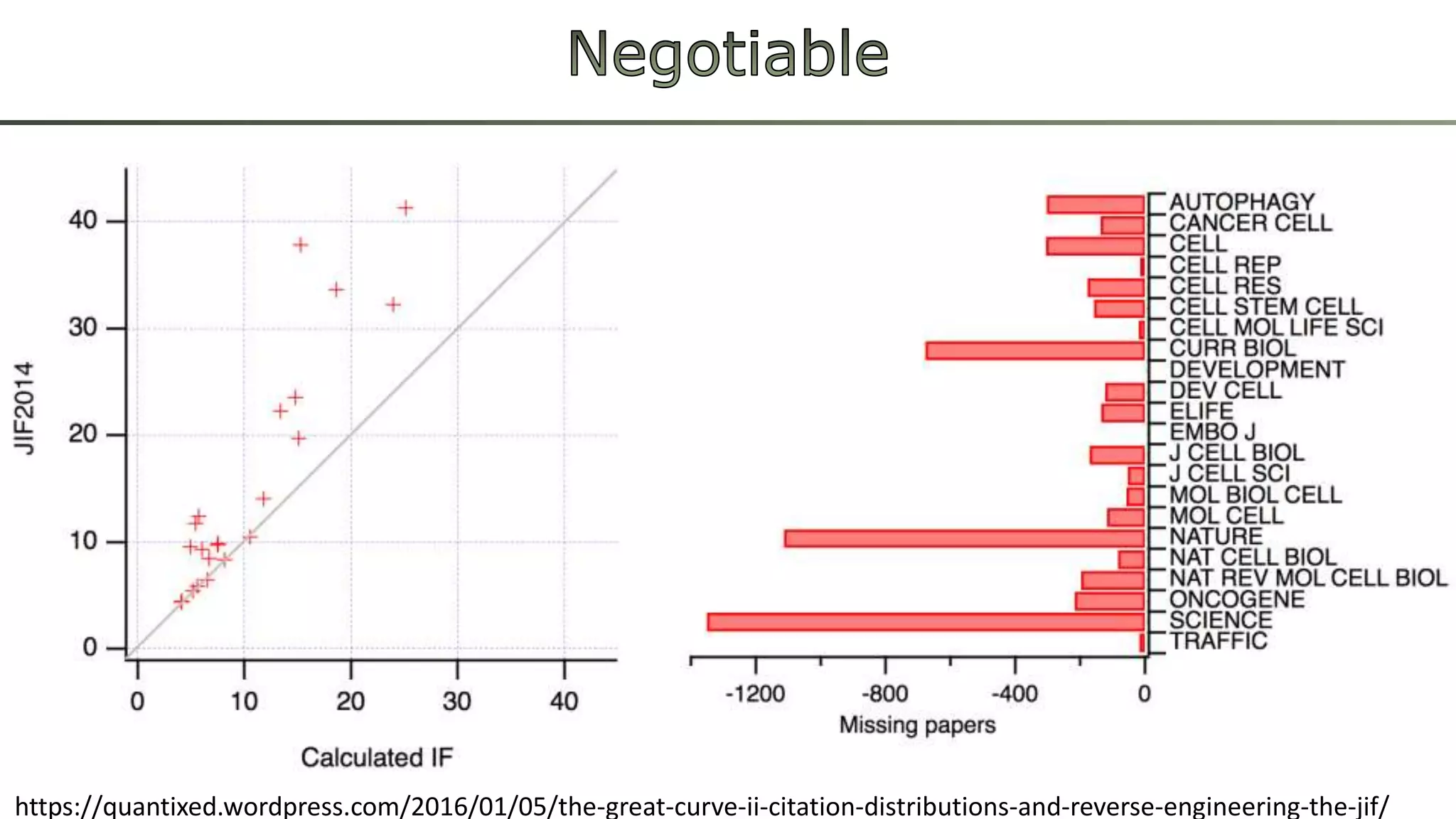
• Negotiable
• Irreproducible
• Mathematically
unsound
https://quantixed.wordpress.com/2016/01/05/the-great-curve-ii-citation-distributions-and-reverse-engineering-the-jif/
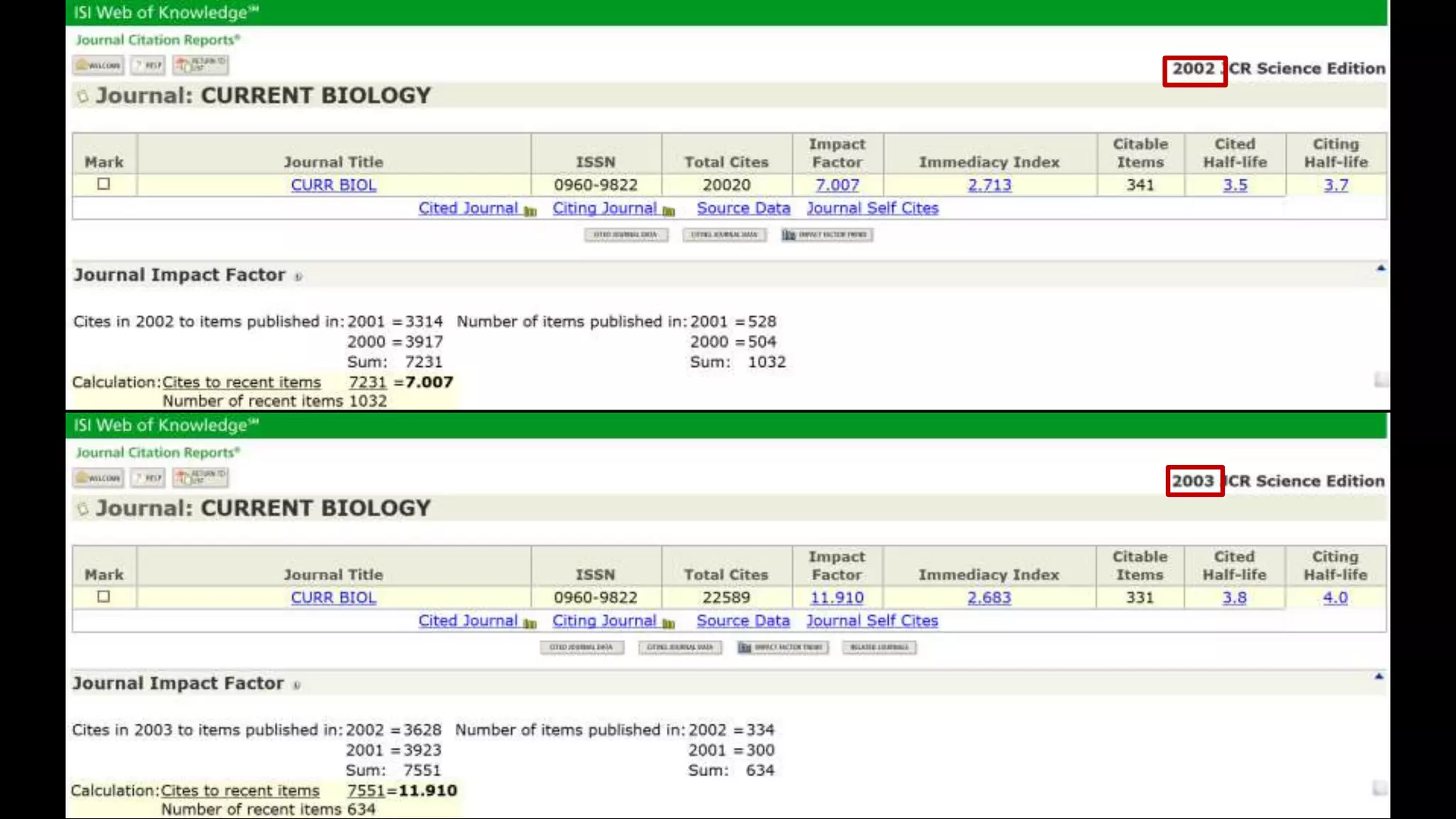
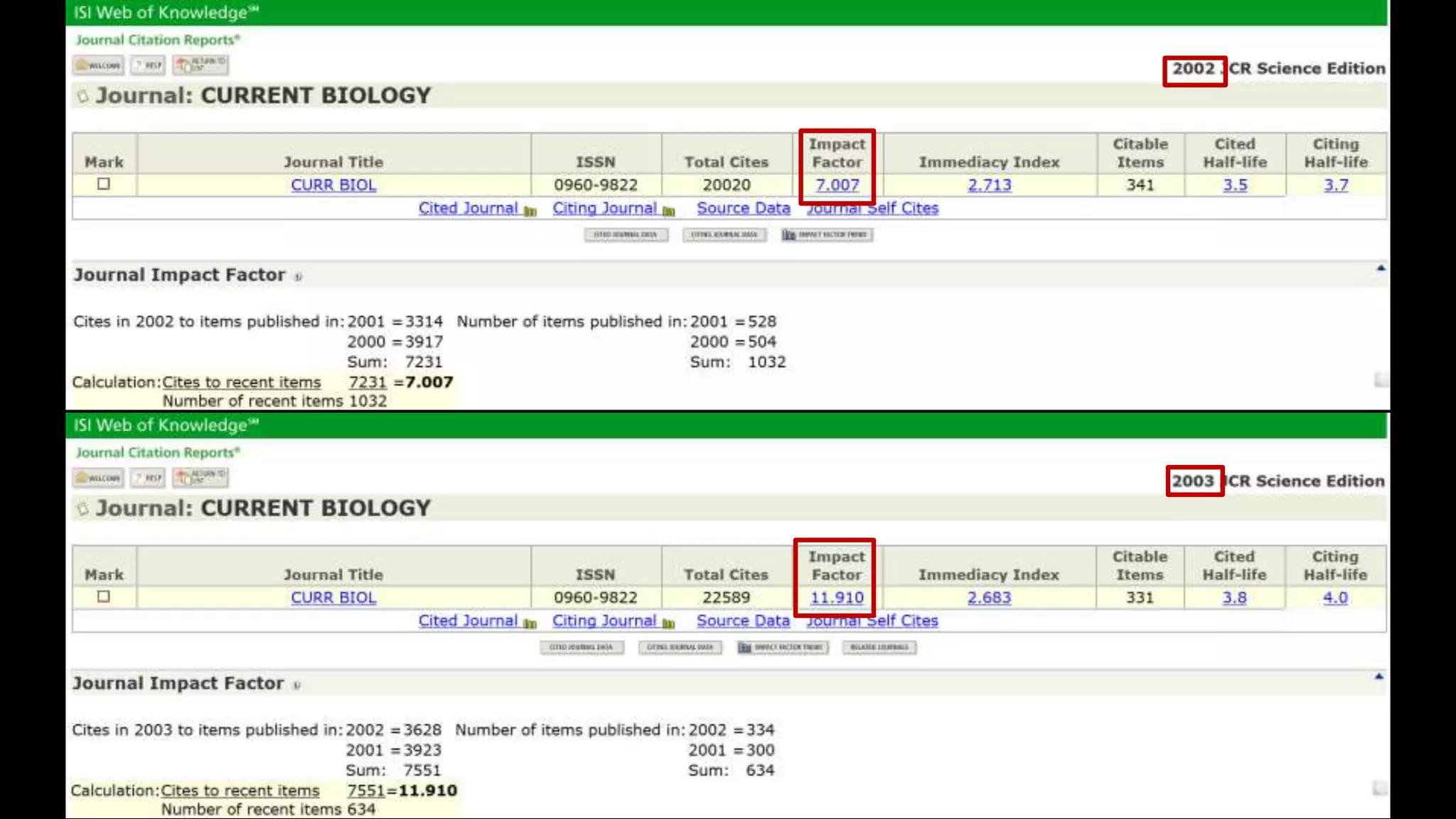
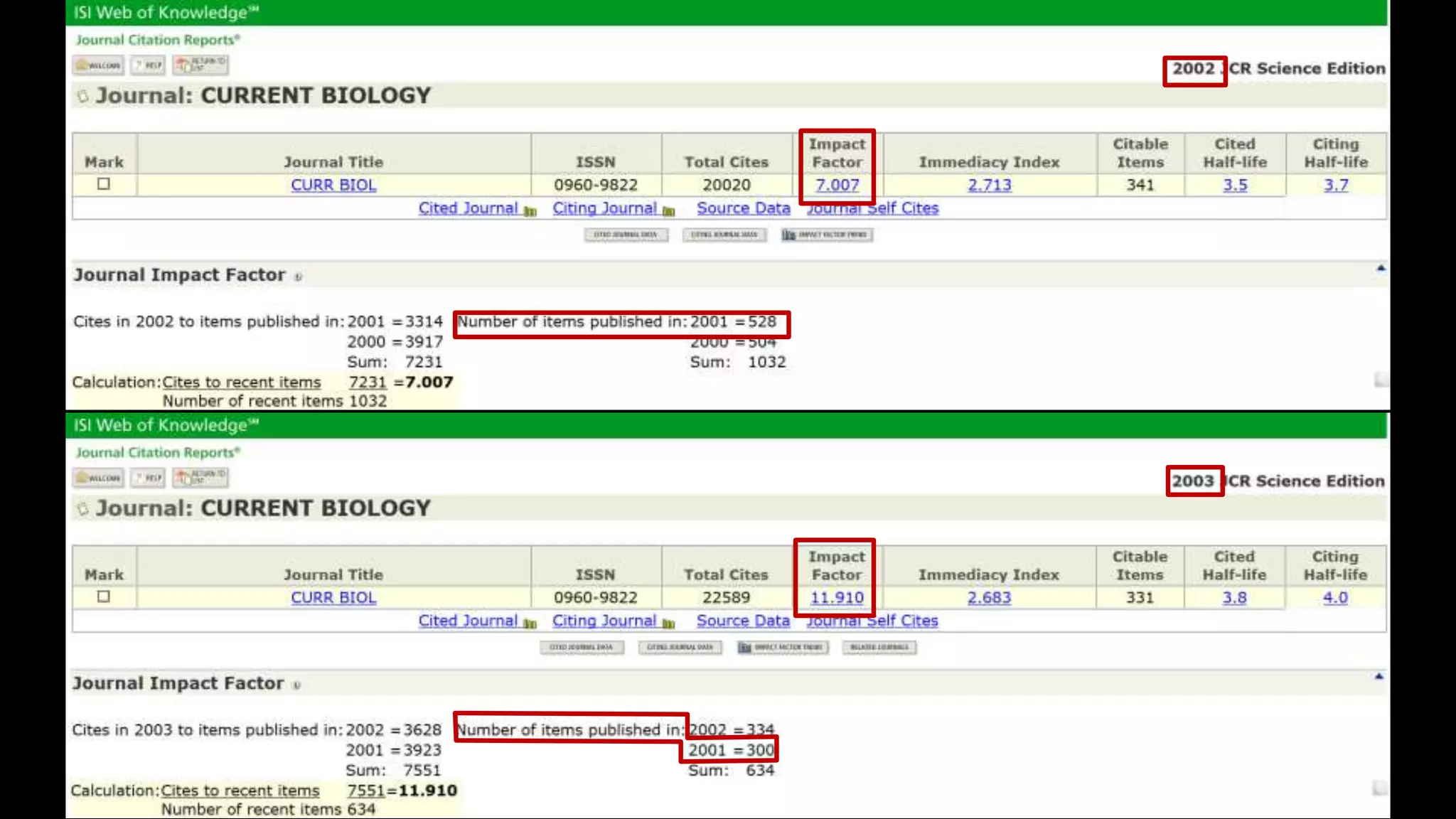
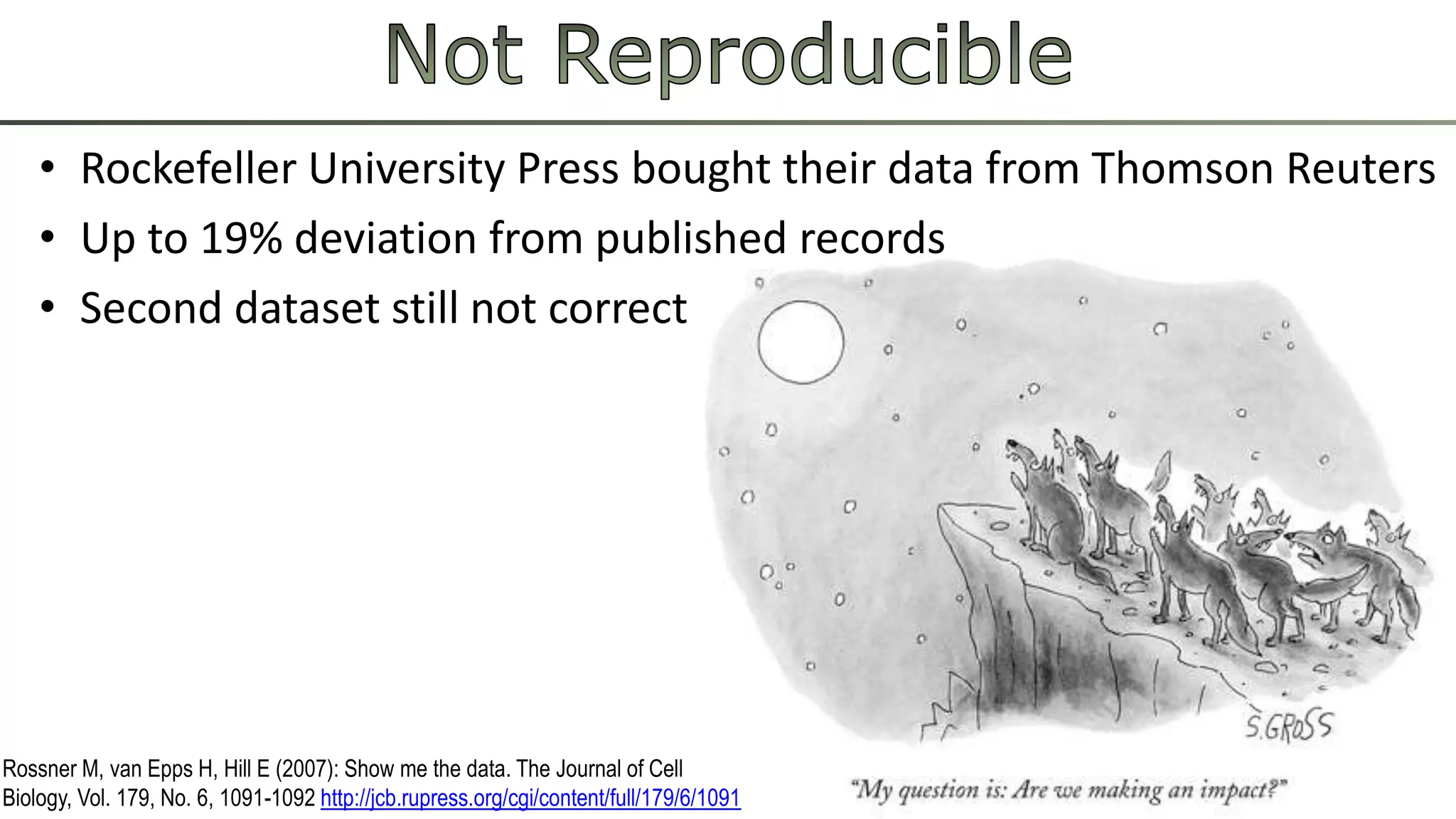
• Rockefeller University Press bought their data from Thomson Reuters
• Up to 19% deviation from published records
• Second dataset still not correct
Rossner M, van Epps H, Hill E (2007): Show me the data. The Journal of Cell
Biology, Vol. 179, No. 6, 1091-1092 http://jcb.rupress.org/cgi/content/full/179/6/1091
• Left-skewed distributions
• Weak correlation of individual
article citation rate with journal IF
Seglen PO (1997): Why the impact factor of journals should not be used for evaluating research. BMJ 1997;314(7079):497http://www.bmj.com/cgi/content/full/314/7079/497
https://quantixed.wordpress.com/2016/01/05/the-great-curve-ii-citation-distributions-and-reverse-engineering-the-jif/
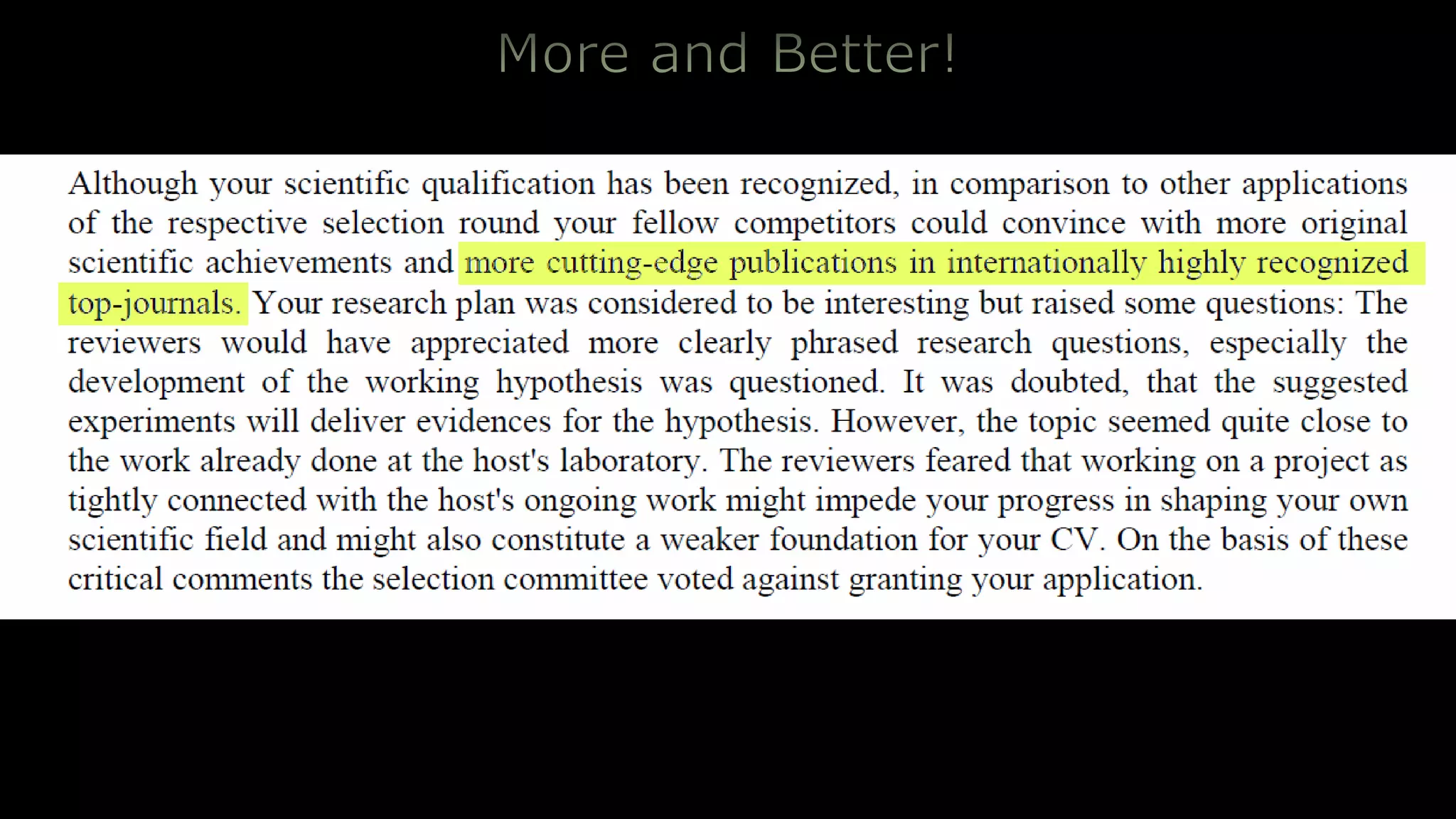
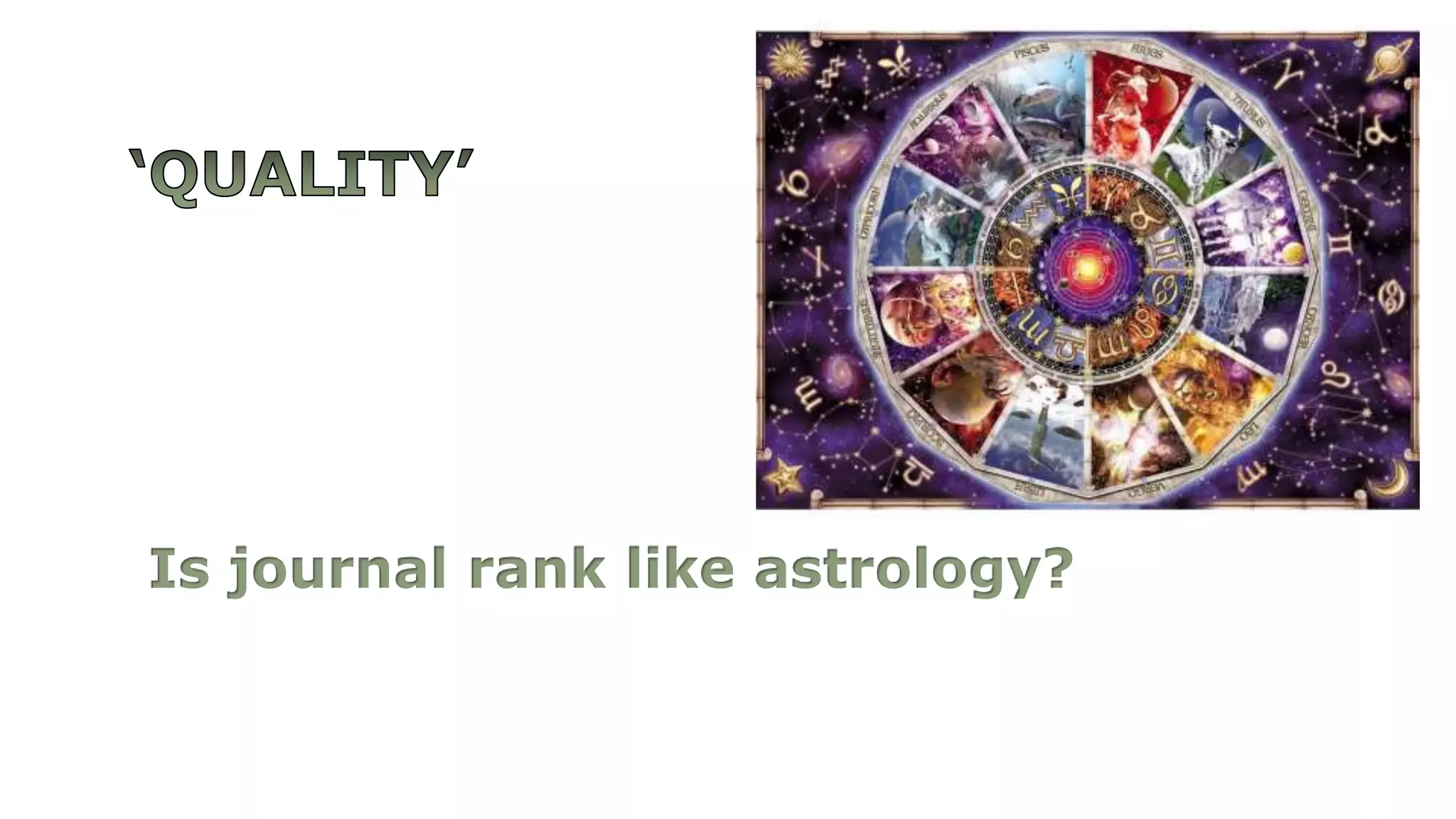
Is journal rank like astrology?
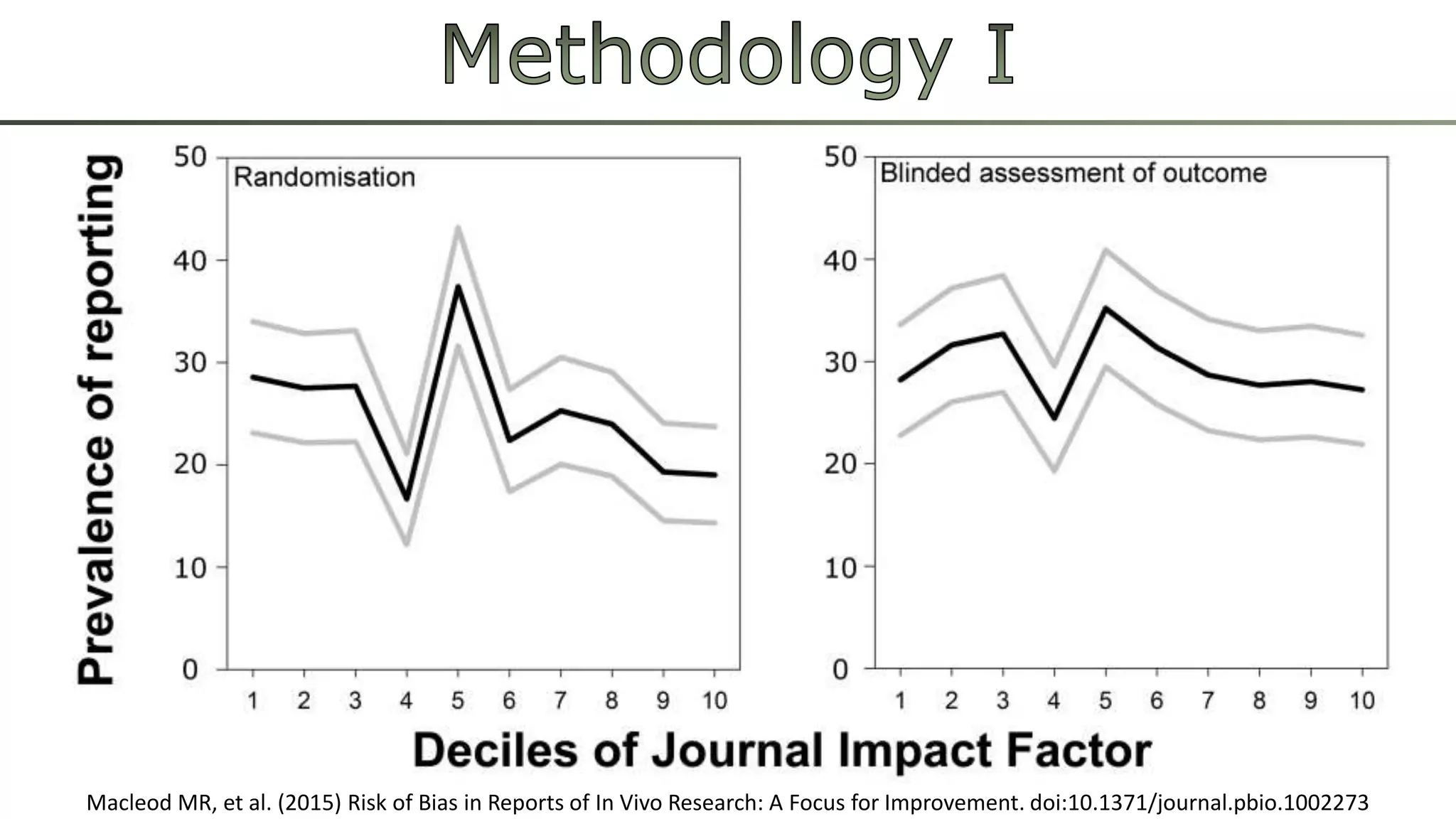
Macleod MR, et al. (2015) Risk of Bias in Reports of In Vivo Research: A Focus for Improvement. doi:10.1371/journal.pbio.1002273
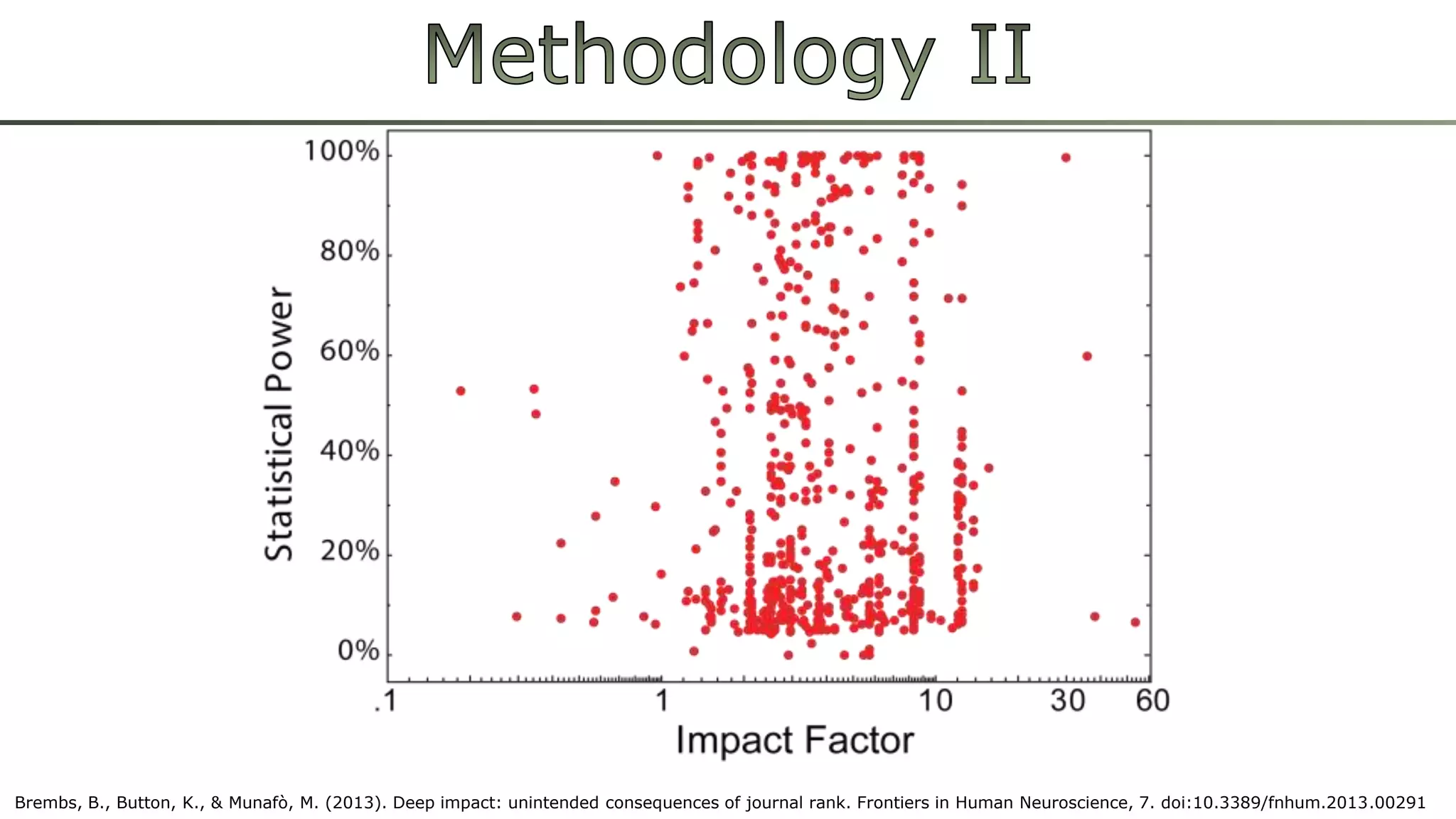
Brembs, B., Button, K., & Munafò, M. (2013). Deep impact: unintended consequences of journal rank. Frontiers in Human Neuroscience, 7. doi:10.3389/fnhum.2013.00291
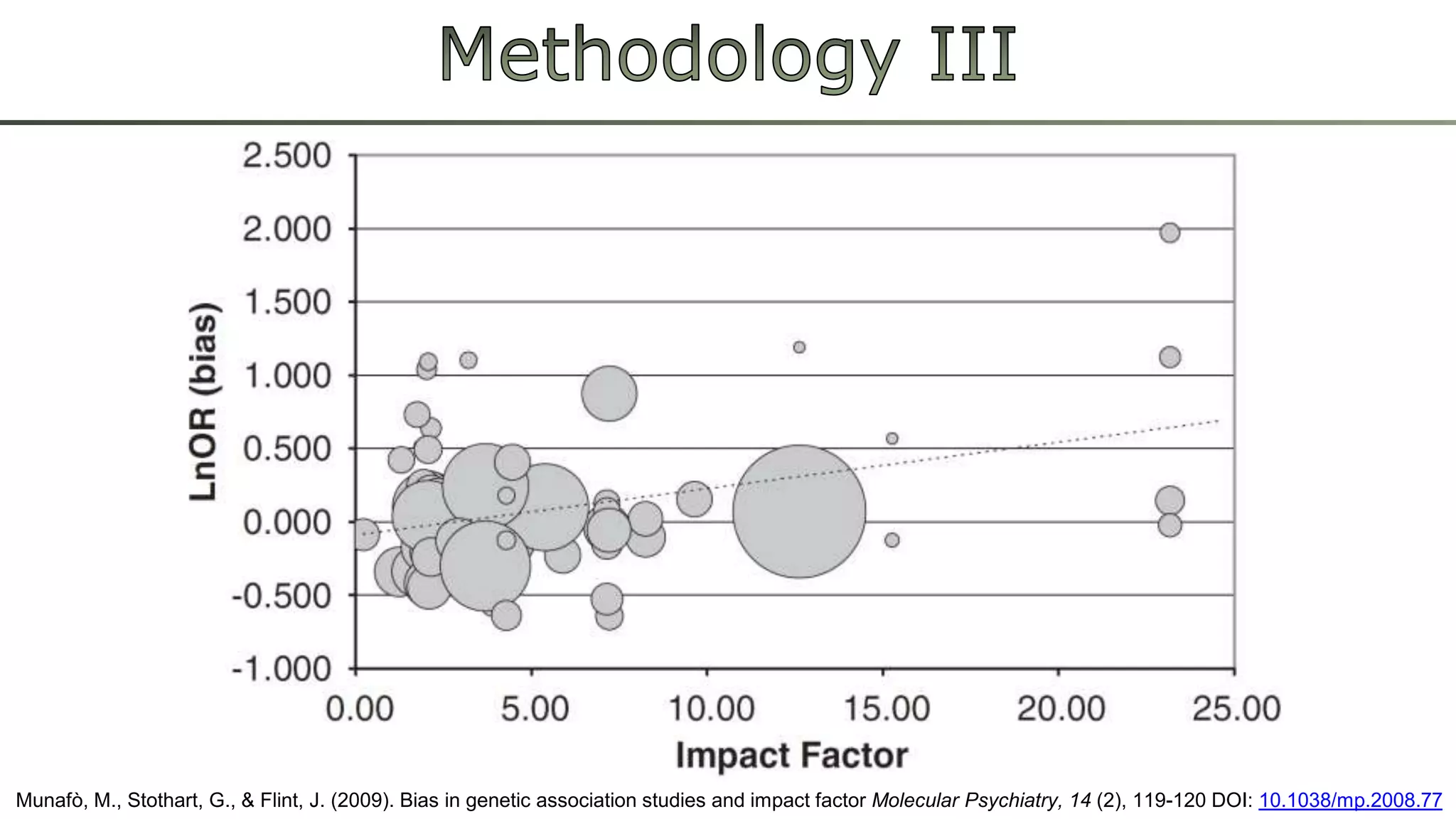
Munafò, M., Stothart, G., & Flint, J. (2009). Bias in genetic association studies and impact factor Molecular Psychiatry, 14 (2), 119-120 DOI: 10.1038/mp.2008.77
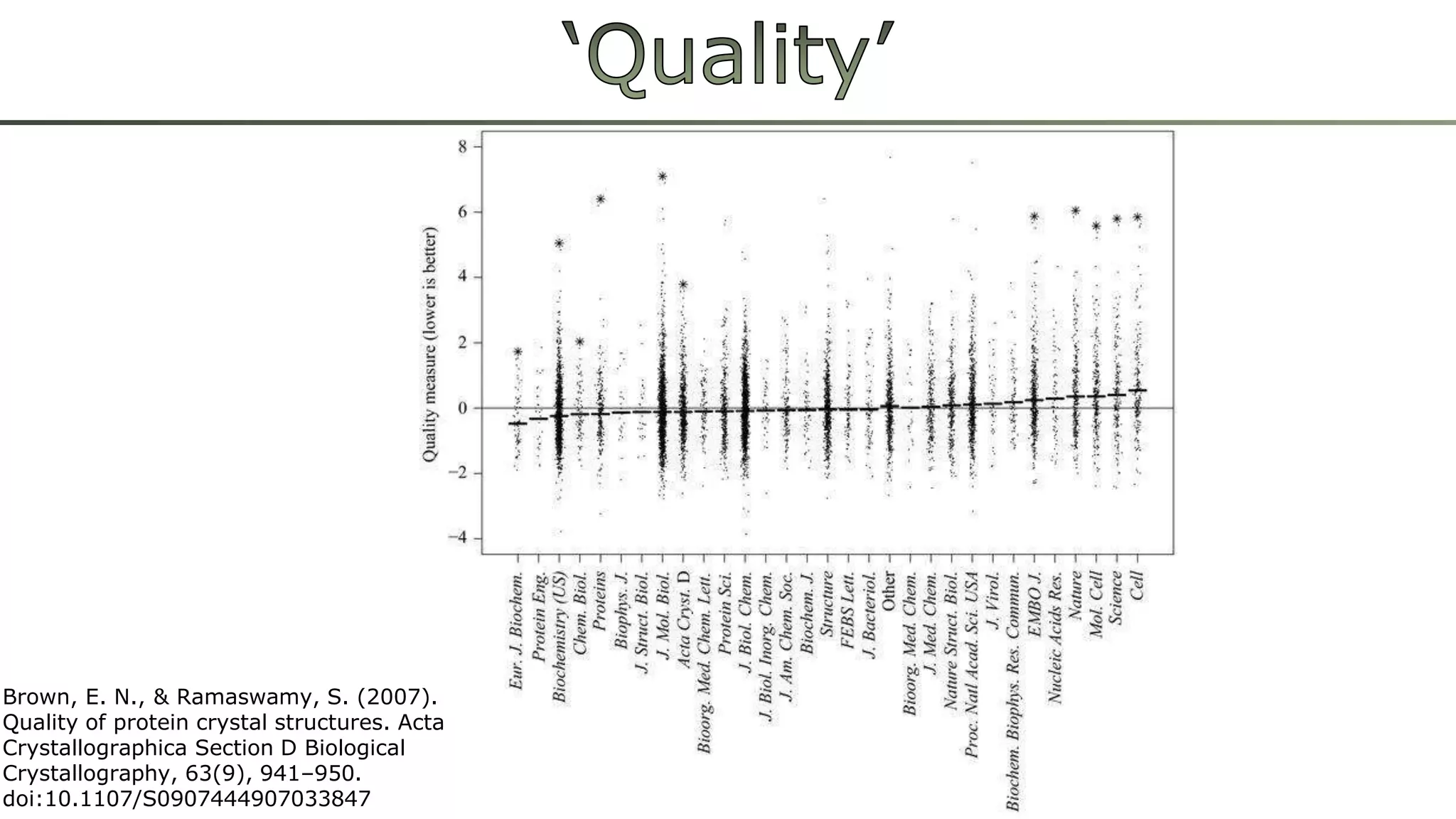
Brown, E. N., & Ramaswamy, S. (2007).
Quality of protein crystal structures. Acta
Crystallographica Section D Biological
Crystallography, 63(9), 941–950.
doi:10.1107/S0907444907033847
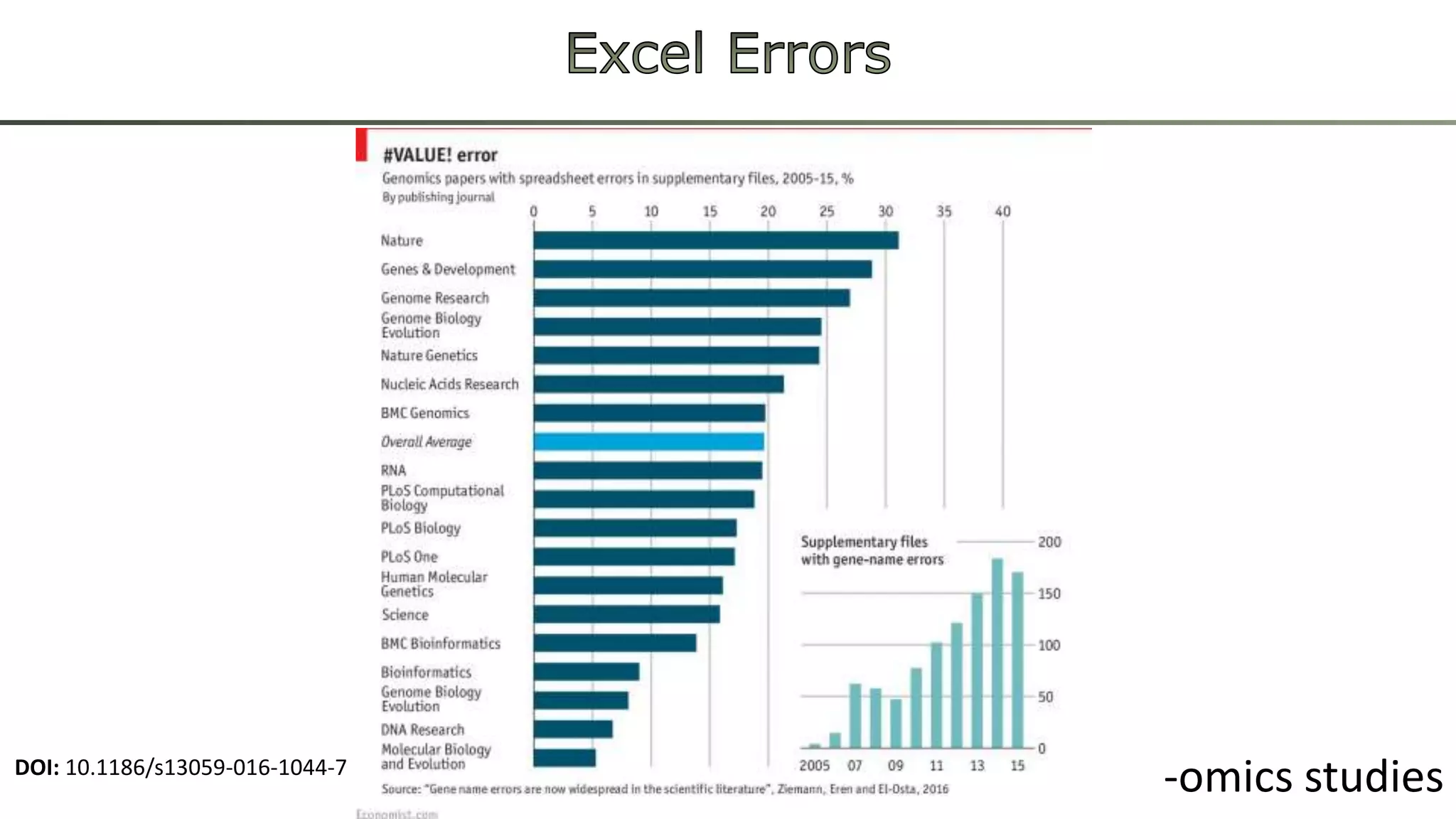
DOI: 10.1186/s13059-016-1044-7
-omics studies
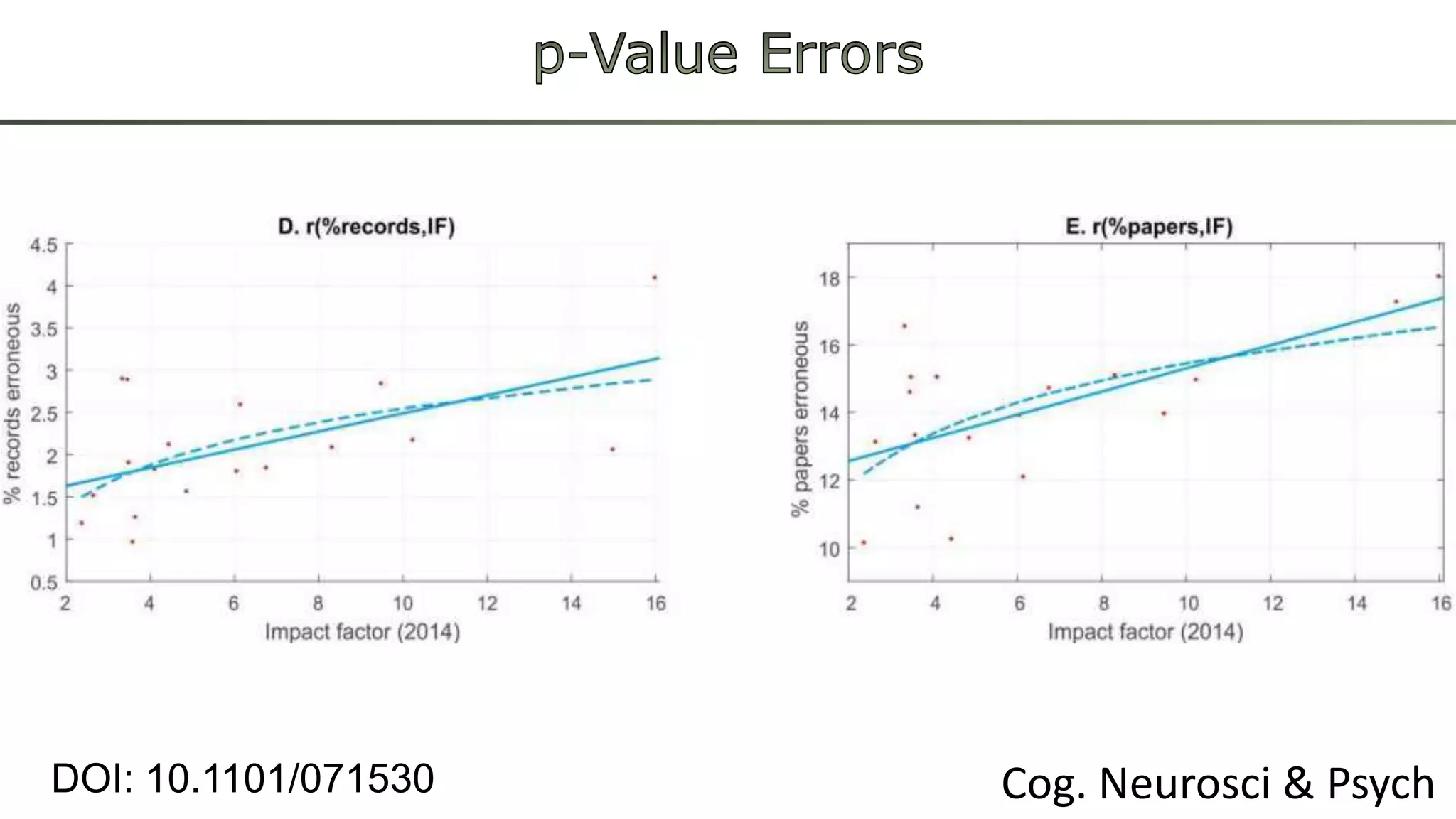
Cog. Neurosci & PsychDOI: 10.1101/071530
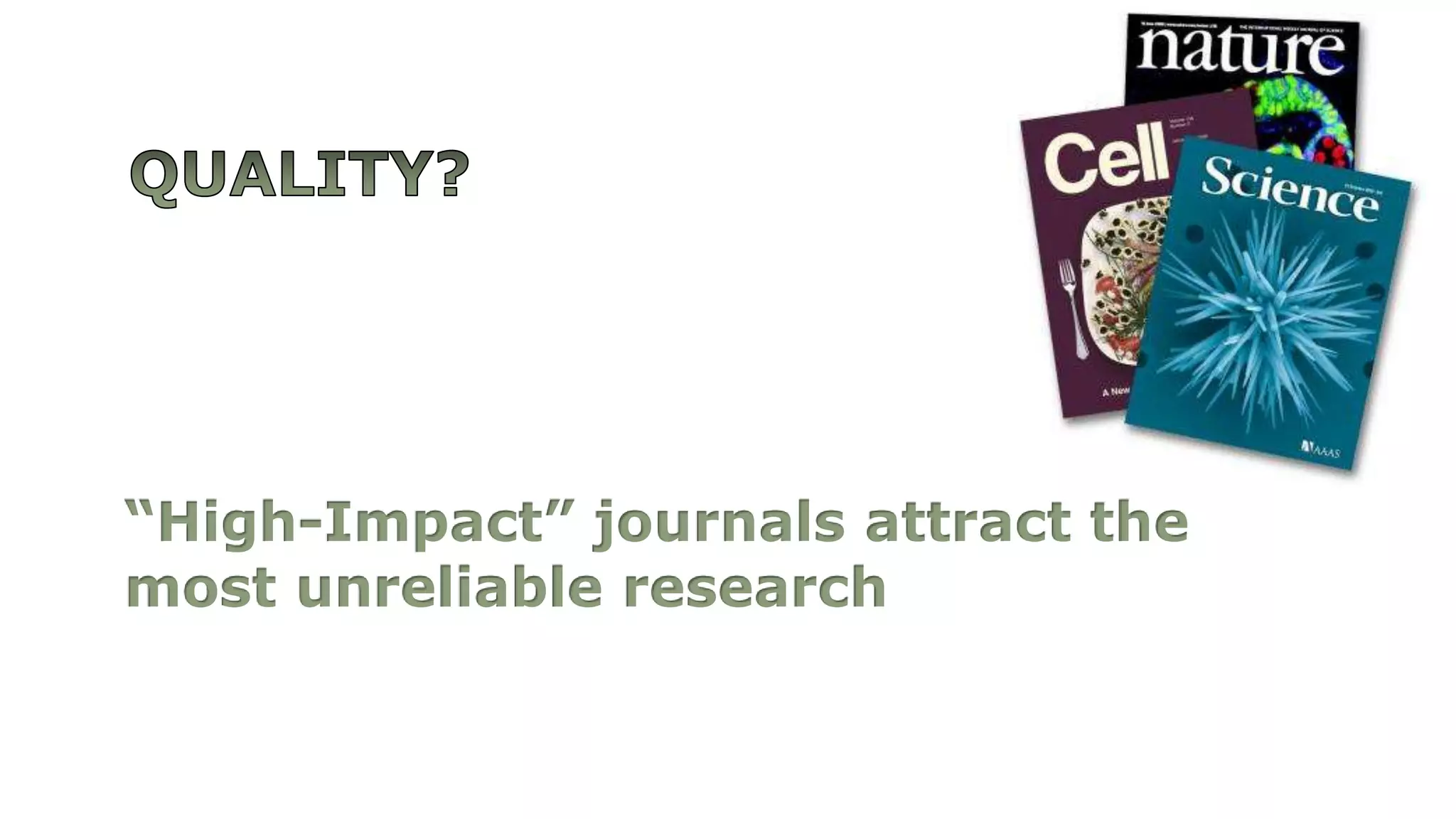
“High-Impact” journals attract the
most unreliable research
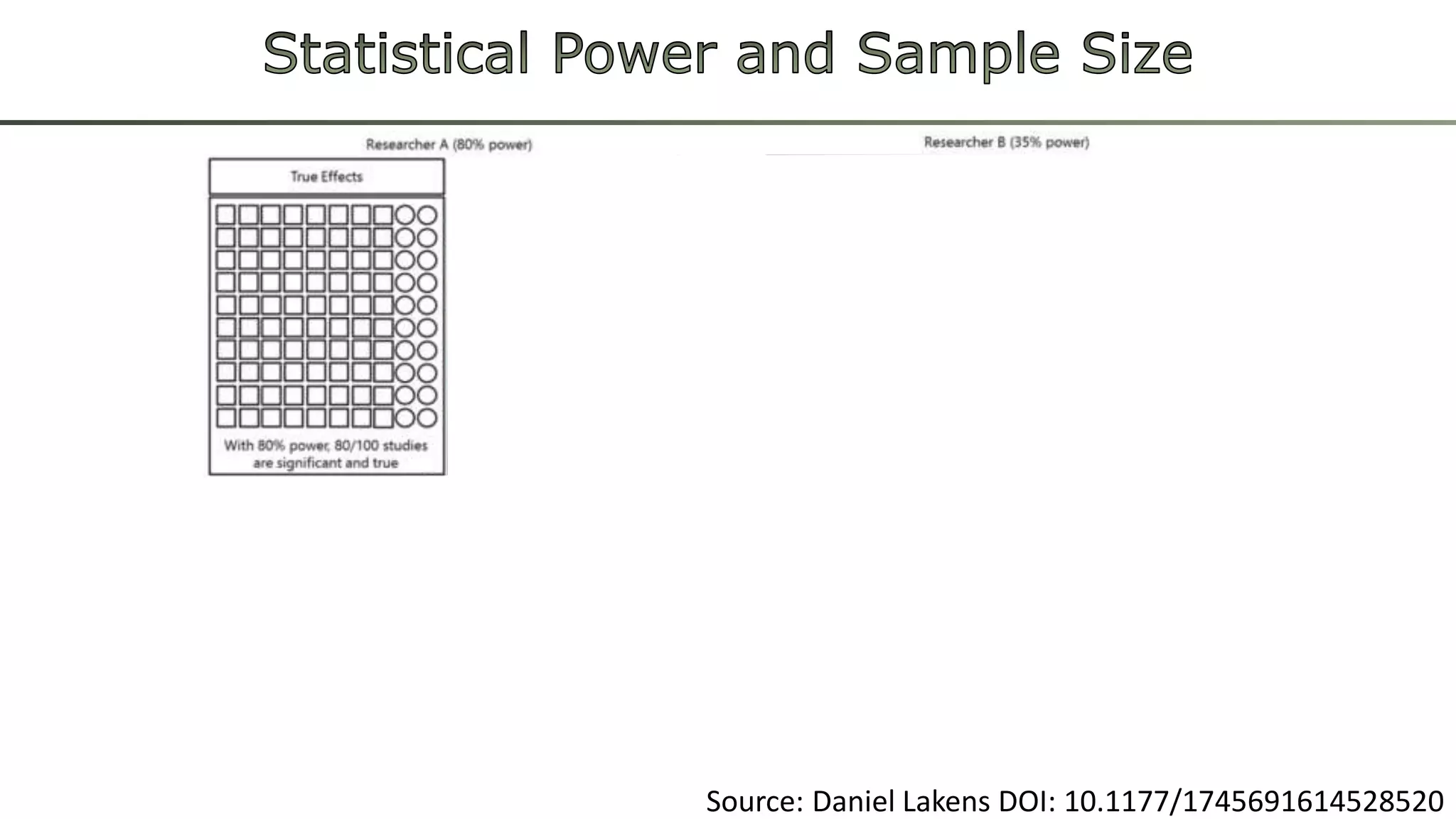
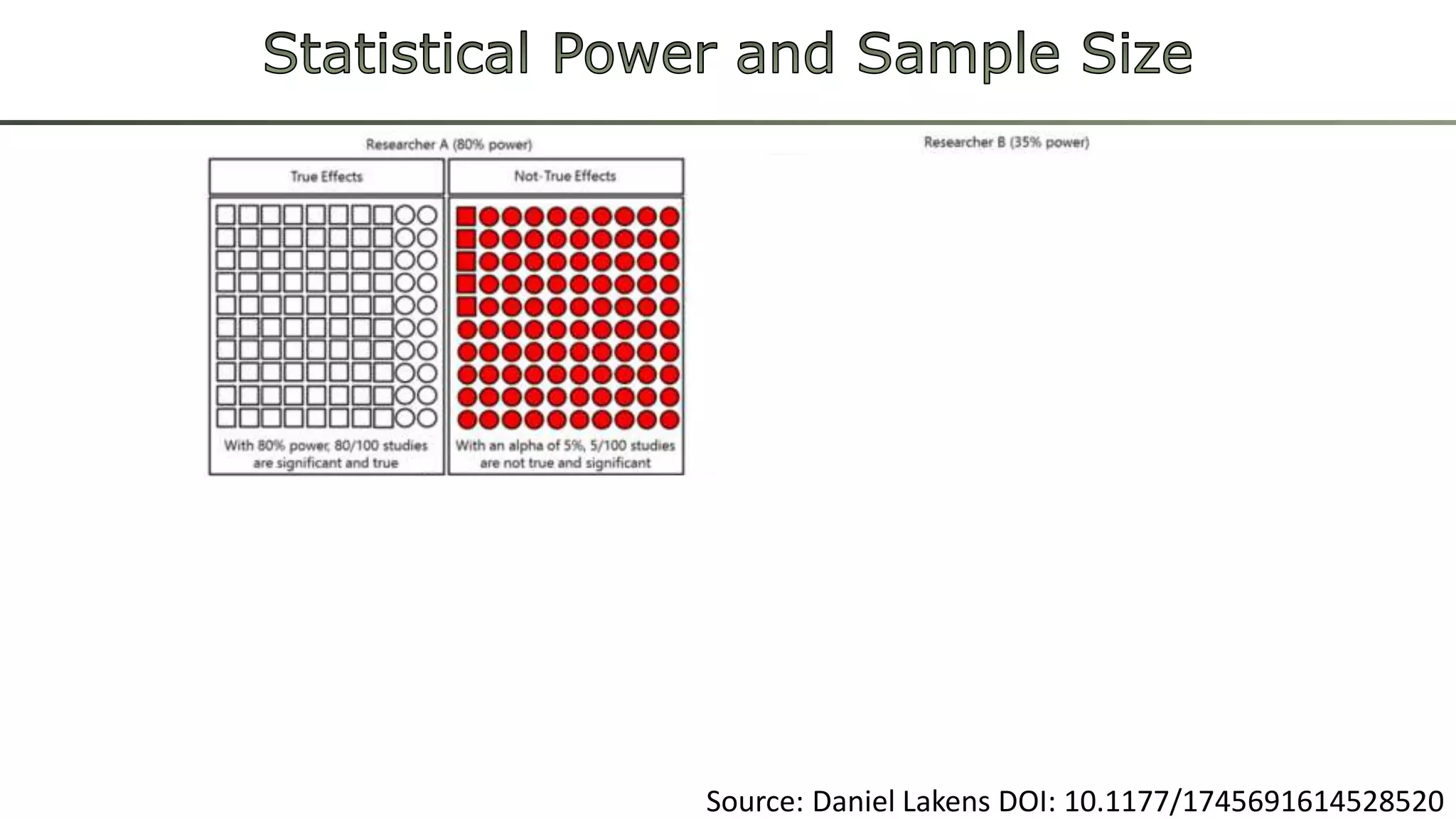
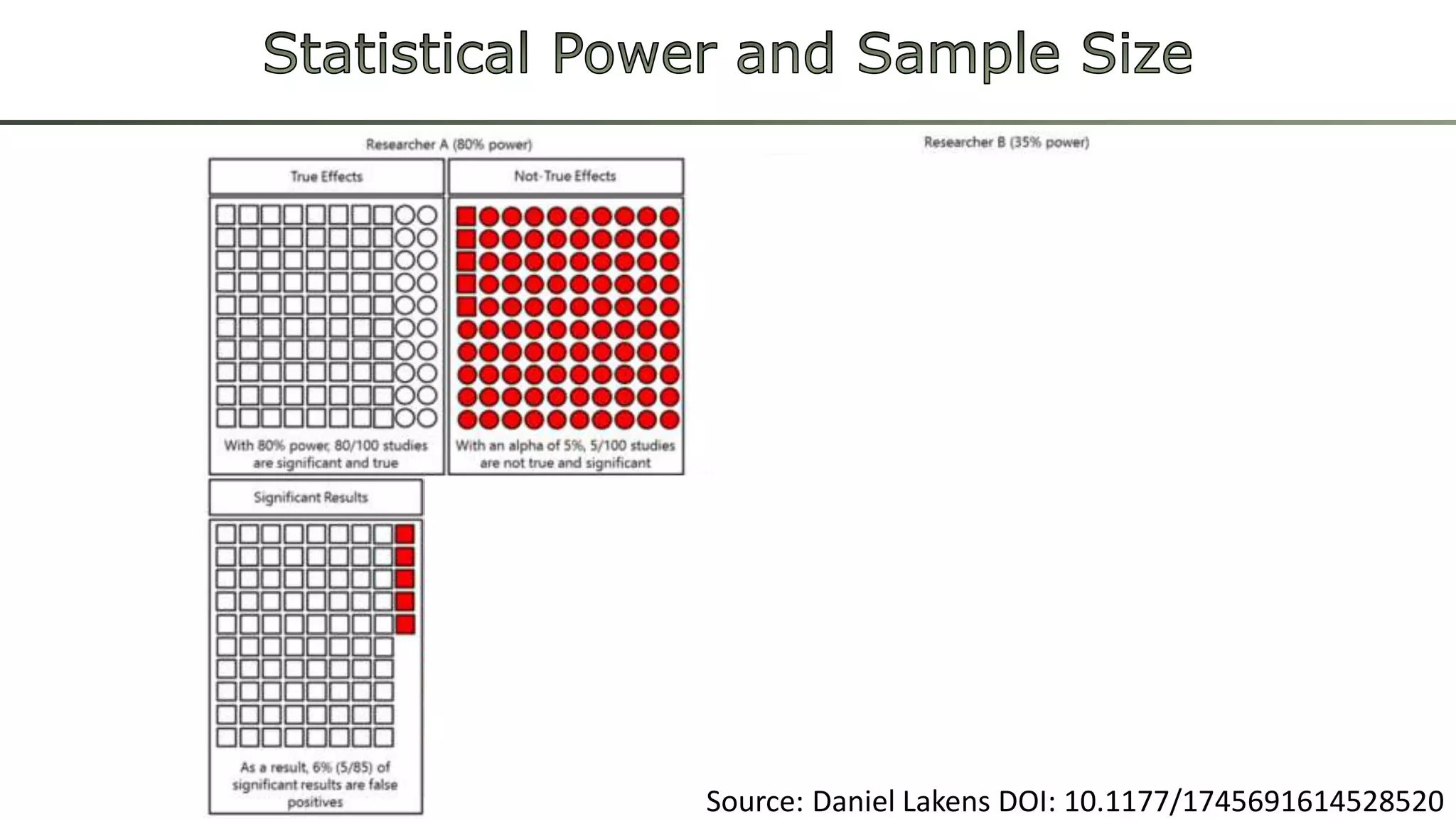
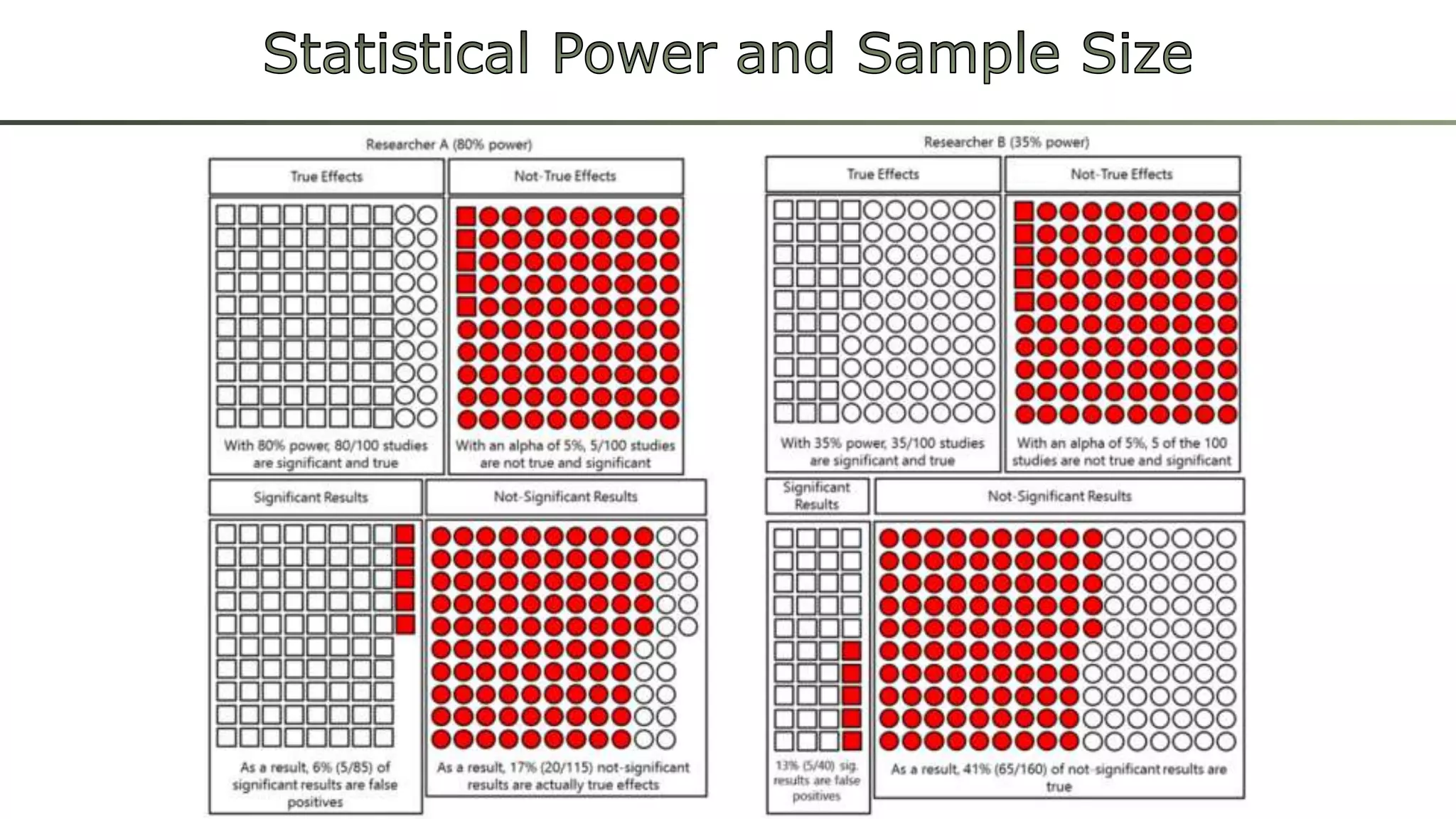
Source: Daniel Lakens DOI: 10.1177/1745691614528520
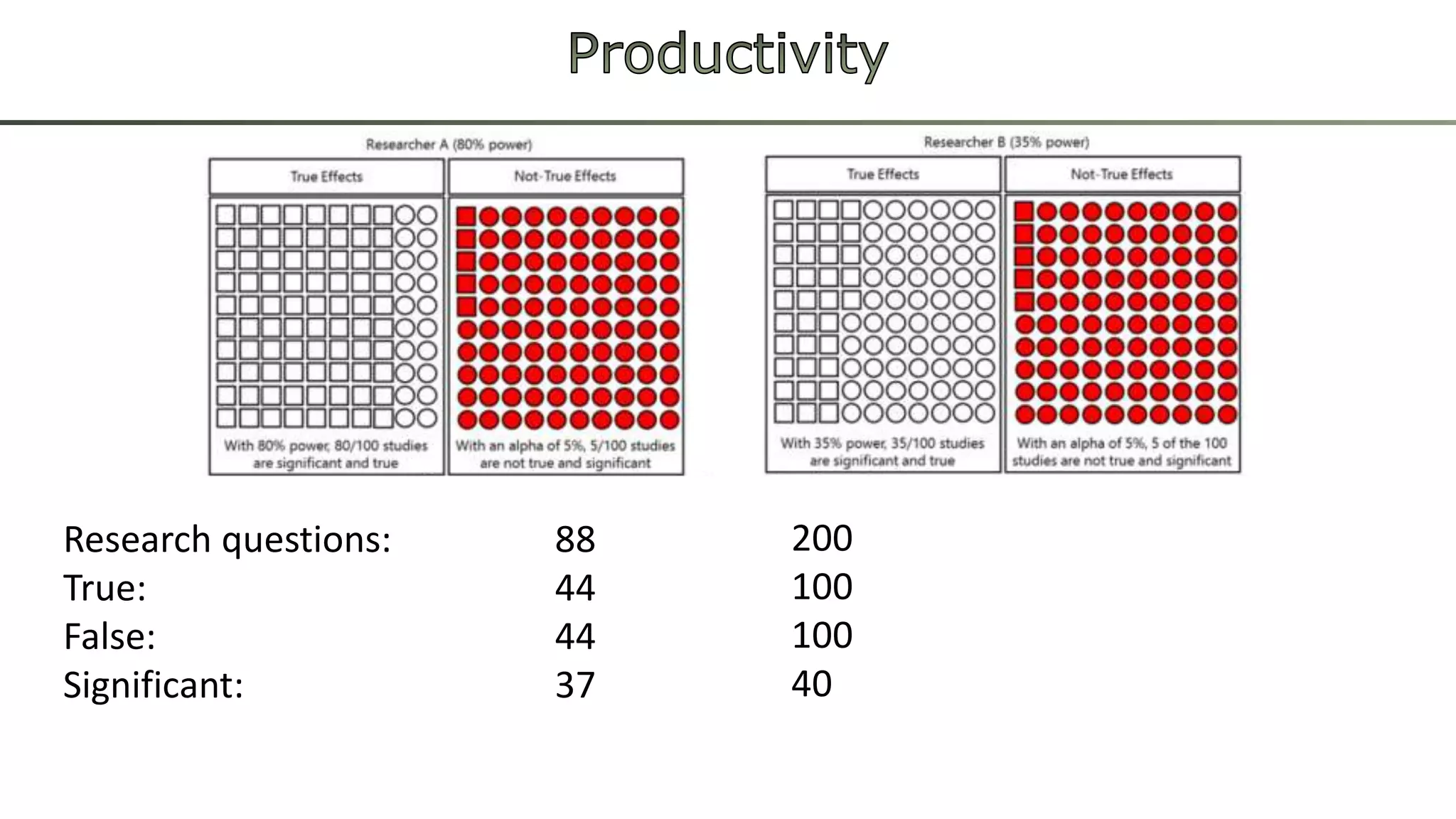
Research questions:
True:
False:
Significant:
200
100
100
40
88
44
44
37
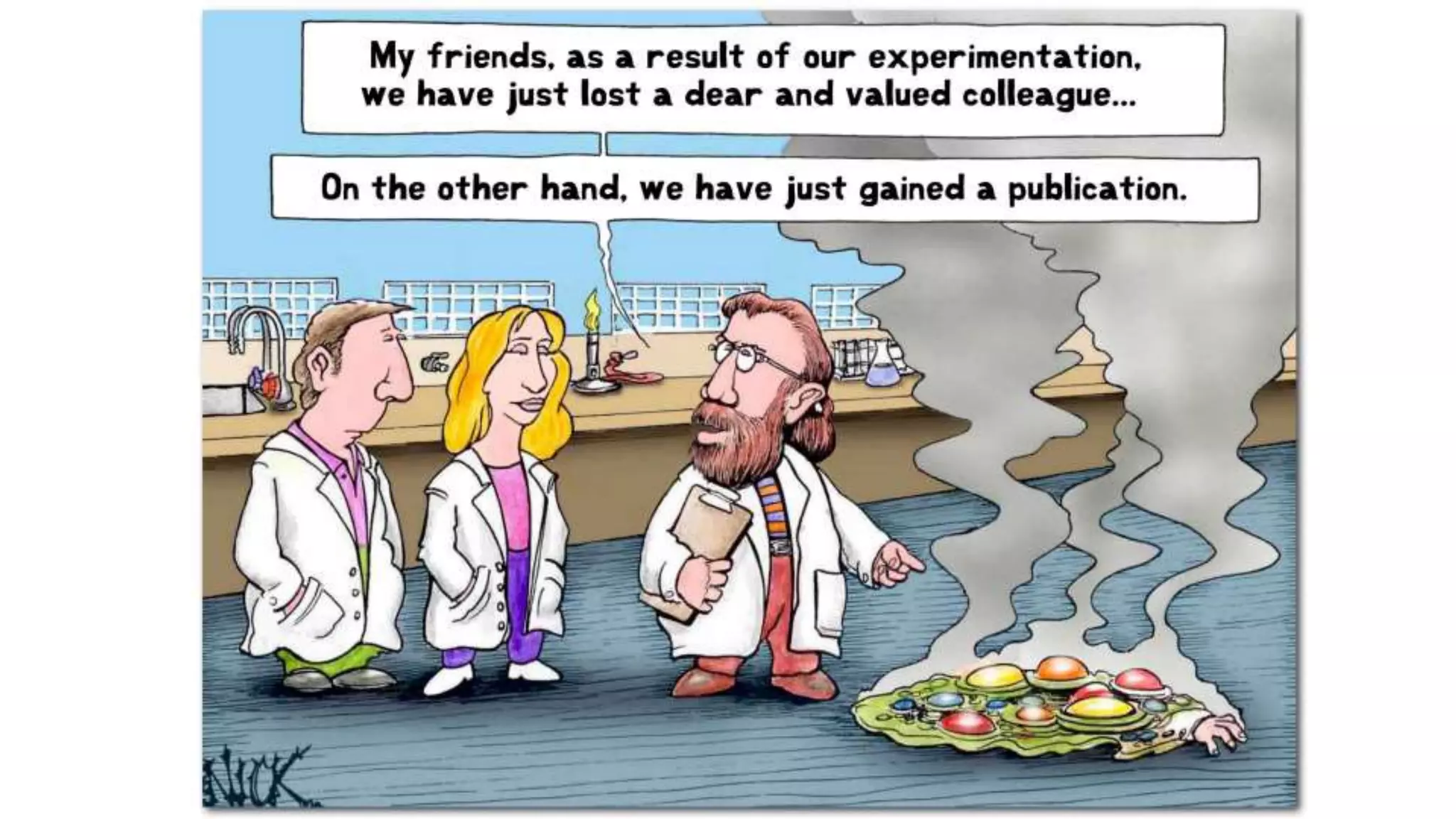
“Publish-or-Perish” disadvantages
meticulous scientists
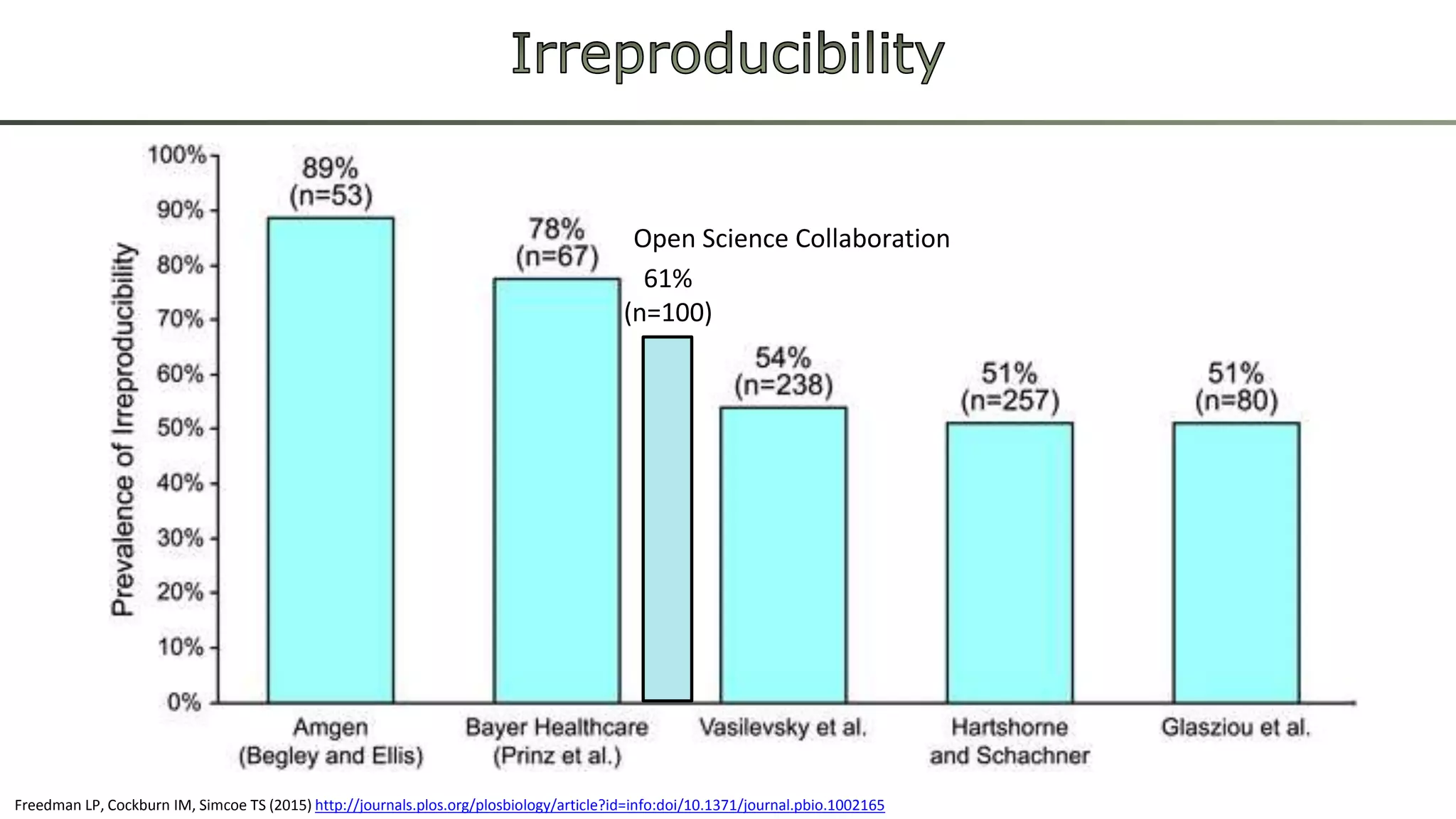
Freedman LP, Cockburn IM, Simcoe TS (2015) http://journals.plos.org/plosbiology/article?id=info:doi/10.1371/journal.pbio.1002165
61%
(n=100)
Open Science Collaboration
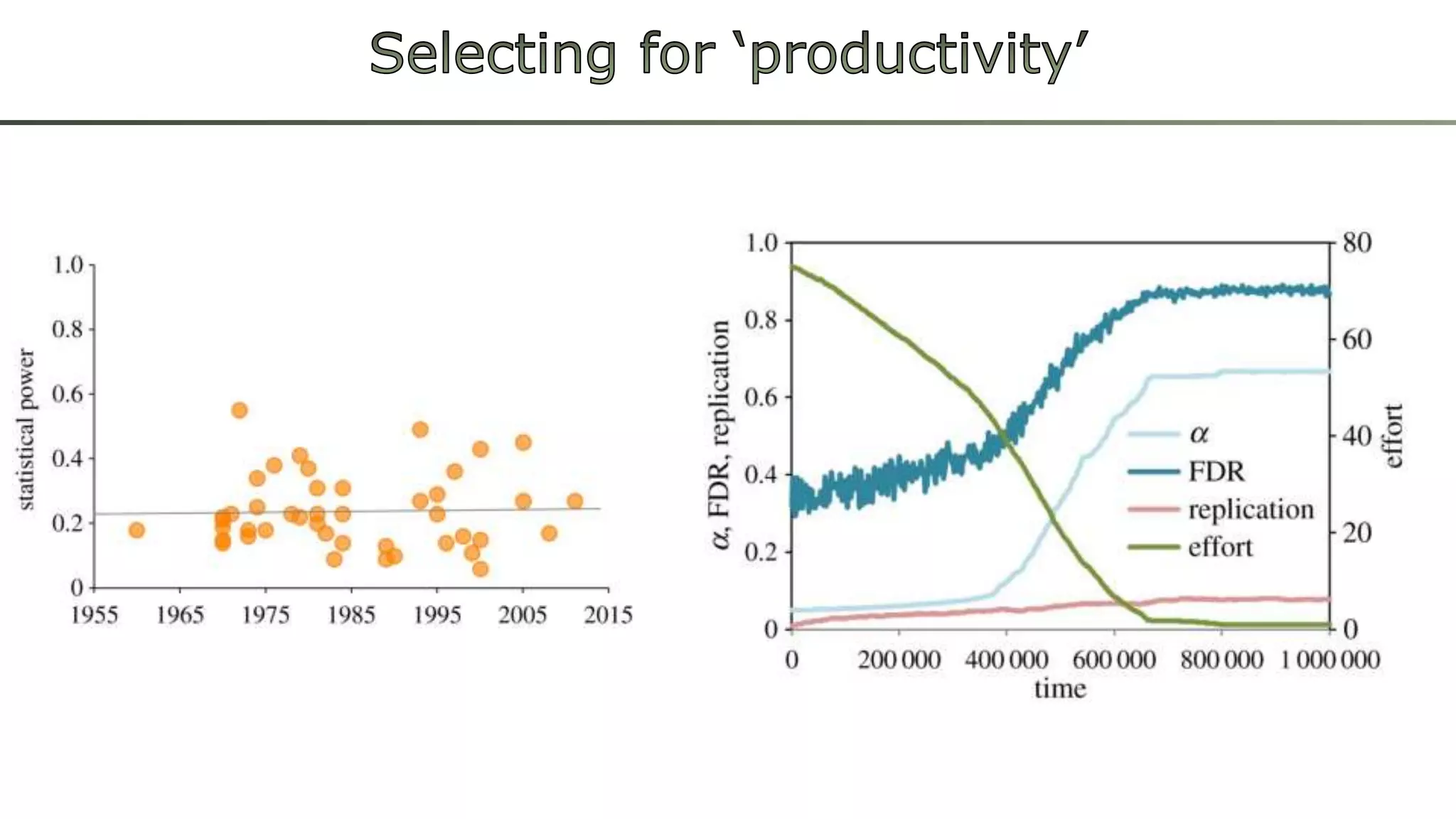
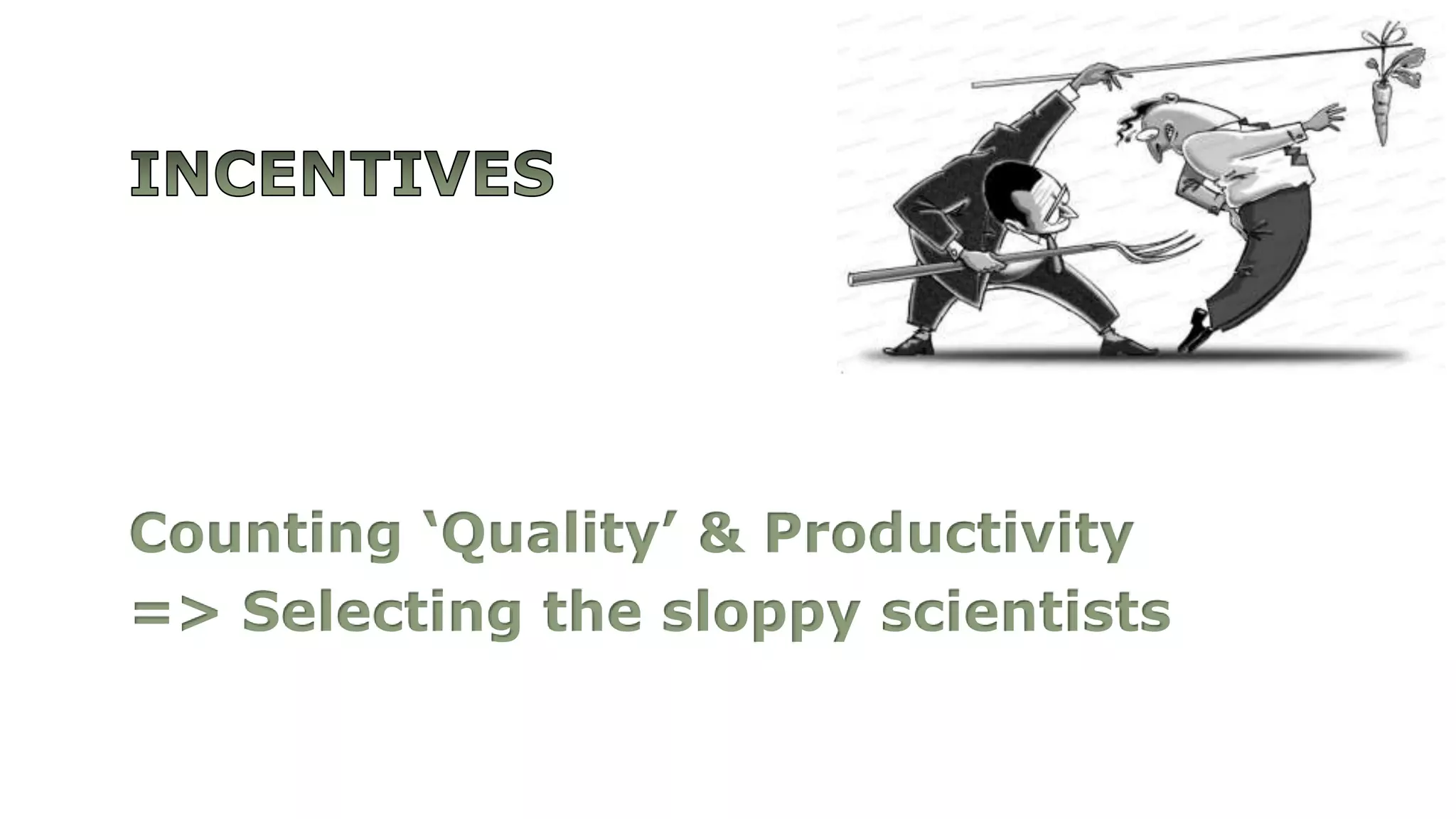
Counting ‘Quality’ & Productivity
=> Selecting the sloppy scientists
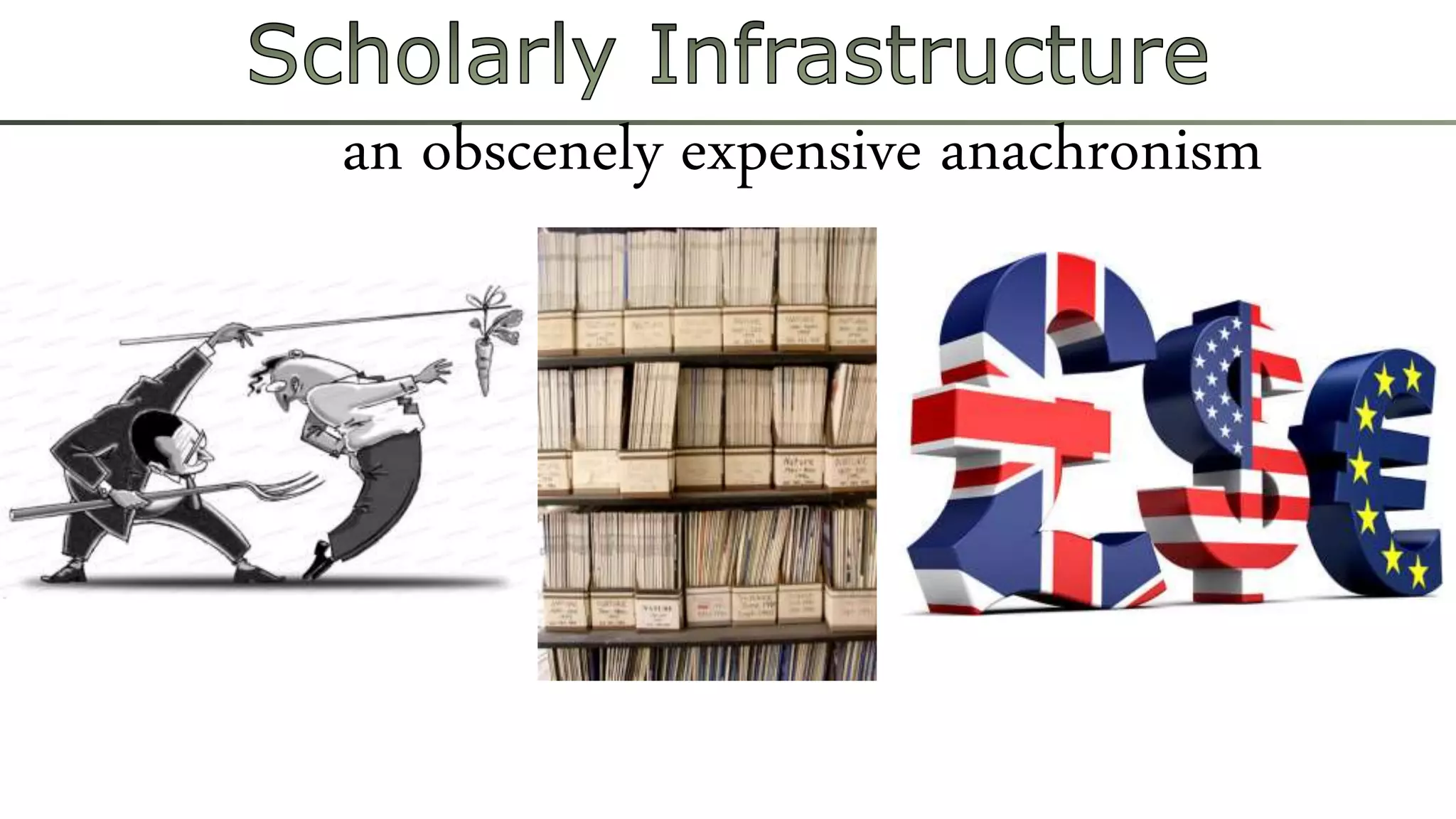
an obscenely expensive anachronism
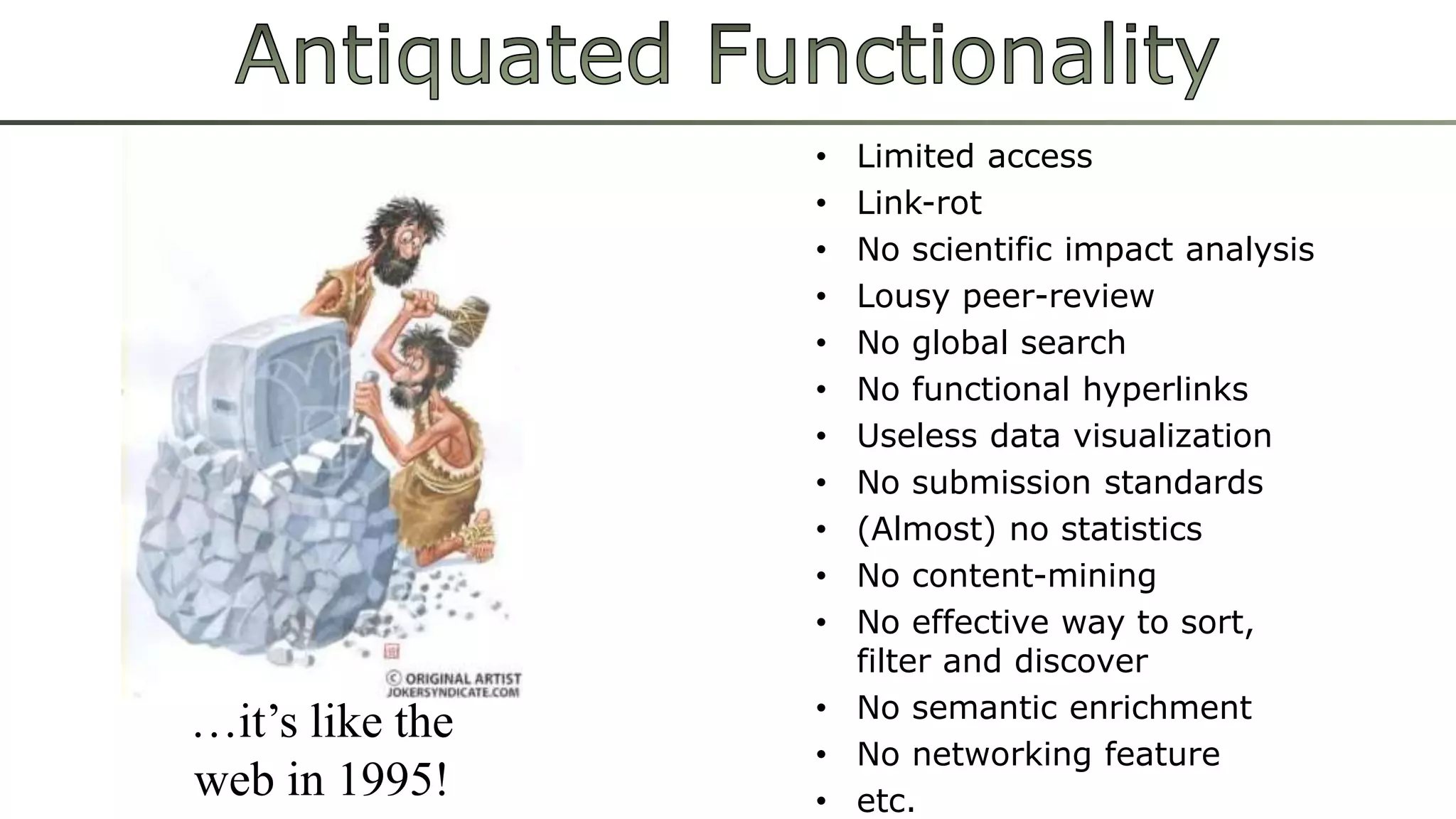
Dysfunctional scholarly literature
• Limited access
• Link-rot
• No scientific impact analysis
• Lousy peer-review
• No global search
• No functional hyperlinks
• Useless data visualization
• No submission standards
• (Almost) no statistics
• No content-mining
• No effective way to sort,
filter and discover
• No semantic enrichment
• No networking feature
• etc.
…it’s like the
web in 1995!
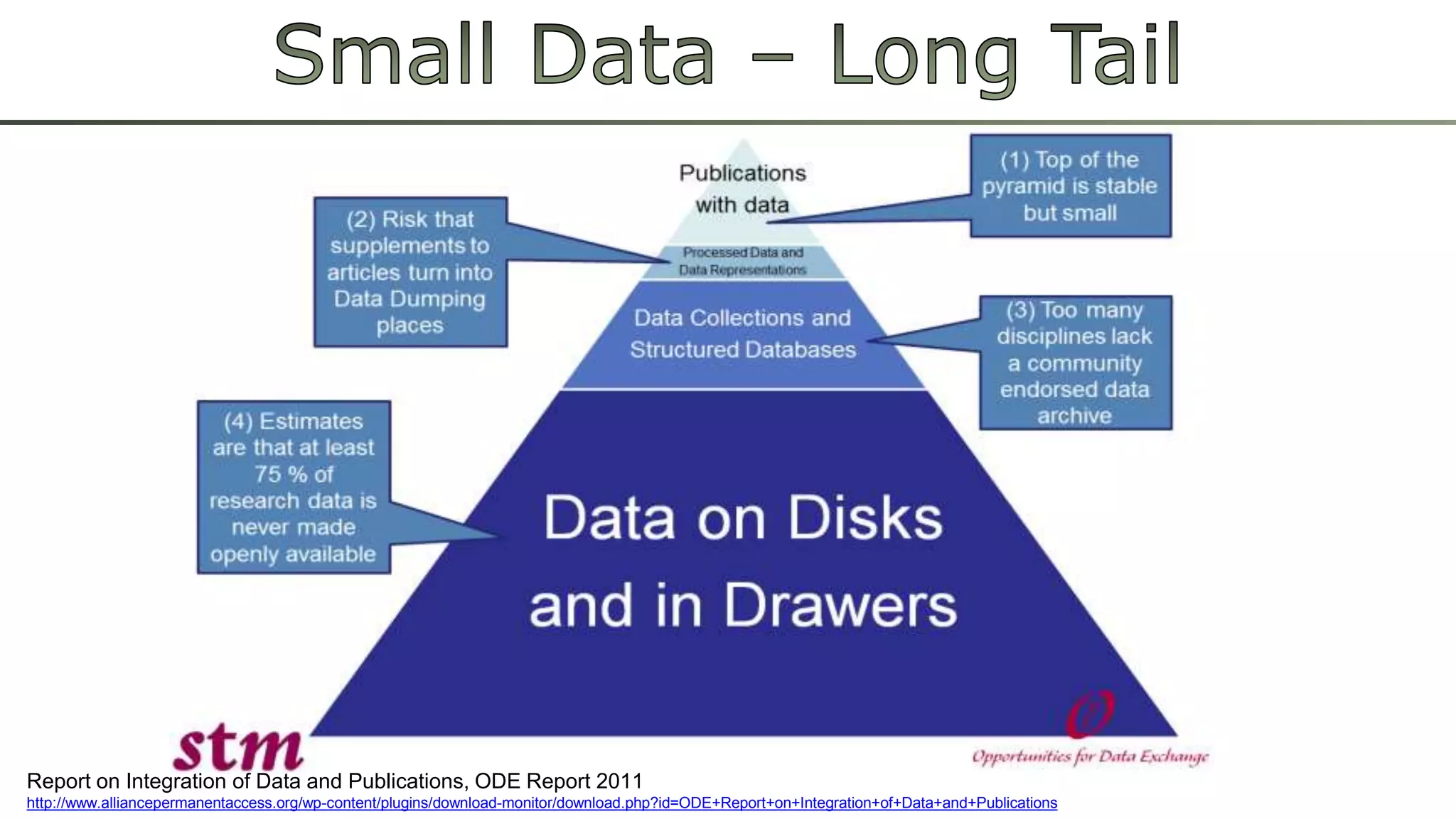
Scientific data in peril
Report on Integration of Data and Publications, ODE Report 2011
http://www.alliancepermanentaccess.org/wp-content/plugins/download-monitor/download.php?id=ODE+Report+on+Integration+of+Data+and+Publications
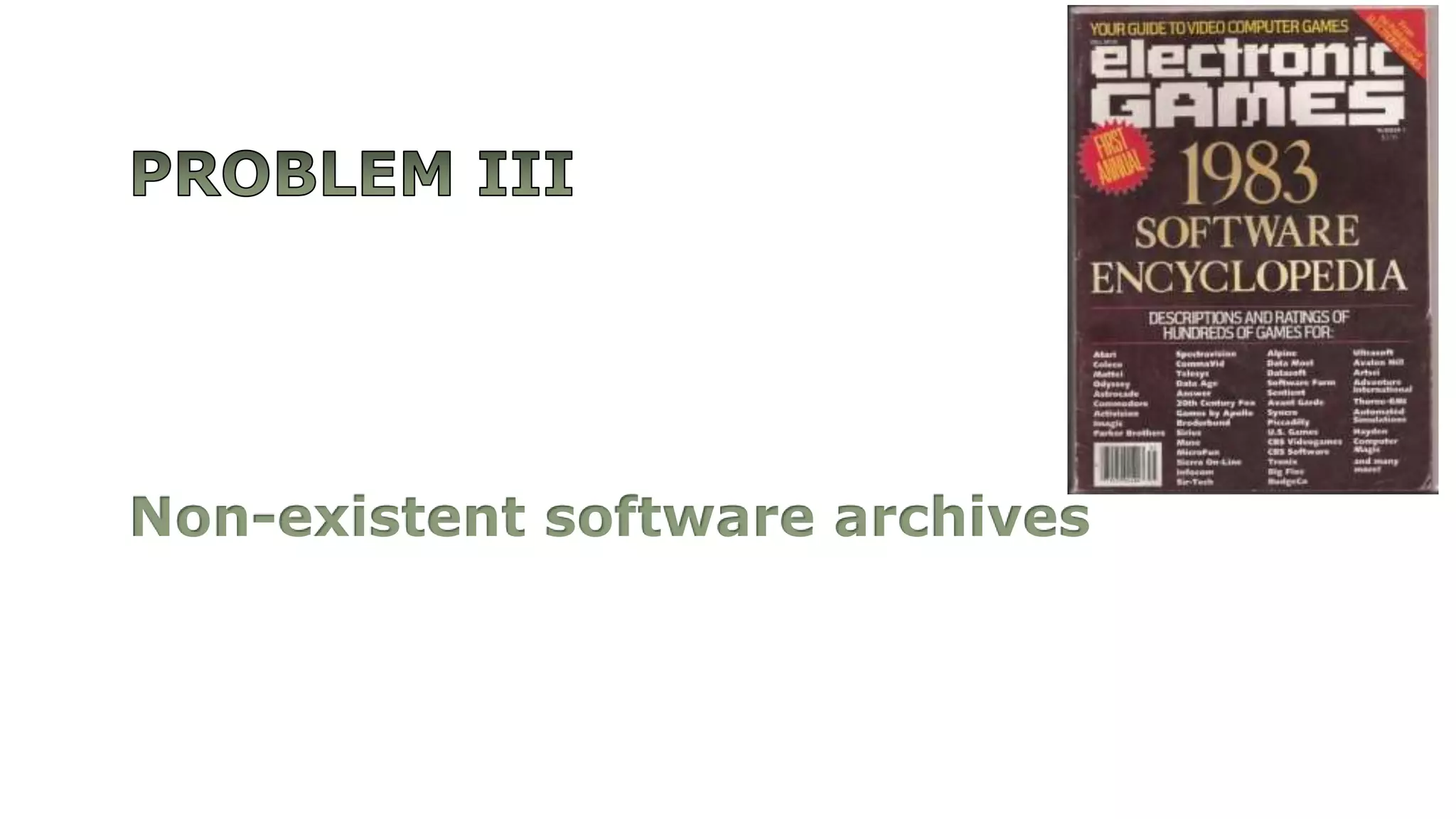
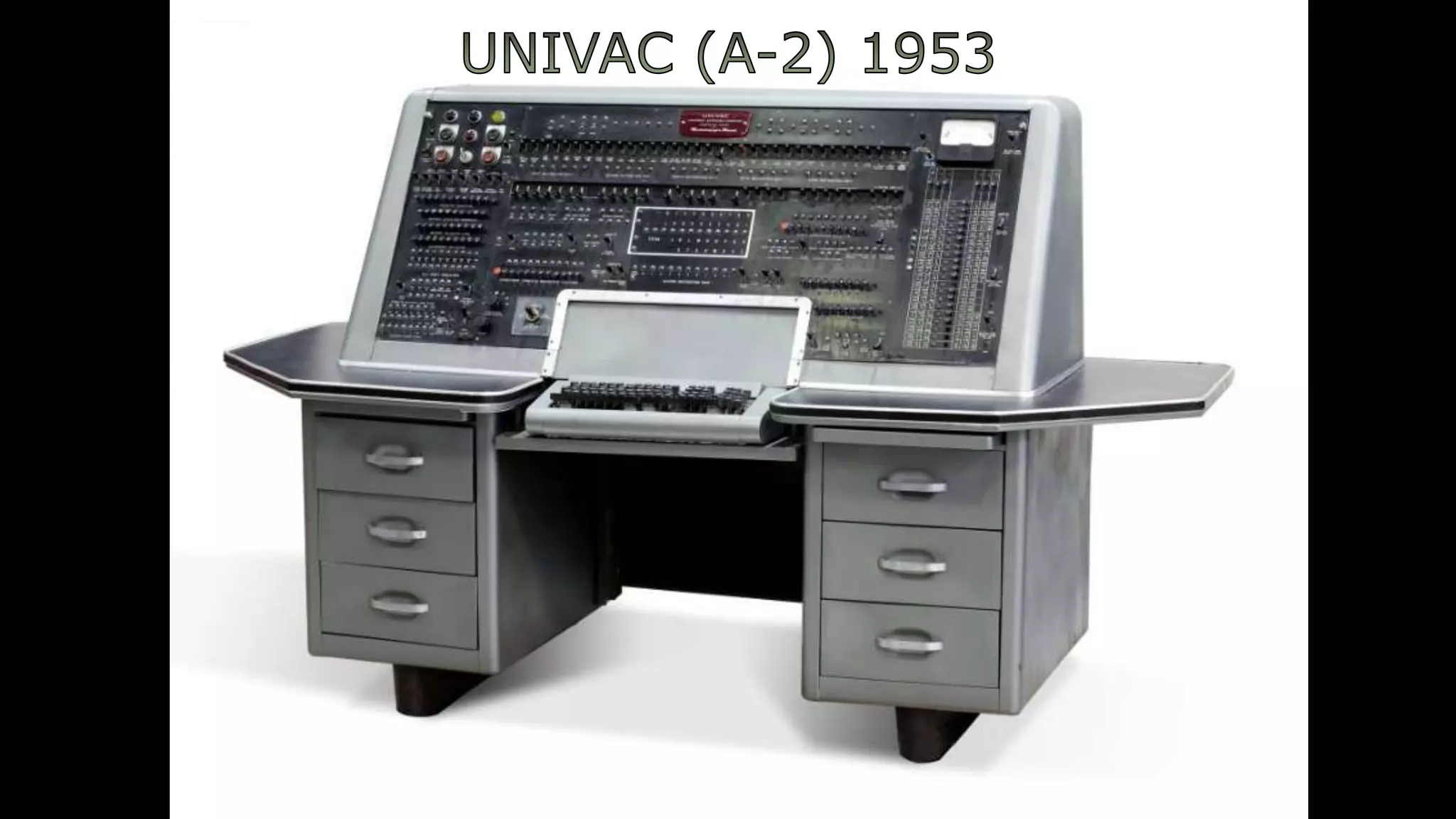
Non-existent software archives
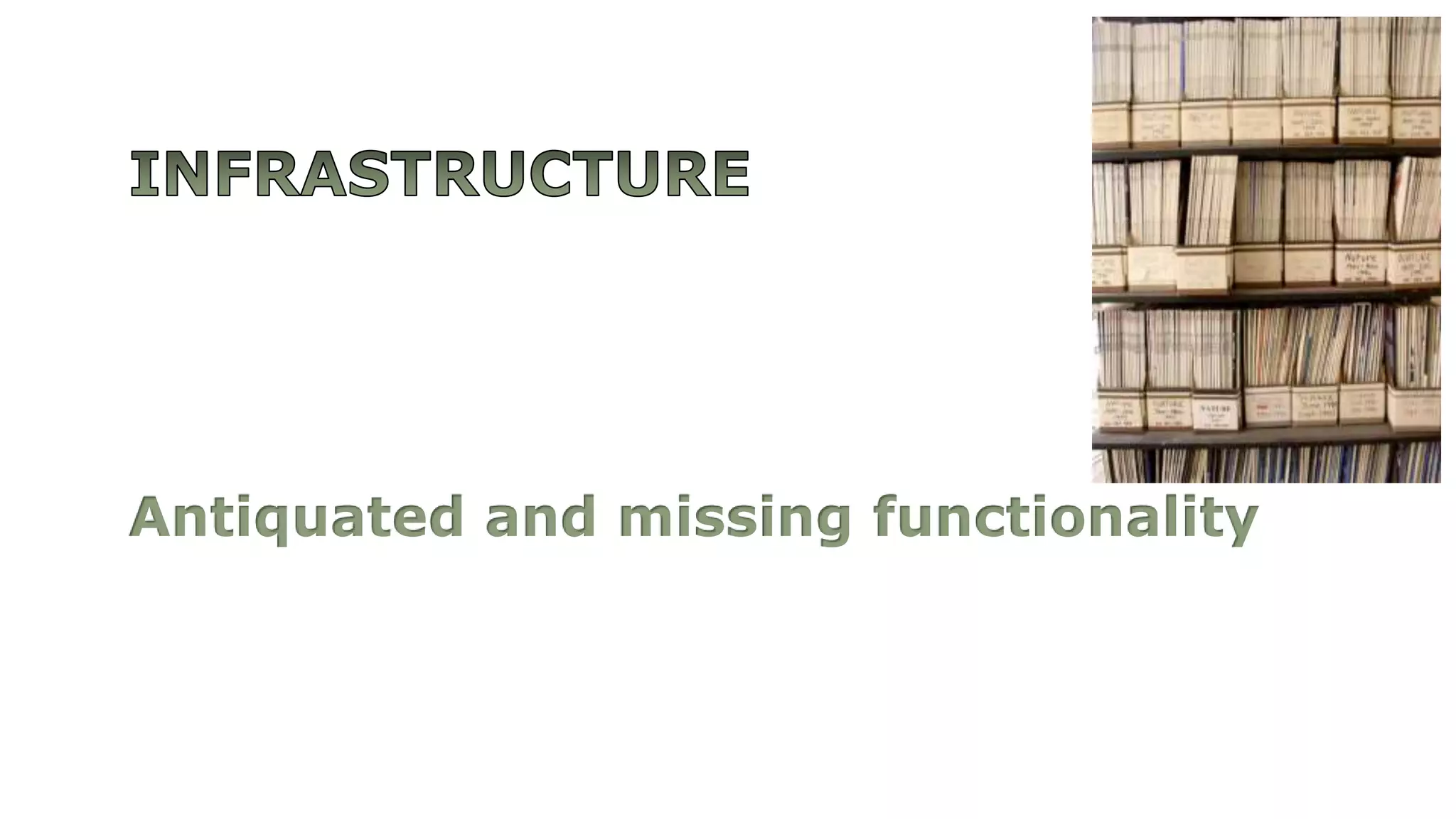
Antiquated and missing functionality
Costs[thousandUS$/article]
Legacy Modern
(Sources: Van Noorden, R. (2013). Open access: The true cost of science publishing. Nature 495, 426–9; Packer, A. L. (2010). The SciELO Open
Access: A Gold Way from the South. Can. J. High. Educ. 39, 111–126)
(SciELO
Ubiquity
Scholastica
ScienceOpen
PeerJ
F1000Research
Frontiers
etc.)
Wasting billions on a parasitic industry
The disaster that is our scholarly
infrastructure
“Pretty please be open!”
The Department of Psychology embraces the values of open science
and strives for replicable and reproducible research. For this goal we
support transparent research with open data, open material, and
pre-registrations. Candidates are asked to describe in what way they
already pursued and plan to pursue these goals.
Complete list of publications, including original research papers as first
author, senior author, impact points total and in the last 5 years, with
marked first and last-authorships, personal Scientific Citations Index
(SCI, h-Index according to Web of Science) for all publications.
versus
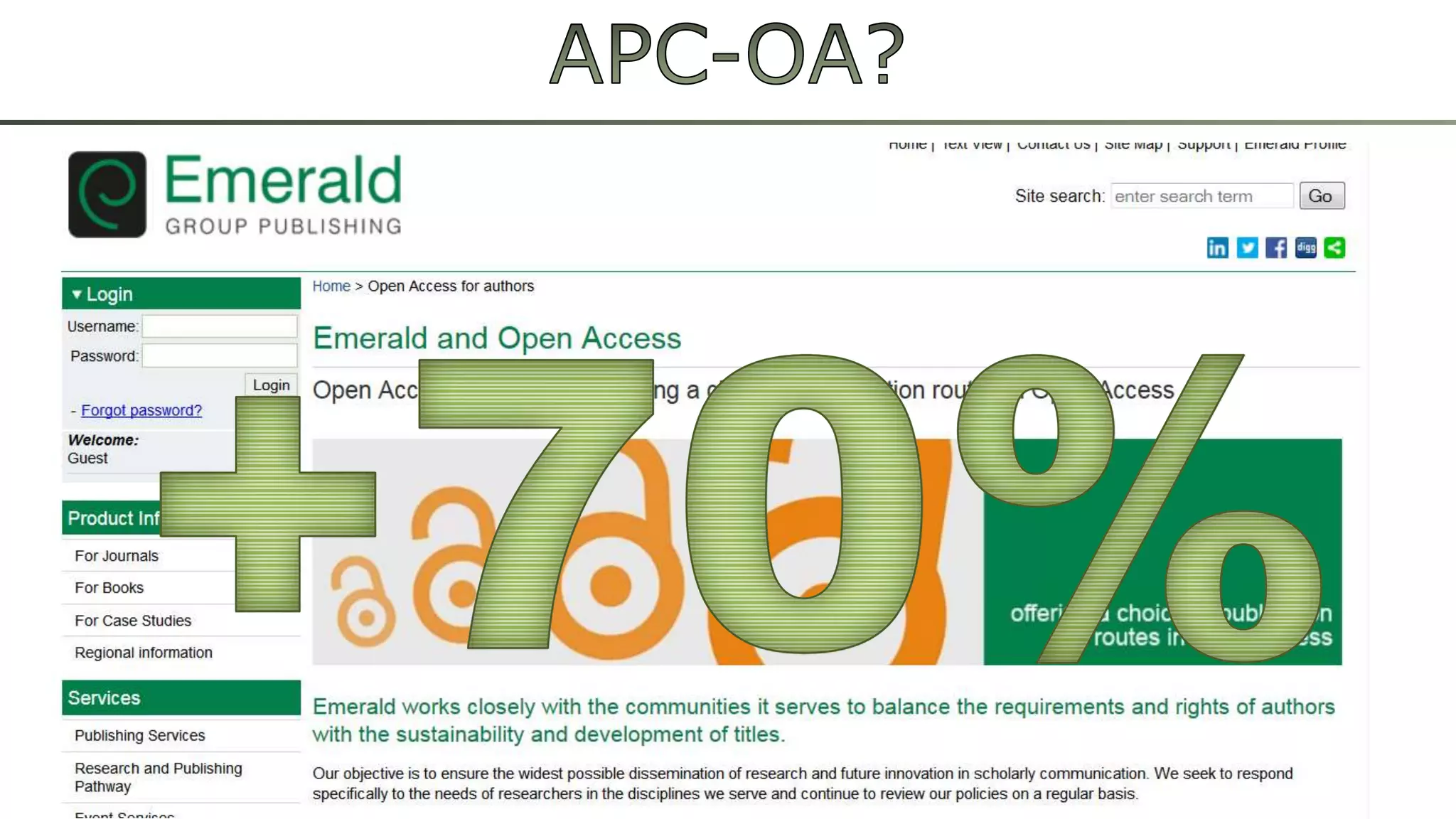
“The decision, based on market and competitor analysis, will bring Emerald’s
APC pricing in line with the wider market, taking a mid-point position amongst its
competitors.”
Emerald spokesperson
Save time and money (and make science
open by default as an added benefit)
(Sources: Van Noorden, R. (2013). Open access: The true cost of science publishing. doi:10.1038/495426a, Packer, A. L. (2010). The SciELO Open
Access: A Gold Way from the South. Can. J. High. Educ. 39, 111–126)
Potentialforinnovation:9.8bp.a.
Costs[thousandUS$/article]
Legacy SciELO
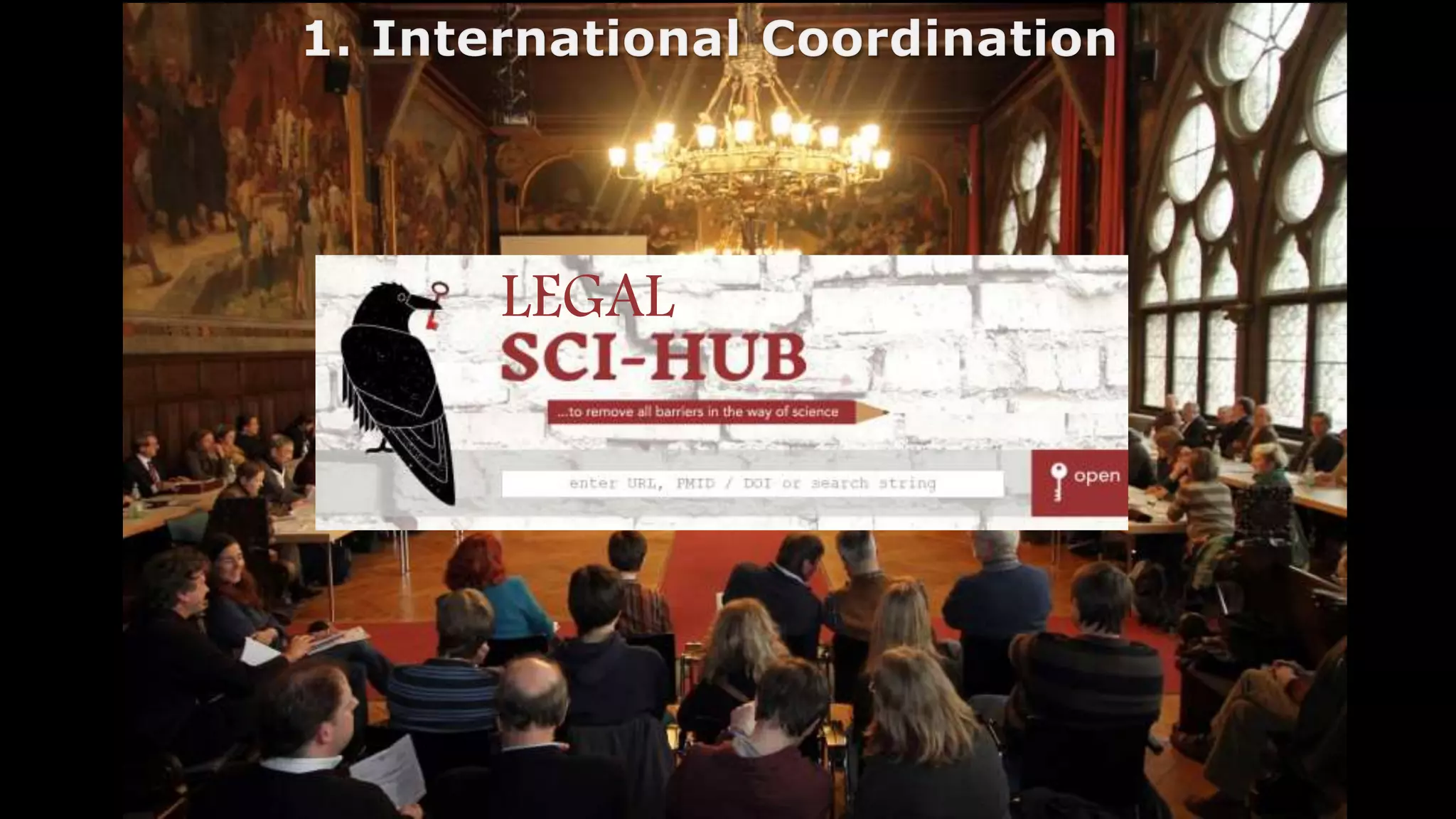
LEGAL
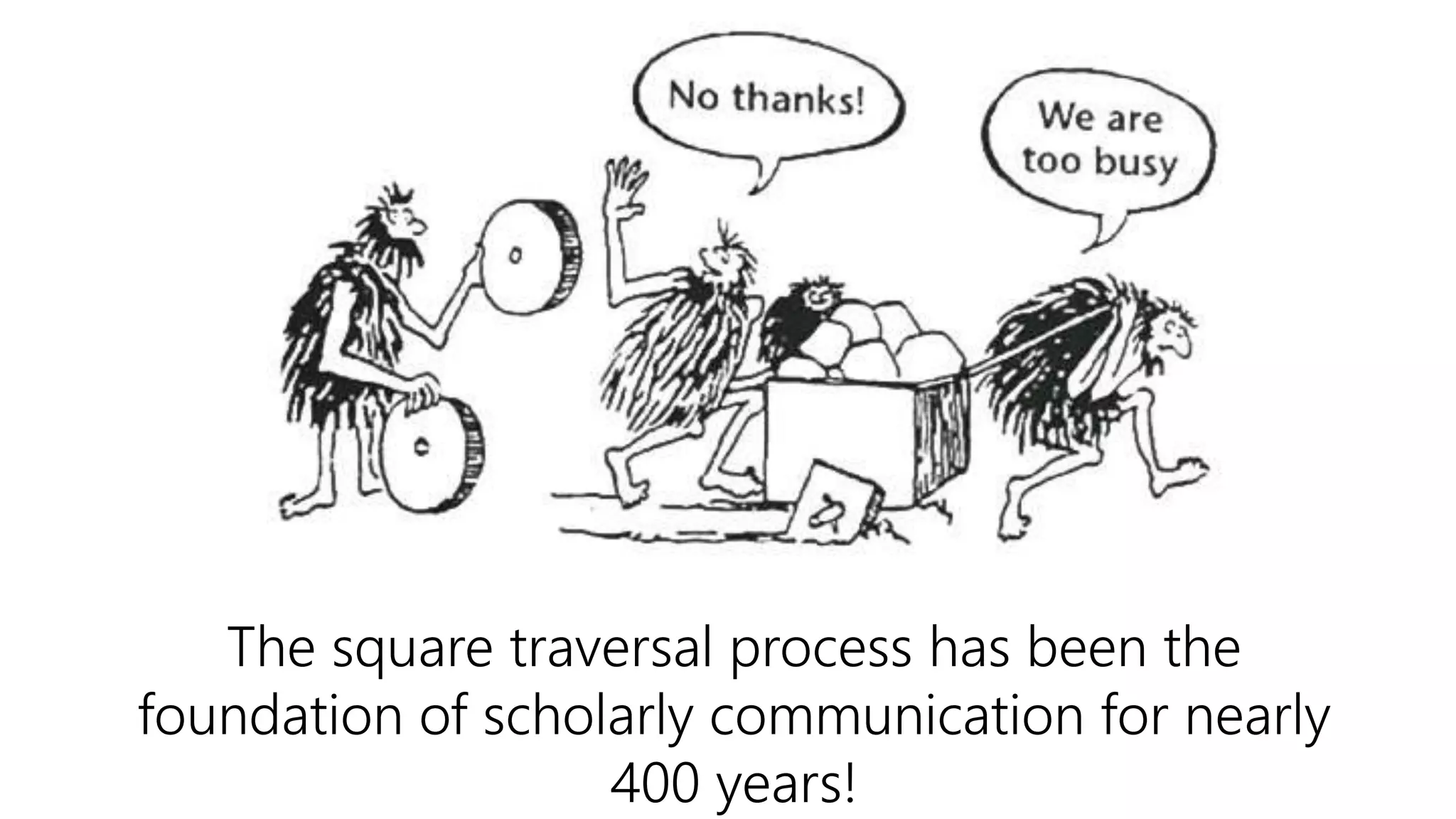
The square traversal process has been the
foundation of scholarly communication for nearly
400 years!

A replication crisis in the making: how we reward unreliable science