Pharmacotherapy of Septic ShockMunzur Morshed, Pharm D. candidate 2011Arnold & Marie Schwartz College of Pharmacy and Health SciencesNorth Shore- Long Island Jewish Health SystemInfectious Diseases-Advanced Pharmacy Practice
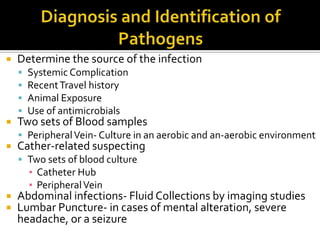
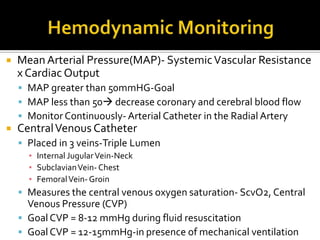
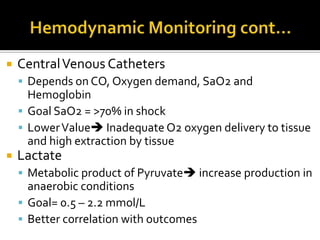
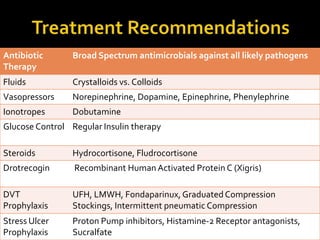
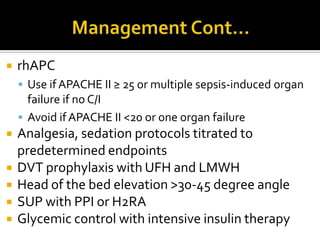
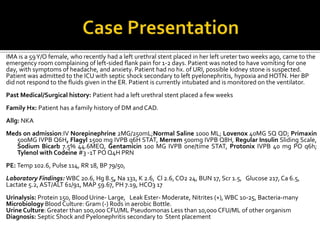
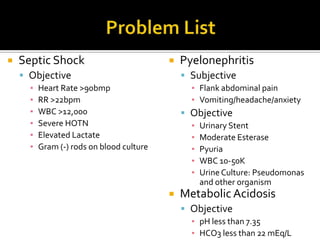
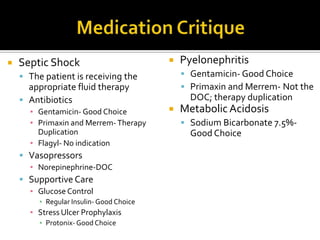
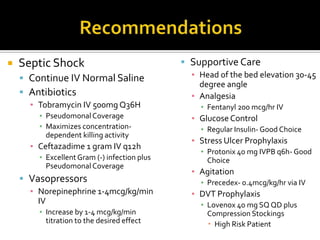
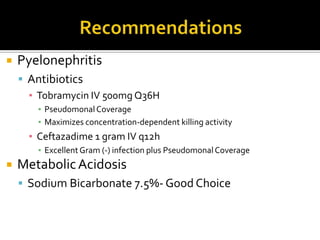
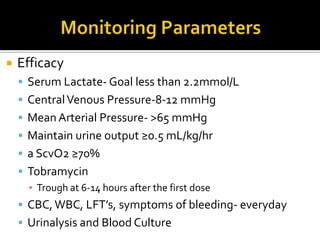
Case PresentationIMA is a 59 Y/O female, who recently had a left urethral stent placed in her left ureter two weeks ago, came to the emergency room complaining of left-sided flank pain for 1-2 days. Patient was noted to have vomiting for oneday, with symptoms of headache, and anxiety. Patient had no hx. of URI, possible kidney stone is suspected. Patient was admitted to the ICU with septic shock secondary to left pyelonephritis, hypoxia and HOTN. Her BPdid not respond to the fluids given in the ER. Patient is currently intubated and is monitored on the ventilator. Past Medical/Surgical history: Patient had a left urethral stent placed a few weeks Family Hx: Patient has a family history of DM and CAD.Allg: NKAMeds on admission:IV Norepinephrine 2MG/250mL;Normal Saline 1000 ML; Lovenox 40MG SQ QD; Primaxin 500MG IVPB Q6H, Flagyl 1500 mg IVPB q6H STAT, Merrem 500mg IVPB Q8H, Regular Insulin Sliding Scale, Sodium Bicarb 7.5% 44.6MEQ, Gentamicin 100 MG IVPB one/time STAT, Protonix IVPB 40 mg PO q6h;  Tylenol with Codeine #3 -1T PO Q4H PRN PE: Temp 102.6, Pulse 114, RR 18, BP 79/50,Laboratory Findings: WBC 20.6, Hg 8.5, Na 131, K 2.6,  Cl 2.6, CO2 24, BUN 17, Scr 1.5,   Glucose 217, Ca 6.5,  Lactate 5.2, AST/ALT 61/91, MAP 59.67, PH 7.19, HCO3 17Urinalysis: Protein 150, Blood Urine- Large,   Leuko Ester- Moderate, Nitrites (+), WBC 10-25, Bacteria-manyMicrobiology Blood Culture: Gram (-) Rods in aerobic Bottle.  Urine Culture: Greater than 100,000 CFU/ML Pseudomona Less than 10,000 CFU/ML of other organismDiagnosis: Septic Shock and Pyelonephritis secondary to  Stent placement
IntroductionWhat is shock?
Life threatening state, decrease in tissue perfusion of blood supply
Characterized by lack of nutrient and O2 rich blood to the organs resulting in inadequate perfusion
Vital Signs
HR < 20 or > 150 bpm
SBP < 80 mmHg, decrease by at least 40mmHg
MAP < 60 mmHg
DBP > 120 mmHg
RR > 35 breaths/min
pH < 7.1 or >7.7
low urine output (<0.5ml/kg/hr ) and confusion or loss of consciousnessTypes of ShockHypovolemic Shock
Loss of blood volume (plasma + RBCs)
External-surgery or trauma
Internal-GI bleeding
Cardiogenic Shock
Hearts inability to pump appropriate amount of blood
Decreased Cardiac Output
Septic Shock- Discussed in detail
Obstructive Shock
Subtype of Hypovolemic Shock
Increase pressure of the jugular vein distended jugular vein
Neurogenic Shock
Injury of the spine
Loss of cardiac nerve fibers from the sympathetic nerve fibers at T1-T4 resulting in profound bradycardia
Diaphoretic Skin
Anaphylactic Shock
Angioedema like reaction
Large Eruptions or bumpy skin
Edema, Massive Swelling
Constricted Airways; Swollen throat; Breathlessness and cough
Weak or rapid pulseWhat is Septic Shock?Massive Systemic infection associated with arterial hypotension that is refractory to fluid resuscitation
It is a systemic inflammatory Response syndrome
Criteria must include the following (2 out of 4)
WBC >12K or <4K or >10% bands
Temperature > 38C or < 36C
Heart rate > 90bpm
Respiratory Rate > 22 breaths/min
PaCO2 < 32mmHg
Systemic Infection- Any etiology
Bacterial- Presence of Bacteria in the bloodstream
Fungemia- Presence of Fungus in the BloodstreamEpidemiologyDefined by site of infectionRespiratory Tract (21%-68%)Intraabdominal Space (14%-22%)Urinary Tract (14%-18%)PathogensGram-Positive bacteria (40% of patients)Gram-Negative bacteria (38% of patients)Fungi (17%)
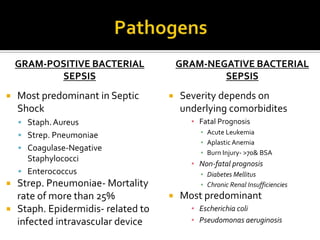
PathogensGram-Positive Bacterial SepsisGram-Negative Bacterial SepsisMost predominant in Septic ShockStaph. Aureus Strep. Pneumoniae Coagulase-Negative StaphylococciEnterococcus Strep. Pneumoniae- Mortality rate of more than 25%Staph. Epidermidis- related to infected intravascular deviceSeverity depends on underlying comorbiditesFatal PrognosisAcute LeukemiaAplastic AnemiaBurn Injury- >70& BSANon-fatal prognosisDiabetes MellitusChronic Renal InsufficienciesMost predominantEscherichia coliPseudomonas aeruginosis
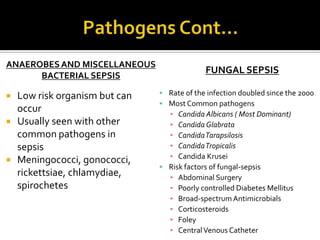
Pathogens Cont…Anaerobes and miscellaneous bacterial Sepsis Fungal SepsisLow risk organism but can occurUsually seen with other common pathogens in sepsisMeningococci, gonococci, rickettsiae, chlamydiae, spirochetesRate of the infection doubled since the 2000
Most Common pathogens
Candida Albicans ( Most Dominant)
Candida Glabrata
Candida Tarapsilosis
Candida Tropicalis
Candida Krusei

Major Case Presentation Septic Shock

Editor's Notes

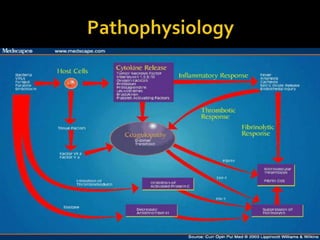
  • #10 Once the bacteria invades the host, inflammatory mediators are produced which causes damage to the host tissue and activation of leukocytes. The balance to control the inflammatory mediators are lost and therefore a systemic inflammatory response develops which in turn converts the infection into sepsis, severe sepsis or septic shock. The key proinflammatory mediator is the tumor necrosis factor-α (TNF-α),interleukin-1 (IL-1), and interleukin-6 (IL-6) . The TNF-áa) is considered the primary mediator of sepsis. Once the TNFáa) is activated, it leads to the activation of IL-1 and IL-6. The TNFá also contributes to the production of Thrombaxane A2, and prostaglandins, which causes vascular endothelial damage, capillary leak, vasodilation, microvascular thrombi formation. Which in turn lead to disseminated intravascular coagulation and acute kidney injury.