MacroEconomicsDiagrams and Definitions
What is macroeconomics?Macroeconomics is the study of a national economy.
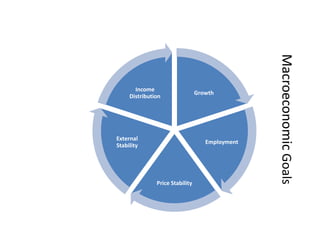
Macroeconomic Goals
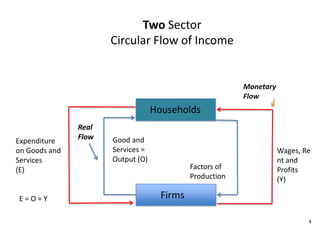
Two Sector Circular Flow of IncomeMonetary FlowHouseholdsRealFlowGood and Services = Output (O)Expenditure on Goods and Services(E)Wages, Rent and Profits(Y)Factors of ProductionFirmsE = O = Y4
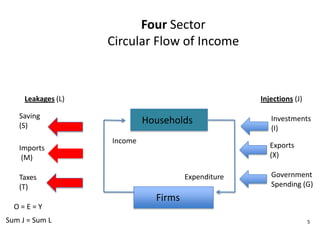
Four Sector Circular Flow of IncomeLeakages (L)Injections (J)Saving (S)HouseholdsInvestments(I)IncomeExports(X)Imports (M)GovernmentSpending (G)ExpenditureTaxes(T)FirmsO = E = Y5Sum J = Sum L
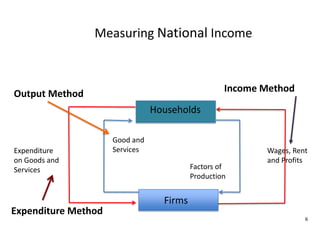
Measuring National IncomeIncome MethodOutput MethodHouseholdsGood and ServicesWages, Rent and ProfitsExpenditure on Goods and ServicesFactors of ProductionFirmsExpenditure Method6
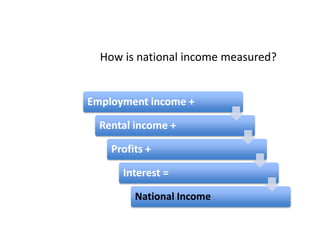
How is national income measured?
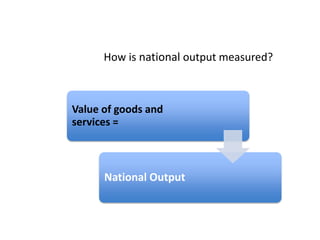
How is national output measured?
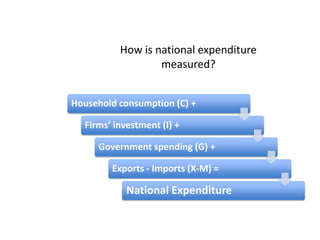
How is national expenditure measured?
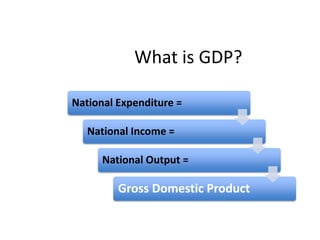
What is GDP?
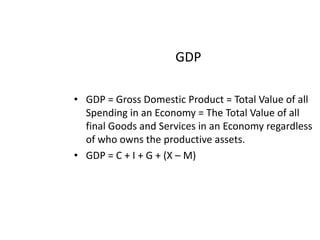
GDPGDP = Gross Domestic Product = Total Value of all Spending in an Economy = The Total Value of all final Goods and Services in an Economy regardless of who owns the productive assets.GDP = C + I + G + (X – M)
GNPGNP = Gross National Product = Total Income Earned by a nation’s factors of production regardless of where the assets are located
Real GDPReal GDP = Nominal GDP adjusted for inflation
Calculating Real GDPReal GDP = Nominal GDP of year measured
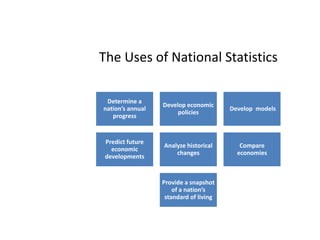
The Uses of National Statistics
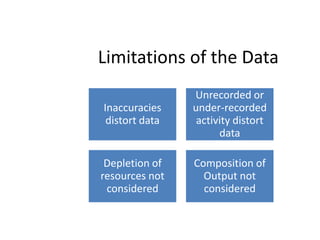
Limitations of the Data
What is economic development?Economic Development is a multidimensional concept that includes poverty reduction, provision of education, health care and law and order, civil liberties and civic participation.
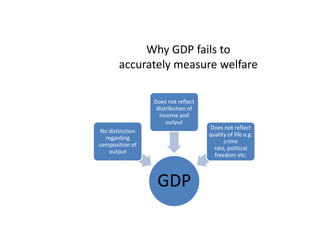
Why GDP fails to accurately measure welfare
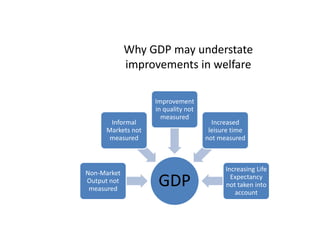
Why GDP may understate improvements in welfare
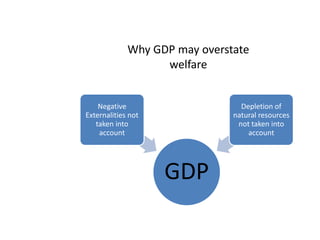
Why GDP may overstate welfare
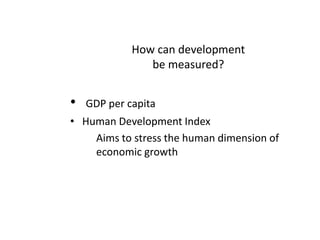
How can development be measured?GDP per capitaHuman Development Index	Aims to stress the human dimension of economic growth
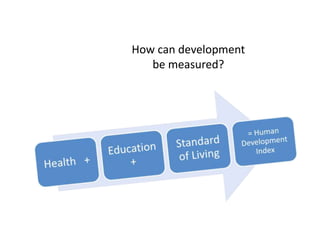
How can development be measured?
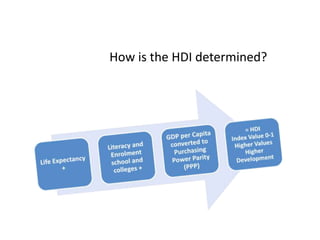
How is the HDI determined?
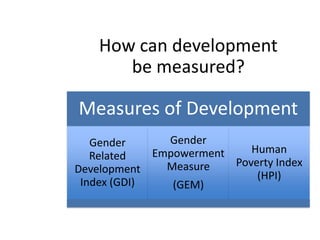
How can development be measured?
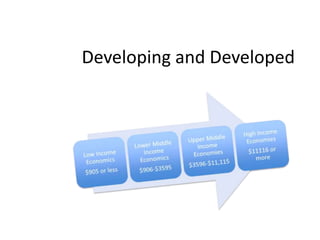
Developing and Developed
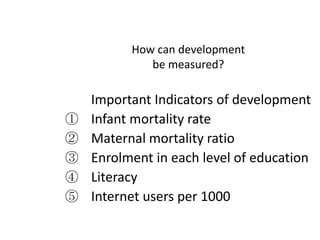
How can development be measured?Important Indicators of developmentInfant mortality rateMaternal mortality ratioEnrolment in each level of educationLiteracy Internet users per 1000
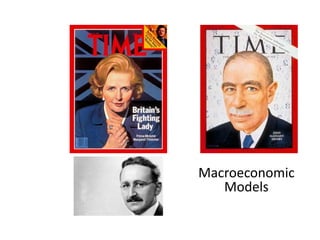
Macroeconomic Models
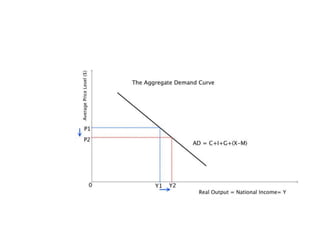
What is aggregate demand (AD)?Aggregate Demand is the aggregate (total) spending on goods and service in a period of time at a given price level.
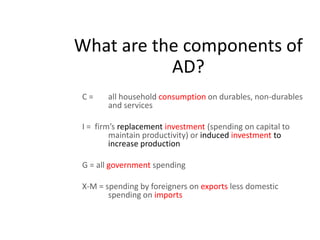
What are the components of AD?C =	all household consumption on durables, non-durables and servicesI =  firm’s replacement investment(spending on capital to maintain productivity) or induced investment to increase productionG = all government spending X-M = spending by foreigners on exports less domestic spending on imports
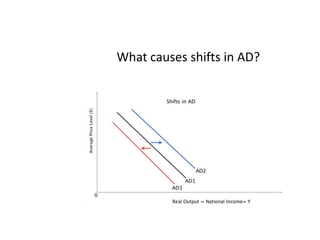
What causes shifts in AD?
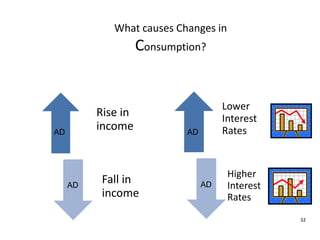
What causes Changes in Consumption?ADADADAD32
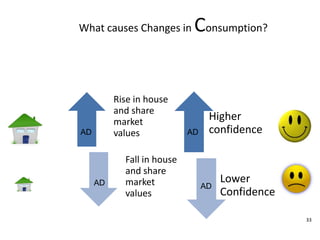
What causes Changes in Consumption?  ADADADAD33
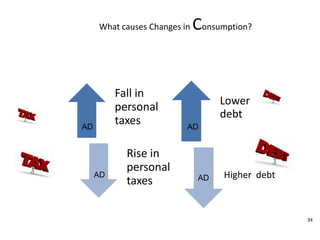
What causes Changes in Consumption? ADADADAD34
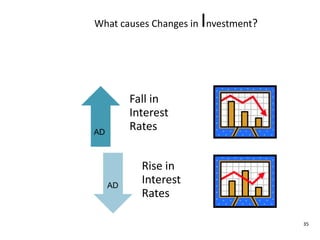
What causes Changes in Investment?ADAD35
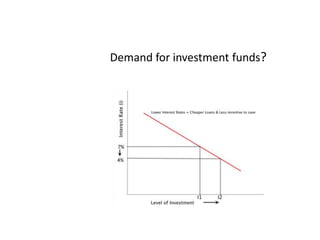
Demand for investment funds?
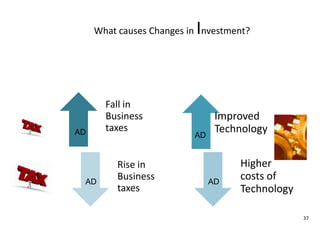
What causes Changes in Investment? ADADADAD37
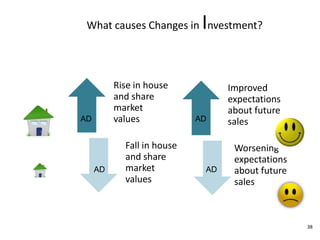
What causes Changes in Investment?  ADADADAD38
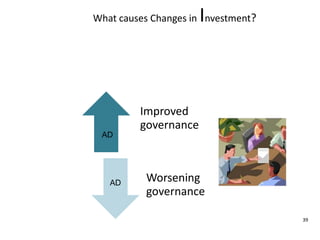
What causes Changes in Investment?ADAD39
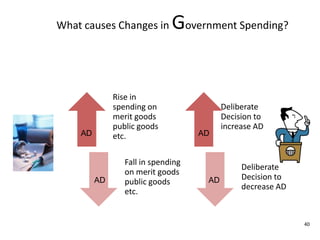
What causes Changes in Government Spending? ADADADAD40
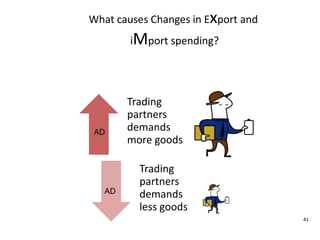
What causes Changes in Export and iMport spending?ADAD41
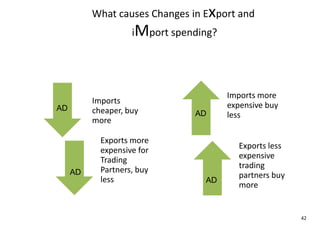
What causes Changes in Export and iMport spending?ADADADAD42
What is aggregate supply (AS)?Aggregate(total) Supply isamount of goods and services that all industries will produce at a given price level.
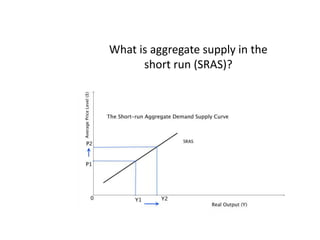
What is aggregate supply in the short run (SRAS)?
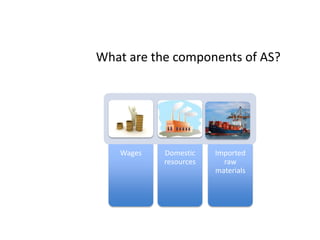
What are the components of AS?
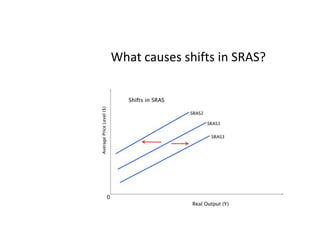
What causes shifts in SRAS?
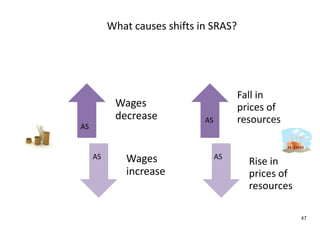
What causes shifts in SRAS? ASASASAS47
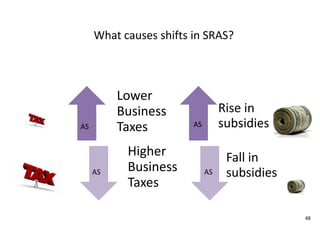
What causes shifts in SRAS? ASASASAS48
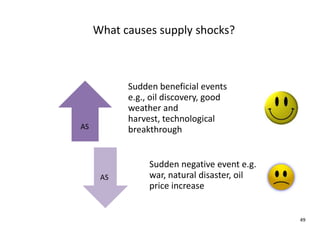
What causes supply shocks? ASAS49
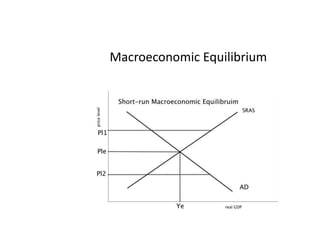
Macroeconomic Equilibrium
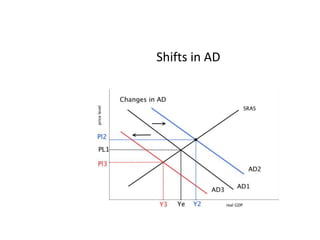
Shifts in AD
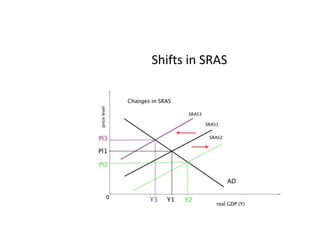
Shifts in SRAS
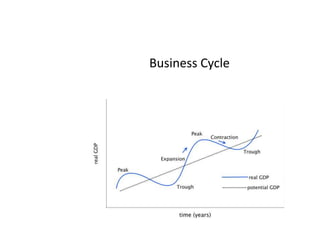
The Business CycleFluctuations in the growth of real output, consisting of periods of expansion and contraction called business cycles or trade cycles.
Business Cycle
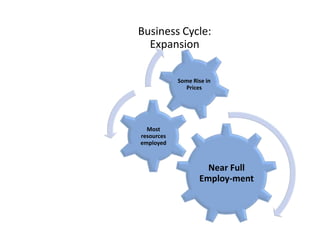
Business Cycle: Expansion
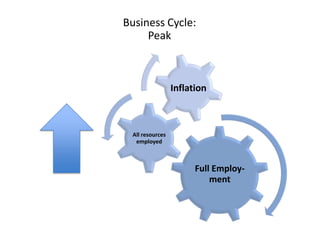
Business Cycle: Peak
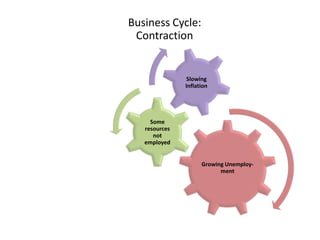
Business Cycle: Contraction
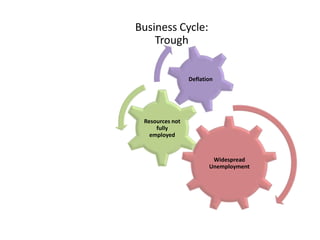
Business Cycle: Trough
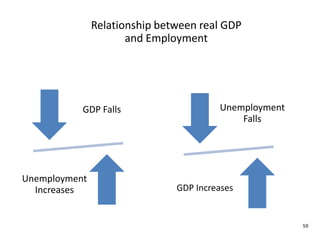
Relationship between real GDP and Employment59
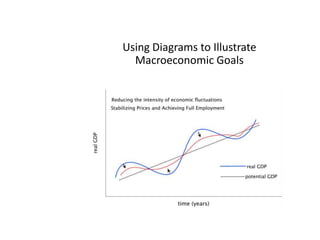
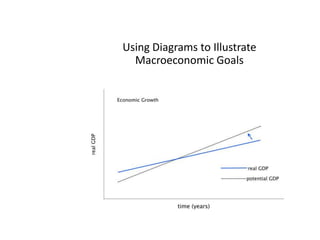
Using Diagrams to Illustrate Macroeconomic Goals
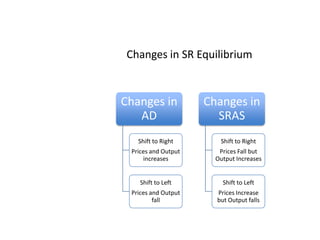
Changes in SR Equilibrium
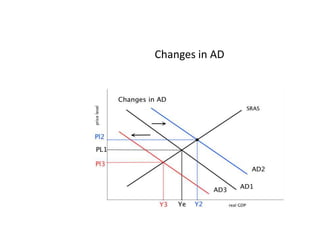
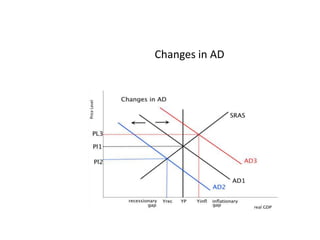
Changes in AD
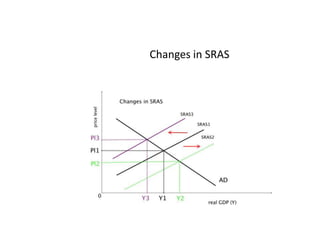
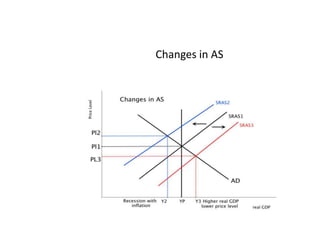
Changes in SRAS
Economic  Scenarios
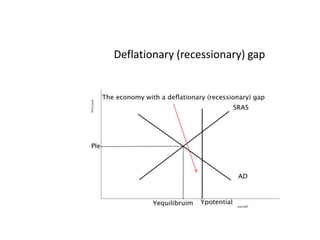
Deflationary (recessionary) gap
Recession A recession is when the economy experiences two consecutive quarters of falling GDP.
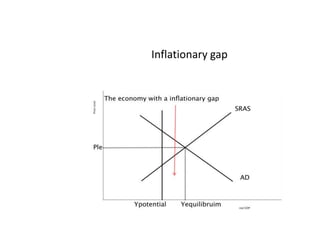
Inflationary gap
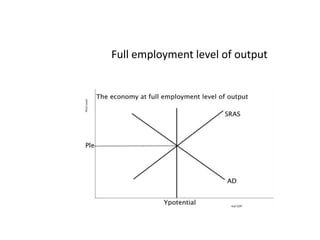
Full employment level of output
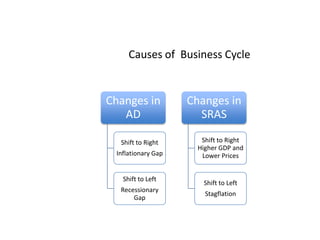
Causes of  Business Cycle
Changes in AD
Changes in AS
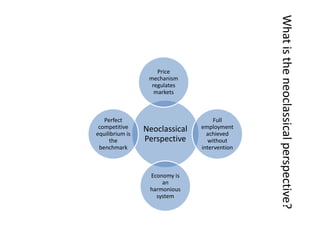
What is the neoclassical perspective?
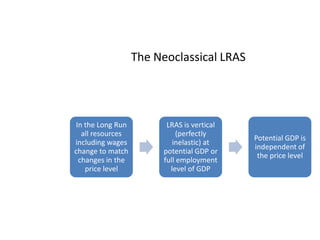
The Neoclassical LRAS
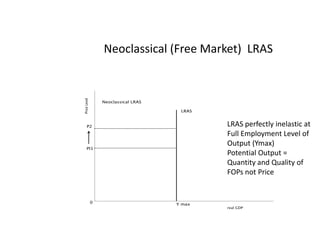
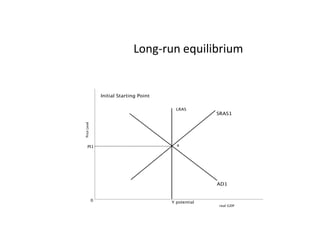
Neoclassical (Free Market)  LRAS LRAS perfectly inelastic at Full Employment Level of Output (Ymax)Potential Output = Quantity and Quality of FOPs not Price
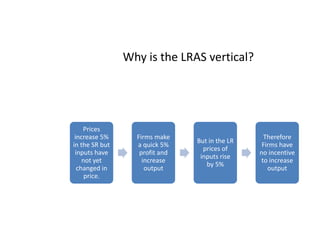
Why is the LRAS vertical?
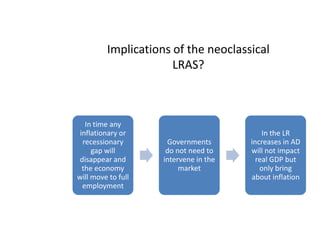
Implications of the neoclassical LRAS?
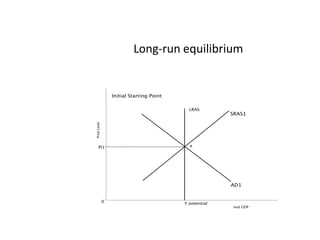
Long-run equilibrium
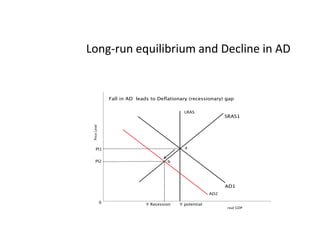
Long-run equilibrium and Decline in AD
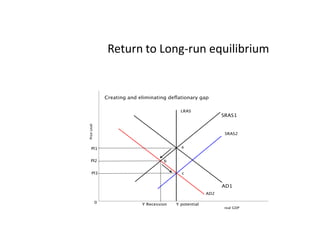
Return to Long-run equilibrium
Long-run equilibrium
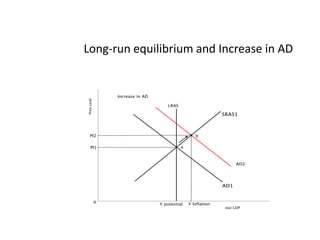
Long-run equilibrium and Increase in AD
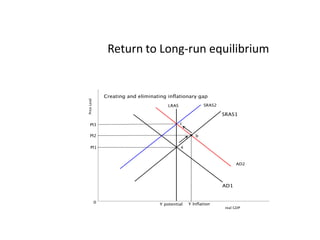
Return to Long-run equilibrium
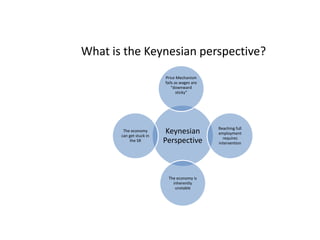
What is the Keynesian perspective?
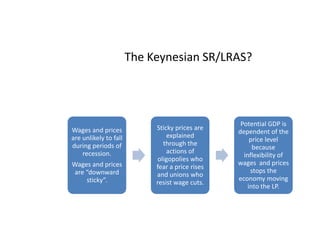
The Keynesian SR/LRAS?
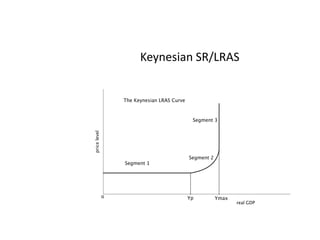
 Keynesian SR/LRAS
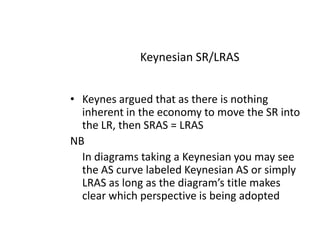
 Keynesian SR/LRASKeynes argued that as there is nothing inherent in the economy to move the SR into the LR, then SRAS = LRASNB In diagrams taking a Keynesian you may see the AS curve labeled Keynesian AS or simply LRAS as long as the diagram’s title makes clear which perspective is being adopted
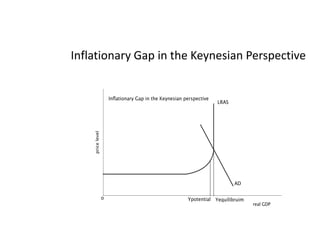
Inflationary Gap in the Keynesian Perspective
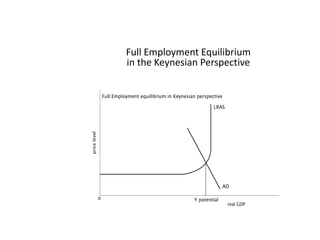
Full Employment Equilibrium in the Keynesian Perspective
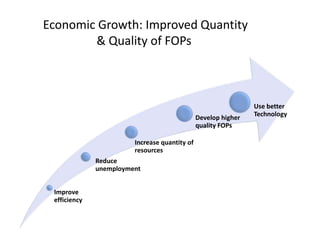
Economic Growth: Improved Quantity & Quality of FOPs
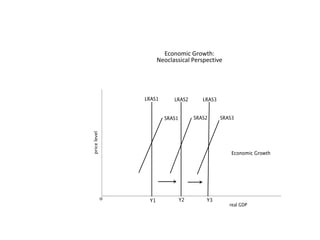
Economic Growth: Neoclassical Perspective
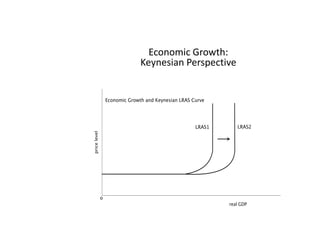
Economic Growth: Keynesian Perspective
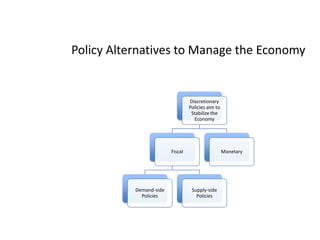
Policy Alternatives to Manage the Economy
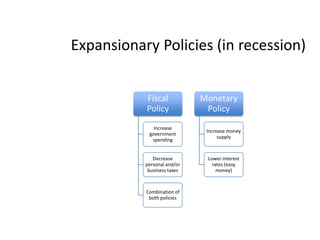
Expansionary Policies (in recession)
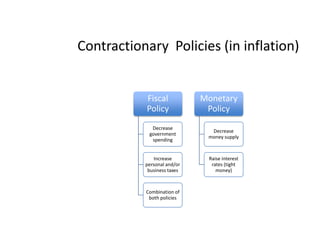
Contractionary  Policies (in inflation)
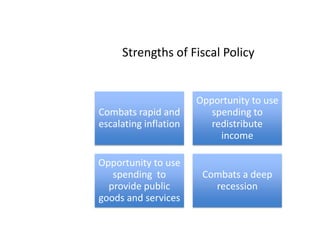
Strengths of Fiscal Policy
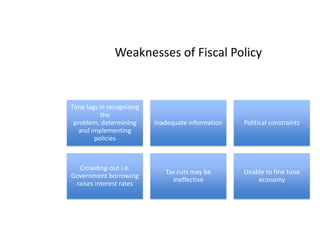
Weaknesses of Fiscal Policy
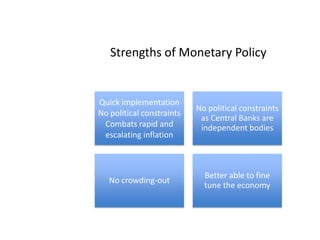
Strengths of Monetary Policy
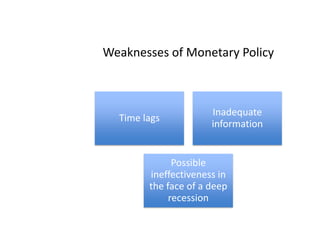
Weaknesses of Monetary Policy
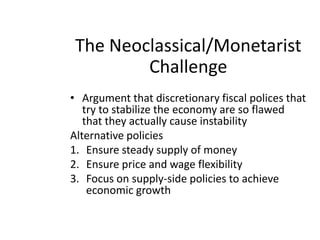
The Neoclassical/Monetarist ChallengeArgument that discretionary fiscal polices that try to stabilize the economy are so flawed that they actually cause instabilityAlternative policiesEnsure steady supply of moneyEnsure price and wage flexibilityFocus on supply-side policies to achieve economic growth
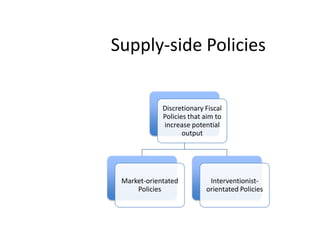
Supply-side Policies
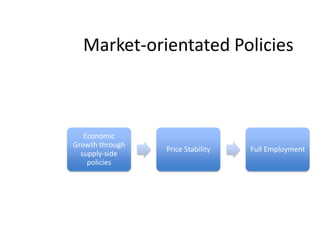
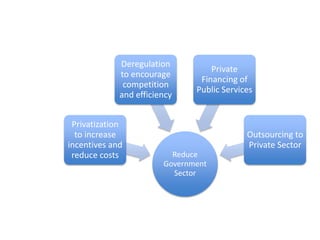
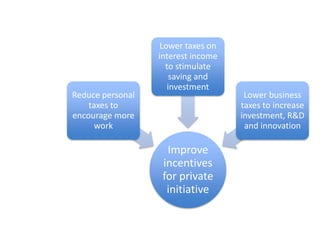
Market-orientated Policies
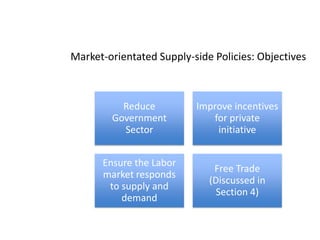
Market-orientated Supply-side Policies: Objectives
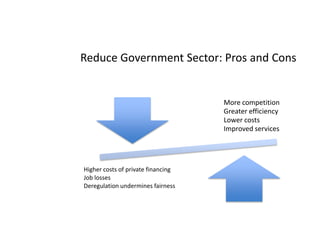
Reduce Government Sector: Pros and Cons
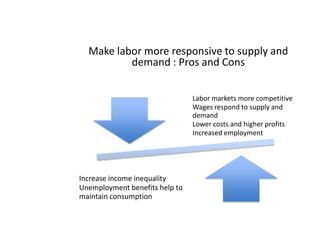
Make labor more responsive to supply and demand : Pros and Cons
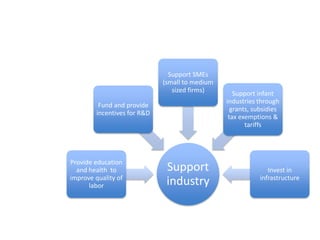
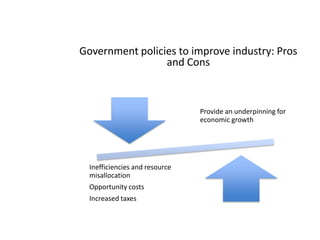
Government policies to improve industry: Pros and Cons
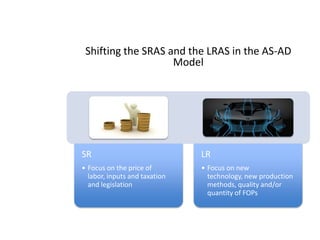
Shifting the SRAS and the LRAS in the AS-AD Model
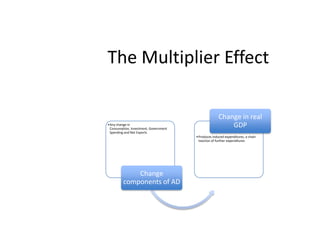
The Multiplier Effect
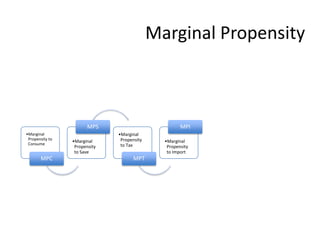
Marginal Propensity
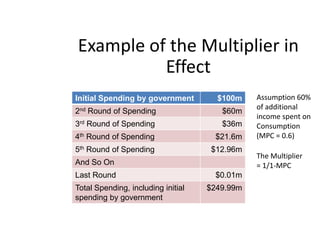
Example of the Multiplier in EffectAssumption 60% of additional income spent on Consumption (MPC = 0.6)The Multiplier = 1/1-MPC
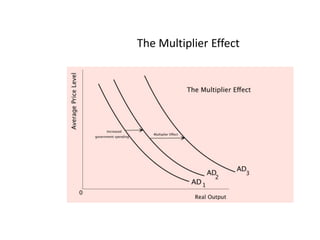
The Multiplier Effect
The Accelerator Theory & the Combined multiplier/accelerator effectArgues that small changes in GDP produces larger changes in investment spending. These fluctuations interact with the Multiplier effect to increase the momentum of business cycle.
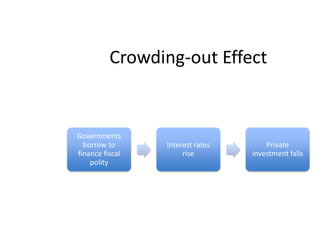
Crowding-out Effect
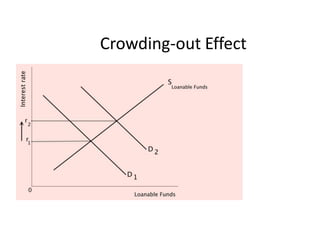
Crowding-out Effect
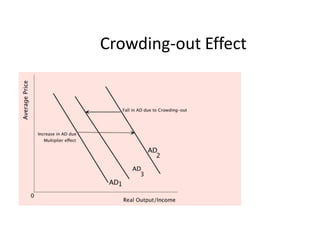
Crowding-out Effect
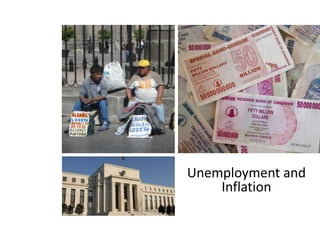
Unemployment and Inflation
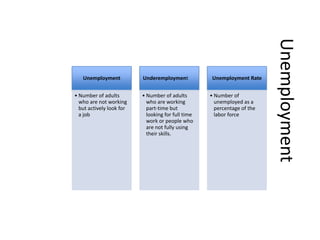
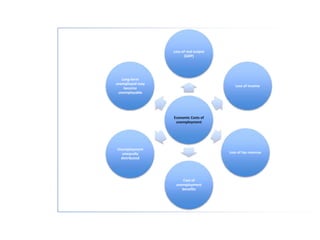
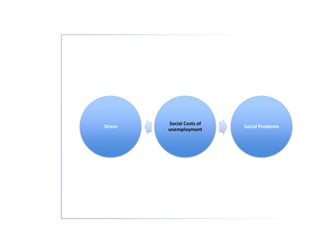
Unemployment
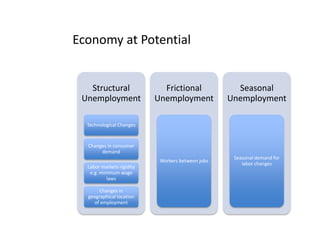
Economy at Potential
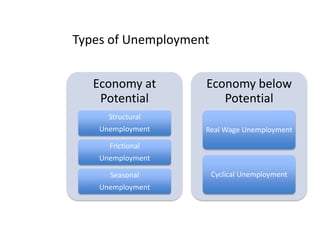
Types of Unemployment
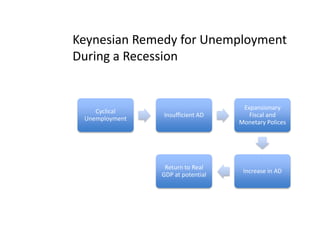
Keynesian Remedy for Unemployment During a Recession
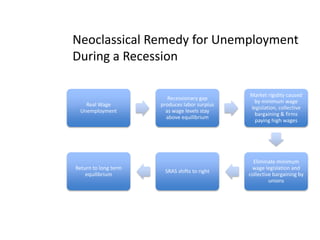
Neoclassical Remedy for Unemployment During a Recession
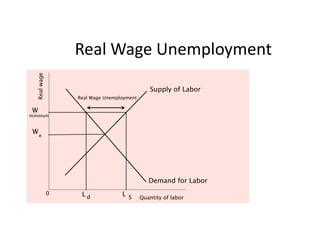
Real Wage Unemployment
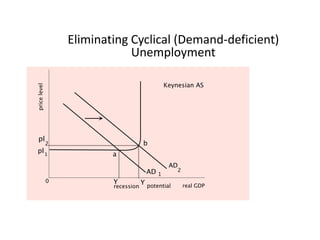
Eliminating Cyclical (Demand-deficient) Unemployment
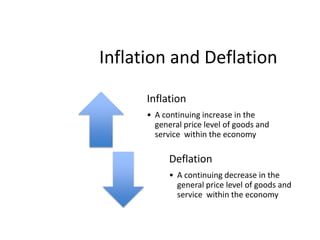
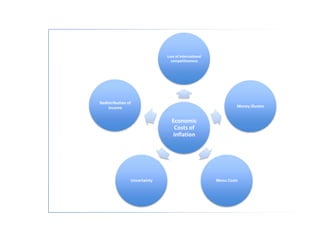
Inflation and Deflation
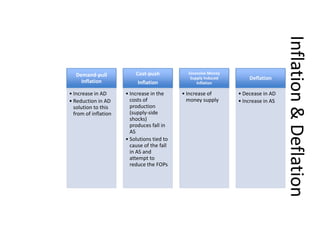
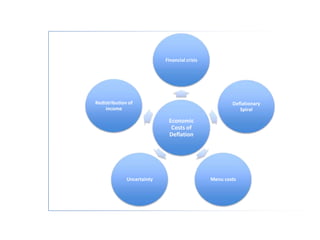
Inflation & Deflation
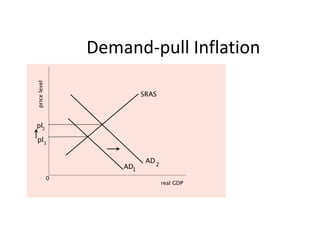
Demand-pull Inflation
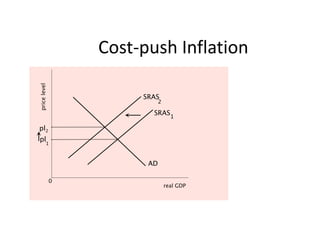
Cost-push Inflation
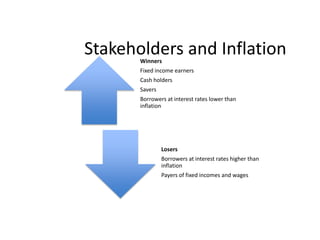
Stakeholders and Inflation
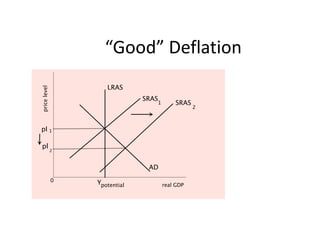
“Good” Deflation
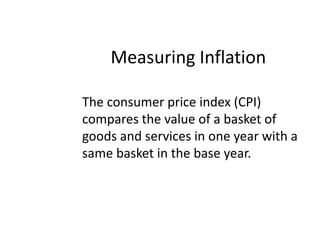
Measuring InflationThe consumer price index (CPI)  compares the value of a basket of goods and services in one year with a same basket in the base year.
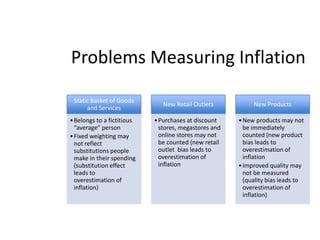
Problems Measuring Inflation
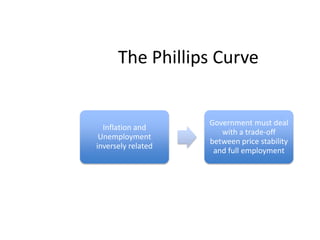
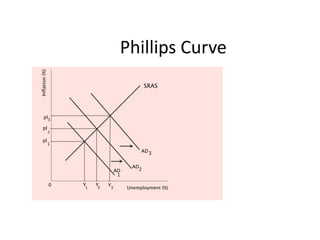
The Phillips Curve
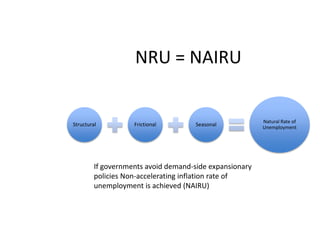
NRU = NAIRUIf governments avoid demand-side expansionary policies Non-accelerating inflation rate of unemployment is achieved (NAIRU)
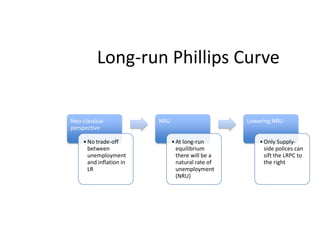
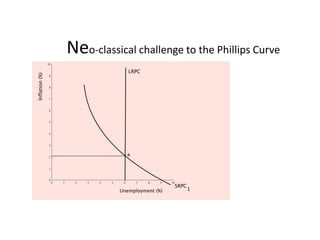
Long-run Phillips Curve
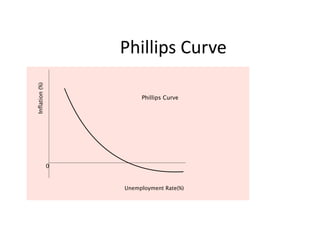
Phillips Curve
Phillips Curve
Neo-classical challenge to the Phillips Curve
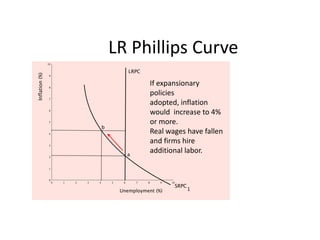
LR Phillips CurveIf expansionary policies adopted, inflation would  increase to 4% or more. Real wages have fallen and firms hire additional labor.
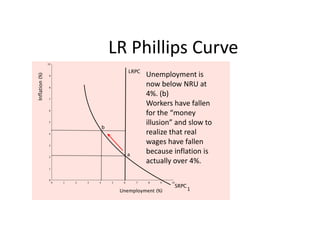
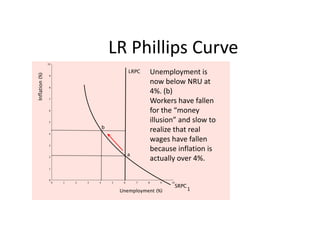
LR Phillips CurveUnemployment is now below NRU at 4%. (b)Workers have fallen for the “money illusion” and slow to realize that real wages have fallen because inflation is actually over 4%.
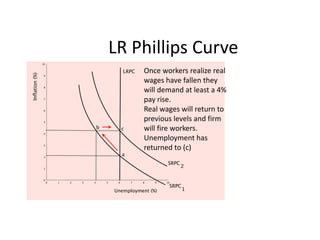
LR Phillips CurveOnce workers realize real wages have fallen they will demand at least a 4% pay rise. Real wages will return to previous levels and firm will fire workers.Unemployment has returned to (c)
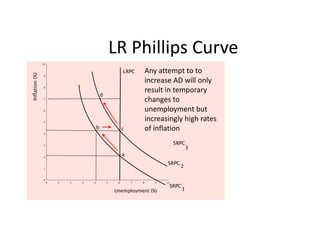
LR Phillips CurveAny attempt to to increase AD will only result in temporary changes to unemployment but increasingly high rates of inflation
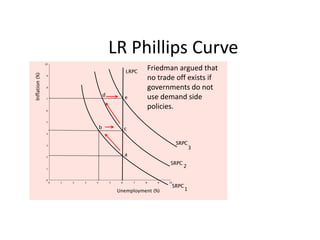
LR Phillips CurveFriedman argued that no trade off exists if governments do not use demand side policies.

Macro diagrams and definitions