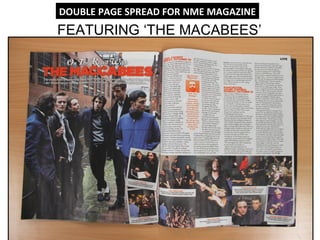
DOUBLE PAGE SPREAD FOR NME MAGAZINE
FEATURING ‘THE MACABEES’
HOW DOES THE CHOICE OF BAND
  FEATURED IN THE ARTICLE SUGGEST
   WHO THE TARGET AUDIENCE WILL
                BE?

                      THE MACABEES
              Indie/Rock band from London
    The choice of band featured in the article suggests that the target audience,
  because all the band members are male, definitely suggests that they will have a
    strong female following. However, this band also has a huge male fan-base,
 meaning the target audience of the article will be pretty vague/general in terms of
                                          gender.
The Macabees are an indie, rock band, so this suggests the target audience will be
         interested in that genre of music and generally will be quite young.
They play at many music festivals and do lots of gigging meaning their audience is
   predominantly young because of this which will attract a young, teenage target
                                audience to the magazine.
 The Macabees are very creative and artistic in their advertising and promotion and
  this will therefore attract a creative audience. Their trendy styling and arty image
       again adds to the idea that their target audience is that of a young one.
They have an album called ‘Colour it in’ and songs such as ‘Lego’ and ‘Dinosaurs’,
which again portrays the band as having a childish, playful side which will attract a
                                    younger audience.
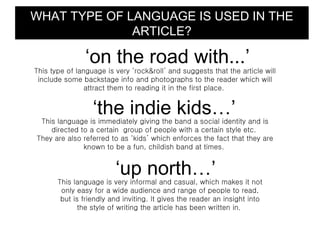
WHAT TYPE OF LANGUAGE IS USED IN THE
              ARTICLE?

                ‘on the road with...’
This type of language is very ‘rock&roll’ and suggests that the article will
 include some backstage info and photographs to the reader which will
                attract them to reading it in the first place.


                  ‘the indie kids…’
 This language is immediately giving the band a social identity and is
    directed to a certain group of people with a certain style etc.
They are also referred to as ‘kids’ which enforces the fact that they are
              known to be a fun, childish band at times.


                         ‘up north…’
       This language is very informal and casual, which makes it not
        only easy for a wide audience and range of people to read,
        but is friendly and inviting. It gives the reader an insight into
              the style of writing the article has been written in.
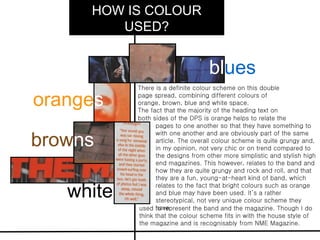
HOW IS COLOUR
        USED?


                                   blues
           There is a definite colour scheme on this double

oranges    page spread, combining different colours of
           orange, brown, blue and white space.
           The fact that the majority of the heading text on
           both sides of the DPS is orange helps to relate the
                 pages to one another so that they have something to

browns
                 with one another and are obviously part of the same
                 article. The overall colour scheme is quite grungy and,
                 in my opinion, not very chic or on trend compared to
                 the designs from other more simplistic and stylish high
                 end magazines. This however, relates to the band and
                 how they are quite grungy and rock and roll, and that
                 they are a fun, young-at-heart kind of band, which

   white
                 relates to the fact that bright colours such as orange
                 and blue may have been used. It’s a rather
                 stereotypical, not very unique colour scheme they
                 have
           used to represent the band and the magazine. Though I do
           think that the colour scheme fits in with the house style of
           the magazine and is recognisably from NME Magazine.
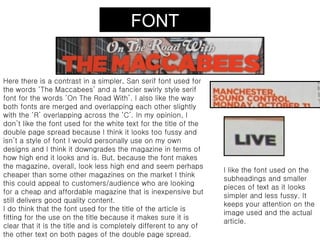
FONT


Here there is a contrast in a simpler, San serif font used for
the words ‘The Maccabees’ and a fancier swirly style serif
font for the words ‘On The Road With’. I also like the way
both fonts are merged and overlapping each other slightly
with the ‘R’ overlapping across the ‘C’. In my opinion, I
don’t like the font used for the white text for the title of the
double page spread because I think it looks too fussy and
isn’t a style of font I would personally use on my own
designs and I think it downgrades the magazine in terms of
how high end it looks and is. But, because the font makes
the magazine, overall, look less high end and seem perhaps
                                                                   I like the font used on the
cheaper than some other magazines on the market I think
                                                                   subheadings and smaller
this could appeal to customers/audience who are looking
                                                                   pieces of text as it looks
for a cheap and affordable magazine that is inexpensive but
                                                                   simpler and less fussy. It
still delivers good quality content.
                                                                   keeps your attention on the
I do think that the font used for the title of the article is
                                                                   image used and the actual
fitting for the use on the title because it makes sure it is
                                                                   article.
clear that it is the title and is completely different to any of
the other text on both pages of the double page spread.
THE IMAGES
                                                          The images used are very musical,
                                                          including guitars which feature in
                                                          multiple images, and gig audiences and
The images used in this double page spread are            crowds.
very informal and taken from the moment rather than
staged or set up, with multiple images taken
backstage at gigs. The smaller images seem to be
quite playful and fun, with the use of face paint,
which portrays the band as playful and fun which is
what they are generally known to be like. This is
contrasted against the main, full page image used
on the left page, which is more serious and
composed. The band almost look quite uninterested
due to no one having direct eye contact with the
camera, which portrays them in a quite 'rock and
roll' way, especially since one of the band members
is looking away completely. It's as if they've all been
told to stand there and look at the camera but no
one is that bothered.
The small polaroid style images spill out onto the
opposite page which therefore relates both pages
which is important as it is a double page spread and
both pages should have some sort of sign to show
they go together as a double page article.

Macabees nme dps analysis

  • 1.
    DOUBLE PAGE SPREADFOR NME MAGAZINE FEATURING ‘THE MACABEES’
  • 2.
    HOW DOES THECHOICE OF BAND FEATURED IN THE ARTICLE SUGGEST WHO THE TARGET AUDIENCE WILL BE? THE MACABEES Indie/Rock band from London The choice of band featured in the article suggests that the target audience, because all the band members are male, definitely suggests that they will have a strong female following. However, this band also has a huge male fan-base, meaning the target audience of the article will be pretty vague/general in terms of gender. The Macabees are an indie, rock band, so this suggests the target audience will be interested in that genre of music and generally will be quite young. They play at many music festivals and do lots of gigging meaning their audience is predominantly young because of this which will attract a young, teenage target audience to the magazine. The Macabees are very creative and artistic in their advertising and promotion and this will therefore attract a creative audience. Their trendy styling and arty image again adds to the idea that their target audience is that of a young one. They have an album called ‘Colour it in’ and songs such as ‘Lego’ and ‘Dinosaurs’, which again portrays the band as having a childish, playful side which will attract a younger audience.
  • 3.
    WHAT TYPE OFLANGUAGE IS USED IN THE ARTICLE? ‘on the road with...’ This type of language is very ‘rock&roll’ and suggests that the article will include some backstage info and photographs to the reader which will attract them to reading it in the first place. ‘the indie kids…’ This language is immediately giving the band a social identity and is directed to a certain group of people with a certain style etc. They are also referred to as ‘kids’ which enforces the fact that they are known to be a fun, childish band at times. ‘up north…’ This language is very informal and casual, which makes it not only easy for a wide audience and range of people to read, but is friendly and inviting. It gives the reader an insight into the style of writing the article has been written in.
  • 4.
    HOW IS COLOUR USED? blues There is a definite colour scheme on this double oranges page spread, combining different colours of orange, brown, blue and white space. The fact that the majority of the heading text on both sides of the DPS is orange helps to relate the pages to one another so that they have something to browns with one another and are obviously part of the same article. The overall colour scheme is quite grungy and, in my opinion, not very chic or on trend compared to the designs from other more simplistic and stylish high end magazines. This however, relates to the band and how they are quite grungy and rock and roll, and that they are a fun, young-at-heart kind of band, which white relates to the fact that bright colours such as orange and blue may have been used. It’s a rather stereotypical, not very unique colour scheme they have used to represent the band and the magazine. Though I do think that the colour scheme fits in with the house style of the magazine and is recognisably from NME Magazine.
  • 5.
    FONT Here there isa contrast in a simpler, San serif font used for the words ‘The Maccabees’ and a fancier swirly style serif font for the words ‘On The Road With’. I also like the way both fonts are merged and overlapping each other slightly with the ‘R’ overlapping across the ‘C’. In my opinion, I don’t like the font used for the white text for the title of the double page spread because I think it looks too fussy and isn’t a style of font I would personally use on my own designs and I think it downgrades the magazine in terms of how high end it looks and is. But, because the font makes the magazine, overall, look less high end and seem perhaps I like the font used on the cheaper than some other magazines on the market I think subheadings and smaller this could appeal to customers/audience who are looking pieces of text as it looks for a cheap and affordable magazine that is inexpensive but simpler and less fussy. It still delivers good quality content. keeps your attention on the I do think that the font used for the title of the article is image used and the actual fitting for the use on the title because it makes sure it is article. clear that it is the title and is completely different to any of the other text on both pages of the double page spread.
  • 6.
    THE IMAGES The images used are very musical, including guitars which feature in multiple images, and gig audiences and The images used in this double page spread are crowds. very informal and taken from the moment rather than staged or set up, with multiple images taken backstage at gigs. The smaller images seem to be quite playful and fun, with the use of face paint, which portrays the band as playful and fun which is what they are generally known to be like. This is contrasted against the main, full page image used on the left page, which is more serious and composed. The band almost look quite uninterested due to no one having direct eye contact with the camera, which portrays them in a quite 'rock and roll' way, especially since one of the band members is looking away completely. It's as if they've all been told to stand there and look at the camera but no one is that bothered. The small polaroid style images spill out onto the opposite page which therefore relates both pages which is important as it is a double page spread and both pages should have some sort of sign to show they go together as a double page article.