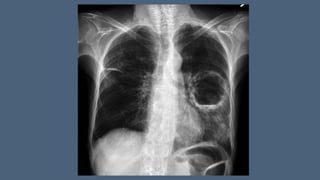
Dr Gopika G Dath
LUNG ABSCESS
• Lung abscess represents necrosis and cavitation of the lung
following microbial infection. Lung abscesses can be single or
multiple but usually are marked by a single dominant cavity >2 cm
in diameter.
• The low prevalence of lung abscesses makes them dif
f
icult to
study in randomized controlled trials. Although the incidence of
lung abscesses has decreased in the antibiotic era, they are still a
source of signi
f
icant morbidity and mortality.
ETIOLOGY
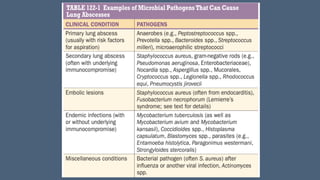
• Lung abscesses are usually characterized as either primary (~80% of cases) or secondary.
• Primary lung abscesses usually arise from aspiration, are often caused principally by
anaerobic bacteria, and occur in the absence of an underlying pulmonary or systemic
condition.
• Secondary lung abscesses arise in the setting of an underlying condition, such as a
postobstructive process (e.g., a bronchial foreign body or tumor) or a systemic process (e.g.,
HIV infection or another immunocompromising condition).
• Lung abscesses can also be characterized as acute (<4–6 weeks in duration) or chronic (~40%
of cases).
EPIDEMIOLOGY
• middle-aged men are more commonly affected than middle-aged women.
• The major risk factor for primary lung abscesses is aspiration.
• Patients at particular risk for aspiration, such as those with altered mental status, alcoholism,
drug overdose, seizures, bulbar dysfunction, prior cerebrovascular or cardiovascular events,
or neuromuscular disease, are most commonly affected
• Patients with esophageal dysmotility or esophageal lesions (strictures or tumors) and those
with gastric distention and/or gastroesophageal re
f
lux, especially those who spend
substantial time in the recumbent position.
PATHOGENESIS
• Primary Lung Abscesses ;Patients who develop primary lung abscesses usually carry an
overwhelming burden of aspirated material or are unable to clear the bacterial load.
Anaerobes are thought to produce more extensive tissue necrosis in polymicrobial infections
in which virulence factors of the various bacteria can act synergistically to cause more
signi
f
icant tissue destruction.
• Secondary Lung Abscesses ;The pathogenesis of secondary abscesses depends on the
predisposing factor.For example, in cases of bronchial obstruction from malignancy or a
foreign body, the obstructing lesion prevents clearance of oropharyngeal secretions, leading
to abscess development. Lung abscesses also arise from septic emboli, either in tricuspid
valve endocarditis (often involving Staphylococcus aureus) or in Lemierre’s syndrome.
PATHOLOGY AND MICROBIOLOGY
PRIMARY LUNG ABSCESS
• The dependent segments (posterior upper lobes and superior lower lobes) are the most
common locations of primary lung abscesses.
• the right lung is affected more commonly than the left because the right mainstem bronchus
is less angulated.
• The microbiology of primary lung abscesses is often polymicrobial, primarily including
anaerobic organisms as well as microaerophilic streptococci.
SECONDARY LUNG ABSCESS
• The location of secondary abscesses may vary with the underlying cause.
• The microbiology of secondary lung abscesses can encompass quite a broad bacterial
spectrum, with infection by Pseudomonas aeruginosa and other gram-negative rods most
common.
Clinical manifestations
• may initially be similar to those of pneumonia, with fevers, cough, sputum production, and
chest pain;a more chronic and indolent presentation that includes night sweats, fatigue, and
anemia is often observed with anaerobic lung abscesses.
• A subset of patients with putrid lung abscesses ( refers to cases with foul-smelling breath,
sputum, or empyema; these manifestations are essentially diagnostic of an anaerobic lung
abscess) may report discolored phlegm and foul-tasting or foul-smelling sputum.
• Findings on physical examination may include fevers, poor dentition, and/or gingival disease
as well as amphoric and/or cavernous breath sounds on lung auscultation. Additional
f
indings
may include digital clubbing and the absence of a gag re
f
lex.
DIFFERENTIAL DIAGNOSIS
• Cavitating lung cancer
• Localized empyema
• Infected bulla containing a
f
luid level
• Infected congenital pulmonary lesions
• Pulmonary haematoma
• Cavitated pneumoconiotic lesions
• Hiatus hernia
• Hydatid cysts
• Infection with paragonimus westermani
• Cavitating pulmonary infarcts
• Wegeners granulomatosis
DIAGNOSIS
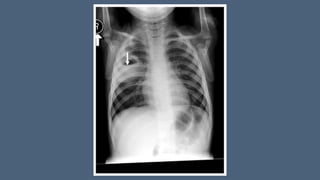
• chest X-ray (a chest radiograph usually detects a thick-walled cavity with an air-
f
luid level,)
• CT Chest (CT may also yield additional information regarding a possible underlying cause of
lung abscess, such as malignancy, and may help distinguish a peripheral lung abscess from a
pleural infection.)
• Generally, if symptoms and clinical setting right for anaerobic infection, generally treat
empirically
• When a secondary lung abscess is present or empirical therapy fails to elicit a response,
sputum and blood cultures are advised.
Additional diagnostics
• Bronchoscopy with bronchoalveolar lavage or protected brush specimen collection
and CT-guided percutaneous needle aspiration, can be undertaken.
• Risks posed by these more invasive diagnostics include spillage of abscess contents
into the other lung (with bronchoscopy) and pneumothorax and bronchopleural
f
istula
development (with CT-guided needle aspiration).
Treatment
• penicillin was the antibiotic of choice for primary lung abscesses in light of its anaerobic
coverage;however, because oral anaerobes can produce β-lactamases, clindamycin has
proved superior to penicillin in clinical trials.4
• For primary lung abscesses, the recommended regimens are
clindamycin (600 mg IV three times daily; then, with the disappearance of fever and
clinical improvement, 300 mg PO four times daily) or
an IV-administered β-lactam/β-lactamase combination, followed—once the patient’s
condition is stable—by orally administered amoxicillin-clavulanate.
• Treatment duration may range from 3–4 weeks to as long as 14 weeks.
• In secondary lung abscesses,prolonged course is often required.
• Treatment regimens and courses vary widely, depending on the immune state of the host
and the identi
f
ied pathogen. An abscess >6–8 cm in diameter is less likely to respond to
antibiotic therapy without additional interventions.
• Options for patients who do not respond to antibiotics and whose additional diagnostic
studies fail to identify an additional pathogen that can be treated include surgical resection
and percutaneous drainage of the abscess, especially when the patient is a poor surgical
candidate.
• Possible complications of percutaneous drainage include bacterial contamination of the
pleural space as well as pneumothorax and hemothorax.
Complications
• bronchiectasis
• recurrence of abscesses despite appropriate therapy
• extension to the pleural space with development of empyema
• life-threatening hemoptysis
• massive aspiration of lung abscess contents
PROGNOSIS AND PREVENTION
• Mortality rates for primary abscesses have been as low as 2%, while rates for secondary
abscesses are generally higher—as high as 75% in some case series.
• Other poor prognostic factors include an age of >60, the presence of aerobic bacteria, sepsis
at presentation, symptom duration of >8 weeks, and abscess size of >6 cm.
• Mitigation of underlying risk factors may be the best approach to prevention of lung
abscesses, with attention directed toward airway protection, oral hygiene, and minimized
sedation with elevation of the head of the bed for patients at risk for aspiration.
• Prophylaxis against certain pathogens in at-risk patients may be undertaken.
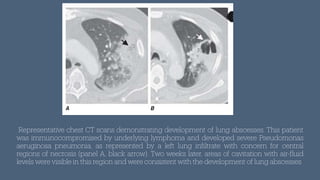
Representative chest CT scans demonstrating development of lung abscesses. This patient
was immunocompromised by underlying lymphoma and developed severe Pseudomonas
aeruginosa pneumonia, as represented by a left lung in
f
iltrate with concern for central
regions of necrosis (panel A, black arrow). Two weeks later, areas of cavitation with air-
f
luid
levels were visible in this region and were consistent with the development of lung abscesses
Thank you

Lung abscess from harrison textbook hshdhdhd.pdf

  • 1.
    Dr Gopika GDath LUNG ABSCESS
  • 2.
    • Lung abscessrepresents necrosis and cavitation of the lung following microbial infection. Lung abscesses can be single or multiple but usually are marked by a single dominant cavity >2 cm in diameter. • The low prevalence of lung abscesses makes them dif f icult to study in randomized controlled trials. Although the incidence of lung abscesses has decreased in the antibiotic era, they are still a source of signi f icant morbidity and mortality.
  • 3.
    ETIOLOGY • Lung abscessesare usually characterized as either primary (~80% of cases) or secondary. • Primary lung abscesses usually arise from aspiration, are often caused principally by anaerobic bacteria, and occur in the absence of an underlying pulmonary or systemic condition. • Secondary lung abscesses arise in the setting of an underlying condition, such as a postobstructive process (e.g., a bronchial foreign body or tumor) or a systemic process (e.g., HIV infection or another immunocompromising condition). • Lung abscesses can also be characterized as acute (<4–6 weeks in duration) or chronic (~40% of cases).
  • 4.
    EPIDEMIOLOGY • middle-aged menare more commonly affected than middle-aged women. • The major risk factor for primary lung abscesses is aspiration. • Patients at particular risk for aspiration, such as those with altered mental status, alcoholism, drug overdose, seizures, bulbar dysfunction, prior cerebrovascular or cardiovascular events, or neuromuscular disease, are most commonly affected • Patients with esophageal dysmotility or esophageal lesions (strictures or tumors) and those with gastric distention and/or gastroesophageal re f lux, especially those who spend substantial time in the recumbent position.
  • 5.
    PATHOGENESIS • Primary LungAbscesses ;Patients who develop primary lung abscesses usually carry an overwhelming burden of aspirated material or are unable to clear the bacterial load. Anaerobes are thought to produce more extensive tissue necrosis in polymicrobial infections in which virulence factors of the various bacteria can act synergistically to cause more signi f icant tissue destruction. • Secondary Lung Abscesses ;The pathogenesis of secondary abscesses depends on the predisposing factor.For example, in cases of bronchial obstruction from malignancy or a foreign body, the obstructing lesion prevents clearance of oropharyngeal secretions, leading to abscess development. Lung abscesses also arise from septic emboli, either in tricuspid valve endocarditis (often involving Staphylococcus aureus) or in Lemierre’s syndrome.
  • 7.
    PATHOLOGY AND MICROBIOLOGY PRIMARYLUNG ABSCESS • The dependent segments (posterior upper lobes and superior lower lobes) are the most common locations of primary lung abscesses. • the right lung is affected more commonly than the left because the right mainstem bronchus is less angulated. • The microbiology of primary lung abscesses is often polymicrobial, primarily including anaerobic organisms as well as microaerophilic streptococci.
  • 8.
    SECONDARY LUNG ABSCESS •The location of secondary abscesses may vary with the underlying cause. • The microbiology of secondary lung abscesses can encompass quite a broad bacterial spectrum, with infection by Pseudomonas aeruginosa and other gram-negative rods most common.
  • 9.
    Clinical manifestations • mayinitially be similar to those of pneumonia, with fevers, cough, sputum production, and chest pain;a more chronic and indolent presentation that includes night sweats, fatigue, and anemia is often observed with anaerobic lung abscesses. • A subset of patients with putrid lung abscesses ( refers to cases with foul-smelling breath, sputum, or empyema; these manifestations are essentially diagnostic of an anaerobic lung abscess) may report discolored phlegm and foul-tasting or foul-smelling sputum. • Findings on physical examination may include fevers, poor dentition, and/or gingival disease as well as amphoric and/or cavernous breath sounds on lung auscultation. Additional f indings may include digital clubbing and the absence of a gag re f lex.
  • 10.
    DIFFERENTIAL DIAGNOSIS • Cavitatinglung cancer • Localized empyema • Infected bulla containing a f luid level • Infected congenital pulmonary lesions • Pulmonary haematoma • Cavitated pneumoconiotic lesions • Hiatus hernia • Hydatid cysts • Infection with paragonimus westermani • Cavitating pulmonary infarcts • Wegeners granulomatosis
  • 11.
    DIAGNOSIS • chest X-ray(a chest radiograph usually detects a thick-walled cavity with an air- f luid level,) • CT Chest (CT may also yield additional information regarding a possible underlying cause of lung abscess, such as malignancy, and may help distinguish a peripheral lung abscess from a pleural infection.) • Generally, if symptoms and clinical setting right for anaerobic infection, generally treat empirically • When a secondary lung abscess is present or empirical therapy fails to elicit a response, sputum and blood cultures are advised.
  • 12.
    Additional diagnostics • Bronchoscopywith bronchoalveolar lavage or protected brush specimen collection and CT-guided percutaneous needle aspiration, can be undertaken. • Risks posed by these more invasive diagnostics include spillage of abscess contents into the other lung (with bronchoscopy) and pneumothorax and bronchopleural f istula development (with CT-guided needle aspiration).
  • 13.
    Treatment • penicillin wasthe antibiotic of choice for primary lung abscesses in light of its anaerobic coverage;however, because oral anaerobes can produce β-lactamases, clindamycin has proved superior to penicillin in clinical trials.4 • For primary lung abscesses, the recommended regimens are clindamycin (600 mg IV three times daily; then, with the disappearance of fever and clinical improvement, 300 mg PO four times daily) or an IV-administered β-lactam/β-lactamase combination, followed—once the patient’s condition is stable—by orally administered amoxicillin-clavulanate. • Treatment duration may range from 3–4 weeks to as long as 14 weeks.
  • 14.
    • In secondarylung abscesses,prolonged course is often required. • Treatment regimens and courses vary widely, depending on the immune state of the host and the identi f ied pathogen. An abscess >6–8 cm in diameter is less likely to respond to antibiotic therapy without additional interventions. • Options for patients who do not respond to antibiotics and whose additional diagnostic studies fail to identify an additional pathogen that can be treated include surgical resection and percutaneous drainage of the abscess, especially when the patient is a poor surgical candidate. • Possible complications of percutaneous drainage include bacterial contamination of the pleural space as well as pneumothorax and hemothorax.
  • 15.
    Complications • bronchiectasis • recurrenceof abscesses despite appropriate therapy • extension to the pleural space with development of empyema • life-threatening hemoptysis • massive aspiration of lung abscess contents
  • 16.
    PROGNOSIS AND PREVENTION •Mortality rates for primary abscesses have been as low as 2%, while rates for secondary abscesses are generally higher—as high as 75% in some case series. • Other poor prognostic factors include an age of >60, the presence of aerobic bacteria, sepsis at presentation, symptom duration of >8 weeks, and abscess size of >6 cm. • Mitigation of underlying risk factors may be the best approach to prevention of lung abscesses, with attention directed toward airway protection, oral hygiene, and minimized sedation with elevation of the head of the bed for patients at risk for aspiration. • Prophylaxis against certain pathogens in at-risk patients may be undertaken.
  • 17.
    Representative chest CTscans demonstrating development of lung abscesses. This patient was immunocompromised by underlying lymphoma and developed severe Pseudomonas aeruginosa pneumonia, as represented by a left lung in f iltrate with concern for central regions of necrosis (panel A, black arrow). Two weeks later, areas of cavitation with air- f luid levels were visible in this region and were consistent with the development of lung abscesses
  • 20.