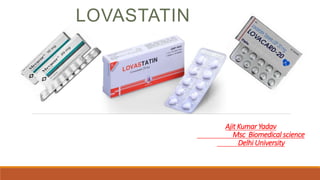
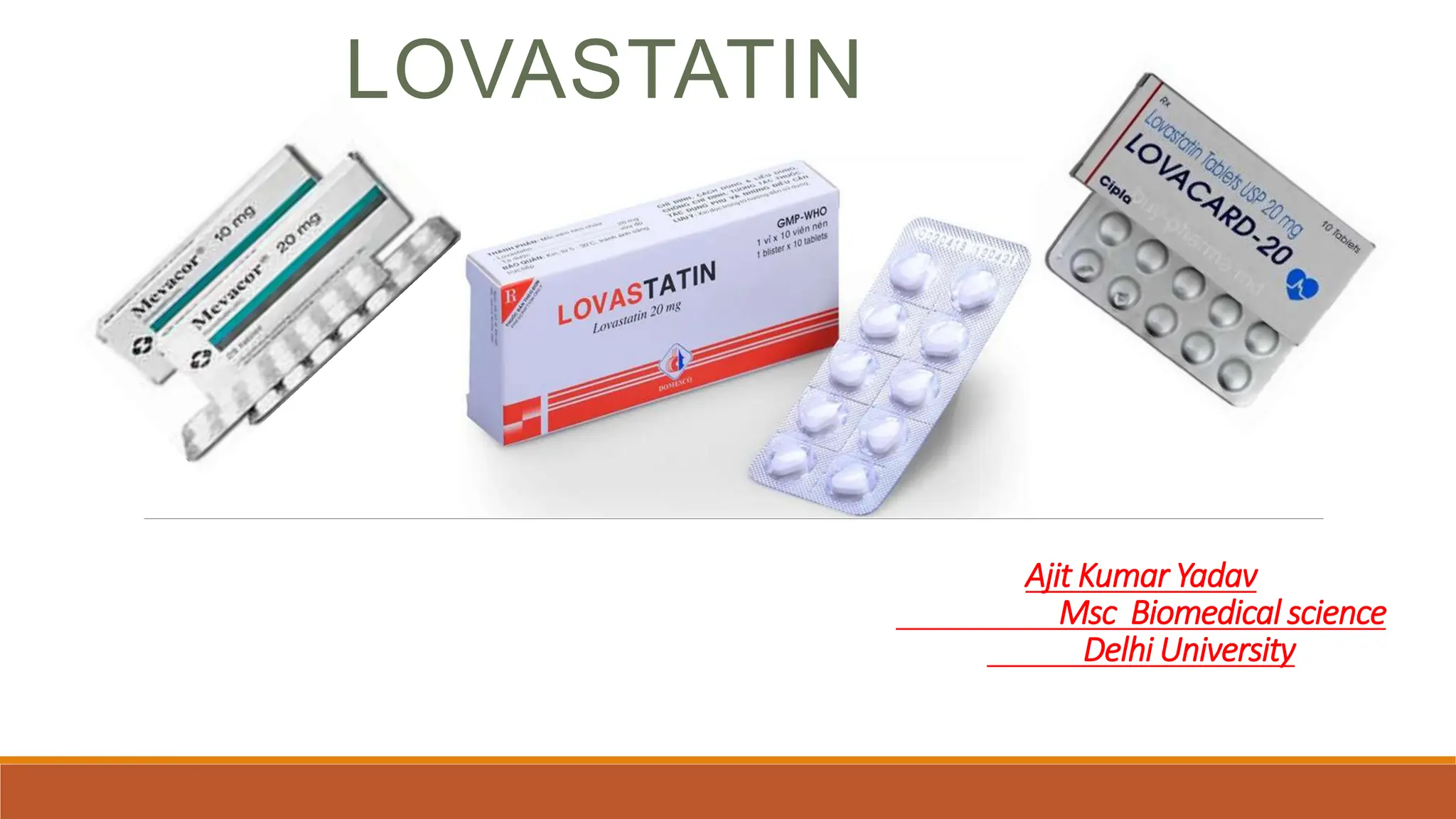
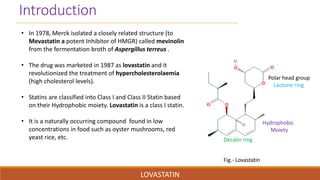
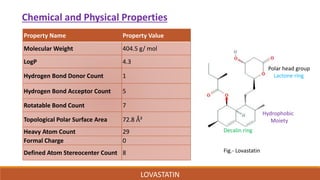
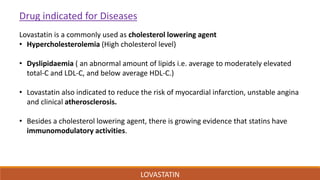
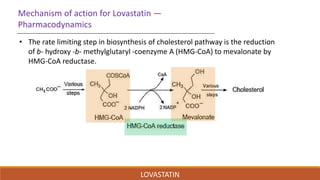
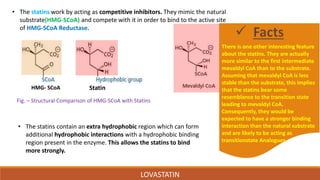
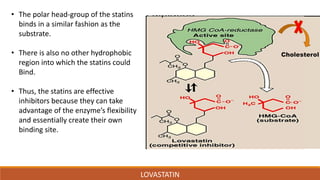
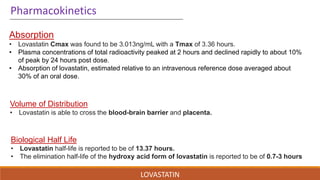
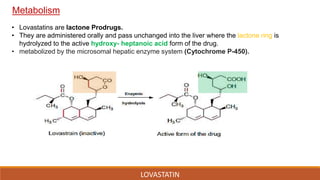
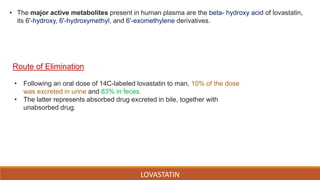
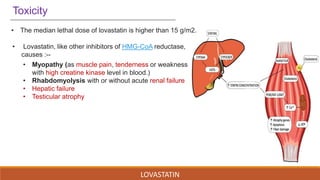
Lovastatin was the first statin drug approved for treatment of high cholesterol. It was isolated from fermentation of Aspergillus terreus in 1978 and marketed in 1987. Lovastatin is a class I statin with a polar head group and hydrophobic moiety. It works by competitively inhibiting HMG-CoA reductase, the rate limiting enzyme in cholesterol biosynthesis. Lovastatin is administered orally and converted to its active form in the liver. It has a biological half-life of 13.37 hours and is metabolized and eliminated primarily in the feces. Adverse effects include myopathy and rhabdomyolysis.


![CTEV [ clubfoot] DR ARUN LAL ,DR MOHAMED ASHRAF travancore medical college k...](https://cdn.slidesharecdn.com/ss_thumbnails/ctevclubfootdrarunlaldrmohamedashraftravancoremedicalcollegekollamkeralaindia-260208063247-18fc466c-thumbnail.jpg?width=640&height=640&fit=bounds)


![ONFH[AVN HIP] -TRIPLE REGIME -A NOVAL SURGICAL CONCEPT .pptx](https://cdn.slidesharecdn.com/ss_thumbnails/onfhavnhip2026koaconcalicutdrgokuldevdrmashraf-260210064517-213ec005-thumbnail.jpg?width=640&height=640&fit=bounds)