Schmidt Rearrangement
 The Schmidt reaction is the reaction of hydrazoic acid or an alkyl azide with a
carbonyl compound, alkene, or alcohol, often in the presence of a Brønsted or
Lewis acid.
 The product is an amine, imine, or amide, with the expulsion of nitrogen
Applications of Schmidt Reaction
 The Schmidt reaction can be applied to prepare amino acids, diamines, cyclic
amides, lactams, and tetrazole.
 Each one of these compounds has a unique application.
 For example, amino acids are used by the industry in the synthesis of drugs and
cosmetics
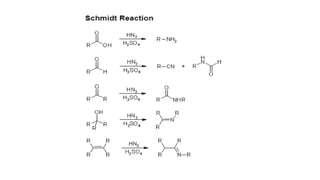
The acid-catalysed reaction of hydrogen azide with electrophiles, such as carbonyl
compounds, tertiary alcohols or alkenes.
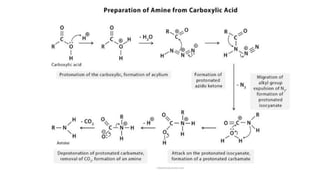
After a rearrangement and extrusion of N2, amines, nitriles, amides or imines are
produced.
Schmidt Rearrangement.pptx

Schmidt Rearrangement.pptx

  • 1.
    Schmidt Rearrangement  TheSchmidt reaction is the reaction of hydrazoic acid or an alkyl azide with a carbonyl compound, alkene, or alcohol, often in the presence of a Brønsted or Lewis acid.  The product is an amine, imine, or amide, with the expulsion of nitrogen Applications of Schmidt Reaction  The Schmidt reaction can be applied to prepare amino acids, diamines, cyclic amides, lactams, and tetrazole.  Each one of these compounds has a unique application.  For example, amino acids are used by the industry in the synthesis of drugs and cosmetics
  • 2.
    The acid-catalysed reactionof hydrogen azide with electrophiles, such as carbonyl compounds, tertiary alcohols or alkenes. After a rearrangement and extrusion of N2, amines, nitriles, amides or imines are produced.