LOGIC MODEL
McCawley
WHAT
 A depiction of a program or project showing what it will
do and what it is intended to accomplish
 A series of ‘if-then’ relationships that ideally, and if
implemented as intended, will contribute to the desired
outcome
 The core of program planning and evaluation
WHAT
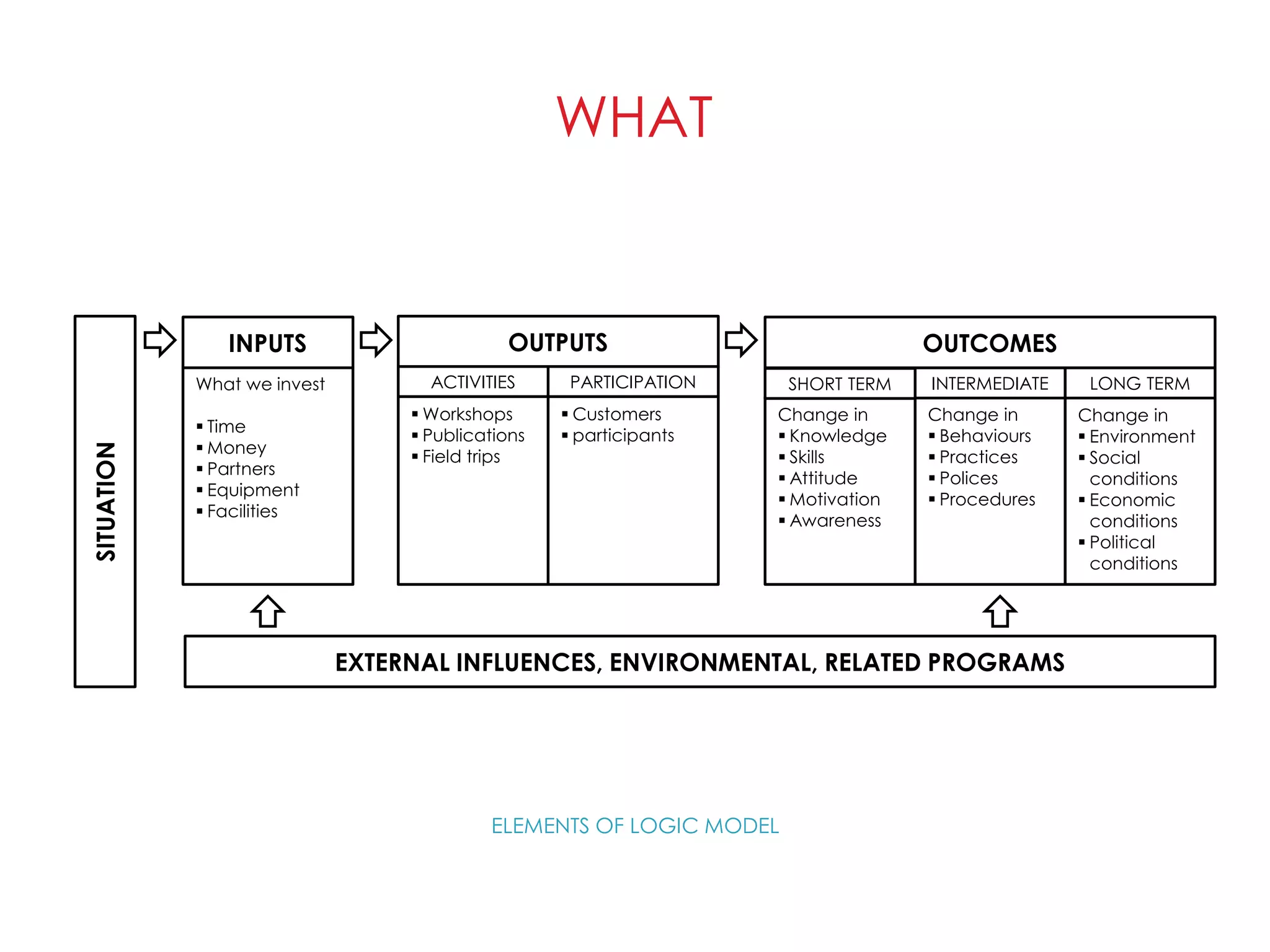
Change in
 Knowledge
 Skills
 Attitude
 Motivation
 Awareness
Change in
 Behaviours
 Practices
 Polices
 Procedures
Change in
 Environment
 Social
conditions
 Economic
conditions
 Political
conditions
SHORT TERM INTERMEDIATE LONG TERM
OUTCOMES
 Workshops
 Publications
 Field trips
 Customers
 participants
EXTERNAL INFLUENCES, ENVIRONMENTAL, RELATED PROGRAMS
SITUATION
OUTPUTS
What we invest
 Time
 Money
 Partners
 Equipment
 Facilities
INPUTS
ELEMENTS OF LOGIC MODEL
ACTIVITIES PARTICIPATION
WHY
 Focus on and be accountable for what matters
 Provides a common language across stakeholders
 Makes assumptions explicit
 Promotes communication
HOW
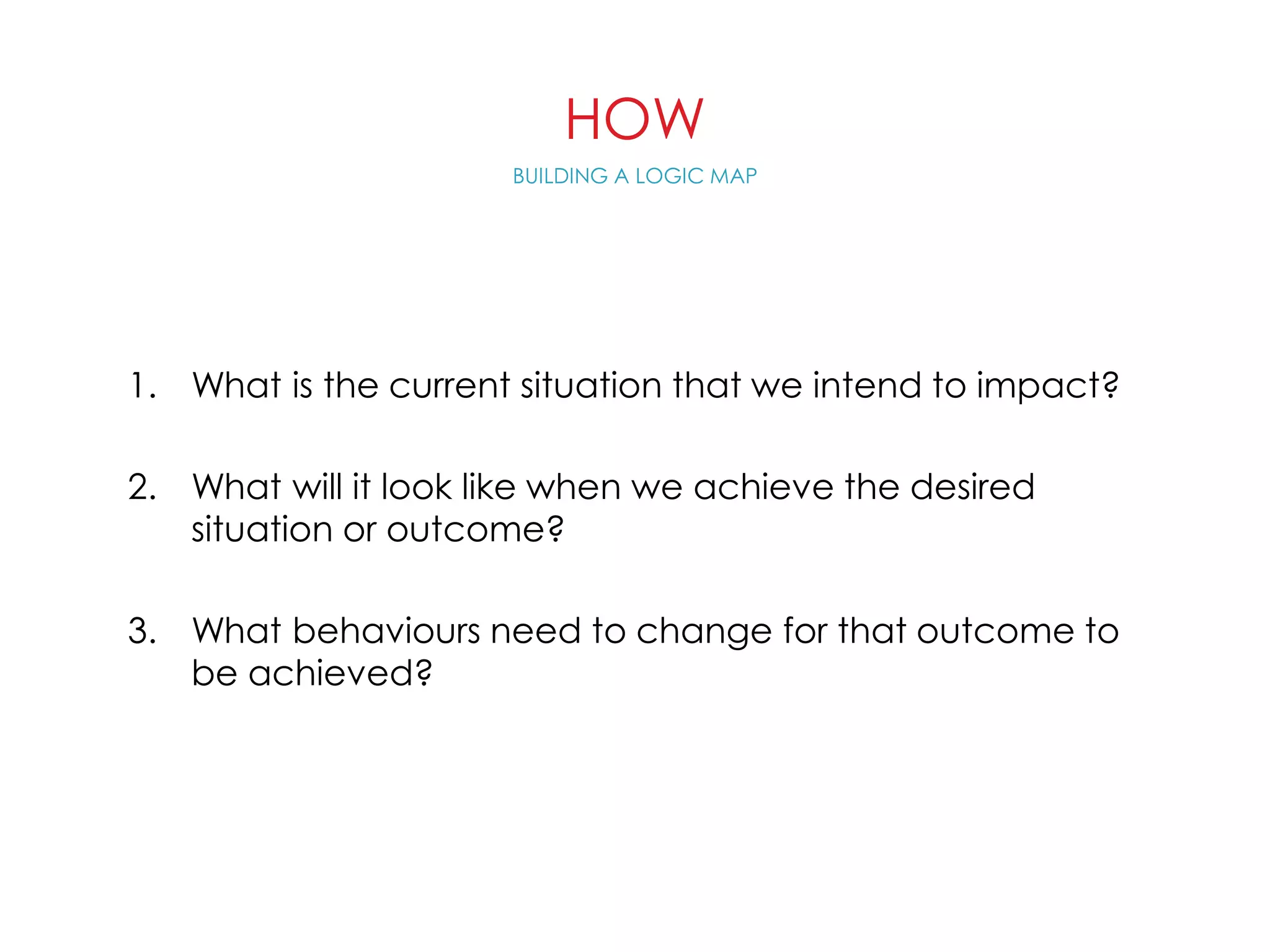
1. What is the current situation that we intend to impact?
2. What will it look like when we achieve the desired
situation or outcome?
3. What behaviours need to change for that outcome to
be achieved?
BUILDING A LOGIC MAP
HOW
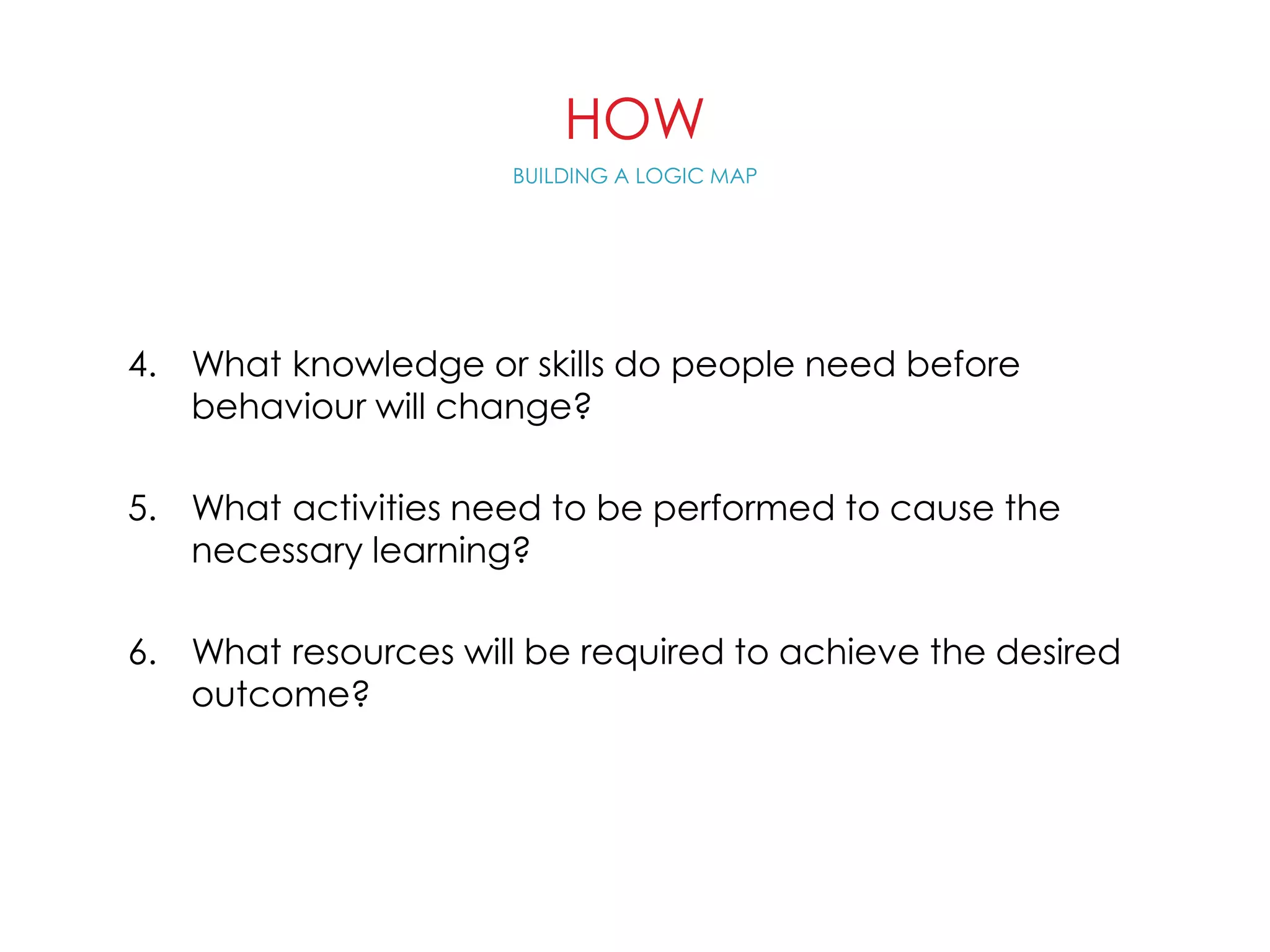
4. What knowledge or skills do people need before
behaviour will change?
5. What activities need to be performed to cause the
necessary learning?
6. What resources will be required to achieve the desired
outcome?
BUILDING A LOGIC MAP
HOW
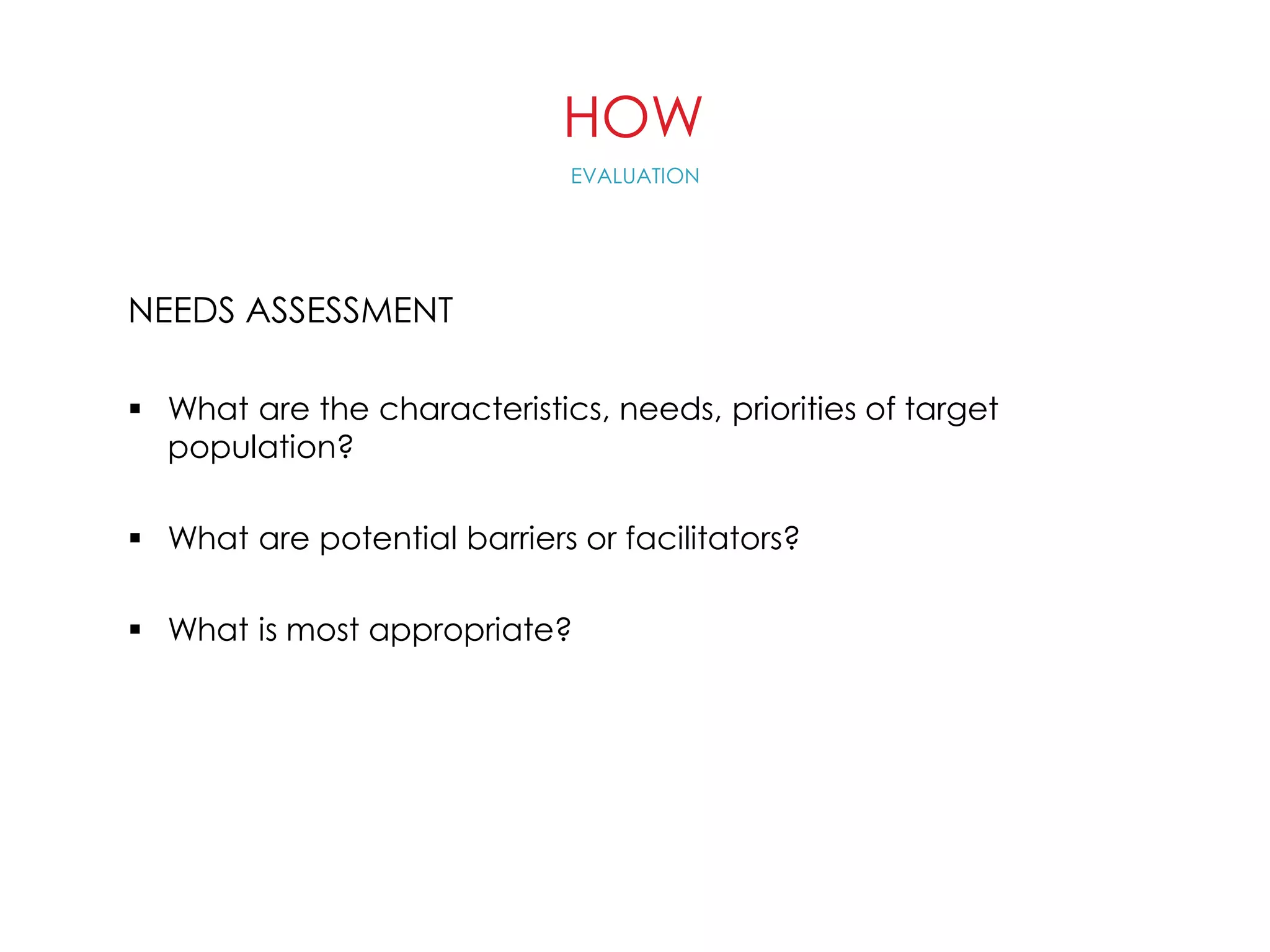
NEEDS ASSESSMENT
 What are the characteristics, needs, priorities of target
population?
 What are potential barriers or facilitators?
 What is most appropriate?
EVALUATION
HOW
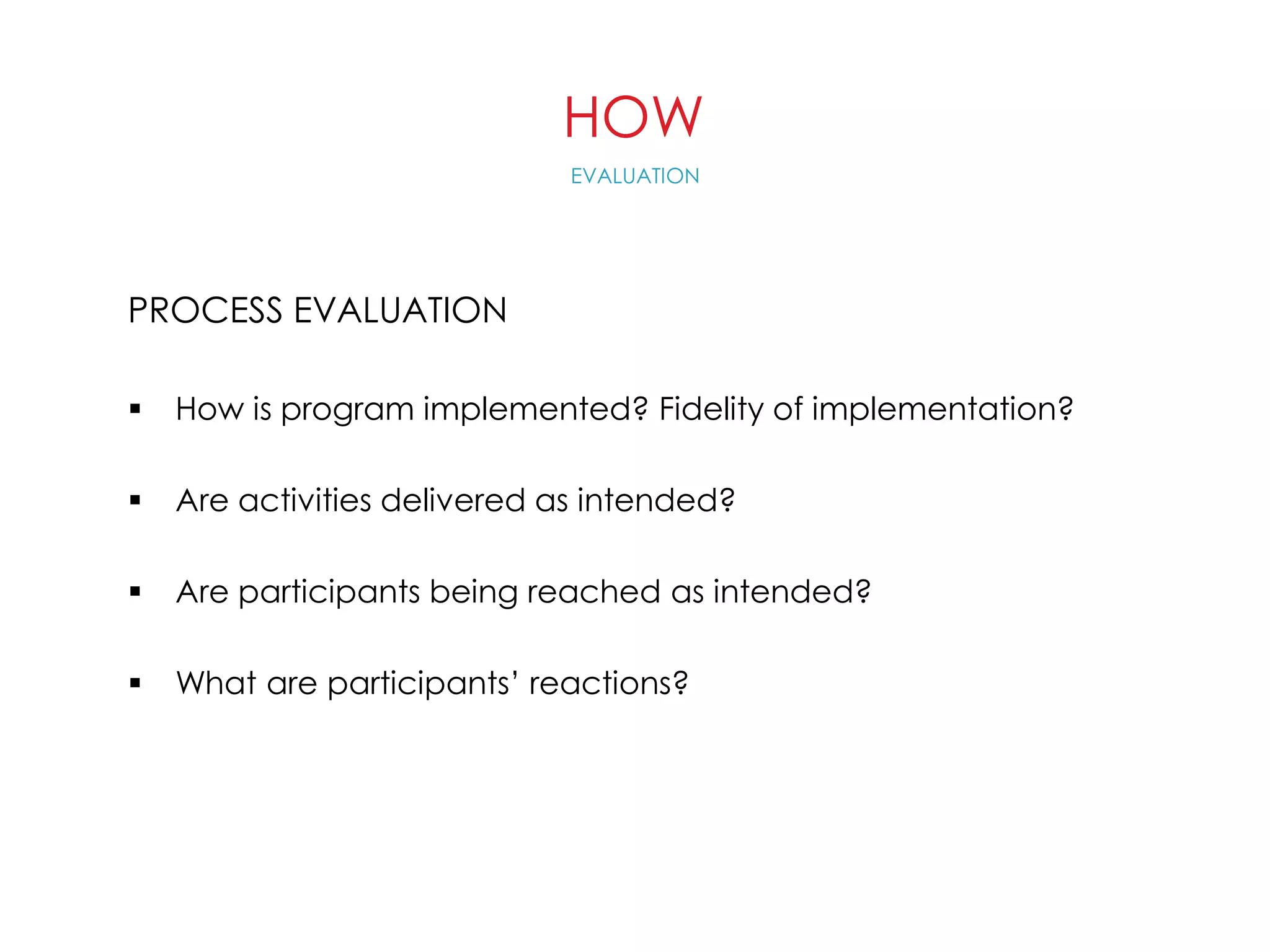
PROCESS EVALUATION
 How is program implemented? Fidelity of implementation?
 Are activities delivered as intended?
 Are participants being reached as intended?
 What are participants’ reactions?
EVALUATION
HOW
OUTCOME EVALUATION
 To what extent are desired changes occurring? For whom?
 Is the program making a difference?
 What seems to work? Not work?
 What are unintended outcomes?
EVALUATION
REFERENCE
McCawley P.F. The Logic Model for Program Planning and
Evaluation CIS 1097 1-5

Logic model

  • 1.
  • 2.
    WHAT  A depictionof a program or project showing what it will do and what it is intended to accomplish  A series of ‘if-then’ relationships that ideally, and if implemented as intended, will contribute to the desired outcome  The core of program planning and evaluation
  • 3.
    WHAT Change in  Knowledge Skills  Attitude  Motivation  Awareness Change in  Behaviours  Practices  Polices  Procedures Change in  Environment  Social conditions  Economic conditions  Political conditions SHORT TERM INTERMEDIATE LONG TERM OUTCOMES  Workshops  Publications  Field trips  Customers  participants EXTERNAL INFLUENCES, ENVIRONMENTAL, RELATED PROGRAMS SITUATION OUTPUTS What we invest  Time  Money  Partners  Equipment  Facilities INPUTS ELEMENTS OF LOGIC MODEL ACTIVITIES PARTICIPATION
  • 4.
    WHY  Focus onand be accountable for what matters  Provides a common language across stakeholders  Makes assumptions explicit  Promotes communication
  • 5.
    HOW 1. What isthe current situation that we intend to impact? 2. What will it look like when we achieve the desired situation or outcome? 3. What behaviours need to change for that outcome to be achieved? BUILDING A LOGIC MAP
  • 6.
    HOW 4. What knowledgeor skills do people need before behaviour will change? 5. What activities need to be performed to cause the necessary learning? 6. What resources will be required to achieve the desired outcome? BUILDING A LOGIC MAP
  • 7.
    HOW NEEDS ASSESSMENT  Whatare the characteristics, needs, priorities of target population?  What are potential barriers or facilitators?  What is most appropriate? EVALUATION
  • 8.
    HOW PROCESS EVALUATION  Howis program implemented? Fidelity of implementation?  Are activities delivered as intended?  Are participants being reached as intended?  What are participants’ reactions? EVALUATION
  • 9.
    HOW OUTCOME EVALUATION  Towhat extent are desired changes occurring? For whom?  Is the program making a difference?  What seems to work? Not work?  What are unintended outcomes? EVALUATION
  • 10.
    REFERENCE McCawley P.F. TheLogic Model for Program Planning and Evaluation CIS 1097 1-5

Editor's Notes

  • #4 Reference:http://carosconsulting.com/ResizedImages/upload/Services/599x282_logicmodel.jpg
  • #8 Reference:http://carosconsulting.com/ResizedImages/upload/Services/599x282_logicmodel.jpg
  • #9 Reference:http://carosconsulting.com/ResizedImages/upload/Services/599x282_logicmodel.jpg
  • #10 Reference:http://carosconsulting.com/ResizedImages/upload/Services/599x282_logicmodel.jpg