Rebecca White, Ph.D.
Professor
Organization Development and Evaluation
LSU AgCenter
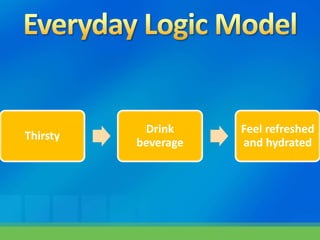
Thirsty
Drink
beverage
Feel refreshed
and hydrated
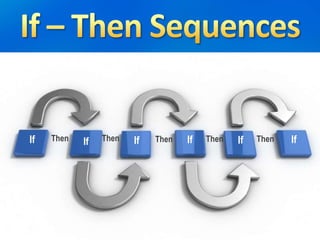
If If If If IfThen Then Then Then Then
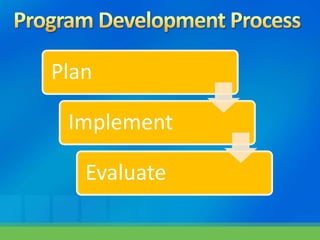
Plan
Implement
Evaluate
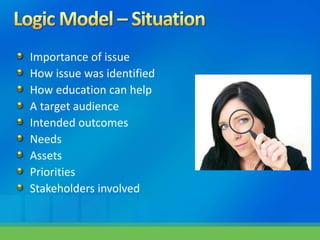
Importance of issue
How issue was identified
How education can help
A target audience
Intended outcomes
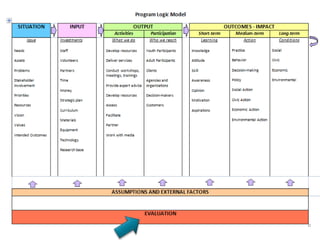
Needs
Assets
Priorities
Stakeholders involved
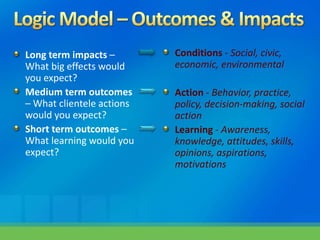
Long term impacts –
What big effects would
you expect?
Medium term outcomes
– What clientele actions
would you expect?
Short term outcomes –
What learning would you
expect?
Conditions - Social, civic,
economic, environmental
Action - Behavior, practice,
policy, decision-making, social
action
Learning - Awareness,
knowledge, attitudes, skills,
opinions, aspirations,
motivations
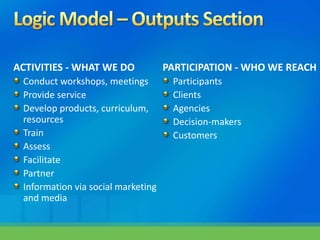
ACTIVITIES - WHAT WE DO
Conduct workshops, meetings
Provide service
Develop products, curriculum,
resources
Train
Assess
Facilitate
Partner
Information via social marketing
and media
PARTICIPATION - WHO WE REACH
Participants
Clients
Agencies
Decision-makers
Customers
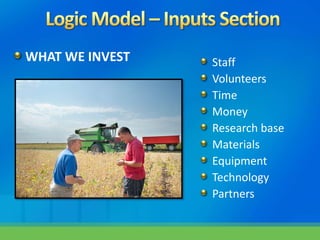
WHAT WE INVEST Staff
Volunteers
Time
Money
Research base
Materials
Equipment
Technology
Partners
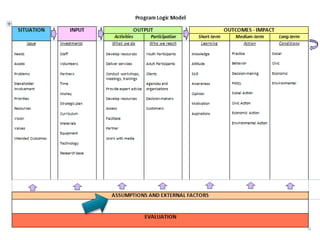
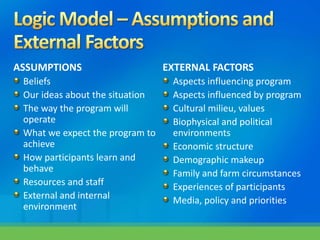
ASSUMPTIONS
Beliefs
Our ideas about the situation
The way the program will
operate
What we expect the program to
achieve
How participants learn and
behave
Resources and staff
External and internal
environment
EXTERNAL FACTORS
Aspects influencing program
Aspects influenced by program
Cultural milieu, values
Biophysical and political
environments
Economic structure
Demographic makeup
Family and farm circumstances
Experiences of participants
Media, policy and priorities
Provides program description that guides
evaluation process that helps to:
know what and when to measure
match evaluation to the program
focus on key, important information
Does the logic model:
Include a listing of all inputs that will be
needed for the program?
Include details of the activities listed?
Include a list of characteristics and intended
number of targeted participants?
Make sequential and logical connections
between inputs, outputs and outcomes?
Barkman, Susan J., (2000). Utilizing the Logic Model for Program Design and Evaluation. West Lafayette, IN: Purdue University:
Do Targeted Outcome(s):
 Help fulfill Extension’s mission?
 Represent meaningful benefits or changes for participants?
 Seem reasonable as a result of program participants in a
non-trivial way?
 Clearly define the intended scope of the program’s
influence?
 Help educator identify both points of success and problems
the program can correct?
 Provide data that is likely to be effective in communicating
benefits to stakeholders?
Barkman, Susan J., (2000). Utilizing the Logic Model for Program Design and Evaluation. West Lafayette, IN: Purdue University:
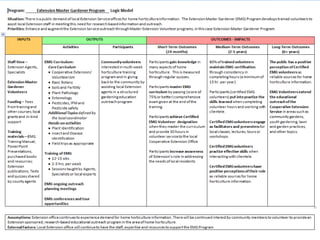
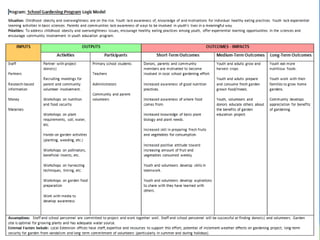
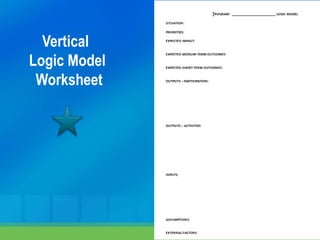
Vertical
Logic Model
Worksheet
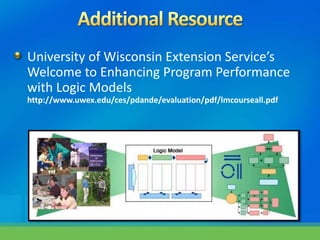
University of Wisconsin Extension Service’s
Welcome to Enhancing Program Performance
with Logic Models
http://www.uwex.edu/ces/pdande/evaluation/pdf/lmcourseall.pdf
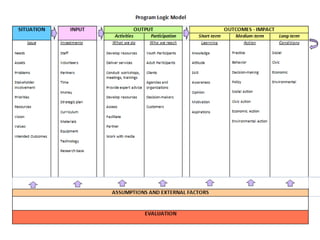
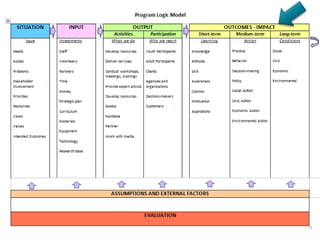
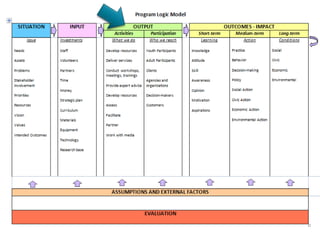
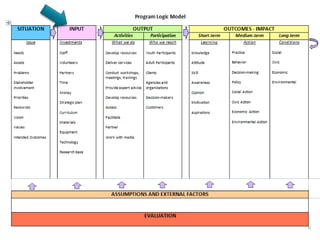
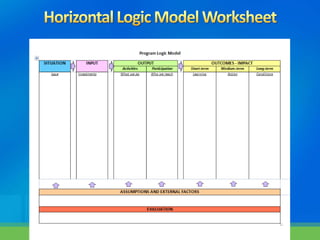
Situation
Impacts and Outcomes
Outputs
Inputs
Assumptions & External Factors
Evaluation Plan
Rebecca White, Ph.D.
Organization Development and Evaluation
Creating a Program Logic Model

Program Logic Models

  • 1.
    Rebecca White, Ph.D. Professor OrganizationDevelopment and Evaluation LSU AgCenter
  • 3.
  • 4.
    If If IfIf IfThen Then Then Then Then
  • 5.
  • 7.
    Importance of issue Howissue was identified How education can help A target audience Intended outcomes Needs Assets Priorities Stakeholders involved
  • 9.
    Long term impacts– What big effects would you expect? Medium term outcomes – What clientele actions would you expect? Short term outcomes – What learning would you expect? Conditions - Social, civic, economic, environmental Action - Behavior, practice, policy, decision-making, social action Learning - Awareness, knowledge, attitudes, skills, opinions, aspirations, motivations
  • 11.
    ACTIVITIES - WHATWE DO Conduct workshops, meetings Provide service Develop products, curriculum, resources Train Assess Facilitate Partner Information via social marketing and media PARTICIPATION - WHO WE REACH Participants Clients Agencies Decision-makers Customers
  • 13.
    WHAT WE INVESTStaff Volunteers Time Money Research base Materials Equipment Technology Partners
  • 15.
    ASSUMPTIONS Beliefs Our ideas aboutthe situation The way the program will operate What we expect the program to achieve How participants learn and behave Resources and staff External and internal environment EXTERNAL FACTORS Aspects influencing program Aspects influenced by program Cultural milieu, values Biophysical and political environments Economic structure Demographic makeup Family and farm circumstances Experiences of participants Media, policy and priorities
  • 17.
    Provides program descriptionthat guides evaluation process that helps to: know what and when to measure match evaluation to the program focus on key, important information
  • 20.
    Does the logicmodel: Include a listing of all inputs that will be needed for the program? Include details of the activities listed? Include a list of characteristics and intended number of targeted participants? Make sequential and logical connections between inputs, outputs and outcomes? Barkman, Susan J., (2000). Utilizing the Logic Model for Program Design and Evaluation. West Lafayette, IN: Purdue University:
  • 21.
    Do Targeted Outcome(s): Help fulfill Extension’s mission?  Represent meaningful benefits or changes for participants?  Seem reasonable as a result of program participants in a non-trivial way?  Clearly define the intended scope of the program’s influence?  Help educator identify both points of success and problems the program can correct?  Provide data that is likely to be effective in communicating benefits to stakeholders? Barkman, Susan J., (2000). Utilizing the Logic Model for Program Design and Evaluation. West Lafayette, IN: Purdue University:
  • 23.
  • 24.
    University of WisconsinExtension Service’s Welcome to Enhancing Program Performance with Logic Models http://www.uwex.edu/ces/pdande/evaluation/pdf/lmcourseall.pdf
  • 25.
  • 26.
    Rebecca White, Ph.D. OrganizationDevelopment and Evaluation Creating a Program Logic Model