LA Technique
Htay Htay Yi
UDM(Mdy)
Historical background
 18th
century – introduction of chemical compounds
 1844 – Horace Wells , a dentist , Nitrous Oxide in
dental practice
 demonstration at the carnival
 laughing gas was given to one of the audience
no pain when crashed into fences
 allowed himself for tooth removal
 did not appreciated nitrous was unsuitable for major
surgical procedure
 Dr WTG Morton ,
American(1819-68)
 Ether as a 1st
inhalation
anaesthesia
 discovery by applying to
the tooth for painful
procedures
 relayed to Dr Bott ,
English
 19.12.46 – molar
extraction of niece
 2 days later Dr Robert
Liston performed historic
operation , amputation
under ether
Era of inhalation anaesthesia
Era of injection anaesthesia
 1855 Alexander Wood
introduced hypodermic
syringe to inject drugs such
as morphine
 only inhalation ( nitrous ,
ether and chloroform )
before that
 short duration , stormy
procedure
 Supplemented with
trichlorethylene and
halothane – additional
hazards
 1884 Carl Koller discovered
cocaine , applied to mucous
memebrane
 American surgeon, William
Halsted used syringe to inject
cocaine
 Side effects – convulsion and
addition
 1905 Alfred Einhorn
synthesized safer Procaine
 1943 Nils Lofgren introduced
Lignocaine
Gow Gate’s mandibular nerve block
 Australian dentist named
Dr. George A.E. Gow-
Gates invented in the mid
1970's
 Injection is delivered at the
neck of the condyle just
under the insertion of the
lateral pterygoid muscle.
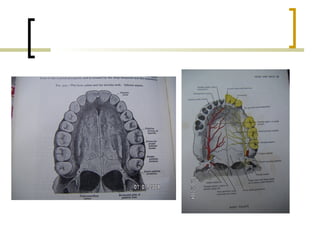
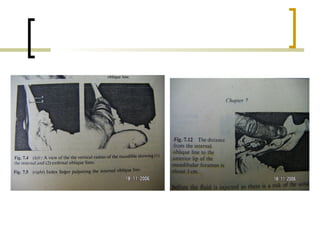
Injection is just below the mesiolingual
cusp of the maxillary second molar.
Vazirani-Akinosi Closed Mouth Mandibular block
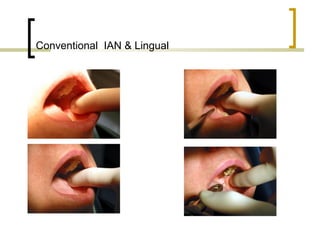
Conventional IAN & Lingual
The point of needle insertion should always be lateral to the pterygomandibular raphe
Vasoconstrictors
 Adrenaline=epinephrine
 Noradrenaline = norepinephrine
 Levonordefrin = corbadine
 Increase depth of anaesthesia
 Increase duration of anaesthesia
 Reduce systemic toxicity
 Hemostasis
Interactions with vasoconstrictors
Non-selective beta-blockers eg. propranolol (Inderal),
 Normal compensatory v/d of sk m/s by Beta2 receptors is inhibited
 Uncompensated peripheral vasoconstriction
 Significant increase blood pressure.
 Reduced vasconstrictor use is warranted.
Tricyclic antidepressants
 Examples include imipramine (Tofranil), amitriptyline (Elavil), desipramine (Norpramin),
nortriptyline (Aventyl), doxepin (Sinequan) and protriptyline (Vivactil).
 This interaction may result in increased blood pressure.
 Levonordefrin is contraindicated.
 Reduced epinephrine use is warranted.
General anaesthetic: halothane (Fluothane)
 This interaction may result in a serious cardiac dysrhythmia.
 The anaesthetist should be advised of the need for epinephrine in local anaesthetic, and
epinephrine should be limited to 1 µg/kg if thiopental is used or 2 µg/kg otherwise.
Cocaine
 This interaction may result in increased blood pressure and cardiac dysrhythmia.
 Patient must be free of cocaine use for at least 24 hours prior to using epinephrine.
Digitalis glycoside (digoxin)
 This interaction may result in arrhythmia
Catecholamine;
 Hypertension – raise BP , CVA
 Coronary artery - Angina pectoris , CABG (1st
3
months ) > arrhythmia
 Heart attack ( myocardia infarct ) > rpt infarct within
6 months , arrhythmia , heart failure
 Arrhythmias
 Hyperthyroidism – thyroid storm
 Diabetes mellitus – hyperglycaemia due to
glycogenolysis in liver and skeletal muscle
Fellypressin
 non catecholamine vasoconstrictor
 is added to prilocaine
 0.003 i.u./ml.
 Ocitocin like effect – smooth muscle
constriction – uterine contraction , coronary vessel
constriction
 relatively safe in patient taking tricyclic ,
halogenated GA
 Continue to monitor as required.
 Maximum dose of epinephrine ; 0.2 mgm per appointment in healthy
0.04 mgm per appointment with severe systemic disease
 Maximum dose of norepinephrine ; 0.34 mgm per appointment in
healthy 0.14 mgm per appointment with severe systemic disease
 Never use epinephrine-impregnated retraction cord.
 epinephrine, in concentrations
 1:50,000, 1:100,000 , 1:200,000
 1:100,000 – 1 Gm in 100,000 ml
- 0.01 mGm in 1 ml
- 0.018 mGm in 1.8 ml
 Adrenaline containing solutions should never be
used for infiltration around end-arteries i.e. penis,
ring block of fingers or other areas with a terminal
vascular supply as the intense vasoconstriction may
lead to severe ischaemia and necrosis
Local Anaesthesia
 Ester – (Amino ester)Procaine , Benzocaine ,
Tetracaine , Chloroprocaine , Propoxycaine
 Non-ester /Amide ( Amino amide)Lignocaine ,
Prilocaine , Mepivacaine , Bupiovacaine ,
Editocaine , Articaine

 Group I – short duration of action and low anaesthetic
potency , half life 5-10 minutes
 Procaine , Chloroprocaine
 Group II – intermediate duration of action and anaesthetic
potency, half life 30-90 minutes
 Lignocaine , Mepivacaine , Prilocaine , Articaine
 Group III – Long duration of action and high anaesthetic
potency , half life 90mins-3hrs
 Tetracaine , Bupivacaine , Etidocaine
Side effects of a L.A. – due to systemic actions ,
high concentration , readily cross the brain barrier
 On C.N.S. ; more resistant than C.V.S. , excitatory and / or
depression , nervousness , apprehension , agitation , nausea ,
nystagmus , logorrhoea , convulsion
 On Respiration ; respiratory depression , rsp. Arrest
 On C.V.S. ; (low - elevated B.P. , heart rate)
(high - peripheral vasodilatation , hypotension ,
conduction trouble , bradycardia ,fibrillation , arrest
 Drug interaction –beta blocker ,cimetidine – decrease the liver blood
flow
 Malignant hyperthermia – ( genetic variant ) , tacchycardia ,
tachypnea , unstable B.P. , cyanosis , fever , muscle rigidity , death
Contraindications to Amide type
 Allergy to amide
 Serious liver problems ; cirrhosis , elimination by the liver
cannot occur
 Malignant hyperthermia - crisis
 Lignocaine + Phenyltoin Na – sinoatrial arest
 Prilocaine – Methaemoglobinaemia d/t degradation products
 D toulidine or nitrosotoludine
 Articaine – Methaemoglobinaemia
 paroxysmal tachycardia , high frequency arrhythmia
 preservative sulphite – anaphylaxis , avoid in asthma
 deficit in cholinesterase
 narrow angle glaucoma
 cannot be used children under 4 yrs
 Epilepsy , Hyperthyroidism – can bring about crisis
 safe use in pregnancy has not been established
 excretion in human milk is unknown
 Most of the amide LA undergo biotransformation in the liver
 Prilocaine receives some metabolism in the lungs
 Articaine cannot cross the placenta barrier
 safe use in pregnancy has not been established
Adverse Reactions: Systemic
Fainting ( Vaso-vagal attack )
 spontaneous recovery is usual
 patient may complains of feeling dizzy , weak and nauseated ,
skin is pale , cold and clammy .
 head should be lowered , supine position with legs elevated ,
respiratory stimulant - smelling salt ( spirit ammonia )
 possible to complete the treatment in the same visit
 if not recover within 30-45 seconds , other causes rather than
vaso -vagal , airway maintained & Oxygen
 BLS - within 3 mins otherwise - irreversible brain damage
 3 months and above of pregnant mother - avoid supine position , gravid uterus
may press on the inferior venacava and aorta- supine hypotensive syndrome ,
should be laid on her side
Allergy
 allergy to an amide is rare
 the ester procaine is somewhat more allergenic
 the allergenic component is the breakdown product para-
aminobenzoic acid (PABA)
 an allergy to one ester rules out using another ester
 Conversely, an allergy to one amide does not rule out using
another amide
 Epinephrine has not been shown to have any allergenic
potential.
 In the past, methylparabens were often found to be the source
of allergy
 Methylparabens are preservatives used for multi-dose vials
 universally used until the early 1980s, and certain products
continued to include them as late as 1994
 Today, they are no longer included in dental cartridges, as
these are all single-use items
 as metabisulfite is added as an antioxidant whenever a
vasoconstrictor is added
 a vasoconstrictor can be used with patients who have an
allergy to sulfa (the antibacterial agent sulfonamide), as there
is no cross-allergenicity with sulfites
 food additives; sulfites are present (soda, vine, deshydrated
food etc...)
Potential allergens:
 Esters
 Amide allergy very rare
 Metabisulfite (present with epinephrine or
levonordefrin)
 Methylparabens (now removed from all cartridges)
 Alternative to LA - GA
Toxicity
 Local anaesthetic toxicity is due to systemic absorption of an
excessive amount of the drug
 toxicity could result if sufficient amounts of the anaesthetic
reach these other tissues, such as the heart or brain
 secondary to repeated injections or could be a result of a
single intravascular administration
 aspiration prior to every injection is so important.
Recommended Maximum Doses of Local
Anaesthetic - doses are even more critical in the paediatric patient
 Articaine 4% with epinephrine
7 mg/kg in adults(up to 500 mg) 7 cartridge
5 mg/kg in children
 Bupivacaine
0.5% with epinephrine 2 mg/kg (up to 200 mg) 10
 Lidocaine 2% with epinephrine
7 mg/kg (up to 500 mg) 13
 Mepivacaine 2% with levonordefrin
6.6 mg/kg (up to 400 mg) 11
 Mepivacaine 3% plain
6.6 mg/kg (up to 400 mg) 7
 Prilocaine 4% plain or with epinephrine
8 mg/kg (up to 500 mg) 8
MSD for healthy 70kg
 Lignocaine – 4.4 mg/kg , with adrenaline 7mg/kg
 Mepivaciane – 4.4 mg/kg , with levonordefrin
6.6mg/kg
 Prilocaine – 6mg/kg
 Bupivacaine – 1.3 mg/kg , with adrenaline2mg/kg
 Etidocaine – with adrenaline 6mg/kg
 Articaine - with adrenaline 7mg/kg

MSD ; limit for 70kgm
2% - 2 Gm in 100 ml
20 mGm in 1 ml
36 mGm in 1.8 ml
 Lidocaine 2%
4.4 mg/kg (300mg) – 8 cartridges
 Lidocaine 2% with epinephrine
7 mg/kg (up to 500 mg) – 13 catridges
10% - Spray
100 mGm in 1 ml
 May initially present as sedation, lightheadedness, slurred
speech, mood alteration, diplopia, sensory disturbances,
disorientation, muscle twitching
 Higher blood levels may result in tremors, respiratory
depression, tonic/clonic seizures
 If severe, may result in coma, respiratory arrest,
cardiovascular collapse
Methemoglobinemia
 most notably with prilocaine, but may also occur with articaine
or the topical anaesthetic benzocaine
 Methemoglobinemia is induced by an excess of metabolites of
these drugs
 presents as a cyanotic appearance
 does not respond to the administration of 100% oxygen
 cyanosis becomes apparent when methemoglobin levels are
low
 additional symptoms of nausea, sedation, seizures and even
coma may result when levels are very high
 prilocaine, articaine and benzocaine are best avoided in
patients with hereditary methemoglobinemia.
Malignant hyperthermia
 patients with this genetic disorder
 exposed to inhalation general anaesthetics or succinylcholine
 local anaesthetics are safe to use in patients who are
susceptible to malignant hyperthermia.
Serum hepatitis
 HBsAg
Adverse Reactions: Localized
Failure to obtain Anaesthesia
 After the expiration date , shelf - life of two years or more
 Variation between patients - duration of action may vary
 Individual reactions - resistance to the effects of certain drug
, insufficient dose , anxiety and fear - complain of pain ,
 Faulty technique - experience and competence of operator
,inadequate amount of L A in close proximity to the nerve
 Injection into muscle - deposition of solution a distance away
from nerve .e.g. IAN - medial pterygoid
 Intravenous injection - there will be no or little anaesthesia
effect
 always aspirate ( harphoon ended plunger , spiral claw )
 Anatomical variation - deviation in position of the nerve , thick
compact bone , accessory nerve supply
 Anastomoses - un-anaesthetized anastomosing nerve fibres
from the contralateral side , anterior region / midline -
supplementary L A injection of either infiltration or block
 Infection - L A agents are combination of weak base and
strong acid . They hydrolysed in the tissue ( pH 7.4 ) to
liberate alkaloid base which is taken up by nerve fibre . Free
base prevents the increase in sodium permeability of the
nerve membrane . In purulent - L A is not dissociated in an
active state resulting in lowering the anaesthetic potency .
Risk of spreading infection by infiltration - use block
Trismus
 limited jaw opening
 due to needle insertion into one of the muscles of mastication,
leading to bleeding, spasm or both
 most commonly involved is the medial pterygoid, which can be
penetrated during an inferior alveolar nerve block
 injection of local anaesthetic directly into muscle may cause a
mild myotoxic response, which can lead to necrosis
 the symptoms of trismus, often associated with pain
 arise anywhere from 1 to 6 days following an injection
 duration of symptoms and their severity are both variable

 Prevention
Follow basic principles of atraumatic injection technique.
 Management
Use analgesics as required.
Advise the patient to gradually open and close the mouth as a
means of physiotherapy.
Hematoma
 localized mass of extravasated blood
 inadvertent nicking of a blood vessel during the injection or
when withdrawing the needle
 pterygoid plexus of veins, the posterior superior alveolar
vessels, the inferior alveolar vessels and the mental vessels
 patient will notice swelling and discolouration (bruising) lasting
7 to 14 days
 hematoma forms independently of aspiration results
Prevention
Follow basic principles of atraumatic injection technique.
Use a short needle for the posterior superior alveolar nerve
block.
Infiltration rather than post superior nerve block
Management
 If hematoma is visible immediately following the injection, apply
direct pressure, if possible.
 Once bleeding has stopped, discharge patient with instructions
to
 Apply ice intermittently to the site for the first 6 hours.
 Do not apply heat for at least 6 hours.
 Use analgesics as required.
 Expect discolouration.
 If difficulty in opening occurs, treat as with trismus
Prolonged anaesthesia or paraesthesia
 after block techniques
 much less commonly after infiltrations
 Most commonly affected the lingual nerve , IAN
 the precise causes of paraesthesia are not certain
 needle trauma or the injection of alcohol or sterilizing solutions
 Articaine and prilocaine are more likely than other LA
 an accidental touch may be perceived as an "electric shock"
sensation by the patient
 majority of paraesthesias are transient
 resolving within 2 months, but they can become permanent
Prevention
 If patient feels "electric shock", move the needle away from the
site before injecting
 Do not store cartridges of local anaesthetic in disinfecting
solutions
 Minimize the use of articaine and prilocaine for block
technique
Management
 Advise the patient that the paraesthesia or anaesthesia is
usually temporary, although, rarely, it can remain indefinitely.
 Note the signs and symptoms and follow up within 1 month.
 If symptoms persist for more than 2 months, refer the patient
to an oral and maxillofacial surgeon
Do not store cartridges of local anaesthetic in disinfecting
solutions
Pain on injection
 pain or a burning sensation
 needle goes into a sensitive structure such as muscle or
tendon , direct trauma from the bevel of the needle causes
laceration of periosteum which is richly vascularized and rich in
nerve supply
 administered too quickly and distends the tissue rapidly
especially to mucosa tightly adapted to periosteum – palate
 Too large injection volume
 LA solutions at extremes of temperature ( cold) may also cause
discomfort
 Solutions that are more acidic / nonisotonic (i.e., those
containing a vasoconstrictor)
 Cartridges stored in a disinfecting solution such as alcohol
Prevention
 Inject slowly: Try to take at least 1 minute to administer 1
cartridge.
 Use volume no more than absolutely necessary
 Bevel of the needle facing towards bone , supraperiosteal
deposition of the LA solution
 Store cartridge at room temperature.
 Do not store cartridges of local anaesthetic in disinfecting
solutions.
Management
 Pain or burning on injection is usually self-limiting
Needle breakage
 rare
 sudden unexpected movement of the patient
 prior to the introduction of disposable needle - hypodermic
needle in chemical disinfectant sol - corroded
 smaller-diameter needles (i.e., 30 gauge), are more likely to
break than the larger diameter (i.e., 25 gauge)
 usually occurs at the hub
 needles should never be inserted completely into tissue
 repeated bending weakens the connection at the hub
Prevention
 Do not insert a needle into tissues to its hub , always leave a
portion exposed.
 Use long needles if a depth of more than 18 mm is required.
 Use larger-diameter needles (25 gauge is ideal) for deeper
blocks
 Do not apply excessive force on the needle once it is inserted
in tissue.
 If redirecting a needle is required, withdraw it almost
completely before doing so.
 Do not bend a needle more than once.
Management
 Remain calm.
 Ask the patient to remain still; keep the mouth open by not
removing your hand.
 If a portion of the needle is visible, remove it with a hemostat
or similar instrument.
 If the needle is not visible,
 Inform the patient.
 Record the events in the patient's chart.
 Refer the patient to an oral and maxillofacial surgeon.
Surgical removal should only be attempted by someone
experienced with surgery of the involved region and after
radiographs have been taken to help localize the needle.
Soft-tissue injury
 a patient may bite into the lip , cheek or tongue when there is
the loss of sensation
 if traumatized, swelling and pain later result
 most common in children and in patients who are mentally
challenged
Prevention
 For the paediatric, mentally challenged or demented patient,
warn the parent, guardian or caregiver to watch the patient
carefully for the duration of soft-tissue anaesthesia.
Management
 Use analgesics as required.
 Use rinses or applications with lukewarm dilute solutions of
salt or baking soda.
 Consider applying petroleum jelly over the lip lesion.
Facial nerve paralysis
 if the needle penetrates the parotid gland capsule
 the seventh cranial nerve, is contained within the parotid gland
and provides motor function through its 5 branches
 the temporalis, zygomatic, buccal, mandibular and cervical
 Needle placement into the parotid may occur if there is over-
insertion ( too far back and behind the ascending ramus )
during an inferior alveolar nerve block
 cause a transient unilateral paralysis of the muscles of the
chin, lower lip, upper lip, cheek and eye
 loss of tone in the muscles of facial expression
 Bell's palsy was commonly used to refer to all paralyses of the
facial nerve
 lasts the expected duration of anaesthesia of soft tissue
Facial palsy
 unilateral facial dysfunction ,
expressionless on effected side
( weakness of ipsilateral ) and muscle
pulled towards the unaffected side
 motor function test
 Temporal - asking the patient to
wrinkle the forehead ( by asking
to look upward ) , raise eyebrow
 Zygomatic - close the eyes as
strong as possible/ against
resistance
 Buccal and mandibular - blow
out the cheeks against the closed
mouth , to purse the mouth and
to whistle
 Buccal – drooping of upper lip
when showing the teeth
 Mandibular – over-riding of lower
lip when showing the teeth
Prevention
 Follow basic principles of atraumatic injection technique.
 Avoid over-insertion of the needle.
 For the conventional inferior alveolar nerve block, do not inject
unless bone has been contacted at the appropriate depth.
Management
 Reassure the patient of the transient nature of the paralysis.
 Advise the patient to use an eyepatch until motor function
returns (protective reflex)..
 If contact lenses are worn, they should be removed.
 Record the details in the patient's chart.
Superfluous anaesthesia
 Unwanted anaesthesia of other nerves may also occur
 Ocular complications following temporary paralysis of cranial
nerves II, III, IV or VI due to intravenous transport of local
anaesthetic to the cavernous sinus
 the lesser palatine nerve is commonly anaesthetized when
performing a greater palatine injection , patient will notice a
transient loss of sensation on the affected side when
swallowing
 the auriculotemporal nerve is most often anaesthetized as
part of the Gow-Gates block , patient will notice loss of
sensation over the superior half of the ear and the temple.
Prevention
 As always, aspirate well.
 Superfluous anaesthesia is often unavoidable.
Management
 Reassure the patient of the transient nature of the superfluous
anaesthesia.
 If there is ocular involvement, monitor and manage
symptomatically.
Infection
 an extremely rare complication, since sterile disposable
needles are used universally
 Injection into the active site of infection ie abscess
 Not only would the low pH prevent onset of local anaesthetic
action, but the infection could spread
 manifest initially as pain and trismus one-day post-injection
 If the symptoms persist for 3 days and continue to worsen, the
possibility of infection should be considered
 other signs of infection, such as swelling, lymphadenopathy
and fever
Prevention
 Use sterile disposable needles , check seal.
 Do not contaminate the needle by contacting non-sterile
surfaces outside the mouth – aseptic technique
 Needles should not be inserted within the active site of
infection
 In severely immunocompromised patients, consider a topical
antiseptic prior to injection.
Management
 Prescribe antibiotics, such as penicillin, in an appropriate
dose and duration.
 Record the details in the patient's chart and follow up to
determine progress.
Blanching
 at injected site is due to tissue tension , vasoconstrictor
 remote from injected site - IV inj. , interference with
autonomic nerve supply of the blood vessels
Bleeding at the injection point
 stop spontaneously
 L A with low v/c , without v/c
Visual disturbances
 infiltrating the orbit to anaesthetize the motor muscles of the
eye
 squints or double vision
 vascular spasm or accidental intra- arterial injection -
transient blindness
Local Anesthesia Injection Technique

Local Anesthesia Injection Technique

  • 1.
  • 2.
    Historical background  18th century– introduction of chemical compounds  1844 – Horace Wells , a dentist , Nitrous Oxide in dental practice  demonstration at the carnival  laughing gas was given to one of the audience no pain when crashed into fences  allowed himself for tooth removal  did not appreciated nitrous was unsuitable for major surgical procedure
  • 3.
     Dr WTGMorton , American(1819-68)  Ether as a 1st inhalation anaesthesia  discovery by applying to the tooth for painful procedures  relayed to Dr Bott , English  19.12.46 – molar extraction of niece  2 days later Dr Robert Liston performed historic operation , amputation under ether Era of inhalation anaesthesia
  • 4.
    Era of injectionanaesthesia  1855 Alexander Wood introduced hypodermic syringe to inject drugs such as morphine  only inhalation ( nitrous , ether and chloroform ) before that  short duration , stormy procedure  Supplemented with trichlorethylene and halothane – additional hazards
  • 5.
     1884 CarlKoller discovered cocaine , applied to mucous memebrane  American surgeon, William Halsted used syringe to inject cocaine  Side effects – convulsion and addition  1905 Alfred Einhorn synthesized safer Procaine  1943 Nils Lofgren introduced Lignocaine
  • 18.
    Gow Gate’s mandibularnerve block  Australian dentist named Dr. George A.E. Gow- Gates invented in the mid 1970's  Injection is delivered at the neck of the condyle just under the insertion of the lateral pterygoid muscle.
  • 19.
    Injection is justbelow the mesiolingual cusp of the maxillary second molar.
  • 20.
  • 24.
  • 26.
    The point ofneedle insertion should always be lateral to the pterygomandibular raphe
  • 29.
    Vasoconstrictors  Adrenaline=epinephrine  Noradrenaline= norepinephrine  Levonordefrin = corbadine
  • 31.
     Increase depthof anaesthesia  Increase duration of anaesthesia  Reduce systemic toxicity  Hemostasis
  • 32.
    Interactions with vasoconstrictors Non-selectivebeta-blockers eg. propranolol (Inderal),  Normal compensatory v/d of sk m/s by Beta2 receptors is inhibited  Uncompensated peripheral vasoconstriction  Significant increase blood pressure.  Reduced vasconstrictor use is warranted. Tricyclic antidepressants  Examples include imipramine (Tofranil), amitriptyline (Elavil), desipramine (Norpramin), nortriptyline (Aventyl), doxepin (Sinequan) and protriptyline (Vivactil).  This interaction may result in increased blood pressure.  Levonordefrin is contraindicated.  Reduced epinephrine use is warranted. General anaesthetic: halothane (Fluothane)  This interaction may result in a serious cardiac dysrhythmia.  The anaesthetist should be advised of the need for epinephrine in local anaesthetic, and epinephrine should be limited to 1 µg/kg if thiopental is used or 2 µg/kg otherwise. Cocaine  This interaction may result in increased blood pressure and cardiac dysrhythmia.  Patient must be free of cocaine use for at least 24 hours prior to using epinephrine. Digitalis glycoside (digoxin)  This interaction may result in arrhythmia
  • 33.
    Catecholamine;  Hypertension –raise BP , CVA  Coronary artery - Angina pectoris , CABG (1st 3 months ) > arrhythmia  Heart attack ( myocardia infarct ) > rpt infarct within 6 months , arrhythmia , heart failure  Arrhythmias  Hyperthyroidism – thyroid storm  Diabetes mellitus – hyperglycaemia due to glycogenolysis in liver and skeletal muscle
  • 34.
    Fellypressin  non catecholaminevasoconstrictor  is added to prilocaine  0.003 i.u./ml.  Ocitocin like effect – smooth muscle constriction – uterine contraction , coronary vessel constriction  relatively safe in patient taking tricyclic , halogenated GA
  • 35.
     Continue tomonitor as required.  Maximum dose of epinephrine ; 0.2 mgm per appointment in healthy 0.04 mgm per appointment with severe systemic disease  Maximum dose of norepinephrine ; 0.34 mgm per appointment in healthy 0.14 mgm per appointment with severe systemic disease  Never use epinephrine-impregnated retraction cord.
  • 36.
     epinephrine, inconcentrations  1:50,000, 1:100,000 , 1:200,000  1:100,000 – 1 Gm in 100,000 ml - 0.01 mGm in 1 ml - 0.018 mGm in 1.8 ml
  • 37.
     Adrenaline containingsolutions should never be used for infiltration around end-arteries i.e. penis, ring block of fingers or other areas with a terminal vascular supply as the intense vasoconstriction may lead to severe ischaemia and necrosis
  • 38.
    Local Anaesthesia  Ester– (Amino ester)Procaine , Benzocaine , Tetracaine , Chloroprocaine , Propoxycaine  Non-ester /Amide ( Amino amide)Lignocaine , Prilocaine , Mepivacaine , Bupiovacaine , Editocaine , Articaine 
  • 39.
     Group I– short duration of action and low anaesthetic potency , half life 5-10 minutes  Procaine , Chloroprocaine  Group II – intermediate duration of action and anaesthetic potency, half life 30-90 minutes  Lignocaine , Mepivacaine , Prilocaine , Articaine  Group III – Long duration of action and high anaesthetic potency , half life 90mins-3hrs  Tetracaine , Bupivacaine , Etidocaine
  • 40.
    Side effects ofa L.A. – due to systemic actions , high concentration , readily cross the brain barrier  On C.N.S. ; more resistant than C.V.S. , excitatory and / or depression , nervousness , apprehension , agitation , nausea , nystagmus , logorrhoea , convulsion  On Respiration ; respiratory depression , rsp. Arrest  On C.V.S. ; (low - elevated B.P. , heart rate) (high - peripheral vasodilatation , hypotension , conduction trouble , bradycardia ,fibrillation , arrest  Drug interaction –beta blocker ,cimetidine – decrease the liver blood flow  Malignant hyperthermia – ( genetic variant ) , tacchycardia , tachypnea , unstable B.P. , cyanosis , fever , muscle rigidity , death
  • 41.
    Contraindications to Amidetype  Allergy to amide  Serious liver problems ; cirrhosis , elimination by the liver cannot occur  Malignant hyperthermia - crisis
  • 42.
     Lignocaine +Phenyltoin Na – sinoatrial arest  Prilocaine – Methaemoglobinaemia d/t degradation products  D toulidine or nitrosotoludine  Articaine – Methaemoglobinaemia  paroxysmal tachycardia , high frequency arrhythmia  preservative sulphite – anaphylaxis , avoid in asthma  deficit in cholinesterase  narrow angle glaucoma  cannot be used children under 4 yrs  Epilepsy , Hyperthyroidism – can bring about crisis  safe use in pregnancy has not been established  excretion in human milk is unknown
  • 43.
     Most ofthe amide LA undergo biotransformation in the liver  Prilocaine receives some metabolism in the lungs  Articaine cannot cross the placenta barrier  safe use in pregnancy has not been established
  • 44.
  • 45.
    Fainting ( Vaso-vagalattack )  spontaneous recovery is usual  patient may complains of feeling dizzy , weak and nauseated , skin is pale , cold and clammy .  head should be lowered , supine position with legs elevated , respiratory stimulant - smelling salt ( spirit ammonia )  possible to complete the treatment in the same visit  if not recover within 30-45 seconds , other causes rather than vaso -vagal , airway maintained & Oxygen  BLS - within 3 mins otherwise - irreversible brain damage
  • 46.
     3 monthsand above of pregnant mother - avoid supine position , gravid uterus may press on the inferior venacava and aorta- supine hypotensive syndrome , should be laid on her side
  • 47.
    Allergy  allergy toan amide is rare  the ester procaine is somewhat more allergenic  the allergenic component is the breakdown product para- aminobenzoic acid (PABA)  an allergy to one ester rules out using another ester  Conversely, an allergy to one amide does not rule out using another amide  Epinephrine has not been shown to have any allergenic potential.
  • 48.
     In thepast, methylparabens were often found to be the source of allergy  Methylparabens are preservatives used for multi-dose vials  universally used until the early 1980s, and certain products continued to include them as late as 1994  Today, they are no longer included in dental cartridges, as these are all single-use items
  • 49.
     as metabisulfiteis added as an antioxidant whenever a vasoconstrictor is added  a vasoconstrictor can be used with patients who have an allergy to sulfa (the antibacterial agent sulfonamide), as there is no cross-allergenicity with sulfites  food additives; sulfites are present (soda, vine, deshydrated food etc...)
  • 50.
    Potential allergens:  Esters Amide allergy very rare  Metabisulfite (present with epinephrine or levonordefrin)  Methylparabens (now removed from all cartridges)
  • 51.
  • 52.
    Toxicity  Local anaesthetictoxicity is due to systemic absorption of an excessive amount of the drug  toxicity could result if sufficient amounts of the anaesthetic reach these other tissues, such as the heart or brain  secondary to repeated injections or could be a result of a single intravascular administration  aspiration prior to every injection is so important.
  • 60.
    Recommended Maximum Dosesof Local Anaesthetic - doses are even more critical in the paediatric patient  Articaine 4% with epinephrine 7 mg/kg in adults(up to 500 mg) 7 cartridge 5 mg/kg in children  Bupivacaine 0.5% with epinephrine 2 mg/kg (up to 200 mg) 10  Lidocaine 2% with epinephrine 7 mg/kg (up to 500 mg) 13  Mepivacaine 2% with levonordefrin 6.6 mg/kg (up to 400 mg) 11  Mepivacaine 3% plain 6.6 mg/kg (up to 400 mg) 7  Prilocaine 4% plain or with epinephrine 8 mg/kg (up to 500 mg) 8
  • 61.
    MSD for healthy70kg  Lignocaine – 4.4 mg/kg , with adrenaline 7mg/kg  Mepivaciane – 4.4 mg/kg , with levonordefrin 6.6mg/kg  Prilocaine – 6mg/kg  Bupivacaine – 1.3 mg/kg , with adrenaline2mg/kg  Etidocaine – with adrenaline 6mg/kg  Articaine - with adrenaline 7mg/kg 
  • 62.
    MSD ; limitfor 70kgm 2% - 2 Gm in 100 ml 20 mGm in 1 ml 36 mGm in 1.8 ml  Lidocaine 2% 4.4 mg/kg (300mg) – 8 cartridges  Lidocaine 2% with epinephrine 7 mg/kg (up to 500 mg) – 13 catridges
  • 63.
    10% - Spray 100mGm in 1 ml
  • 64.
     May initiallypresent as sedation, lightheadedness, slurred speech, mood alteration, diplopia, sensory disturbances, disorientation, muscle twitching  Higher blood levels may result in tremors, respiratory depression, tonic/clonic seizures  If severe, may result in coma, respiratory arrest, cardiovascular collapse
  • 65.
    Methemoglobinemia  most notablywith prilocaine, but may also occur with articaine or the topical anaesthetic benzocaine  Methemoglobinemia is induced by an excess of metabolites of these drugs  presents as a cyanotic appearance  does not respond to the administration of 100% oxygen  cyanosis becomes apparent when methemoglobin levels are low  additional symptoms of nausea, sedation, seizures and even coma may result when levels are very high  prilocaine, articaine and benzocaine are best avoided in patients with hereditary methemoglobinemia.
  • 66.
    Malignant hyperthermia  patientswith this genetic disorder  exposed to inhalation general anaesthetics or succinylcholine  local anaesthetics are safe to use in patients who are susceptible to malignant hyperthermia.
  • 67.
  • 68.
  • 69.
    Failure to obtainAnaesthesia  After the expiration date , shelf - life of two years or more  Variation between patients - duration of action may vary  Individual reactions - resistance to the effects of certain drug , insufficient dose , anxiety and fear - complain of pain ,  Faulty technique - experience and competence of operator ,inadequate amount of L A in close proximity to the nerve  Injection into muscle - deposition of solution a distance away from nerve .e.g. IAN - medial pterygoid  Intravenous injection - there will be no or little anaesthesia effect  always aspirate ( harphoon ended plunger , spiral claw )  Anatomical variation - deviation in position of the nerve , thick compact bone , accessory nerve supply
  • 70.
     Anastomoses -un-anaesthetized anastomosing nerve fibres from the contralateral side , anterior region / midline - supplementary L A injection of either infiltration or block  Infection - L A agents are combination of weak base and strong acid . They hydrolysed in the tissue ( pH 7.4 ) to liberate alkaloid base which is taken up by nerve fibre . Free base prevents the increase in sodium permeability of the nerve membrane . In purulent - L A is not dissociated in an active state resulting in lowering the anaesthetic potency . Risk of spreading infection by infiltration - use block
  • 71.
    Trismus  limited jawopening  due to needle insertion into one of the muscles of mastication, leading to bleeding, spasm or both  most commonly involved is the medial pterygoid, which can be penetrated during an inferior alveolar nerve block  injection of local anaesthetic directly into muscle may cause a mild myotoxic response, which can lead to necrosis  the symptoms of trismus, often associated with pain  arise anywhere from 1 to 6 days following an injection  duration of symptoms and their severity are both variable 
  • 72.
     Prevention Follow basicprinciples of atraumatic injection technique.  Management Use analgesics as required. Advise the patient to gradually open and close the mouth as a means of physiotherapy.
  • 73.
    Hematoma  localized massof extravasated blood  inadvertent nicking of a blood vessel during the injection or when withdrawing the needle  pterygoid plexus of veins, the posterior superior alveolar vessels, the inferior alveolar vessels and the mental vessels  patient will notice swelling and discolouration (bruising) lasting 7 to 14 days  hematoma forms independently of aspiration results
  • 75.
    Prevention Follow basic principlesof atraumatic injection technique. Use a short needle for the posterior superior alveolar nerve block. Infiltration rather than post superior nerve block Management  If hematoma is visible immediately following the injection, apply direct pressure, if possible.  Once bleeding has stopped, discharge patient with instructions to  Apply ice intermittently to the site for the first 6 hours.  Do not apply heat for at least 6 hours.  Use analgesics as required.  Expect discolouration.  If difficulty in opening occurs, treat as with trismus
  • 76.
    Prolonged anaesthesia orparaesthesia  after block techniques  much less commonly after infiltrations  Most commonly affected the lingual nerve , IAN  the precise causes of paraesthesia are not certain  needle trauma or the injection of alcohol or sterilizing solutions  Articaine and prilocaine are more likely than other LA  an accidental touch may be perceived as an "electric shock" sensation by the patient  majority of paraesthesias are transient  resolving within 2 months, but they can become permanent
  • 77.
    Prevention  If patientfeels "electric shock", move the needle away from the site before injecting  Do not store cartridges of local anaesthetic in disinfecting solutions  Minimize the use of articaine and prilocaine for block technique Management  Advise the patient that the paraesthesia or anaesthesia is usually temporary, although, rarely, it can remain indefinitely.  Note the signs and symptoms and follow up within 1 month.  If symptoms persist for more than 2 months, refer the patient to an oral and maxillofacial surgeon
  • 78.
    Do not storecartridges of local anaesthetic in disinfecting solutions
  • 79.
    Pain on injection pain or a burning sensation  needle goes into a sensitive structure such as muscle or tendon , direct trauma from the bevel of the needle causes laceration of periosteum which is richly vascularized and rich in nerve supply  administered too quickly and distends the tissue rapidly especially to mucosa tightly adapted to periosteum – palate  Too large injection volume  LA solutions at extremes of temperature ( cold) may also cause discomfort  Solutions that are more acidic / nonisotonic (i.e., those containing a vasoconstrictor)  Cartridges stored in a disinfecting solution such as alcohol
  • 80.
    Prevention  Inject slowly:Try to take at least 1 minute to administer 1 cartridge.  Use volume no more than absolutely necessary  Bevel of the needle facing towards bone , supraperiosteal deposition of the LA solution  Store cartridge at room temperature.  Do not store cartridges of local anaesthetic in disinfecting solutions. Management  Pain or burning on injection is usually self-limiting
  • 82.
    Needle breakage  rare sudden unexpected movement of the patient  prior to the introduction of disposable needle - hypodermic needle in chemical disinfectant sol - corroded  smaller-diameter needles (i.e., 30 gauge), are more likely to break than the larger diameter (i.e., 25 gauge)  usually occurs at the hub  needles should never be inserted completely into tissue  repeated bending weakens the connection at the hub
  • 83.
    Prevention  Do notinsert a needle into tissues to its hub , always leave a portion exposed.  Use long needles if a depth of more than 18 mm is required.  Use larger-diameter needles (25 gauge is ideal) for deeper blocks  Do not apply excessive force on the needle once it is inserted in tissue.  If redirecting a needle is required, withdraw it almost completely before doing so.  Do not bend a needle more than once.
  • 84.
    Management  Remain calm. Ask the patient to remain still; keep the mouth open by not removing your hand.  If a portion of the needle is visible, remove it with a hemostat or similar instrument.  If the needle is not visible,  Inform the patient.  Record the events in the patient's chart.  Refer the patient to an oral and maxillofacial surgeon. Surgical removal should only be attempted by someone experienced with surgery of the involved region and after radiographs have been taken to help localize the needle.
  • 85.
    Soft-tissue injury  apatient may bite into the lip , cheek or tongue when there is the loss of sensation  if traumatized, swelling and pain later result  most common in children and in patients who are mentally challenged
  • 86.
    Prevention  For thepaediatric, mentally challenged or demented patient, warn the parent, guardian or caregiver to watch the patient carefully for the duration of soft-tissue anaesthesia. Management  Use analgesics as required.  Use rinses or applications with lukewarm dilute solutions of salt or baking soda.  Consider applying petroleum jelly over the lip lesion.
  • 87.
    Facial nerve paralysis if the needle penetrates the parotid gland capsule  the seventh cranial nerve, is contained within the parotid gland and provides motor function through its 5 branches  the temporalis, zygomatic, buccal, mandibular and cervical  Needle placement into the parotid may occur if there is over- insertion ( too far back and behind the ascending ramus ) during an inferior alveolar nerve block  cause a transient unilateral paralysis of the muscles of the chin, lower lip, upper lip, cheek and eye  loss of tone in the muscles of facial expression  Bell's palsy was commonly used to refer to all paralyses of the facial nerve  lasts the expected duration of anaesthesia of soft tissue
  • 91.
    Facial palsy  unilateralfacial dysfunction , expressionless on effected side ( weakness of ipsilateral ) and muscle pulled towards the unaffected side  motor function test  Temporal - asking the patient to wrinkle the forehead ( by asking to look upward ) , raise eyebrow  Zygomatic - close the eyes as strong as possible/ against resistance  Buccal and mandibular - blow out the cheeks against the closed mouth , to purse the mouth and to whistle  Buccal – drooping of upper lip when showing the teeth  Mandibular – over-riding of lower lip when showing the teeth
  • 92.
    Prevention  Follow basicprinciples of atraumatic injection technique.  Avoid over-insertion of the needle.  For the conventional inferior alveolar nerve block, do not inject unless bone has been contacted at the appropriate depth. Management  Reassure the patient of the transient nature of the paralysis.  Advise the patient to use an eyepatch until motor function returns (protective reflex)..  If contact lenses are worn, they should be removed.  Record the details in the patient's chart.
  • 93.
    Superfluous anaesthesia  Unwantedanaesthesia of other nerves may also occur  Ocular complications following temporary paralysis of cranial nerves II, III, IV or VI due to intravenous transport of local anaesthetic to the cavernous sinus  the lesser palatine nerve is commonly anaesthetized when performing a greater palatine injection , patient will notice a transient loss of sensation on the affected side when swallowing  the auriculotemporal nerve is most often anaesthetized as part of the Gow-Gates block , patient will notice loss of sensation over the superior half of the ear and the temple.
  • 94.
    Prevention  As always,aspirate well.  Superfluous anaesthesia is often unavoidable. Management  Reassure the patient of the transient nature of the superfluous anaesthesia.  If there is ocular involvement, monitor and manage symptomatically.
  • 95.
    Infection  an extremelyrare complication, since sterile disposable needles are used universally  Injection into the active site of infection ie abscess  Not only would the low pH prevent onset of local anaesthetic action, but the infection could spread  manifest initially as pain and trismus one-day post-injection  If the symptoms persist for 3 days and continue to worsen, the possibility of infection should be considered  other signs of infection, such as swelling, lymphadenopathy and fever
  • 96.
    Prevention  Use steriledisposable needles , check seal.  Do not contaminate the needle by contacting non-sterile surfaces outside the mouth – aseptic technique  Needles should not be inserted within the active site of infection  In severely immunocompromised patients, consider a topical antiseptic prior to injection. Management  Prescribe antibiotics, such as penicillin, in an appropriate dose and duration.  Record the details in the patient's chart and follow up to determine progress.
  • 97.
    Blanching  at injectedsite is due to tissue tension , vasoconstrictor  remote from injected site - IV inj. , interference with autonomic nerve supply of the blood vessels
  • 98.
    Bleeding at theinjection point  stop spontaneously  L A with low v/c , without v/c
  • 99.
    Visual disturbances  infiltratingthe orbit to anaesthetize the motor muscles of the eye  squints or double vision  vascular spasm or accidental intra- arterial injection - transient blindness