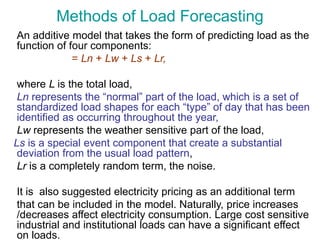
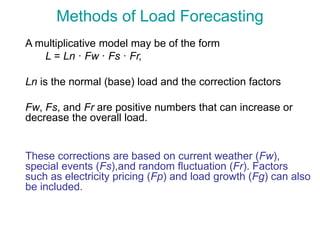
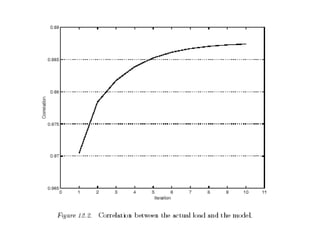
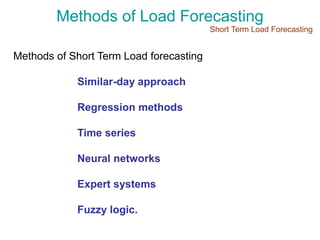
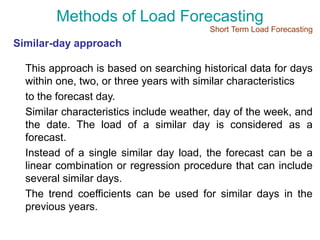
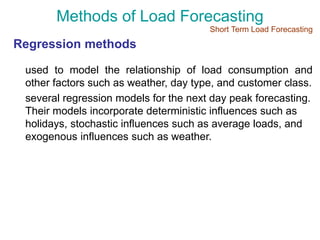
Load forecasting aims to predict electricity demand with varying levels of accuracy over different timescales. Short-term load forecasting for the next day can predict load within 1-3% accuracy, while long-term forecasting for the next year's peak load is less accurate due to uncertain weather. Multiple factors influence load forecasting models, including weather, customer class, time of day or year, historical load data, and economic indicators. Common statistical techniques used include regression, time series, and neural networks to analyze these influencing factors for both short and long-term load forecasting needs.