Peak-to-Average Power Ratio (PAPR)
Reduction
in Multi-Carrier Communication Systems
Simon Litsyn
Department of Electrical Engineering – Systems,
Tel Aviv University, 69978 ISRAEL
litsyn@eng.tau.ac.il
Peak-to-Average Power Ratio (PAPR) Reduction in multi-carrier systems

1

0 5
.

0 2
.

0 4
.

0 6
.

0 8
.

1

- .
0 5

*1

1

1

0.5

0.2

0.4

0.6

0.
8

1

0.5

*(-1)

6

4

-1

1

0.5

0.2

0.4

0.6

0.
8

1

-0.
5

*(-1)

1

1

0.5

0.2
-0.5

-1

0.4

0.6

0.8

1

*1

=

2

0.2

0.4

0.6

0.8

1
Peak-to-Average Power Ratio (PAPR) Reduction in multi-carrier systems

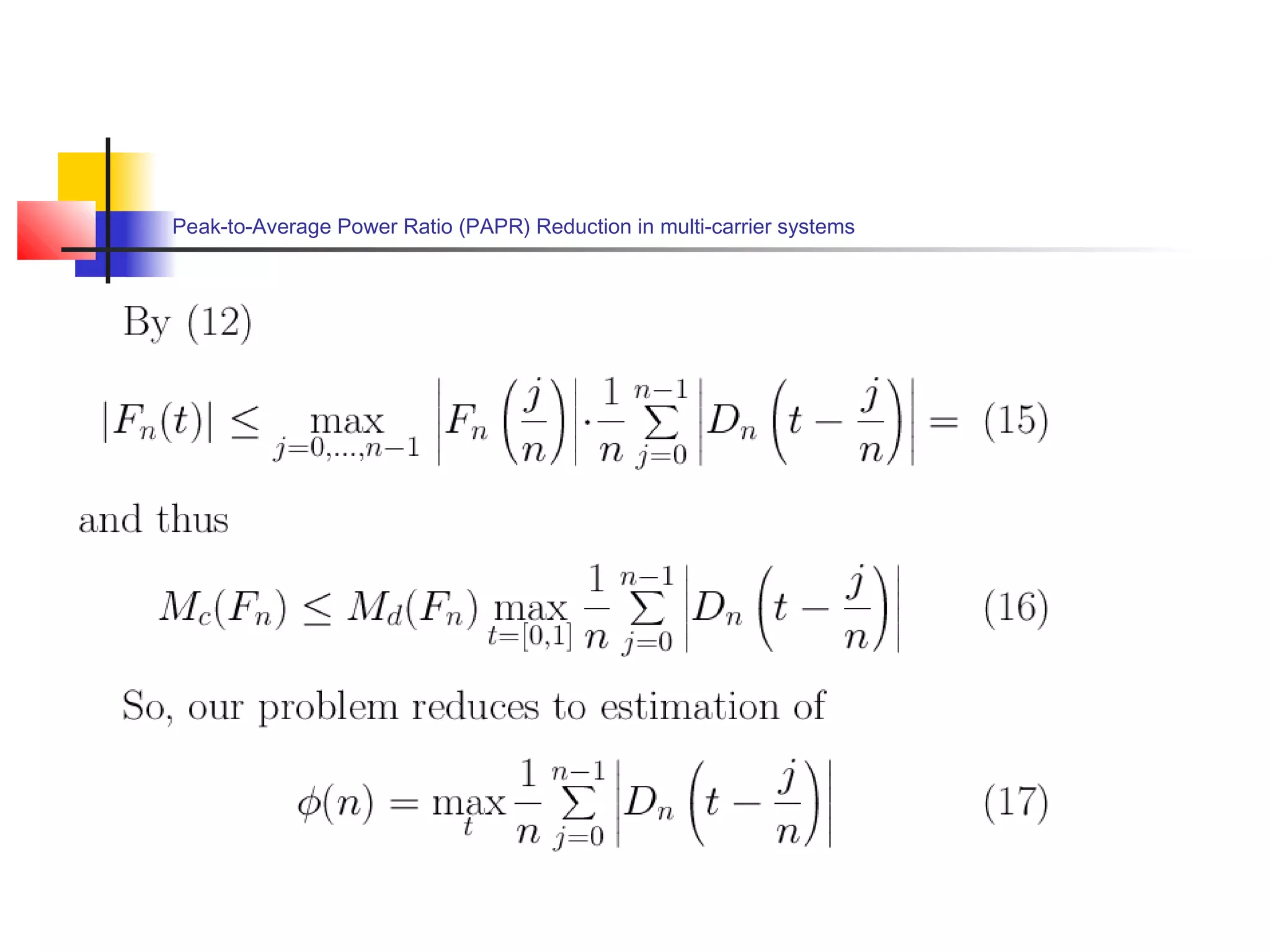
5
4
3
2
1

0.2

0.4

0.6

0.8

1
Peak-to-Average Power Ratio (PAPR) Reduction in multi-carrier systems

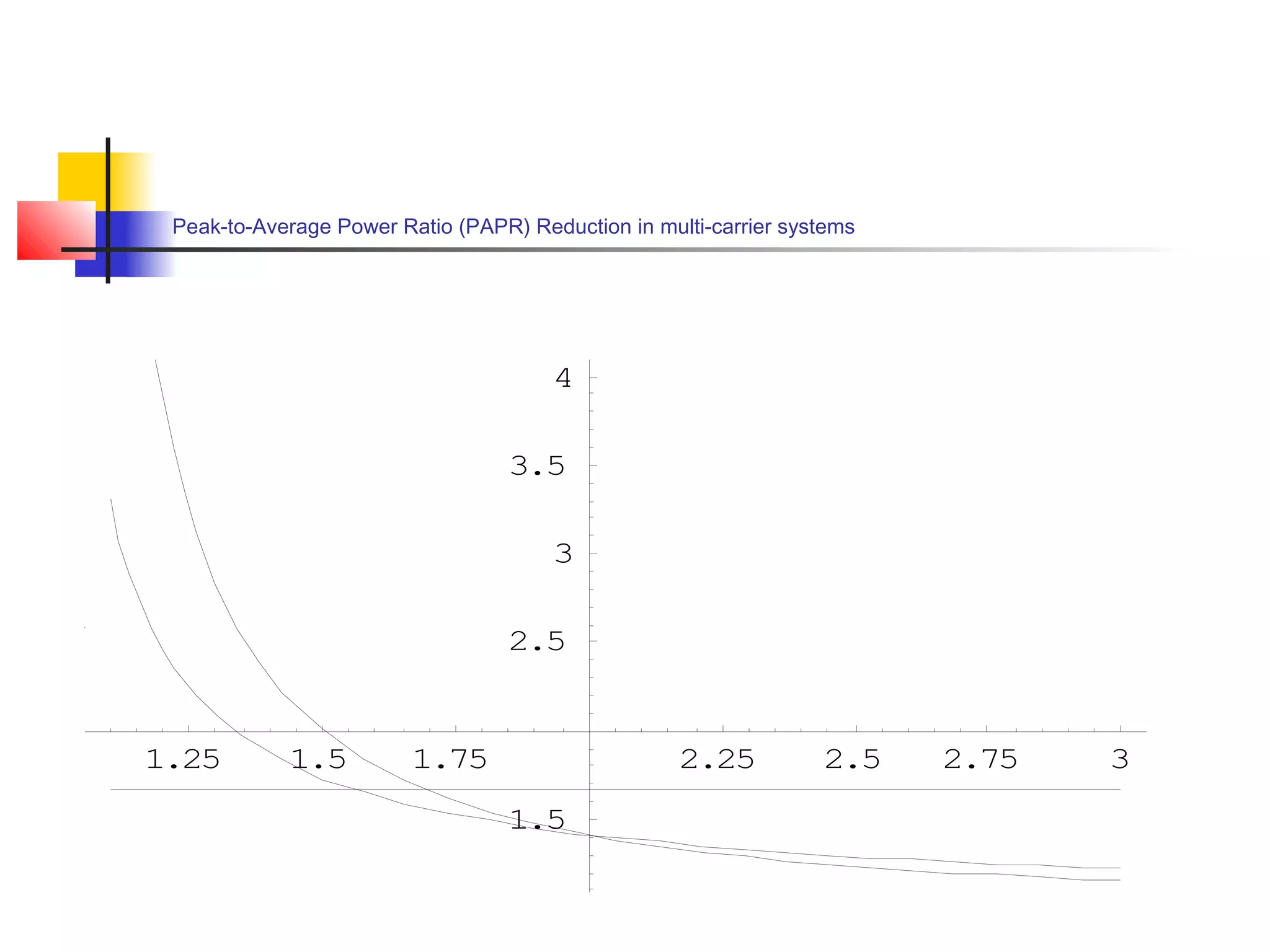
4
3.5
3
2.5

1.25

1.5

1.75

2.25
1.5

2.5

2.75

3
Peak-to-Average Power Ratio (PAPR) Reduction in multi-carrier systems

PAPR Reduction