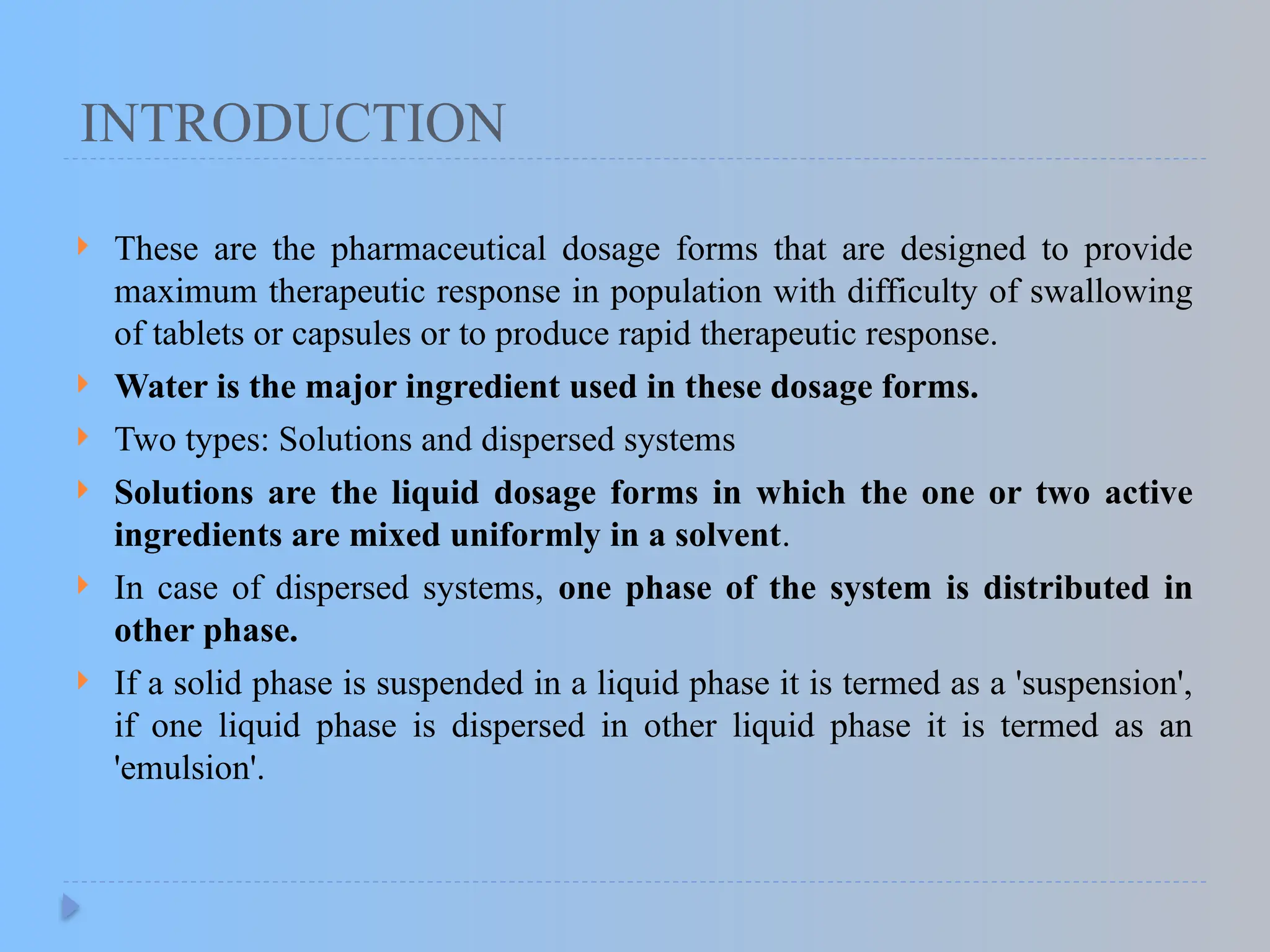
LIQUID DOSAGE FORMS
PREPARED BY POST-BASIC PHARMACY GROUP TWO
Overview
Liquid Dosage Forms:
❤ ️
Solutions 🩸
👉 Introduction
👉Formulation
considerations (solvents and
other
excipients, stability)
👉Manufacturing processes:
Equipments and machines,
filling and packaging
👉 Quality evaluations
INTRODUCTION
 These are the pharmaceutical dosage forms that are designed to provide
maximum therapeutic response in population with difficulty of swallowing
of tablets or capsules or to produce rapid therapeutic response.
 Water is the major ingredient used in these dosage forms.
 Two types: Solutions and dispersed systems
 Solutions are the liquid dosage forms in which the one or two active
ingredients are mixed uniformly in a solvent.
 In case of dispersed systems, one phase of the system is distributed in
other phase.
 If a solid phase is suspended in a liquid phase it is termed as a 'suspension',
if one liquid phase is dispersed in other liquid phase it is termed as an
'emulsion'.
ADVANTAGES
 They are more effective than solid dosage forms as this
eliminates the dissolving step of solid drug in the GIT.
 It is easy to swallow than solid dosage form especially
in case of geriatric and pediatric populations.
 Certain drugs have to be administered in liquid form
only. It may be due to the large dose of the drug that is
difficult to administer in solid dosage form.
 Some drugs cause gastric irritation when administered
in Solid dosage form, e.g. potassium iodide and
bromide. Hence they are to be administered in liquid
dosage form
DISADVANTAGES
 Deterioration and loss of potency
 Flavouring and sweetening problems
 Many incompatibility problems
 More chances for microbial contamination .Hence
preservatives added. But the liquid dosage forms with
preservatives are not intended for neonates as the antimicrobial
preservatives cause serious acute and long-term adverse
effects.
 Inaccuracy of measuring dose may occur. It needs a Accurate
measuring device for administration.
 These are bulkier to carry than solid dosage forms. There are
chances for breakage of the container.
EXCIPIENTS USED IN LIQUID DOSAGE FORM
 Pharmaceutical excipients are substances other than the
pharmacologically active drug which are include in the
manufacturing process or are contained in a finished
pharmaceutical product dosage form.
 In most of the formulations these are present in a greater
proportion with regards to active pharmaceutical ingredient, as
it forms about the bulk of the formulation, it is necessary to
select an excipient which satisfies the ideal properties for a
particular excipient.
 Excipients act as protective agents, bulking agents and can also
be used to improve bioavailability of drugs in some instances
1.VEHICLE
 Vehicles, in pharmaceutical formulations, are the liquid
bases that carry drugs and other excipients in dissolved or
dispersed state. Pharmaceutical vehicles can be classified
as under; aqueous vehicles: Water, hydro-alcoholic,
polyhydric alcohols and buffers.
 Oily vehicles: Vegetable oils, mineral oils, organic oily
bases or emulsified bases.
WATER
 water is the most widely used vehicle in the preparation of
pharmaceutical solutions. It acts as a universal solvent in
solubilizing many active ingredients.
Advantages
 Widely available, inexpensive Palatable.
 Non-toxic and non-irritable both for oral use and external
use.
 Acts a solvent for many drugs
 Potable water, Purified water , Hard Water, Distilled
Water, Aromatic waters, Water for injection:
Alcohol (Ethyl Alcohol)
 It is used as a primary solvent for many organic
compounds.
 Alcohol has been well recognized as a solvent and
excipient in the formulation of oral pharmaceutical
products.
 Next to water, alcohol is the most useful solvent in
pharmacy.
 It is invariably used as hydro-alcoholic mixture that
dissolves both water soluble and alcohol soluble drugs and
excipients.
Glycerol
 Glycerol (or Glycerin) is a clear, colorless liquid, with
thick, syrup like consistence, oily to the touch,
odourless, very sweet and slightly warm to the taste.
 It is miscible with both water and alcohol. Glycerol is
obtained by the decomposition of vegetable or animal
fats or fixed oils and containing not less than 95
percent of absolute Glycerin.
 It is soluble in all proportions, in Water or Alcohol
 It is also used to improve viscosity, taste and flavor
2.BUFFERING AGENTS
 Are the agents which are added to maintain different
ranges of pH of the solution. They resist the change in
pH of the solution,
 modified phosphate buffer, sodium acetate buffer
3.ISOTONICITY MODIFIERS
 These are the agents added to maintain the isotonicity
of the solutions similar to that of various body
cavities.
 These are mainly added for ophthalmic solutions,
injectable solutions and solutions applied for mucous
membrane.
 E.g.: Dextrose and 0.9% NaCl solution.
4.VISCOSITY MODIFIERS
 In order to increase the residence time of the aqueous
based solutions that are intended for skin, eye, and
ears ,some jelling agents, in low concentrations are
added to increase the viscosity of the product
 They also improve palatability and ease pourability of
the product
 e.g. Hydroxy propyl methy cellulose(HPMC),
hydroxyethyl cellulose(HEC), methylcellulose(MC)
5.PRESERVATIVES
 Preservatives are substances added to various
pharmaceutical dosage forms and cosmetic
preparations to prevent or inhibit microbial growth.
 An ideal preservative would be effective at low
concentrations against all possible micro-organism, be
non- toxic and compatible with other constituent of
the preparation and be stable for the shelf-life of the
preparation.
 Ethanol ,Propylene glycol ,Glycerin ,Benzoic acid
and sorbic acid
6.ANTIOXIDANTS
 Antioxidants are currently used as efficient excipients that
delay or inhibit the oxidation process of molecules.
 These are agents used to prevent the products like vitamins,
essential oils and fats from oxidation.
 The oxidation reaction may be due to heat, light and heavy
metals.
 To prevent from heat and light they should be stored at cool
temperature and in light resistance container respectively.
 EDTA or citric acid is mostly used to prevent oxidation by
heavy metals like Fe, Cu.
 Other antioxidants: Ascorbic acid, citric acid.
7.SWEETENING AGENTS
 These are the agents added to mask the bitter taste of the
active Ingredient.
i. Sucrose is widely used sweetening agent.
Advantages: Colorless, highly water soluble, stable over a
wide pH range (4-8), increase the viscosity, masks both salty
and bitter taste, has soothing effect on throat.
Disadvantages: Prolonged usage of the product with sucrose
cause dental caries and it is also not suitable for diabetic
patients.
ii. Polyhydric alcohols such as sorbitol, mannitol and
glycerol also act as sweeteners and can be used for diabetic
preparations.
8.FLAVORS AND PERFUMES
 These are the agents added to mask the unpleasant
taste or odor and make the preparation more
acceptable to take. Enable the easy identification of
the product.
 Example Natural products like Fruit juices
(raspberry), extracts (liquorice), spirits (orange
and lemon), syrups (black current)
 Some flavors are associated with special preparations.
E.g.: peppermint is associated with antacid
preparations. Artificial perfumes are cheaper, more
readily available and more stable than natural
products.
9.COLORING AGENTS
 These are the agents added to enhance the appearance
of the preparation.
 They should be non-toxic, non-irritant and should not
show any therapeutic activity. Both natural and
artificial coloring agents are available.
 Natural coloring agents: These include materials
extracted from Plants and animals. e.g. Carotenoids,
chlorophylls, saffron, red beet root extract,
caramel.
 Synthetic colors: Azo compounds. These are widely
used as they give wide range of bright and stable
colors.
10.WETTING AGENTS AND SURFACTANTS
 Wetting agents are routinely used in pharmaceutical
formulations, in liquid dosage forms to create a homo
dispersion of solid particles in a liquid vehicle.
 This process can be challenging due to a layer of
adsorbed air on the particle’s surface.
 Hence, even particles with a high density may float on
the surface of the liquid until the air phase is displaced
completely.
 The use of a wetting agent allows removal of
adsorbed air and easy penetration of the liquid vehicle
into pores of the particle in a short period of time.
 For an aqueous vehicle, alcohol, glycerin, and PG are
frequently used to facilitate the removal of adsorbed
air from the surface of particles.
 For non-aqueous liquid vehicle, mineral oil is
commonly used as a wetting agent.
 Typically, hydrophobic API particles are not easily
wetted even after the removal of adsorbed air. Hence,
it is necessary to reduce the interfacial tension
between the particles and the liquid vehicle by using a
surface active agent.
 For example, sodium lauryl sulfate is one of the
most commonly used surface-active agents.
METHODS TO ENHANCE THE SOLUBILITY
 Solubility is the property of a solute to dissolve in a
solvent to form a homogeneous solution.
 Any drug to be absorbed must be present in the form of
solution.
 Most of the drugs are weakly acidic or weakly basic with
poor water solubility
 The solubility is commonly expressed as a concentration,
either by mass
All drugs have been divided into four classes
A. Class 1: High soluble and high permeable
B. Class II: High soluble and low permeable
C. Class III: Low soluble and high permeable
D. Class IV: Low soluble and low permeable
Surfactants
 Conventional approach to solubilize a poorly soluble
substance is to reduce the interfacial tension between the
surface of solute and solvent for better wetting.
 A wide variety of surfactants like Tweens, Spans, Poly
oxy ethylene stearates are very successful as excipient and
carrier for dissolution enhancement.
 Eg: The solubility of spironolactate can be increased by
using surfactants .
Cosolvency
 The solubility of a poorly water soluble drug can be
increased frequently by the addition of a water miscible
solvent in which the drug has good solubility known as
co solvents.
 Co-solvents are mixtures of water and one or more
water miscible solvents used to create a solution with
enhanced solubility for poorly soluble compounds.
 Examples of solvents used in co-solvent mixtures are
PEG 300, propylene glycol or ethanol.
 Co-solvent formulations of poorly soluble drugs can be
administered orally and parenterally.
 Co-Solvents can increase the solubility of poorly soluble
compounds several thousand times compared to the
aqueous solubility of the drug alone.
 The use of co-solvents is a highly effective technique to
enhance the solubility of poorly soluble drugs.
Micronization
 The process involves reducing the size of the solid drug
particles to 1 to 10 microns, commonly by milling ( jet
mill ).
 The process is also called micro- millling .
 The solubility of steroidal drugs and sulpha drugs can be
increased by this method
Nanonisation
 It is the process where by the drug powder is
converted to nano crystals of size 200-600 nm
 Nano crystals are dispersed in a liquid to form nano
suspensions .
 The basis technology currently used are pearl
milling, wet milling.
Use of salt
 Salts have improved solubility and disssolution in
comparison to the original drug .
 Alkali metal salts of acidic drugs like pencillin and strong
acid salts of basic drugs like atropine are more water
soluble than parent drug
Limitation
It is not feasible to form salt of neutral compounds
It is very difficult for very weak base or acid
Stability
Physical Stability: Prevents precipitation, discoloration,
or turbidity. Emulsifiers or stabilizers may be used.
Chemical Stability: Maintains the potency of active
ingredients. Antioxidants or pH stabilizers may be
necessary to prevent degradation.
Microbiological Stability: Preservatives are added to
prevent microbial contamination and ensure the product
remains safe over its shelf life.
Manufacturing Processes
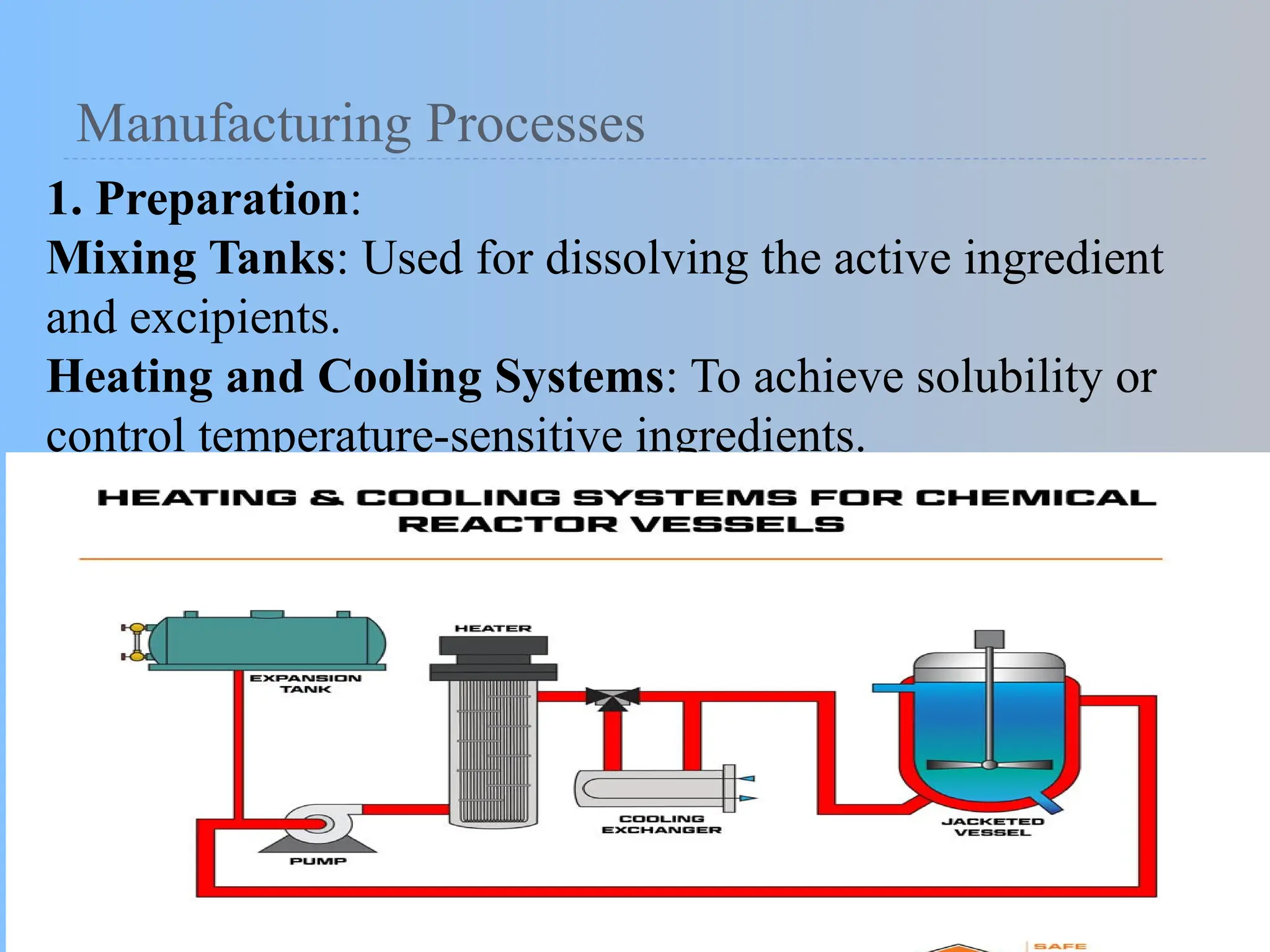
1. Preparation:
Mixing Tanks: Used for dissolving the active ingredient
and excipients.
Heating and Cooling Systems: To achieve solubility or
control temperature-sensitive ingredients.
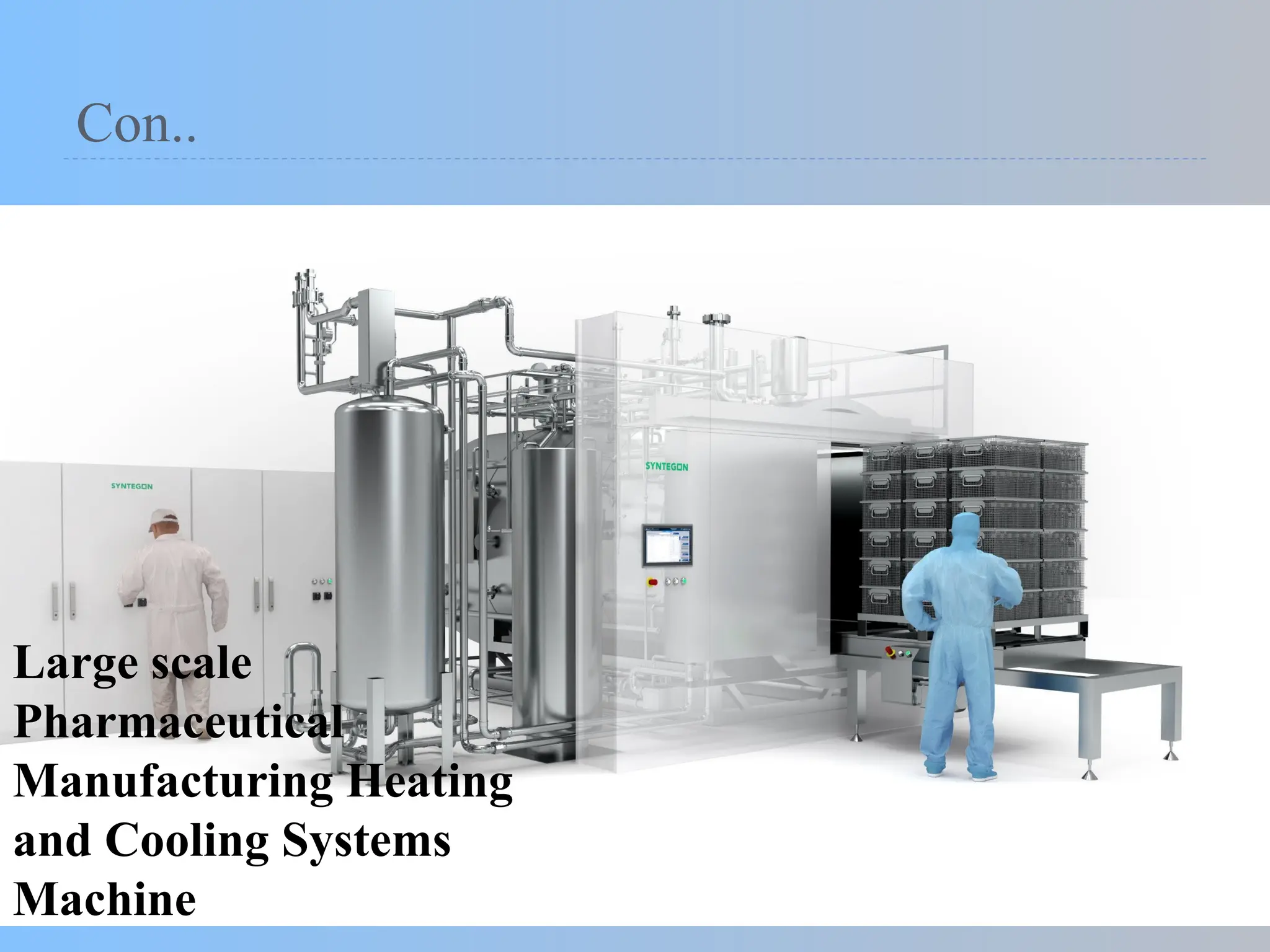
Con..
Large scale
Pharmaceutical
Manufacturing Heating
and Cooling Systems
Machine
2. Equipment and Machines
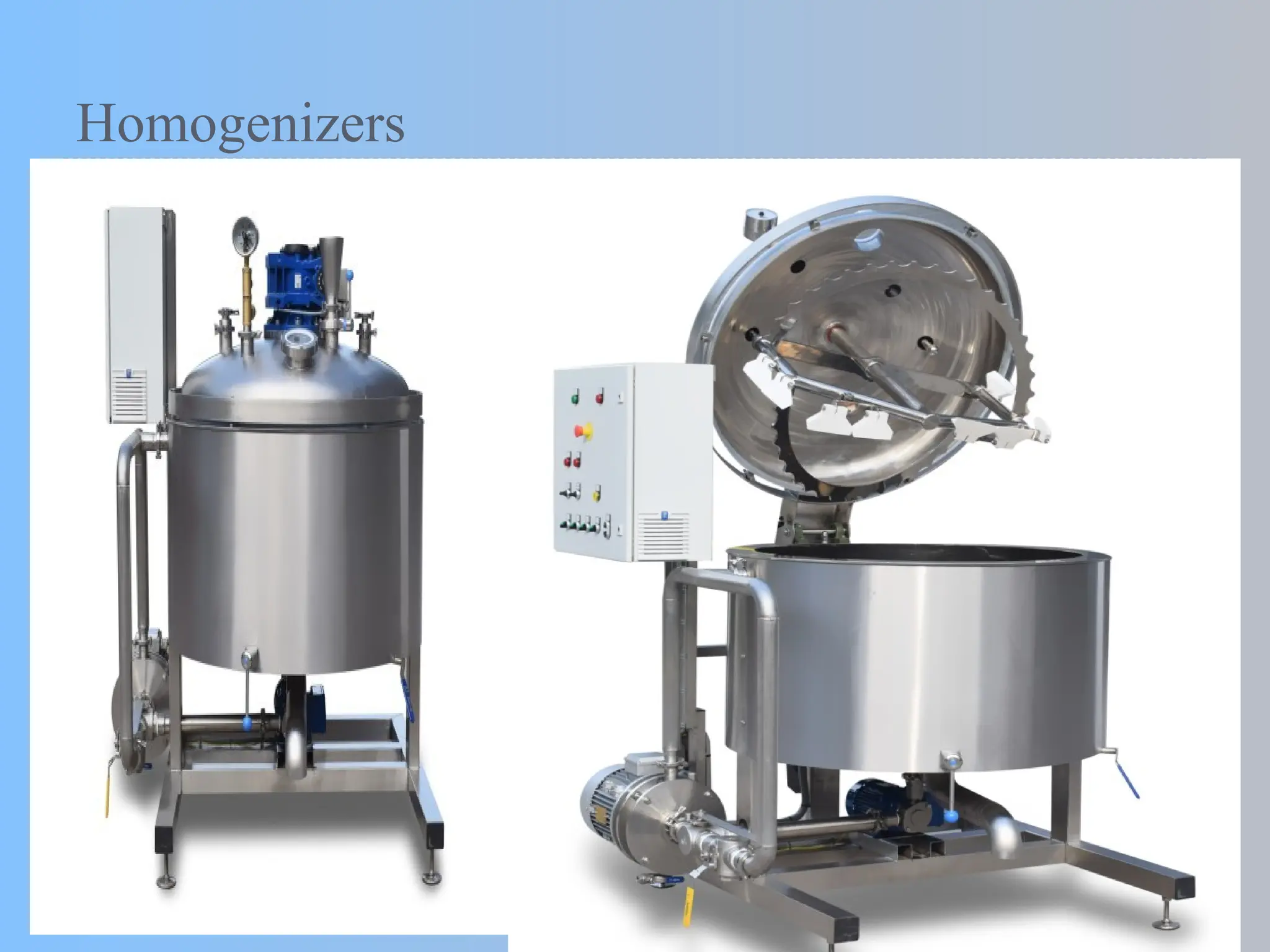
Homogenizers: These break down particles to a uniform
size, ensuring a consistent product. For example, a
homogenizer is used in Lidocaine Oral Solution to keep
the anesthetic evenly distributed, ensuring effectiveness
with each dose.
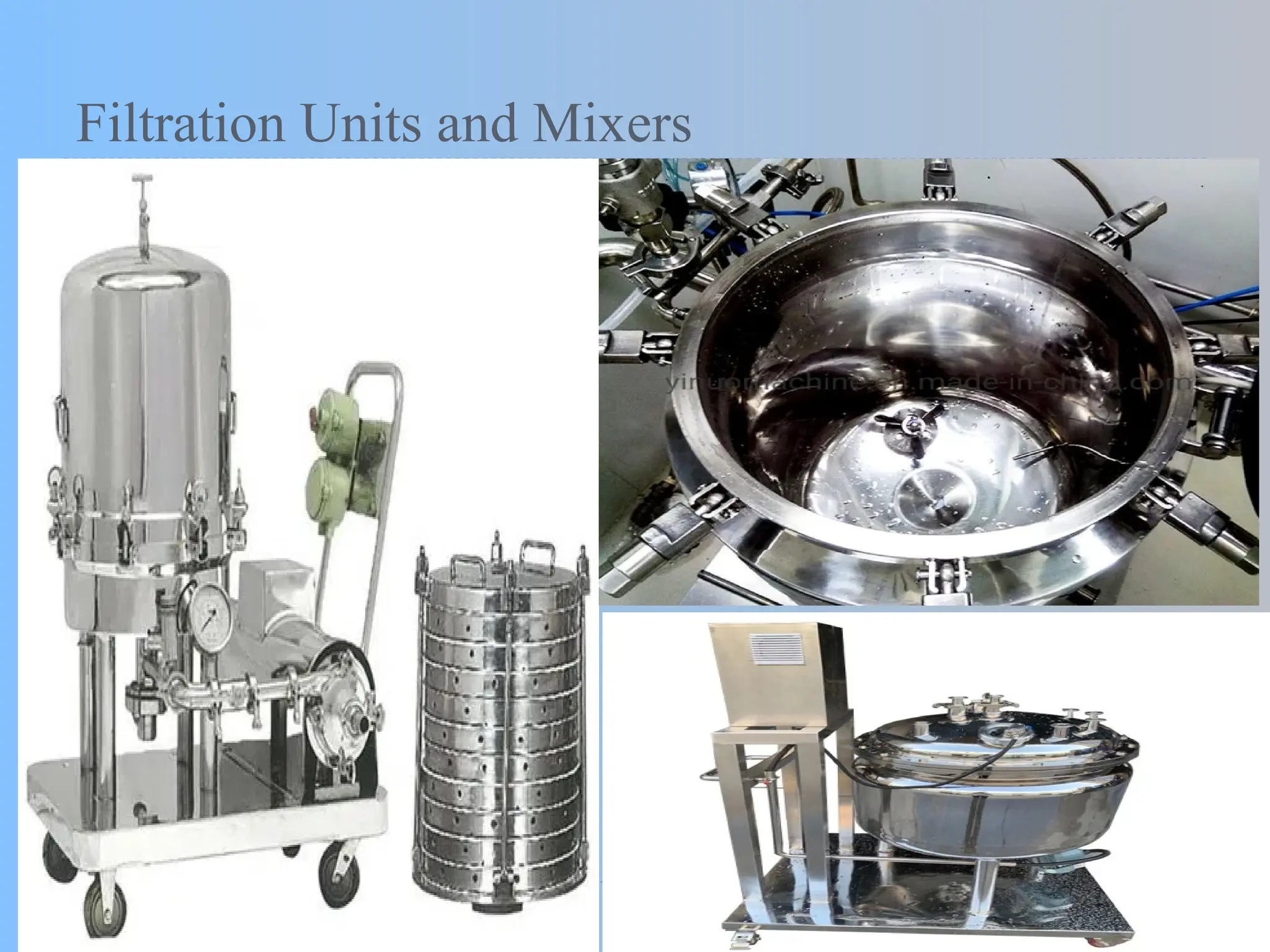
Mixers: Thorough mixing prevents the risk of uneven
potency. Hydrocodone Syrup, for instance, requires
precise mixing for consistent concentration and efficacy.
Filtration Units: Removing particles is essential,
particularly in injectable products like Sterile Saline
Solution. Filtration enhances clarity and removes
potential sources of infection in IV solutions.
Homogenizers
Filtration Units and Mixers
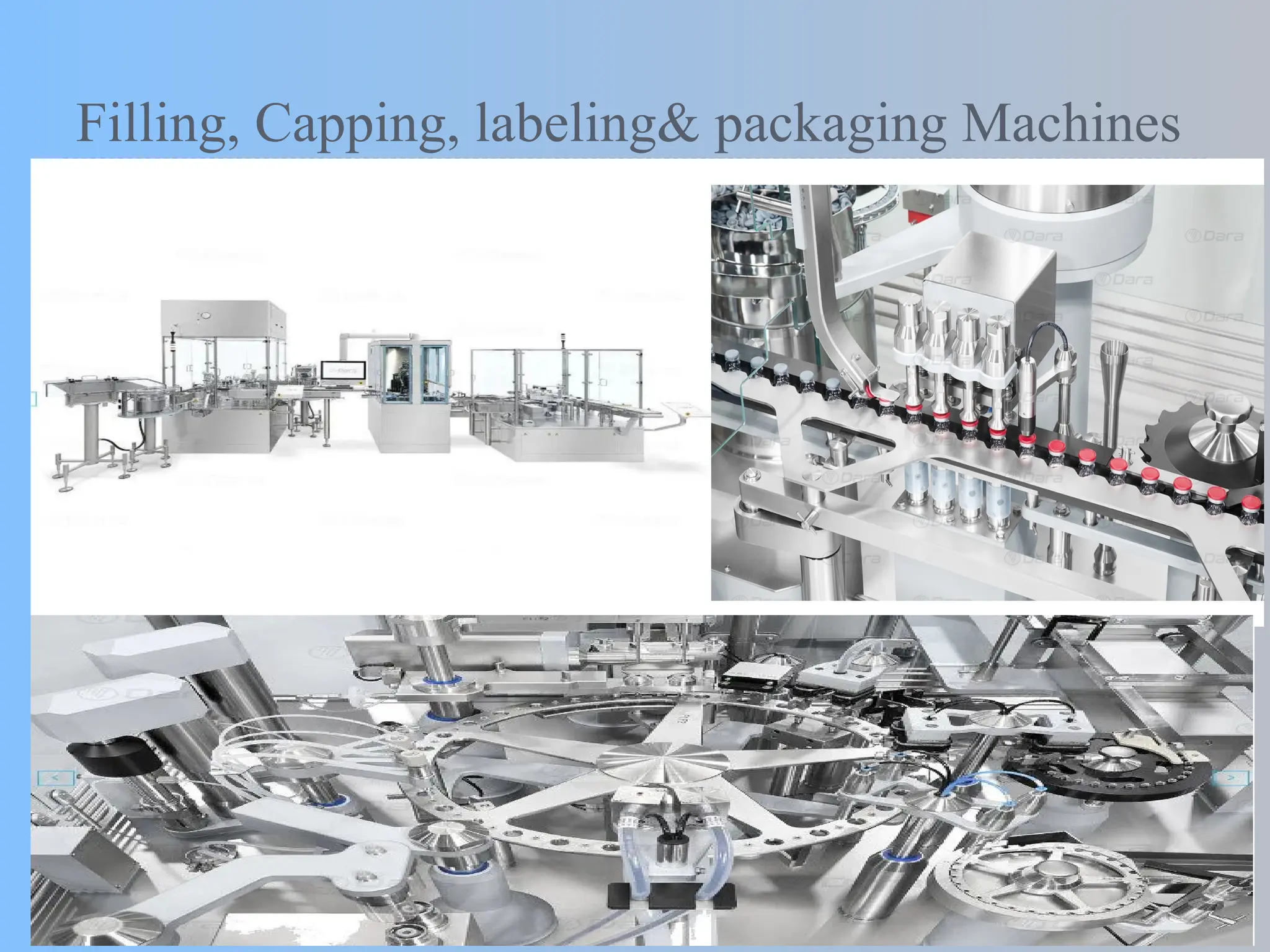
3. Filling and Packaging
Filling Machines: Precise dosing is critical; filling
machines ensure accuracy, typically automated for speed
and consistency in large-scale production.
Capping and Sealing Machines: Important for preventing
contamination and ensuring product safety.
Labeling Machines: Ensure compliance by providing
accurate product information, including concentration,
instructions, and safety warnings.
Packaging Types: Solutions are usually packaged in amber
or opaque containers to protect from light. Child-resistant
closures are often used for safety.
Filling, Capping, labeling& packaging Machines
4. Quality Evaluations
1. Appearance: The solution should be clear and free from
visible particulates unless it’s a suspension. Color consistency
is also monitored.
2. pH Measurement: Monitored to ensure it remains within a
specific range, as pH can impact both stability and patient
comfort.
3. Assay of Active Ingredient: Ensures that the concentration
of the active ingredient is correct, confirming dosing
accuracy.
4. Microbial Limits Test: Evaluates the microbial content to
ensure the preservative system is effective and the product
remains uncontaminated.
Con...
5. Viscosity Measurement: Important for solutions that are
thickened, as viscosity affects dosing and patient compliance.
6. Stability Testing: Includes both real-time and accelerated
tests under varying conditions (temperature, humidity) to
evaluate physical, chemical, and microbial stability.
7. Packaging Integrity: Ensures that the packaging prevents
leakage and protects the solution from environmental
conditions like light, air, and moisture.
GROUP MEMBERS
1.Hisak FuntoJaro
2. Hussein Ali Ahmed
3. Hussein Suleyman
4. Kalid Mohammed
5. Kemal Abdella
6. Kiya Getnet
7. Lami Abetu
8. Lijalem Eshetu
9. Mesfin Yeshigeta
10. Michael Mohammed
11. Mohammed Wabe Shoga
Liquid Dosage Forms (solution) Assignment GROUP TWO.pptx

Liquid Dosage Forms (solution) Assignment GROUP TWO.pptx

  • 1.
    LIQUID DOSAGE FORMS PREPAREDBY POST-BASIC PHARMACY GROUP TWO
  • 2.
    Overview Liquid Dosage Forms: ❤️ Solutions 🩸 👉 Introduction 👉Formulation considerations (solvents and other excipients, stability) 👉Manufacturing processes: Equipments and machines, filling and packaging 👉 Quality evaluations
  • 3.
    INTRODUCTION  These arethe pharmaceutical dosage forms that are designed to provide maximum therapeutic response in population with difficulty of swallowing of tablets or capsules or to produce rapid therapeutic response.  Water is the major ingredient used in these dosage forms.  Two types: Solutions and dispersed systems  Solutions are the liquid dosage forms in which the one or two active ingredients are mixed uniformly in a solvent.  In case of dispersed systems, one phase of the system is distributed in other phase.  If a solid phase is suspended in a liquid phase it is termed as a 'suspension', if one liquid phase is dispersed in other liquid phase it is termed as an 'emulsion'.
  • 4.
    ADVANTAGES  They aremore effective than solid dosage forms as this eliminates the dissolving step of solid drug in the GIT.  It is easy to swallow than solid dosage form especially in case of geriatric and pediatric populations.  Certain drugs have to be administered in liquid form only. It may be due to the large dose of the drug that is difficult to administer in solid dosage form.  Some drugs cause gastric irritation when administered in Solid dosage form, e.g. potassium iodide and bromide. Hence they are to be administered in liquid dosage form
  • 5.
    DISADVANTAGES  Deterioration andloss of potency  Flavouring and sweetening problems  Many incompatibility problems  More chances for microbial contamination .Hence preservatives added. But the liquid dosage forms with preservatives are not intended for neonates as the antimicrobial preservatives cause serious acute and long-term adverse effects.  Inaccuracy of measuring dose may occur. It needs a Accurate measuring device for administration.  These are bulkier to carry than solid dosage forms. There are chances for breakage of the container.
  • 6.
    EXCIPIENTS USED INLIQUID DOSAGE FORM  Pharmaceutical excipients are substances other than the pharmacologically active drug which are include in the manufacturing process or are contained in a finished pharmaceutical product dosage form.  In most of the formulations these are present in a greater proportion with regards to active pharmaceutical ingredient, as it forms about the bulk of the formulation, it is necessary to select an excipient which satisfies the ideal properties for a particular excipient.  Excipients act as protective agents, bulking agents and can also be used to improve bioavailability of drugs in some instances
  • 7.
    1.VEHICLE  Vehicles, inpharmaceutical formulations, are the liquid bases that carry drugs and other excipients in dissolved or dispersed state. Pharmaceutical vehicles can be classified as under; aqueous vehicles: Water, hydro-alcoholic, polyhydric alcohols and buffers.  Oily vehicles: Vegetable oils, mineral oils, organic oily bases or emulsified bases.
  • 8.
    WATER  water isthe most widely used vehicle in the preparation of pharmaceutical solutions. It acts as a universal solvent in solubilizing many active ingredients. Advantages  Widely available, inexpensive Palatable.  Non-toxic and non-irritable both for oral use and external use.  Acts a solvent for many drugs  Potable water, Purified water , Hard Water, Distilled Water, Aromatic waters, Water for injection:
  • 9.
    Alcohol (Ethyl Alcohol) It is used as a primary solvent for many organic compounds.  Alcohol has been well recognized as a solvent and excipient in the formulation of oral pharmaceutical products.  Next to water, alcohol is the most useful solvent in pharmacy.  It is invariably used as hydro-alcoholic mixture that dissolves both water soluble and alcohol soluble drugs and excipients.
  • 10.
    Glycerol  Glycerol (orGlycerin) is a clear, colorless liquid, with thick, syrup like consistence, oily to the touch, odourless, very sweet and slightly warm to the taste.  It is miscible with both water and alcohol. Glycerol is obtained by the decomposition of vegetable or animal fats or fixed oils and containing not less than 95 percent of absolute Glycerin.  It is soluble in all proportions, in Water or Alcohol  It is also used to improve viscosity, taste and flavor
  • 11.
    2.BUFFERING AGENTS  Arethe agents which are added to maintain different ranges of pH of the solution. They resist the change in pH of the solution,  modified phosphate buffer, sodium acetate buffer
  • 12.
    3.ISOTONICITY MODIFIERS  Theseare the agents added to maintain the isotonicity of the solutions similar to that of various body cavities.  These are mainly added for ophthalmic solutions, injectable solutions and solutions applied for mucous membrane.  E.g.: Dextrose and 0.9% NaCl solution.
  • 13.
    4.VISCOSITY MODIFIERS  Inorder to increase the residence time of the aqueous based solutions that are intended for skin, eye, and ears ,some jelling agents, in low concentrations are added to increase the viscosity of the product  They also improve palatability and ease pourability of the product  e.g. Hydroxy propyl methy cellulose(HPMC), hydroxyethyl cellulose(HEC), methylcellulose(MC)
  • 14.
    5.PRESERVATIVES  Preservatives aresubstances added to various pharmaceutical dosage forms and cosmetic preparations to prevent or inhibit microbial growth.  An ideal preservative would be effective at low concentrations against all possible micro-organism, be non- toxic and compatible with other constituent of the preparation and be stable for the shelf-life of the preparation.  Ethanol ,Propylene glycol ,Glycerin ,Benzoic acid and sorbic acid
  • 15.
    6.ANTIOXIDANTS  Antioxidants arecurrently used as efficient excipients that delay or inhibit the oxidation process of molecules.  These are agents used to prevent the products like vitamins, essential oils and fats from oxidation.  The oxidation reaction may be due to heat, light and heavy metals.  To prevent from heat and light they should be stored at cool temperature and in light resistance container respectively.  EDTA or citric acid is mostly used to prevent oxidation by heavy metals like Fe, Cu.  Other antioxidants: Ascorbic acid, citric acid.
  • 16.
    7.SWEETENING AGENTS  Theseare the agents added to mask the bitter taste of the active Ingredient. i. Sucrose is widely used sweetening agent. Advantages: Colorless, highly water soluble, stable over a wide pH range (4-8), increase the viscosity, masks both salty and bitter taste, has soothing effect on throat. Disadvantages: Prolonged usage of the product with sucrose cause dental caries and it is also not suitable for diabetic patients. ii. Polyhydric alcohols such as sorbitol, mannitol and glycerol also act as sweeteners and can be used for diabetic preparations.
  • 17.
    8.FLAVORS AND PERFUMES These are the agents added to mask the unpleasant taste or odor and make the preparation more acceptable to take. Enable the easy identification of the product.  Example Natural products like Fruit juices (raspberry), extracts (liquorice), spirits (orange and lemon), syrups (black current)  Some flavors are associated with special preparations. E.g.: peppermint is associated with antacid preparations. Artificial perfumes are cheaper, more readily available and more stable than natural products.
  • 18.
    9.COLORING AGENTS  Theseare the agents added to enhance the appearance of the preparation.  They should be non-toxic, non-irritant and should not show any therapeutic activity. Both natural and artificial coloring agents are available.  Natural coloring agents: These include materials extracted from Plants and animals. e.g. Carotenoids, chlorophylls, saffron, red beet root extract, caramel.  Synthetic colors: Azo compounds. These are widely used as they give wide range of bright and stable colors.
  • 19.
    10.WETTING AGENTS ANDSURFACTANTS  Wetting agents are routinely used in pharmaceutical formulations, in liquid dosage forms to create a homo dispersion of solid particles in a liquid vehicle.  This process can be challenging due to a layer of adsorbed air on the particle’s surface.  Hence, even particles with a high density may float on the surface of the liquid until the air phase is displaced completely.  The use of a wetting agent allows removal of adsorbed air and easy penetration of the liquid vehicle into pores of the particle in a short period of time.
  • 20.
     For anaqueous vehicle, alcohol, glycerin, and PG are frequently used to facilitate the removal of adsorbed air from the surface of particles.  For non-aqueous liquid vehicle, mineral oil is commonly used as a wetting agent.  Typically, hydrophobic API particles are not easily wetted even after the removal of adsorbed air. Hence, it is necessary to reduce the interfacial tension between the particles and the liquid vehicle by using a surface active agent.  For example, sodium lauryl sulfate is one of the most commonly used surface-active agents.
  • 21.
    METHODS TO ENHANCETHE SOLUBILITY  Solubility is the property of a solute to dissolve in a solvent to form a homogeneous solution.  Any drug to be absorbed must be present in the form of solution.  Most of the drugs are weakly acidic or weakly basic with poor water solubility  The solubility is commonly expressed as a concentration, either by mass
  • 22.
    All drugs havebeen divided into four classes A. Class 1: High soluble and high permeable B. Class II: High soluble and low permeable C. Class III: Low soluble and high permeable D. Class IV: Low soluble and low permeable
  • 23.
    Surfactants  Conventional approachto solubilize a poorly soluble substance is to reduce the interfacial tension between the surface of solute and solvent for better wetting.  A wide variety of surfactants like Tweens, Spans, Poly oxy ethylene stearates are very successful as excipient and carrier for dissolution enhancement.  Eg: The solubility of spironolactate can be increased by using surfactants .
  • 24.
    Cosolvency  The solubilityof a poorly water soluble drug can be increased frequently by the addition of a water miscible solvent in which the drug has good solubility known as co solvents.  Co-solvents are mixtures of water and one or more water miscible solvents used to create a solution with enhanced solubility for poorly soluble compounds.  Examples of solvents used in co-solvent mixtures are PEG 300, propylene glycol or ethanol.  Co-solvent formulations of poorly soluble drugs can be administered orally and parenterally.
  • 25.
     Co-Solvents canincrease the solubility of poorly soluble compounds several thousand times compared to the aqueous solubility of the drug alone.  The use of co-solvents is a highly effective technique to enhance the solubility of poorly soluble drugs.
  • 26.
    Micronization  The processinvolves reducing the size of the solid drug particles to 1 to 10 microns, commonly by milling ( jet mill ).  The process is also called micro- millling .  The solubility of steroidal drugs and sulpha drugs can be increased by this method
  • 27.
    Nanonisation  It isthe process where by the drug powder is converted to nano crystals of size 200-600 nm  Nano crystals are dispersed in a liquid to form nano suspensions .  The basis technology currently used are pearl milling, wet milling.
  • 28.
    Use of salt Salts have improved solubility and disssolution in comparison to the original drug .  Alkali metal salts of acidic drugs like pencillin and strong acid salts of basic drugs like atropine are more water soluble than parent drug Limitation It is not feasible to form salt of neutral compounds It is very difficult for very weak base or acid
  • 29.
    Stability Physical Stability: Preventsprecipitation, discoloration, or turbidity. Emulsifiers or stabilizers may be used. Chemical Stability: Maintains the potency of active ingredients. Antioxidants or pH stabilizers may be necessary to prevent degradation. Microbiological Stability: Preservatives are added to prevent microbial contamination and ensure the product remains safe over its shelf life.
  • 30.
    Manufacturing Processes 1. Preparation: MixingTanks: Used for dissolving the active ingredient and excipients. Heating and Cooling Systems: To achieve solubility or control temperature-sensitive ingredients.
  • 31.
  • 32.
    2. Equipment andMachines Homogenizers: These break down particles to a uniform size, ensuring a consistent product. For example, a homogenizer is used in Lidocaine Oral Solution to keep the anesthetic evenly distributed, ensuring effectiveness with each dose. Mixers: Thorough mixing prevents the risk of uneven potency. Hydrocodone Syrup, for instance, requires precise mixing for consistent concentration and efficacy. Filtration Units: Removing particles is essential, particularly in injectable products like Sterile Saline Solution. Filtration enhances clarity and removes potential sources of infection in IV solutions.
  • 33.
  • 34.
  • 35.
    3. Filling andPackaging Filling Machines: Precise dosing is critical; filling machines ensure accuracy, typically automated for speed and consistency in large-scale production. Capping and Sealing Machines: Important for preventing contamination and ensuring product safety. Labeling Machines: Ensure compliance by providing accurate product information, including concentration, instructions, and safety warnings. Packaging Types: Solutions are usually packaged in amber or opaque containers to protect from light. Child-resistant closures are often used for safety.
  • 36.
    Filling, Capping, labeling&packaging Machines
  • 37.
    4. Quality Evaluations 1.Appearance: The solution should be clear and free from visible particulates unless it’s a suspension. Color consistency is also monitored. 2. pH Measurement: Monitored to ensure it remains within a specific range, as pH can impact both stability and patient comfort. 3. Assay of Active Ingredient: Ensures that the concentration of the active ingredient is correct, confirming dosing accuracy. 4. Microbial Limits Test: Evaluates the microbial content to ensure the preservative system is effective and the product remains uncontaminated.
  • 38.
    Con... 5. Viscosity Measurement:Important for solutions that are thickened, as viscosity affects dosing and patient compliance. 6. Stability Testing: Includes both real-time and accelerated tests under varying conditions (temperature, humidity) to evaluate physical, chemical, and microbial stability. 7. Packaging Integrity: Ensures that the packaging prevents leakage and protects the solution from environmental conditions like light, air, and moisture.
  • 39.
    GROUP MEMBERS 1.Hisak FuntoJaro 2.Hussein Ali Ahmed 3. Hussein Suleyman 4. Kalid Mohammed 5. Kemal Abdella 6. Kiya Getnet 7. Lami Abetu 8. Lijalem Eshetu 9. Mesfin Yeshigeta 10. Michael Mohammed 11. Mohammed Wabe Shoga