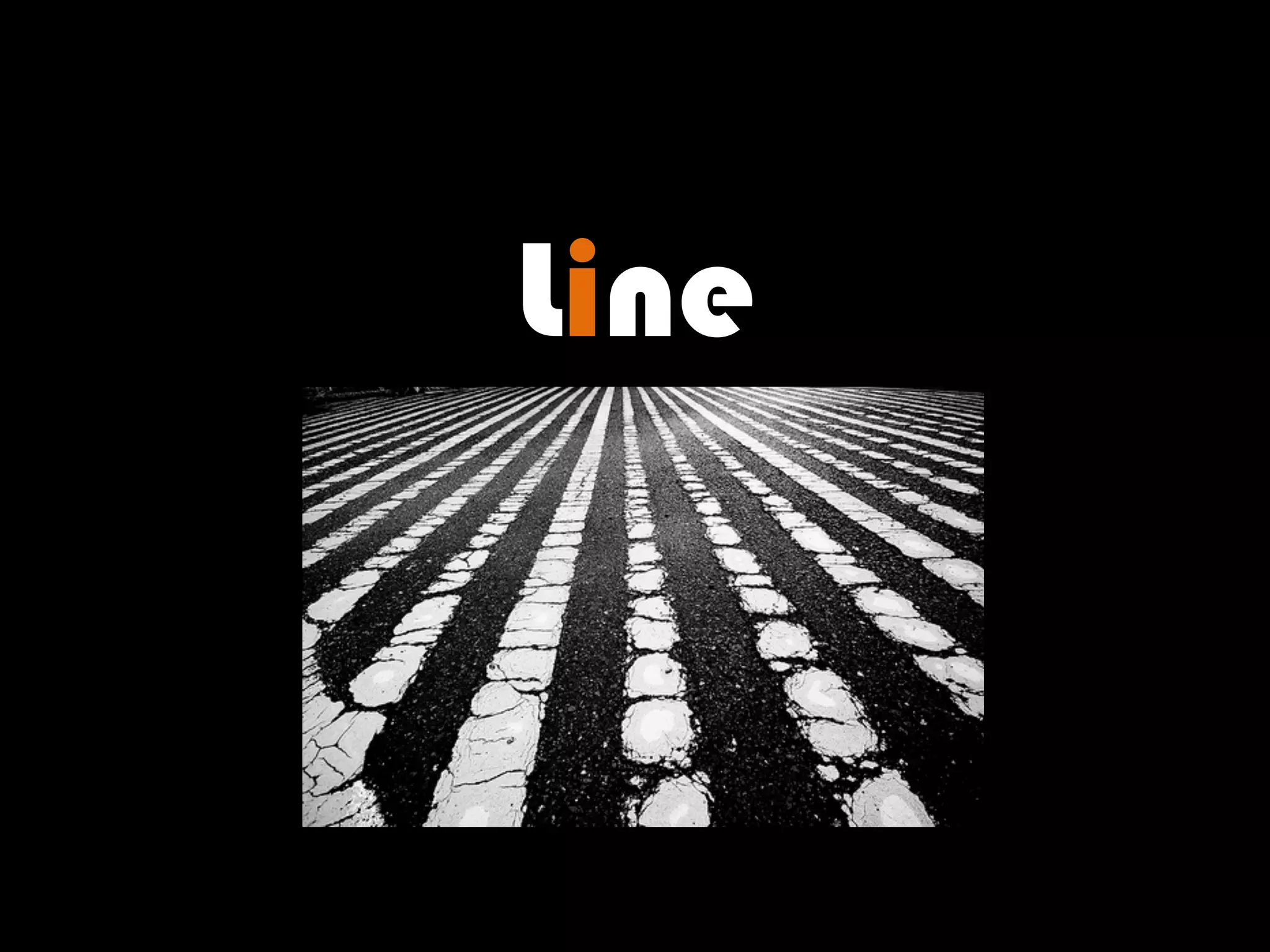
Line
Brought to you by:
Line is...
the path of a moving point. It is a mark
left by a tool - brush, pencil, stick, pen,
etc. Line defines the edges of shapes and
forms. They don't exist naturally, artists
have to decide where and how to place
lines as they draw. Lines often suggest
movement in a drawing or painting.
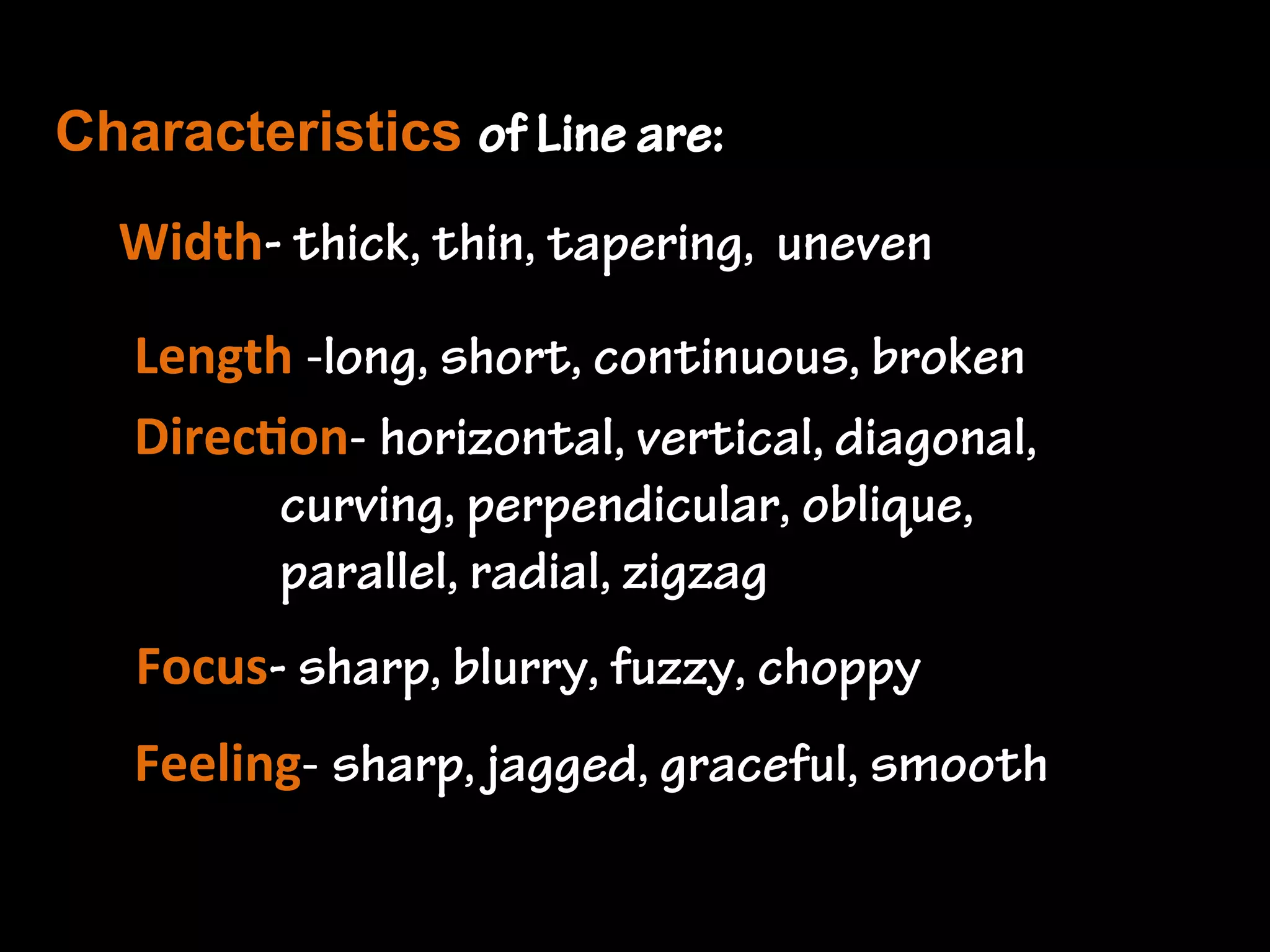
Characteristics of Line are:
	
  
Width- thick, thin, tapering, uneven


Length	
  -­‐long, short, continuous, broken
Direc-on-­‐	
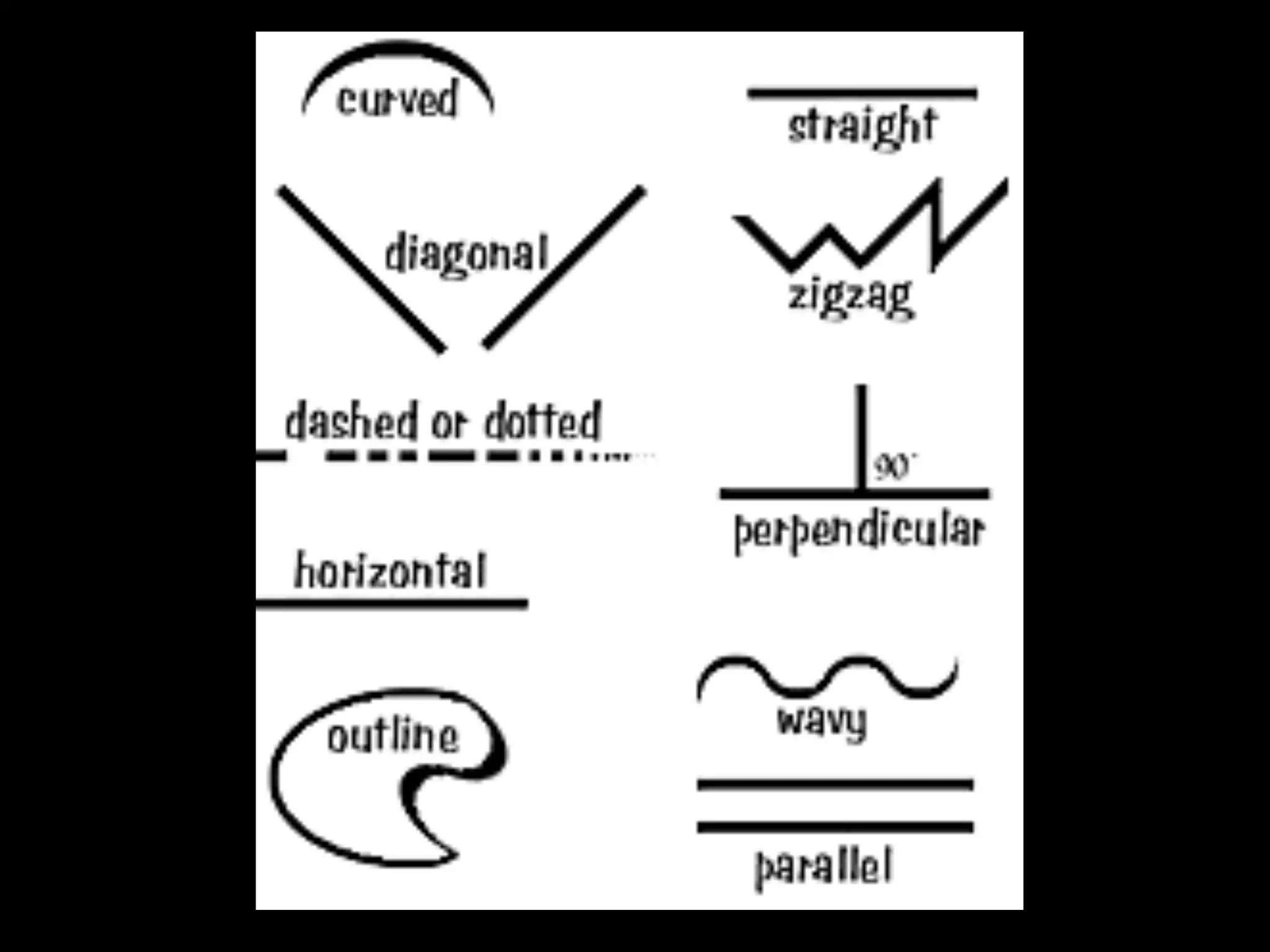
  horizontal, vertical, diagonal,
curving, perpendicular, oblique,
parallel, radial, zigzag
Focus- sharp, blurry, fuzzy, choppy
Feeling-­‐	
  sharp, jagged, graceful, smooth
Types of Line:
Outlines-Lines made by the edge of an object or silhouee
Contour	
  lines-Lines that describe the shape of an object and
the interior detail
Gesture	
  lines-Lines that are energetic & catch the movement
of a figure in motion/action figure
Sketch	
  lines- Lines that captures the appearance of an object
or impression of a place.
Calligraphic Lines- Greek word meaning “beautiful writing.” Precise,
elegant handwriting or leering done by hand. Also
artwork that has flowing lines like an elegant
handwriting.
	
   Implied Line- Lines that are not actually drawn but created by a group of
objects seen from a distance. The direction an object is
pointing to, or the direction a person is looking at.
How does LINE translate in Fine art:
Drawing with
Lines 	
  
Outline	


Gesture Lines
Hatching
Crosshatching
Contour Line	
  	
  
Lines Create.... 	
  
Depth
	
  
(Deep
Space)

"Fishing Boat" by Emile Node, 1910, woodcut print,
12"x16", Nolde-Stiftung Seebull, Germany 	
  
Lines Create....
Form &
Texture

"Urban Jewels" by Denyse Thomasos, 1995, Acrylic,
10'x16', Lennon, Weinberg, NY 	
  
Lines Create....
Illusion	


"Stripe Song" by J. Seeley, 1981, Photo
Sildscreen print, 22"x30", VAGA, NY 	
  
How	
  does	
  LINE	
  translate	
  in	
  Photography?	
  
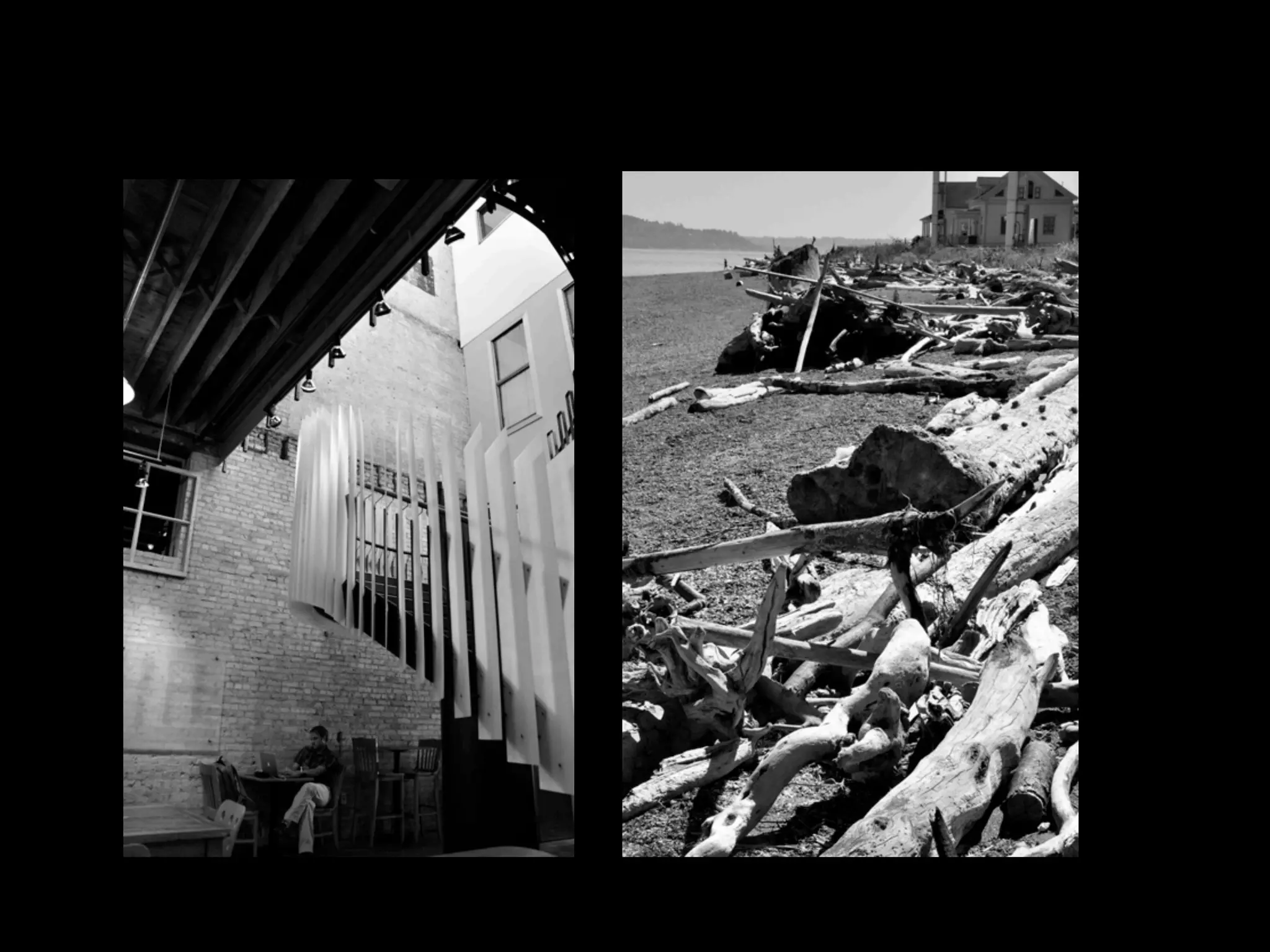
Leading Lines:	
  
Line:	
  
Student Samples:
Crystal Foster
Nick Vespe
Nick Vespe
Olivia Foltiny
Tim Nooney
Tyler Trumbetti
Tyler Trumbetti
Tyler Trumbetti
A

vs.

B
A vs. B

High School LIne Photography Lesson

  • 1.
  • 2.
  • 3.
    Line is... the pathof a moving point. It is a mark left by a tool - brush, pencil, stick, pen, etc. Line defines the edges of shapes and forms. They don't exist naturally, artists have to decide where and how to place lines as they draw. Lines often suggest movement in a drawing or painting.
  • 4.
    Characteristics of Lineare:   Width- thick, thin, tapering, uneven         Length  -­‐long, short, continuous, broken Direc-on-­‐  horizontal, vertical, diagonal, curving, perpendicular, oblique, parallel, radial, zigzag Focus- sharp, blurry, fuzzy, choppy Feeling-­‐  sharp, jagged, graceful, smooth
  • 6.
    Types of Line: Outlines-Linesmade by the edge of an object or silhouee Contour  lines-Lines that describe the shape of an object and the interior detail Gesture  lines-Lines that are energetic & catch the movement of a figure in motion/action figure Sketch  lines- Lines that captures the appearance of an object or impression of a place. Calligraphic Lines- Greek word meaning “beautiful writing.” Precise, elegant handwriting or leering done by hand. Also artwork that has flowing lines like an elegant handwriting.   Implied Line- Lines that are not actually drawn but created by a group of objects seen from a distance. The direction an object is pointing to, or the direction a person is looking at.
  • 7.
    How does LINEtranslate in Fine art:
  • 8.
    Drawing with Lines   Outline         Gesture Lines Hatching Crosshatching Contour Line    
  • 9.
    Lines Create....   Depth   (Deep Space) "Fishing Boat" by Emile Node, 1910, woodcut print, 12"x16", Nolde-Stiftung Seebull, Germany  
  • 10.
    Lines Create.... Form & Texture "UrbanJewels" by Denyse Thomasos, 1995, Acrylic, 10'x16', Lennon, Weinberg, NY  
  • 11.
    Lines Create.... Illusion     "Stripe Song" by J. Seeley, 1981, Photo Sildscreen print, 22"x30", VAGA, NY  
  • 12.
    How  does  LINE  translate  in  Photography?  
  • 14.
  • 21.
  • 27.
  • 28.
  • 29.
  • 30.
  • 31.
  • 32.
  • 33.
  • 34.
  • 35.
  • 36.
  • 37.