Symbols Associated with Creative Commons Licenses
All of the licenses have 4 symbols in commons. They are shown below. Give the name of the symbol and give an
 explanation of each symbol in your own words. See this website: http://creativecommons.org/about/licenses
                                                (8 points each)

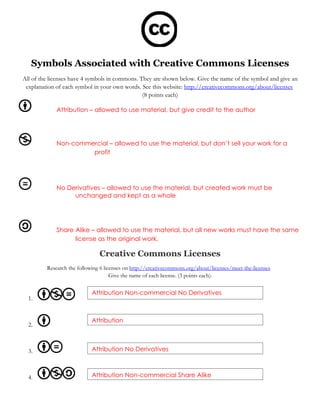
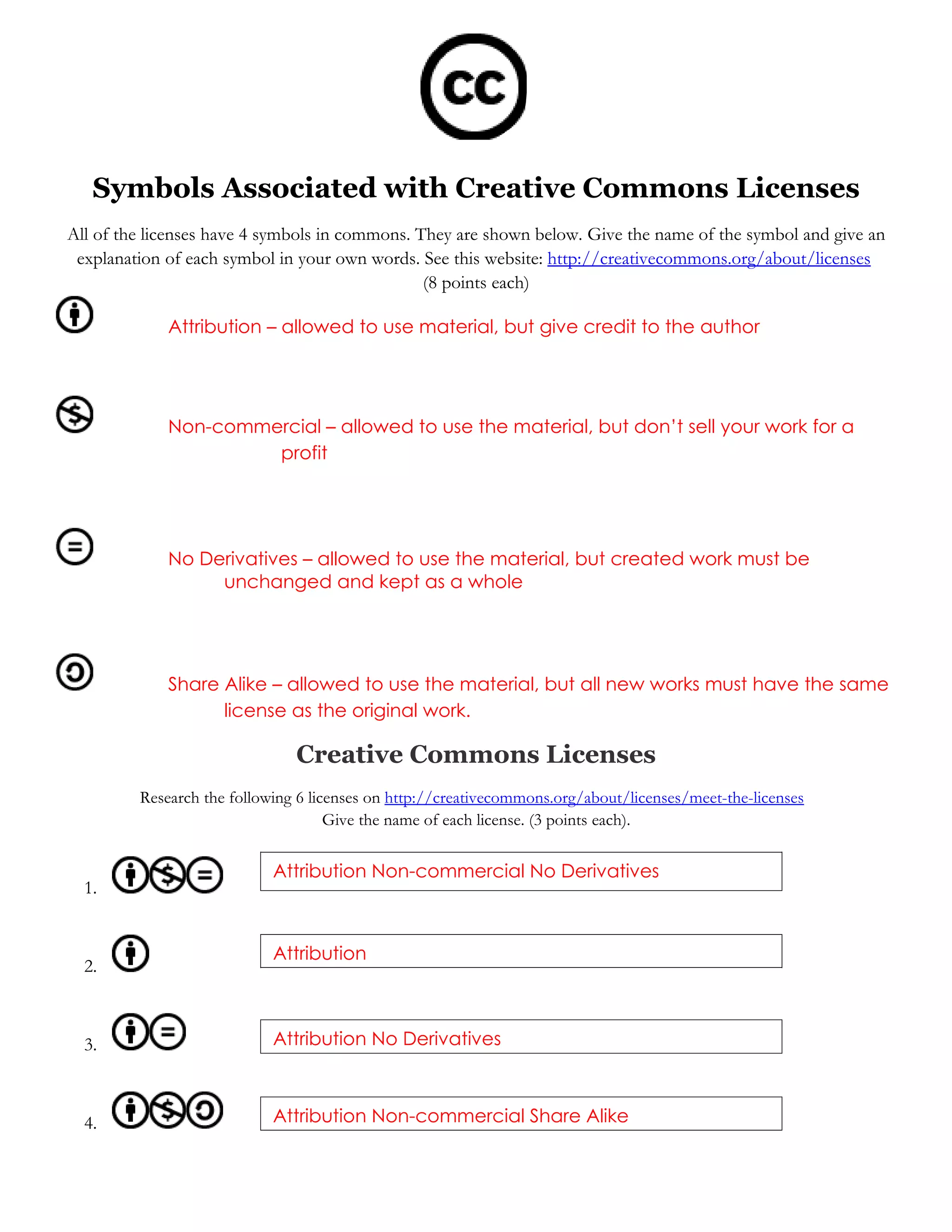
             Attribution – allowed to use material, but give credit to the author


             Non-commercial – allowed to use the material, but don’t sell your work for a
                      profit


             No Derivatives – allowed to use the material, but created work must be
                  unchanged and kept as a whole


             Share Alike – allowed to use the material, but all new works must have the same
                   license as the original work.

                               Creative Commons Licenses
         Research the following 6 licenses on http://creativecommons.org/about/licenses/meet-the-licenses
                                     Give the name of each license. (3 points each).


                            Attribution Non-commercial No Derivatives
  1.


                            Attribution
  2.


  3.                        Attribution No Derivatives


  4.                        Attribution Non-commercial Share Alike
5.                        Attribution Share Alike


   6.                        Attribution Non-commercial


            Before Licensing Your Work to Creative Commons
There are some basic things that you should think about before you apply a Creative Commons license to your
work. Go to: http://wiki.creativecommons.org/Before_Licensing and summarize the first four things to think
about. The 5th item is not that important to us. (10 points each)

1. Make sure your work falls within the Creative Commons license
Creative Commons licenses apply to works that are protected by copyright. Generally, works that
are protected by copyright are: books, scripts, websites, lesson plans, blogs and any other forms of
writings; photographs and other visual images; films, video games and other visual materials; musical
compositions, sound recordings and other audio works.

2. Make sure you have the rights
Before applying a Creative Commons license to a work, you need to make sure you have the
authority to do so. This means that you need to make sure that the person who owns the copyright in
the work is happy to have the work made available under a Creative Commons license.

3. Make sure you understand how Creative Commons licenses operate
Before you apply a Creative Commons license to your work, you should make sure you understand
how they operate. You can do this by reviewing the [Frequently_Asked_Questions FAQ]

4. Be specific about what you are licensing
You need to be specific about exactly what you are CC-licensing when you apply the Creative
Commons license to your work. We give you the option of identifying the format of the work in the
metadata (text, audio, video, image, interactive) and you should use this.


                           Positives of using CC Material
 Explain why using Creative Commons material is a good idea. Thinks If you need to have a review, see this page:
                          http://wiki.creativecommons.org/Sharing_Creative_Works

Creative Commons allows creators to share their work with the public while keeping the copyright to
their work. Creators can choose from six different licenses that allow users to use their work, but
according to the restrictions of the license.

It’s good for us in education because we don’t have to ask permission from creators – we already
have their permission. We must, however, follow their license if we want to use the work. Also, we
don’t have to worry about Fair Use Guidelines that are part of copyright law.
Licenses  Worksheet    Answers

Licenses Worksheet Answers

  • 1.
    Symbols Associated withCreative Commons Licenses All of the licenses have 4 symbols in commons. They are shown below. Give the name of the symbol and give an explanation of each symbol in your own words. See this website: http://creativecommons.org/about/licenses (8 points each) Attribution – allowed to use material, but give credit to the author Non-commercial – allowed to use the material, but don’t sell your work for a profit No Derivatives – allowed to use the material, but created work must be unchanged and kept as a whole Share Alike – allowed to use the material, but all new works must have the same license as the original work. Creative Commons Licenses Research the following 6 licenses on http://creativecommons.org/about/licenses/meet-the-licenses Give the name of each license. (3 points each). Attribution Non-commercial No Derivatives 1. Attribution 2. 3. Attribution No Derivatives 4. Attribution Non-commercial Share Alike
  • 2.
    5. Attribution Share Alike 6. Attribution Non-commercial Before Licensing Your Work to Creative Commons There are some basic things that you should think about before you apply a Creative Commons license to your work. Go to: http://wiki.creativecommons.org/Before_Licensing and summarize the first four things to think about. The 5th item is not that important to us. (10 points each) 1. Make sure your work falls within the Creative Commons license Creative Commons licenses apply to works that are protected by copyright. Generally, works that are protected by copyright are: books, scripts, websites, lesson plans, blogs and any other forms of writings; photographs and other visual images; films, video games and other visual materials; musical compositions, sound recordings and other audio works. 2. Make sure you have the rights Before applying a Creative Commons license to a work, you need to make sure you have the authority to do so. This means that you need to make sure that the person who owns the copyright in the work is happy to have the work made available under a Creative Commons license. 3. Make sure you understand how Creative Commons licenses operate Before you apply a Creative Commons license to your work, you should make sure you understand how they operate. You can do this by reviewing the [Frequently_Asked_Questions FAQ] 4. Be specific about what you are licensing You need to be specific about exactly what you are CC-licensing when you apply the Creative Commons license to your work. We give you the option of identifying the format of the work in the metadata (text, audio, video, image, interactive) and you should use this. Positives of using CC Material Explain why using Creative Commons material is a good idea. Thinks If you need to have a review, see this page: http://wiki.creativecommons.org/Sharing_Creative_Works Creative Commons allows creators to share their work with the public while keeping the copyright to their work. Creators can choose from six different licenses that allow users to use their work, but according to the restrictions of the license. It’s good for us in education because we don’t have to ask permission from creators – we already have their permission. We must, however, follow their license if we want to use the work. Also, we don’t have to worry about Fair Use Guidelines that are part of copyright law.