LIBRARY
Decoration
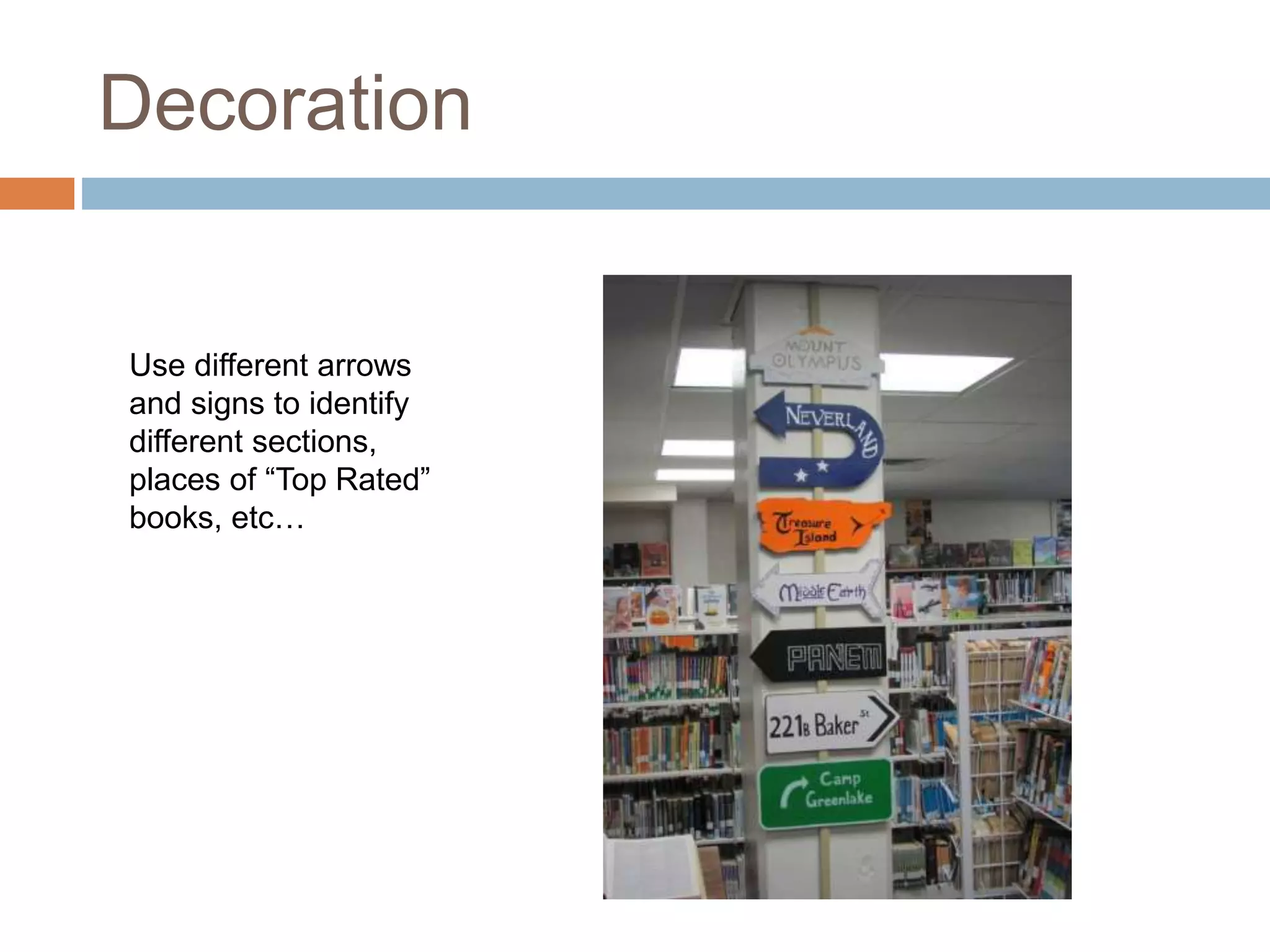
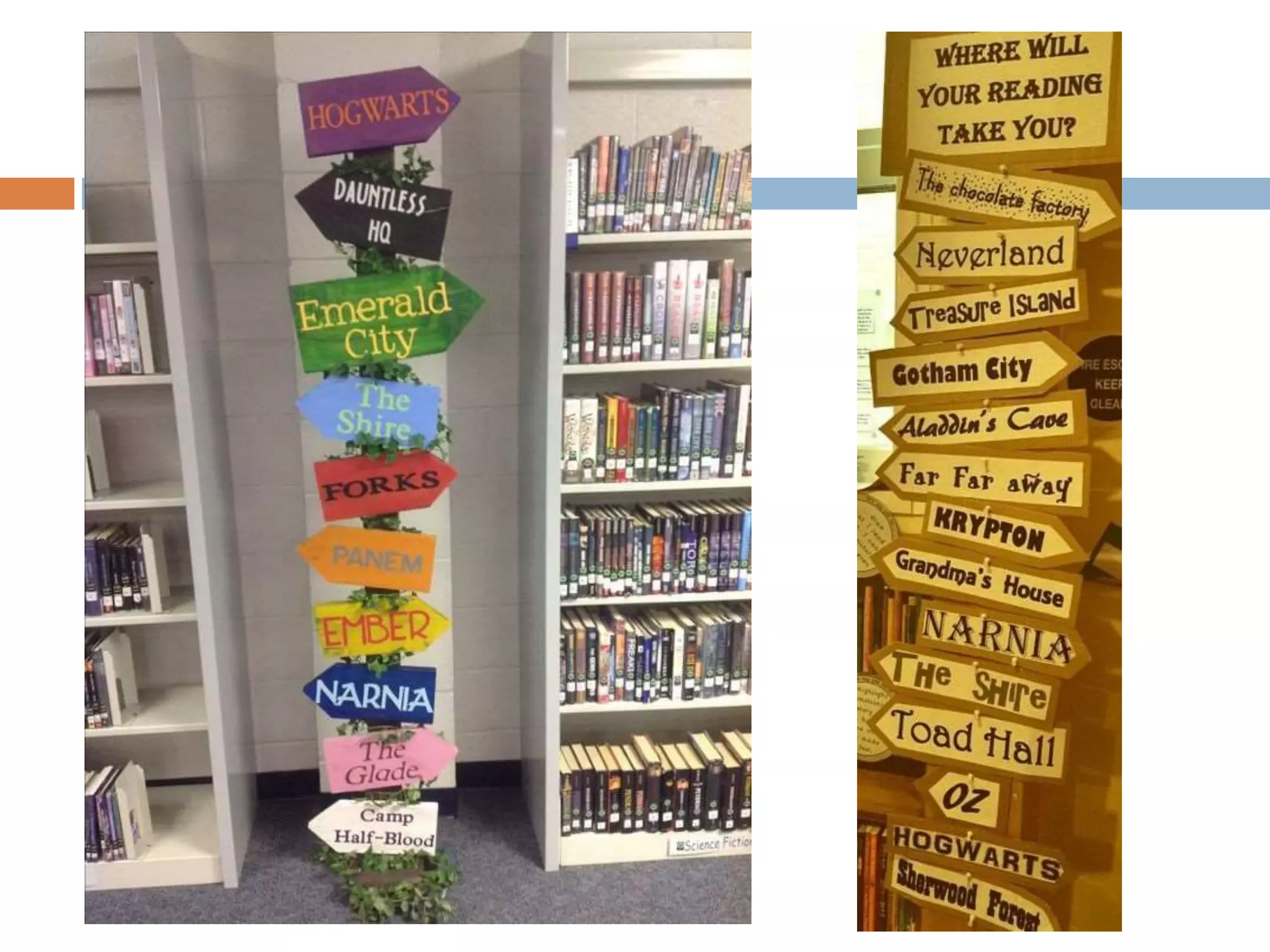
Use different arrows
and signs to identify
different sections,
places of “Top Rated”
books, etc…
decoration
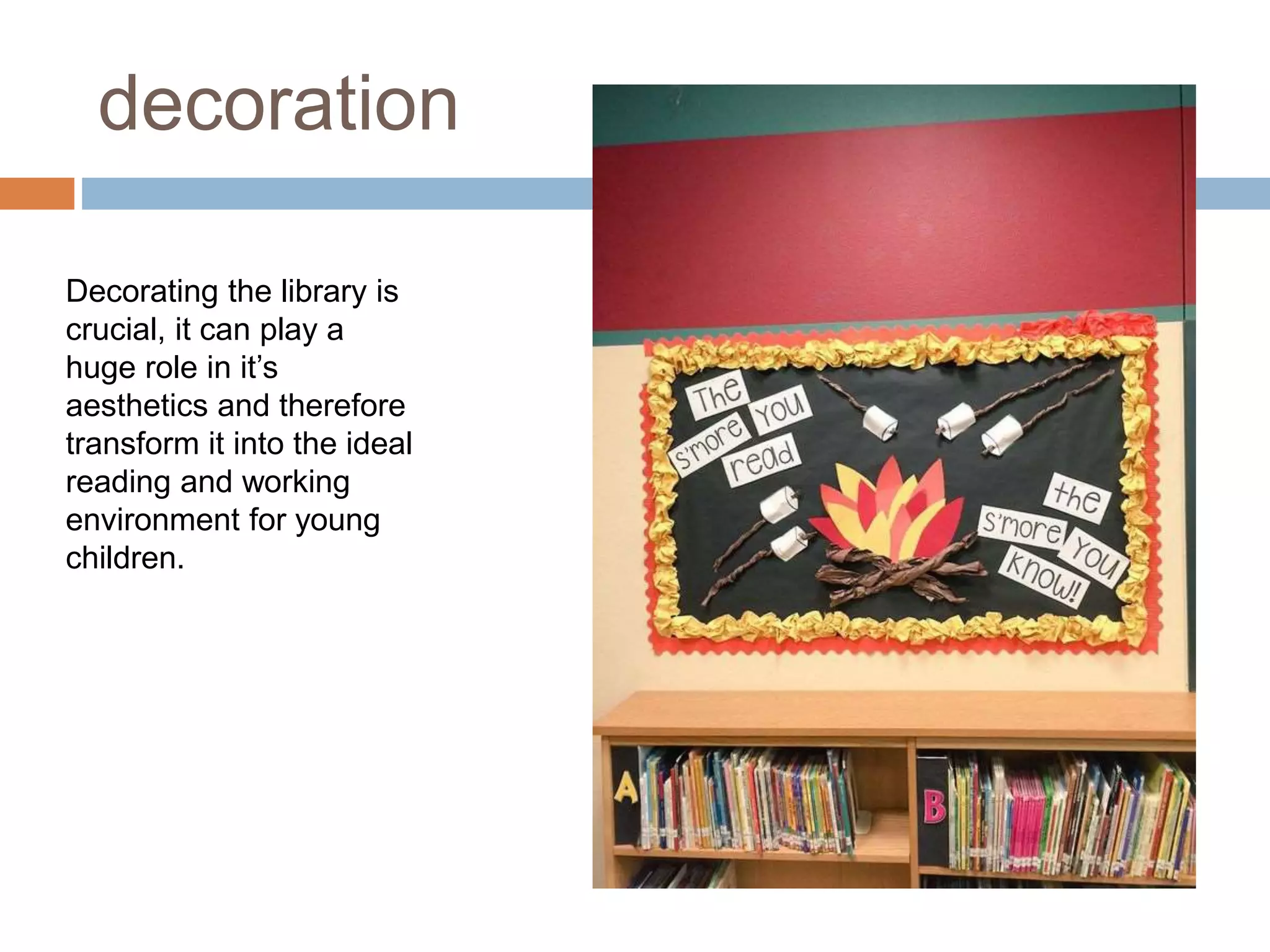
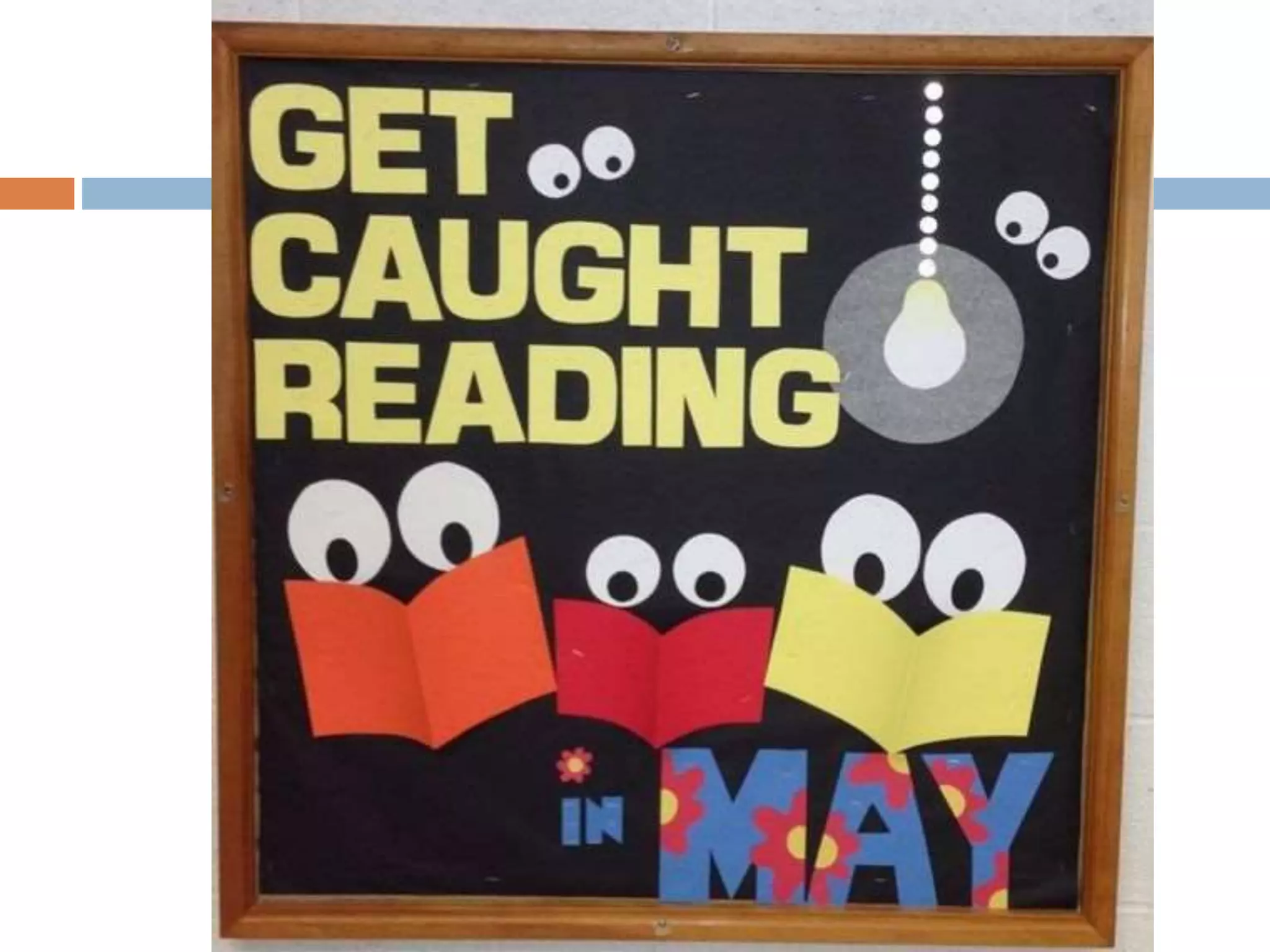
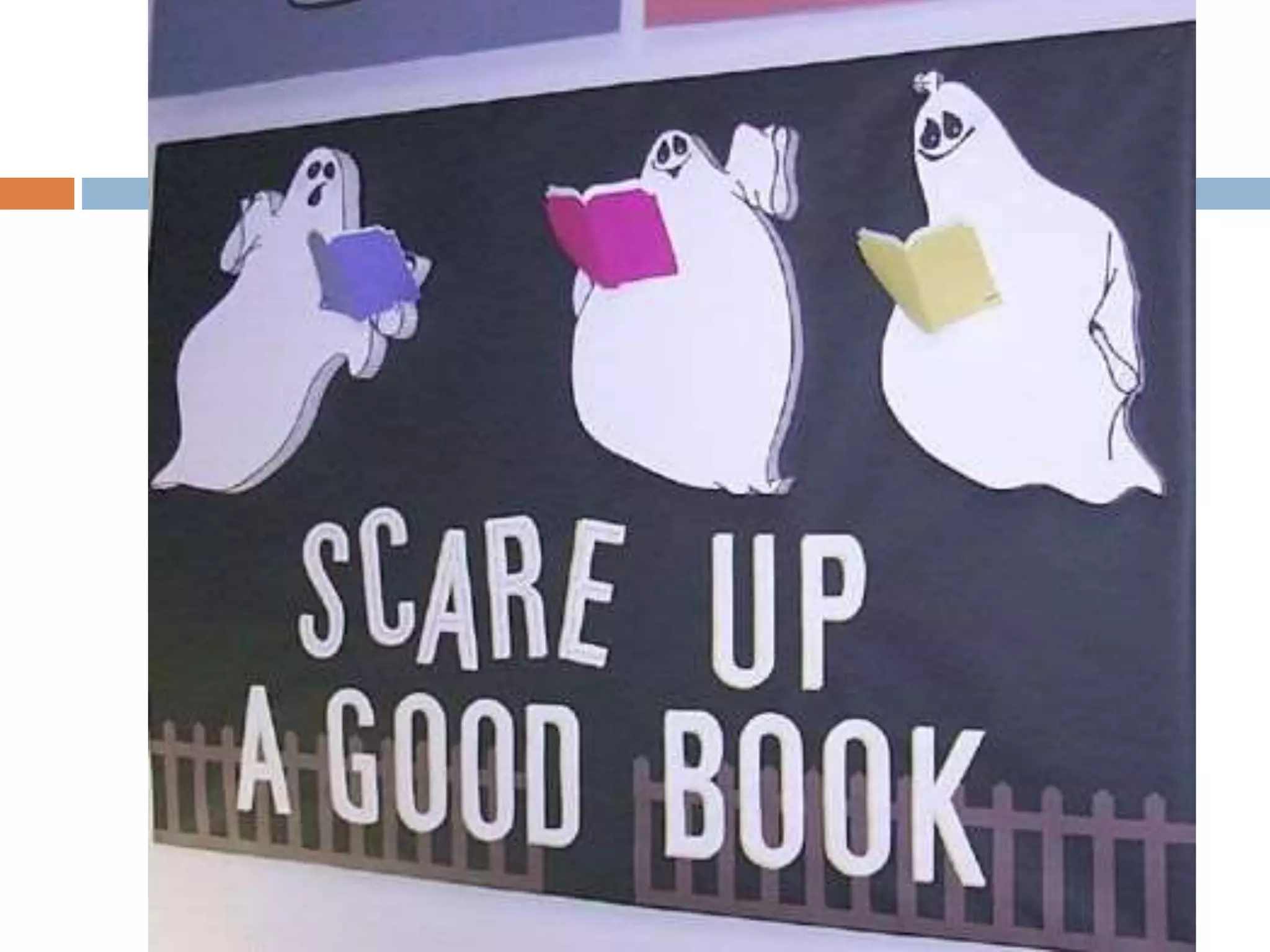
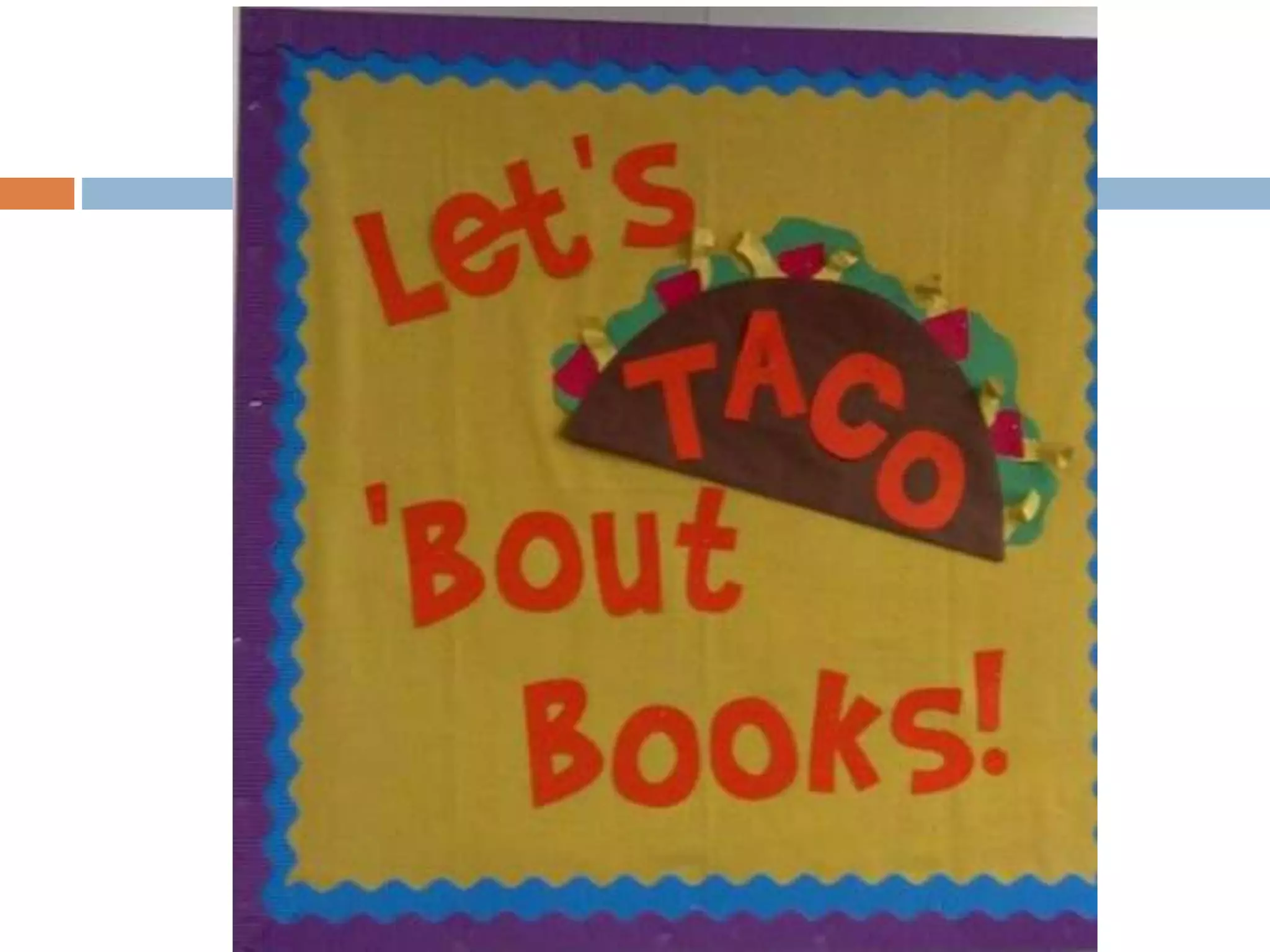
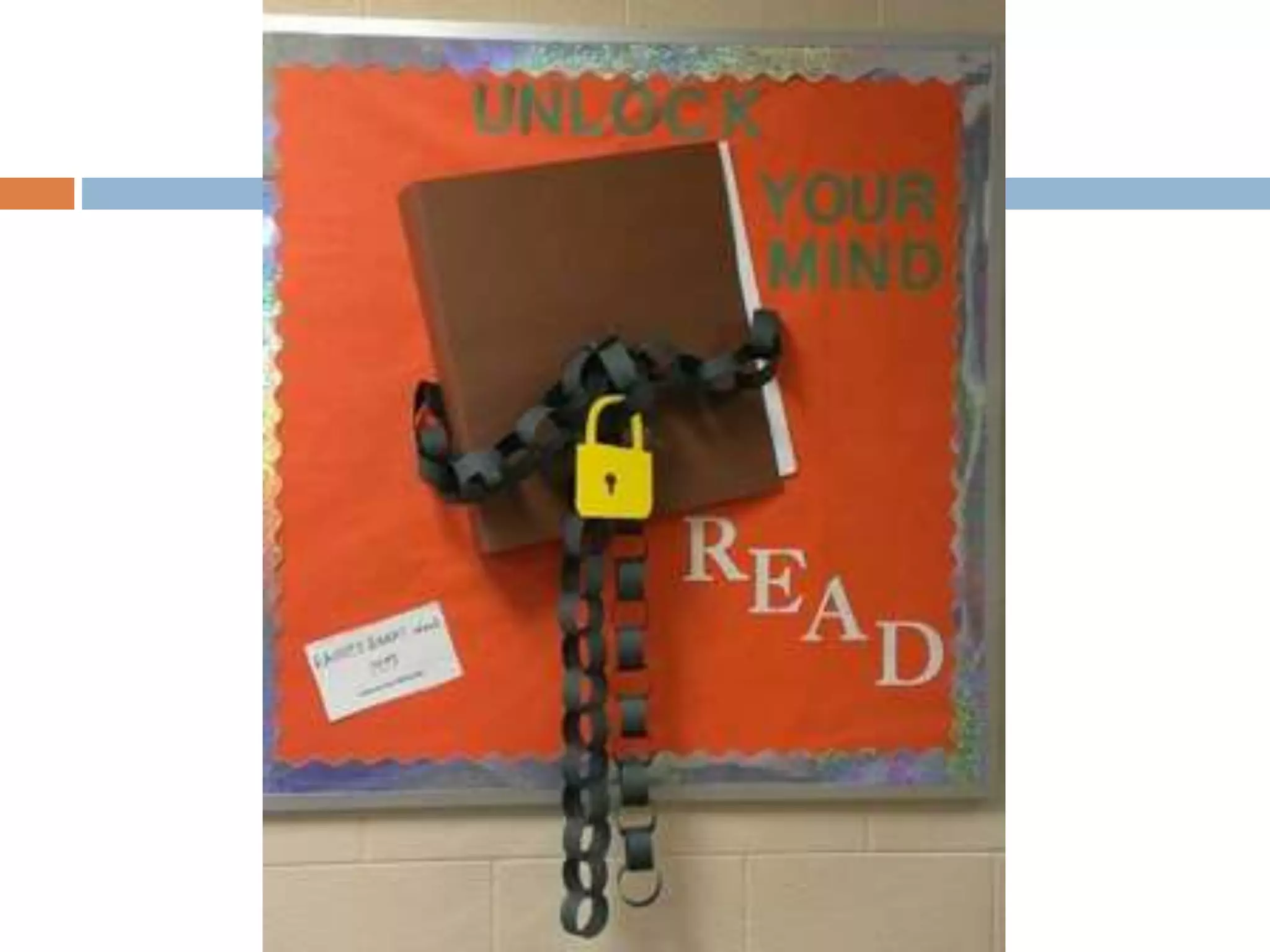
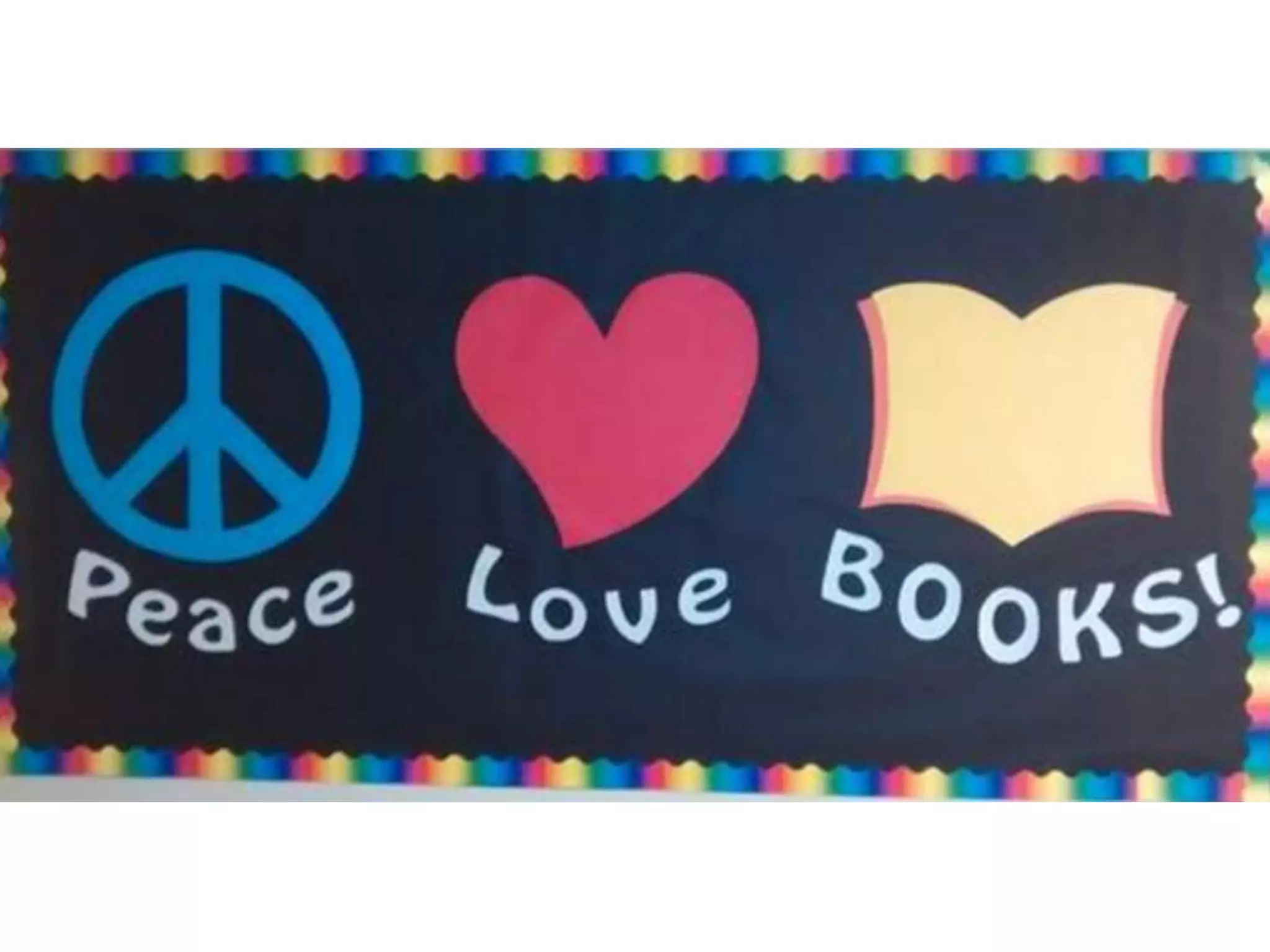
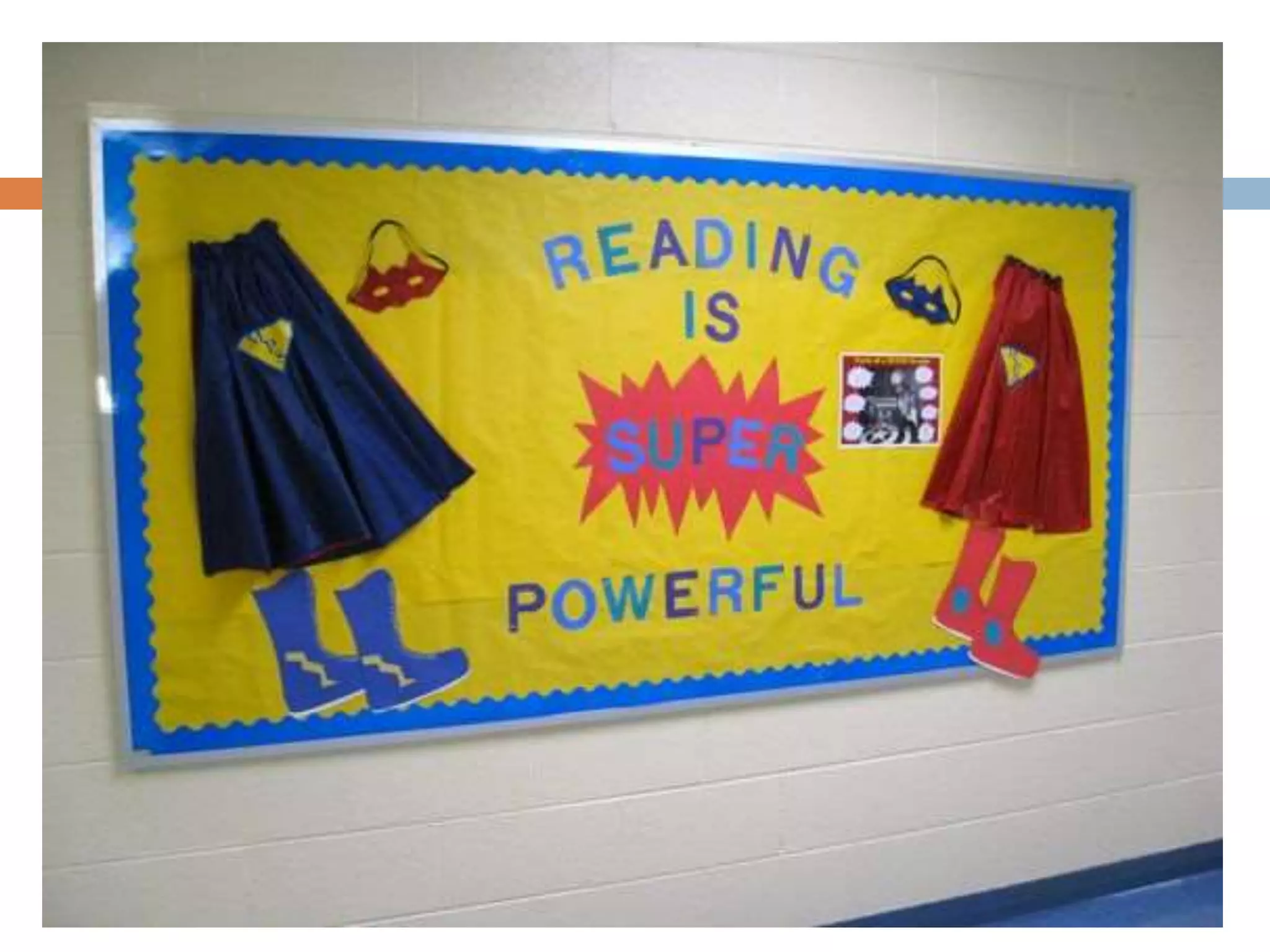
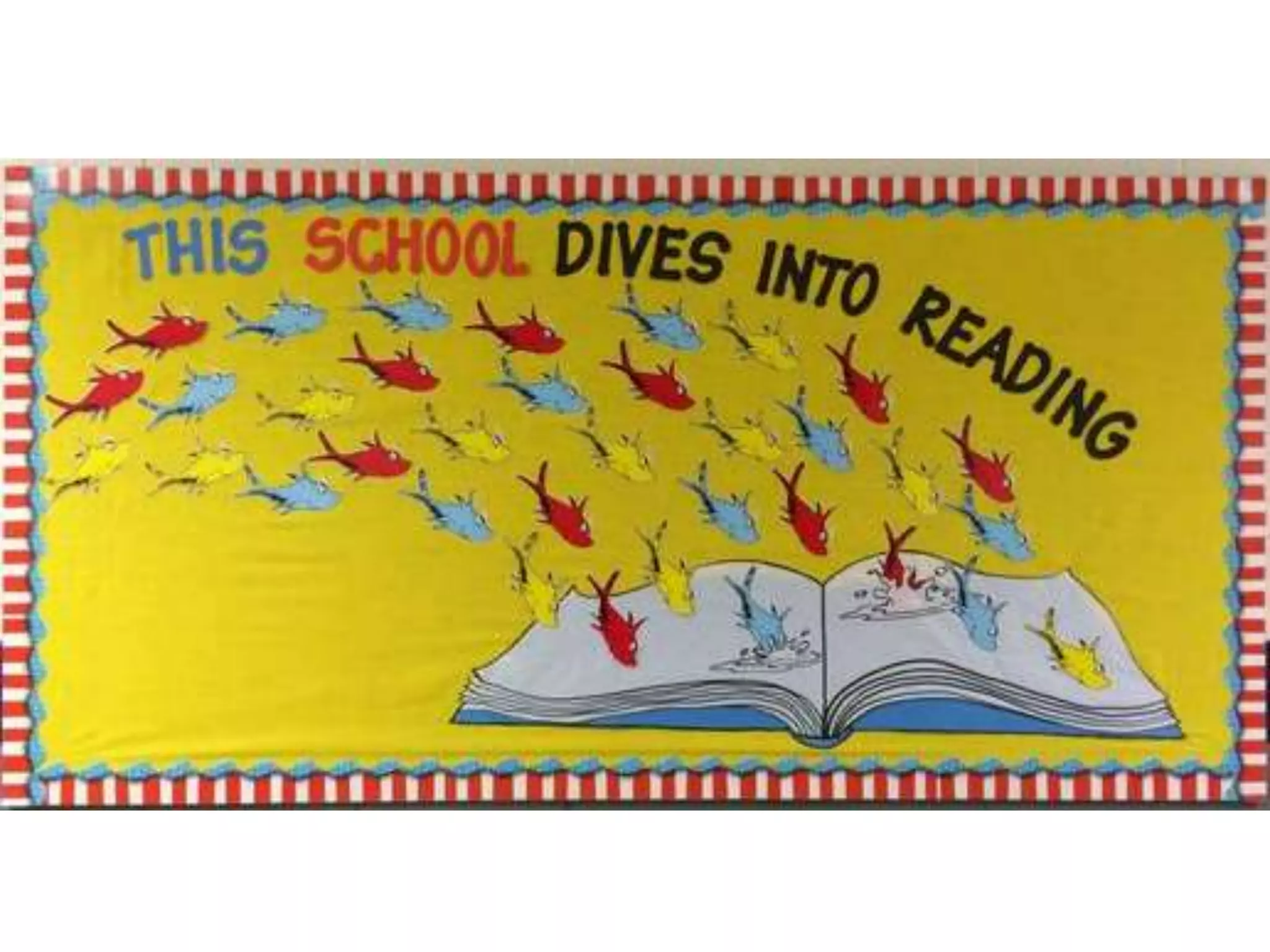
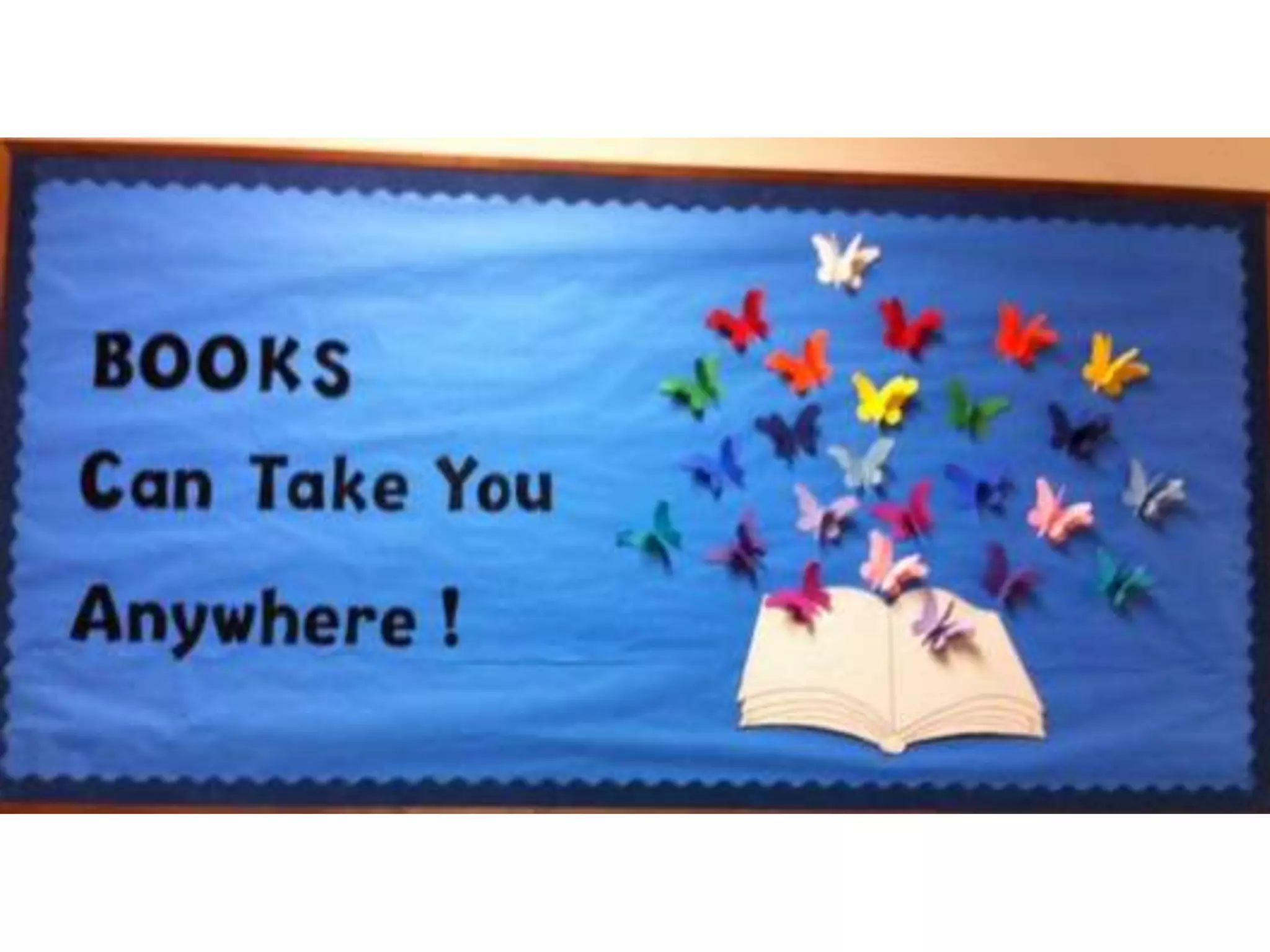
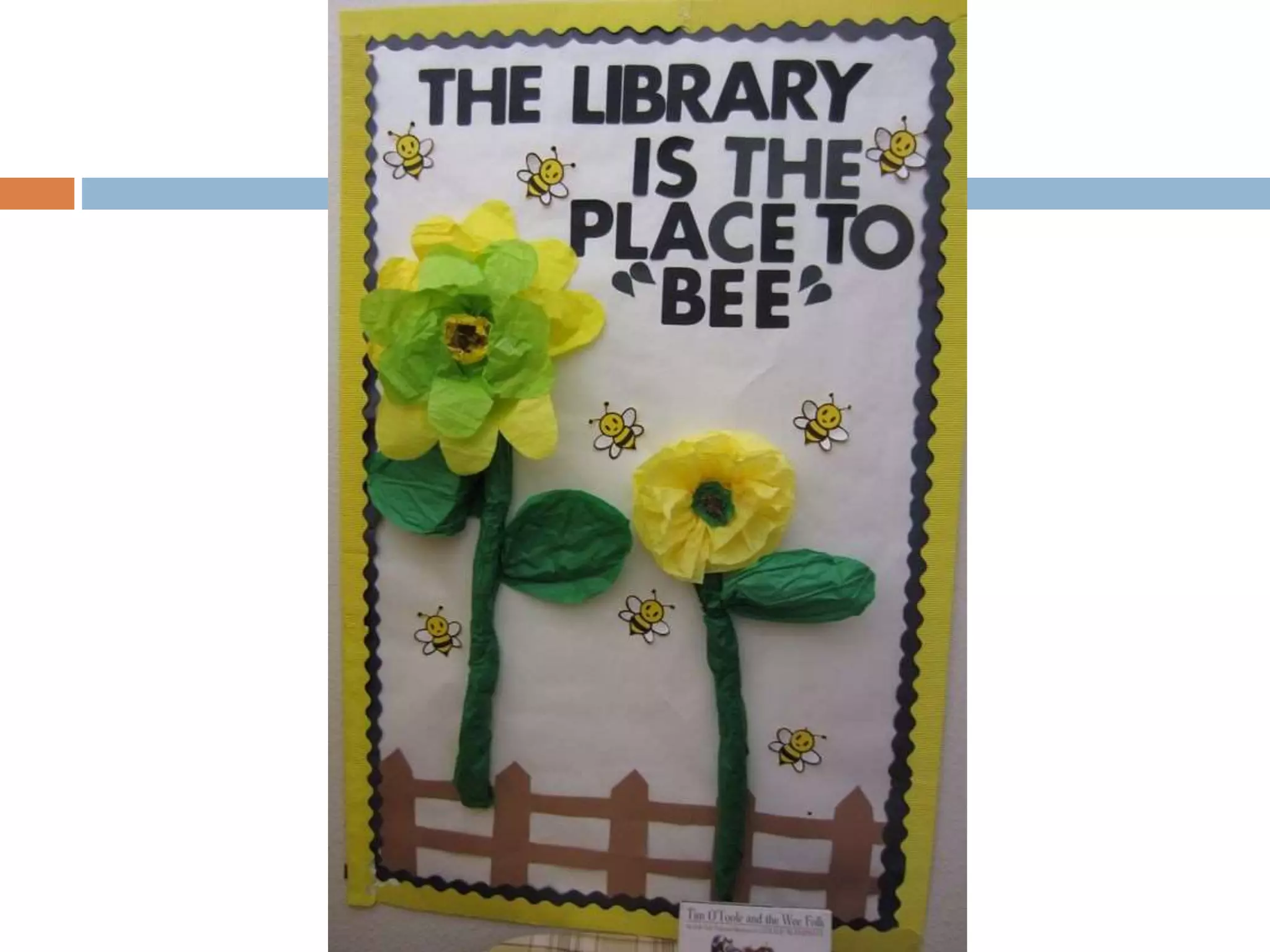
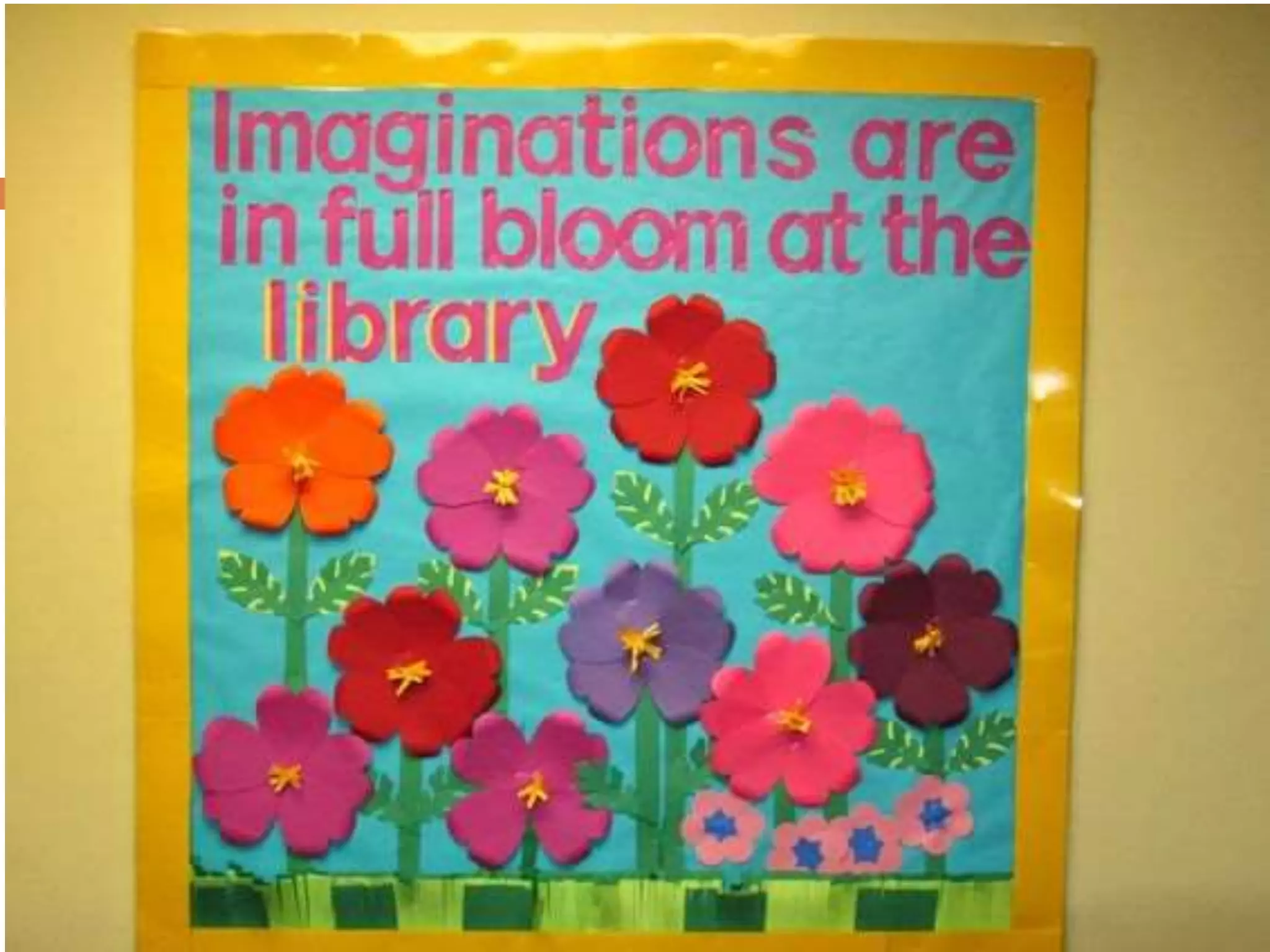
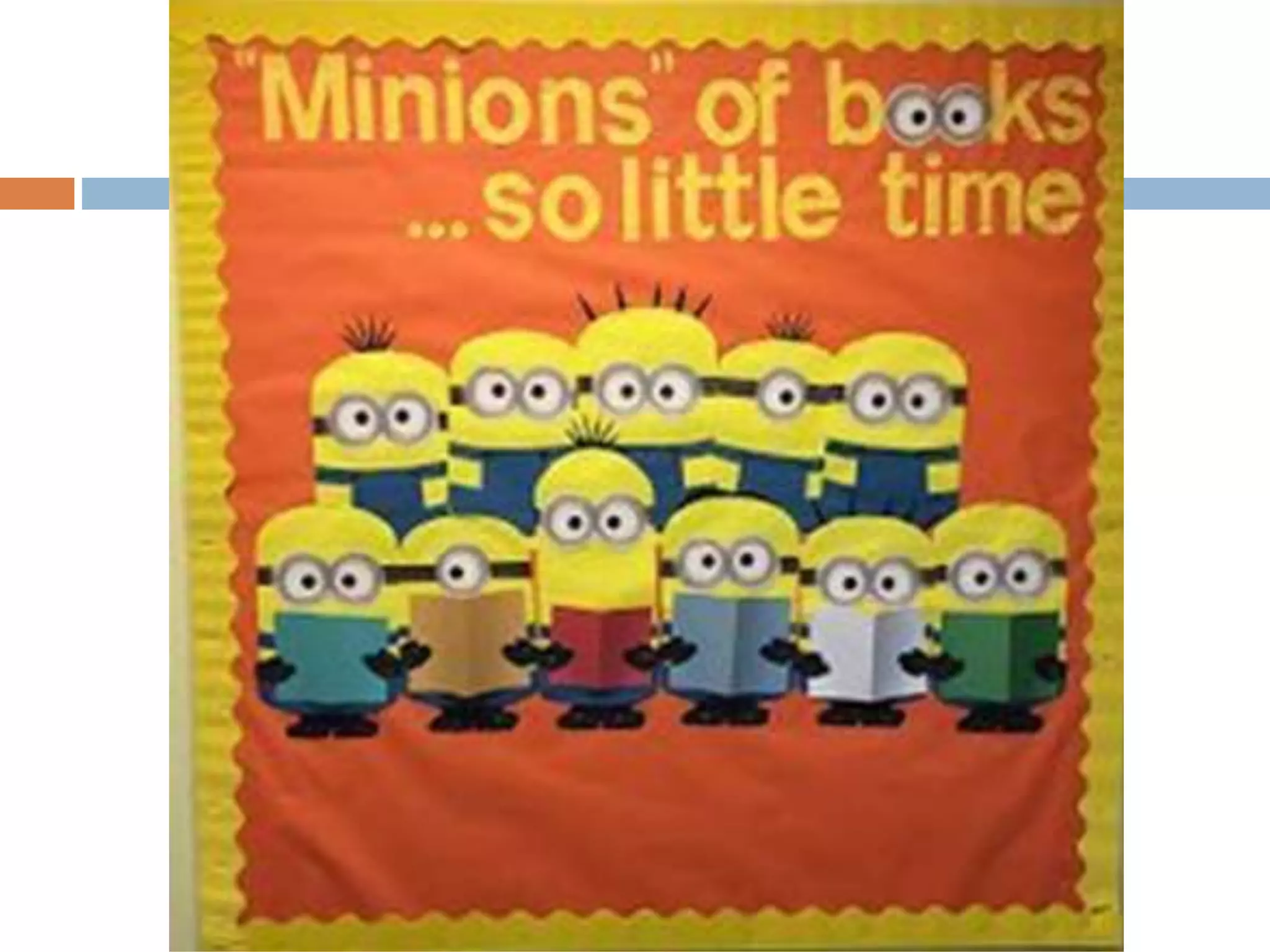
Decorating the library is
crucial, it can play a
huge role in it’s
aesthetics and therefore
transform it into the ideal
reading and working
environment for young
children.
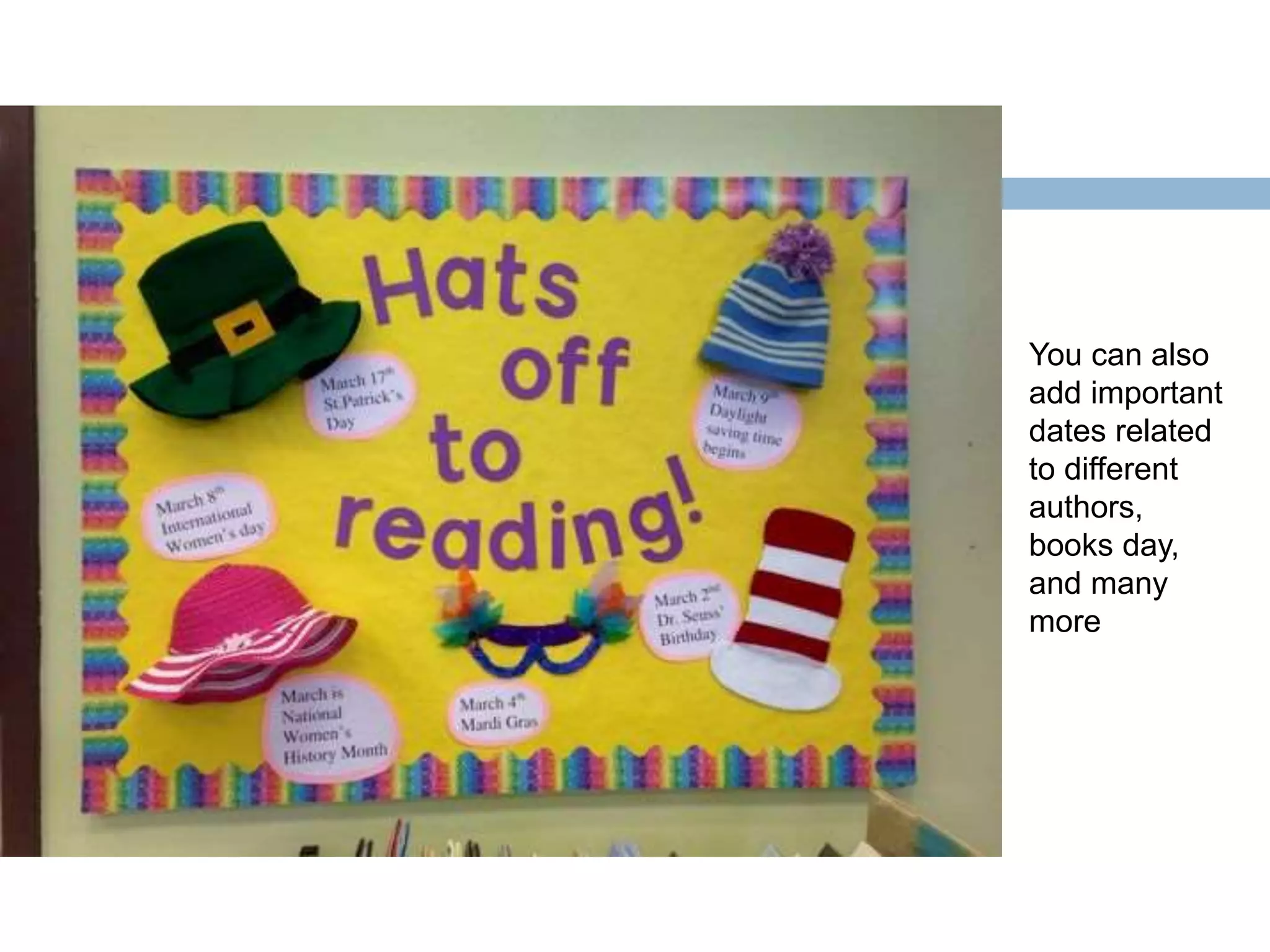
You can also
add important
dates related
to different
authors,
books day,
and many
more
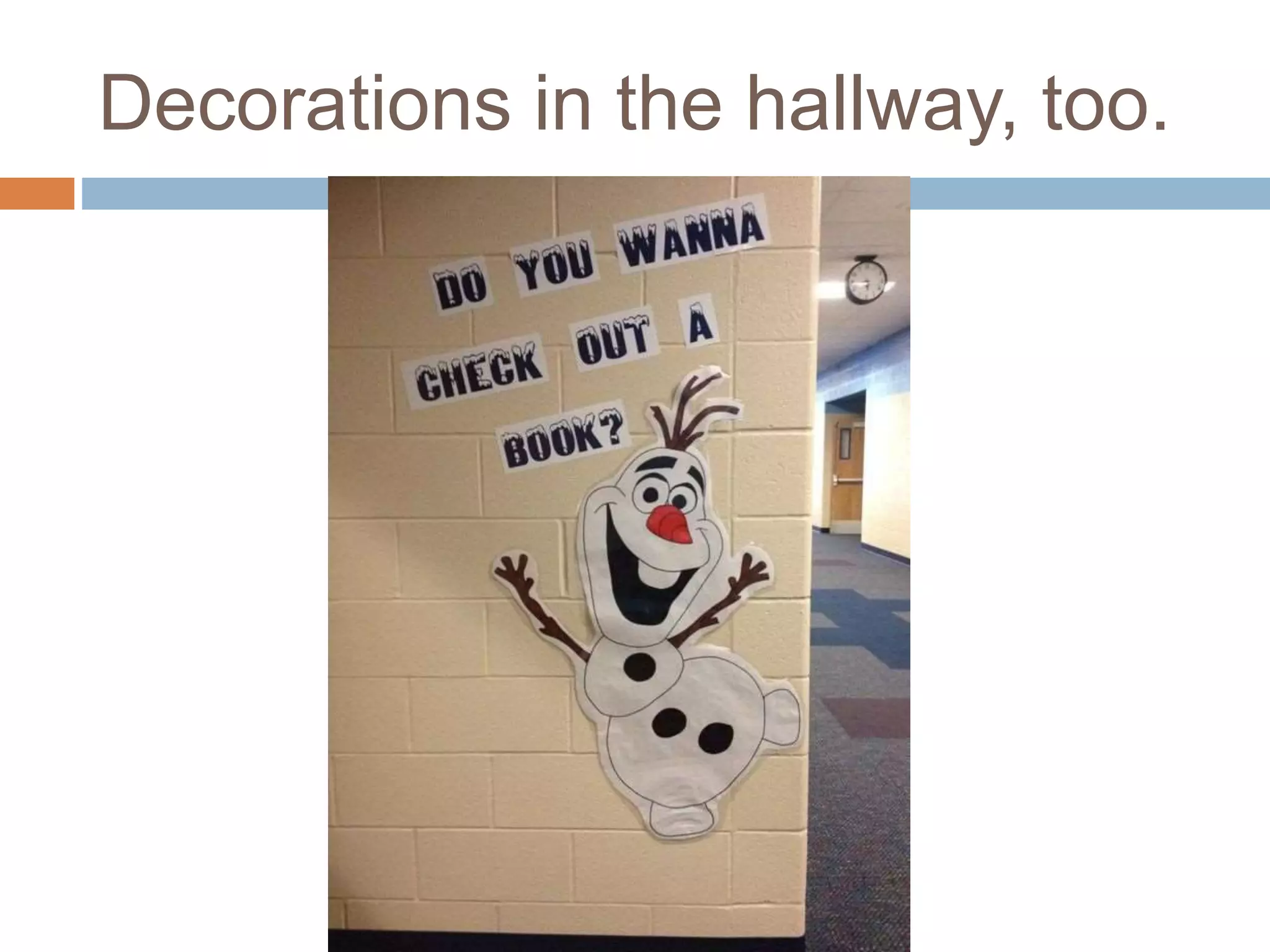
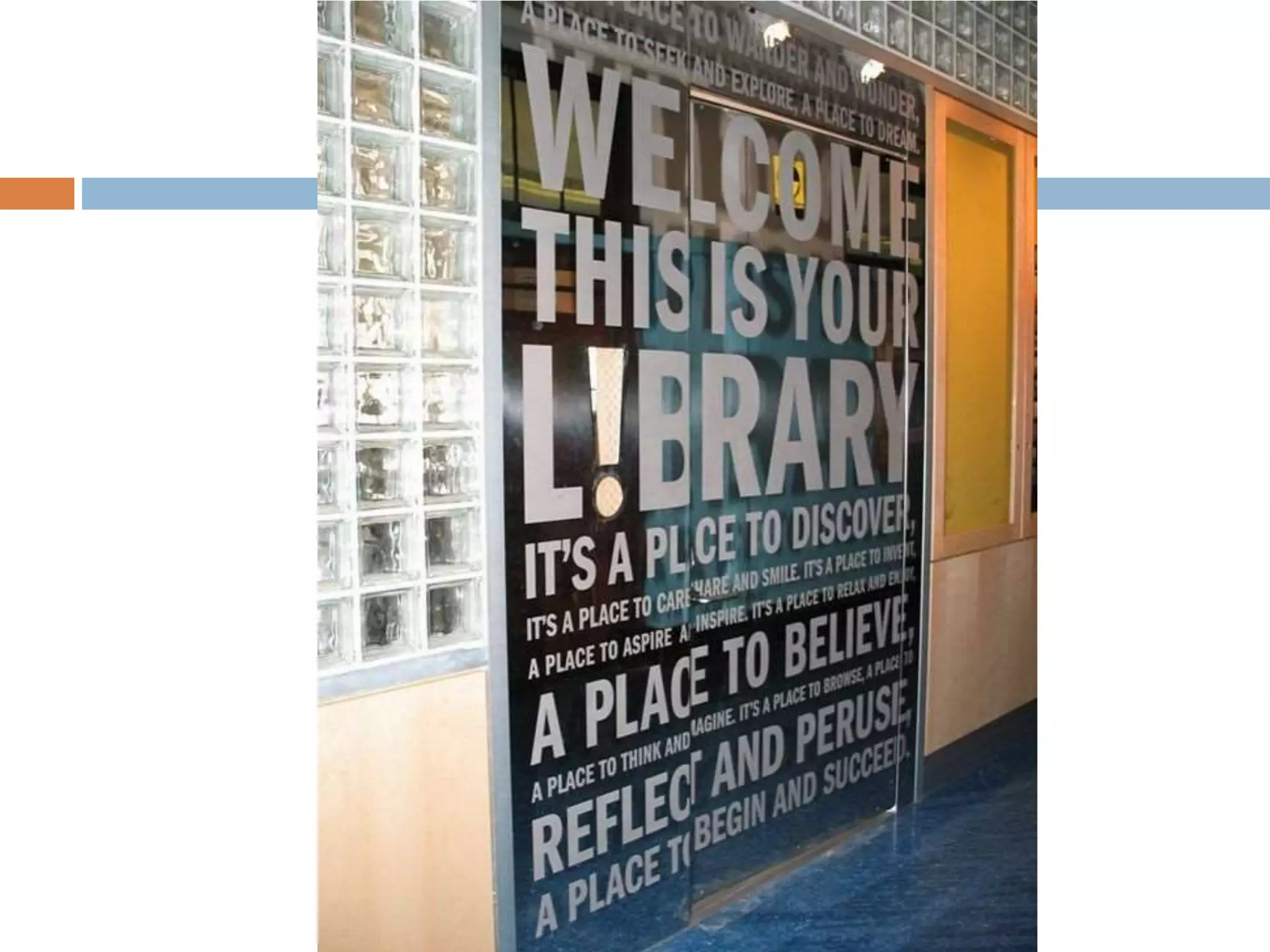
Decorations in the hallway, too.
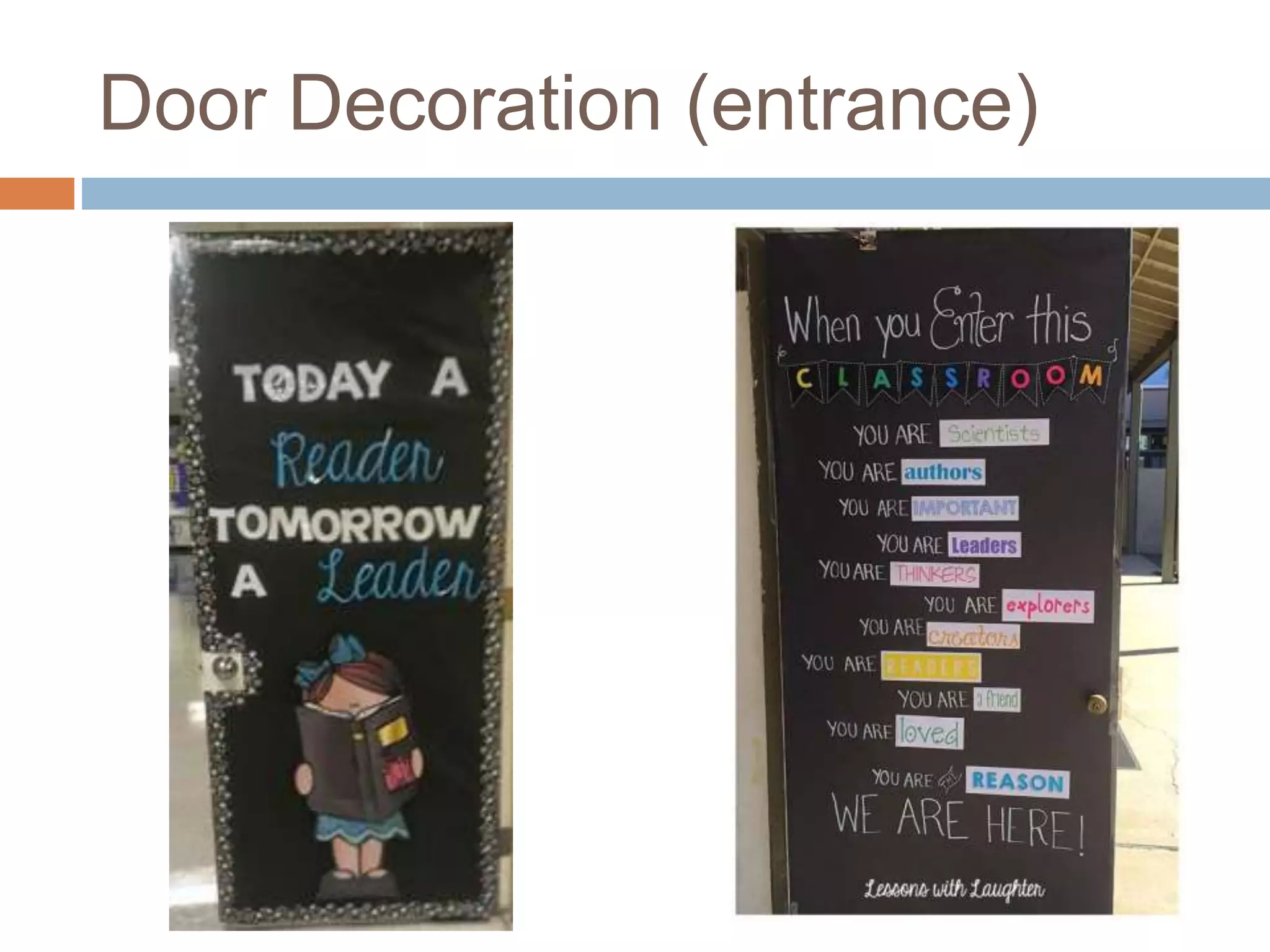
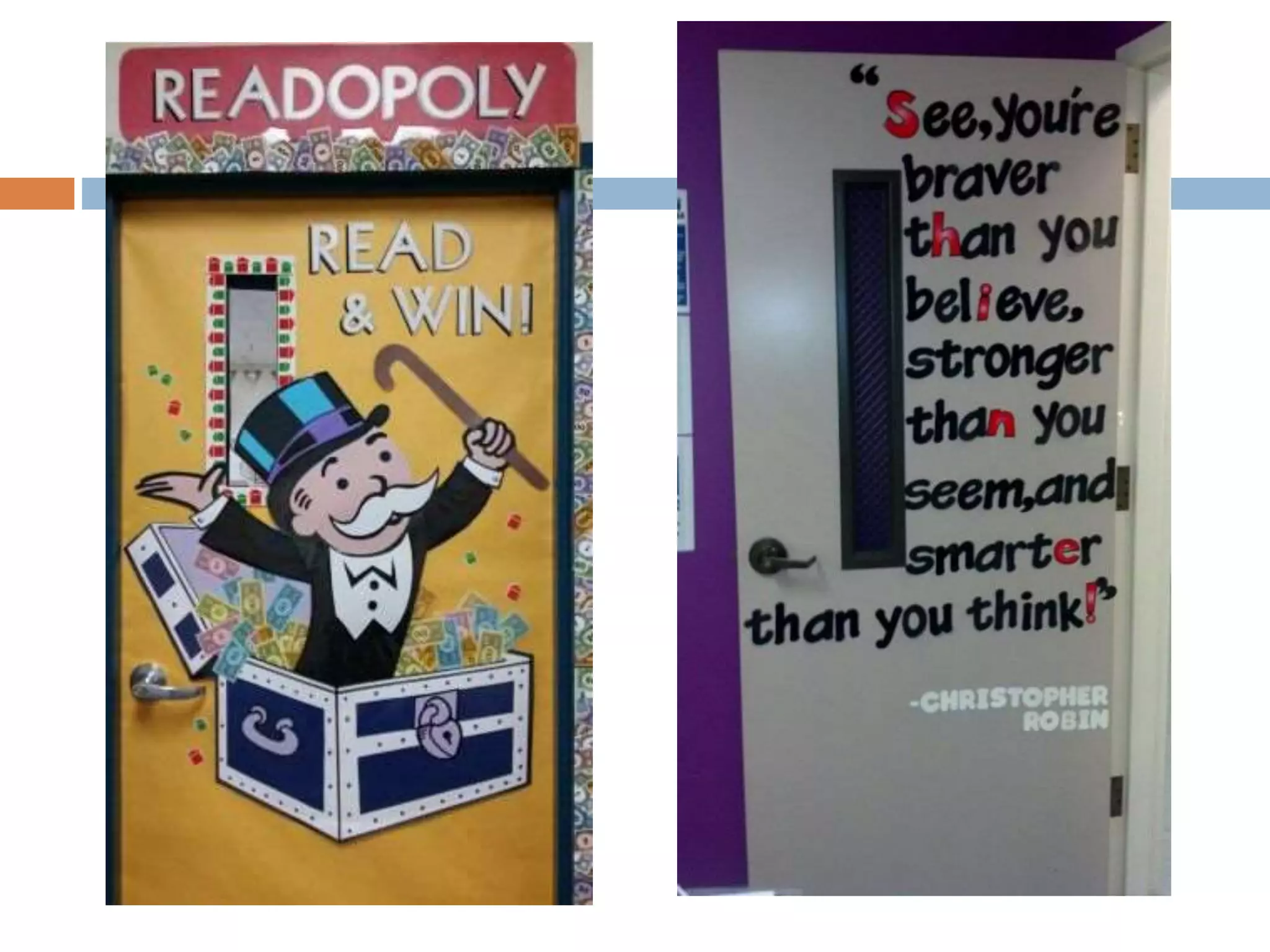
Door Decoration (entrance)
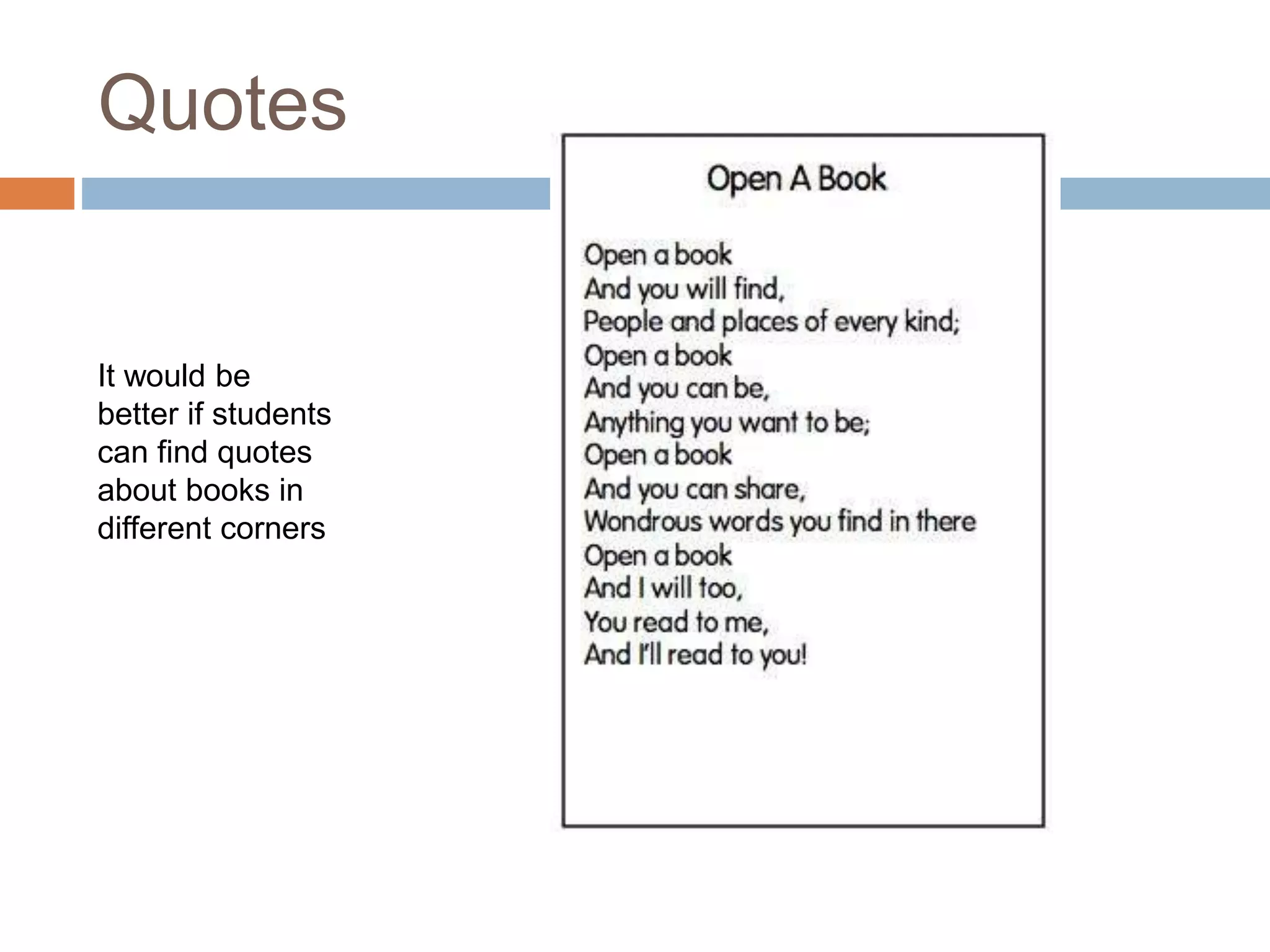
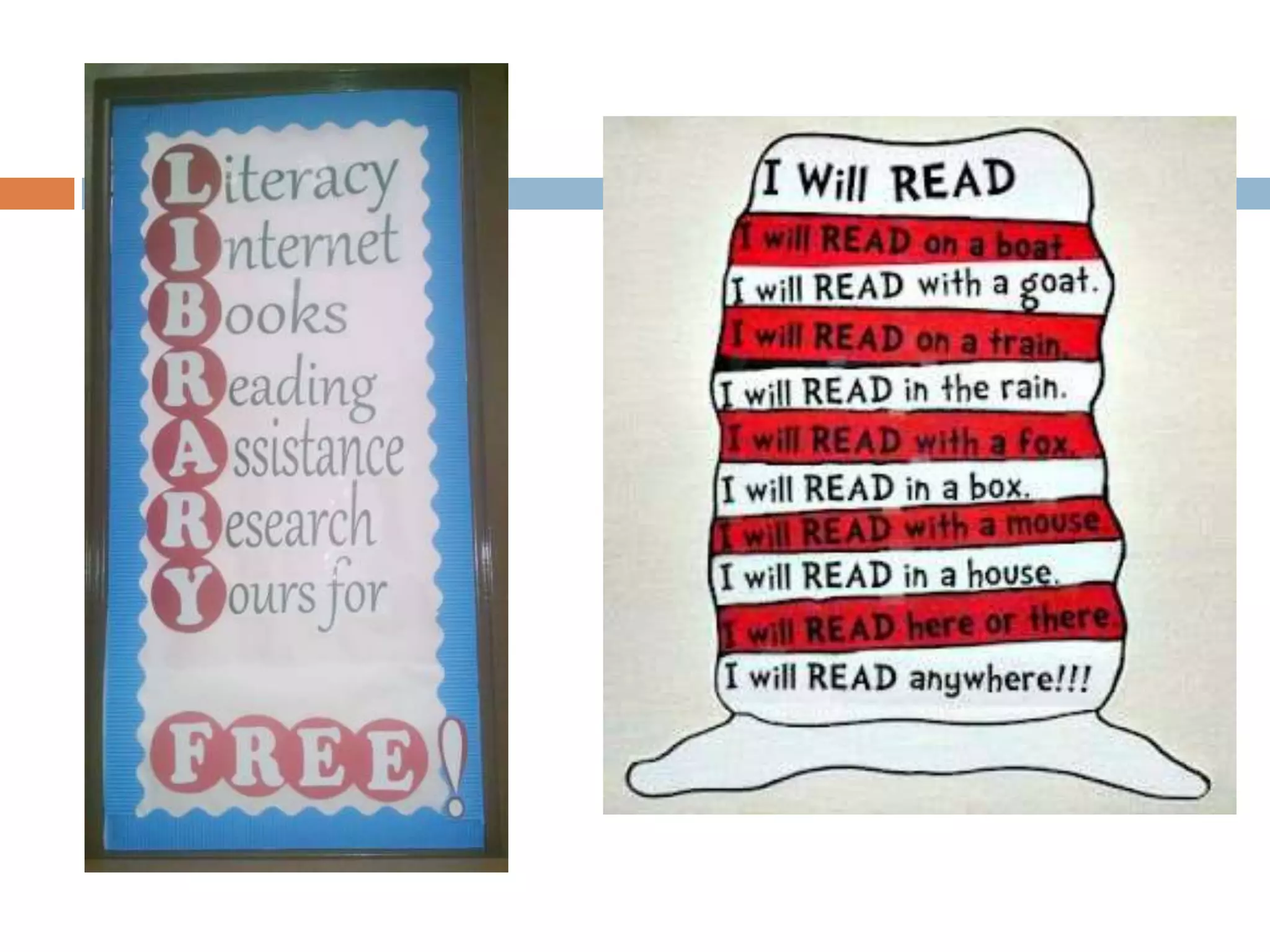
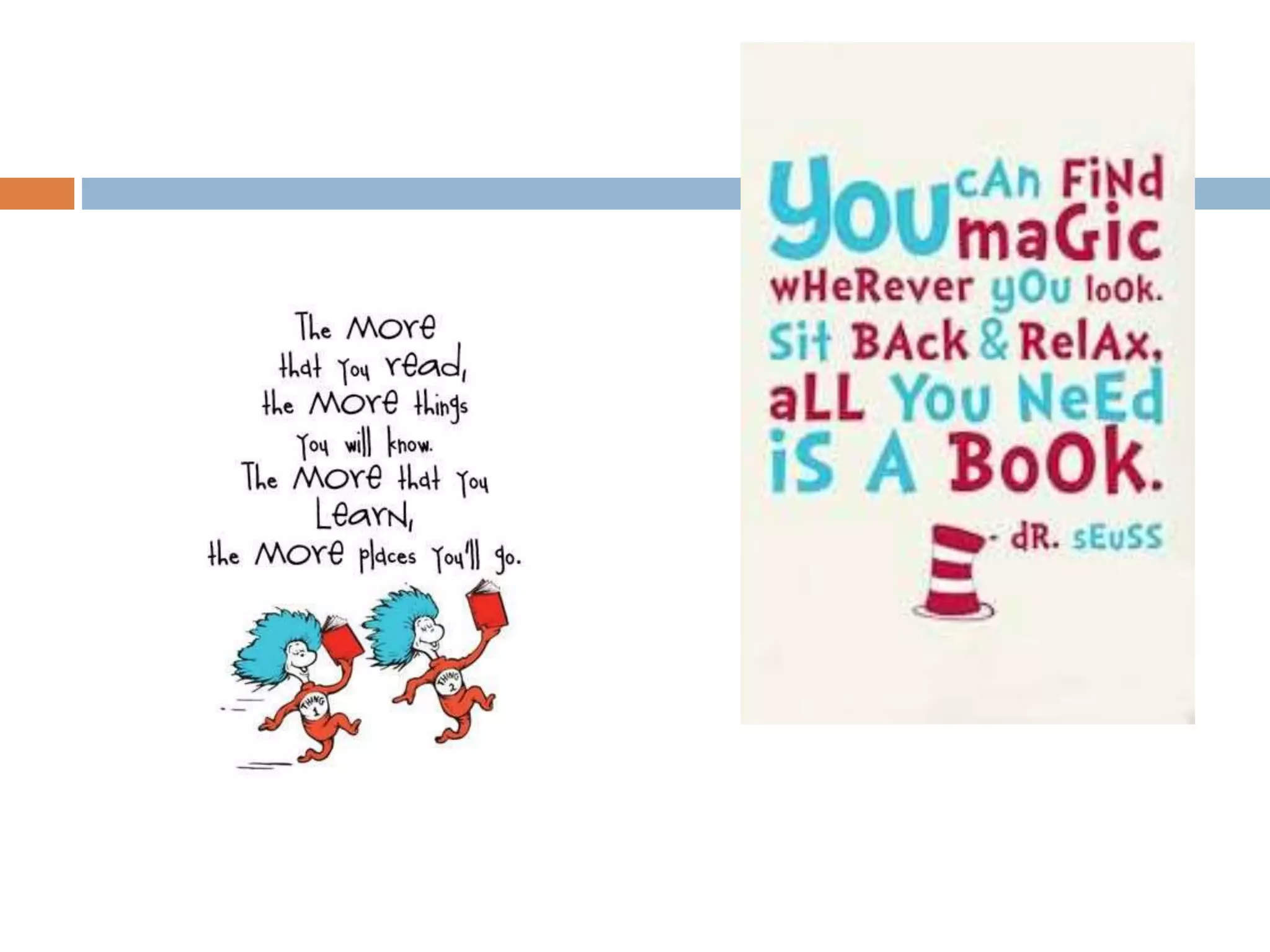
Quotes
It would be
better if students
can find quotes
about books in
different corners
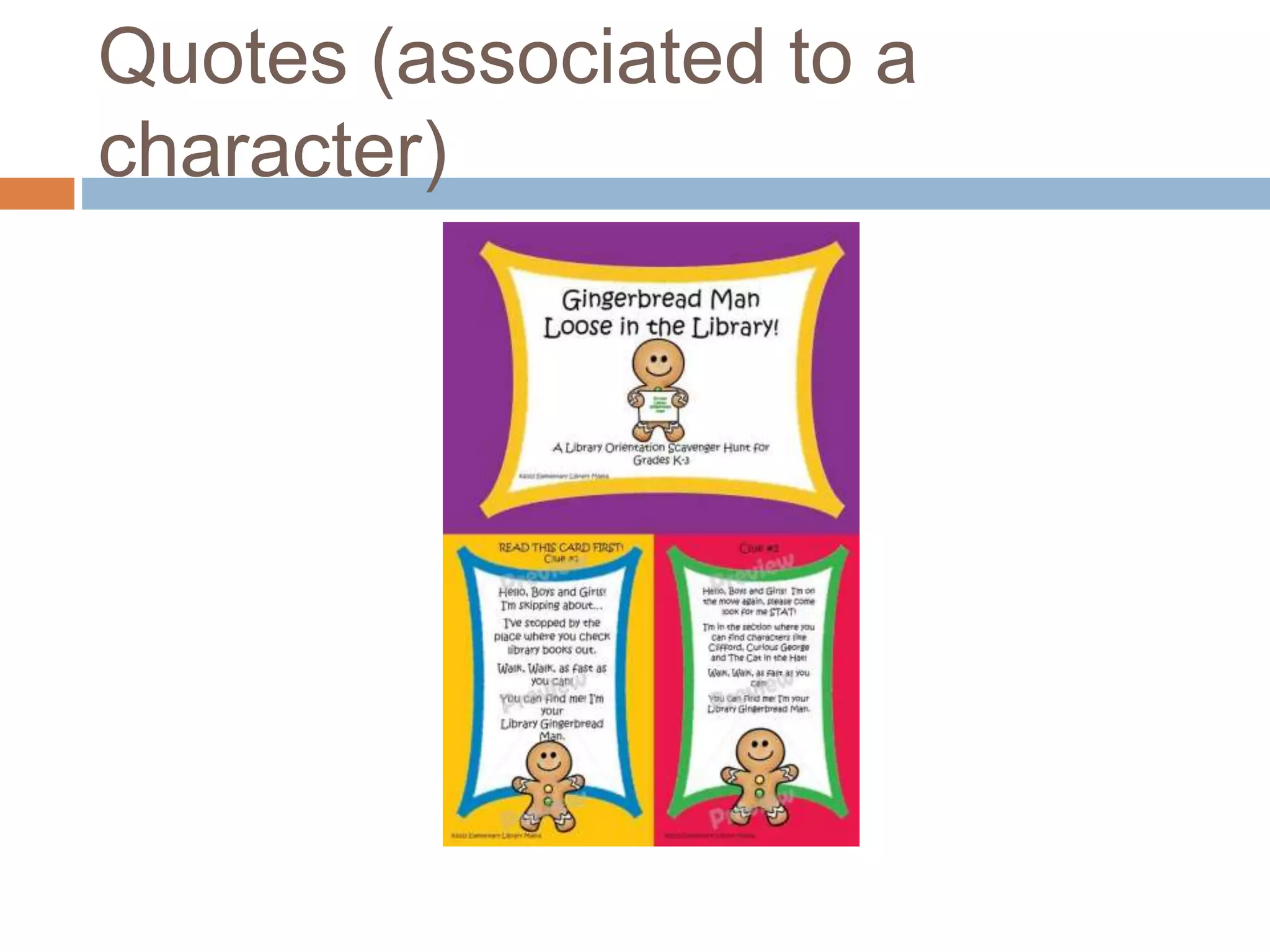
Quotes (associated to a
character)
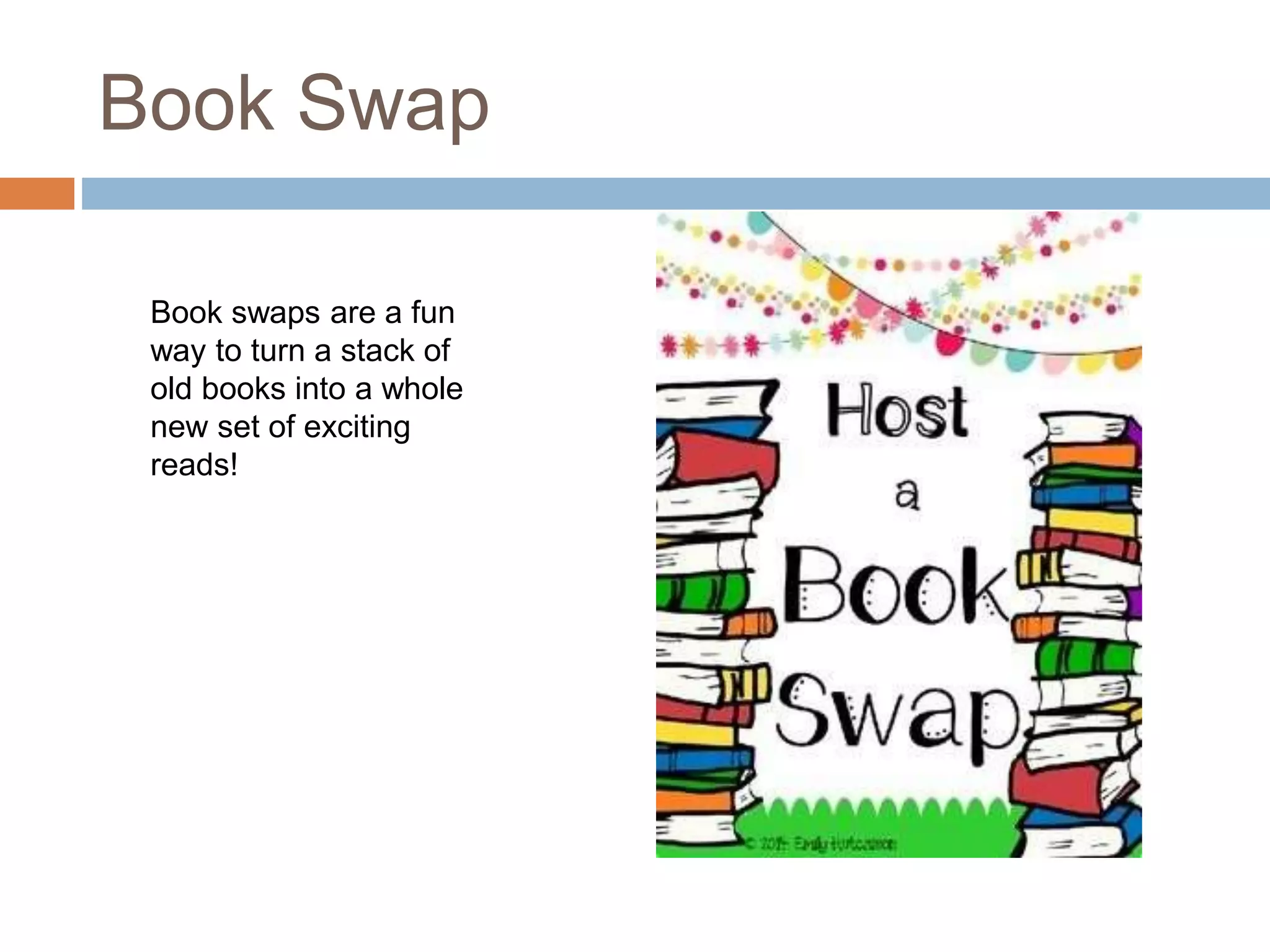
Book Swap
Book swaps are a fun
way to turn a stack of
old books into a whole
new set of exciting
reads!
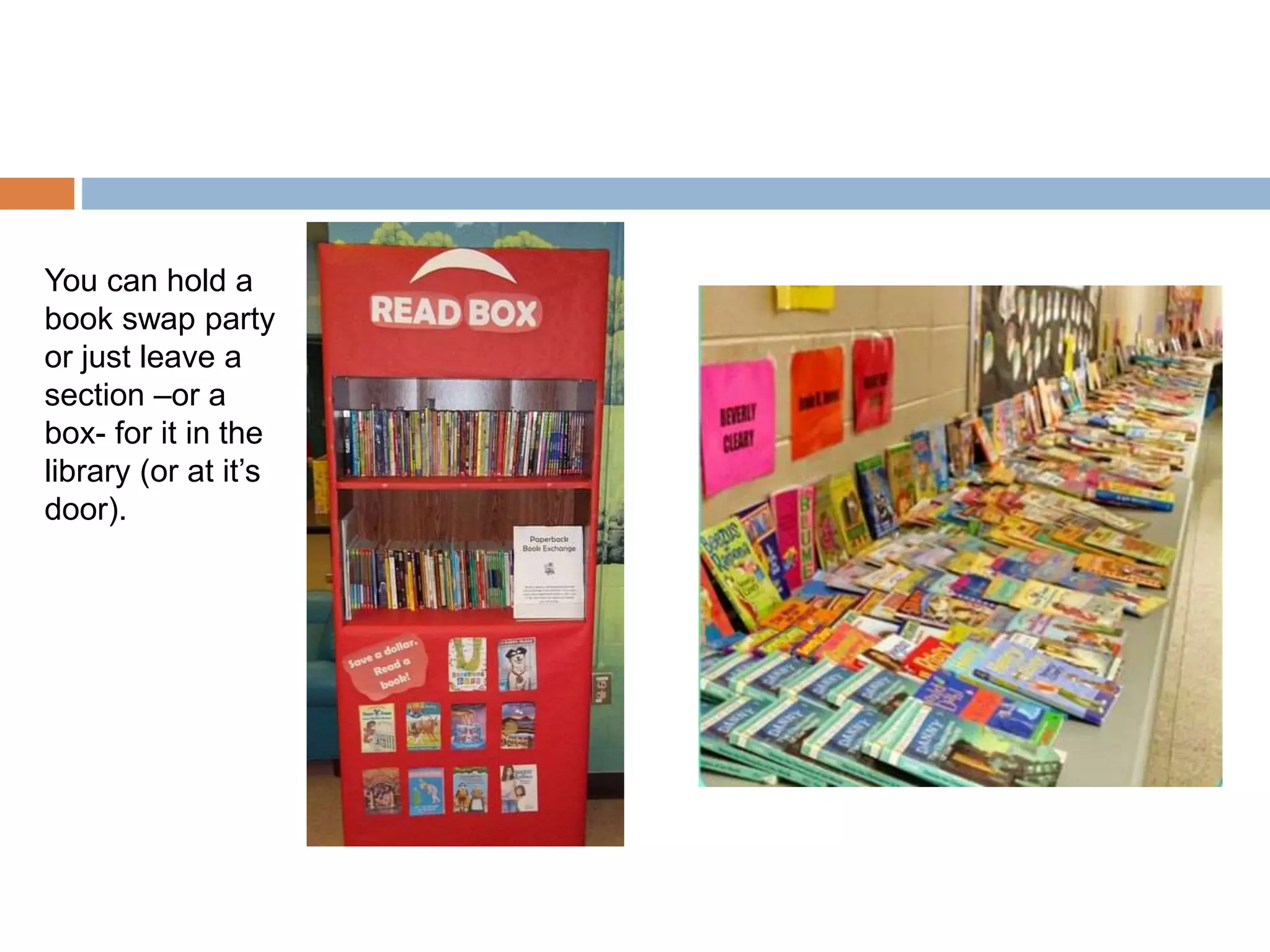
You can hold a
book swap party
or just leave a
section –or a
box- for it in the
library (or at it’s
door).
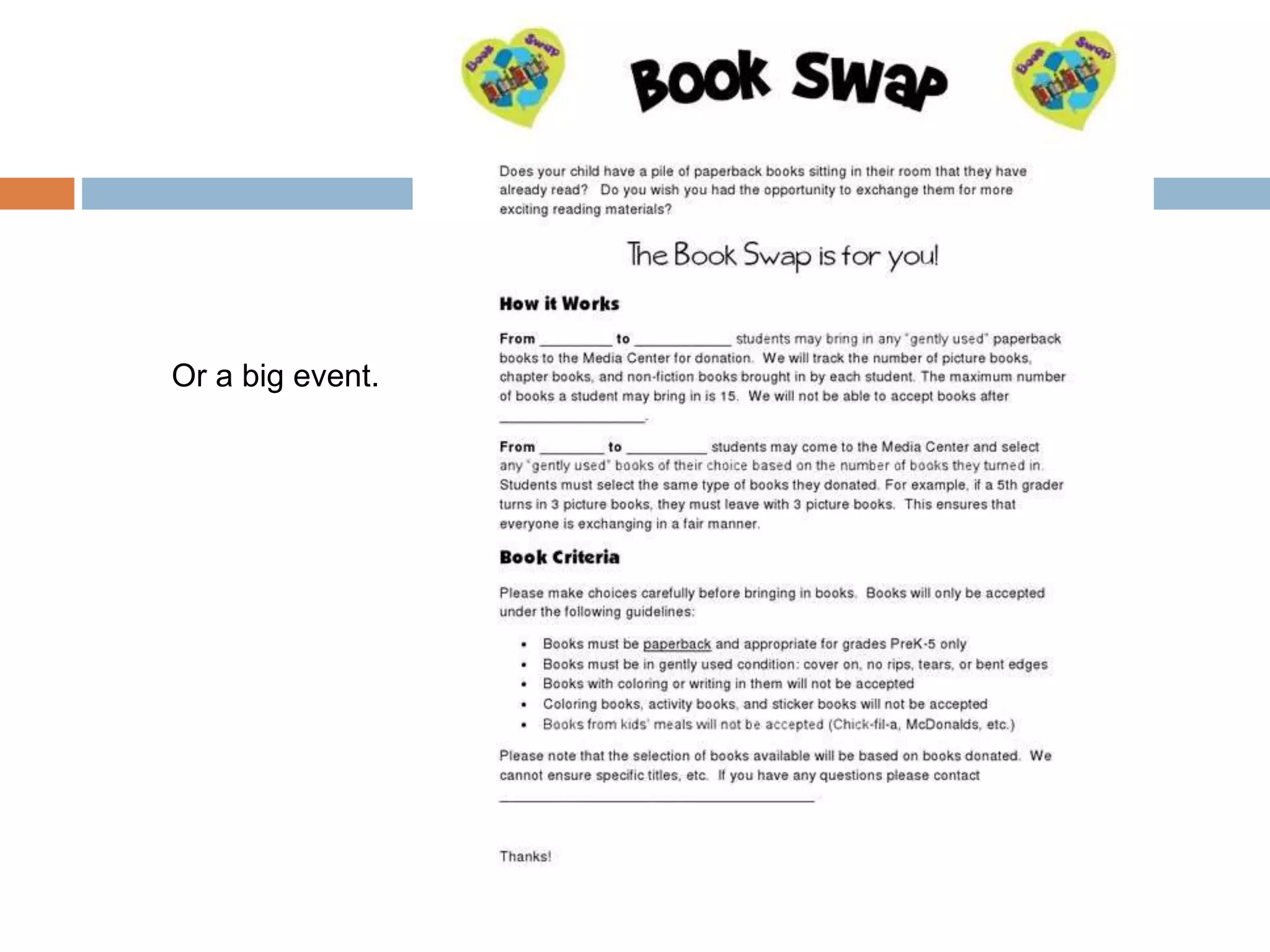
Or a big event.
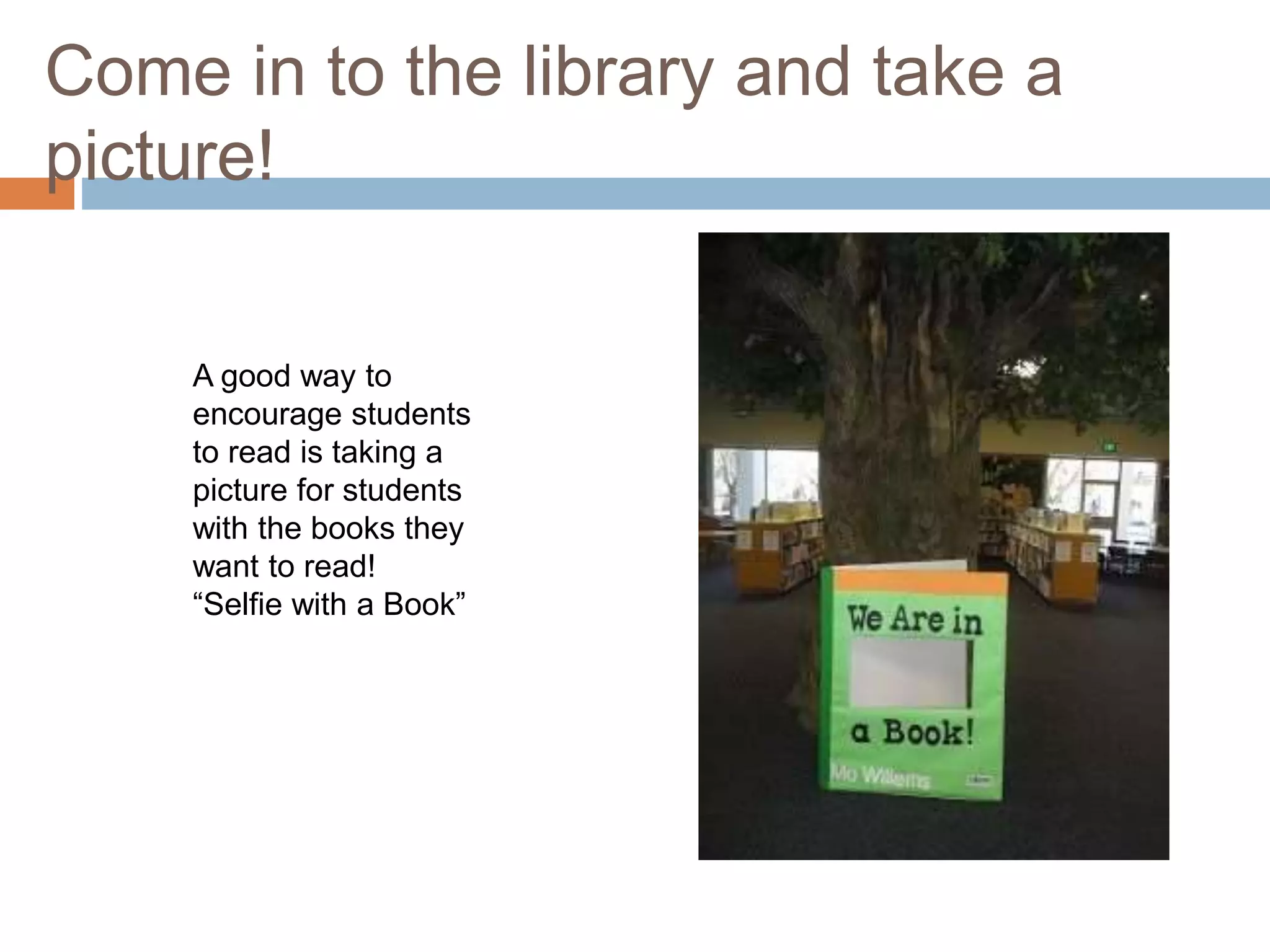
Come in to the library and take a
picture!
A good way to
encourage students
to read is taking a
picture for students
with the books they
want to read!
“Selfie with a Book”
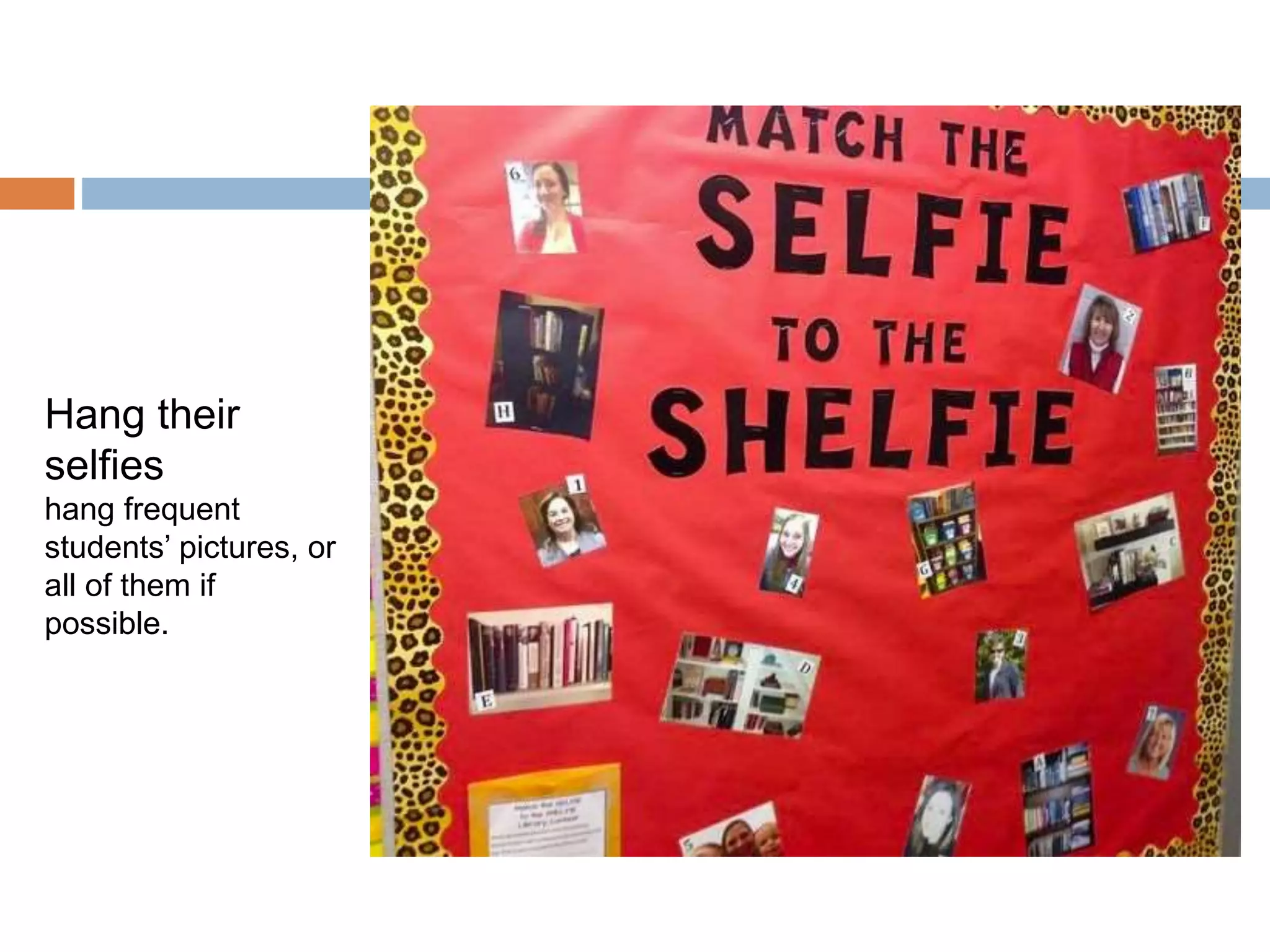
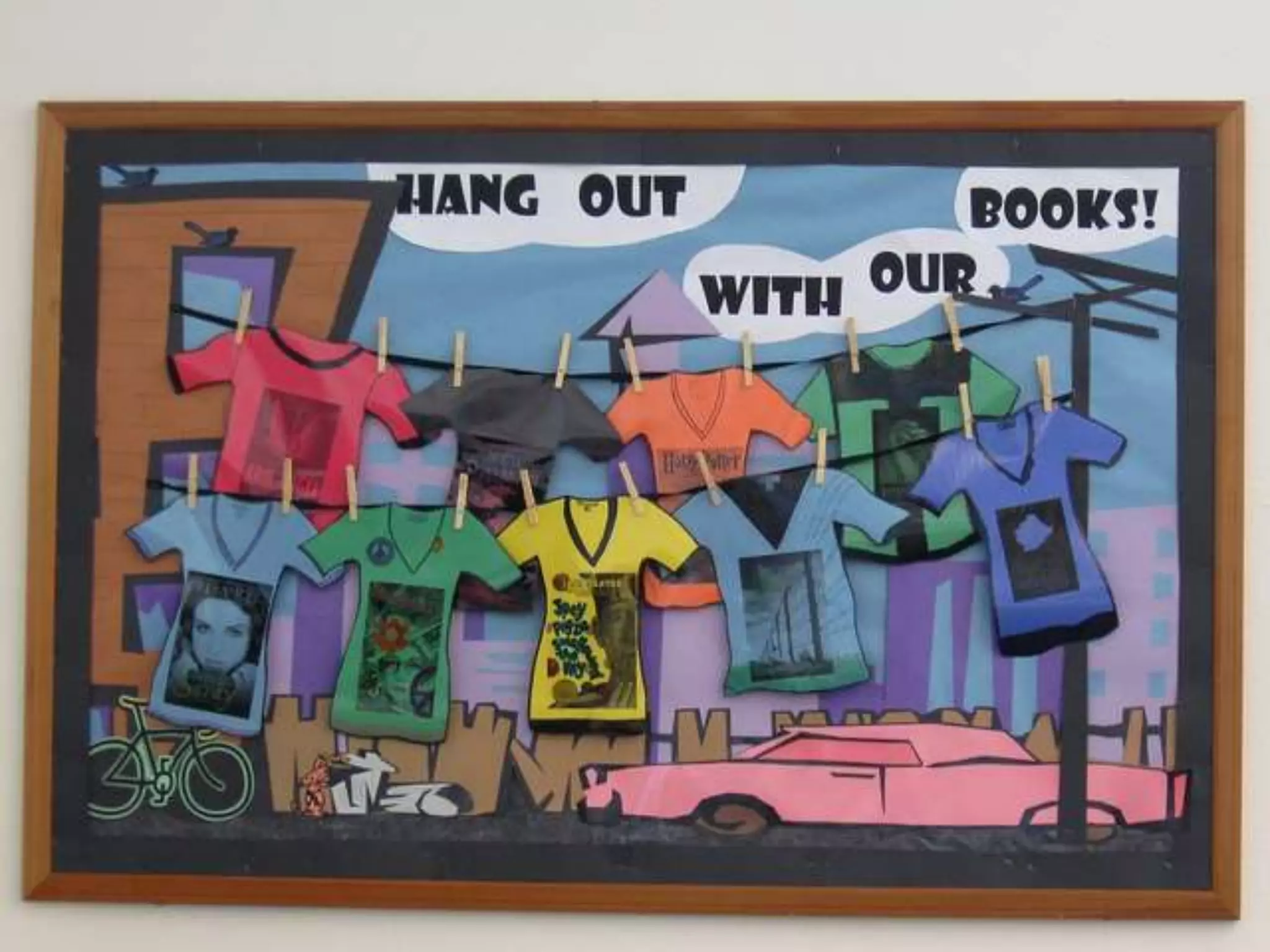
Hang their
selfies
hang frequent
students’ pictures, or
all of them if
possible.
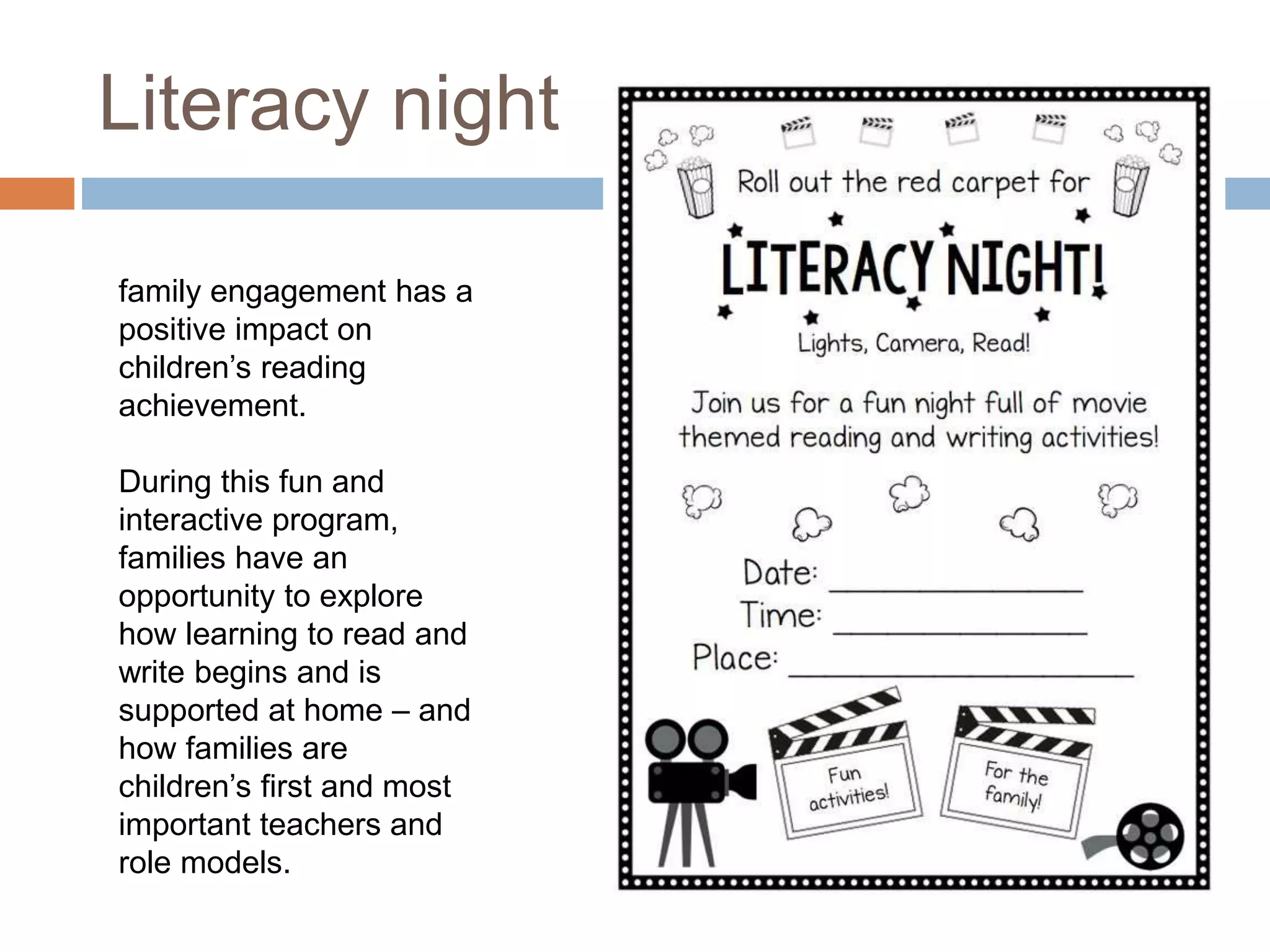
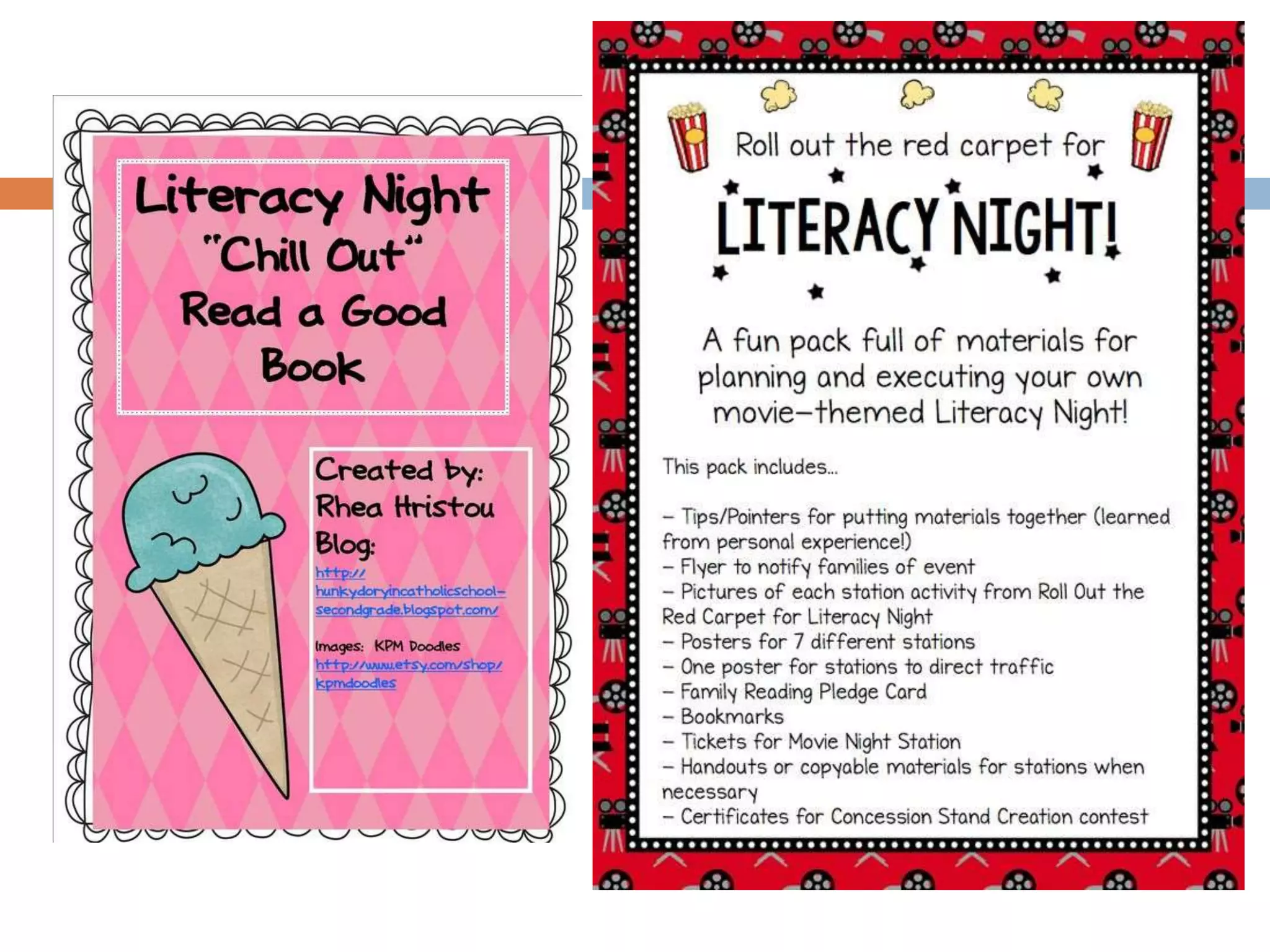
Literacy night
family engagement has a
positive impact on
children’s reading
achievement.
During this fun and
interactive program,
families have an
opportunity to explore
how learning to read and
write begins and is
supported at home – and
how families are
children’s first and most
important teachers and
role models.
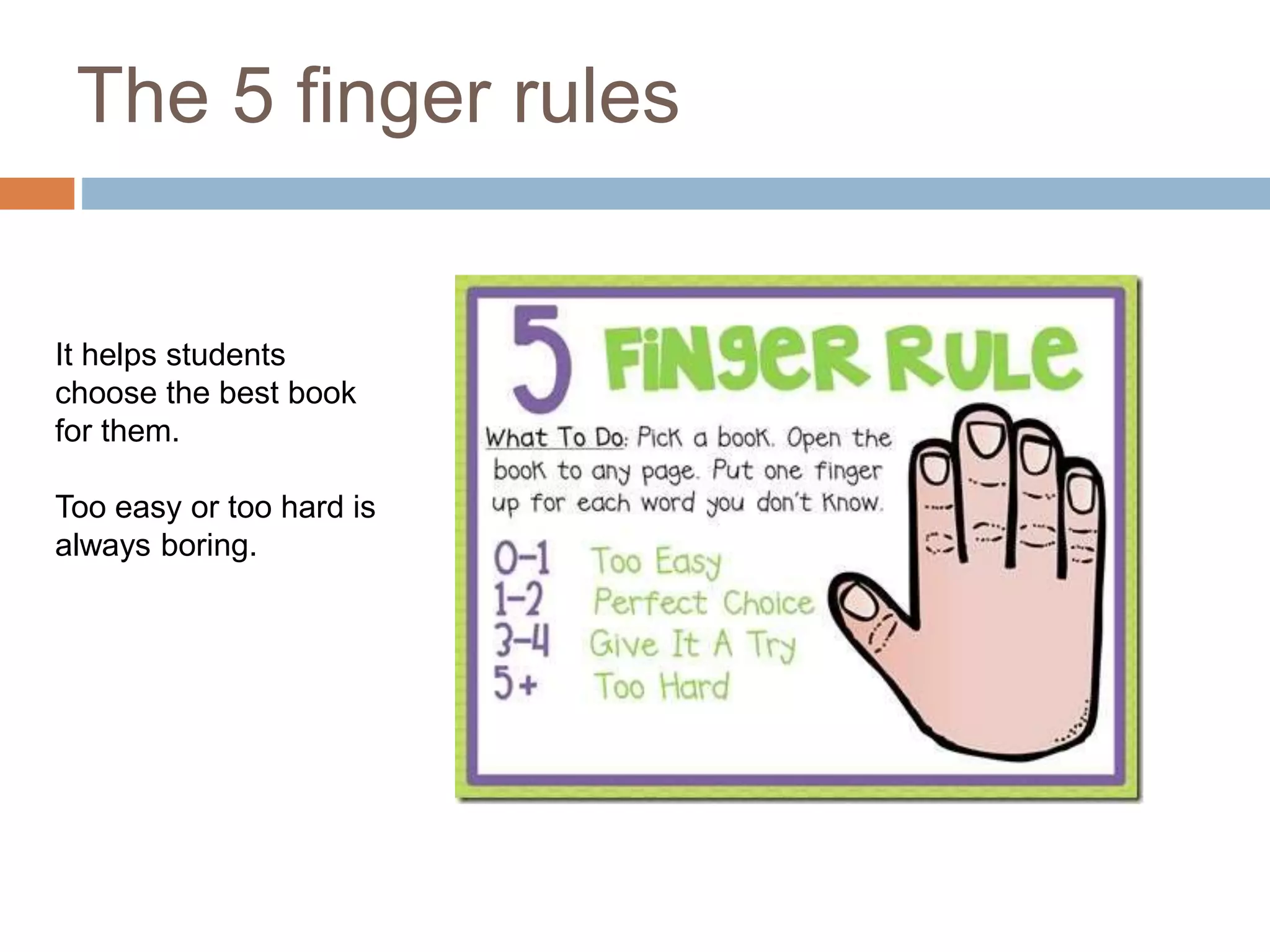
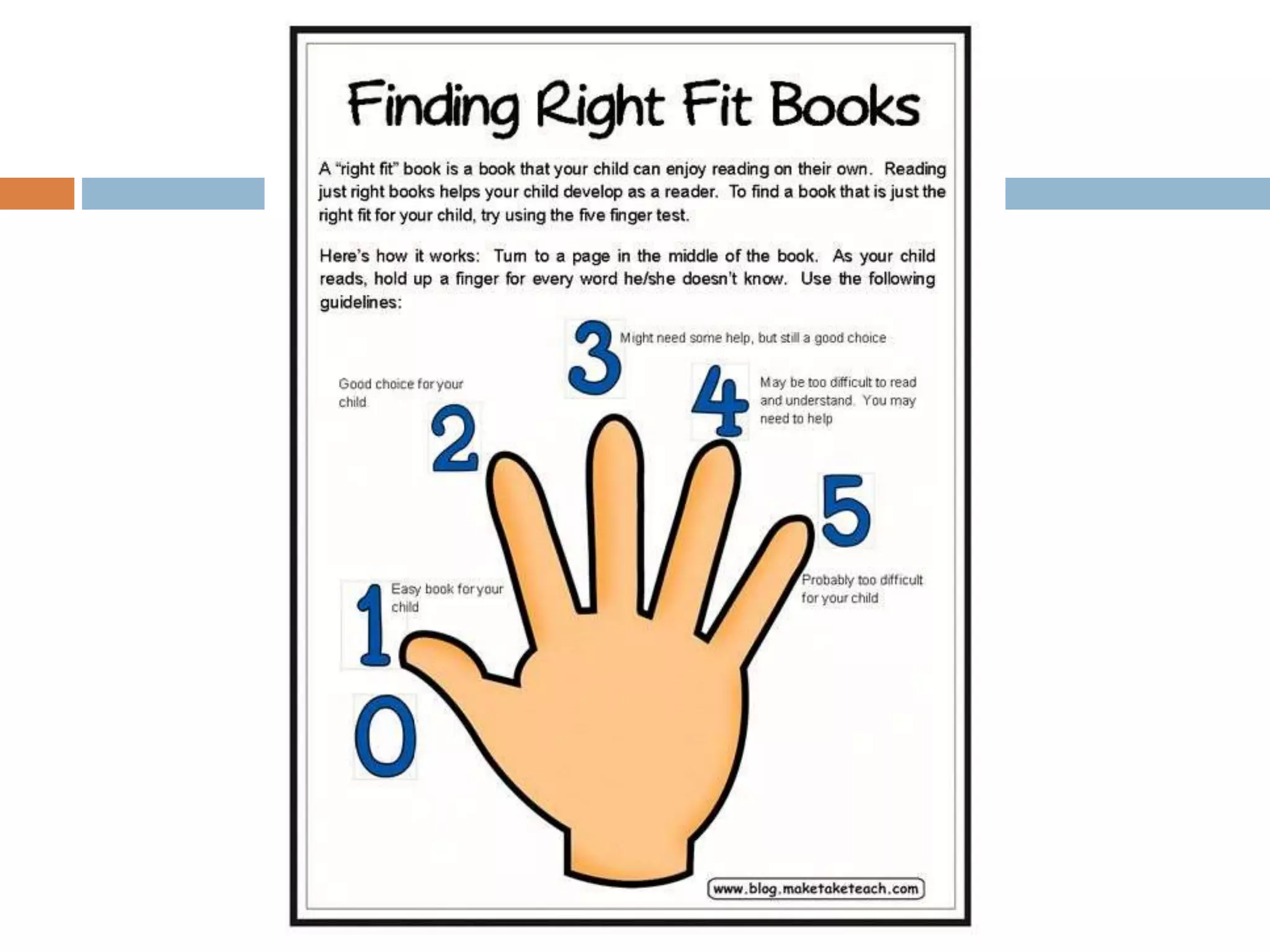
The 5 finger rules
It helps students
choose the best book
for them.
Too easy or too hard is
always boring.
have couches or bean bags!
At break time,
some students
would just love to
go to the library,
grab a book, relax
and read.
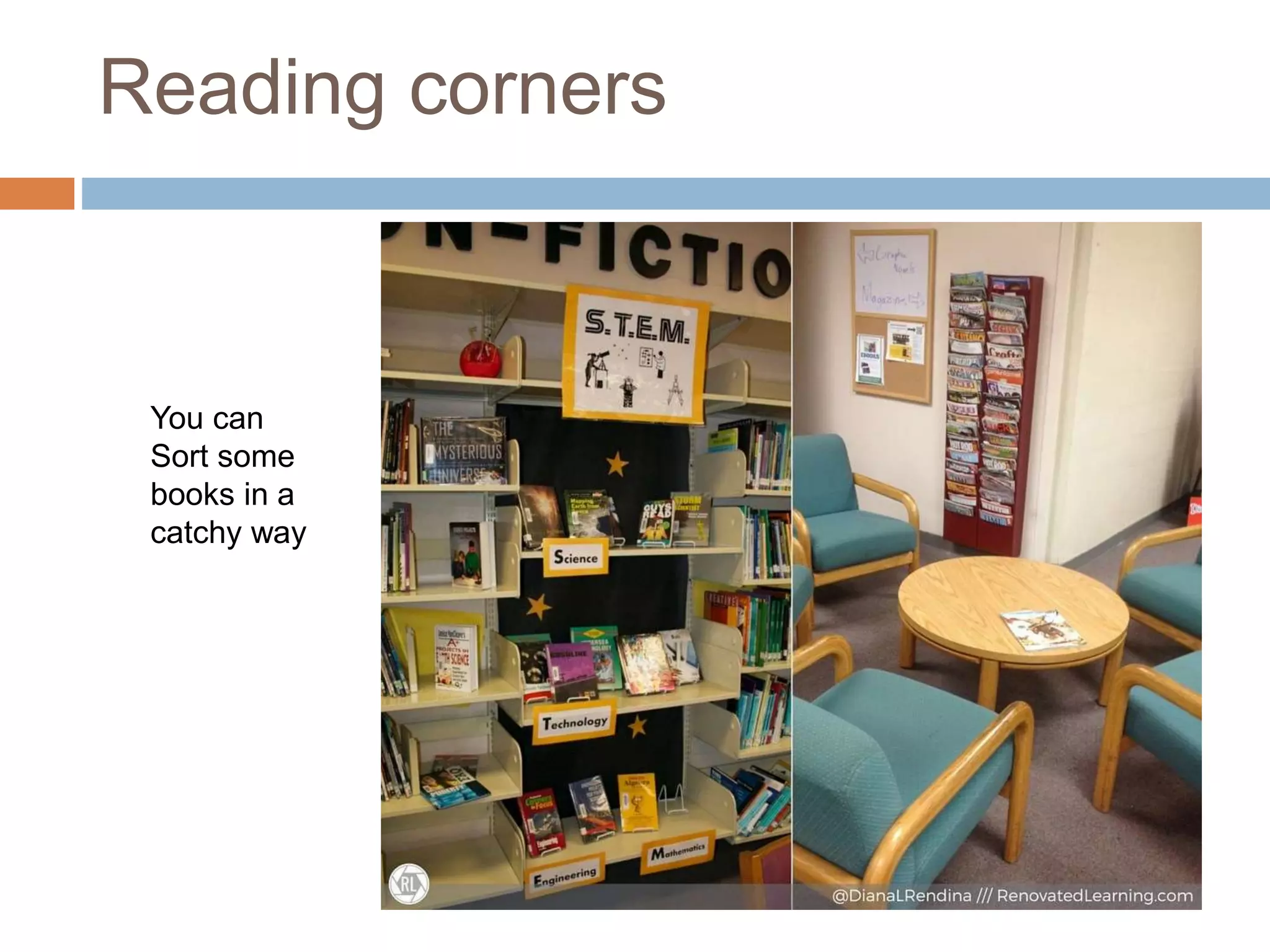
Reading corners
You can
Sort some
books in a
catchy way
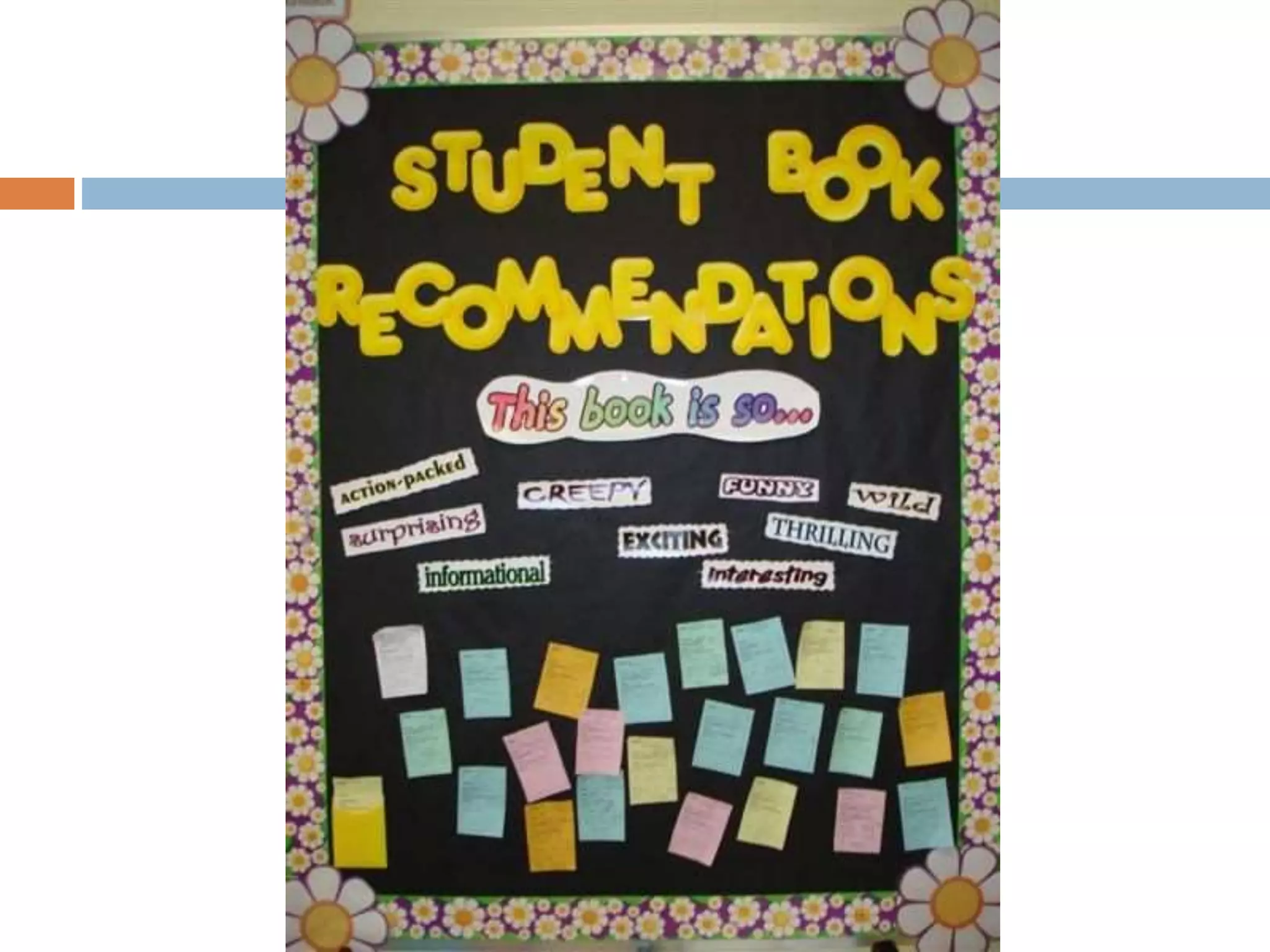
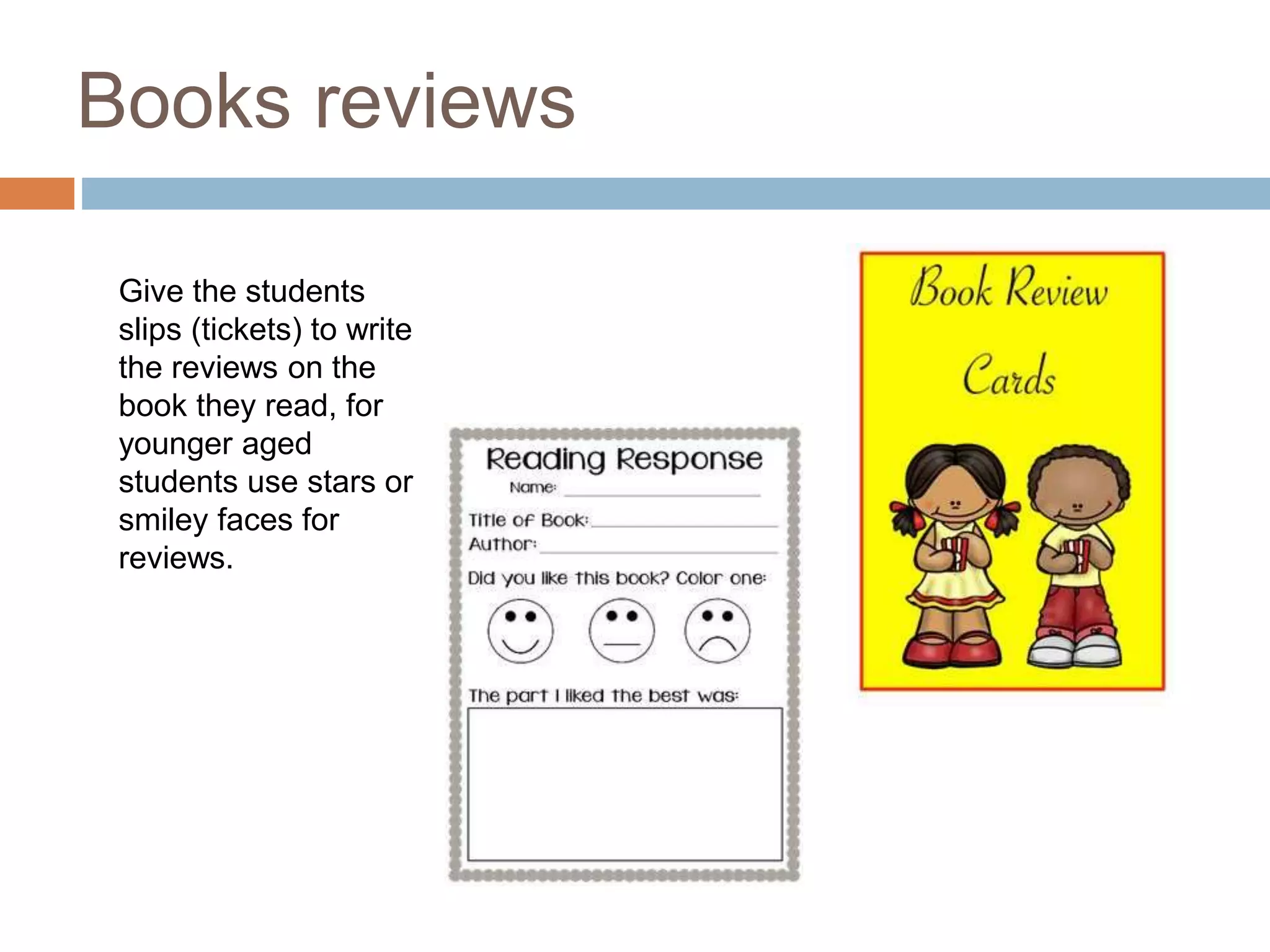
Books reviews
Give the students
slips (tickets) to write
the reviews on the
book they read, for
younger aged
students use stars or
smiley faces for
reviews.
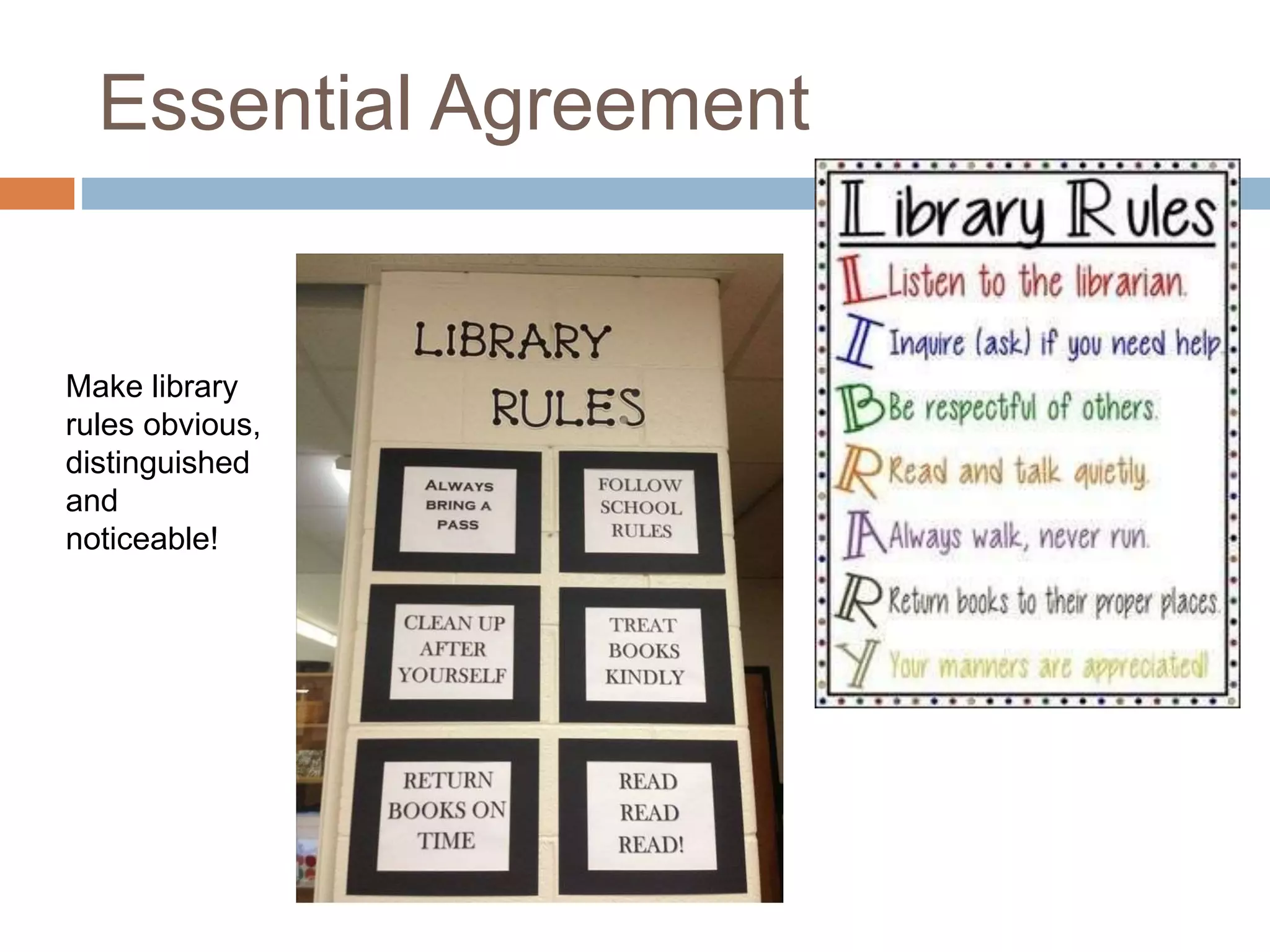
Essential Agreement
Make library
rules obvious,
distinguished
and
noticeable!
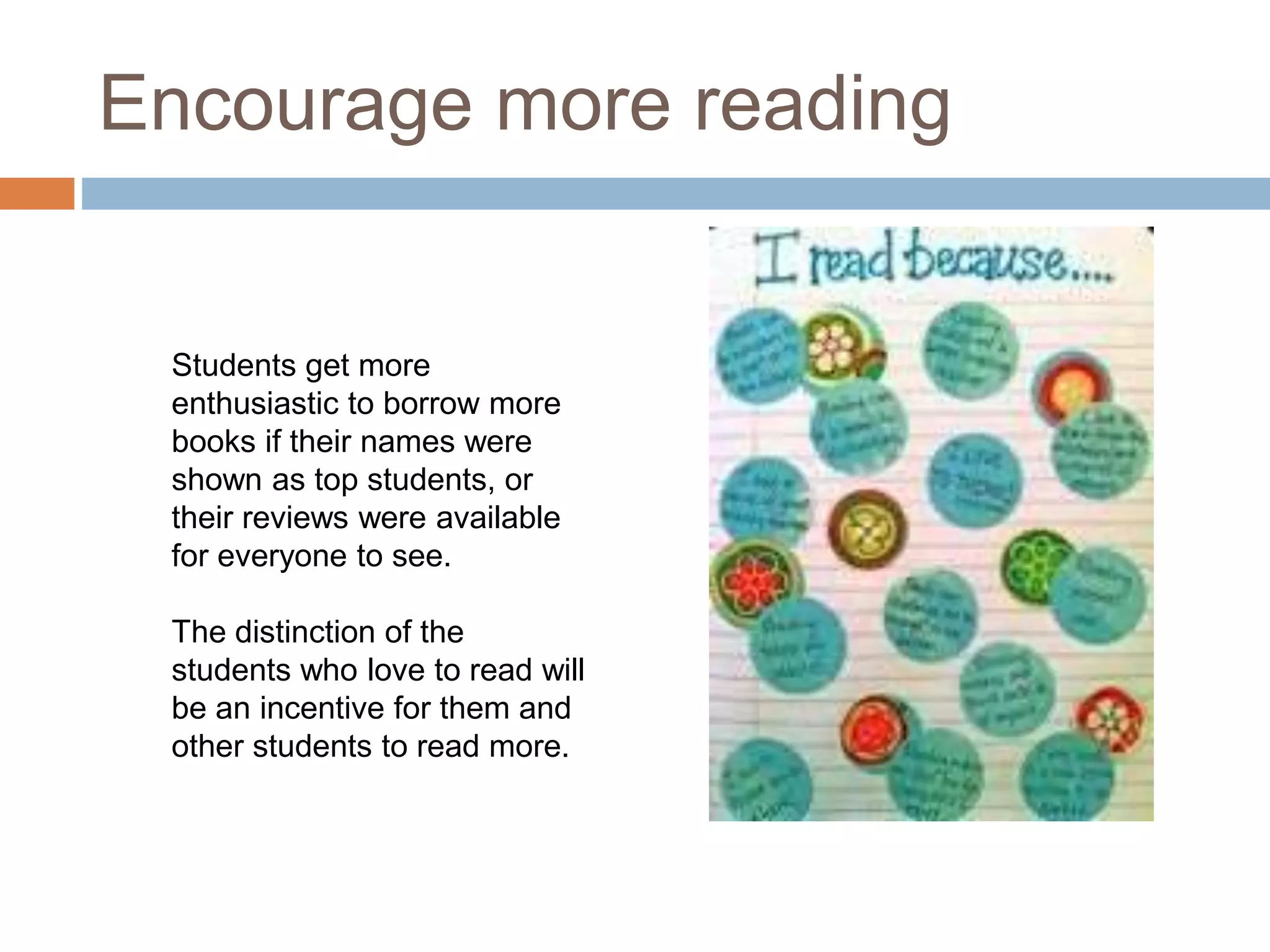
Encourage more reading
Students get more
enthusiastic to borrow more
books if their names were
shown as top students, or
their reviews were available
for everyone to see.
The distinction of the
students who love to read will
be an incentive for them and
other students to read more.
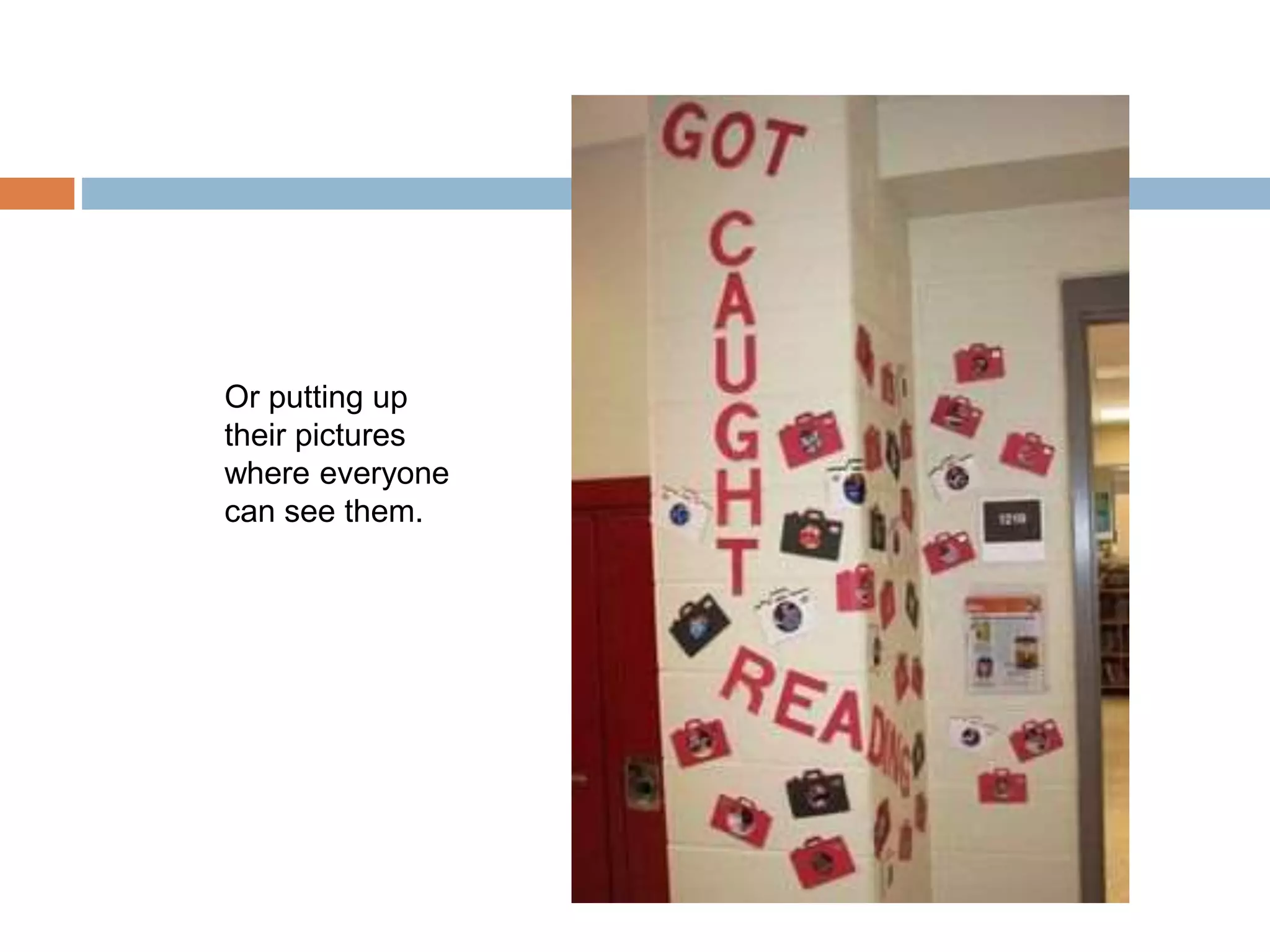
Or putting up
their pictures
where everyone
can see them.
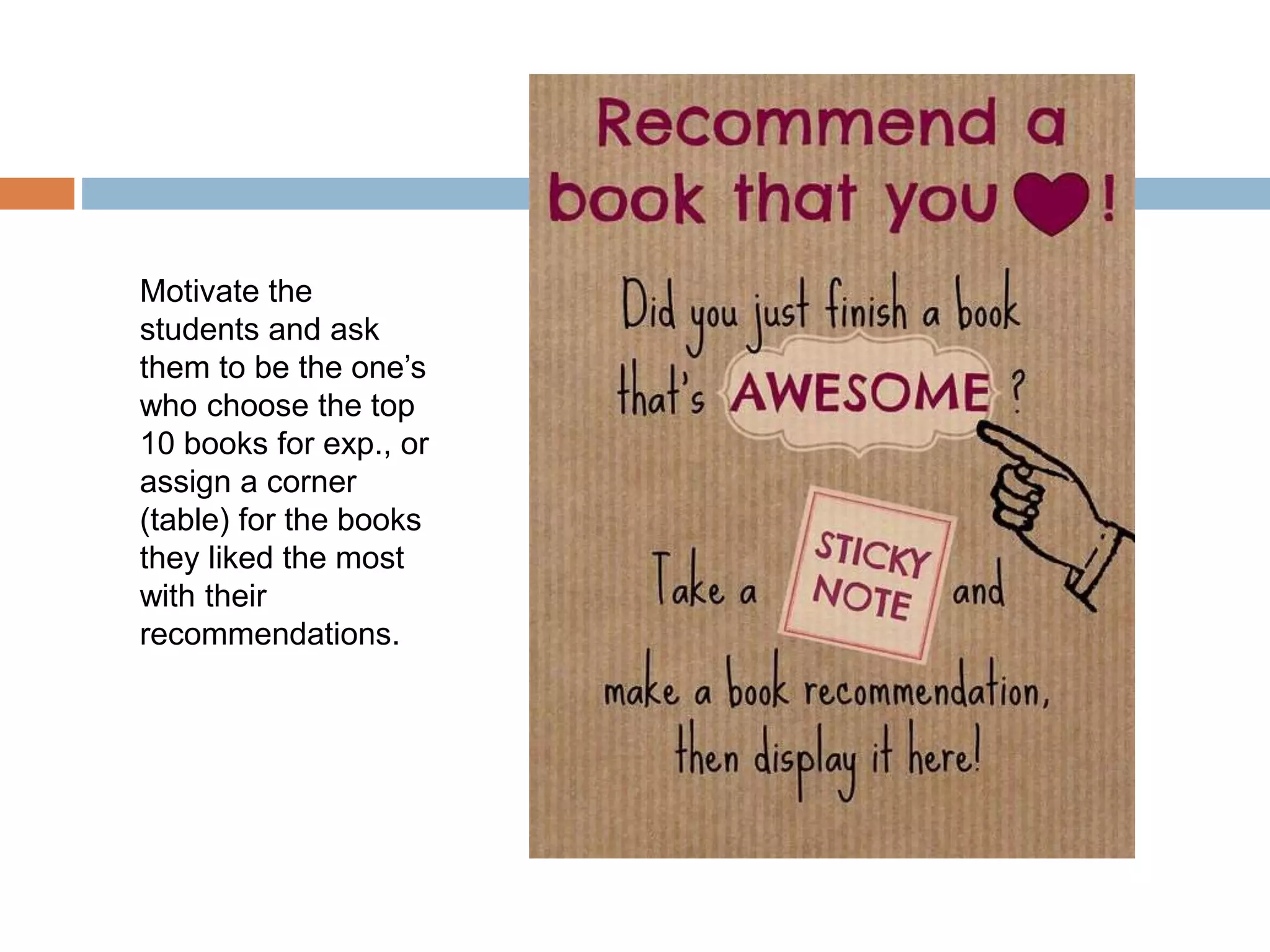
Motivate the
students and ask
them to be the one’s
who choose the top
10 books for exp., or
assign a corner
(table) for the books
they liked the most
with their
recommendations.
Choose the
top 5 books
each week
and post
their
pictures,
it’ll be
easier for
the
indecisive
kids to
choose.
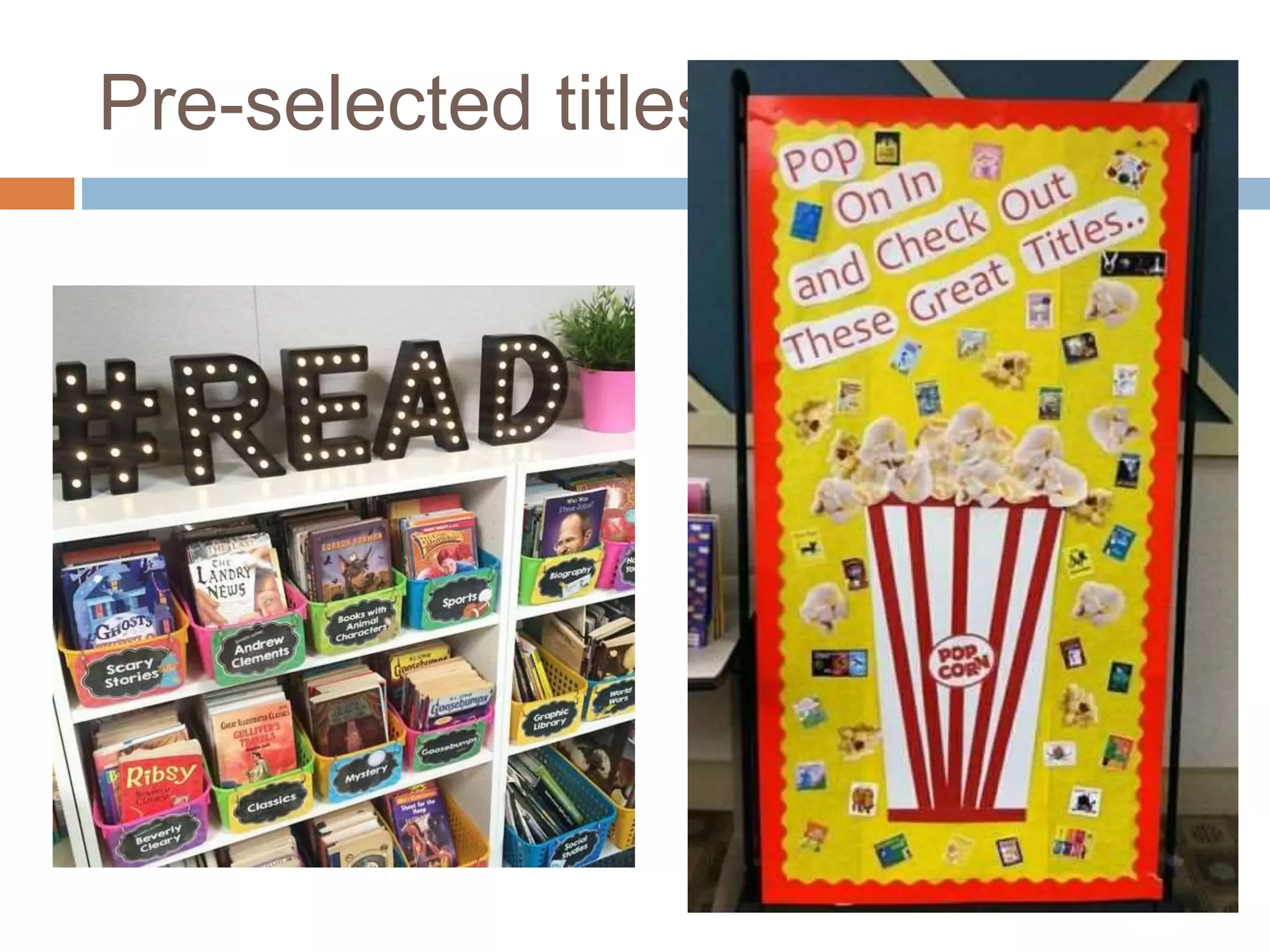
Pre-selected titles
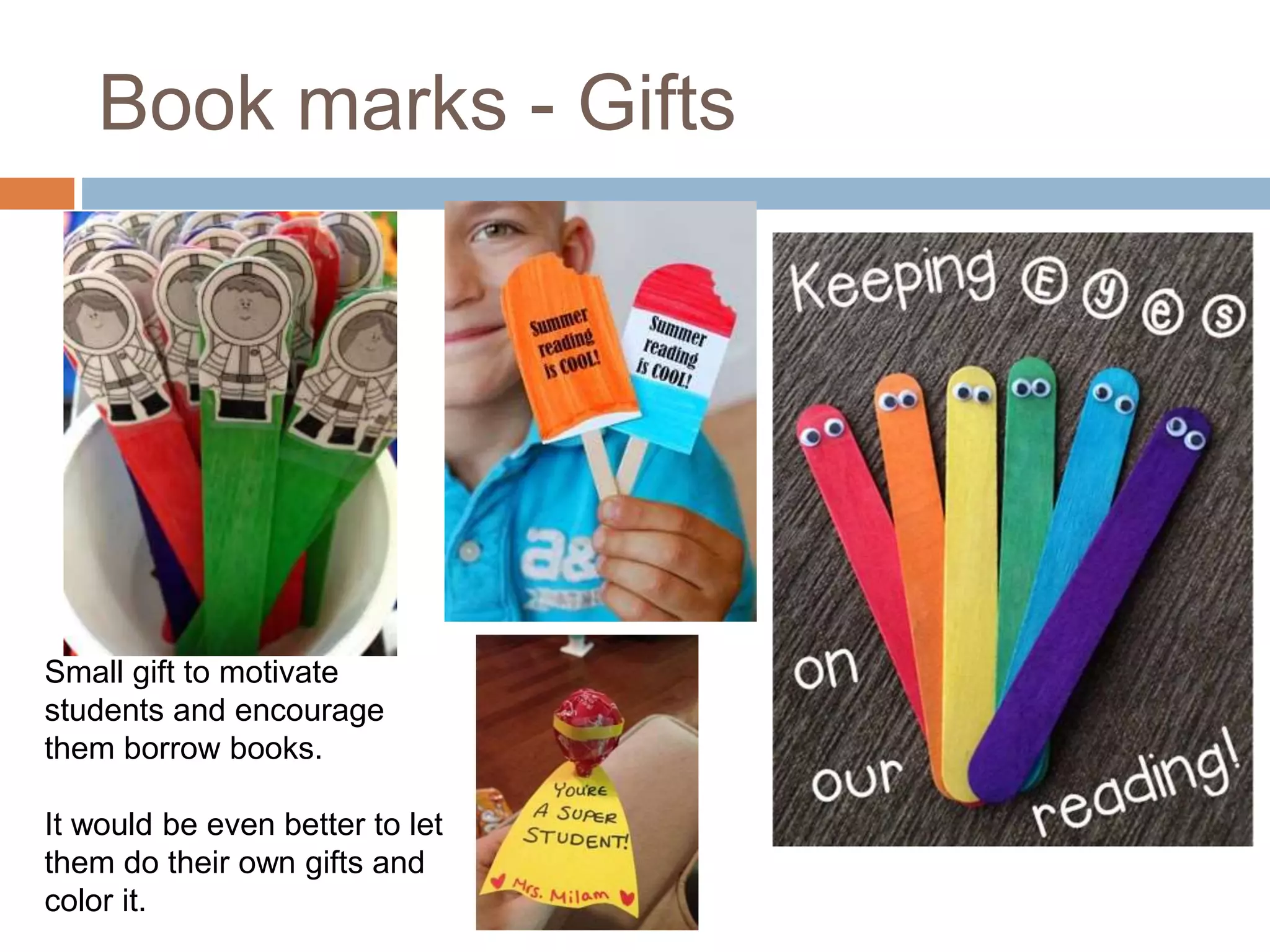
Book marks - Gifts
Small gift to motivate
students and encourage
them borrow books.
It would be even better to let
them do their own gifts and
color it.
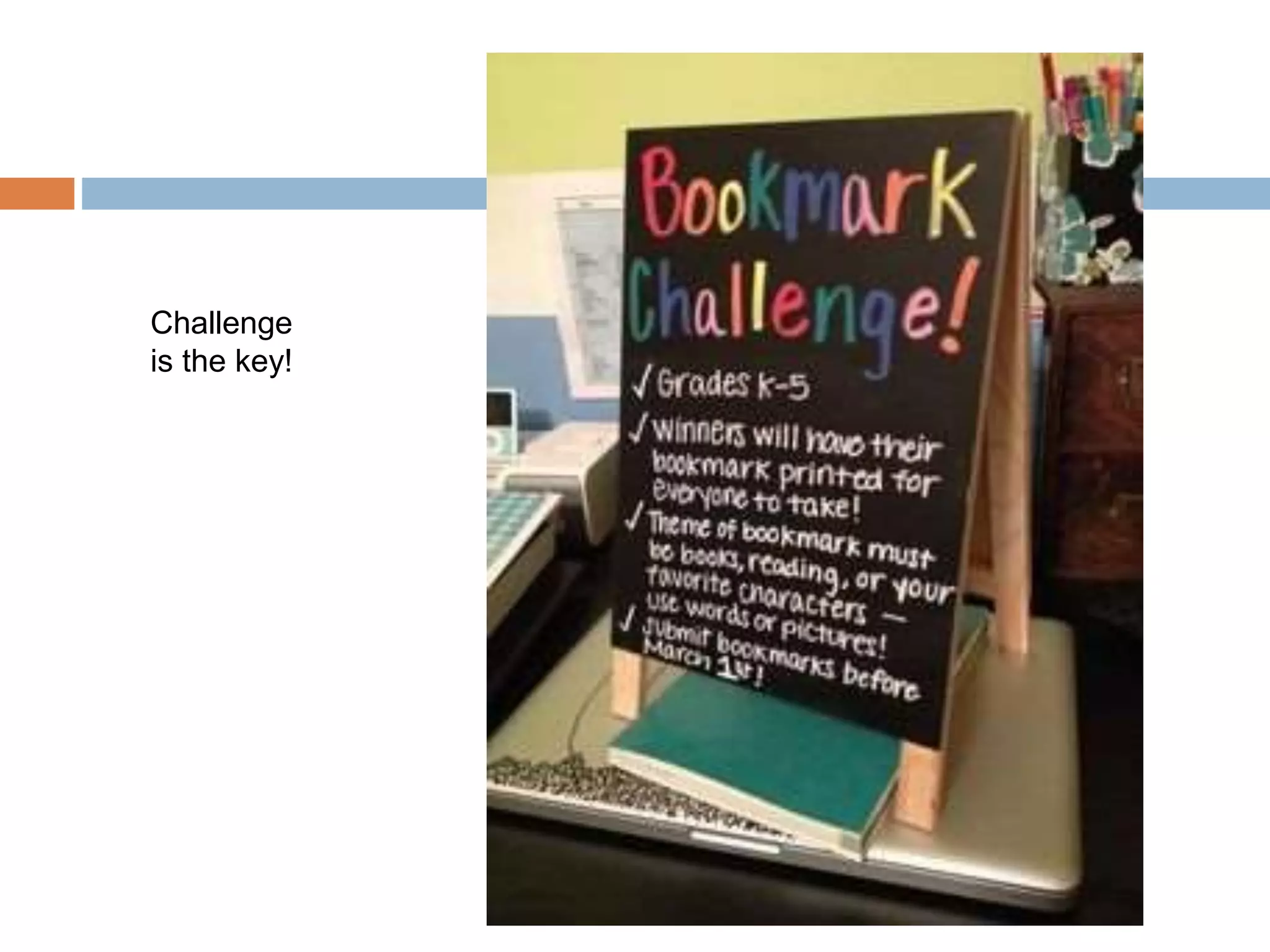
Challenge
is the key!
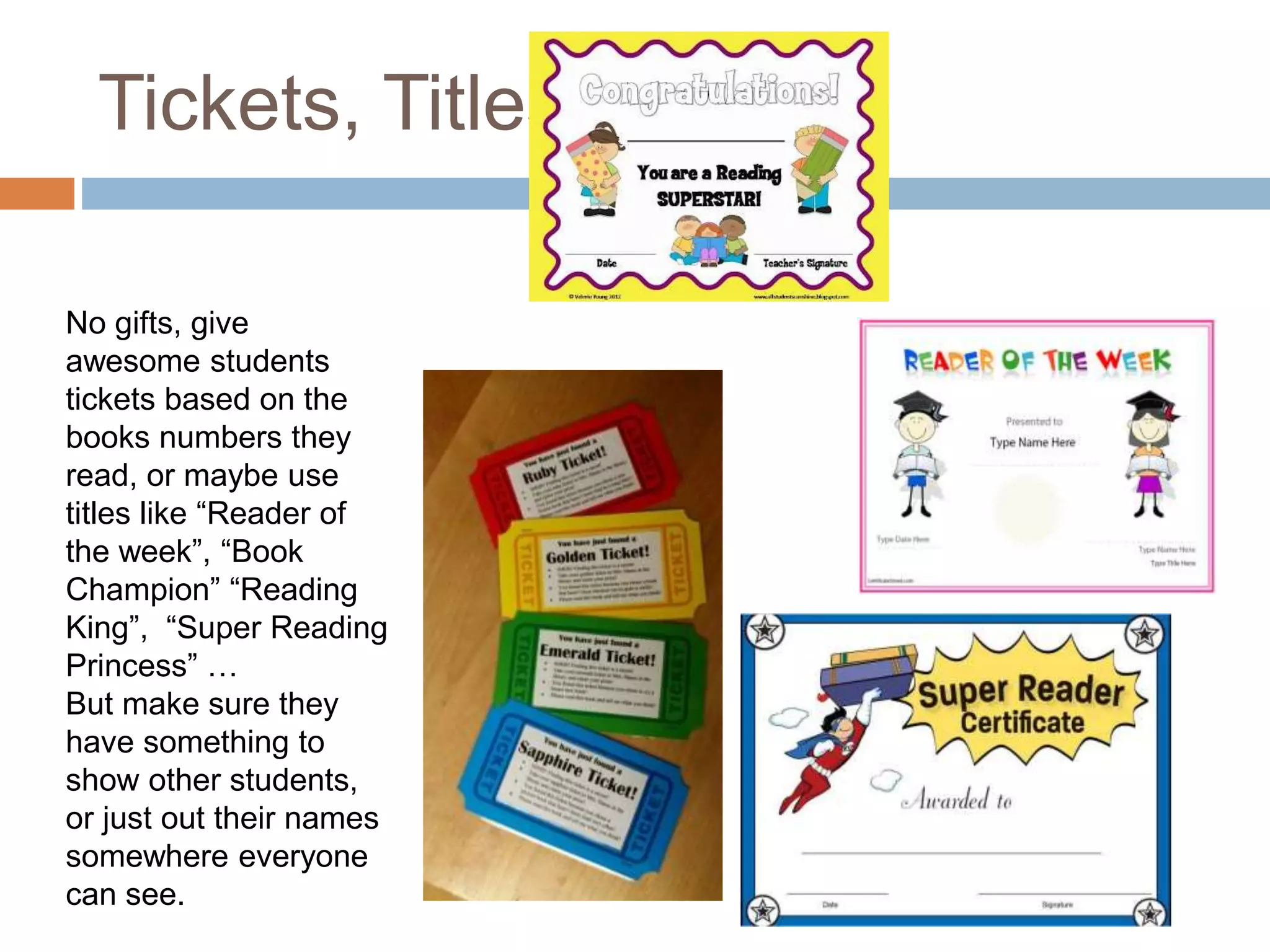
Tickets, Titles
No gifts, give
awesome students
tickets based on the
books numbers they
read, or maybe use
titles like “Reader of
the week”, “Book
Champion” “Reading
King”, “Super Reading
Princess” …
But make sure they
have something to
show other students,
or just out their names
somewhere everyone
can see.
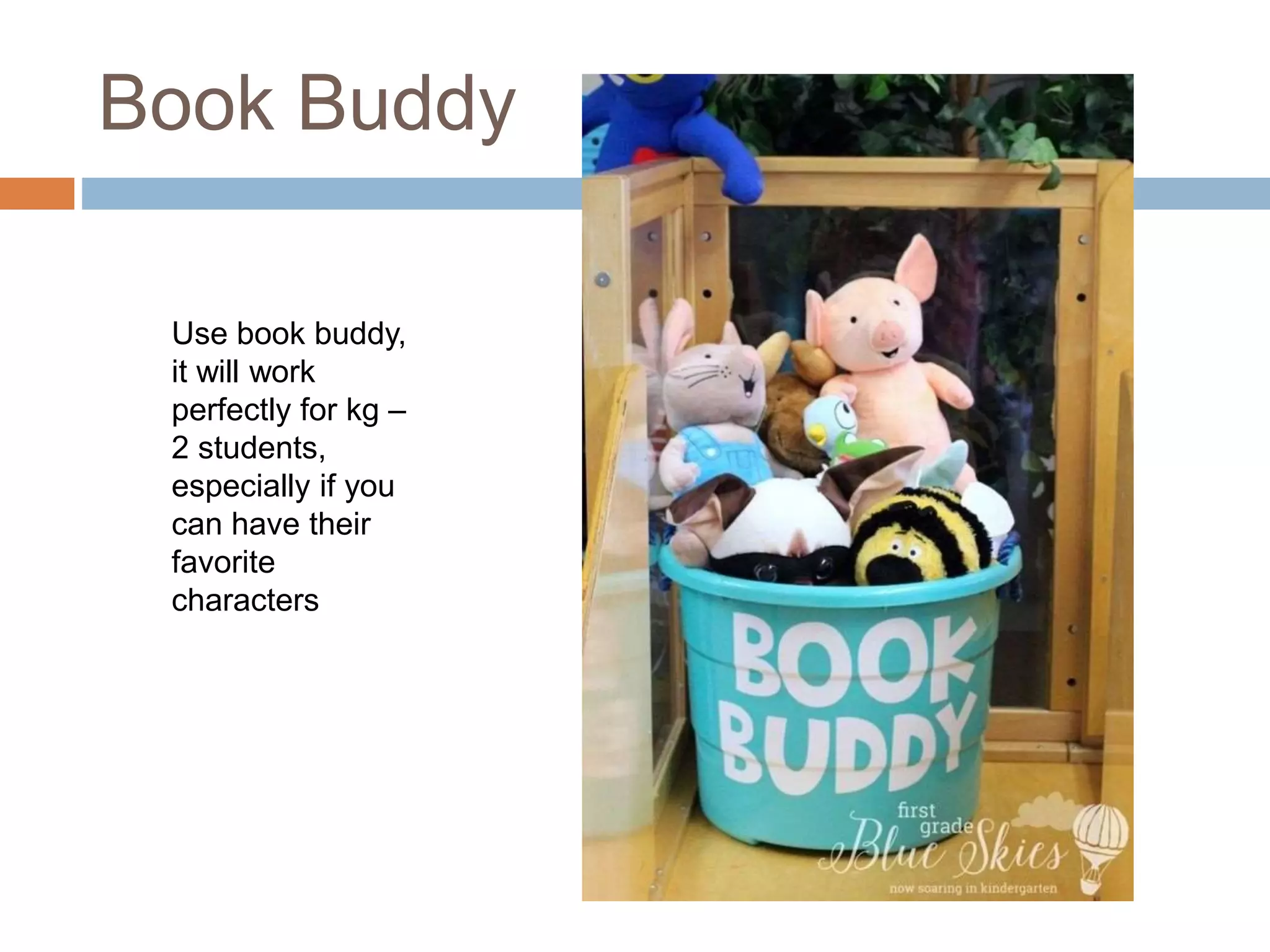
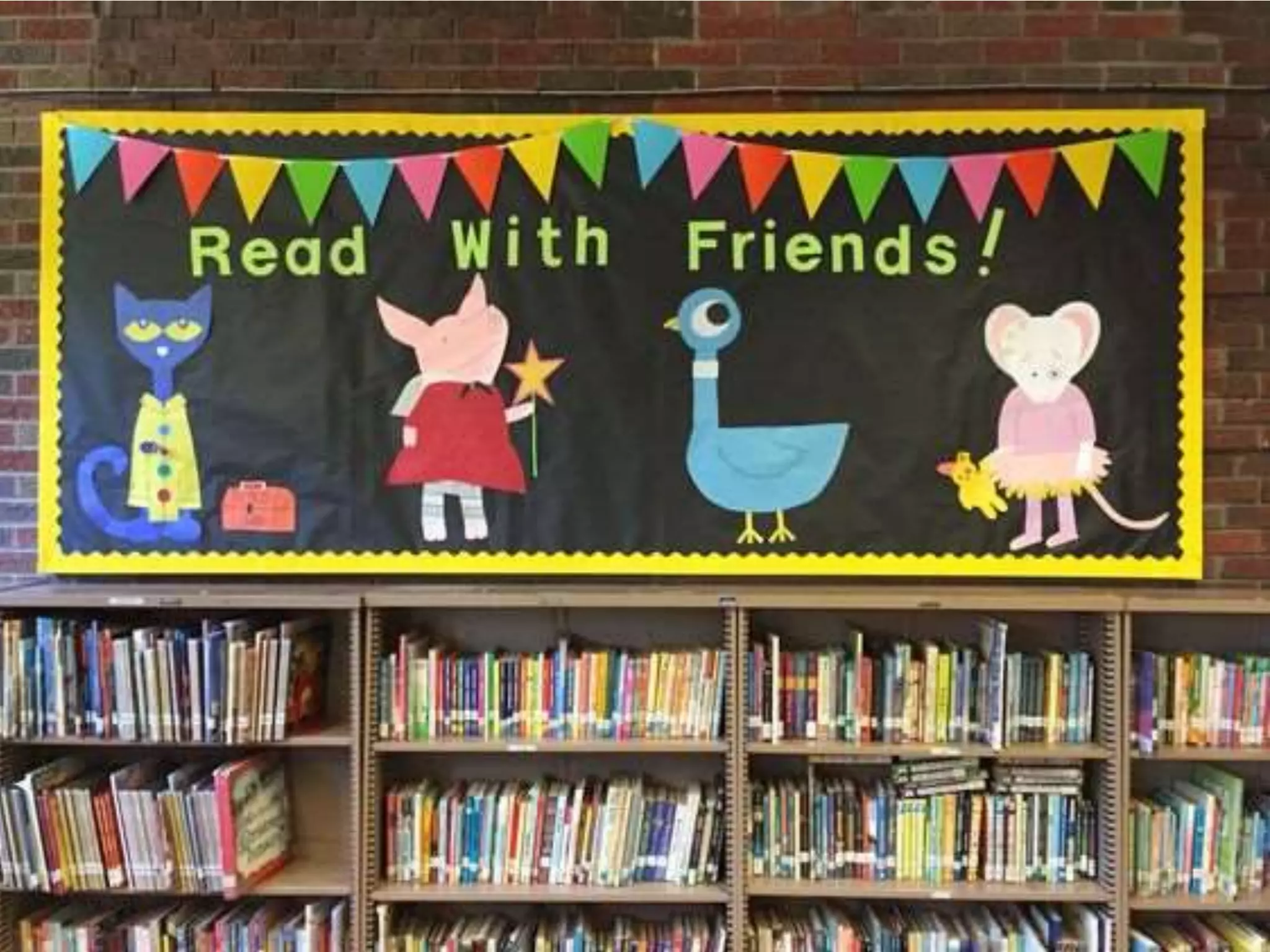
Book Buddy
Use book buddy,
it will work
perfectly for kg –
2 students,
especially if you
can have their
favorite
characters
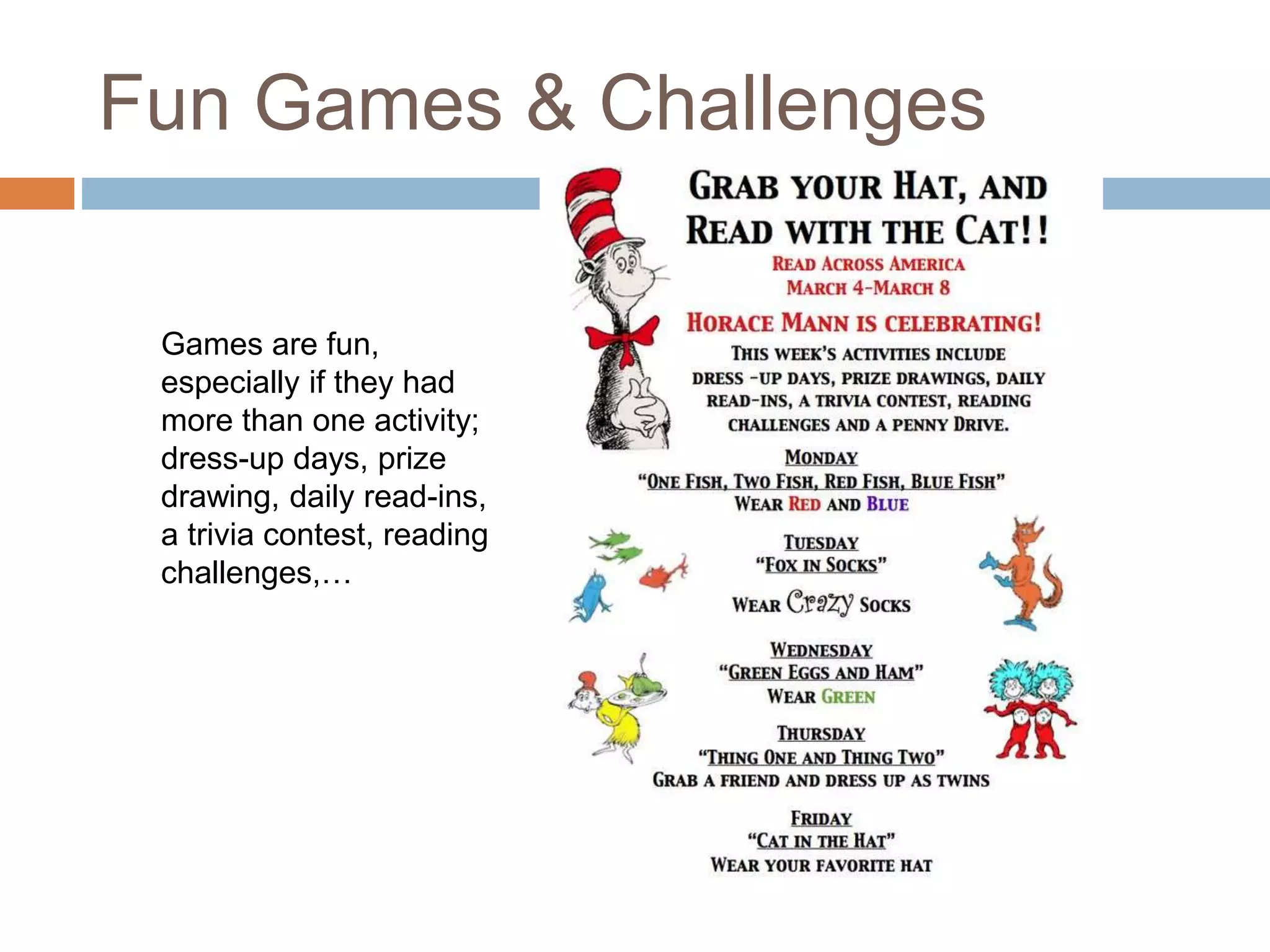
Fun Games & Challenges
Games are fun,
especially if they had
more than one activity;
dress-up days, prize
drawing, daily read-ins,
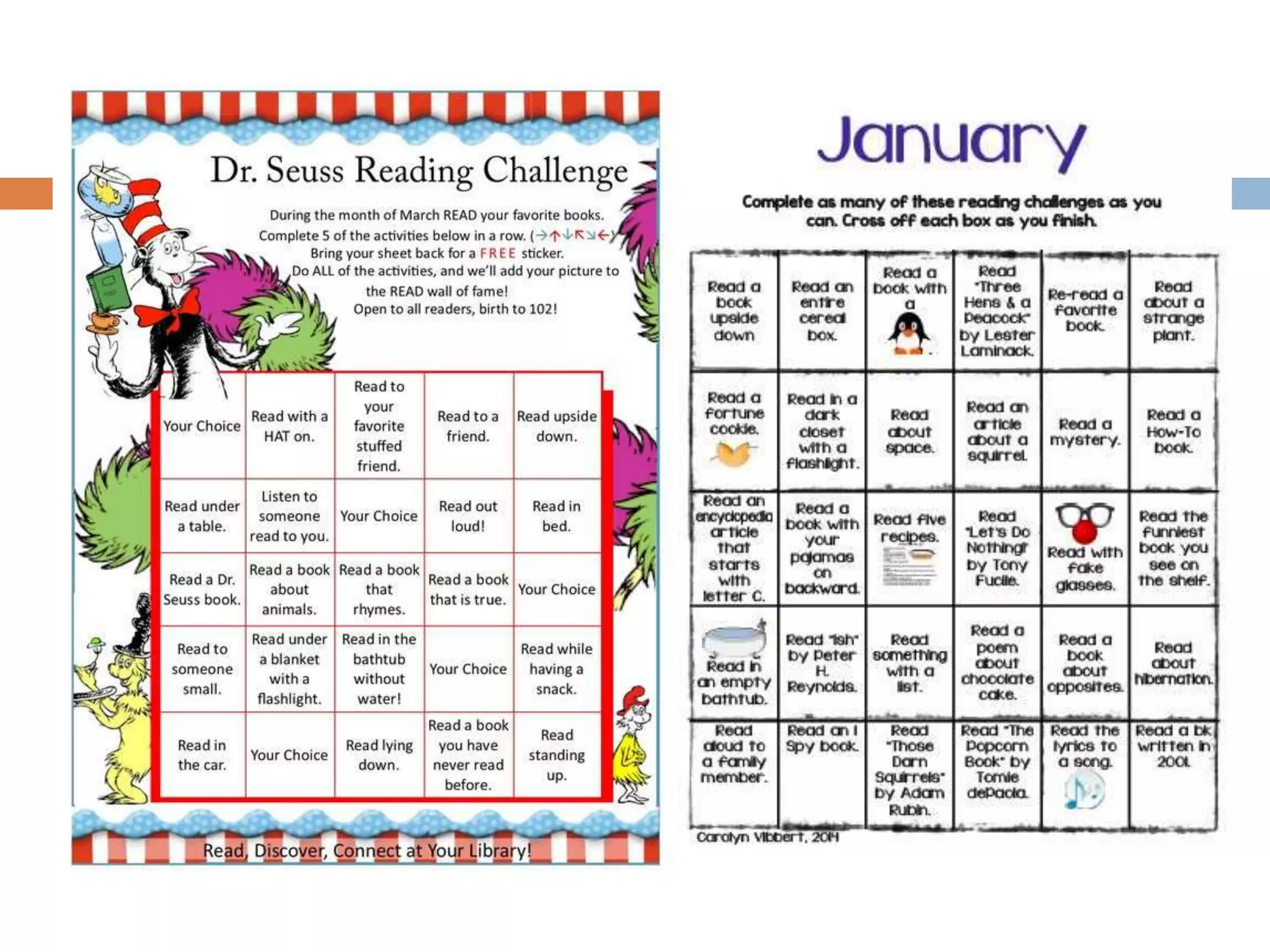
a trivia contest, reading
challenges,…
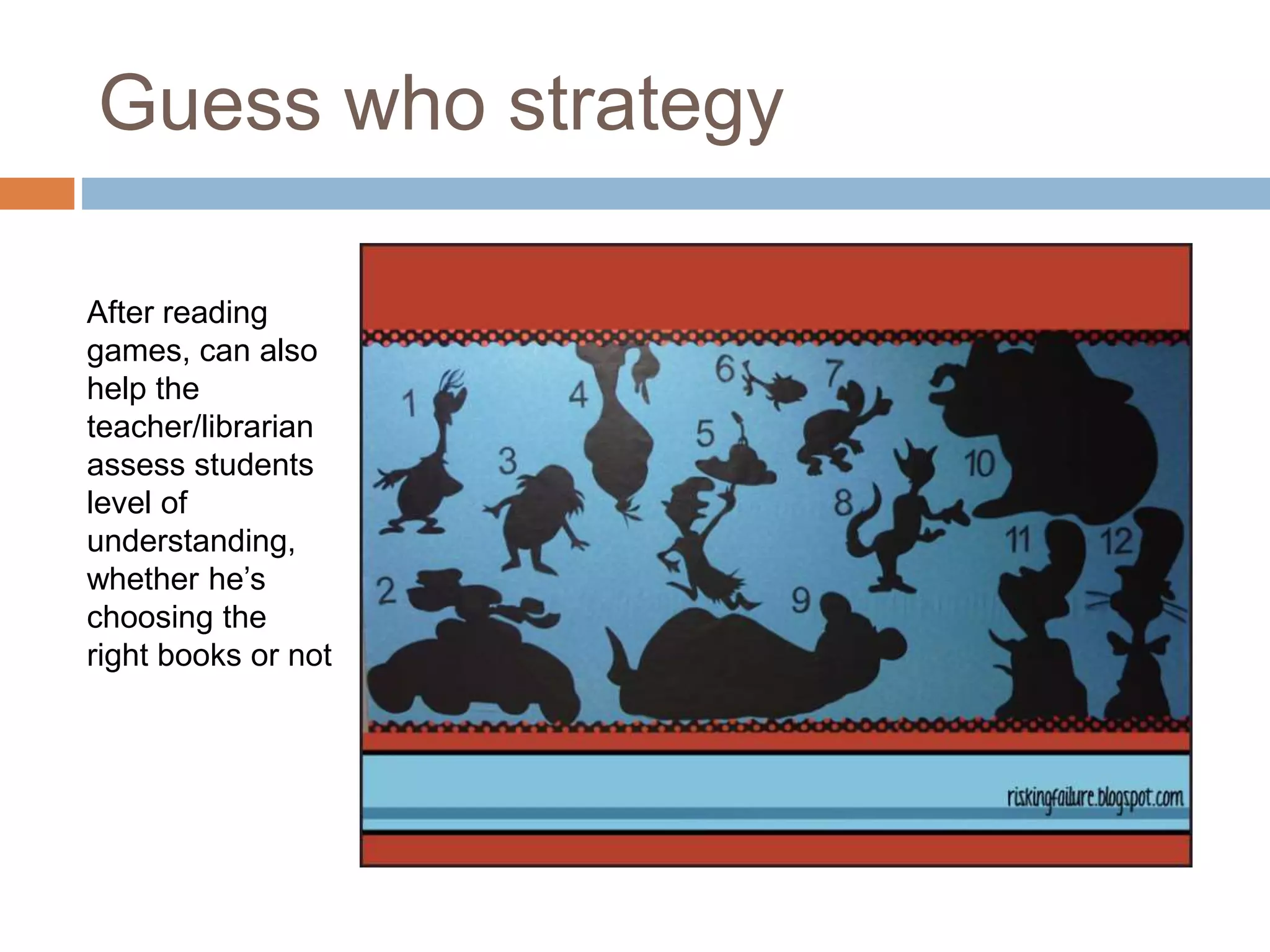
Guess who strategy
After reading
games, can also
help the
teacher/librarian
assess students
level of
understanding,
whether he’s
choosing the
right books or not
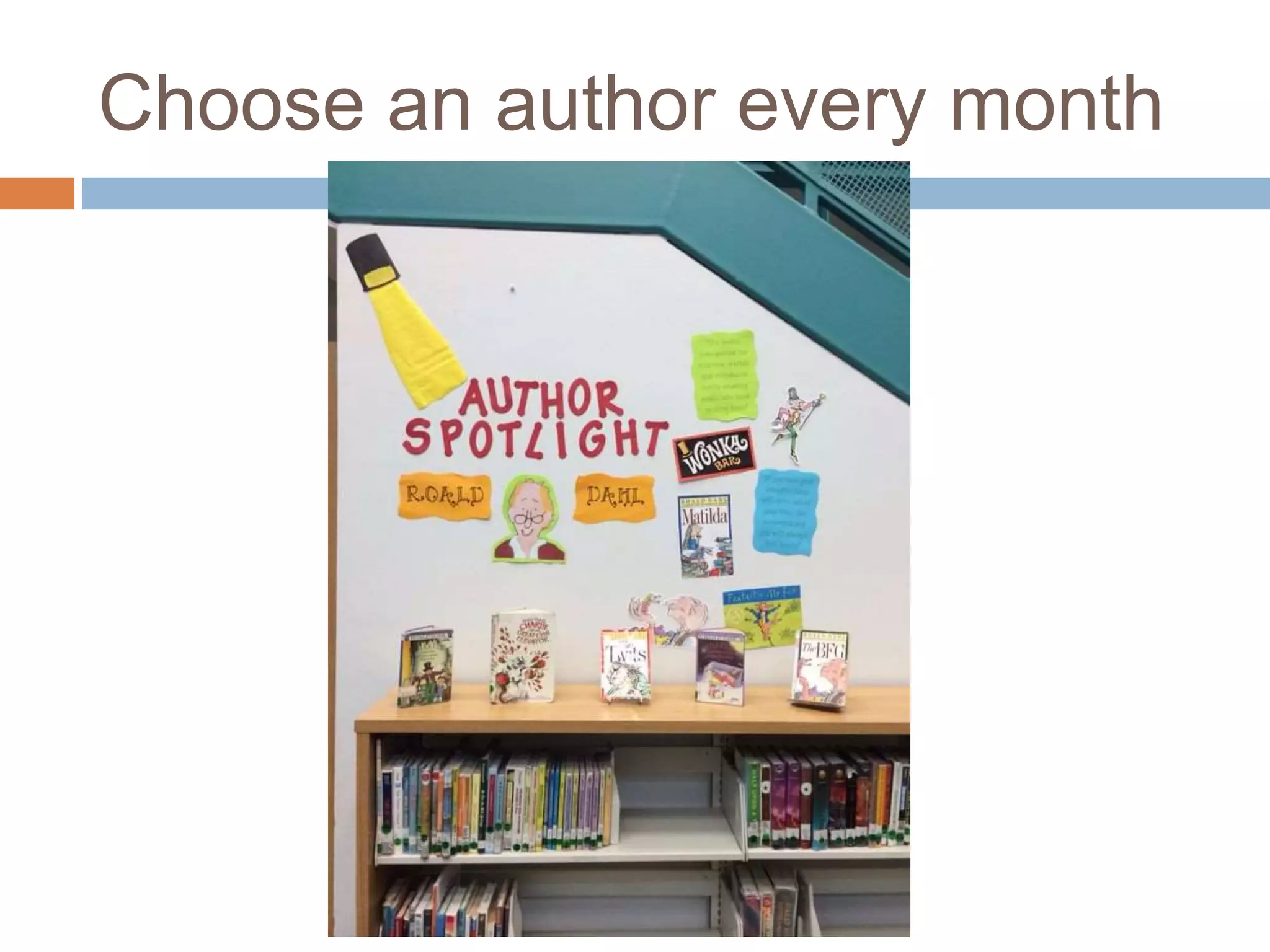
Choose an author every month
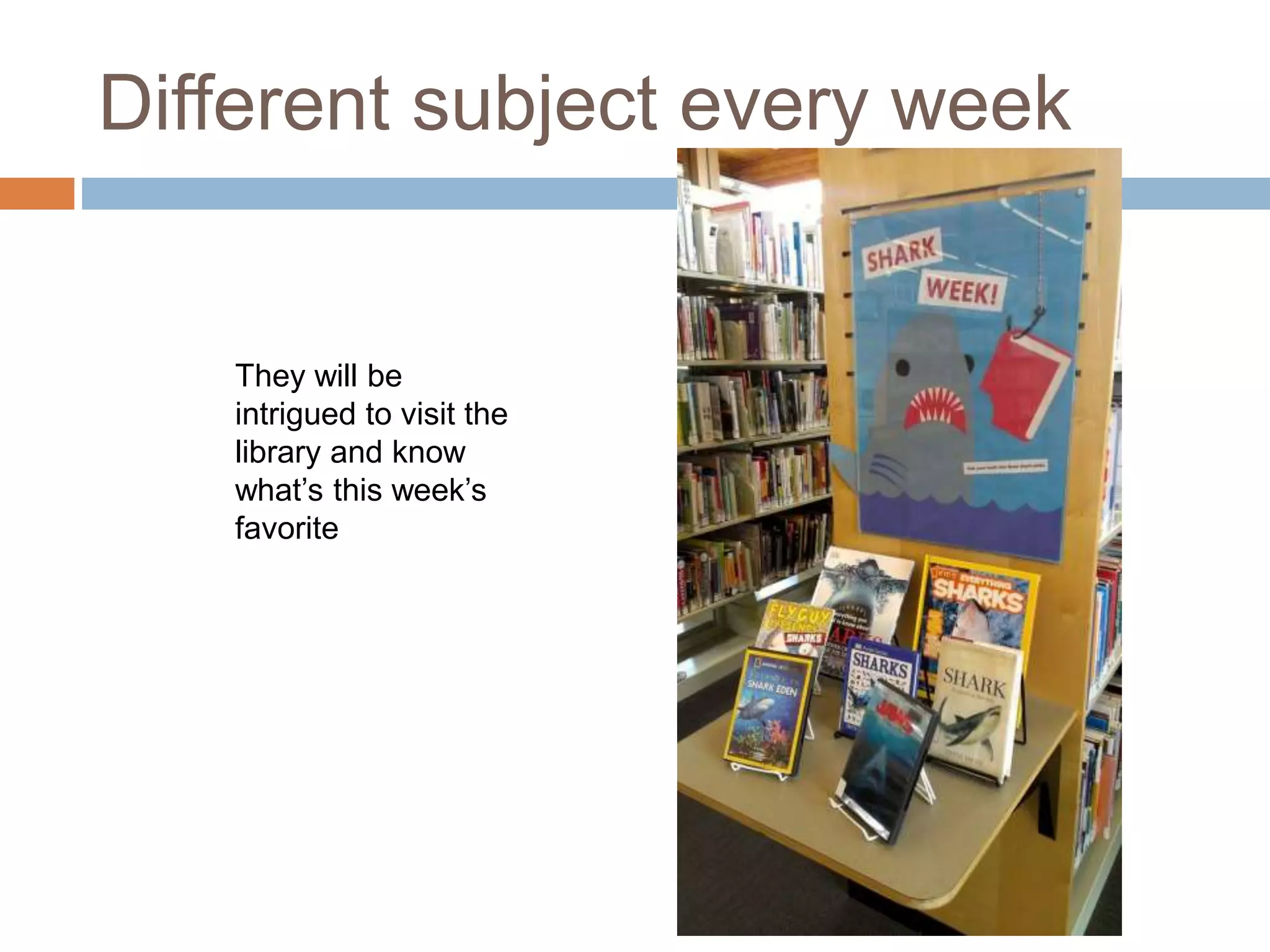
Different subject every week
They will be
intrigued to visit the
library and know
what’s this week’s
favorite
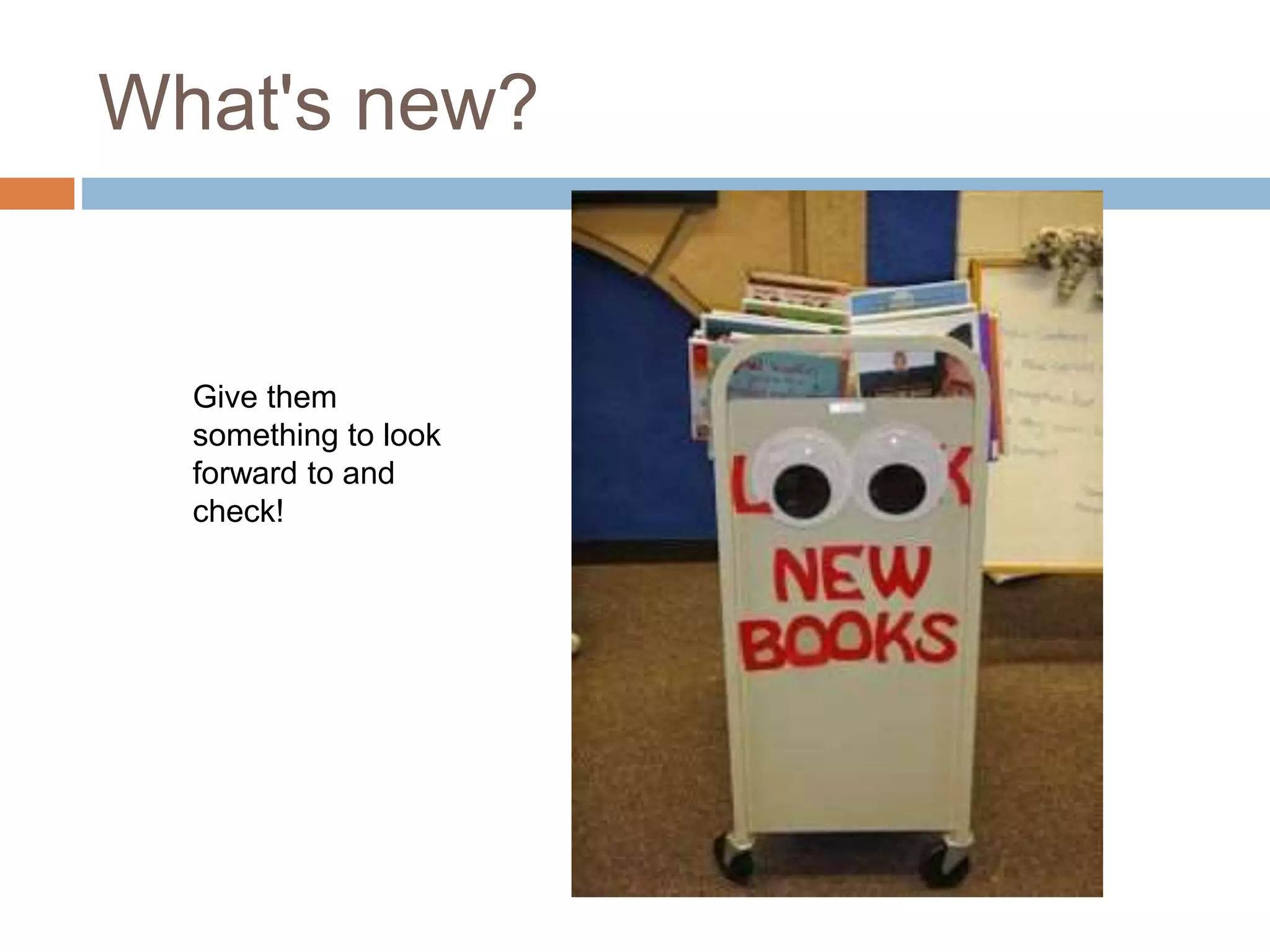
What's new?
Give them
something to look
forward to and
check!
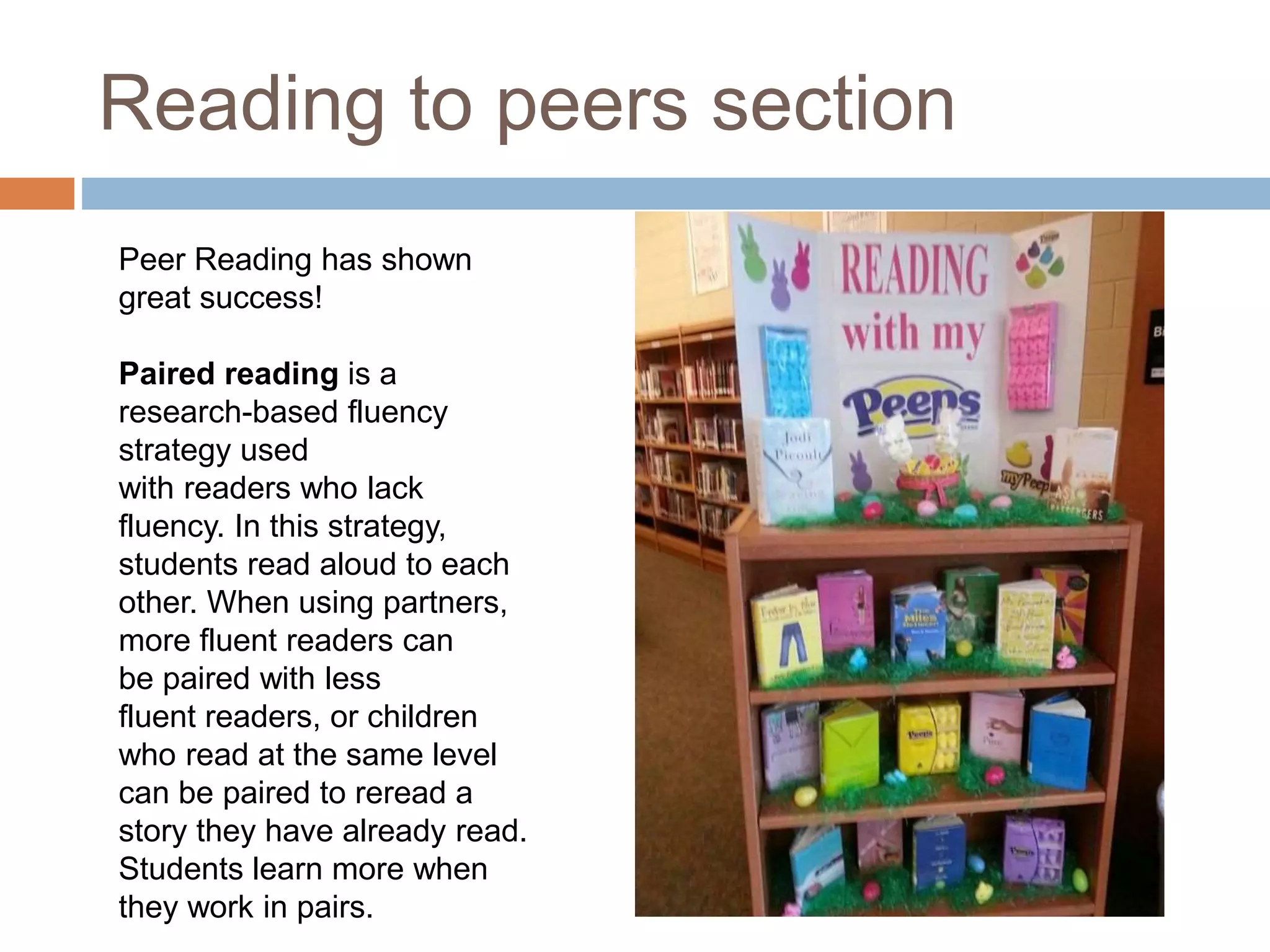
Reading to peers section
Peer Reading has shown
great success!
Paired reading is a
research-based fluency
strategy used
with readers who lack
fluency. In this strategy,
students read aloud to each
other. When using partners,
more fluent readers can
be paired with less
fluent readers, or children
who read at the same level
can be paired to reread a
story they have already read.
Students learn more when
they work in pairs.
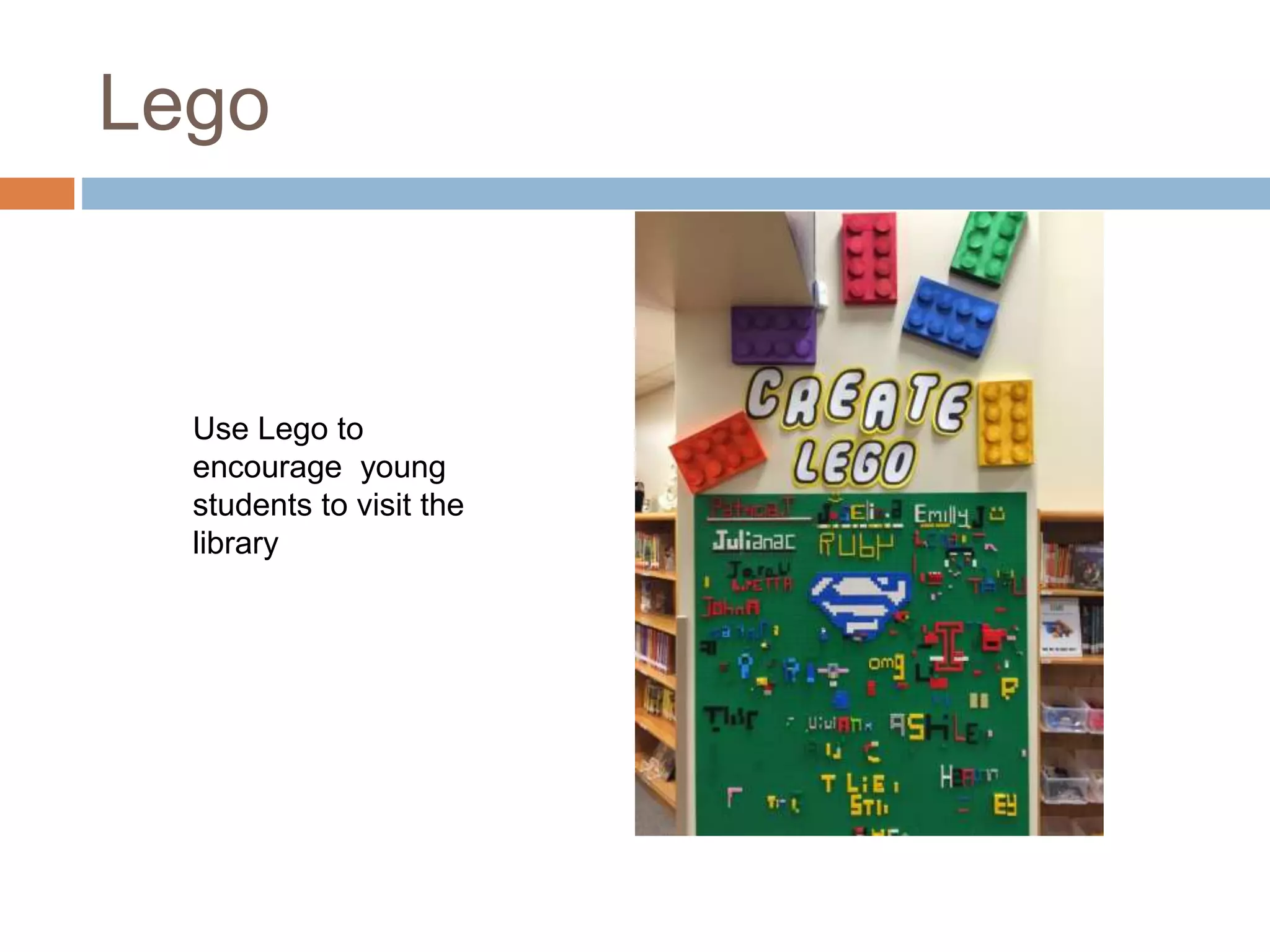
Lego
Use Lego to
encourage young
students to visit the
library
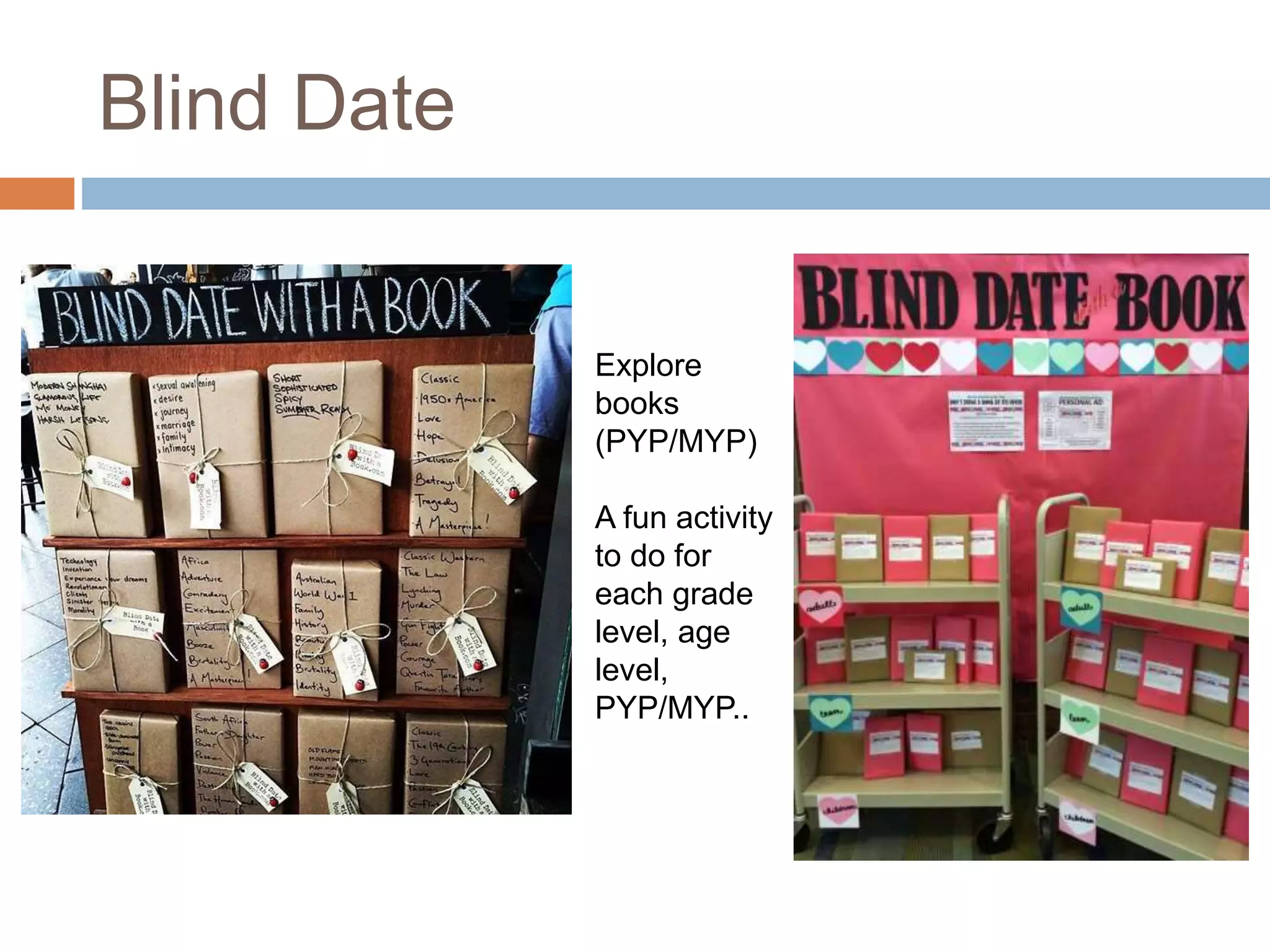
Blind Date
Explore
books
(PYP/MYP)
A fun activity
to do for
each grade
level, age
level,
PYP/MYP..
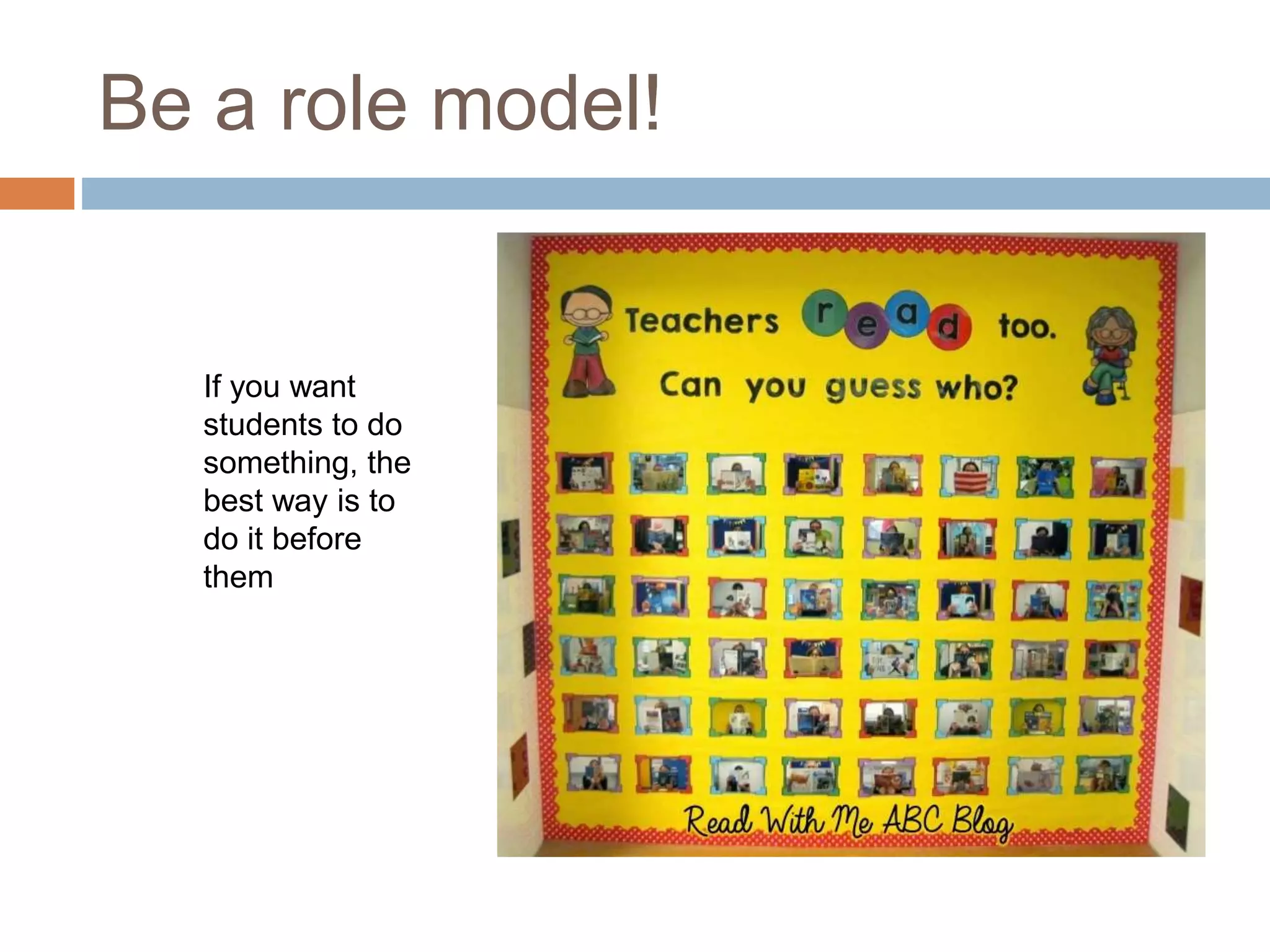
Be a role model!
If you want
students to do
something, the
best way is to
do it before
them
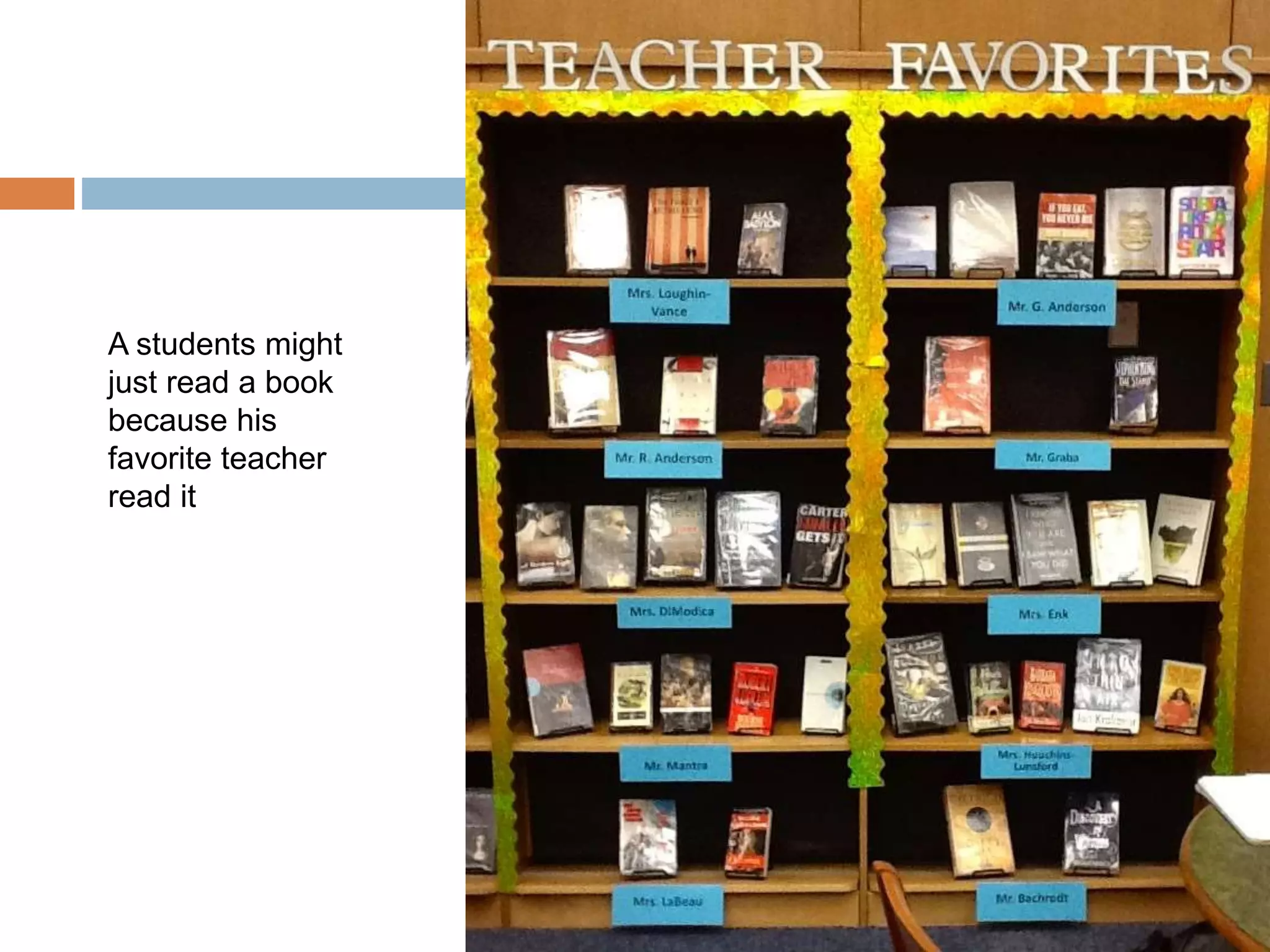
A students might
just read a book
because his
favorite teacher
read it
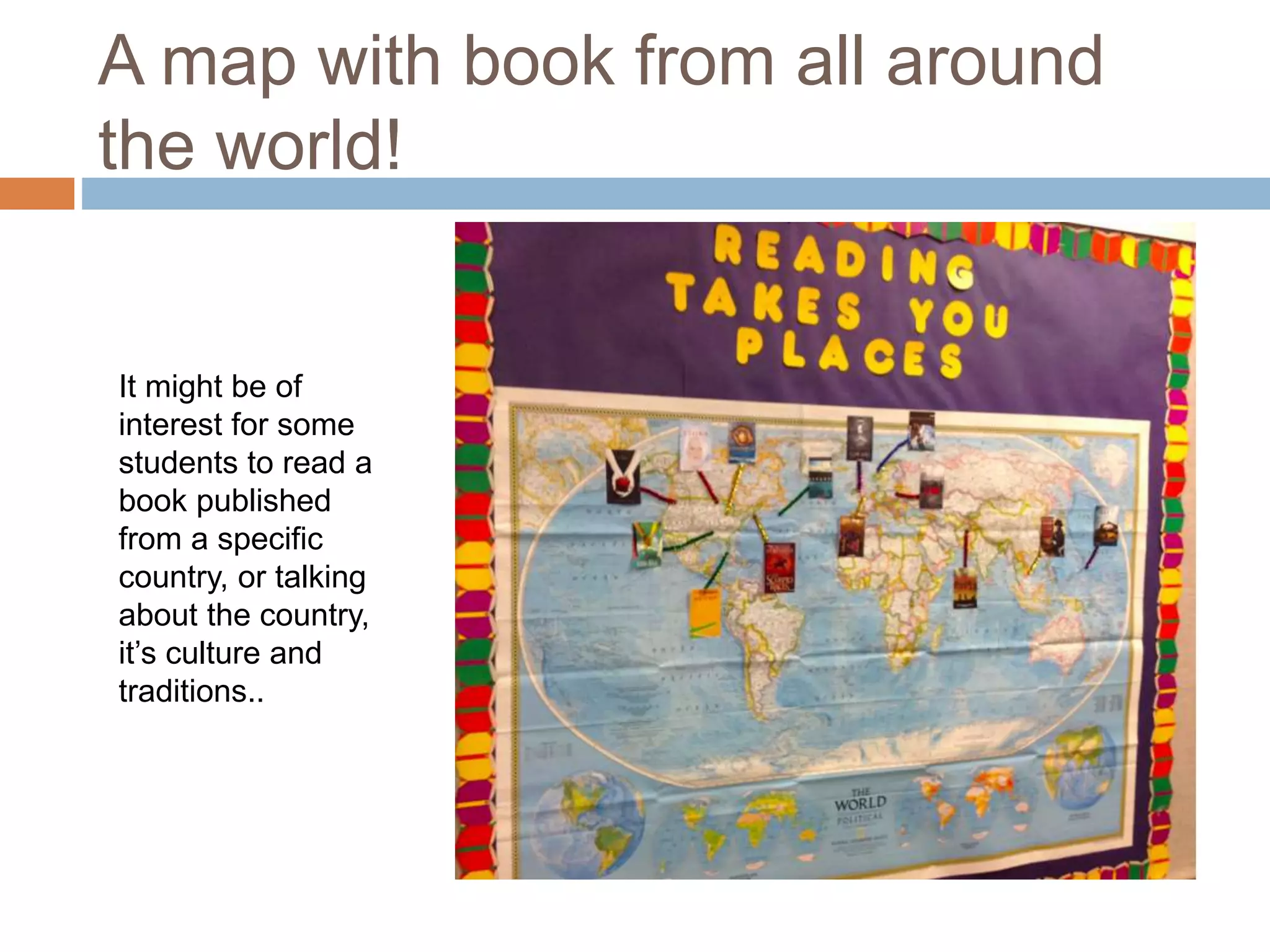
A map with book from all around
the world!
It might be of
interest for some
students to read a
book published
from a specific
country, or talking
about the country,
it’s culture and
traditions..
PYP Learner Profile and
Attitudes
Make sure you
always use the
language of PYP
LP and Attitudes
with the Kids.
Exp. “You are
Knowledgeable”
“You are
responsible, you
always return
books on time”..
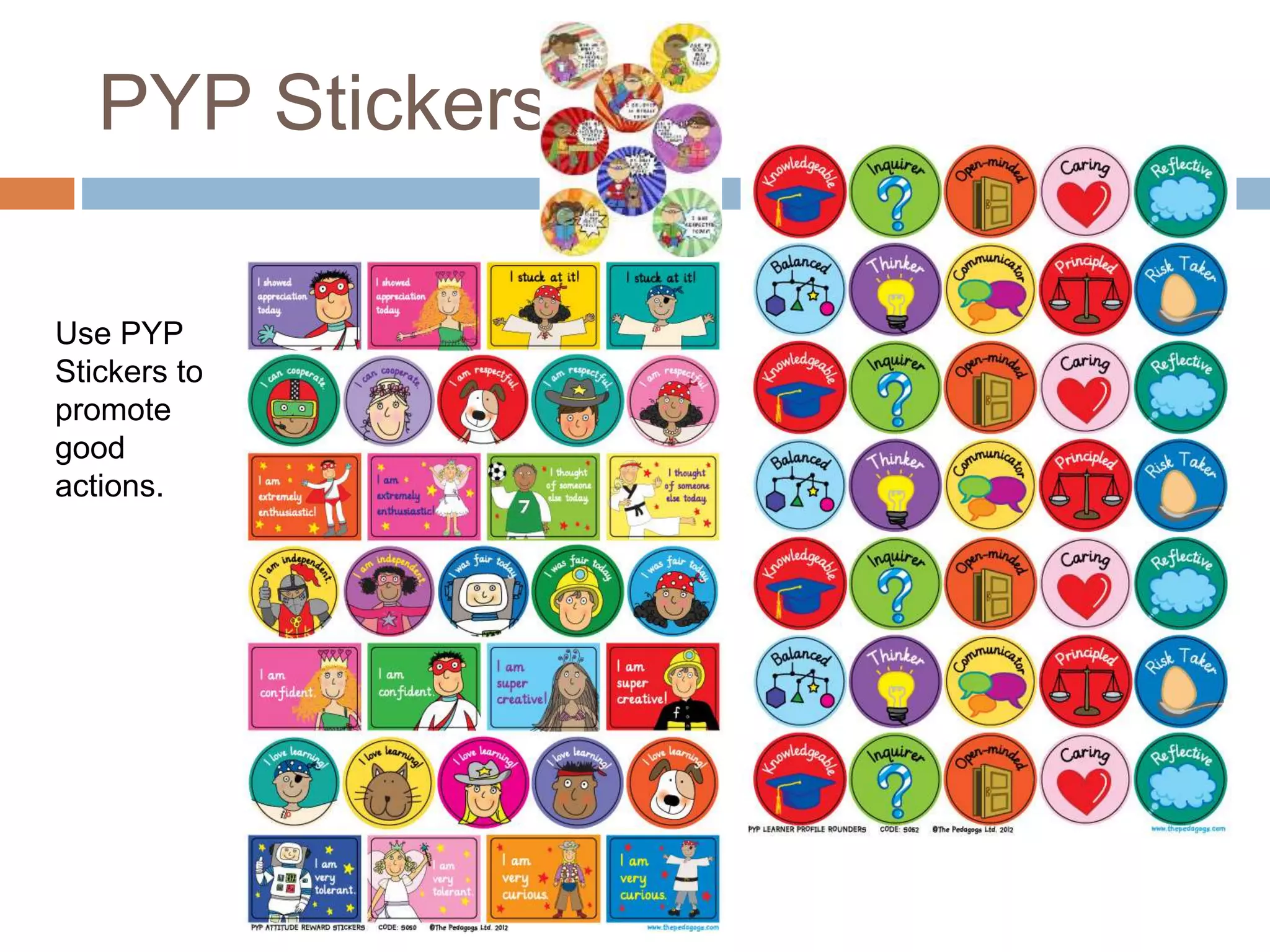
PYP Stickers
Use PYP
Stickers to
promote
good
actions.
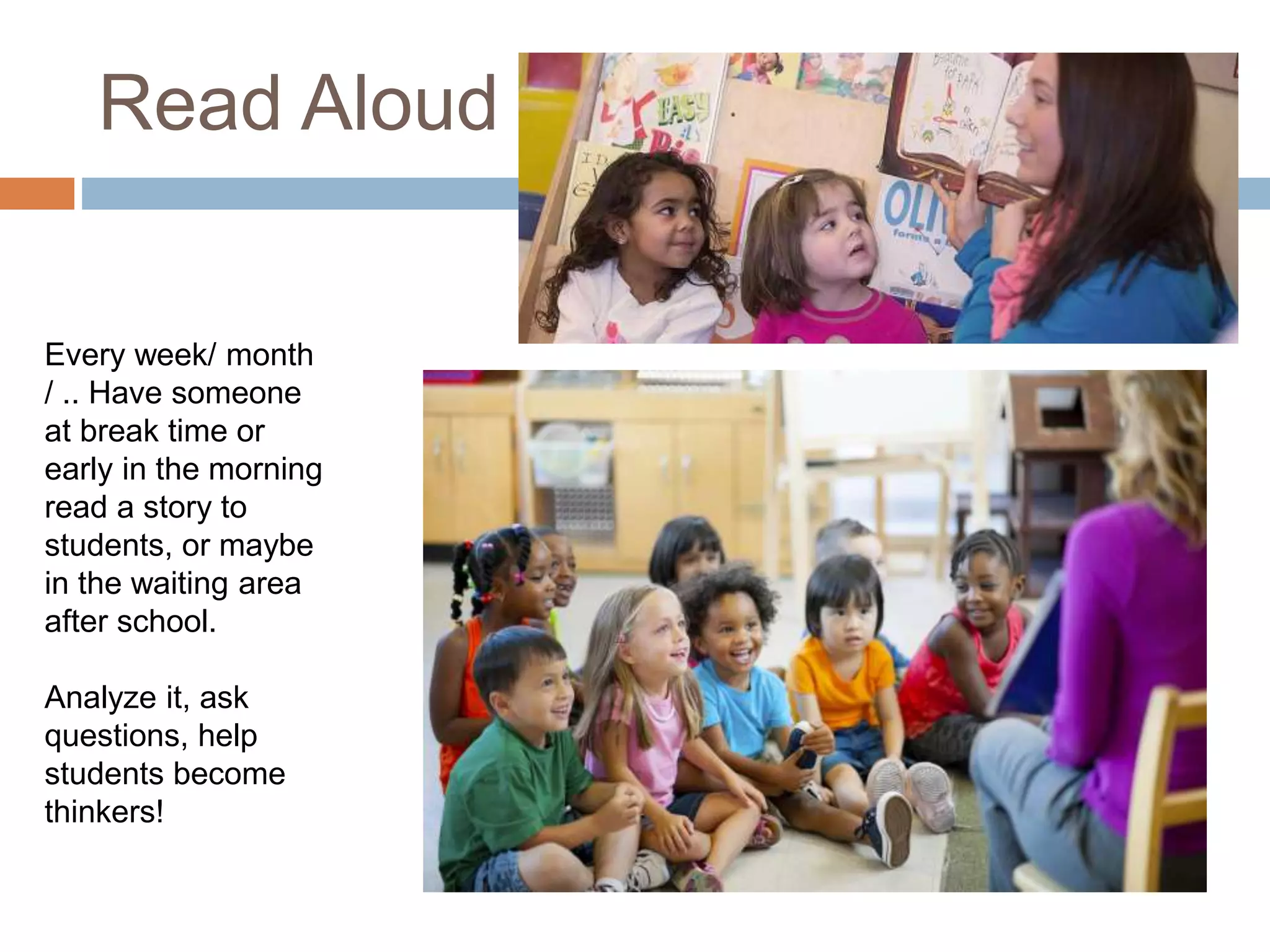
Read Aloud
Every week/ month
/ .. Have someone
at break time or
early in the morning
read a story to
students, or maybe
in the waiting area
after school.
Analyze it, ask
questions, help
students become
thinkers!
Not only Librarians
It’s a collaborative work between
teachers and librarians !
Everyone should be involved

Library ppt

  • 1.
  • 2.
    Decoration Use different arrows andsigns to identify different sections, places of “Top Rated” books, etc…
  • 4.
    decoration Decorating the libraryis crucial, it can play a huge role in it’s aesthetics and therefore transform it into the ideal reading and working environment for young children.
  • 11.
    You can also addimportant dates related to different authors, books day, and many more
  • 17.
    Decorations in thehallway, too.
  • 18.
  • 22.
    Quotes It would be betterif students can find quotes about books in different corners
  • 25.
  • 26.
    Book Swap Book swapsare a fun way to turn a stack of old books into a whole new set of exciting reads!
  • 27.
    You can holda book swap party or just leave a section –or a box- for it in the library (or at it’s door).
  • 28.
    Or a bigevent.
  • 29.
    Come in tothe library and take a picture! A good way to encourage students to read is taking a picture for students with the books they want to read! “Selfie with a Book”
  • 30.
    Hang their selfies hang frequent students’pictures, or all of them if possible.
  • 31.
    Literacy night family engagementhas a positive impact on children’s reading achievement. During this fun and interactive program, families have an opportunity to explore how learning to read and write begins and is supported at home – and how families are children’s first and most important teachers and role models.
  • 33.
    The 5 fingerrules It helps students choose the best book for them. Too easy or too hard is always boring.
  • 35.
    have couches orbean bags! At break time, some students would just love to go to the library, grab a book, relax and read.
  • 36.
    Reading corners You can Sortsome books in a catchy way
  • 37.
    Books reviews Give thestudents slips (tickets) to write the reviews on the book they read, for younger aged students use stars or smiley faces for reviews.
  • 38.
    Essential Agreement Make library rulesobvious, distinguished and noticeable!
  • 39.
    Encourage more reading Studentsget more enthusiastic to borrow more books if their names were shown as top students, or their reviews were available for everyone to see. The distinction of the students who love to read will be an incentive for them and other students to read more.
  • 40.
    Or putting up theirpictures where everyone can see them.
  • 42.
    Motivate the students andask them to be the one’s who choose the top 10 books for exp., or assign a corner (table) for the books they liked the most with their recommendations.
  • 44.
    Choose the top 5books each week and post their pictures, it’ll be easier for the indecisive kids to choose.
  • 45.
  • 46.
    Book marks -Gifts Small gift to motivate students and encourage them borrow books. It would be even better to let them do their own gifts and color it.
  • 47.
  • 48.
    Tickets, Titles No gifts,give awesome students tickets based on the books numbers they read, or maybe use titles like “Reader of the week”, “Book Champion” “Reading King”, “Super Reading Princess” … But make sure they have something to show other students, or just out their names somewhere everyone can see.
  • 49.
    Book Buddy Use bookbuddy, it will work perfectly for kg – 2 students, especially if you can have their favorite characters
  • 50.
    Fun Games &Challenges Games are fun, especially if they had more than one activity; dress-up days, prize drawing, daily read-ins, a trivia contest, reading challenges,…
  • 52.
    Guess who strategy Afterreading games, can also help the teacher/librarian assess students level of understanding, whether he’s choosing the right books or not
  • 53.
    Choose an authorevery month
  • 54.
    Different subject everyweek They will be intrigued to visit the library and know what’s this week’s favorite
  • 55.
    What's new? Give them somethingto look forward to and check!
  • 56.
    Reading to peerssection Peer Reading has shown great success! Paired reading is a research-based fluency strategy used with readers who lack fluency. In this strategy, students read aloud to each other. When using partners, more fluent readers can be paired with less fluent readers, or children who read at the same level can be paired to reread a story they have already read. Students learn more when they work in pairs.
  • 58.
    Lego Use Lego to encourageyoung students to visit the library
  • 59.
    Blind Date Explore books (PYP/MYP) A funactivity to do for each grade level, age level, PYP/MYP..
  • 60.
    Be a rolemodel! If you want students to do something, the best way is to do it before them
  • 61.
    A students might justread a book because his favorite teacher read it
  • 62.
    A map withbook from all around the world! It might be of interest for some students to read a book published from a specific country, or talking about the country, it’s culture and traditions..
  • 63.
    PYP Learner Profileand Attitudes Make sure you always use the language of PYP LP and Attitudes with the Kids. Exp. “You are Knowledgeable” “You are responsible, you always return books on time”..
  • 64.
    PYP Stickers Use PYP Stickersto promote good actions.
  • 65.
    Read Aloud Every week/month / .. Have someone at break time or early in the morning read a story to students, or maybe in the waiting area after school. Analyze it, ask questions, help students become thinkers!
  • 66.
    Not only Librarians It’sa collaborative work between teachers and librarians ! Everyone should be involved