Barbara Braxton 2009
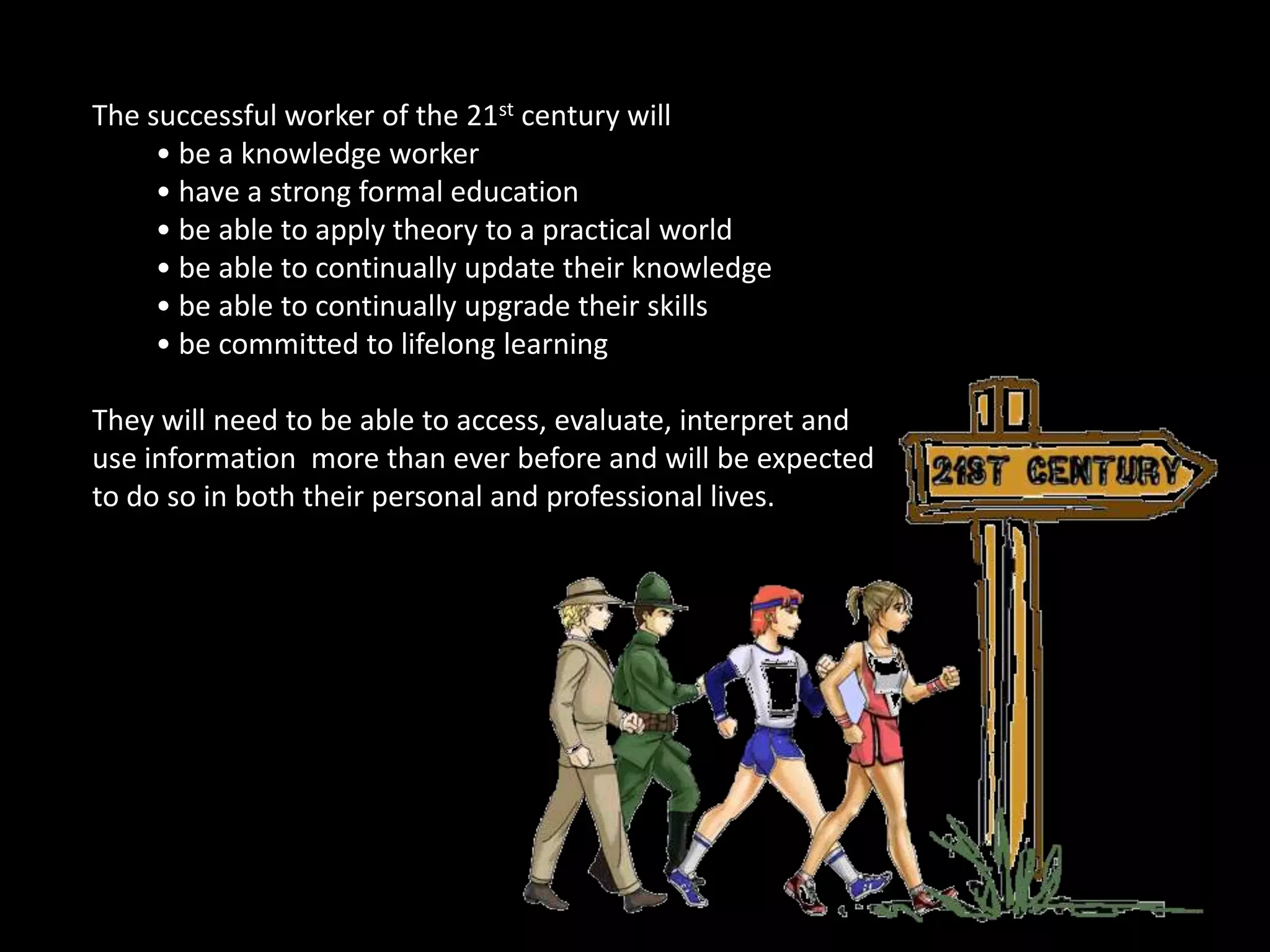
The successful worker of the 21st century will be a knowledge worker
 have a strong formal education
 be able to apply theory to a practical world
 be able to continually update their knowledge
 be able to continually upgrade their skills
 be committed to lifelong learningThey will need to be able to access, evaluate, interpret and use information  more than ever before and will be expected to do so in both their personal and professional lives.
The library is the information centerof the school and its staff are the information specialists.We know how to ask the questions and provide the services that willallow the knowledge worker to makemeaning from the information they gather.It is in the library, and through the programs and productsthat we offer, that the knowledge workersof the future will be nurtured.
But if they are to be nurtured, they need to be in the library. Therefore it needs to be a place which invites them in.
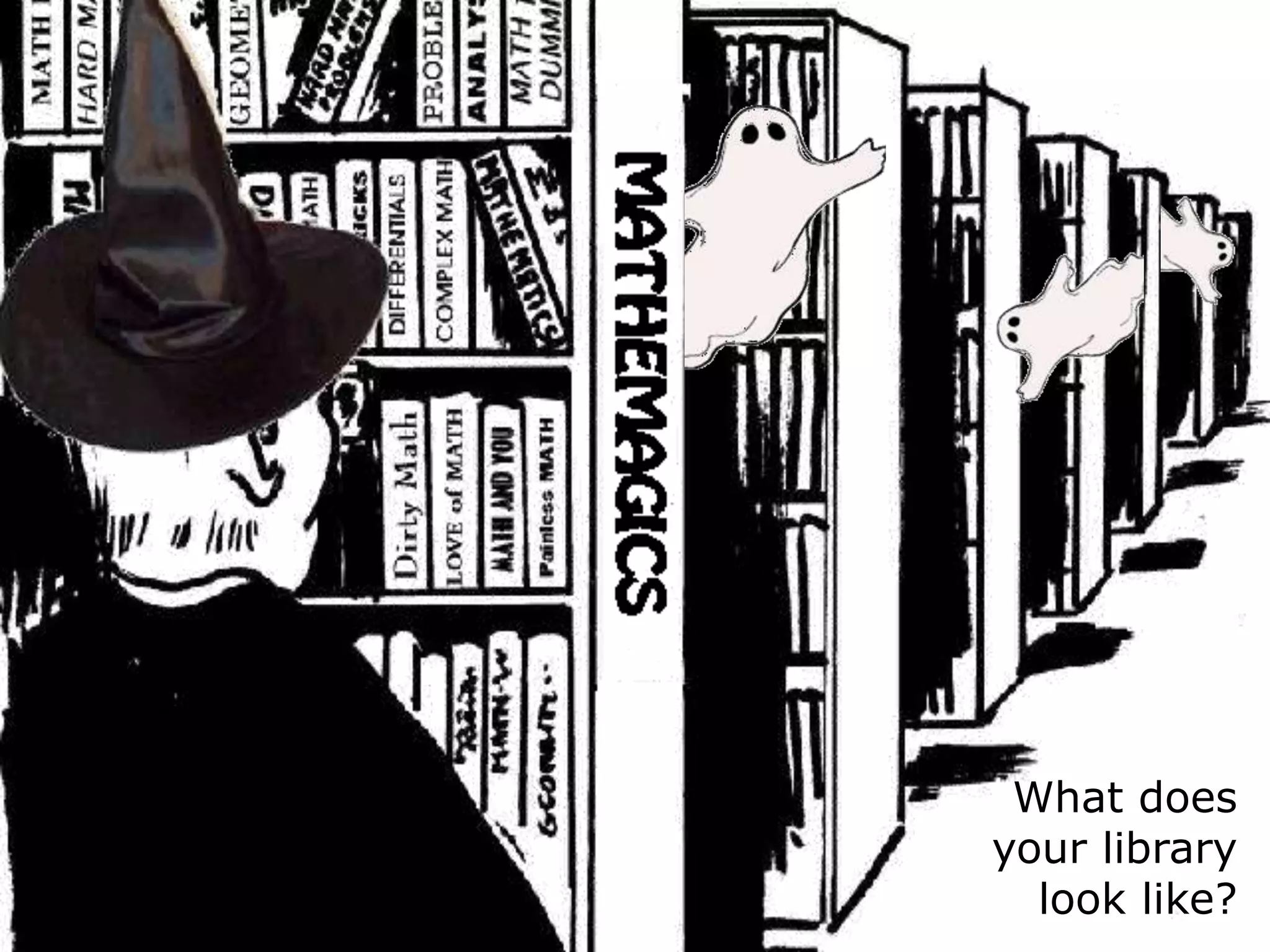
What doesyour librarylook like?
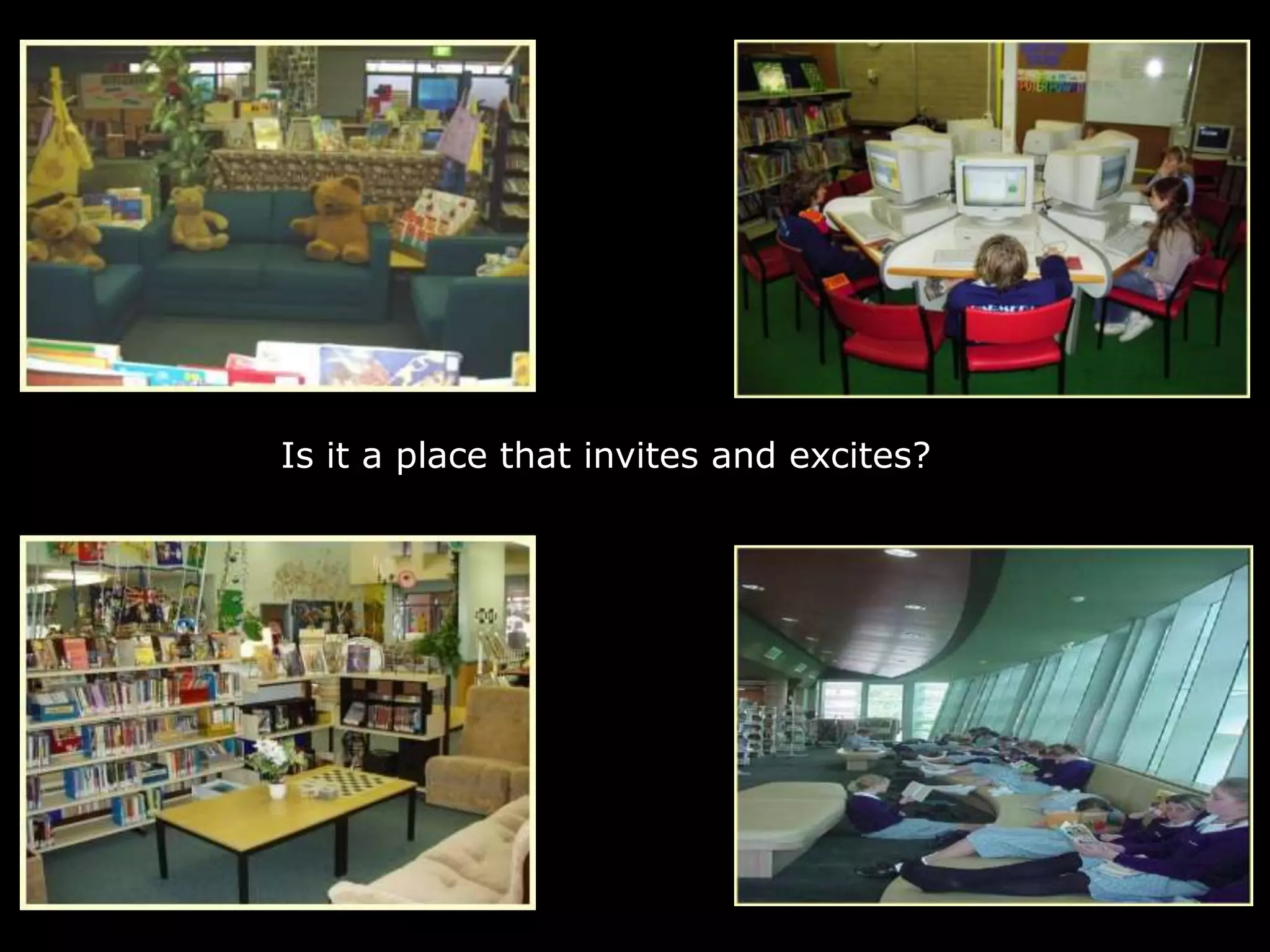
Is it a place that invites and excites?
Research into learning tells usthe brain functions at many levels simultaneously as thoughts, emotions, imagination,  predispositions and physiology  interact and exchange information with the environmentthe brain absorbs information both directly and indirectly,  continually aware of  what is beyond the immediate focus of attention, to the extent that 70% of what is learned is not directly taught.Learning involves conscious and unconscious processes, including experience, emotion and sensory input.  Much of our learning  occurs and is processed below the level of immediate awareness so that understanding may not happen until much later after there has been time for reflection and assimilationthe brain is ‘plastic’ because its structure is changed (or ‘rewired’) by exposure to new experiences so the more we use it, the better it gets.the brain is stimulated by challenge and inhibited by threat, so students in safe, secure environments, both mental and physical, can allow their cognitive brains to dominate their emotional brains and will explore, investigate, take risks and learn.30%-60% of the brain’s wiring comes from our genetic makeup (nature) and 40%-70% comes from environmental influences and impact (nurture)The two critical factors in learning are novelty and interactive specific feedback
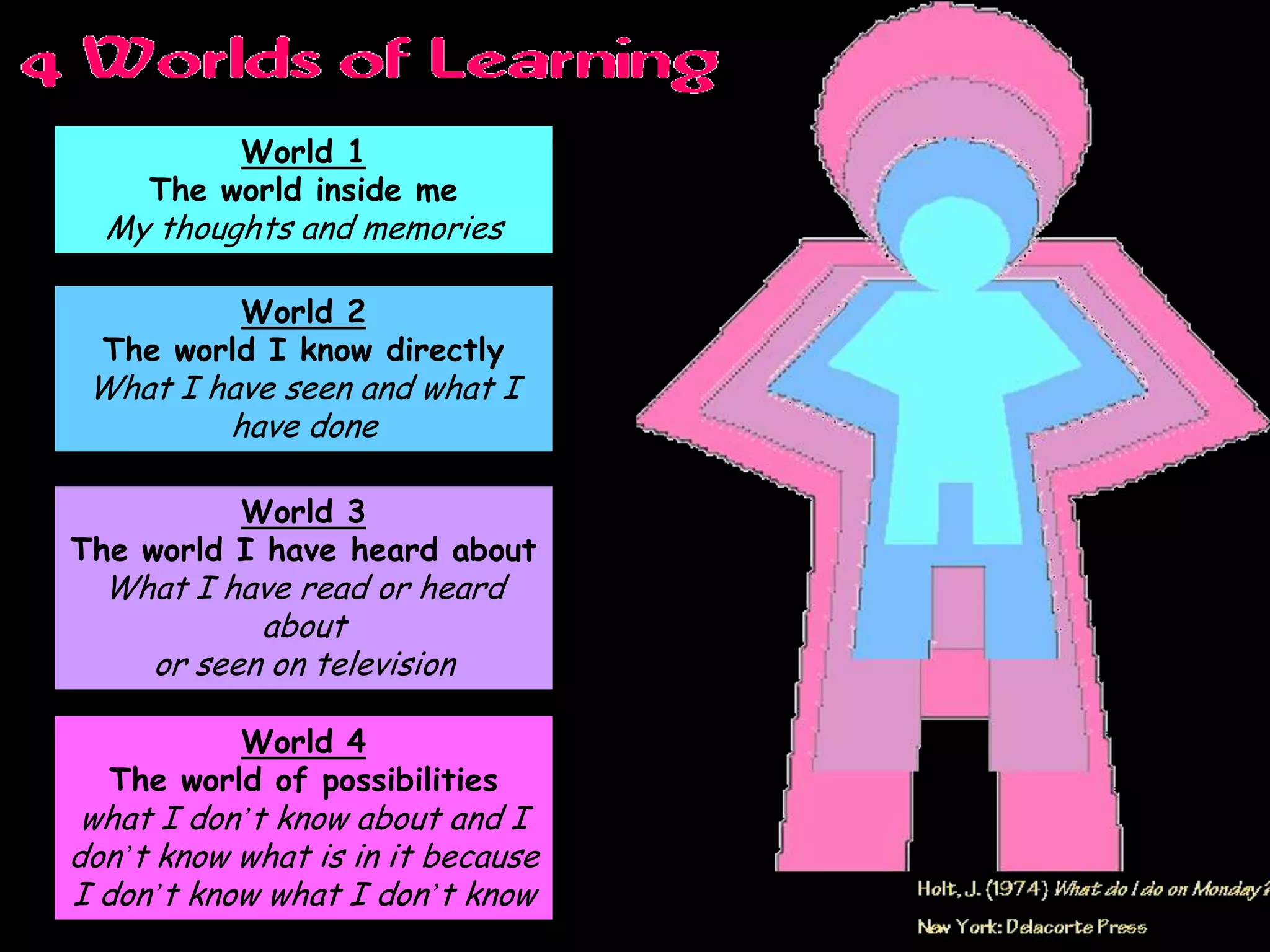
World 1The world inside meMy thoughts and memoriesWorld 2The world I know directlyWhat I have seen and what I have doneWorld 3The world I have heard aboutWhat I have read or heard aboutor seen on televisionWorld 4The world of possibilitieswhat I don’t know about and I don’t know what is in it because I don’t know what I don’t know
The library is the gateway to the world.
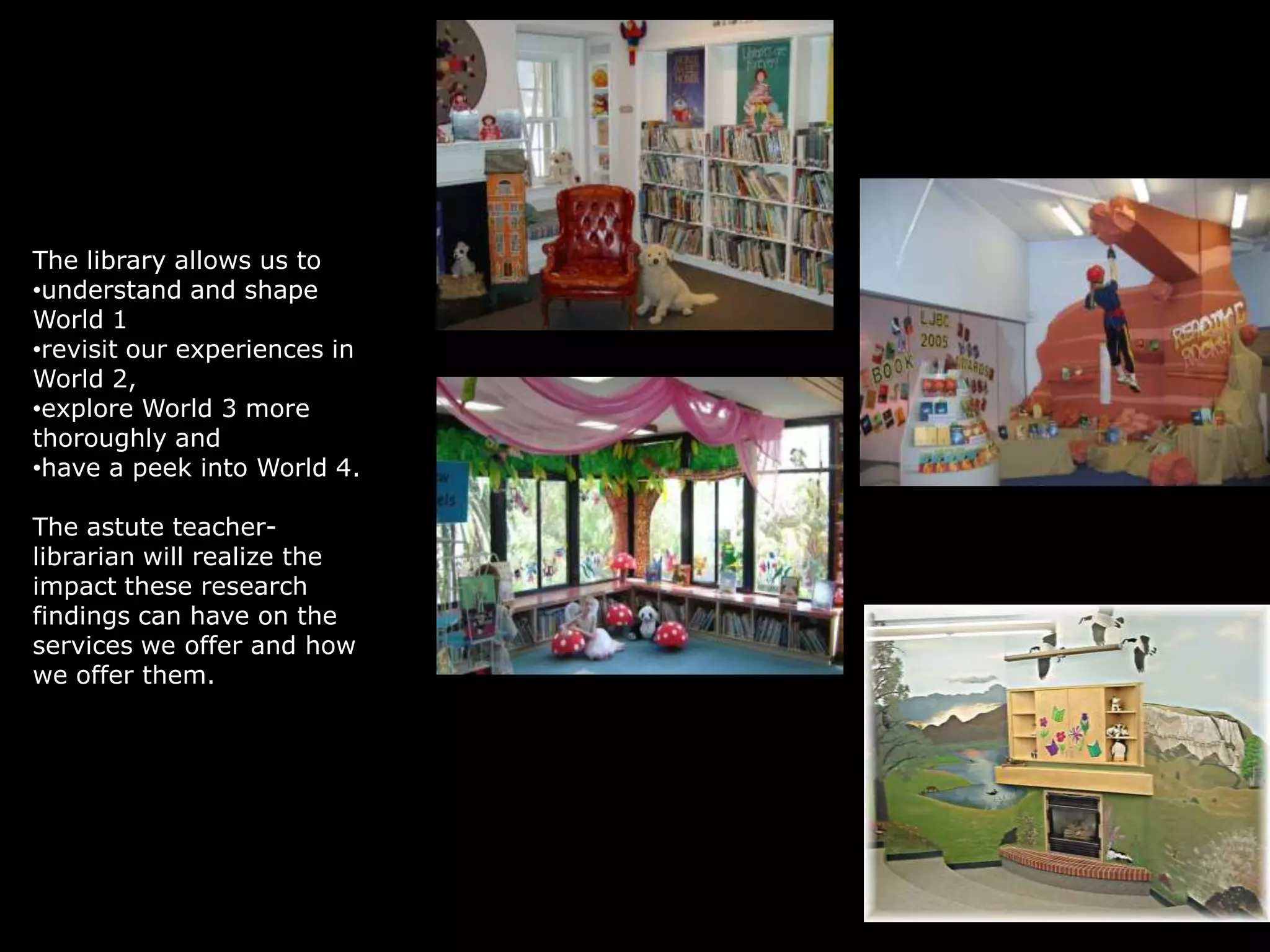
The library allows us to understand and shape World 1
revisit our experiences in World 2,
explore World 3 more thoroughly and
have a peek into World 4.The astute teacher-librarian will realize the impact these research findings can have on the services we offer and how we offer them.
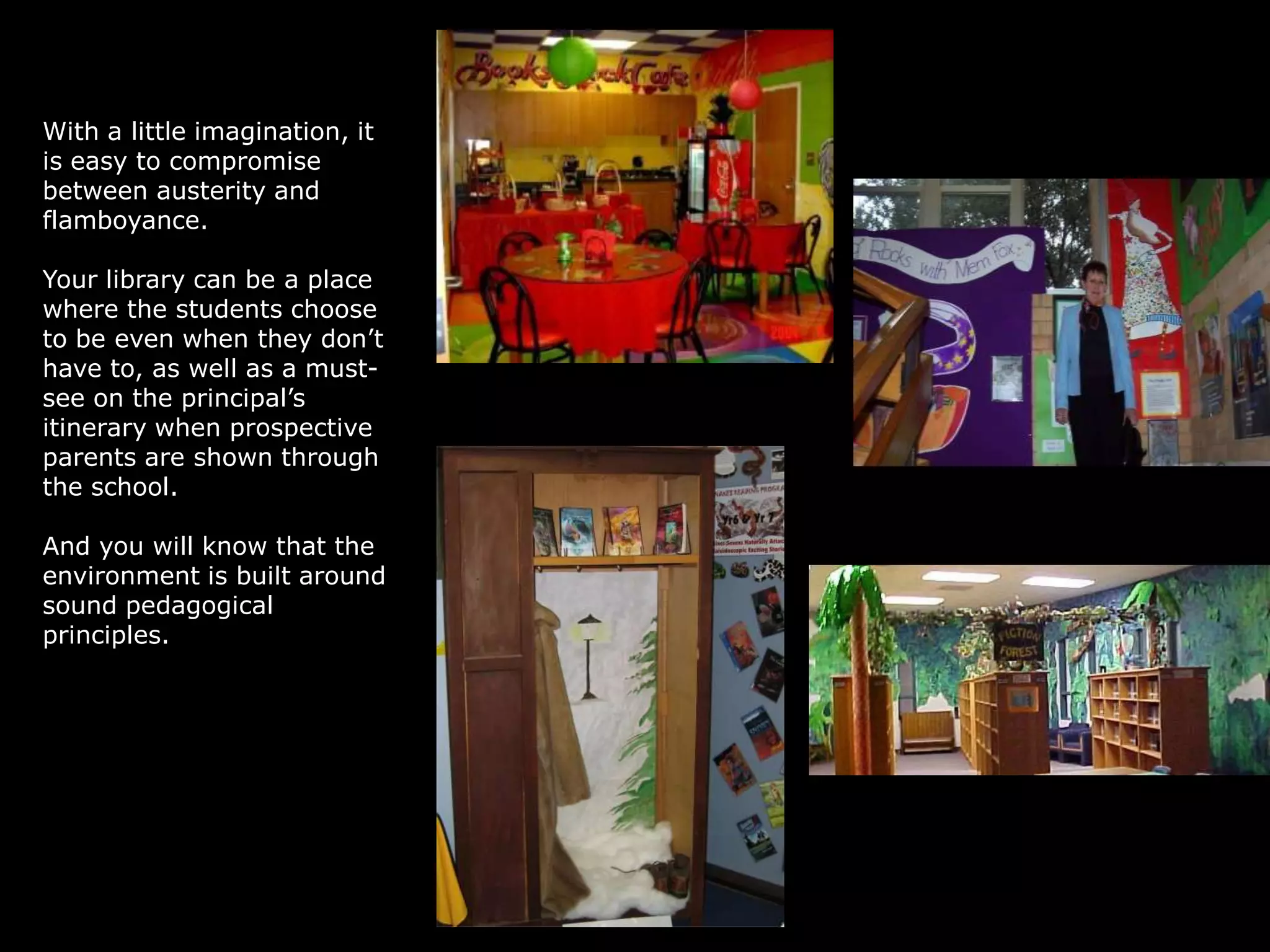
With a little imagination, it is easy to compromise between austerity and flamboyance.Your library can be a place where the students choose to be even when they don’t have to, as well as a must-see on the principal’s itinerary when prospective parents are shown through the school. And you will know that the environment is built around sound pedagogical principles.
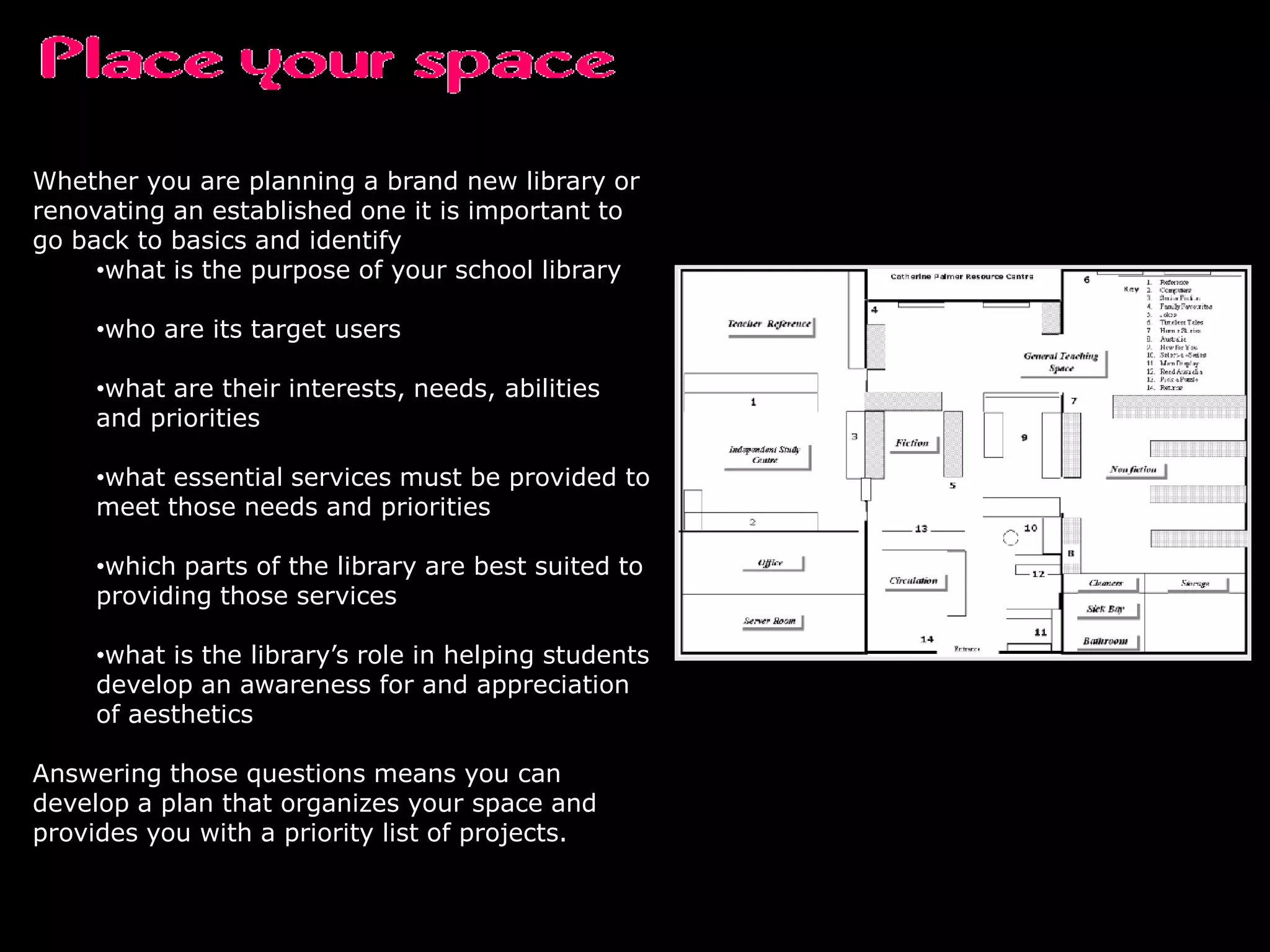
Whether you are planning a brand new library or renovating an established one it is important to go back to basics and identify what is the purpose of your school library
who are its target users
what are their interests, needs, abilities and priorities
what essential services must be provided to meet those needs and priorities
which parts of the library are best suited to providing those services
what is the library’s role in helping students develop an awareness for and appreciation of aestheticsAnswering those questions means you can develop a plan that organizes your space and provides you with a priority list of projects.
Create a scale floor plan of your space and mark in the fixed furniture and fittings, windows and power supplies. Check your building or district fire safety regulations so you comply with their entry/exit requirements, what can be put on walls and hung from ceilings and any other constraints. Using your priority list, place spaces that are dependent on those non-negotiables such as your quiet reading spot near the natural light and the computers near the power sources. Top priority, however, must go to being able to see as much of the space as possible from the circulation desk or wherever it is that you spend the majority of your time. This may even mean having closed-circuit camera surveillance because the legalities of duty-of-care demand that such supervision is essential. 
Duty of care requires “everything ‘reasonably practicable’ to be done to protect the health and safety of others at the workplace” and includesproviding and maintaining a safe environment and equipment
information and instruction about the use of equipment
supervision of students to ensure safe work practices
monitoring conditions at any workplace to ensure the highest safety standards are maintained.Education authorities are particularly cognisant of duty of care as society becomes more litigious.  As well as duty of care, as educators we are also charged with being in loco parentis which means being “in place of the parent”.  Therefore we have extra responsibilities relating to student supervision so it is critical that we take all possible precautions.
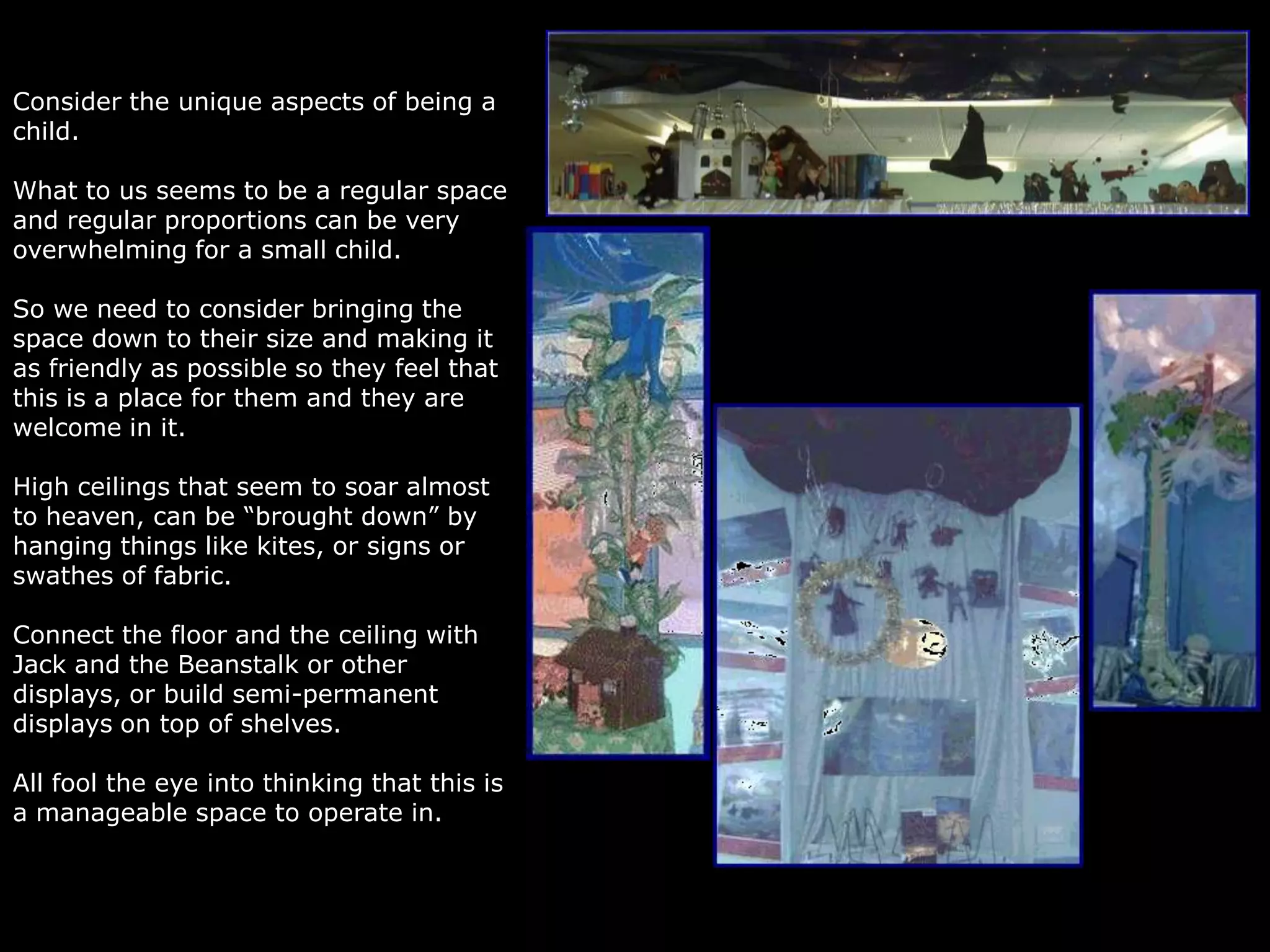
Consider the unique aspects of being a child.  What to us seems to be a regular space and regular proportions can be very overwhelming for a small child.  So we need to consider bringing the space down to their size and making it as friendly as possible so they feel that this is a place for them and they are welcome in it. High ceilings that seem to soar almost to heaven, can be “brought down” by hanging things like kites, or signs or swathes of fabric.  Connect the floor and the ceiling with Jack and the Beanstalk or other displays, or build semi-permanent displays on top of shelves.  All fool the eye into thinking that this is a manageable space to operate in.
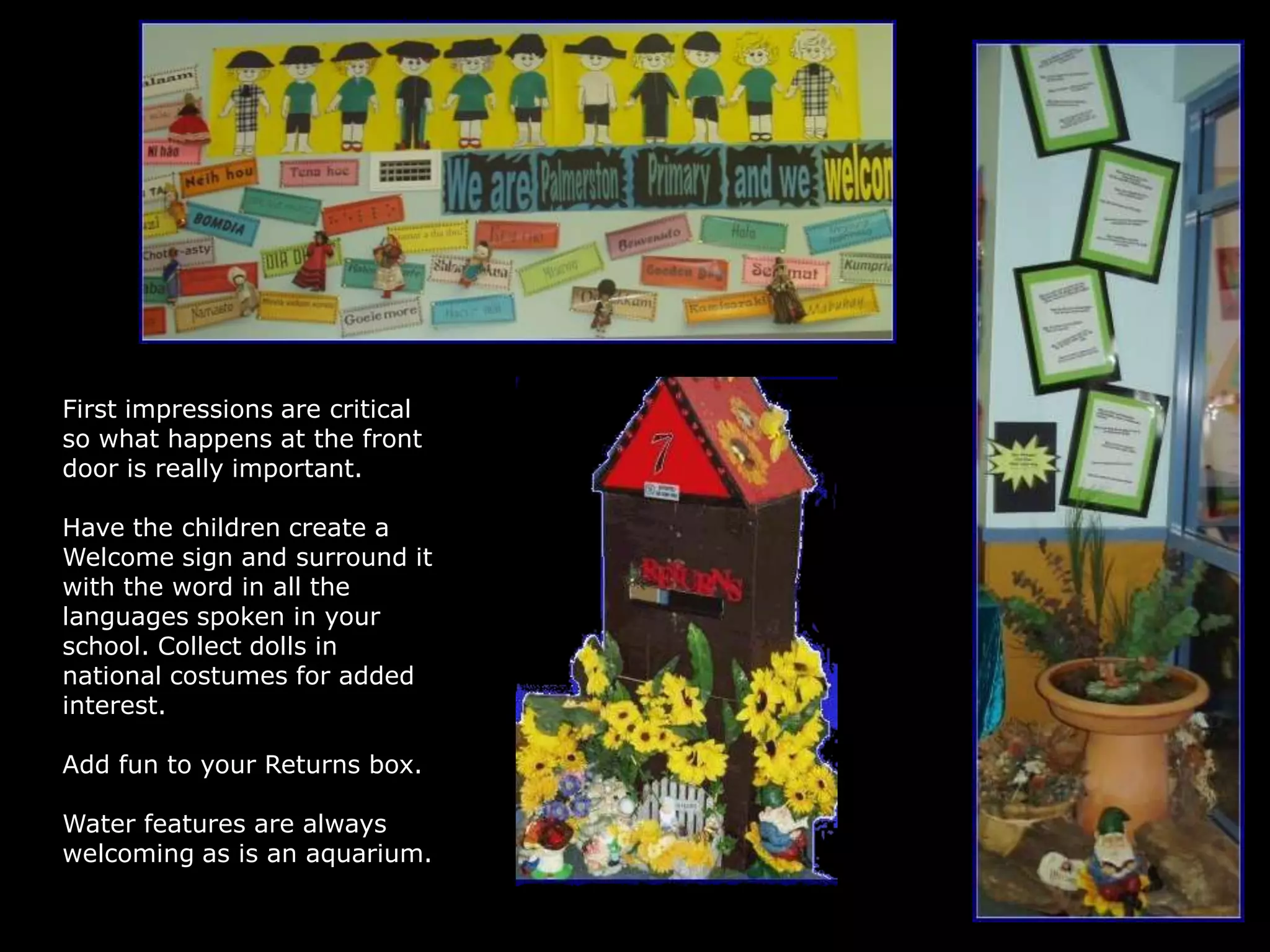
First impressions are critical so what happens at the front door is really important.Have the children create a Welcome sign and surround it with the word in all the languages spoken in your school. Collect dolls in national costumes for added interest.Add fun to your Returns box.Water features are always welcoming as is an aquarium.
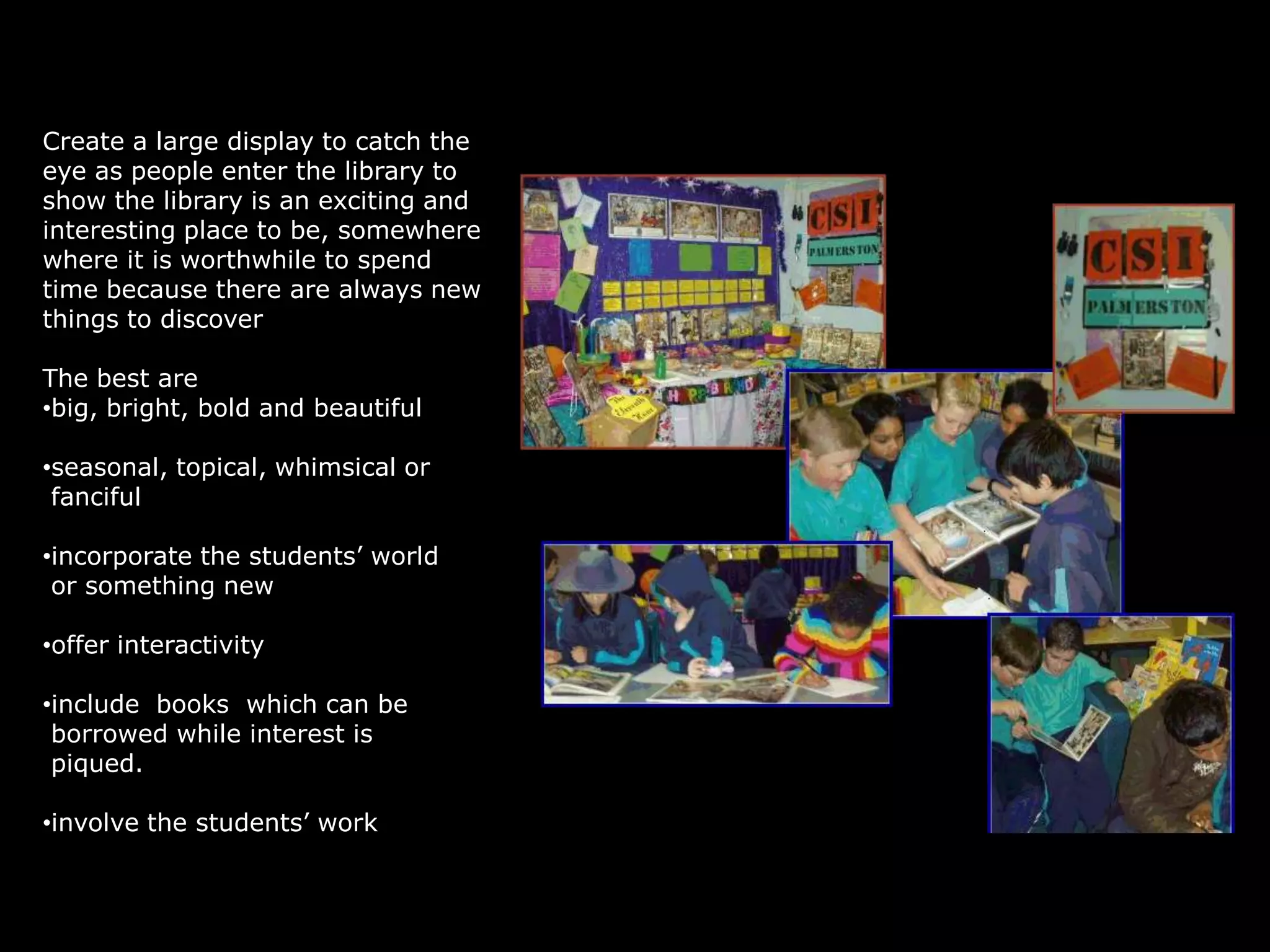
Create a large display to catch the eye as people enter the library to show the library is an exciting and interesting place to be, somewhere where it is worthwhile to spend time because there are always new things to discoverThe best are big, bright, bold and beautiful
seasonal, topical, whimsical or   fancifulincorporate the students’ world or something newoffer interactivity
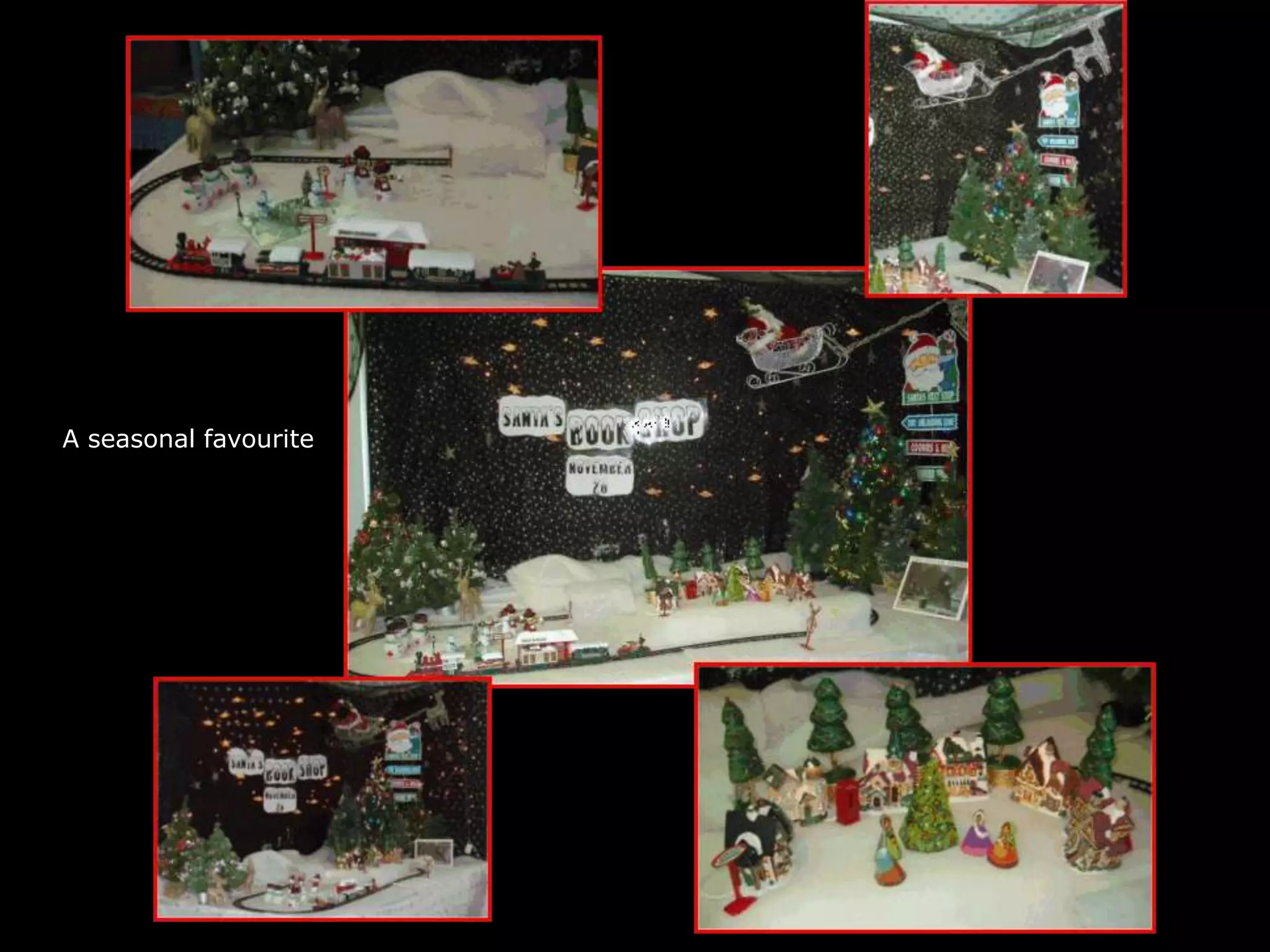
include  books  which can be  borrowed while interest is piqued.involve the students’ workA seasonal favourite
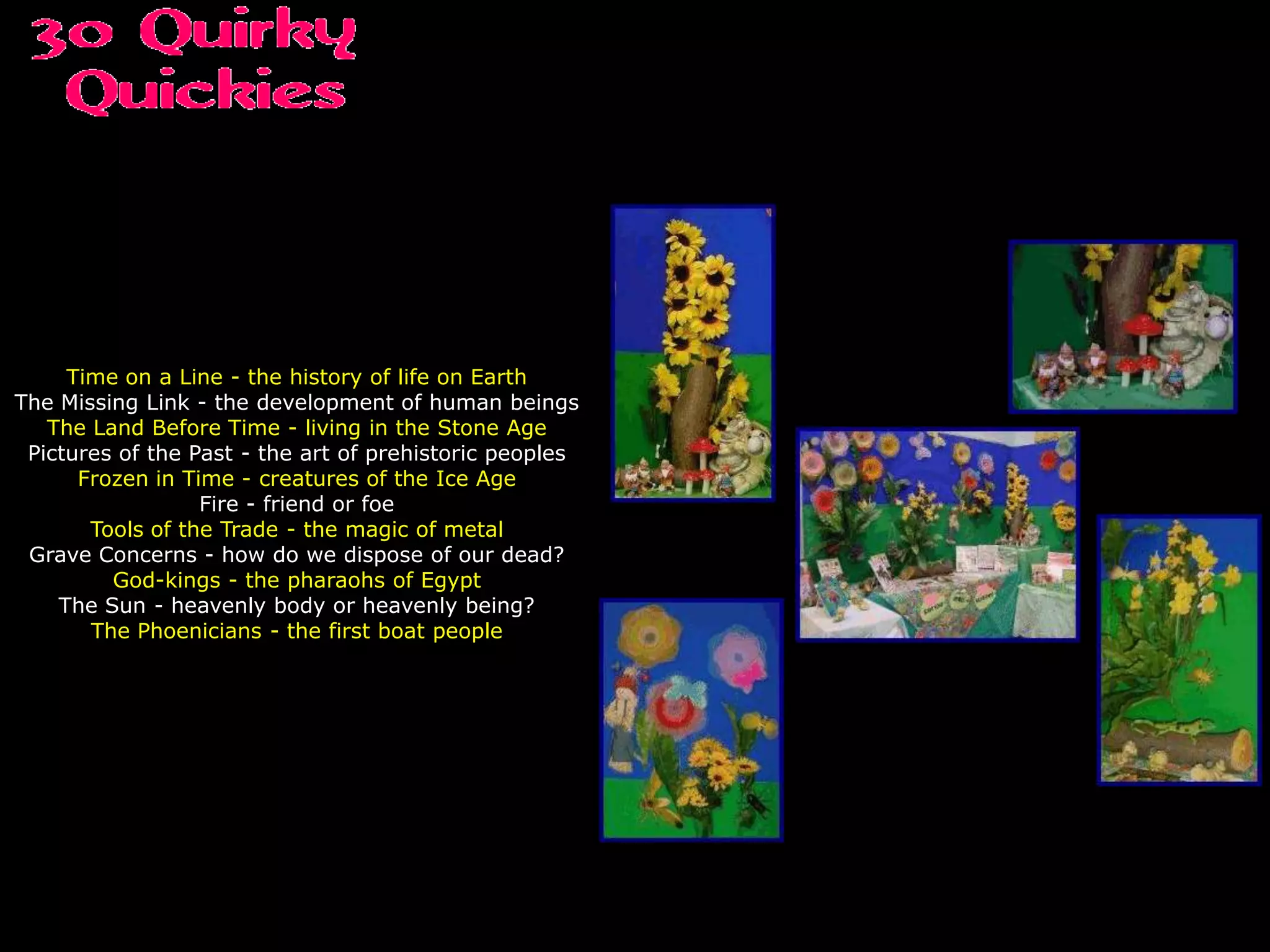
Time on a Line - the history of life on EarthThe Missing Link - the development of human beingsThe Land Before Time - living in the Stone AgePictures of the Past - the art of prehistoric peoplesFrozen in Time - creatures of the Ice AgeFire - friend or foeTools of the Trade - the magic of metalGrave Concerns - how do we dispose of our dead?God-kings - the pharaohs of EgyptThe Sun - heavenly body or heavenly being?The Phoenicians - the first boat people
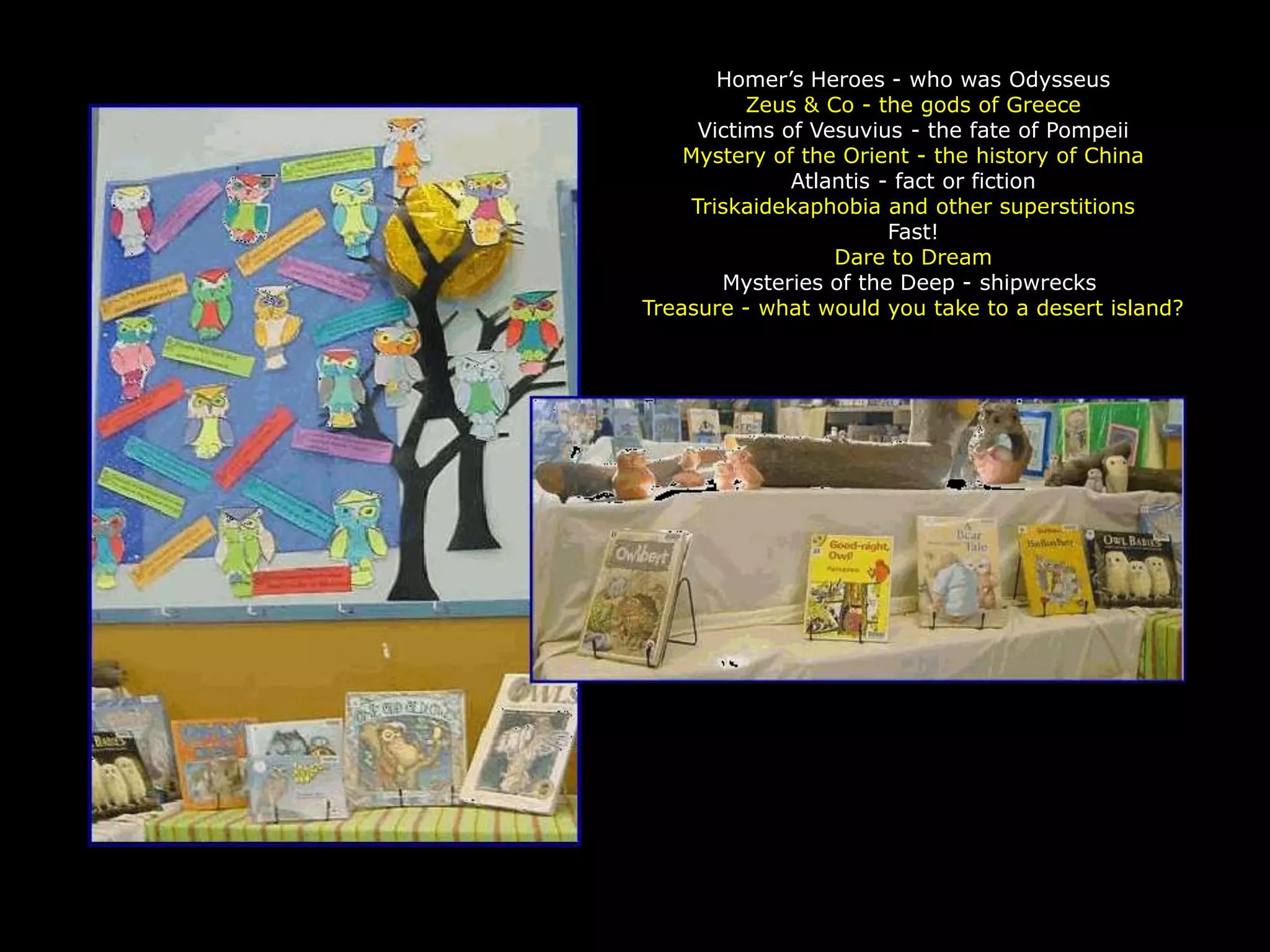
Homer’s Heroes - who was OdysseusZeus & Co - the gods of GreeceVictims of Vesuvius - the fate of PompeiiMystery of the Orient - the history of ChinaAtlantis - fact or fictionTriskaidekaphobia and other superstitionsFast!Dare to DreamMysteries of the Deep - shipwrecks Treasure - what would you take to a desert island?
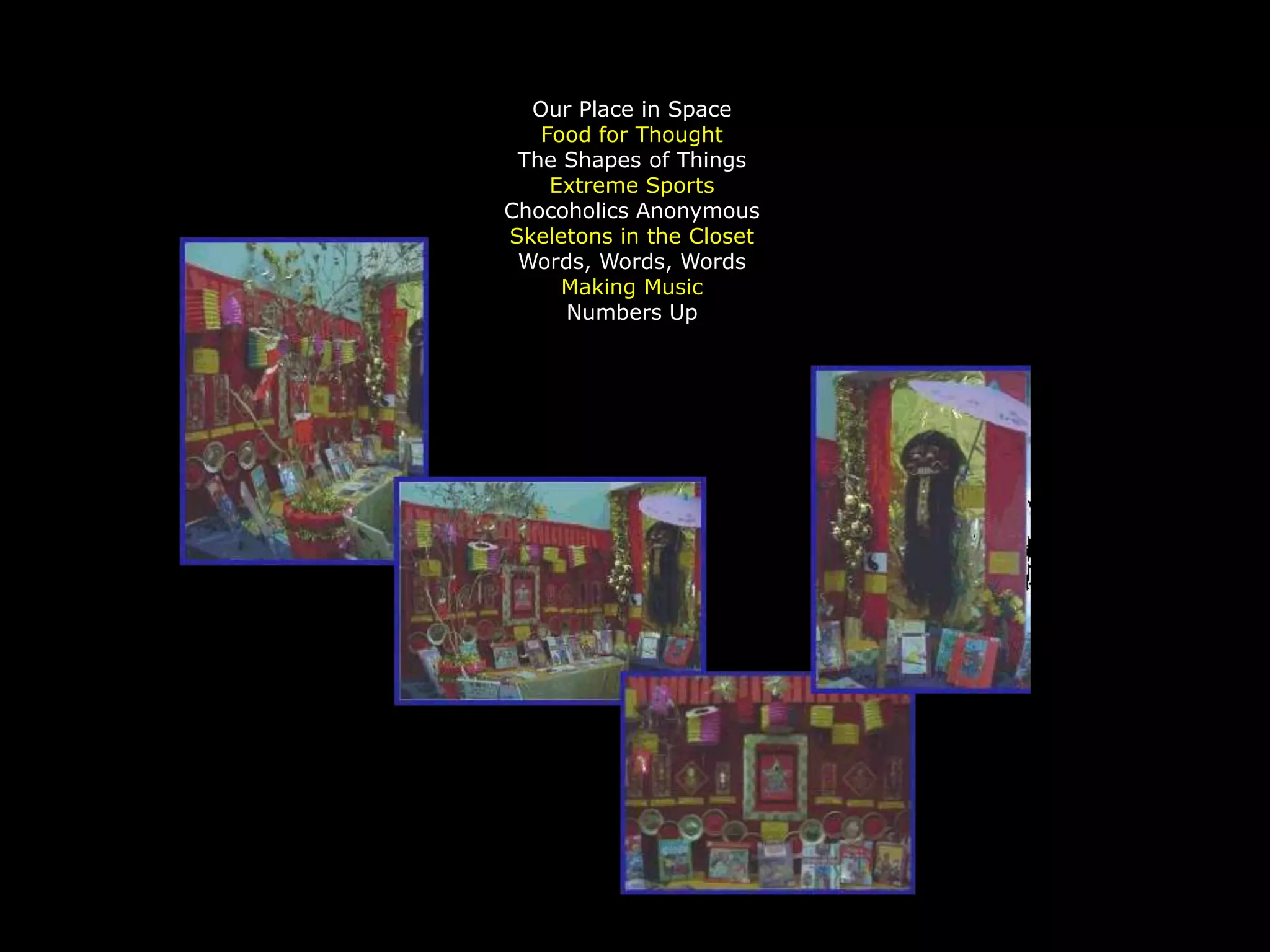
Our Place in SpaceFood for ThoughtThe Shapes of ThingsExtreme SportsChocoholics AnonymousSkeletons in the ClosetWords, Words, WordsMaking MusicNumbers Up
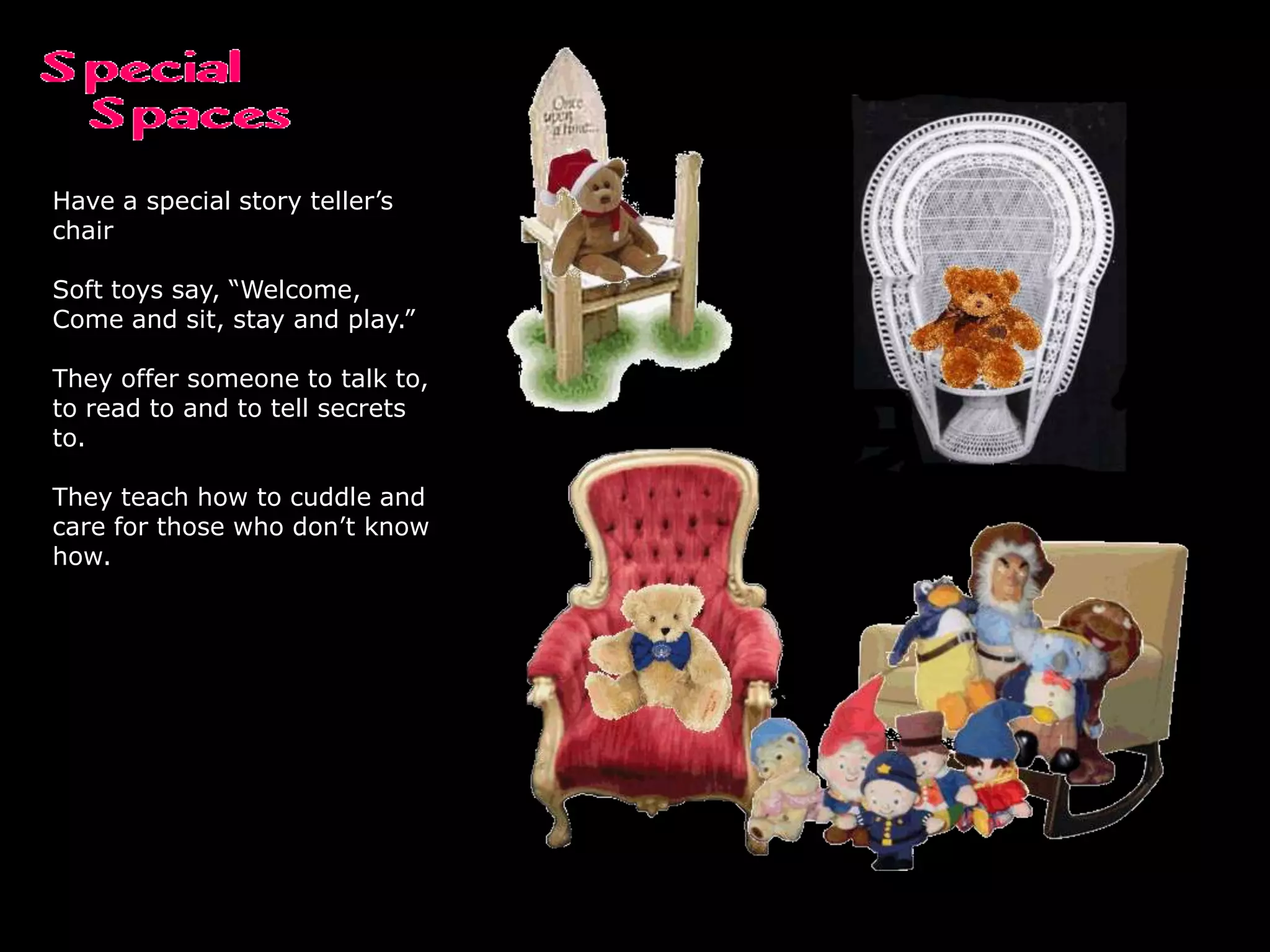
Have a special story teller’s chairSoft toys say, “Welcome, Come and sit, stay and play.”They offer someone to talk to, to read to and to tell secrets to.They teach how to cuddle and care for those who don’t know how.
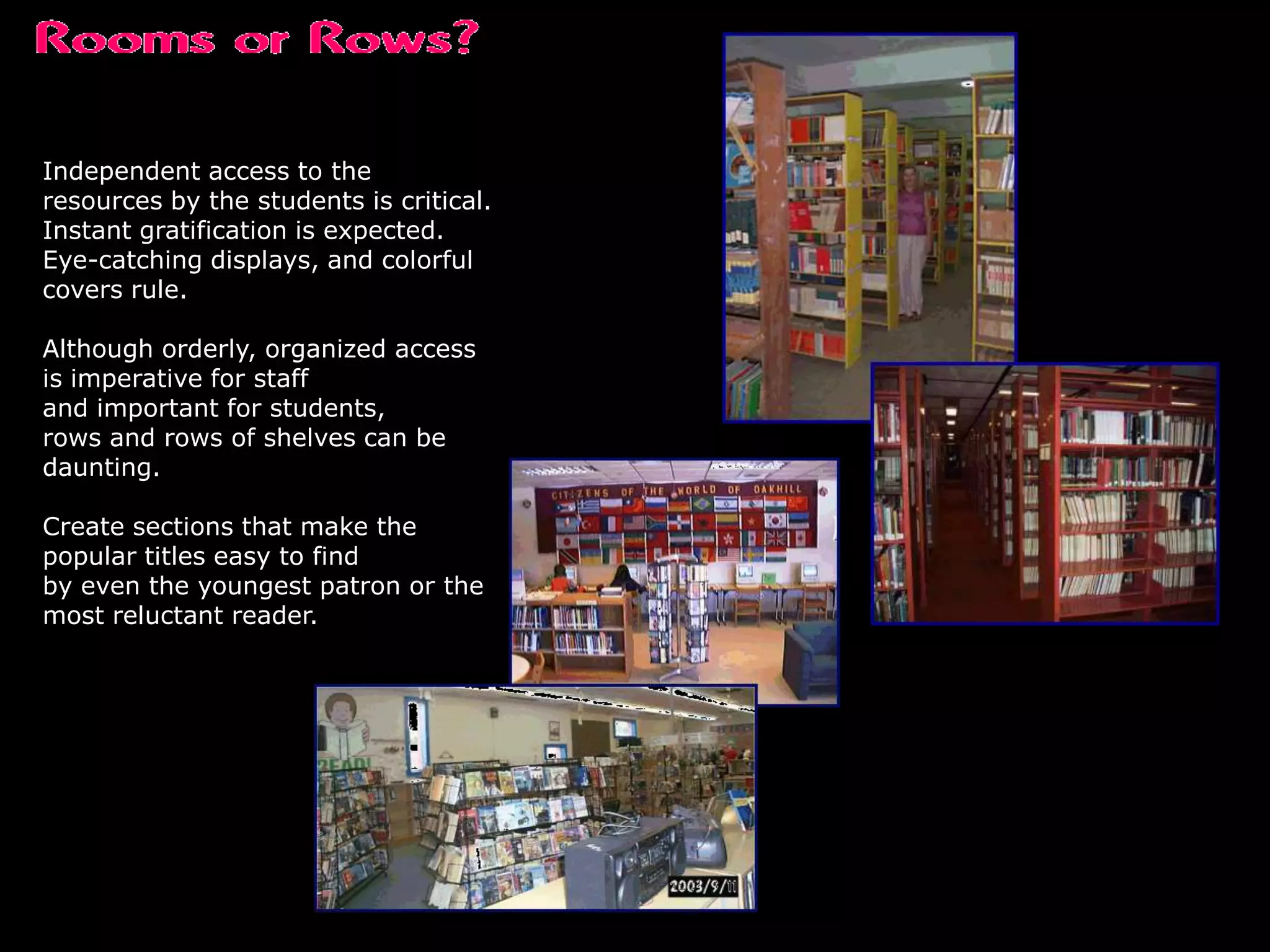
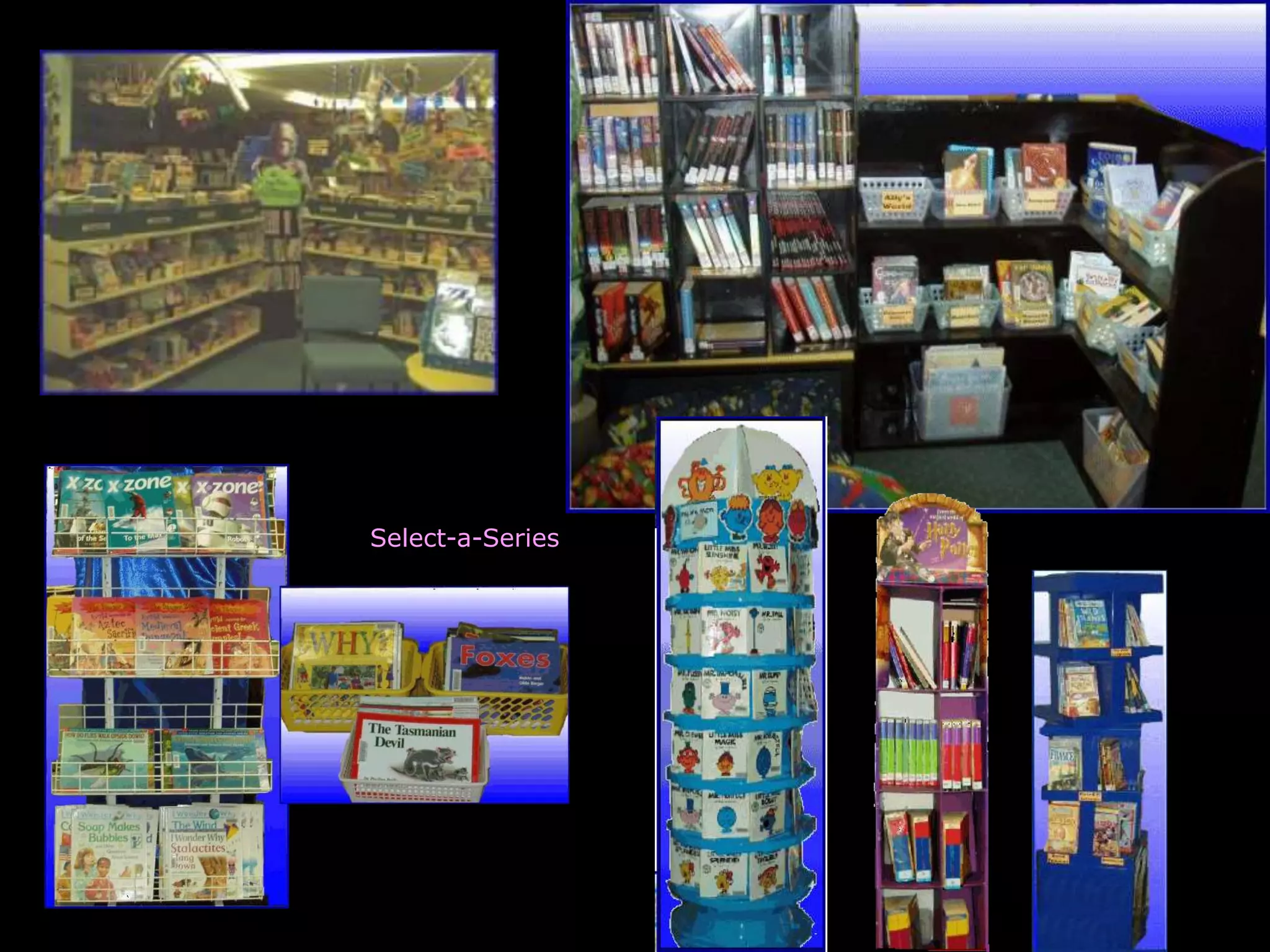
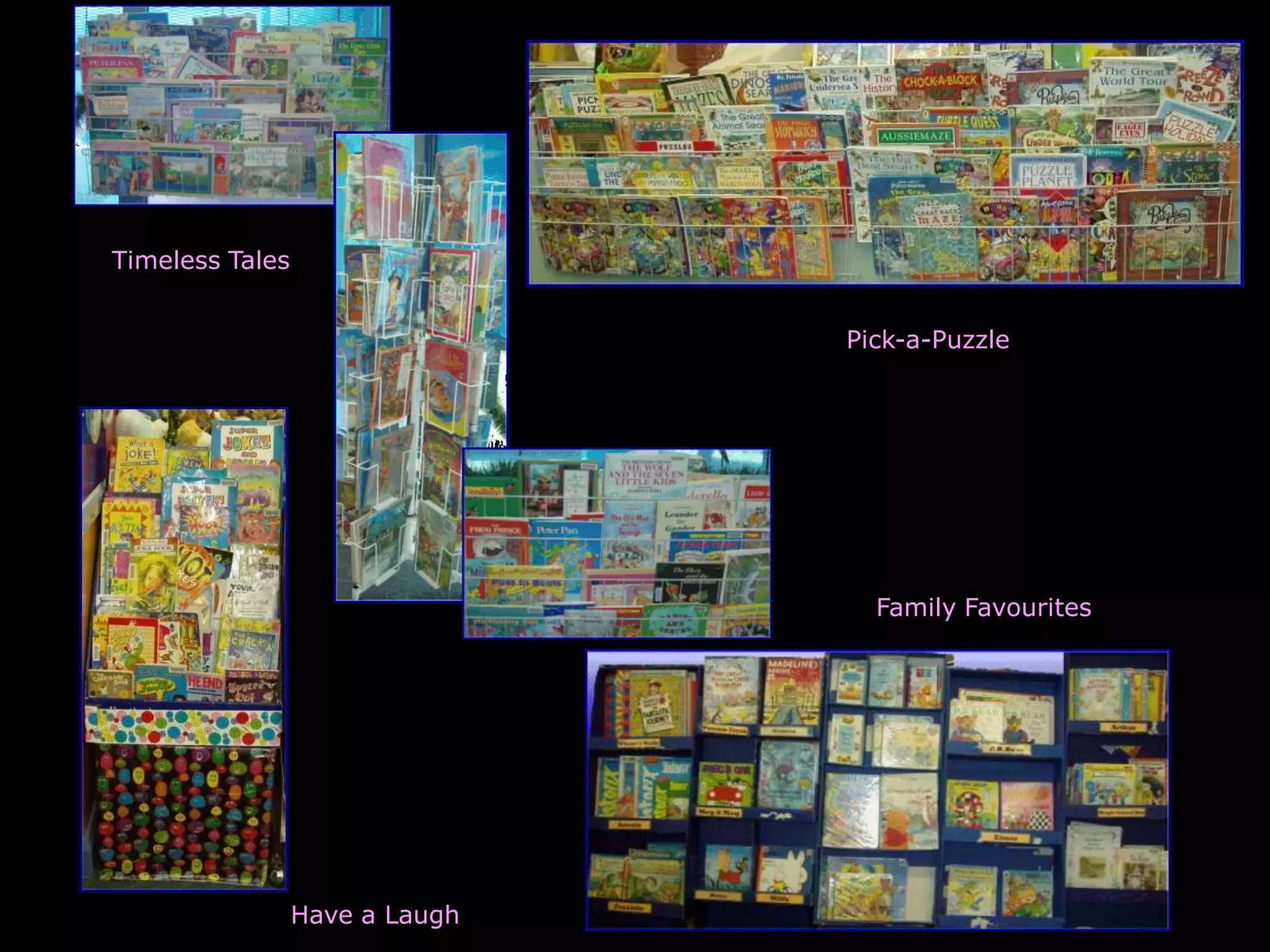
Independent access to the resources by the students is critical. Instant gratification is expected. Eye-catching displays, and colorful covers rule.  Although orderly, organized access is imperative for staffand important for students, rows and rows of shelves can be daunting. Create sections that make the popular titles easy to find by even the youngest patron or the most reluctant reader.
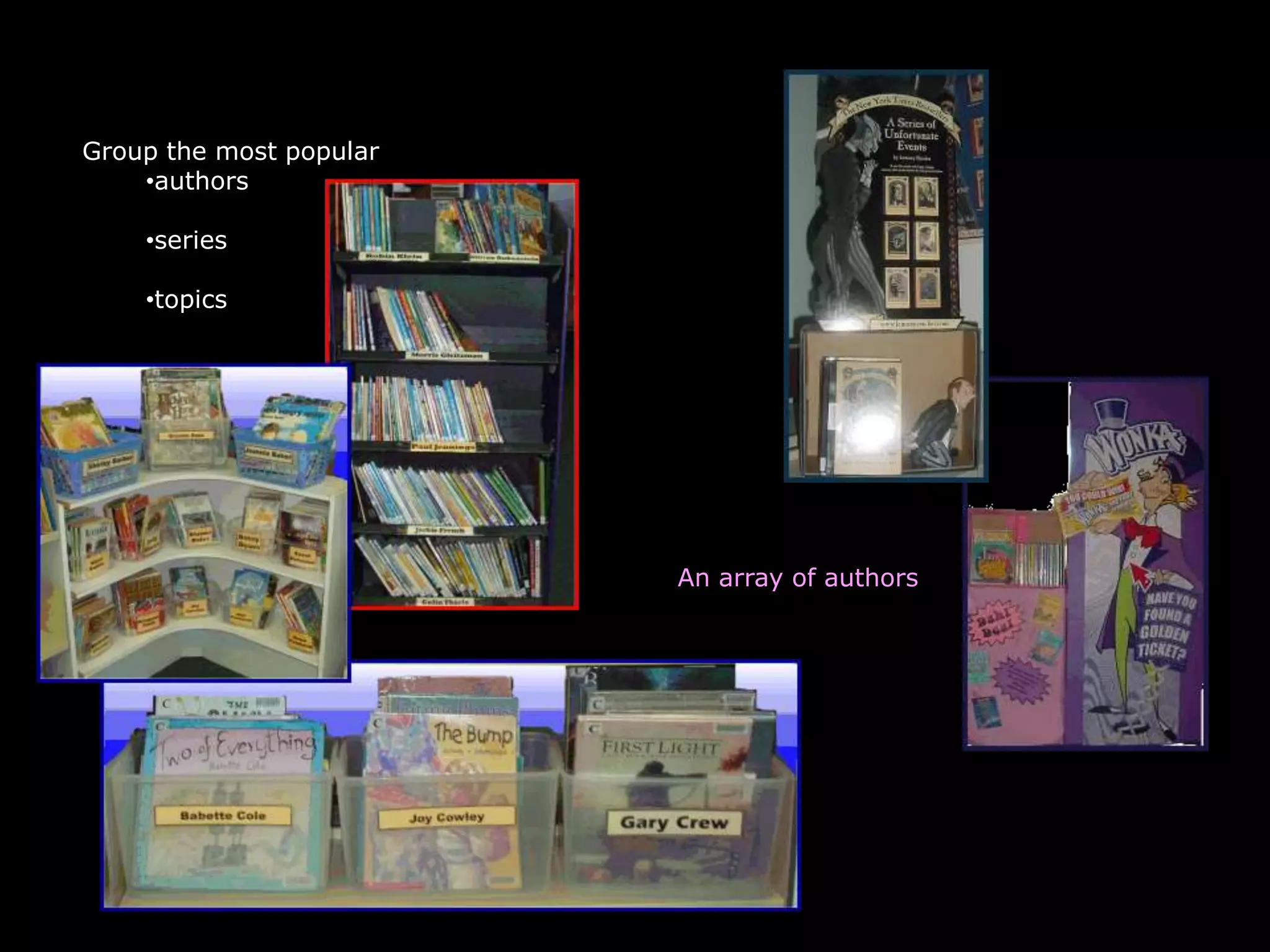
Group the most popularauthors
series
topicsAn array of authors
Select-a-Series

Landscape Your Library

  • 1.
  • 2.
    The successful workerof the 21st century will be a knowledge worker
  • 3.
    have astrong formal education
  • 4.
    be ableto apply theory to a practical world
  • 5.
    be ableto continually update their knowledge
  • 6.
    be ableto continually upgrade their skills
  • 7.
    be committedto lifelong learningThey will need to be able to access, evaluate, interpret and use information more than ever before and will be expected to do so in both their personal and professional lives.
  • 8.
    The library isthe information centerof the school and its staff are the information specialists.We know how to ask the questions and provide the services that willallow the knowledge worker to makemeaning from the information they gather.It is in the library, and through the programs and productsthat we offer, that the knowledge workersof the future will be nurtured.
  • 9.
    But if theyare to be nurtured, they need to be in the library. Therefore it needs to be a place which invites them in.
  • 10.
  • 11.
    Is it aplace that invites and excites?
  • 12.
    Research into learningtells usthe brain functions at many levels simultaneously as thoughts, emotions, imagination, predispositions and physiology interact and exchange information with the environmentthe brain absorbs information both directly and indirectly, continually aware of what is beyond the immediate focus of attention, to the extent that 70% of what is learned is not directly taught.Learning involves conscious and unconscious processes, including experience, emotion and sensory input. Much of our learning occurs and is processed below the level of immediate awareness so that understanding may not happen until much later after there has been time for reflection and assimilationthe brain is ‘plastic’ because its structure is changed (or ‘rewired’) by exposure to new experiences so the more we use it, the better it gets.the brain is stimulated by challenge and inhibited by threat, so students in safe, secure environments, both mental and physical, can allow their cognitive brains to dominate their emotional brains and will explore, investigate, take risks and learn.30%-60% of the brain’s wiring comes from our genetic makeup (nature) and 40%-70% comes from environmental influences and impact (nurture)The two critical factors in learning are novelty and interactive specific feedback
  • 13.
    World 1The worldinside meMy thoughts and memoriesWorld 2The world I know directlyWhat I have seen and what I have doneWorld 3The world I have heard aboutWhat I have read or heard aboutor seen on televisionWorld 4The world of possibilitieswhat I don’t know about and I don’t know what is in it because I don’t know what I don’t know
  • 14.
    The library isthe gateway to the world.
  • 15.
    The library allowsus to understand and shape World 1
  • 16.
  • 17.
    explore World 3more thoroughly and
  • 18.
    have a peekinto World 4.The astute teacher-librarian will realize the impact these research findings can have on the services we offer and how we offer them.
  • 19.
    With a littleimagination, it is easy to compromise between austerity and flamboyance.Your library can be a place where the students choose to be even when they don’t have to, as well as a must-see on the principal’s itinerary when prospective parents are shown through the school. And you will know that the environment is built around sound pedagogical principles.
  • 20.
    Whether you areplanning a brand new library or renovating an established one it is important to go back to basics and identify what is the purpose of your school library
  • 21.
    who are itstarget users
  • 22.
    what are theirinterests, needs, abilities and priorities
  • 23.
    what essential servicesmust be provided to meet those needs and priorities
  • 24.
    which parts ofthe library are best suited to providing those services
  • 25.
    what is thelibrary’s role in helping students develop an awareness for and appreciation of aestheticsAnswering those questions means you can develop a plan that organizes your space and provides you with a priority list of projects.
  • 26.
    Create a scalefloor plan of your space and mark in the fixed furniture and fittings, windows and power supplies. Check your building or district fire safety regulations so you comply with their entry/exit requirements, what can be put on walls and hung from ceilings and any other constraints. Using your priority list, place spaces that are dependent on those non-negotiables such as your quiet reading spot near the natural light and the computers near the power sources. Top priority, however, must go to being able to see as much of the space as possible from the circulation desk or wherever it is that you spend the majority of your time. This may even mean having closed-circuit camera surveillance because the legalities of duty-of-care demand that such supervision is essential. 
  • 27.
    Duty of carerequires “everything ‘reasonably practicable’ to be done to protect the health and safety of others at the workplace” and includesproviding and maintaining a safe environment and equipment
  • 28.
    information and instructionabout the use of equipment
  • 29.
    supervision of studentsto ensure safe work practices
  • 30.
    monitoring conditions atany workplace to ensure the highest safety standards are maintained.Education authorities are particularly cognisant of duty of care as society becomes more litigious. As well as duty of care, as educators we are also charged with being in loco parentis which means being “in place of the parent”. Therefore we have extra responsibilities relating to student supervision so it is critical that we take all possible precautions.
  • 31.
    Consider the uniqueaspects of being a child.  What to us seems to be a regular space and regular proportions can be very overwhelming for a small child. So we need to consider bringing the space down to their size and making it as friendly as possible so they feel that this is a place for them and they are welcome in it. High ceilings that seem to soar almost to heaven, can be “brought down” by hanging things like kites, or signs or swathes of fabric. Connect the floor and the ceiling with Jack and the Beanstalk or other displays, or build semi-permanent displays on top of shelves. All fool the eye into thinking that this is a manageable space to operate in.
  • 32.
    First impressions arecritical so what happens at the front door is really important.Have the children create a Welcome sign and surround it with the word in all the languages spoken in your school. Collect dolls in national costumes for added interest.Add fun to your Returns box.Water features are always welcoming as is an aquarium.
  • 33.
    Create a largedisplay to catch the eye as people enter the library to show the library is an exciting and interesting place to be, somewhere where it is worthwhile to spend time because there are always new things to discoverThe best are big, bright, bold and beautiful
  • 34.
    seasonal, topical, whimsicalor fancifulincorporate the students’ world or something newoffer interactivity
  • 35.
    include books which can be borrowed while interest is piqued.involve the students’ workA seasonal favourite
  • 36.
    Time on aLine - the history of life on EarthThe Missing Link - the development of human beingsThe Land Before Time - living in the Stone AgePictures of the Past - the art of prehistoric peoplesFrozen in Time - creatures of the Ice AgeFire - friend or foeTools of the Trade - the magic of metalGrave Concerns - how do we dispose of our dead?God-kings - the pharaohs of EgyptThe Sun - heavenly body or heavenly being?The Phoenicians - the first boat people
  • 37.
    Homer’s Heroes -who was OdysseusZeus & Co - the gods of GreeceVictims of Vesuvius - the fate of PompeiiMystery of the Orient - the history of ChinaAtlantis - fact or fictionTriskaidekaphobia and other superstitionsFast!Dare to DreamMysteries of the Deep - shipwrecks Treasure - what would you take to a desert island?
  • 38.
    Our Place inSpaceFood for ThoughtThe Shapes of ThingsExtreme SportsChocoholics AnonymousSkeletons in the ClosetWords, Words, WordsMaking MusicNumbers Up
  • 39.
    Have a specialstory teller’s chairSoft toys say, “Welcome, Come and sit, stay and play.”They offer someone to talk to, to read to and to tell secrets to.They teach how to cuddle and care for those who don’t know how.
  • 40.
    Independent access tothe resources by the students is critical. Instant gratification is expected. Eye-catching displays, and colorful covers rule.  Although orderly, organized access is imperative for staffand important for students, rows and rows of shelves can be daunting. Create sections that make the popular titles easy to find by even the youngest patron or the most reluctant reader.
  • 41.
    Group the mostpopularauthors
  • 42.
  • 43.
  • 44.
  • 45.
  • 46.
    Grouping meansthestudents can find all the works by their favourite authors quickly
  • 47.
    all the booksin a series are collected together
  • 48.
    shelves are notso tightly packed or left scattered and shattered after a class has been in
  • 49.
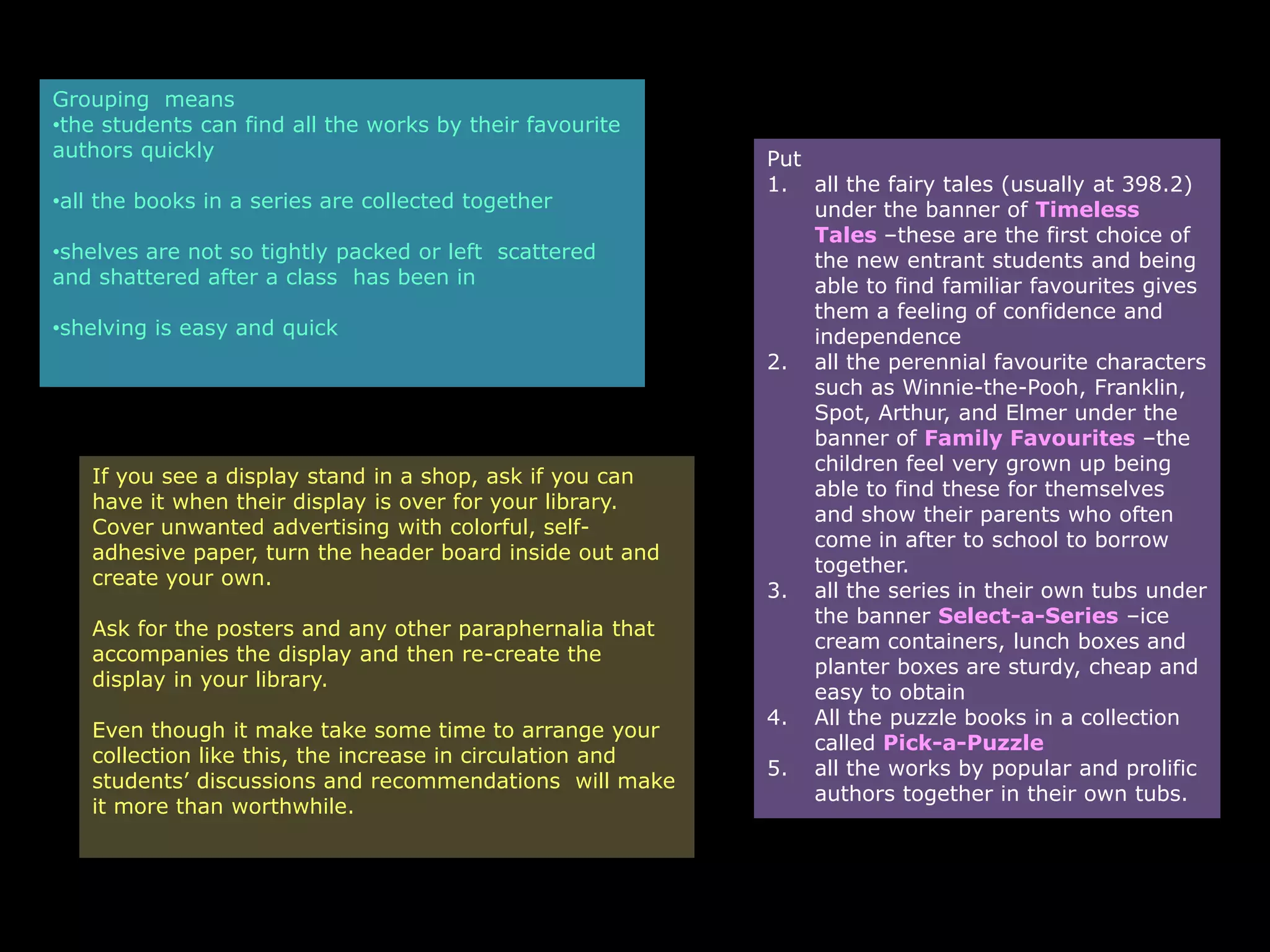
    shelving is easyand quick Put all the fairy tales (usually at 398.2) under the banner of Timeless Tales –these are the first choice of the new entrant students and being able to find familiar favourites gives them a feeling of confidence and independenceall the perennial favourite characters such as Winnie-the-Pooh, Franklin, Spot, Arthur, and Elmer under the banner of Family Favourites –the children feel very grown up being able to find these for themselves and show their parents who often come in after to school to borrow together. all the series in their own tubs under the banner Select-a-Series–ice cream containers, lunch boxes and planter boxes are sturdy, cheap and easy to obtain All the puzzle books in a collection called Pick-a-Puzzleall the works by popular and prolific authors together in their own tubs.If you see a display stand in a shop, ask if you can have it when their display is over for your library. Cover unwanted advertising with colorful, self-adhesive paper, turn the header board inside out and create your own. Ask for the posters and any other paraphernalia that accompanies the display and then re-create the display in your library.  Even though it make take some time to arrange your collection like this, the increase in circulation and students’ discussions and recommendations will make it more than worthwhile.
  • 50.
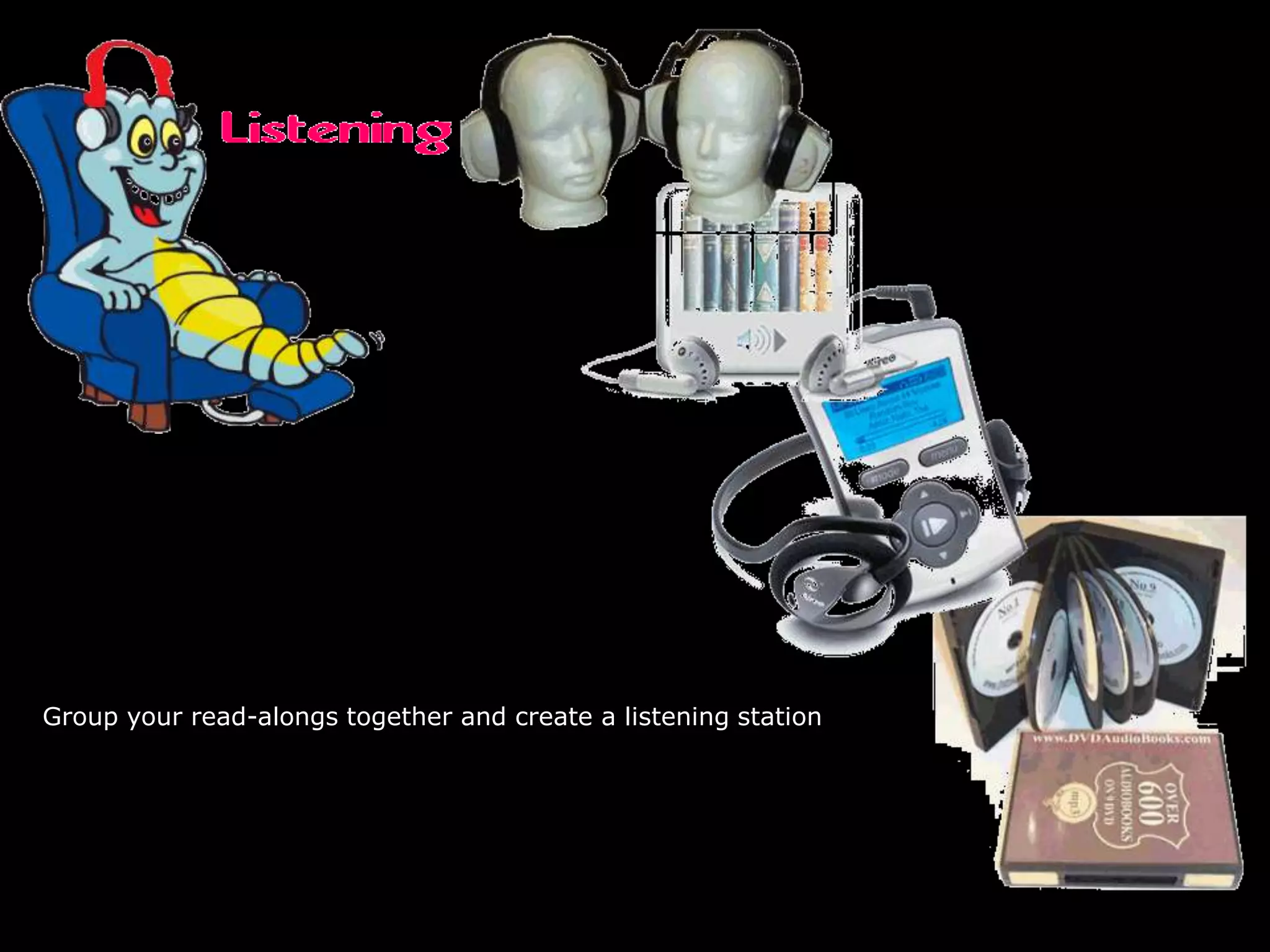
    Group your read-alongstogether and create a listening station 
  • 51.
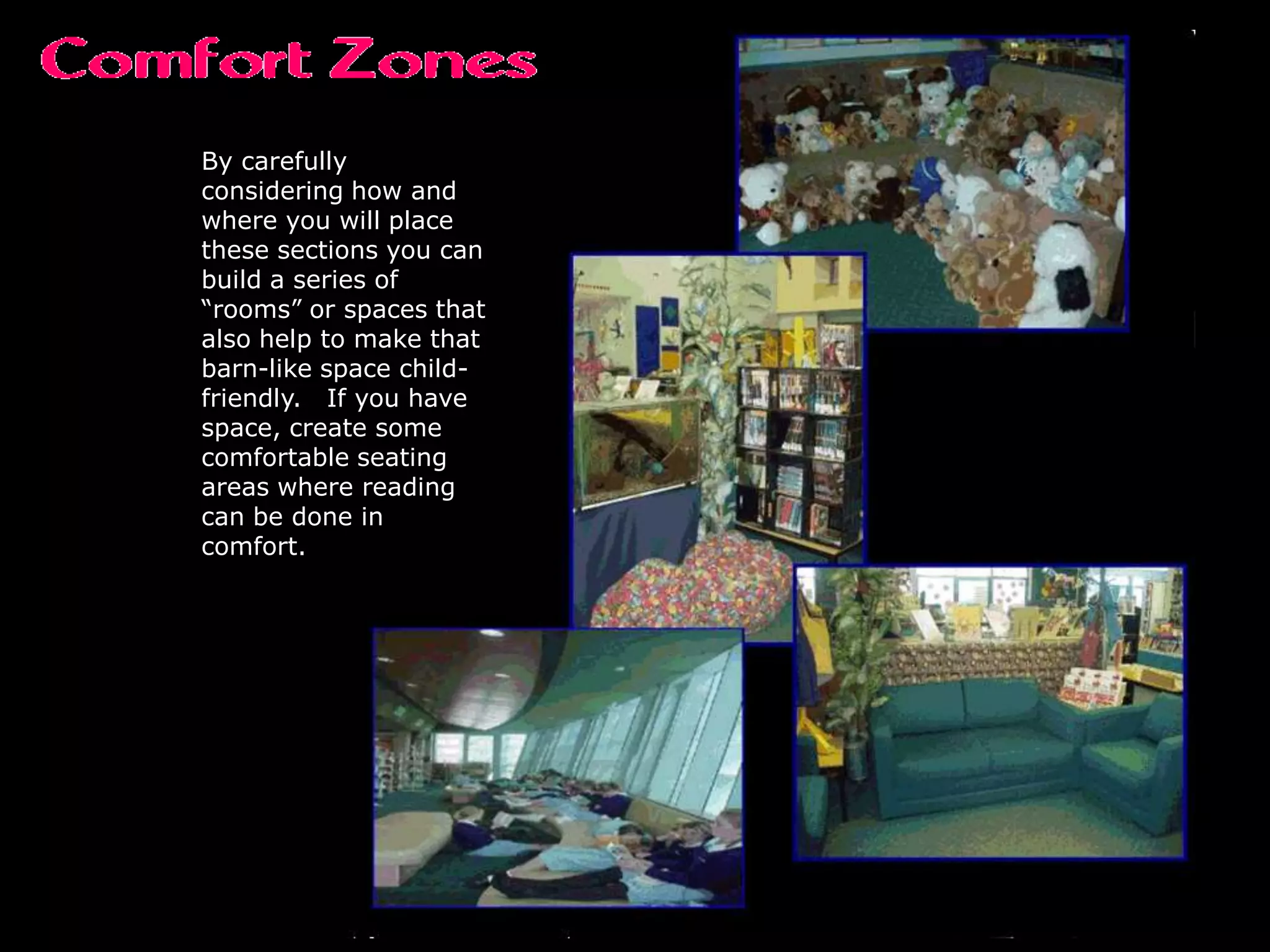
    By carefully consideringhow and where you will place these sections you can build a series of “rooms” or spaces that also help to make that barn-like space child-friendly. If you have space, create some comfortable seating areas where reading can be done in comfort.
  • 52.
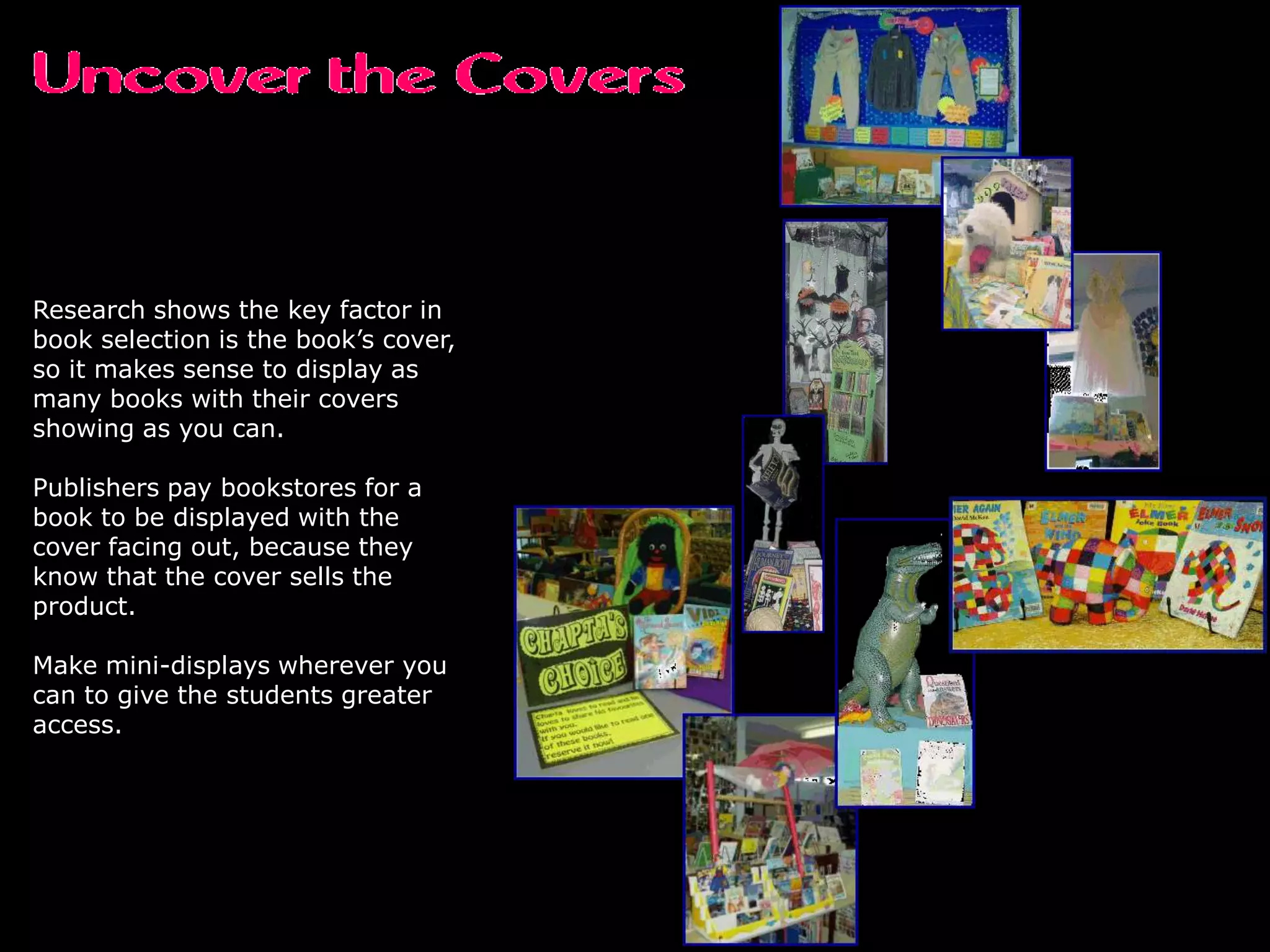
    Research shows thekey factor in book selection is the book’s cover, so it makes sense to display as many books with their covers showing as you can.Publishers pay bookstores for a book to be displayed with the cover facing out, because they know that the cover sells the product.Make mini-displays wherever you can to give the students greater access.
  • 53.
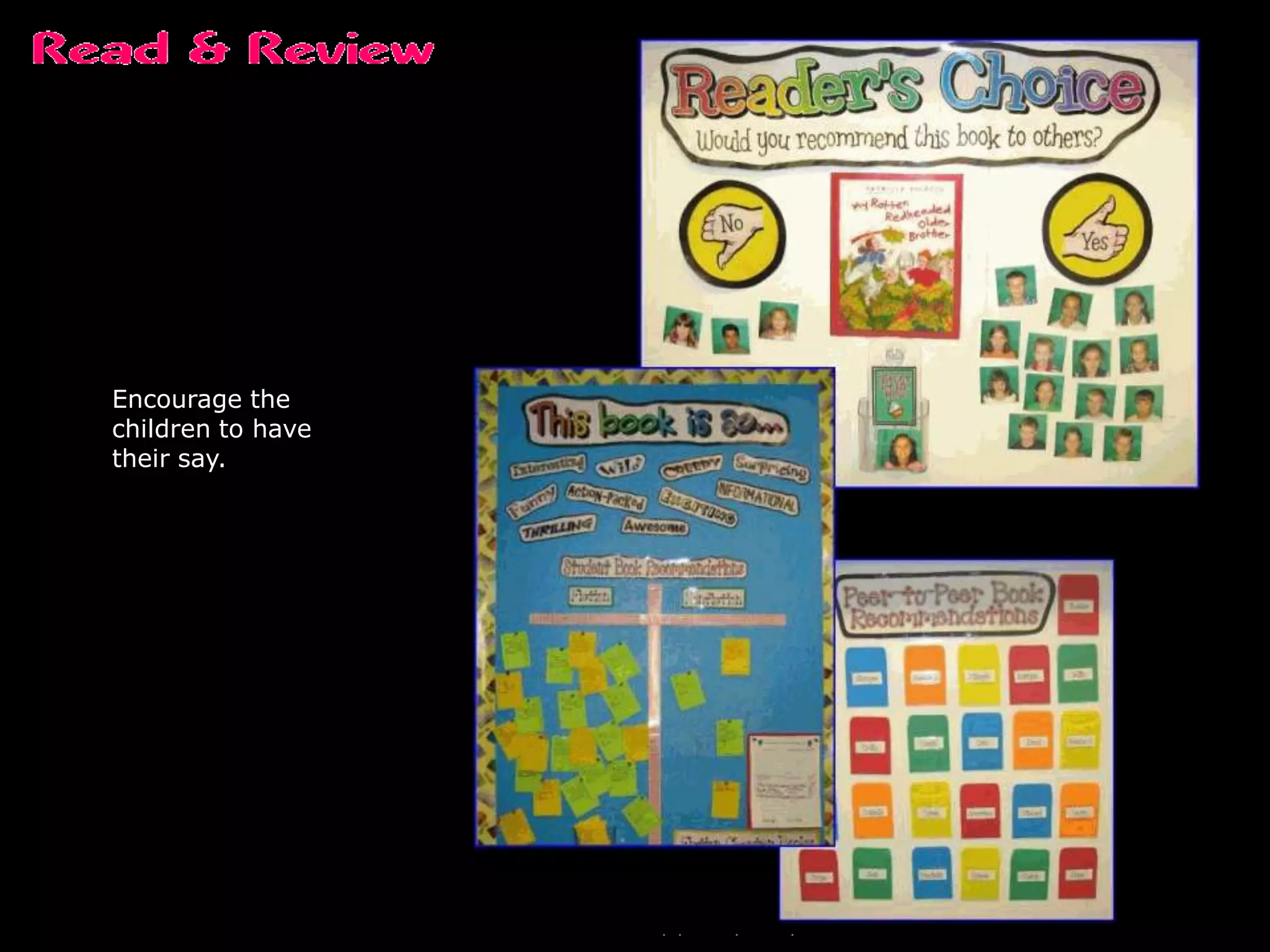
    Encourage the childrento have their say. 
  • 54.
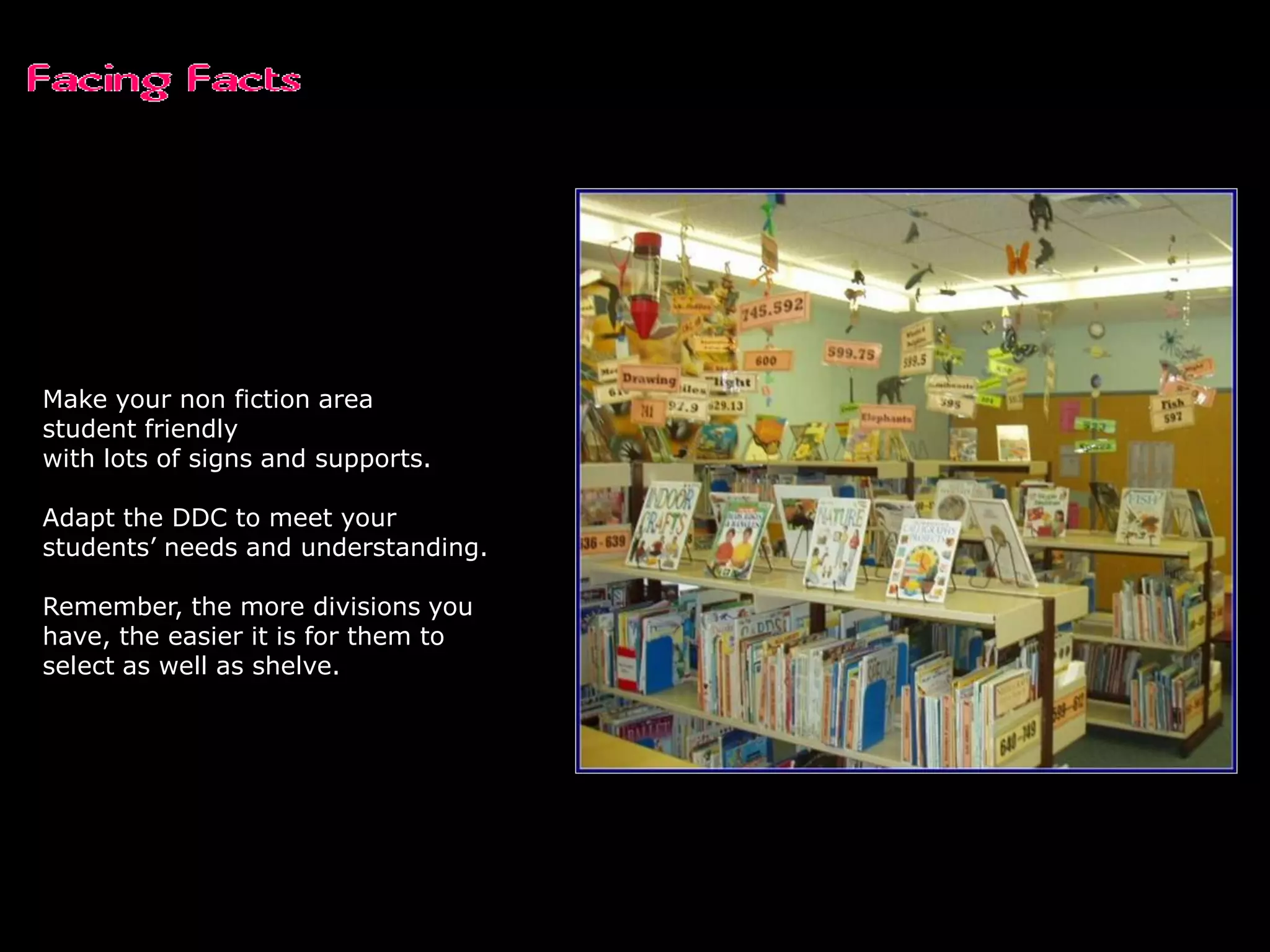
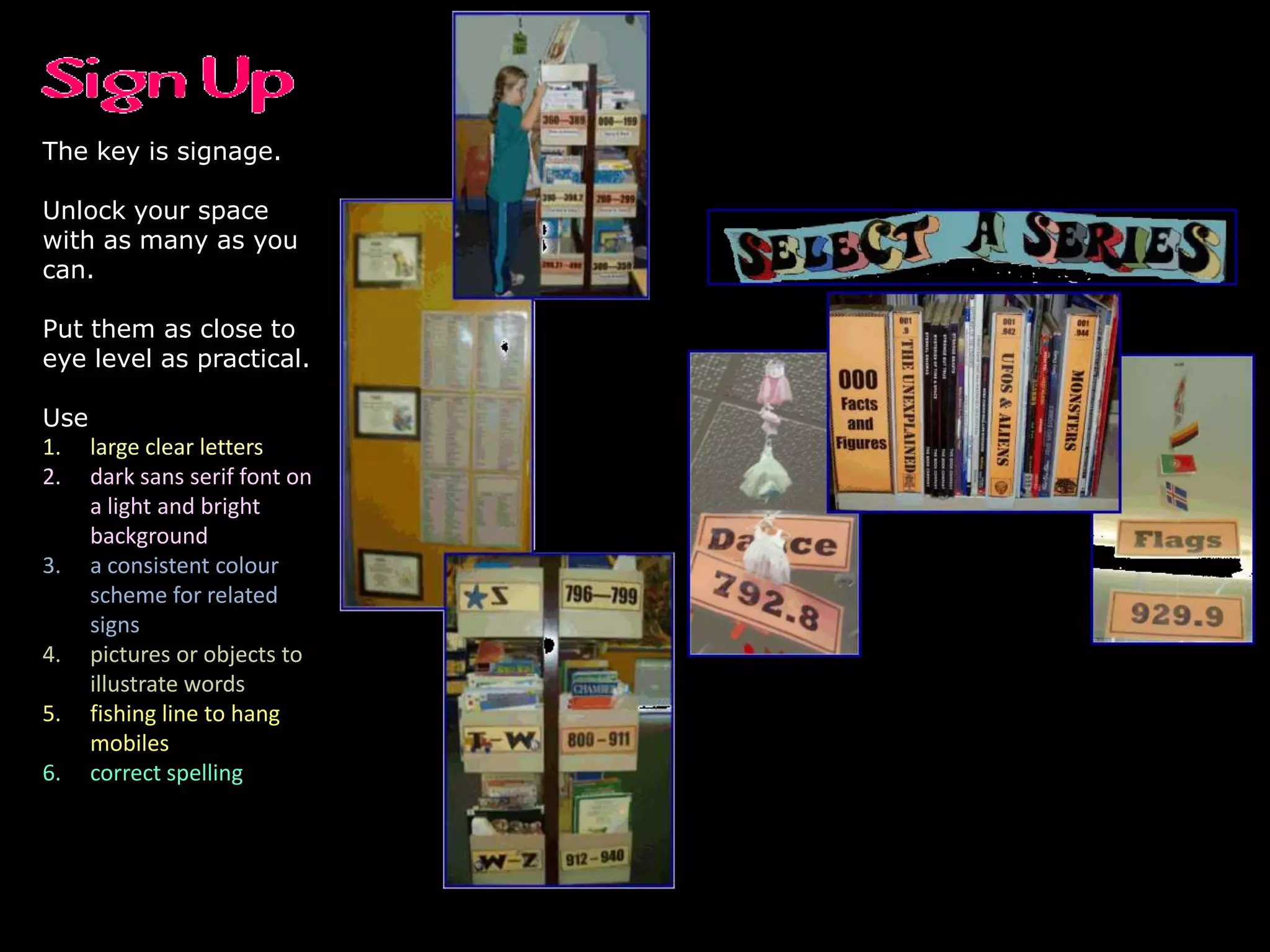
    Make your nonfiction areastudent friendlywith lots of signs and supports.Adapt the DDC to meet your students’ needs and understanding.Remember, the more divisions you have, the easier it is for them to select as well as shelve.
  • 55.
    The key issignage.Unlock your space with as many as you can.Put them as close to eye level as practical.Uselarge clear lettersdark sans serif font on a light and bright backgrounda consistent colour scheme for related signspictures or objects to illustrate wordsfishing line to hang mobilescorrect spelling
  • 56.
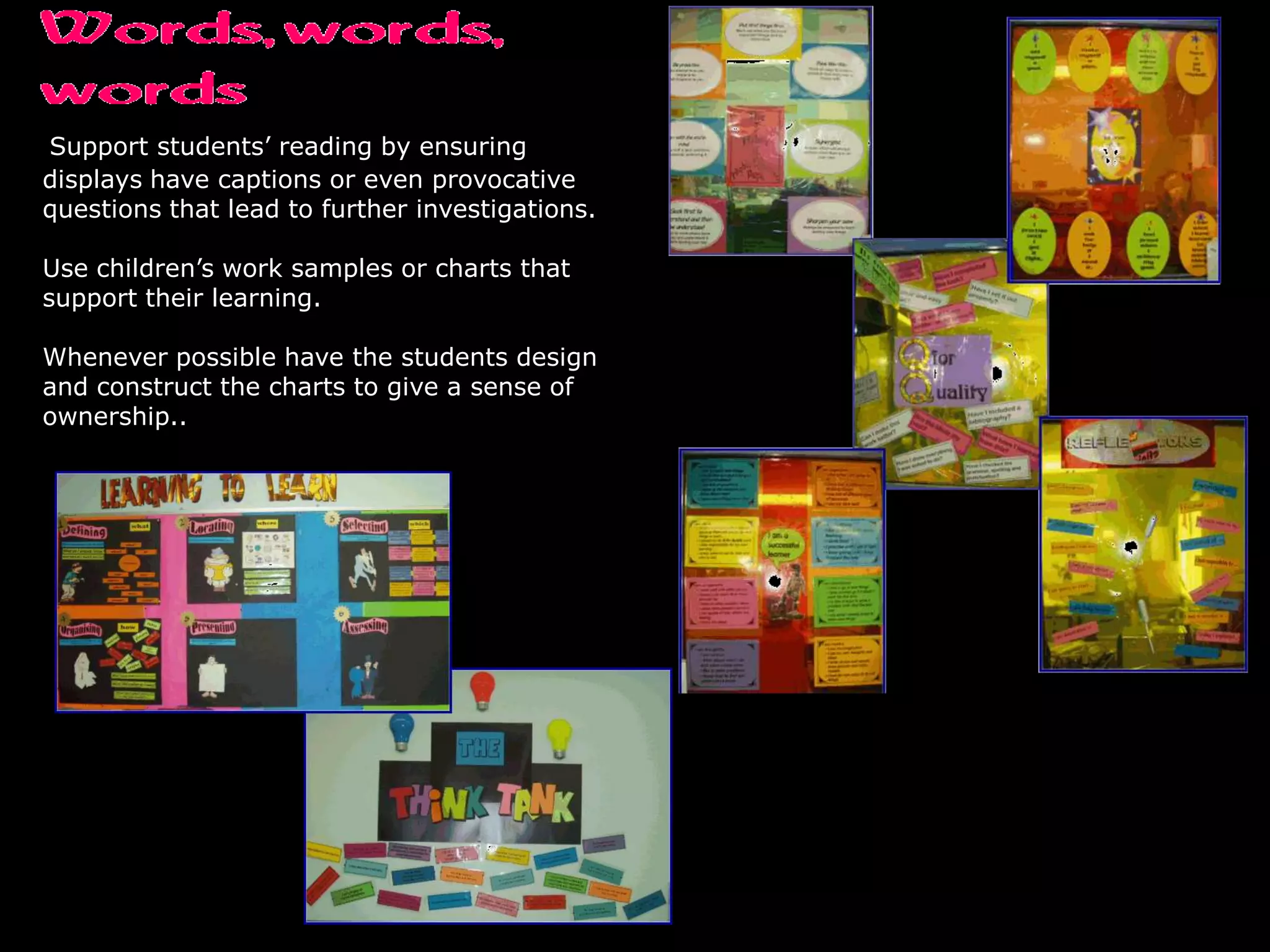
    Support students’ readingby ensuring displays have captions or even provocative questions that lead to further investigations.Use children’s work samples or charts that support their learning.Whenever possible have the students design and construct the charts to give a sense of ownership..
  • 57.
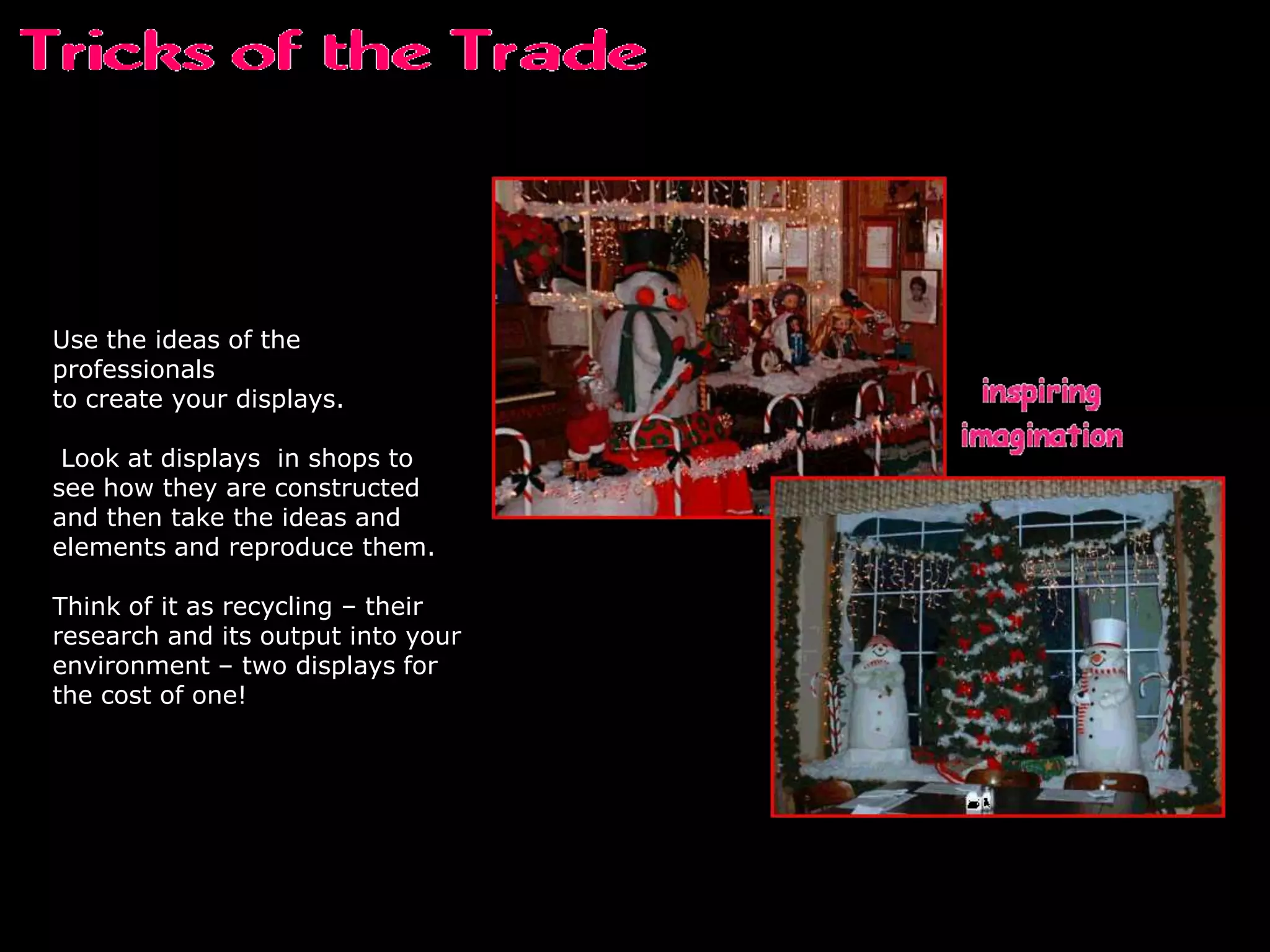
    Use the ideasof the professionalsto create your displays.Look at displays in shops to see how they are constructed and then take the ideas and elements and reproduce them.Think of it as recycling – their research and its output into your environment – two displays for the cost of one!
  • 58.
    Look at thecolours that are used to attract the eye – the younger generation likes garish and bright, not moody and subtleDifferent levels of lighting literally create variations of light and shade, and thus, different levels of emotions. Although your reading corner should be near natural light, add a regular reading lamp to build atmosphere. Ensure workspaces are brightly lit but illuminate special displays with soft, gentle lighting to help draw attention to the space it helps define. Christmas lights can add sparkle to displays all year round.Music and sound effects can also add atmosphere to a display, but keep the volume low out of consideration for all users.
  • 59.
    The smell ofhot coffee and home-cooking is enticing as smells stimulate. But think of those with allergies - even a simple vase of fresh flowers can be a trigger.Use objects that the students can touch and investigate so the display becomes interactive.Place your returns box and checkout counter near the main exit but allow enough space for one class to be coming in while another is checking out.Have an enticing main display near the entrance to not only to attract visitors but also give those waiting in the checkout queue something to look at and maybe borrow. Books placed here can increase circulation exponentially.Be aware of traffic aisles, especially those to emergency exits. Watch where your students go as soon as they come in and make sure the pathway is wide enough. If you want to highlight a ‘slow’ section of your collection, make the display near this pathway.
  • 60.
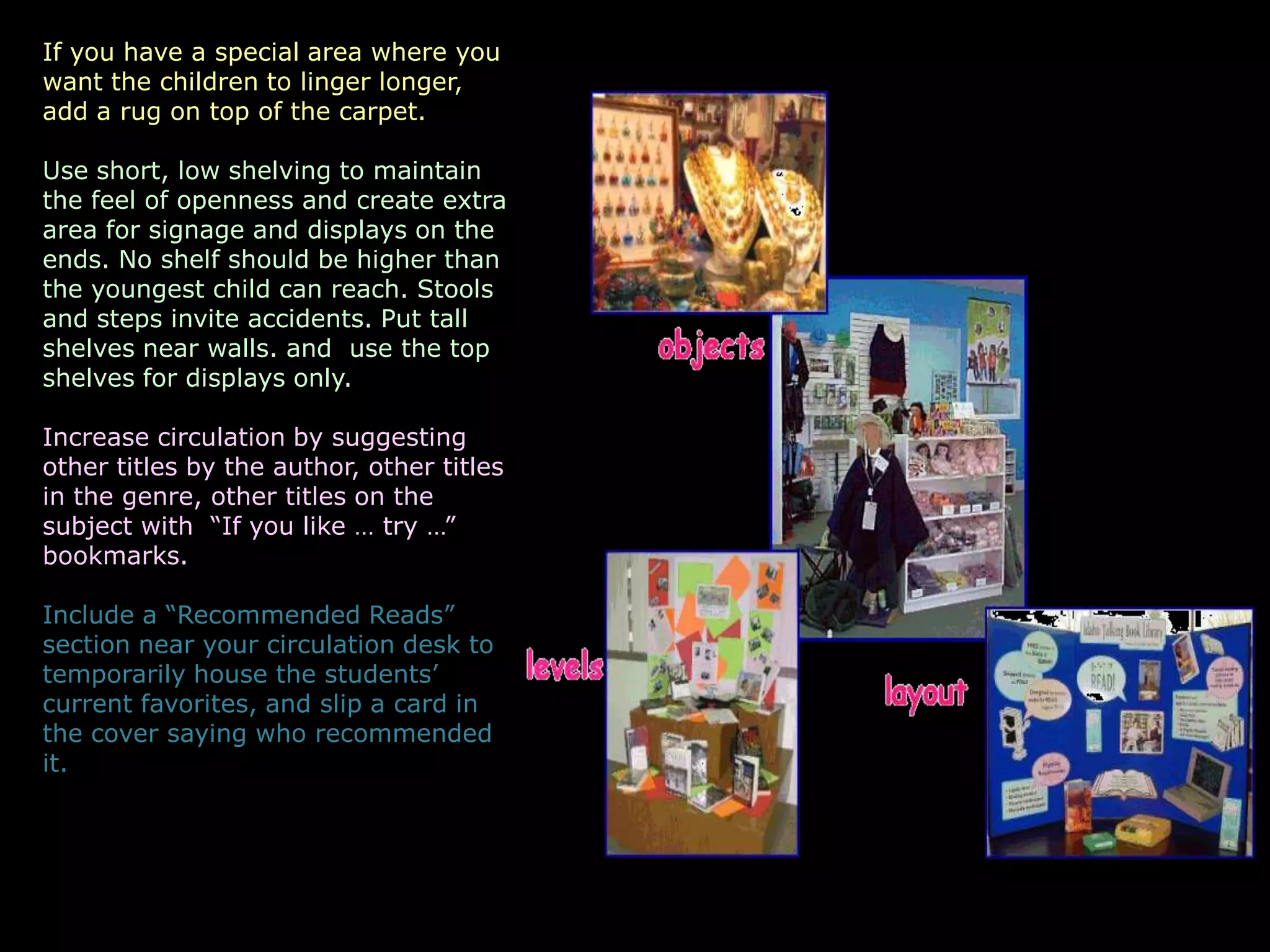
    If you havea special area where you want the children to linger longer, add a rug on top of the carpet.Use short, low shelving to maintain the feel of openness and create extra area for signage and displays on the ends. No shelf should be higher than the youngest child can reach. Stools and steps invite accidents. Put tall shelves near walls. and use the top shelves for displays only.Increase circulation by suggesting other titles by the author, other titles in the genre, other titles on the subject with “If you like … try …” bookmarks.Include a “Recommended Reads” section near your circulation desk to temporarily house the students’ current favorites, and slip a card in the cover saying who recommended it.
  • 61.
    Look at thedisplays in shop windows. Analyse what attracted you, how it is constructed and how you can adapt it.All resources on display must be able to be borrowed at the time so the child’s curiositycan be satisfied immediately. Select topic which can be supported with plenty of resources.Get ideas for layouts and fripperies from scrapbooking magazinesIncrease reading opportunities by creating captions for everything on display.Create challenges for the students based on the display. If your theme is flight, investigate which style of paper airplane flies the longest distance. Consider using the display as a draw card for raising funds for charityCover large boxes with fabric to increase display space and present books between eye and waist level.Swathes of fabric are excellent for backdrops and ceilings and covering surfaces. They define the space, “lower” high ceilings and are reusable. Look for texture as well as color and pattern as children like to touch them
  • 62.
    Christmas lights anddecorations make glitzy additions to fantasy displays.Use fishing line for strength, durability and invisibility when hanging thingsLook at using everyday materials in different ways. Calendars are an excellent source of pictures for country landscapes, artists’ works theme timelines, animals and almost everything else. Buy them in mid-January when they are heavily discounted.Some displays can be semi-permanent such as a Highdays and Holidays display.Just change the month and add appropriate resources.Make displays interactive so children can become involved with them.Even shaking or plucking an instrument adds interest.Invite the children to design or contribute to a display. Use their writing, their drawingsand their models. Have them find the resources to accompany it.
  • 63.
    View your displaysas presentation models for the students so they learn what elements are important and how they can be arranged. Make everything you do suitable for a high-quality gallery.Create displays that are not the center of current classroom instruction. Even though it is tempting to integrate in this way, the resources need to be in use in the classrooms.Search the Internet for pictures of other school libraries and adapt the ideas you find.Get to know your local El Cheapos, charity stores and recycling shops wellAlways give your display a catchy title and consider music and lighting.Remember your imagination is your best friend and closest ally..
  • 64.
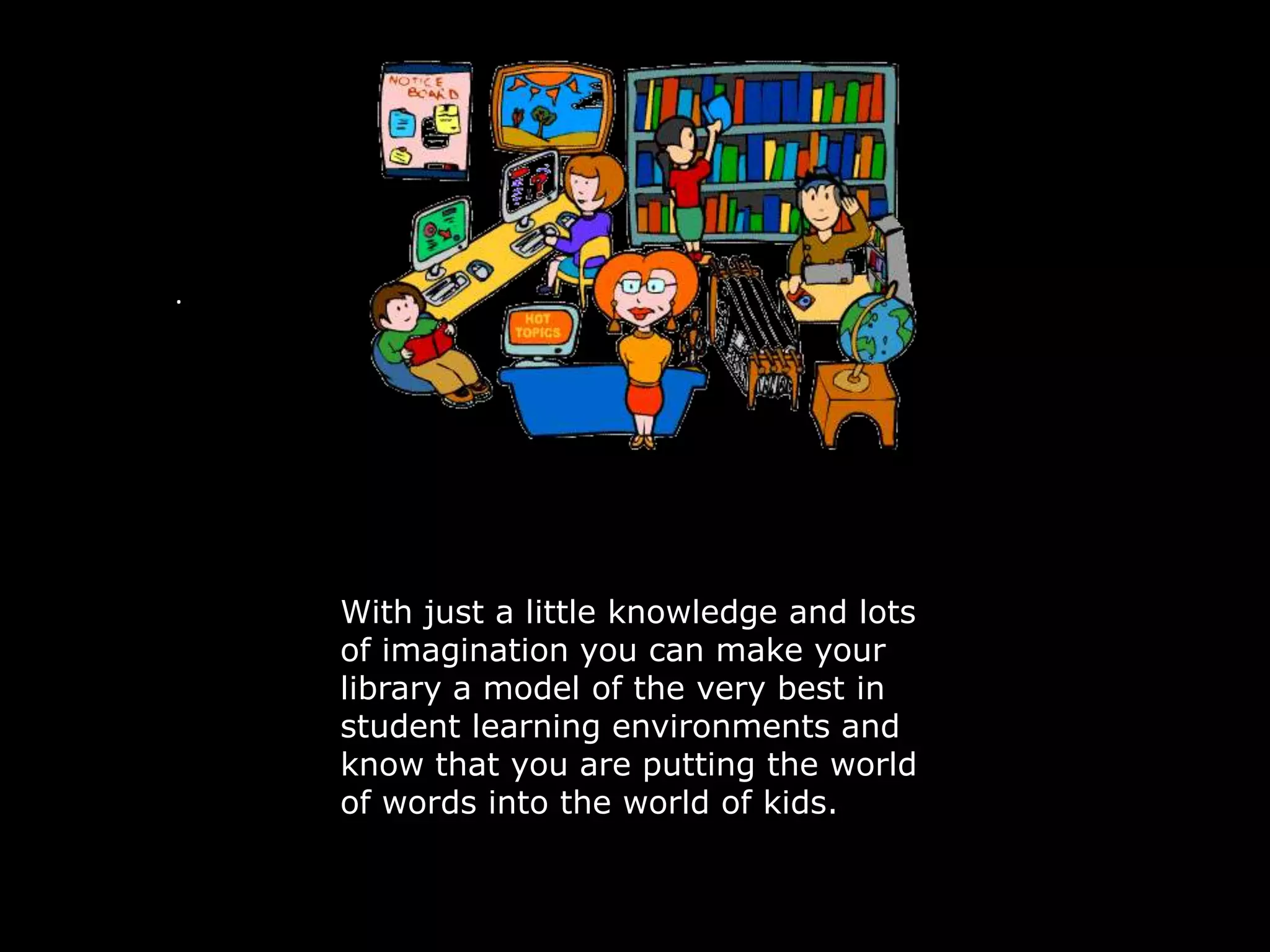
    .With just alittle knowledge and lots of imagination you can make your library a model of the very best in student learning environments and know that you are putting the world of words into the world of kids.
  • 65.
    ReferencesCaine R. andCaine, G. 1994 Making Connections: Teaching and the Human Brain, Menlo Park, Calif.: Addison-Wesley Drucker, P. F. 1999 Management Challenges for the 21st Century New York: Harper Business Drucker, P. F. 2001 The Essential Drucker New York: HarperCollins Industry Commission, Work, Health and Safety, Report No. 47, Sept 1995, National Occupational Health and Safety Commission, AustraliaAvailable at http://www.nohsc.gov.au/OHSLegalObligations/DutyOfCare/dutycare.htm Jensen, E. 1998 Teaching with the brain in mind Alexandra, VA: ASCD Oliver, M. & Christenson, J. 2001 The Rain Gutter Literacy Revolution Available at http://www.trelease-on-reading.com/oliver.html Rippel, C. 2003 What libraries can learn from bookstores : applying the bookstore model to public libraries Available at http://www.ckls.org/~crippel/marketing/bookstore.html Rowling, J. K. 1997 Harry Potter and the Philosopher’s Stone London: BloomsburyImages are the author’s own or have been shared under a Creative Commons licence. Should you believe there to be one in breach of copyright, please contact the author.  
  • 66.
    Landscaping Your LibraryBarbaraBraxtonTeacher LibrarianCOOMA NSW 2630July 2006Updated October 2009