LIBRARY MANAGEMENT
SYSTEM
Presented By,
41 Viraj Kelkar
43 Tejas Kondhalkar
44 Sanket Kudalkar
INDEX
 Project Definition
 Existing System
 Proposed System
 System Requirements
 Need
 Proposal
 Scope
 Benefits
 Planning
 Schedule
 Risk Management
 Quality Management
 Project Closure
 Conclusion
PROJECT DEFINITION
 To develop a project titled “LIBRARY MANAGEMENT” and is
developed to maintain the operation done in a library.
 To Ease the transactions done in Library by Computerizing the
Whole System.
EXISTING SYSTEM
 We have visited the Rane Library Kankavli.
 All the Records are maintained in Registers.
 The Lack of consistency in register maintenance leads to both loss of
work as well as money and time.
 More Manual work.
 In their system first take collect order from customer.
 They give registration form from customer with personal and ordered
books details.
 Then they will ordered the to supplier, supplier supply book transport
through and payment the supplier banking through
PROPOSED SYSTEM
 The project “Library Management System” mainly focuses on
basic operations In a library like adding new member, new
books, and updating new information, Searching books and
members and facility to borrow and return books.
 All transactions are computerized.
 Less paper work.
 Secured and consistent Database.
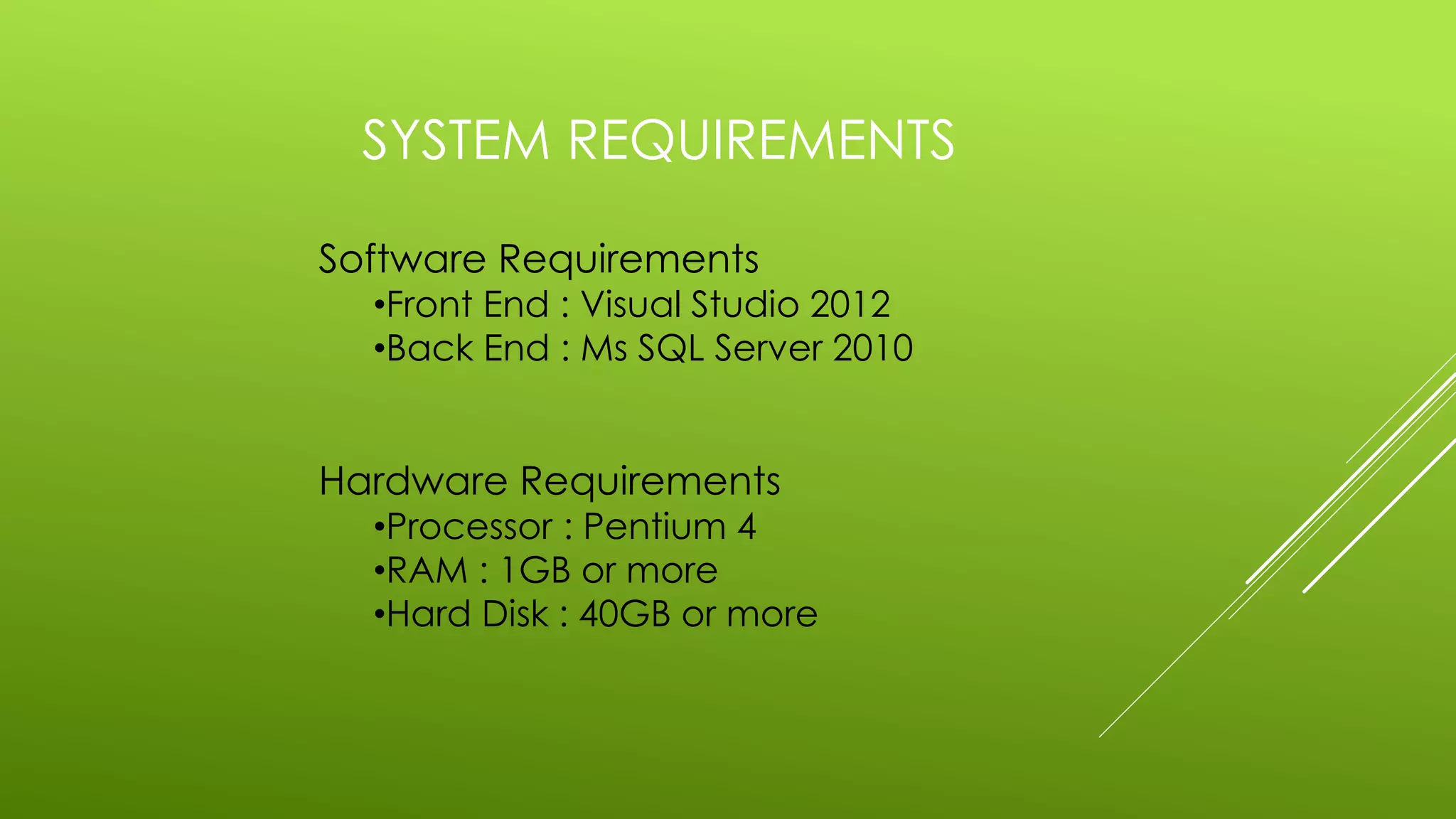
SYSTEM REQUIREMENTS
Software Requirements
•Front End : Visual Studio 2012
•Back End : Ms SQL Server 2010
Hardware Requirements
•Processor : Pentium 4
•RAM : 1GB or more
•Hard Disk : 40GB or more
NEED
 For every customer and student it is not possible to purchase the
book online.
 So this system very helpful to local student.
 They can easily issue the books.
 Maintain the consistency of database.
 It will maintain the record in the database in such a way that it
can be easily retrieved back whenever needed
PROPOSAL
 This system is to perform all task systematically. The objective of
this system is to provide data storage in efficient manner by
giving security to data. This project “Library Management
System” is targeted towards the modern Library. Proper
management & audit of book possibly through easy to use
interface for the customer
SCOPE
 The scope of this project is to provide improved & optimized
service. All manual work converted into computerized, so
workload of worker decreases.
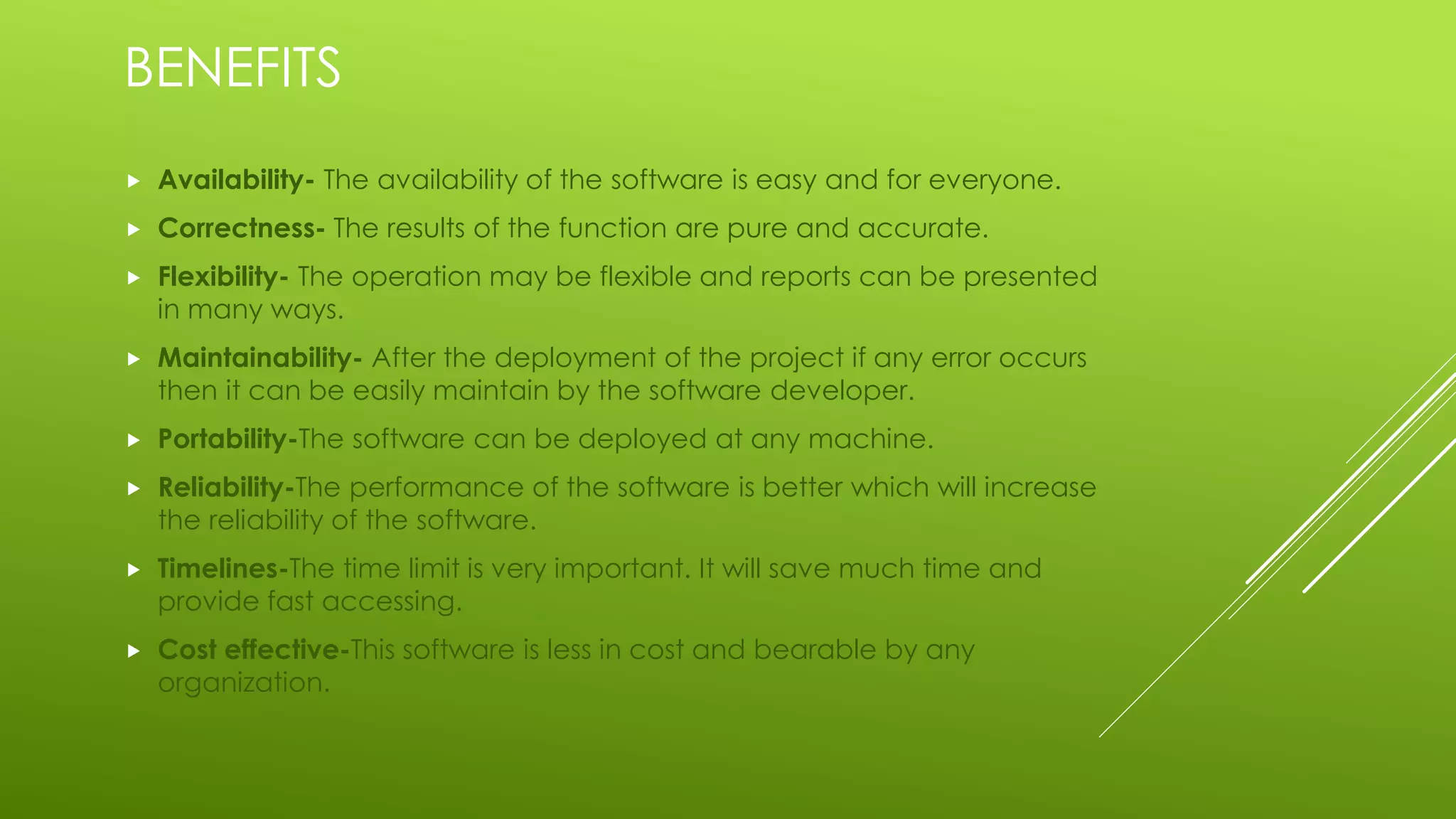
BENEFITS
 Availability- The availability of the software is easy and for everyone.
 Correctness- The results of the function are pure and accurate.
 Flexibility- The operation may be flexible and reports can be presented
in many ways.
 Maintainability- After the deployment of the project if any error occurs
then it can be easily maintain by the software developer.
 Portability-The software can be deployed at any machine.
 Reliability-The performance of the software is better which will increase
the reliability of the software.
 Timelines-The time limit is very important. It will save much time and
provide fast accessing.
 Cost effective-This software is less in cost and bearable by any
organization.
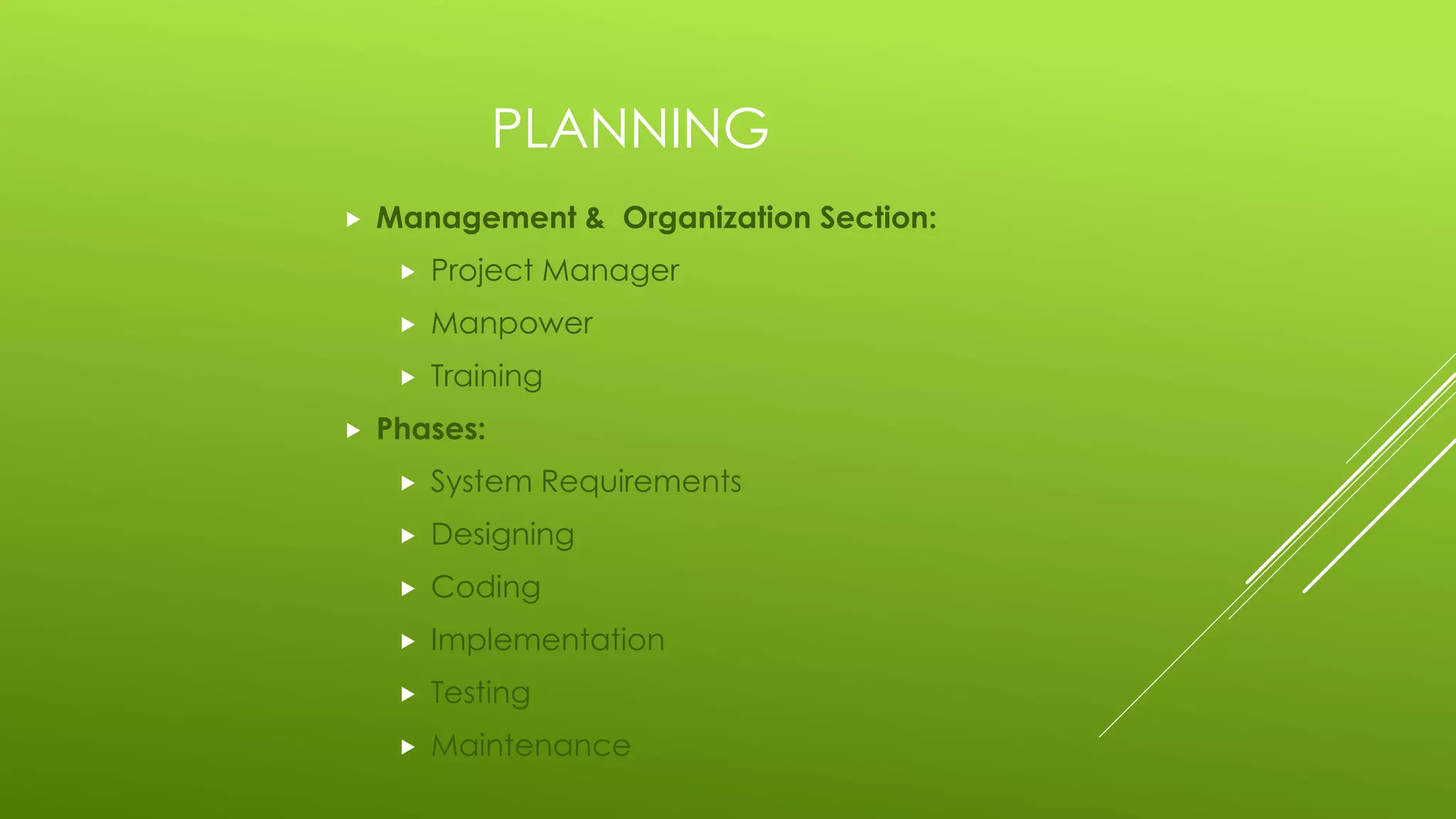
PLANNING
 Management & Organization Section:
 Project Manager
 Manpower
 Training
 Phases:
 System Requirements
 Designing
 Coding
 Implementation
 Testing
 Maintenance
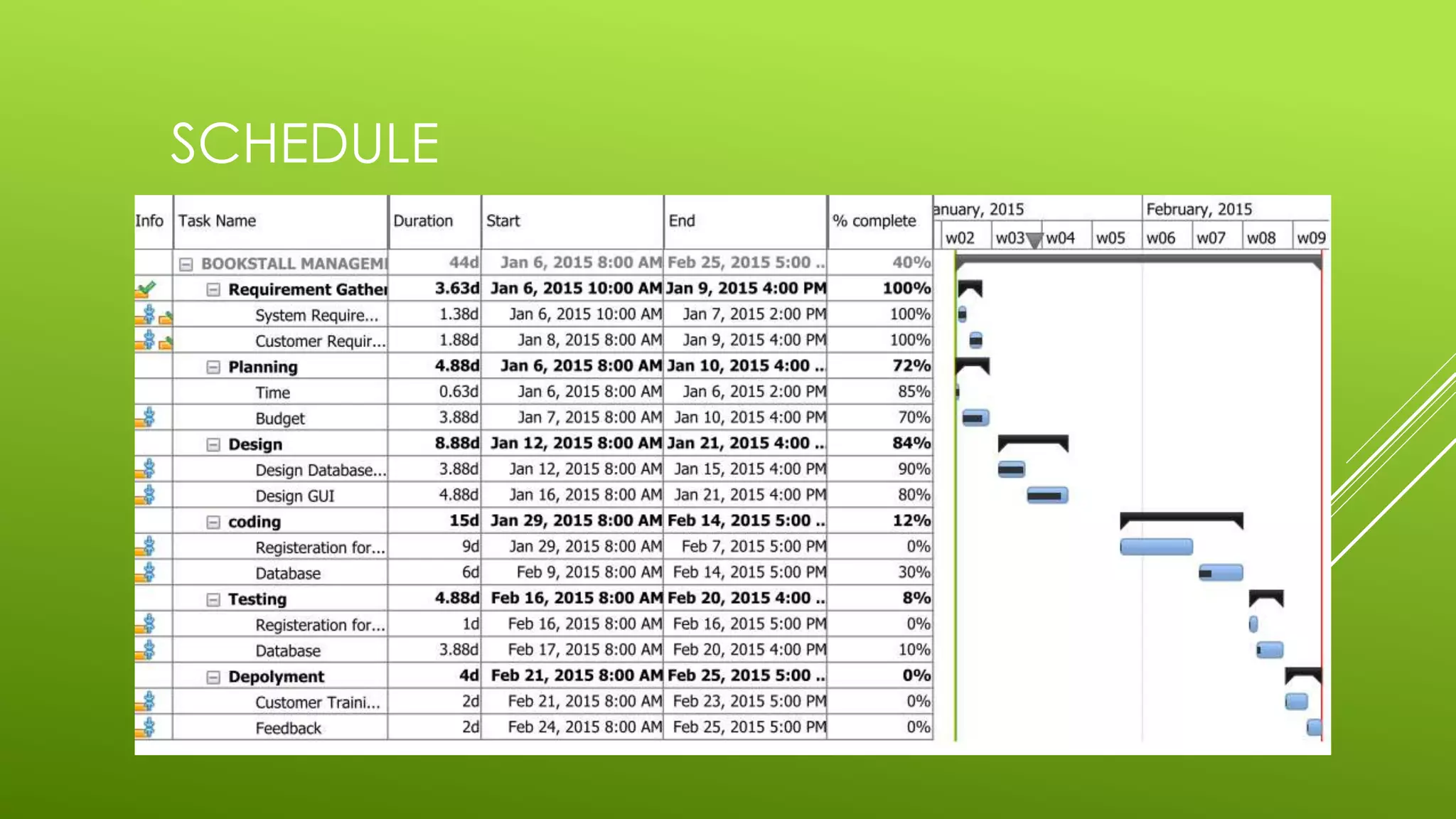
SCHEDULE
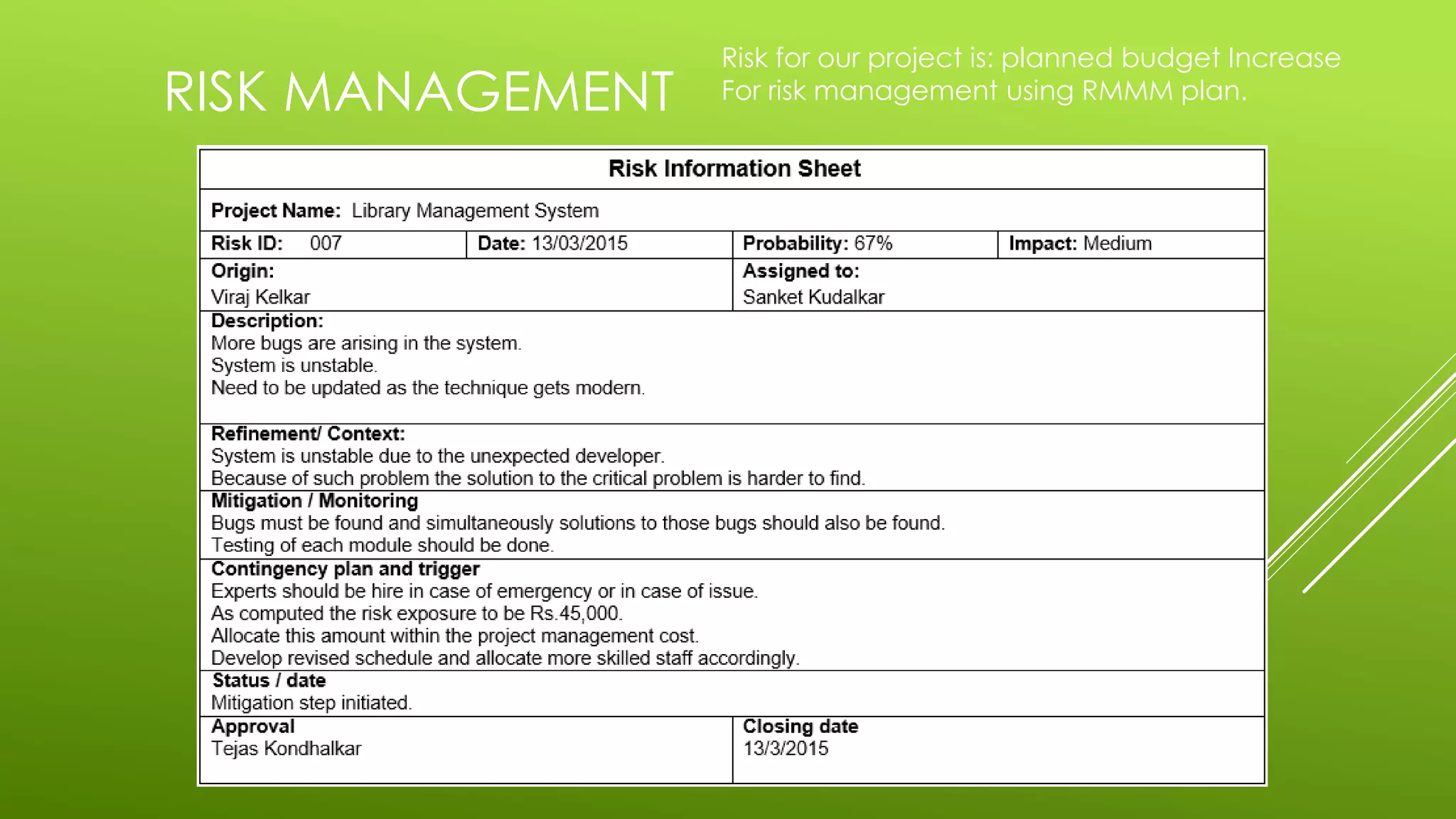
RISK MANAGEMENT
Risk for our project is: planned budget Increase
For risk management using RMMM plan.
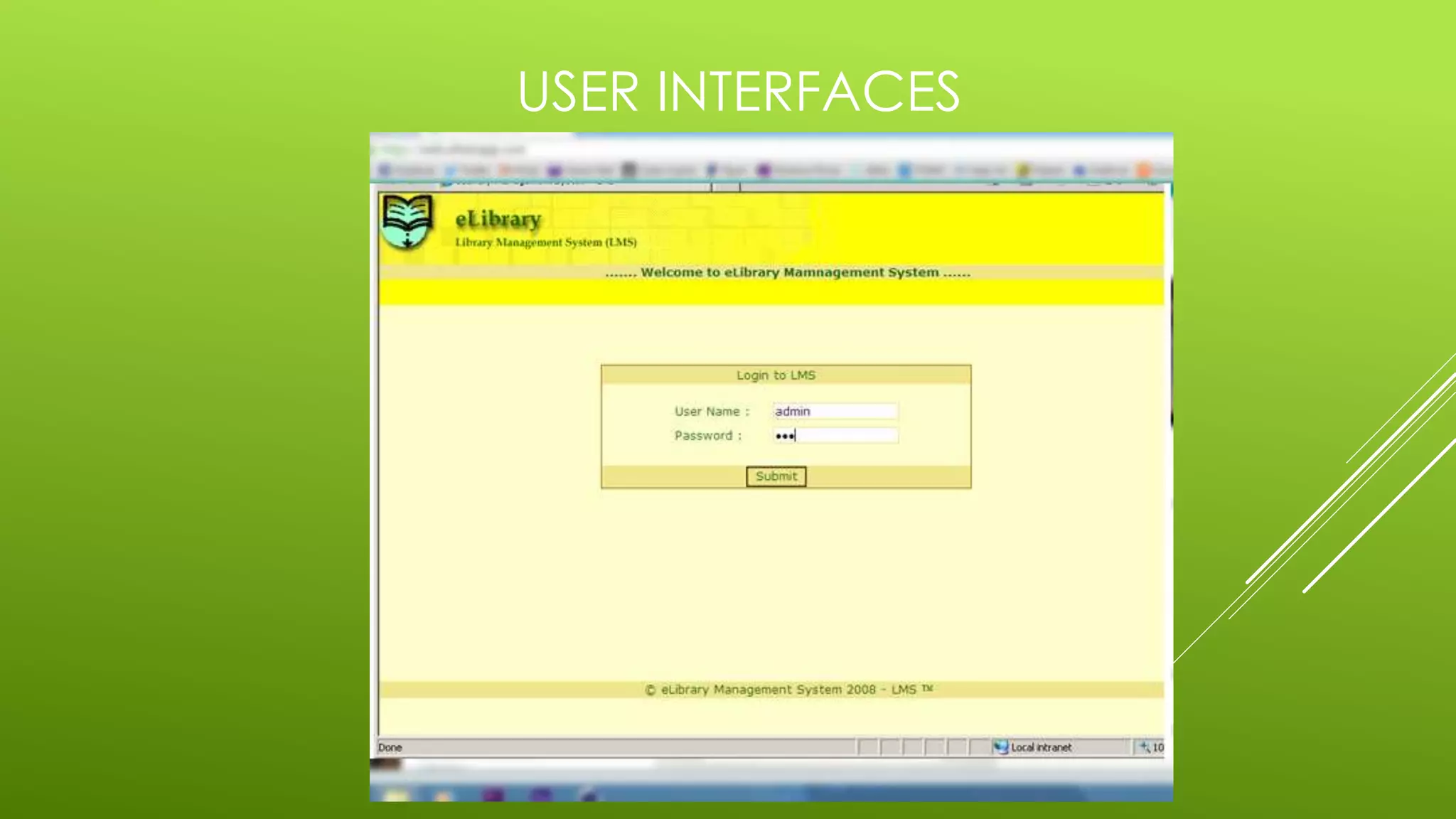
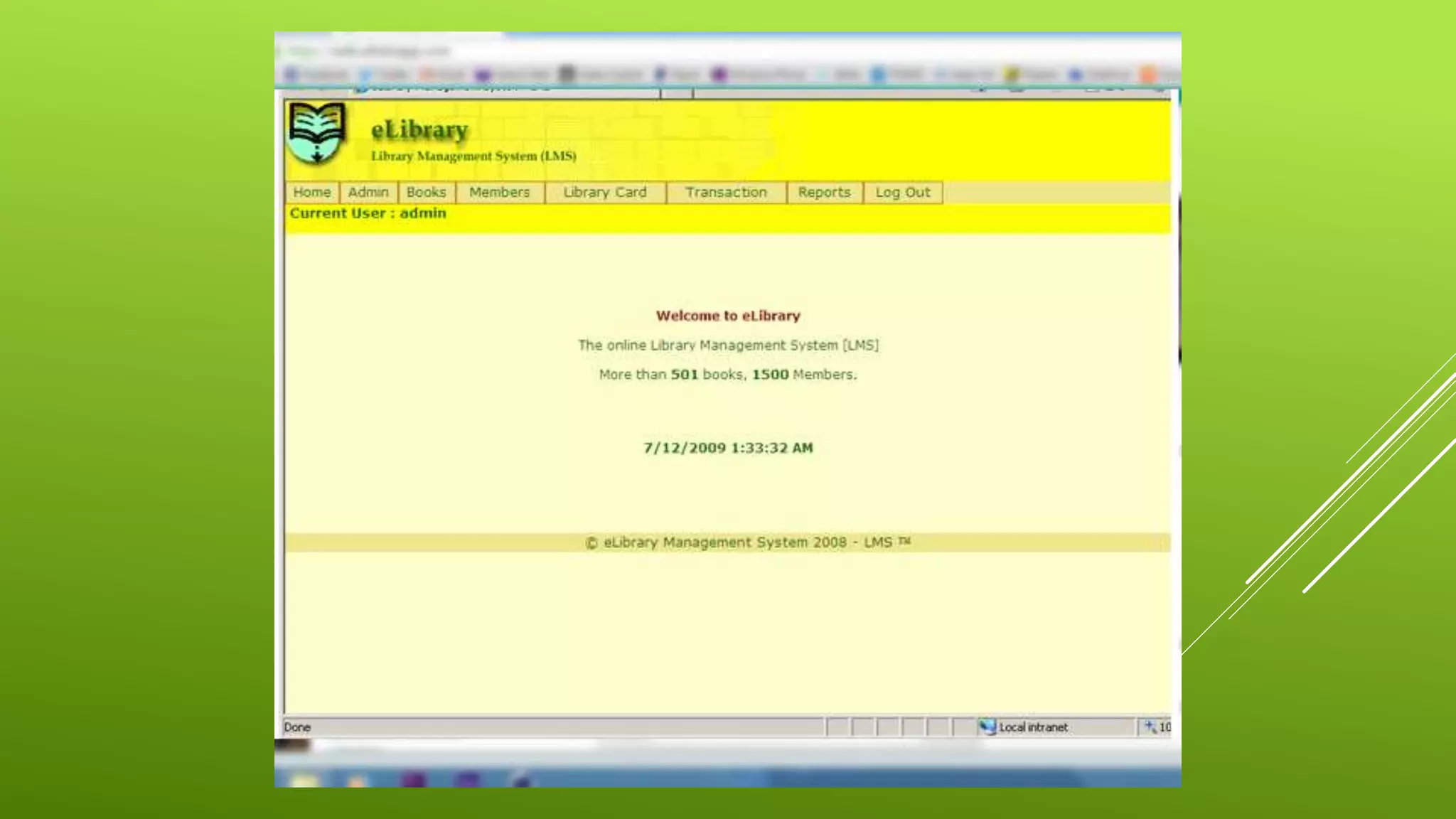
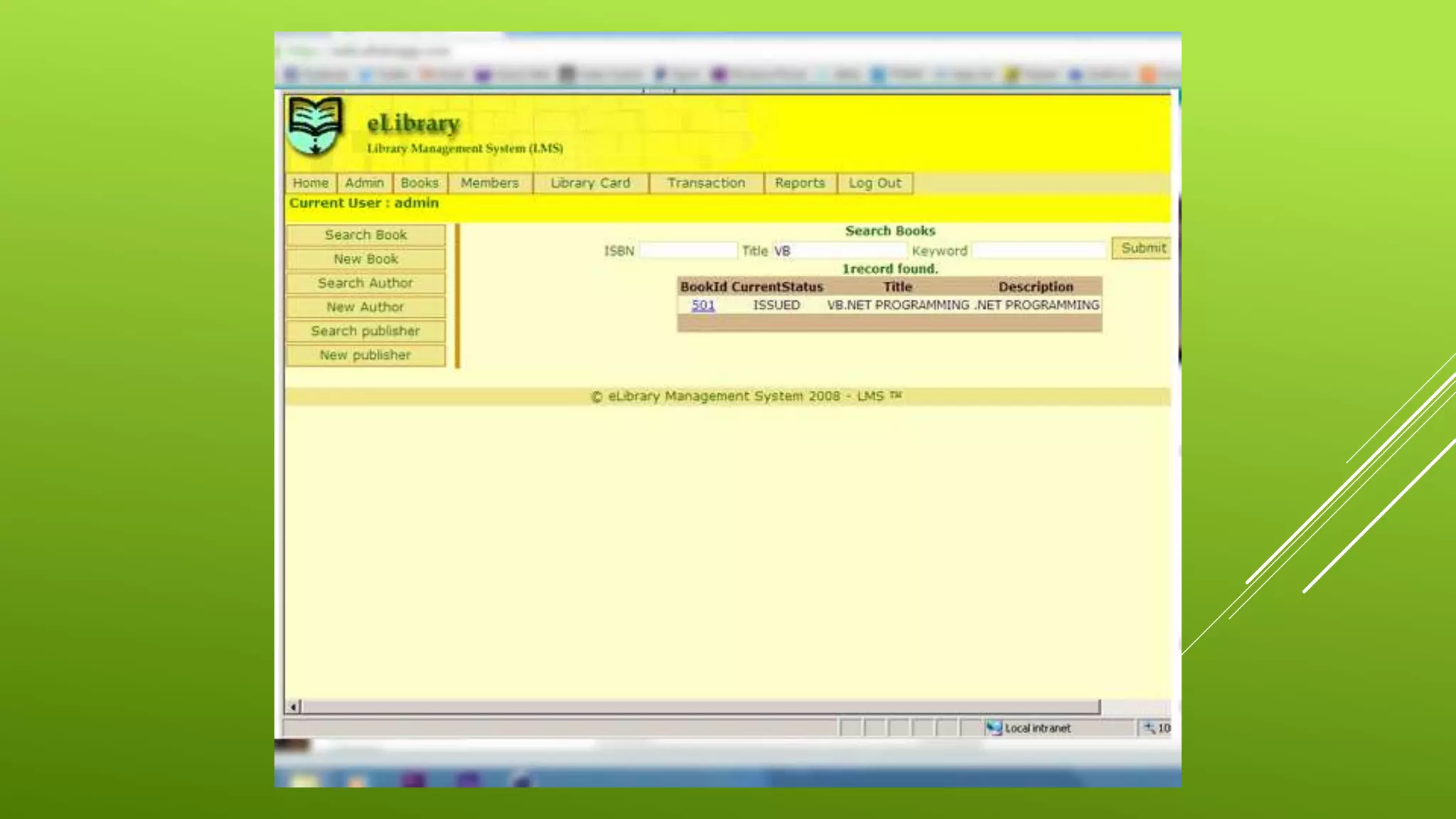
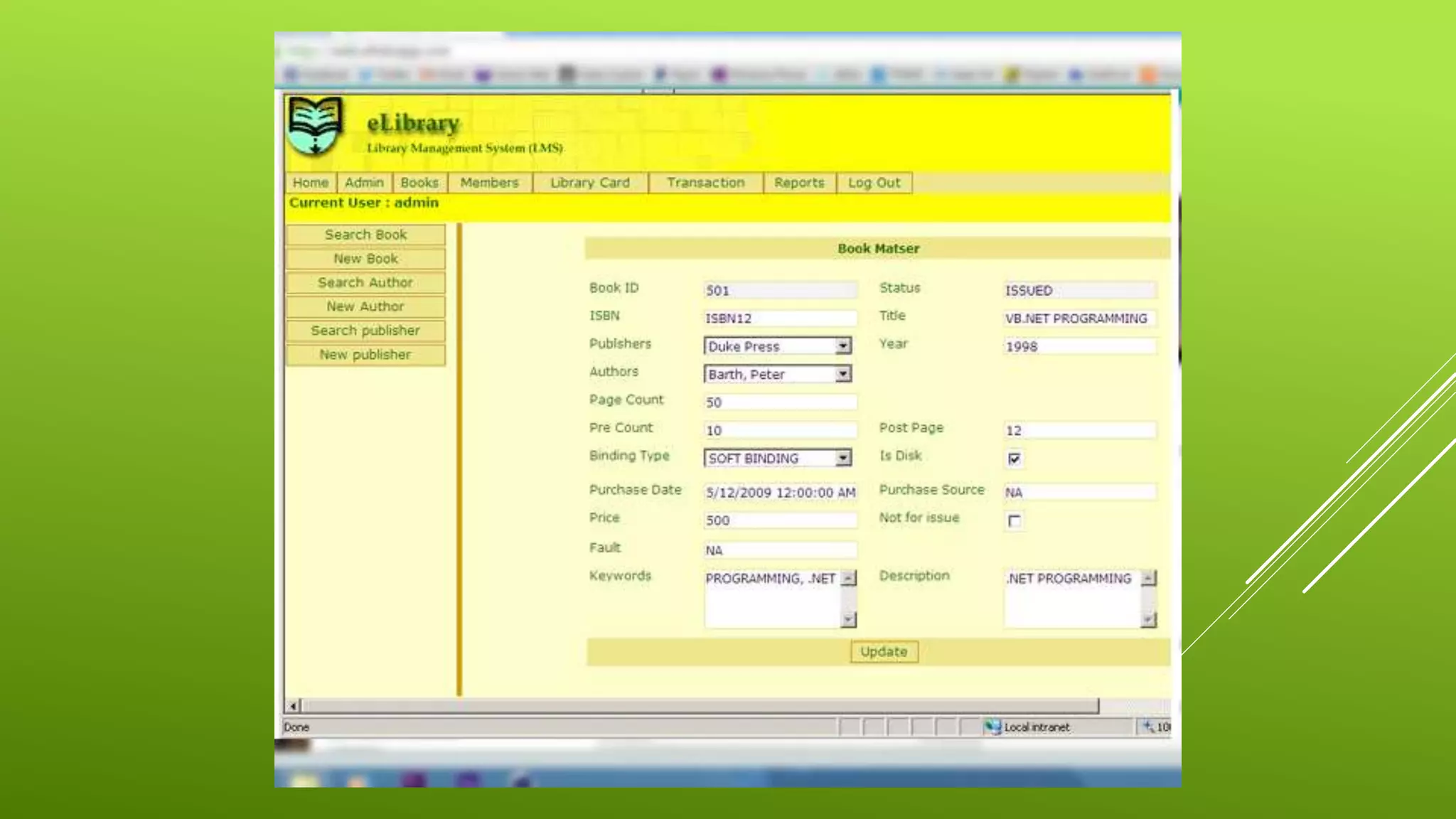
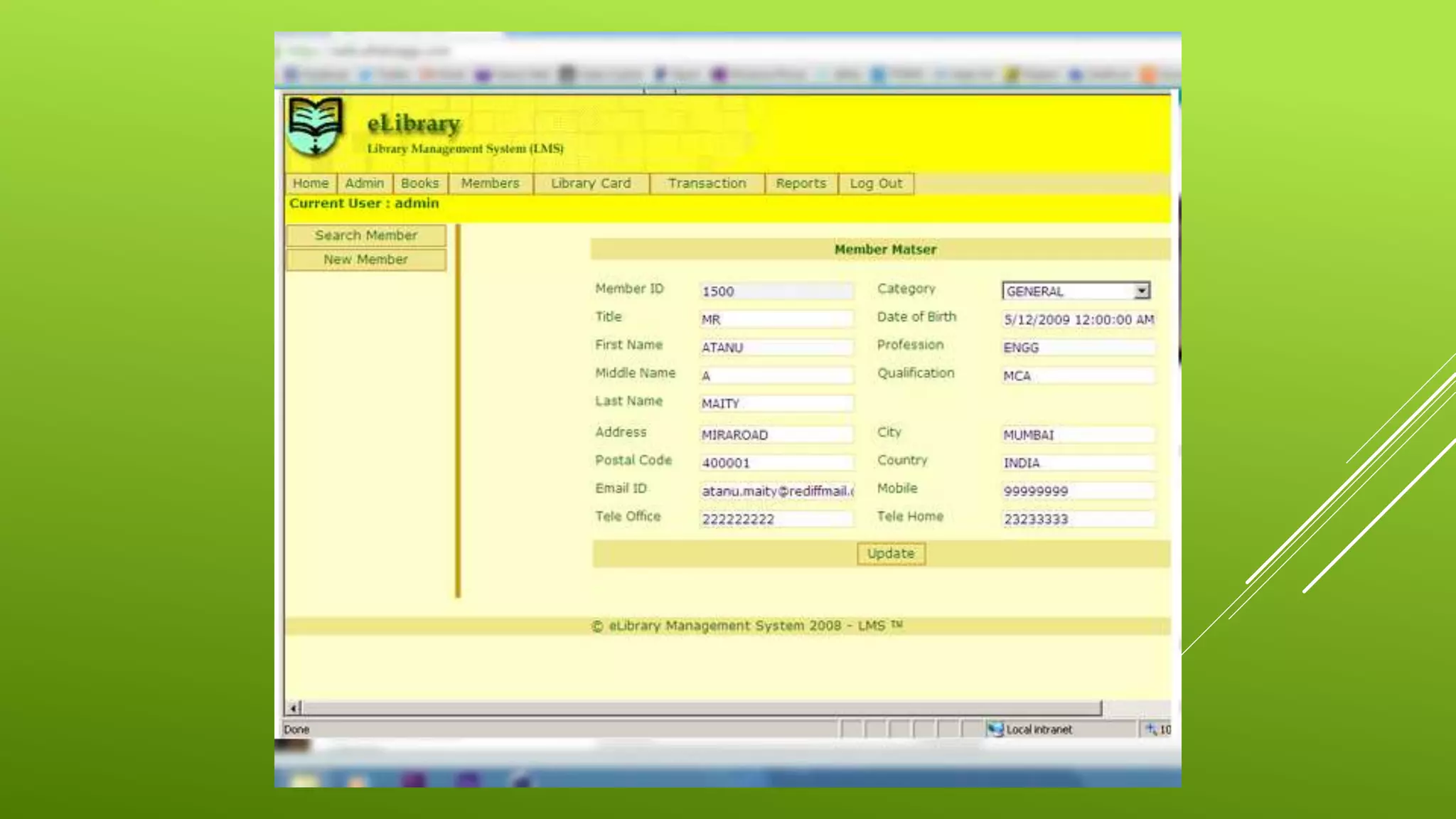
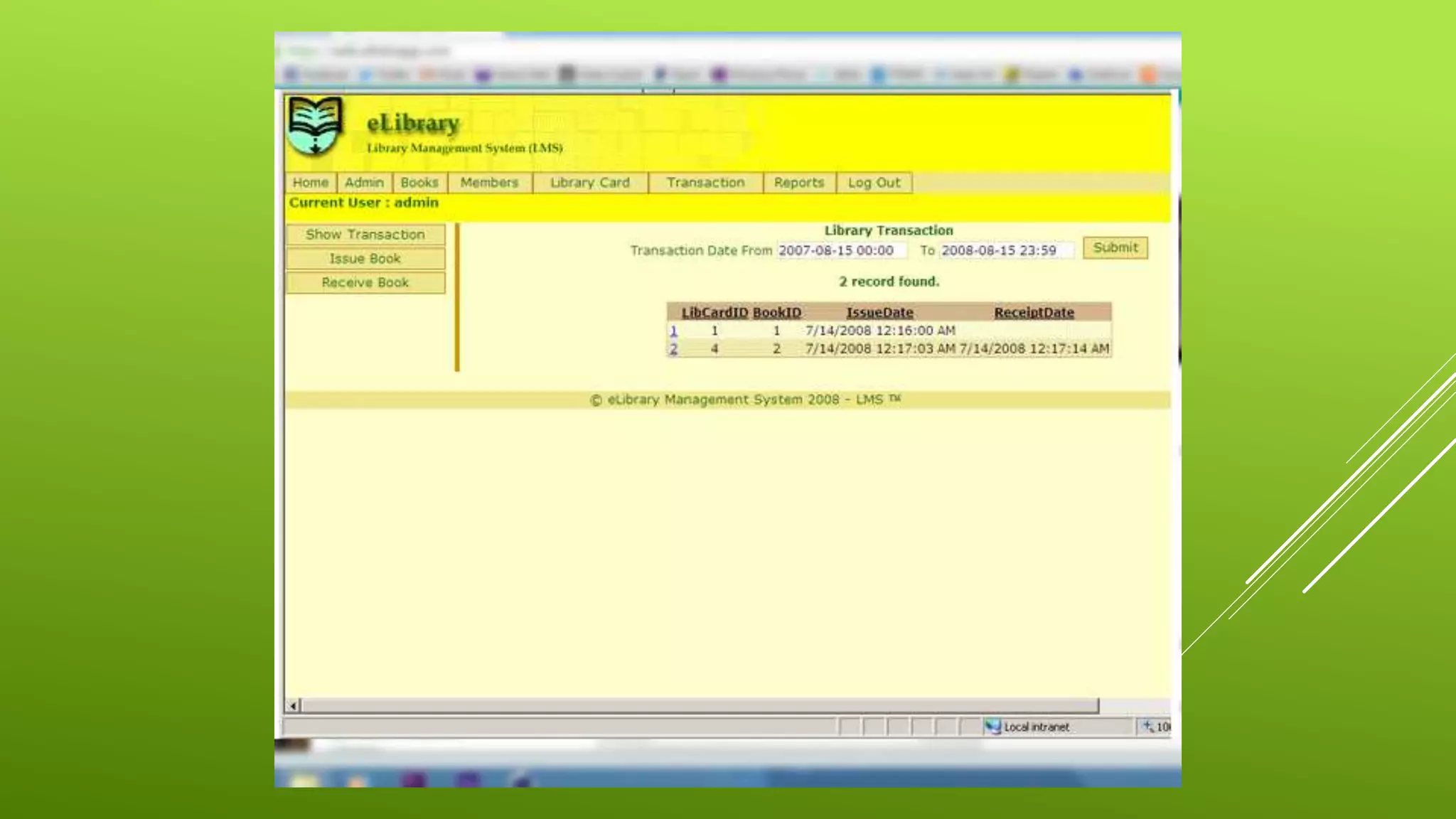
USER INTERFACES
QUALITY MANAGEMENT
 Planning of project is done in less budget with good
quality.
 Project is completed according to the planning.
 Equal time has given to coding as well as
implementation.
 Training has given to customer how to handle the
project.
 Modification of project according to future requirement
can be done.
PROJECT CLOSURE
 Prepared documentation of project.
 Taken a review after every task as completed.
 Checked whether the customer need is satisfied.
 Training for customer to handle the project.
 Proper payment for each workers
CONCLUSION
 After analyzing the cost benefit and working of the current
system & automated system , we conclude that the automated
system is best.
 Computerized Library system is more efficient and reliable than
the old system
 It reduces most of the paper work
THANK YOU!!!

Library Management Project Presentation

  • 1.
    LIBRARY MANAGEMENT SYSTEM Presented By, 41Viraj Kelkar 43 Tejas Kondhalkar 44 Sanket Kudalkar
  • 2.
    INDEX  Project Definition Existing System  Proposed System  System Requirements  Need  Proposal  Scope  Benefits  Planning  Schedule  Risk Management  Quality Management  Project Closure  Conclusion
  • 3.
    PROJECT DEFINITION  Todevelop a project titled “LIBRARY MANAGEMENT” and is developed to maintain the operation done in a library.  To Ease the transactions done in Library by Computerizing the Whole System.
  • 4.
    EXISTING SYSTEM  Wehave visited the Rane Library Kankavli.  All the Records are maintained in Registers.  The Lack of consistency in register maintenance leads to both loss of work as well as money and time.  More Manual work.  In their system first take collect order from customer.  They give registration form from customer with personal and ordered books details.  Then they will ordered the to supplier, supplier supply book transport through and payment the supplier banking through
  • 5.
    PROPOSED SYSTEM  Theproject “Library Management System” mainly focuses on basic operations In a library like adding new member, new books, and updating new information, Searching books and members and facility to borrow and return books.  All transactions are computerized.  Less paper work.  Secured and consistent Database.
  • 6.
    SYSTEM REQUIREMENTS Software Requirements •FrontEnd : Visual Studio 2012 •Back End : Ms SQL Server 2010 Hardware Requirements •Processor : Pentium 4 •RAM : 1GB or more •Hard Disk : 40GB or more
  • 7.
    NEED  For everycustomer and student it is not possible to purchase the book online.  So this system very helpful to local student.  They can easily issue the books.  Maintain the consistency of database.  It will maintain the record in the database in such a way that it can be easily retrieved back whenever needed
  • 8.
    PROPOSAL  This systemis to perform all task systematically. The objective of this system is to provide data storage in efficient manner by giving security to data. This project “Library Management System” is targeted towards the modern Library. Proper management & audit of book possibly through easy to use interface for the customer
  • 9.
    SCOPE  The scopeof this project is to provide improved & optimized service. All manual work converted into computerized, so workload of worker decreases.
  • 10.
    BENEFITS  Availability- Theavailability of the software is easy and for everyone.  Correctness- The results of the function are pure and accurate.  Flexibility- The operation may be flexible and reports can be presented in many ways.  Maintainability- After the deployment of the project if any error occurs then it can be easily maintain by the software developer.  Portability-The software can be deployed at any machine.  Reliability-The performance of the software is better which will increase the reliability of the software.  Timelines-The time limit is very important. It will save much time and provide fast accessing.  Cost effective-This software is less in cost and bearable by any organization.
  • 11.
    PLANNING  Management &Organization Section:  Project Manager  Manpower  Training  Phases:  System Requirements  Designing  Coding  Implementation  Testing  Maintenance
  • 12.
  • 13.
    RISK MANAGEMENT Risk forour project is: planned budget Increase For risk management using RMMM plan.
  • 14.
  • 20.
    QUALITY MANAGEMENT  Planningof project is done in less budget with good quality.  Project is completed according to the planning.  Equal time has given to coding as well as implementation.  Training has given to customer how to handle the project.  Modification of project according to future requirement can be done.
  • 21.
    PROJECT CLOSURE  Prepareddocumentation of project.  Taken a review after every task as completed.  Checked whether the customer need is satisfied.  Training for customer to handle the project.  Proper payment for each workers
  • 22.
    CONCLUSION  After analyzingthe cost benefit and working of the current system & automated system , we conclude that the automated system is best.  Computerized Library system is more efficient and reliable than the old system  It reduces most of the paper work
  • 23.