+ 
Photosynthesis: Converting sunlight into chemical 
energy 
Students who demonstrate understanding can: 
HS-LS1-5: Use a model to illustrate how photosynthesis transforms light energy into stored chemical 
energy.
+ 
✔ For Understanding 
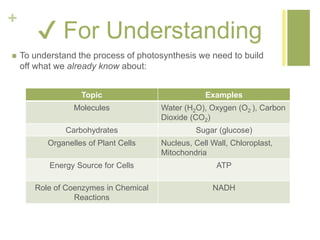
 To understand the process of photosynthesis we need to build 
off what we already know about: 
Topic Examples 
Molecules Water (H2O), Oxygen (O2 ), Carbon 
Dioxide (CO2) 
Carbohydrates Sugar (glucose) 
Organelles of Plant Cells Nucleus, Cell Wall, Chloroplast, 
Mitochondria 
Energy Source for Cells ATP 
Role of Coenzymes in Chemical 
Reactions 
NADH
+ 
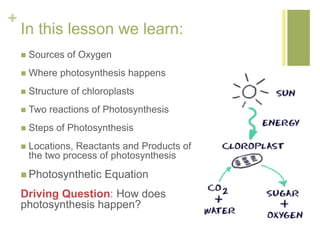
In this lesson we learn: 
 Sources of Oxygen 
 Where photosynthesis happens 
 Structure of chloroplasts 
 Two reactions of Photosynthesis 
 Steps of Photosynthesis 
 Locations, Reactants and Products of 
the two process of photosynthesis 
 Photosynthetic Equation 
Driving Question: How does 
photosynthesis happen?
Try this: Lets all take a deep breath in and then slowly 
exhale out. Ready go! 
 Think-Pair-Share: Where do you 
think the oxygen (O2) we breathe 
comes from? 
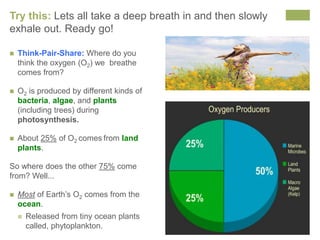
 O2 is produced by different kinds of 
bacteria, algae, and plants 
(including trees) during 
photosynthesis. 
 About 25% of O2 comes from land 
plants. 
So where does the other 75% come 
from? Well... 
 Most of Earth’s O2 comes from the 
ocean. 
 Released from tiny ocean plants 
called, phytoplankton.
+ 
✔ For Understanding 
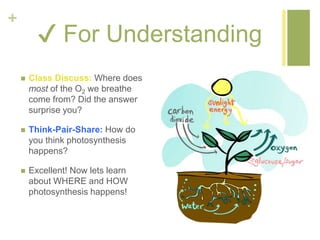
 Class Discuss: Where does 
most of the O2 we breathe 
come from? Did the answer 
surprise you? 
 Think-Pair-Share: How do 
you think photosynthesis 
happens? 
 Excellent! Now lets learn 
about WHERE and HOW 
photosynthesis happens!
+ 
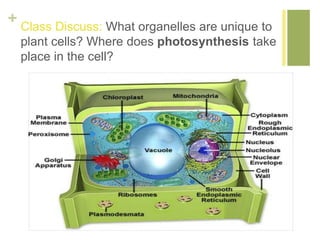
Class Discuss: What organelles are unique to 
plant cells? Where does photosynthesis take 
place in the cell?
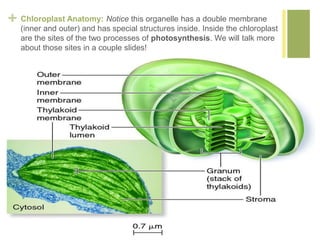
+ Chloroplast Anatomy: Notice this organelle has a double membrane 
(inner and outer) and has special structures inside. Inside the chloroplast 
are the sites of the two processes of photosynthesis. We will talk more 
about those sites in a couple slides!
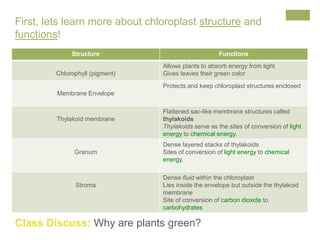
First, lets learn more about chloroplast structure and 
functions! 
Structure Functions 
Chlorophyll (pigment) 
Allows plants to absorb energy from light 
Gives leaves their green color 
Membrane Envelope 
Protects and keep chloroplast structures enclosed 
Thylakoid membrane 
Flattened sac-like membrane structures called 
thylakoids 
Thylakoids serve as the sites of conversion of light 
energy to chemical energy. 
Granum 
Dense layered stacks of thylakoids 
Sites of conversion of light energy to chemical 
energy. 
Stroma 
Dense fluid within the chloroplast 
Lies inside the envelope but outside the thylakoid 
membrane 
Site of conversion of carbon dioxide to 
carbohydrates 
Class Discuss: Why are plants green?
+ Now lets look at HOW photosynthesis happens: 
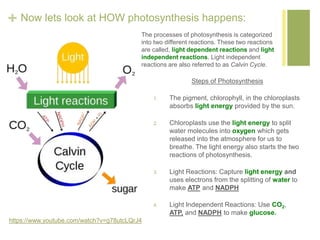
The processes of photosynthesis is categorized 
into two different reactions. These two reactions 
are called, light dependent reactions and light 
independent reactions. Light independent 
reactions are also referred to as Calvin Cycle. 
Steps of Photosynthesis 
1. The pigment, chlorophyll, in the chloroplasts 
absorbs light energy provided by the sun. 
2. Chloroplasts use the light energy to split 
water molecules into oxygen which gets 
released into the atmosphere for us to 
breathe. The light energy also starts the two 
reactions of photosynthesis. 
3. Light Reactions: Capture light energy and 
uses electrons from the splitting of water to 
make ATP and NADPH 
4. Light Independent Reactions: Use CO2, 
ATP, and NADPH to make glucose. 
https://www.youtube.com/watch?v=g78utcLQrJ4
Summary and Location of 
Reactions 
Class Discuss: What are the two reactions of 
photosynthesis? What absorbs light energy? 
Think-Pair-Share: Do you think light independent 
reactions use light energy? 
Light Dependent Reactions Light Independent Reactions 
Location Thylakoid Membrane 
Reactants 
1. Sunlight 
2. Water (H2O) 
End Products 
1. ATP 
2. NADPH 
3. Oxygen (O2) 
Location Stroma 
Reactants 
1. ATP 
2. NADPH 
3. Carbon Dioxide 
(CO2) 
End Products 1. Sugar (glucose) 
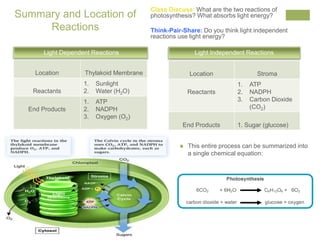
 This entire process can be summarized into 
a single chemical equation:
Think-Pair-Share: Why is photosynthesis essential to 
life on Earth? https://www.youtube.com/watch?v=eo5XndJaz-Y 
Driving Question: How does photosynthesis happen? 
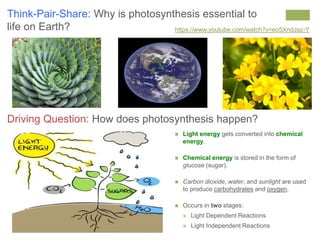
 Light energy gets converted into chemical 
energy. 
 Chemical energy is stored in the form of 
glucose (sugar). 
 Carbon dioxide, water, and sunlight are used 
to produce carbohydrates and oxygen. 
 Occurs in two stages: 
 Light Dependent Reactions 
 Light Independent Reactions

Lesson Plan Revised

  • 1.
    + Photosynthesis: Convertingsunlight into chemical energy Students who demonstrate understanding can: HS-LS1-5: Use a model to illustrate how photosynthesis transforms light energy into stored chemical energy.
  • 2.
    + ✔ ForUnderstanding  To understand the process of photosynthesis we need to build off what we already know about: Topic Examples Molecules Water (H2O), Oxygen (O2 ), Carbon Dioxide (CO2) Carbohydrates Sugar (glucose) Organelles of Plant Cells Nucleus, Cell Wall, Chloroplast, Mitochondria Energy Source for Cells ATP Role of Coenzymes in Chemical Reactions NADH
  • 3.
    + In thislesson we learn:  Sources of Oxygen  Where photosynthesis happens  Structure of chloroplasts  Two reactions of Photosynthesis  Steps of Photosynthesis  Locations, Reactants and Products of the two process of photosynthesis  Photosynthetic Equation Driving Question: How does photosynthesis happen?
  • 4.
    Try this: Letsall take a deep breath in and then slowly exhale out. Ready go!  Think-Pair-Share: Where do you think the oxygen (O2) we breathe comes from?  O2 is produced by different kinds of bacteria, algae, and plants (including trees) during photosynthesis.  About 25% of O2 comes from land plants. So where does the other 75% come from? Well...  Most of Earth’s O2 comes from the ocean.  Released from tiny ocean plants called, phytoplankton.
  • 5.
    + ✔ ForUnderstanding  Class Discuss: Where does most of the O2 we breathe come from? Did the answer surprise you?  Think-Pair-Share: How do you think photosynthesis happens?  Excellent! Now lets learn about WHERE and HOW photosynthesis happens!
  • 6.
    + Class Discuss:What organelles are unique to plant cells? Where does photosynthesis take place in the cell?
  • 7.
    + Chloroplast Anatomy:Notice this organelle has a double membrane (inner and outer) and has special structures inside. Inside the chloroplast are the sites of the two processes of photosynthesis. We will talk more about those sites in a couple slides!
  • 8.
    First, lets learnmore about chloroplast structure and functions! Structure Functions Chlorophyll (pigment) Allows plants to absorb energy from light Gives leaves their green color Membrane Envelope Protects and keep chloroplast structures enclosed Thylakoid membrane Flattened sac-like membrane structures called thylakoids Thylakoids serve as the sites of conversion of light energy to chemical energy. Granum Dense layered stacks of thylakoids Sites of conversion of light energy to chemical energy. Stroma Dense fluid within the chloroplast Lies inside the envelope but outside the thylakoid membrane Site of conversion of carbon dioxide to carbohydrates Class Discuss: Why are plants green?
  • 9.
    + Now letslook at HOW photosynthesis happens: The processes of photosynthesis is categorized into two different reactions. These two reactions are called, light dependent reactions and light independent reactions. Light independent reactions are also referred to as Calvin Cycle. Steps of Photosynthesis 1. The pigment, chlorophyll, in the chloroplasts absorbs light energy provided by the sun. 2. Chloroplasts use the light energy to split water molecules into oxygen which gets released into the atmosphere for us to breathe. The light energy also starts the two reactions of photosynthesis. 3. Light Reactions: Capture light energy and uses electrons from the splitting of water to make ATP and NADPH 4. Light Independent Reactions: Use CO2, ATP, and NADPH to make glucose. https://www.youtube.com/watch?v=g78utcLQrJ4
  • 10.
    Summary and Locationof Reactions Class Discuss: What are the two reactions of photosynthesis? What absorbs light energy? Think-Pair-Share: Do you think light independent reactions use light energy? Light Dependent Reactions Light Independent Reactions Location Thylakoid Membrane Reactants 1. Sunlight 2. Water (H2O) End Products 1. ATP 2. NADPH 3. Oxygen (O2) Location Stroma Reactants 1. ATP 2. NADPH 3. Carbon Dioxide (CO2) End Products 1. Sugar (glucose)  This entire process can be summarized into a single chemical equation:
  • 11.
    Think-Pair-Share: Why isphotosynthesis essential to life on Earth? https://www.youtube.com/watch?v=eo5XndJaz-Y Driving Question: How does photosynthesis happen?  Light energy gets converted into chemical energy.  Chemical energy is stored in the form of glucose (sugar).  Carbon dioxide, water, and sunlight are used to produce carbohydrates and oxygen.  Occurs in two stages:  Light Dependent Reactions  Light Independent Reactions

Editor's Notes

  • #3 A check for understand is where we pause as a class to discuss or answer questions displayed on the slide.
  • #8 Here is a picture of a real chloroplast and a model. Notice the organelle has a double membrane (inner and outer) and has special structures inside. Remember chloroplasts are only found in plant cells!
  • #10 We will not watch the entire video. I will move the video to show only the grade appropriate material.
  • #11 The first part is called the light dependent reaction. This reaction happens when the light energy is captured and pushed into a chemical called ATP. Atmospheric oxygen is produced by the “splitting” of water. Notice how oxygen is released during the light dependent reaction and ATP and NADPH move into the second part of photosynthesis. In general, the second part of the process happens when the ATP is used to make glucose. Remember this is also referred to as the Calvin Cycle or light independent reaction. This process gets its name because sunlight in not directly involved with this cycle.
  • #12 Glucose is a type of sugar. The glucose gives plants energy and the plants can also use glucose to make cellulose, a substance they use to grow and build cell walls.