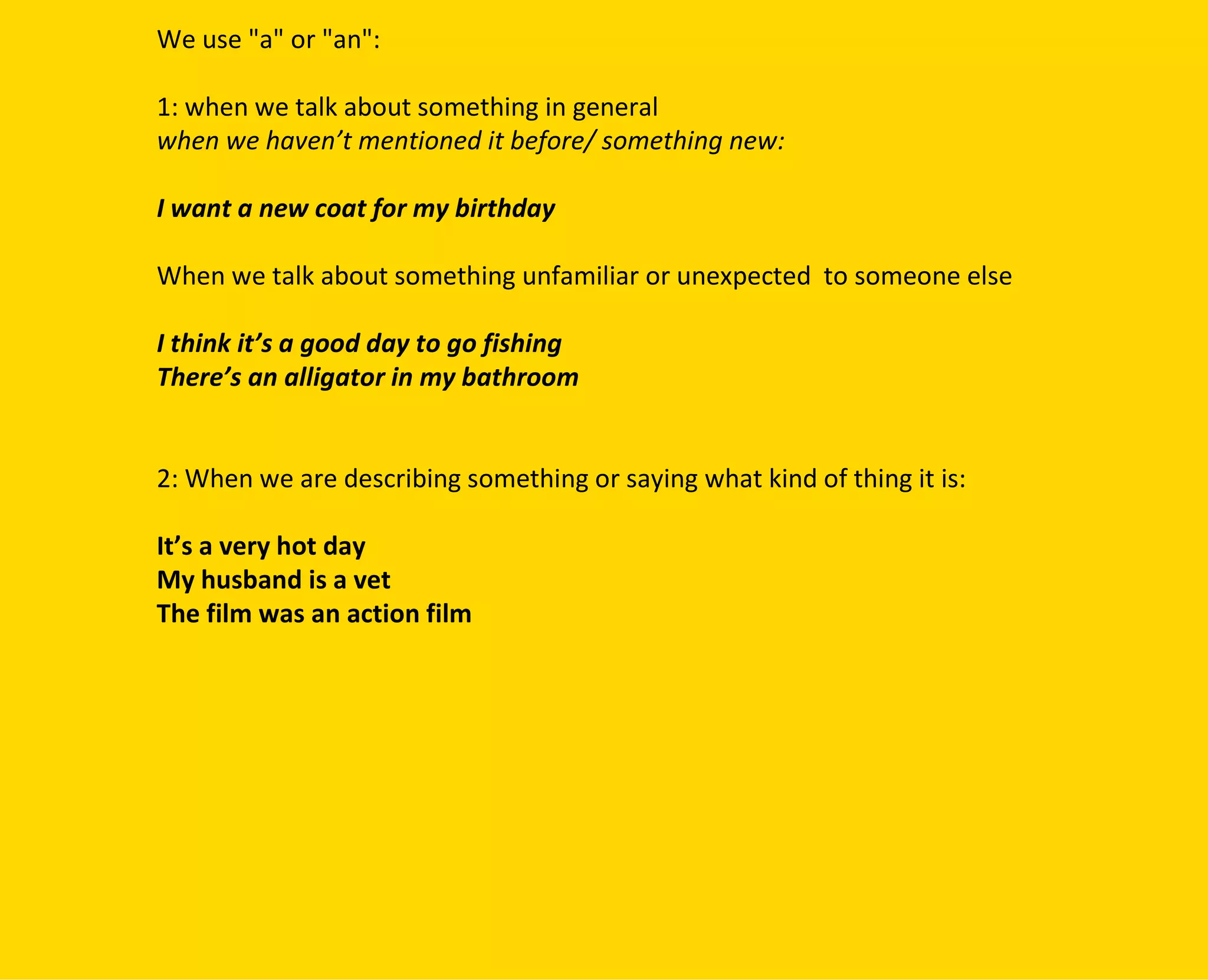
We use "a" or "an": 1: when we talk about something in general   when we haven’t mentioned it before/ something new: I want a new coat for my birthday When we talk about something unfamiliar or unexpected  to someone else I think it’s a good day to go fishing There’s an alligator in my bathroom  2: When we are describing something or saying what kind of thing it is: It’s a very hot day My husband is a vet The film was an action film
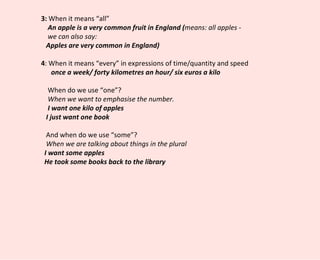
3:  When it means “all” An apple is a very common fruit in England ( means: all apples - we can also say:  Apples are very common in England) 4 : When it means “every” in expressions of time/quantity and speed once a week/ forty kilometres an hour/ six euros a kilo When do we use “one”? When we want to emphasise the number.  I want one kilo of apples  I just want one book And when do we use “some”? When we are talking about things in the plural I want some apples He took some books back to the library
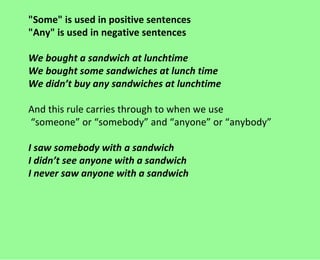
"Some" is used in positive sentences "Any" is used in negative sentences We bought a sandwich at lunchtime We bought some sandwiches at lunch time We didn’t buy any sandwiches at lunchtime And this rule carries through to when we use “ someone” or “somebody” and “anyone” or “anybody” I saw somebody with a sandwich I didn’t see anyone with a sandwich I never saw anyone with a sandwich
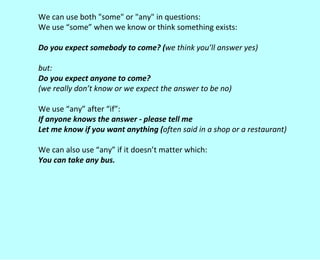
We can use both "some" or "any" in questions: We use “some” when we know or think something exists: Do you expect somebody to come? ( we think you’ll answer yes) but: Do you expect anyone to come?  (we really don’t know or we expect the answer to be no) We use “any” after “if”: If anyone knows the answer - please tell me Let me know if you want anything ( often said in a shop or a restaurant) We can also use “any” if it doesn’t matter which: You can take any bus.
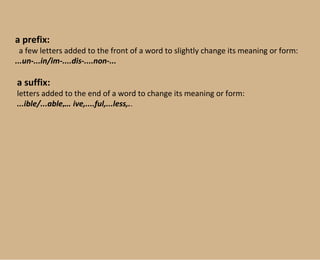
a prefix: a few letters added to the front of a word to slightly change its   meaning or form:   ...un-...in/im-....dis-....non-... a   suffix: letters added to the end of a word to change its meaning or form: ...ible/...able ,...  ive,....ful,...less,. .

Lesson 8 Spring

  • 1.
    We use "a"or "an": 1: when we talk about something in general when we haven’t mentioned it before/ something new: I want a new coat for my birthday When we talk about something unfamiliar or unexpected to someone else I think it’s a good day to go fishing There’s an alligator in my bathroom 2: When we are describing something or saying what kind of thing it is: It’s a very hot day My husband is a vet The film was an action film
  • 2.
    3: Whenit means “all” An apple is a very common fruit in England ( means: all apples - we can also say: Apples are very common in England) 4 : When it means “every” in expressions of time/quantity and speed once a week/ forty kilometres an hour/ six euros a kilo When do we use “one”? When we want to emphasise the number. I want one kilo of apples I just want one book And when do we use “some”? When we are talking about things in the plural I want some apples He took some books back to the library
  • 3.
    "Some" is usedin positive sentences "Any" is used in negative sentences We bought a sandwich at lunchtime We bought some sandwiches at lunch time We didn’t buy any sandwiches at lunchtime And this rule carries through to when we use “ someone” or “somebody” and “anyone” or “anybody” I saw somebody with a sandwich I didn’t see anyone with a sandwich I never saw anyone with a sandwich
  • 4.
    We can useboth "some" or "any" in questions: We use “some” when we know or think something exists: Do you expect somebody to come? ( we think you’ll answer yes) but: Do you expect anyone to come? (we really don’t know or we expect the answer to be no) We use “any” after “if”: If anyone knows the answer - please tell me Let me know if you want anything ( often said in a shop or a restaurant) We can also use “any” if it doesn’t matter which: You can take any bus.
  • 5.
    a prefix: afew letters added to the front of a word to slightly change its meaning or form: ...un-...in/im-....dis-....non-... a suffix: letters added to the end of a word to change its meaning or form: ...ible/...able ,... ive,....ful,...less,. .