Extreme weather
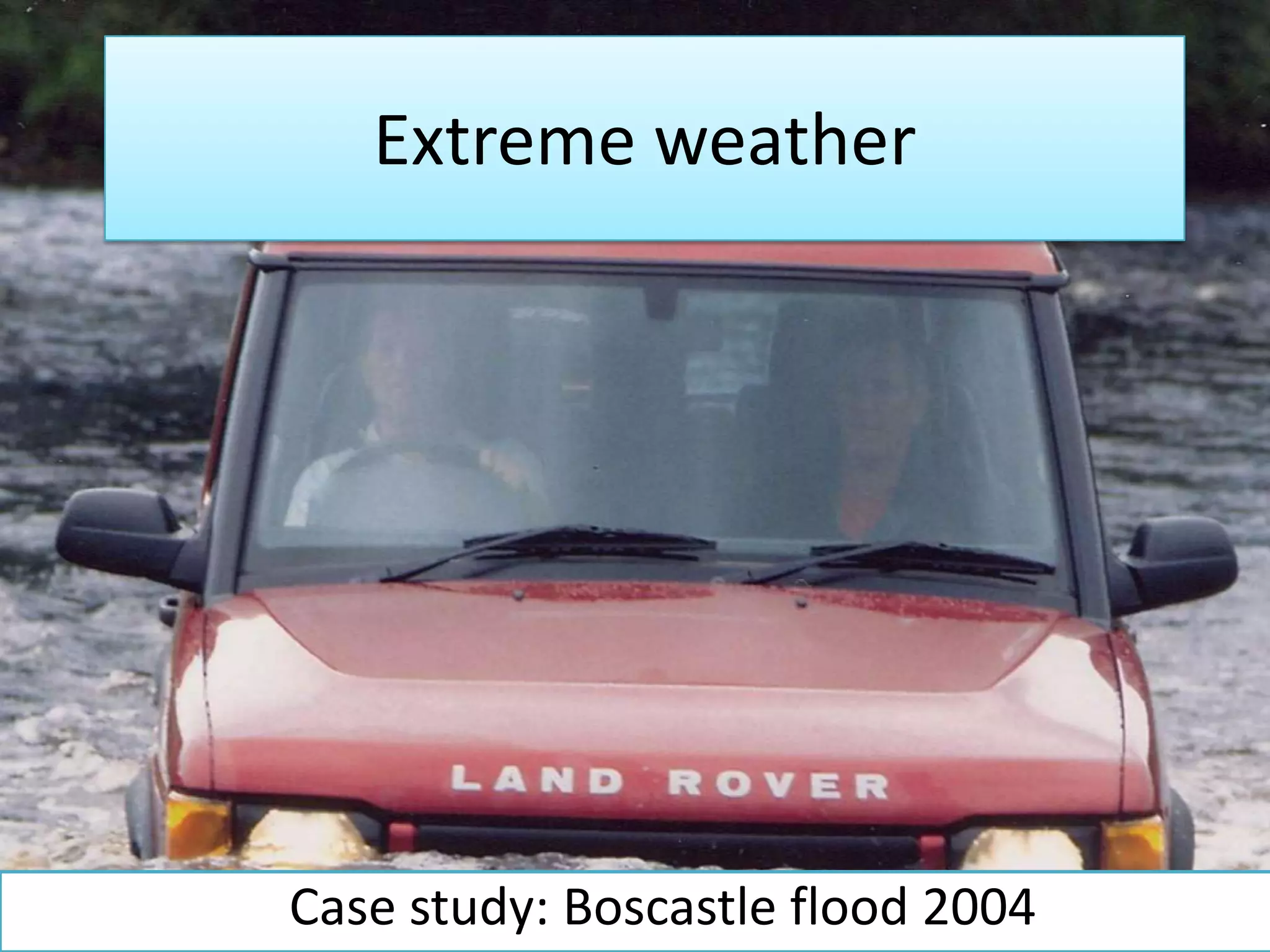
Case study: Boscastle flood 2004
Learning goals
Knowledge
To know what is meant by an extreme weather event
Understanding
To understand why the UK weather pattern is becoming more
extreme
To understand what impact this has on people’s
homes, lives, agriculture, health and transport.
Skills
To appreciate the need for planning and being prepared
Examination question practice
What questions would you like to ask
of this image?
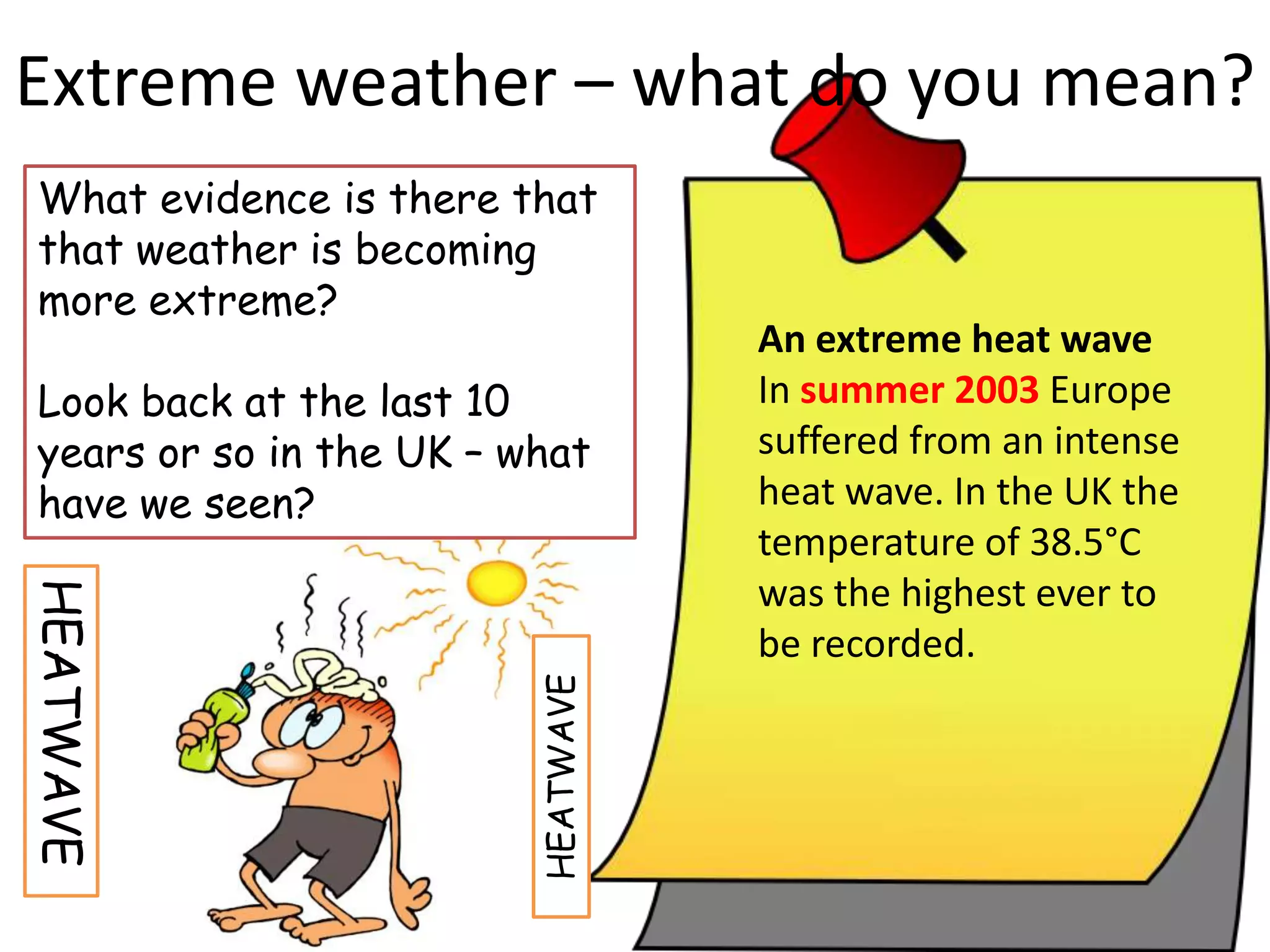
An extreme heat wave
In summer 2003 Europe
suffered from an intense
heat wave. In the UK the
temperature of 38.5°C
was the highest ever to
be recorded.
Extreme weather – what do you mean?
What evidence is there that
that weather is becoming
more extreme?
Look back at the last 10
years or so in the UK – what
have we seen?
HEATWAVE
HEATWAVE
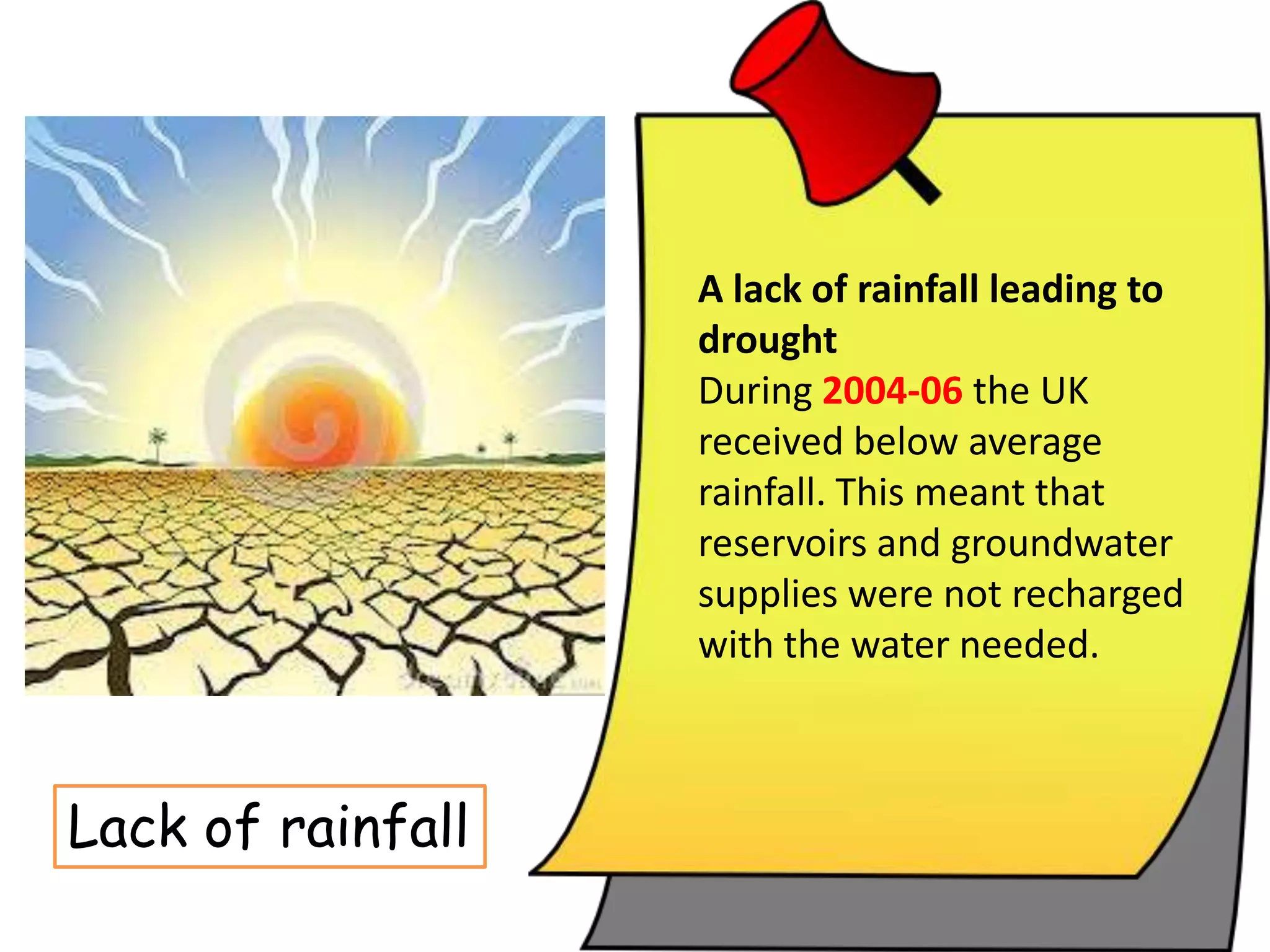
A lack of rainfall leading to
drought
During 2004-06 the UK
received below average
rainfall. This meant that
reservoirs and groundwater
supplies were not recharged
with the water needed.
Lack of rainfall
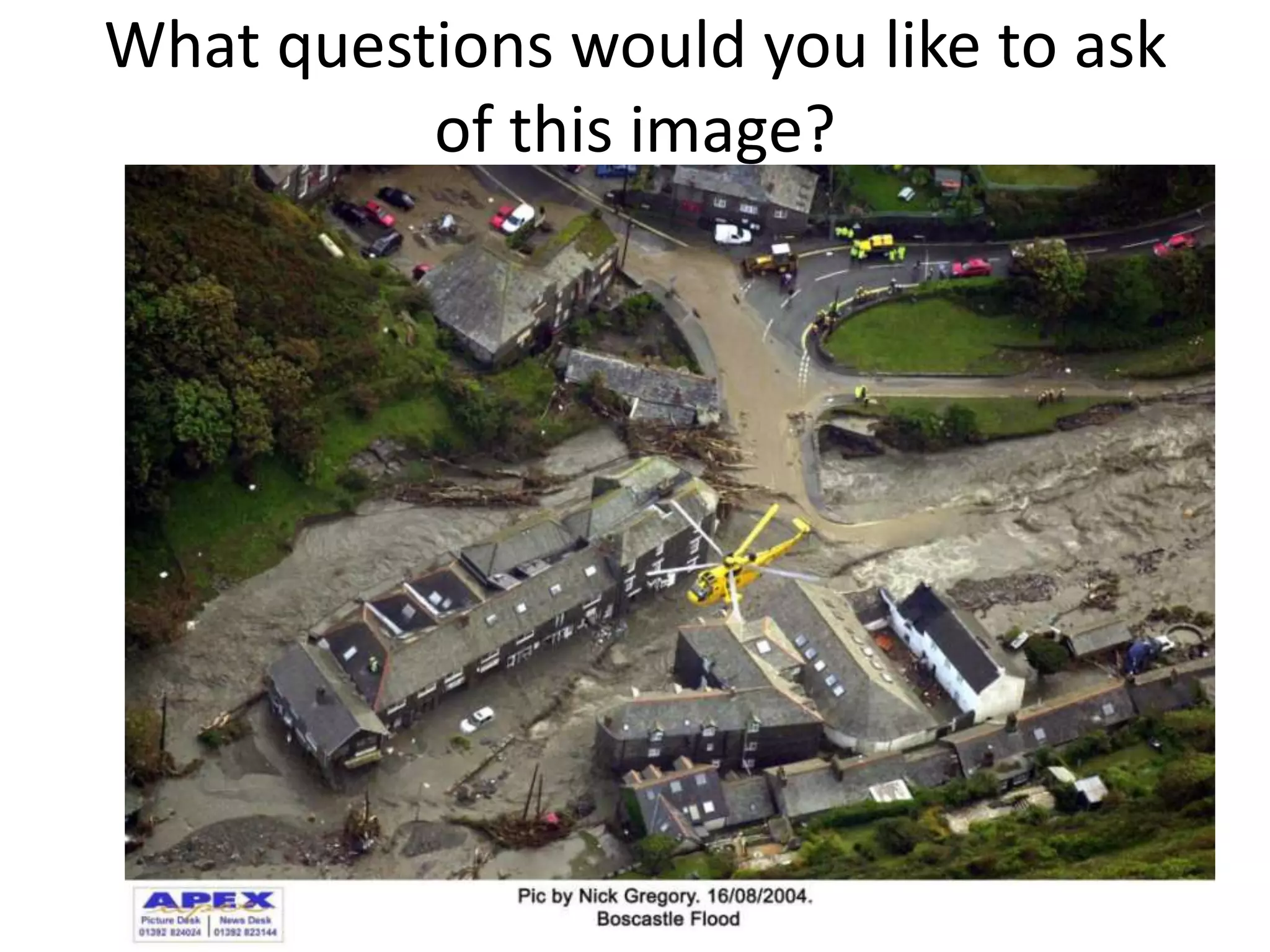
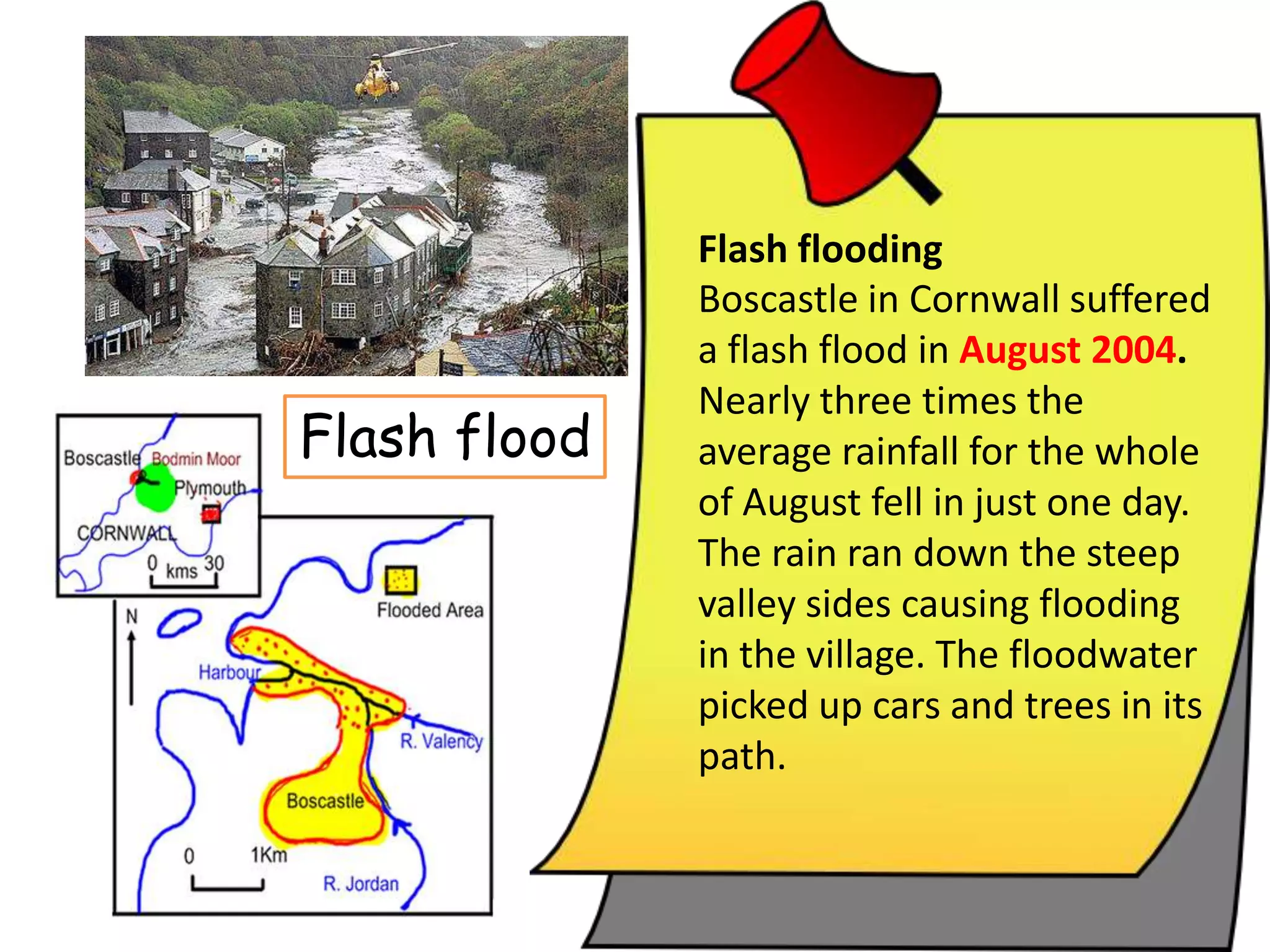
Boscastle in Cornwall suffered
a flash flood in August 2004.
Nearly three times the
average rainfall for the whole
of August fell in just one day.
The rain ran down the steep
valley sides causing flooding
in the village. The floodwater
picked up cars and trees in its
path.
Flash flood
Flash flooding
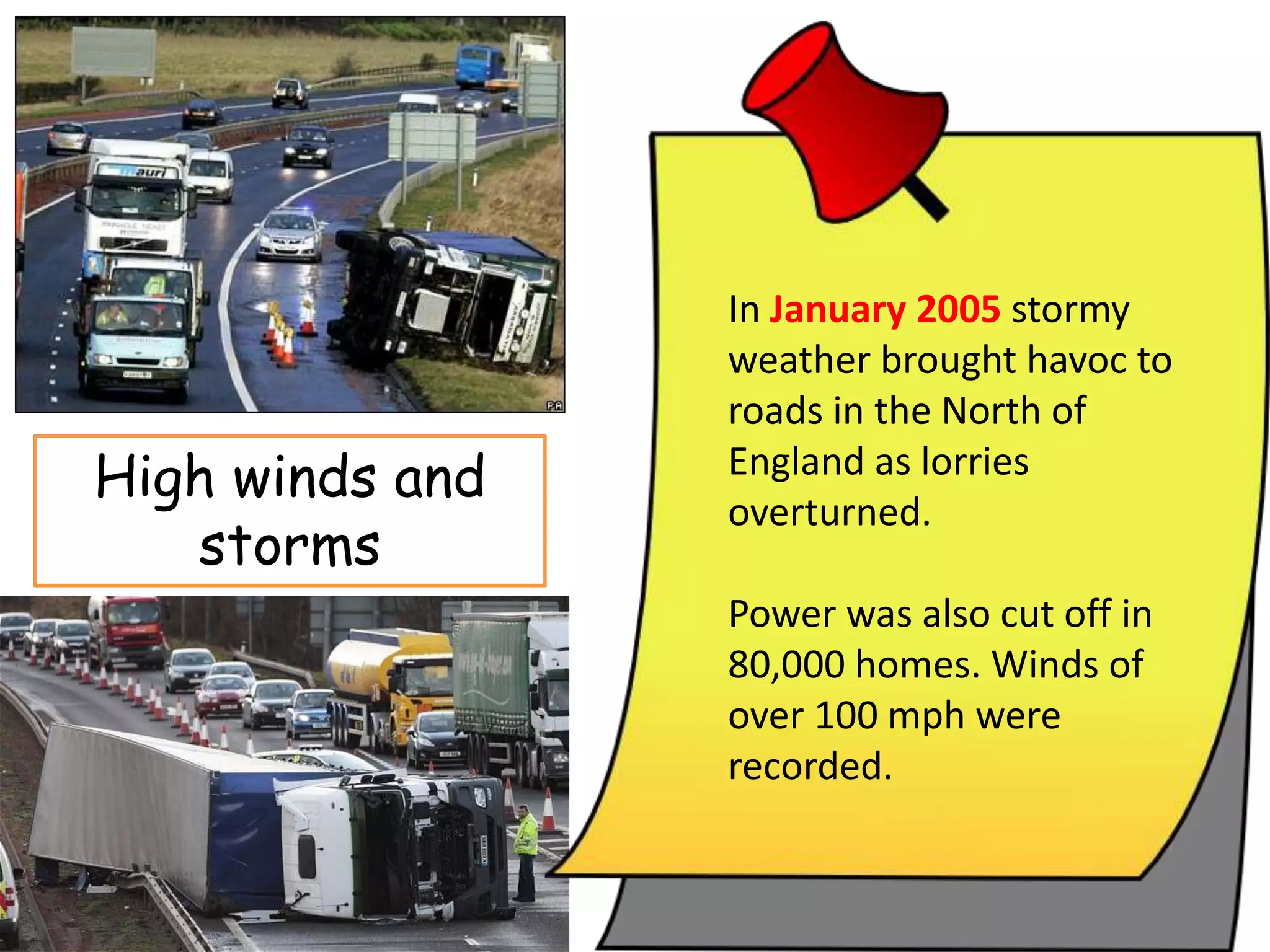
Strong winds and storms
In January 2005 stormy
weather brought havoc to
roads in the North of England
as lorries overturned. Power
was also cut off in 80,000
homes. Winds of over 100
mph were recorded.
In January 2005 stormy
weather brought havoc to
roads in the North of
England as lorries
overturned.
Power was also cut off in
80,000 homes. Winds of
over 100 mph were
recorded.
High winds and
storms
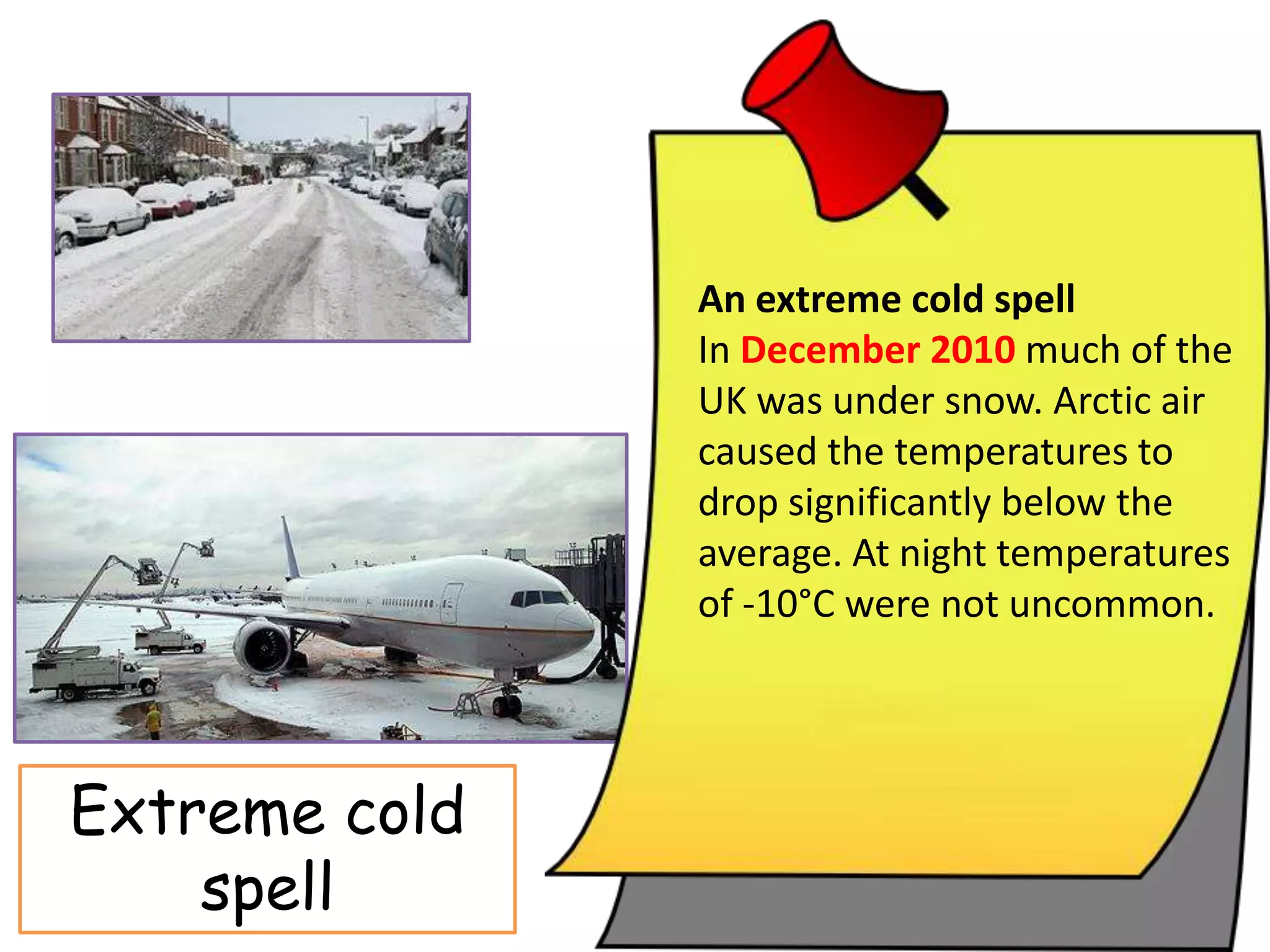
An extreme cold spell
In December 2010 much of the
UK was under snow. Arctic air
caused the temperatures to
drop significantly below the
average. At night temperatures
of -10°C were not uncommon.
Extreme cold
spell
What do I need to know for the exam?
The impact of extreme weather on people’s homes and lives,
agriculture (farming), health and transport. The benefits and
costs of extreme weather and the issues raised. The need for
adequate warning, preparation, and plans to deal with the
impacts.
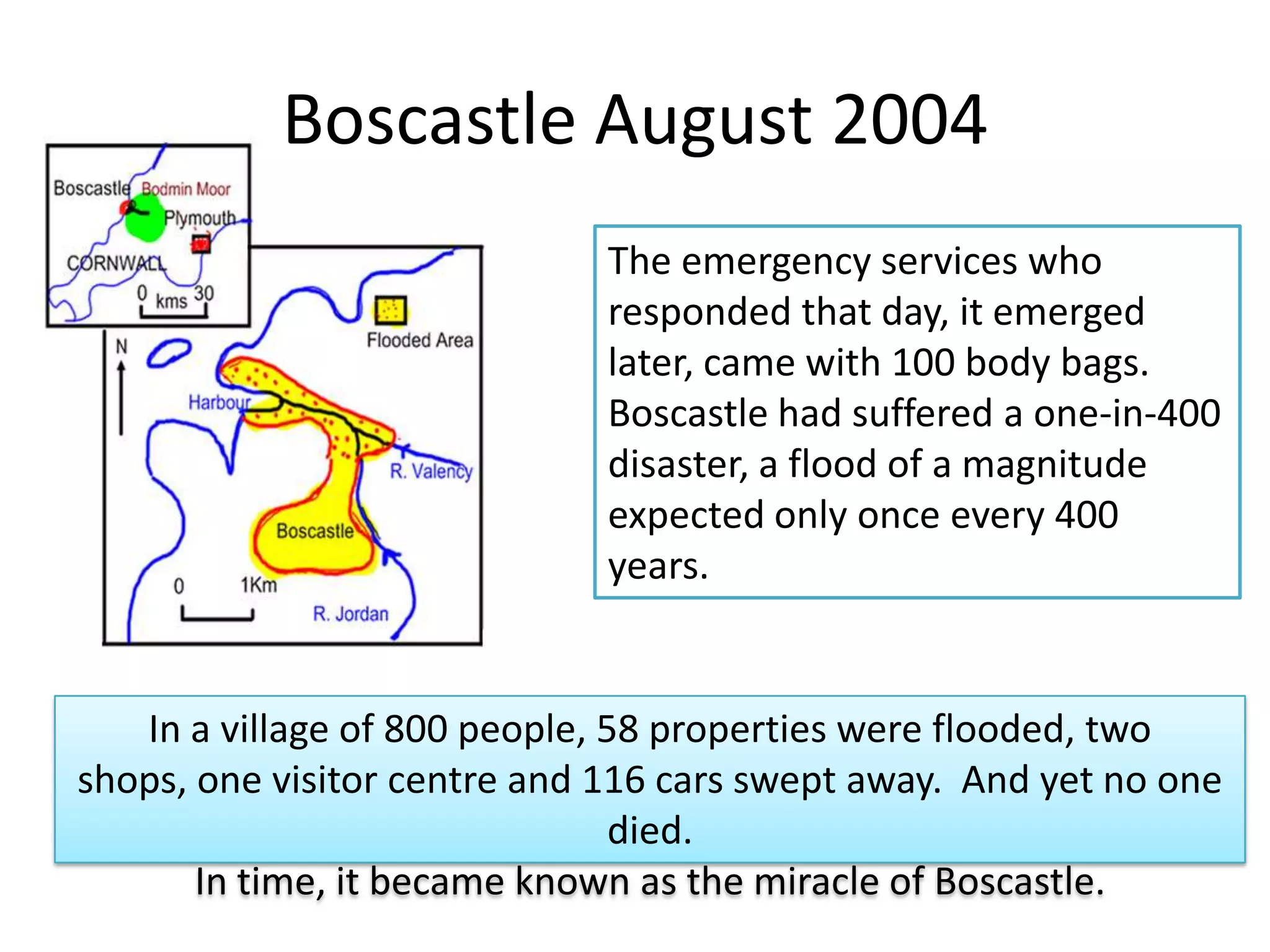
Boscastle August 2004
The emergency services who
responded that day, it emerged
later, came with 100 body bags.
Boscastle had suffered a one-in-400
disaster, a flood of a magnitude
expected only once every 400
years.
In a village of 800 people, 58 properties were flooded, two
shops, one visitor centre and 116 cars swept away. And yet no one
died.
In time, it became known as the miracle of Boscastle.
The Environment Agency has had a great deal of input. Firstly, the
entire region was inspected & the probability of a recurrence
calculated.
Estimates from various sources differ greatly, some
predicting a repeat event in 2005 & some not expecting
similar to happen for another 60-70 years.
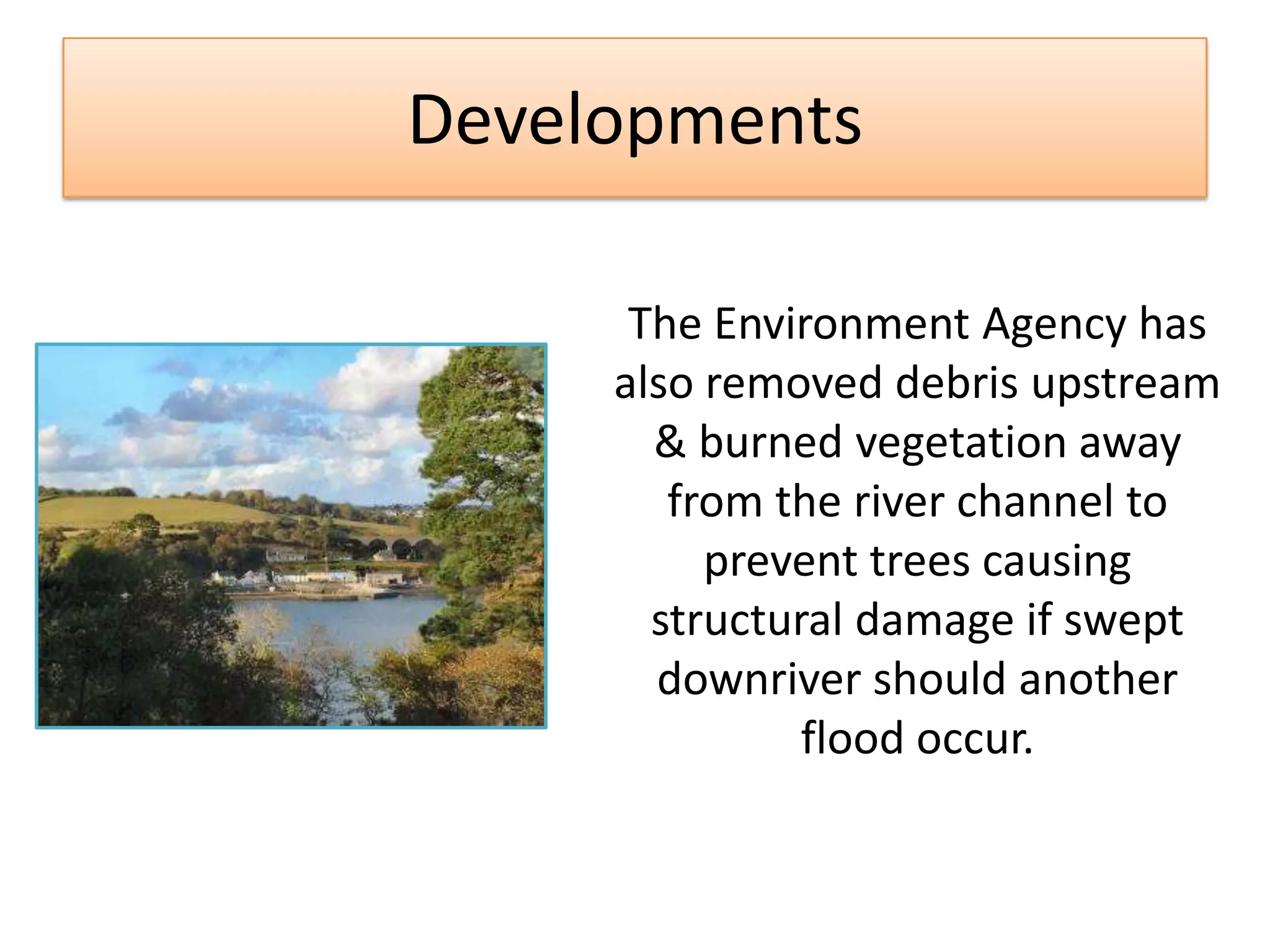
Developments
Developments
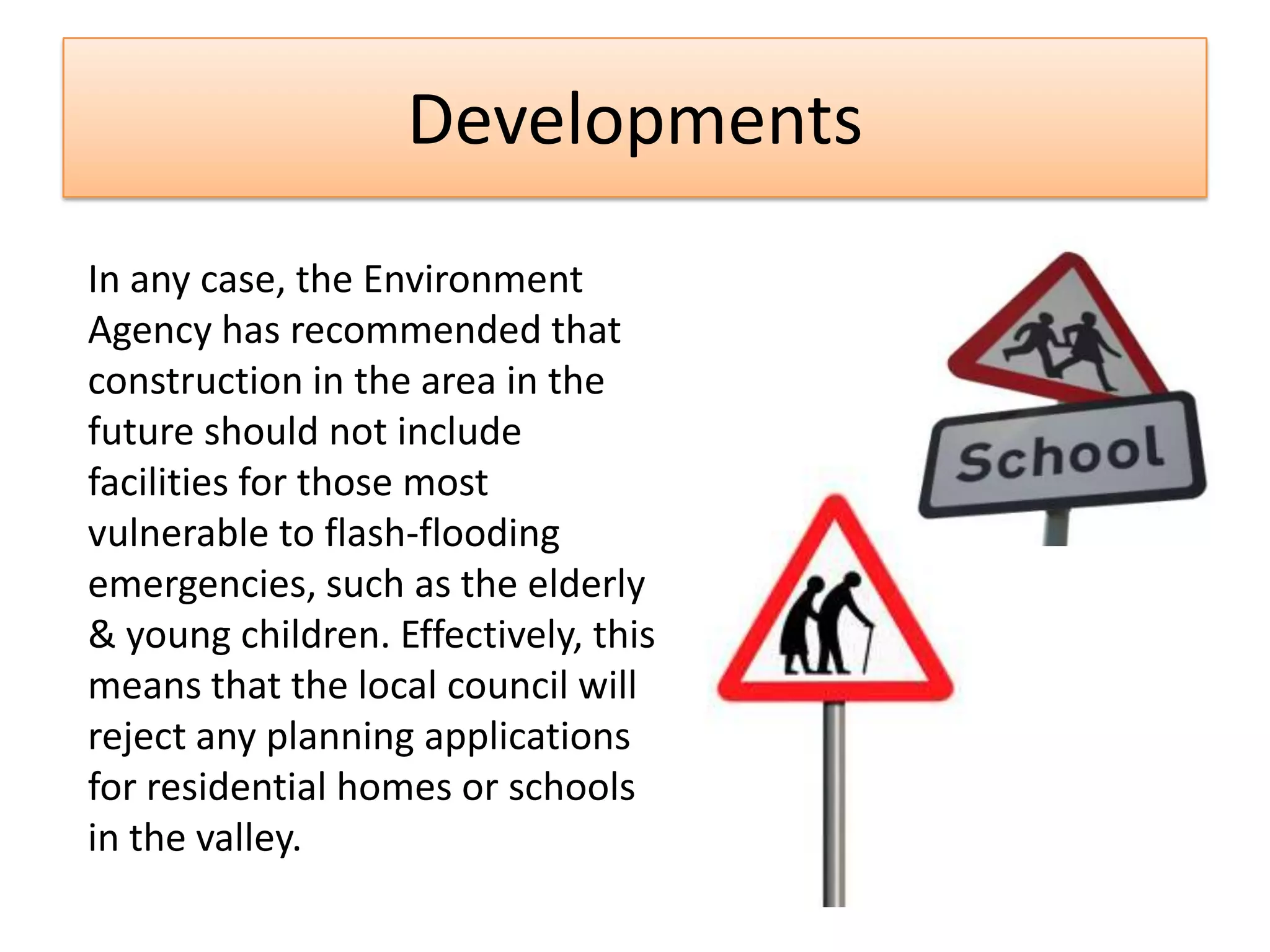
In any case, the Environment
Agency has recommended that
construction in the area in the
future should not include
facilities for those most
vulnerable to flash-flooding
emergencies, such as the elderly
& young children. Effectively, this
means that the local council will
reject any planning applications
for residential homes or schools
in the valley.
Developments
The Environment Agency has
also removed debris upstream
& burned vegetation away
from the river channel to
prevent trees causing
structural damage if swept
downriver should another
flood occur.
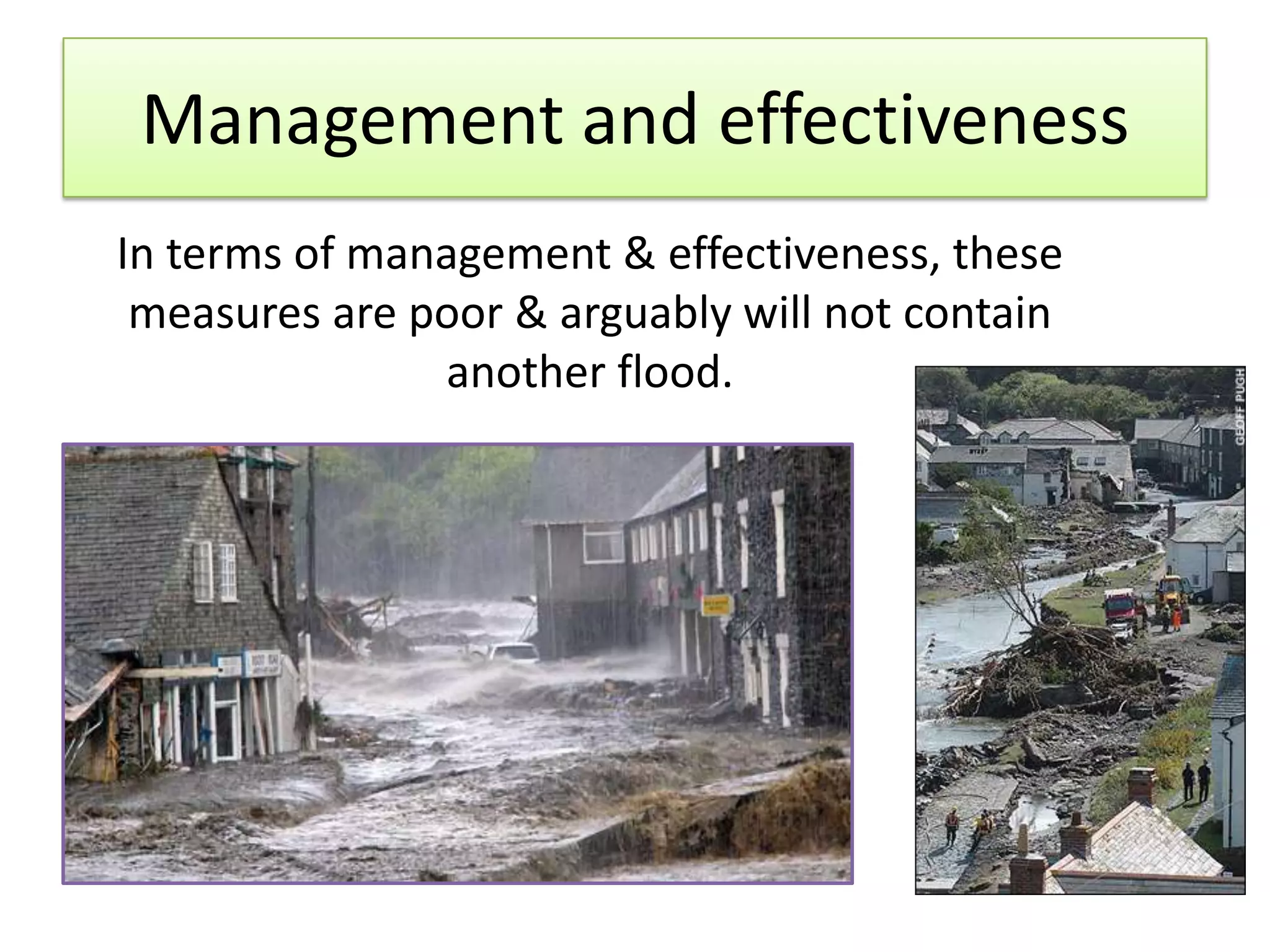
Management and effectiveness
In terms of management & effectiveness, these
measures are poor & arguably will not contain
another flood.
Management and effectiveness
The organisations most active in
Boscastle are the insurance
companies, who have had to
manage redevelopments & assess
damage in order to limit the
massive costs incurred due to
policy holders claiming for the
damage caused.
Due to the historical merit of several of the town's buildings, reconstruction work has
been complicated by the need to find lost artefacts or reconstruct buildings using
traditional materials & methods. The inherent lack of flood-resistance in these buildings
is likely to cause problems if another flood occurs.
Impact on people
The focus in Boscastle has been on repairing
the damage & clearing up only – while the
need of the community to return to some
sort of normality as quickly as possible is
obvious, the distinct lack of effective flood
prevention measures, such as improving the
maximum discharge volume capacity of the
river channel or building flood
barriers, means that Boscastle is unprepared
for another flood, which could result in yet
another disaster & even loss of life in later
years.
Write a short summary
Plenary - can you list:
1 Cause of the flood
2 Economic impacts of the flood
3 Social impacts of the flood
2 Immediate responses
1 Long-term responses
Exam question
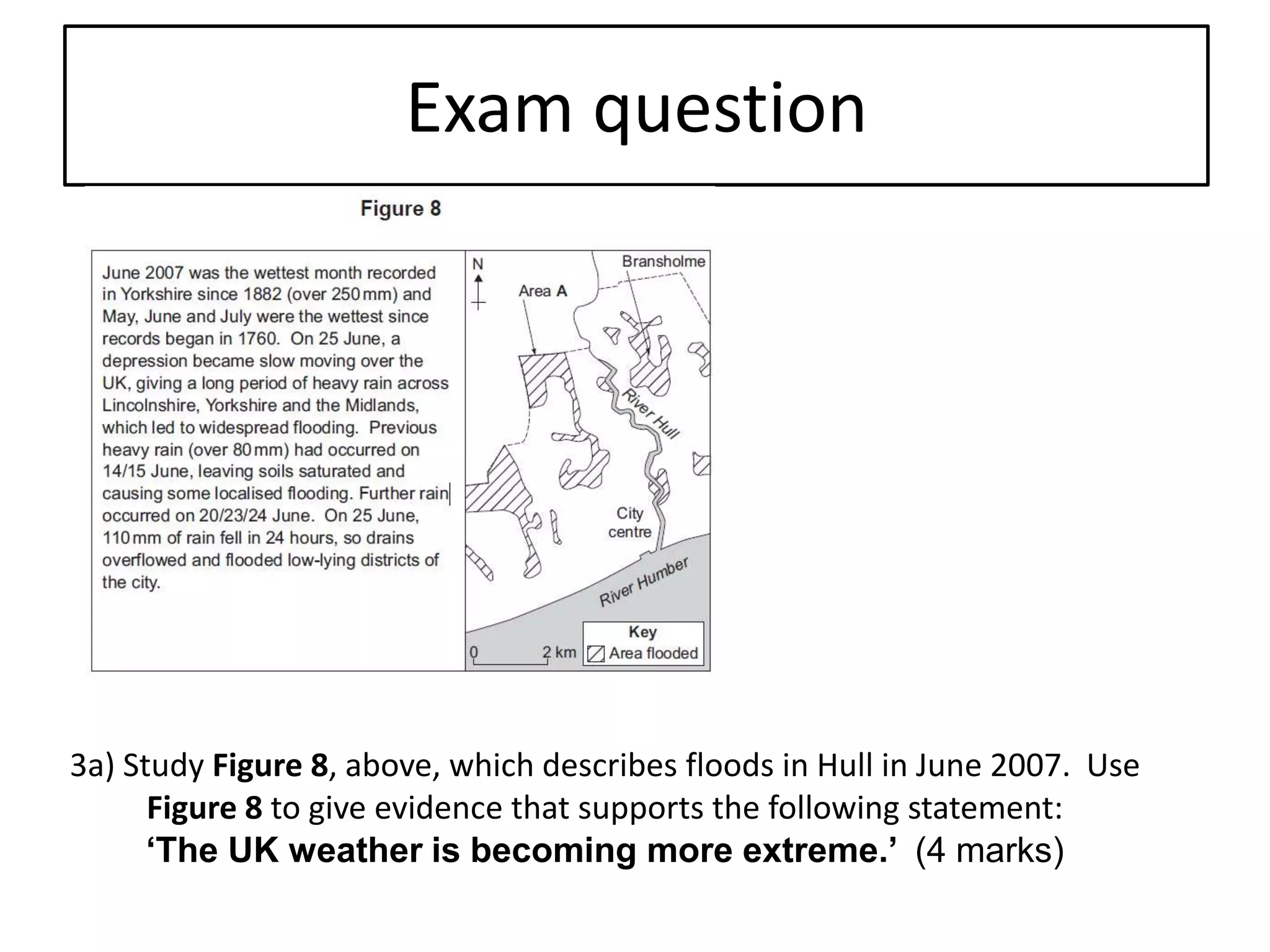
3a) Study Figure 8, above, which describes floods in Hull in June 2007. Use
Figure 8 to give evidence that supports the following statement:
‘The UK weather is becoming more extreme.’ (4 marks)
Marks scheme
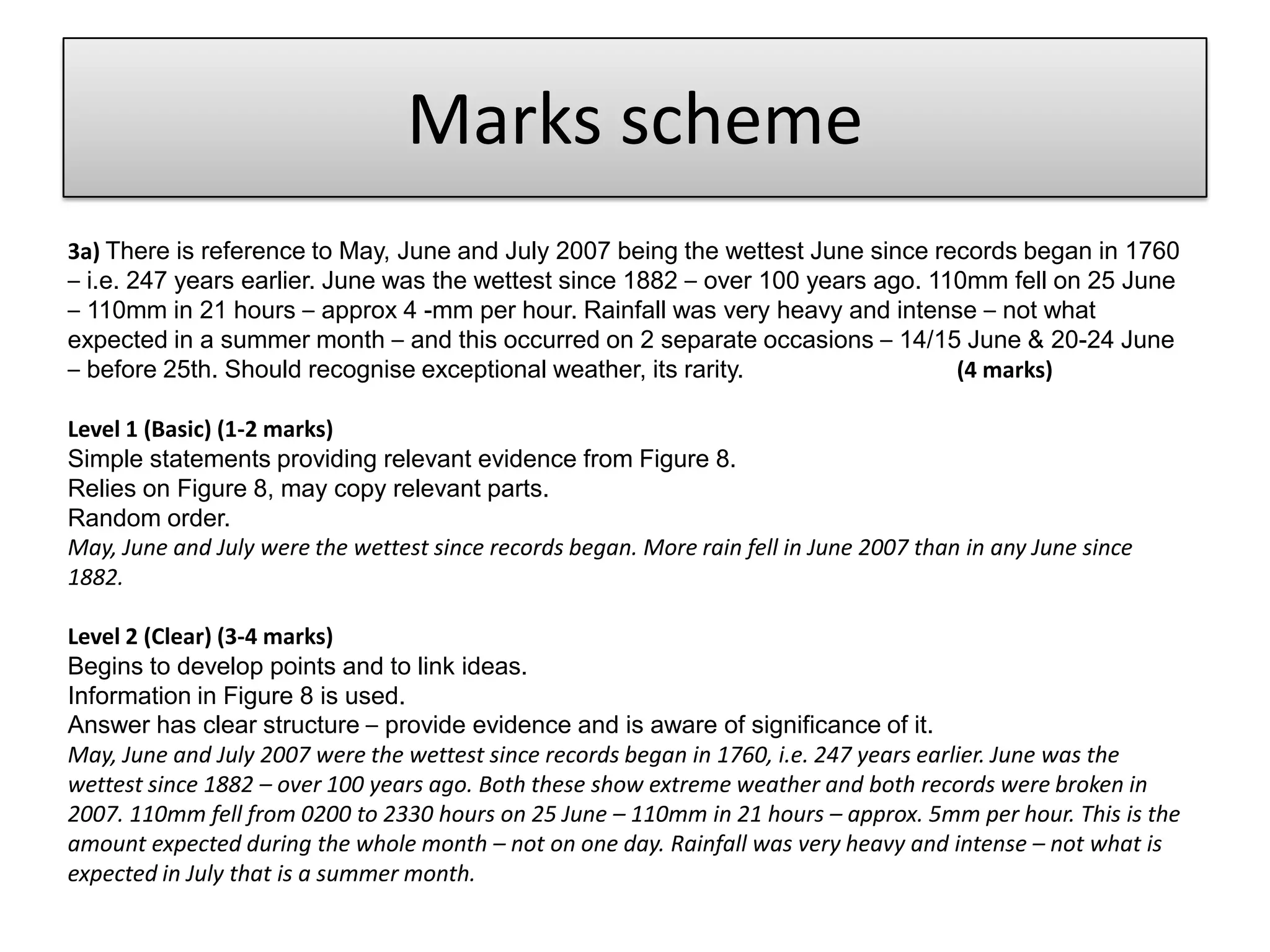
3a) There is reference to May, June and July 2007 being the wettest June since records began in 1760
– i.e. 247 years earlier. June was the wettest since 1882 – over 100 years ago. 110mm fell on 25 June
– 110mm in 21 hours – approx 4 -mm per hour. Rainfall was very heavy and intense – not what
expected in a summer month – and this occurred on 2 separate occasions – 14/15 June & 20-24 June
– before 25th. Should recognise exceptional weather, its rarity. (4 marks)
Level 1 (Basic) (1-2 marks)
Simple statements providing relevant evidence from Figure 8.
Relies on Figure 8, may copy relevant parts.
Random order.
May, June and July were the wettest since records began. More rain fell in June 2007 than in any June since
1882.
Level 2 (Clear) (3-4 marks)
Begins to develop points and to link ideas.
Information in Figure 8 is used.
Answer has clear structure – provide evidence and is aware of significance of it.
May, June and July 2007 were the wettest since records began in 1760, i.e. 247 years earlier. June was the
wettest since 1882 – over 100 years ago. Both these show extreme weather and both records were broken in
2007. 110mm fell from 0200 to 2330 hours on 25 June – 110mm in 21 hours – approx. 5mm per hour. This is the
amount expected during the whole month – not on one day. Rainfall was very heavy and intense – not what is
expected in July that is a summer month.
3b) What is the difference between weather and climate? (2 marks)
Exam question
3b) Weather is the day-to-day variation of features such as
rainfall, temperature, wind, whilst climate represents the
average weather conditions – over a period of time,
average of at least 30 years

Lesson 4 extreme weather event (cl)

  • 1.
    Extreme weather Case study:Boscastle flood 2004
  • 2.
    Learning goals Knowledge To knowwhat is meant by an extreme weather event Understanding To understand why the UK weather pattern is becoming more extreme To understand what impact this has on people’s homes, lives, agriculture, health and transport. Skills To appreciate the need for planning and being prepared Examination question practice
  • 3.
    What questions wouldyou like to ask of this image?
  • 4.
    An extreme heatwave In summer 2003 Europe suffered from an intense heat wave. In the UK the temperature of 38.5°C was the highest ever to be recorded. Extreme weather – what do you mean? What evidence is there that that weather is becoming more extreme? Look back at the last 10 years or so in the UK – what have we seen? HEATWAVE HEATWAVE
  • 5.
    A lack ofrainfall leading to drought During 2004-06 the UK received below average rainfall. This meant that reservoirs and groundwater supplies were not recharged with the water needed. Lack of rainfall
  • 6.
    Boscastle in Cornwallsuffered a flash flood in August 2004. Nearly three times the average rainfall for the whole of August fell in just one day. The rain ran down the steep valley sides causing flooding in the village. The floodwater picked up cars and trees in its path. Flash flood Flash flooding
  • 7.
    Strong winds andstorms In January 2005 stormy weather brought havoc to roads in the North of England as lorries overturned. Power was also cut off in 80,000 homes. Winds of over 100 mph were recorded. In January 2005 stormy weather brought havoc to roads in the North of England as lorries overturned. Power was also cut off in 80,000 homes. Winds of over 100 mph were recorded. High winds and storms
  • 8.
    An extreme coldspell In December 2010 much of the UK was under snow. Arctic air caused the temperatures to drop significantly below the average. At night temperatures of -10°C were not uncommon. Extreme cold spell
  • 9.
    What do Ineed to know for the exam? The impact of extreme weather on people’s homes and lives, agriculture (farming), health and transport. The benefits and costs of extreme weather and the issues raised. The need for adequate warning, preparation, and plans to deal with the impacts.
  • 10.
    Boscastle August 2004 Theemergency services who responded that day, it emerged later, came with 100 body bags. Boscastle had suffered a one-in-400 disaster, a flood of a magnitude expected only once every 400 years. In a village of 800 people, 58 properties were flooded, two shops, one visitor centre and 116 cars swept away. And yet no one died. In time, it became known as the miracle of Boscastle.
  • 11.
    The Environment Agencyhas had a great deal of input. Firstly, the entire region was inspected & the probability of a recurrence calculated. Estimates from various sources differ greatly, some predicting a repeat event in 2005 & some not expecting similar to happen for another 60-70 years. Developments
  • 12.
    Developments In any case,the Environment Agency has recommended that construction in the area in the future should not include facilities for those most vulnerable to flash-flooding emergencies, such as the elderly & young children. Effectively, this means that the local council will reject any planning applications for residential homes or schools in the valley.
  • 13.
    Developments The Environment Agencyhas also removed debris upstream & burned vegetation away from the river channel to prevent trees causing structural damage if swept downriver should another flood occur.
  • 14.
    Management and effectiveness Interms of management & effectiveness, these measures are poor & arguably will not contain another flood.
  • 15.
    Management and effectiveness Theorganisations most active in Boscastle are the insurance companies, who have had to manage redevelopments & assess damage in order to limit the massive costs incurred due to policy holders claiming for the damage caused. Due to the historical merit of several of the town's buildings, reconstruction work has been complicated by the need to find lost artefacts or reconstruct buildings using traditional materials & methods. The inherent lack of flood-resistance in these buildings is likely to cause problems if another flood occurs.
  • 16.
    Impact on people Thefocus in Boscastle has been on repairing the damage & clearing up only – while the need of the community to return to some sort of normality as quickly as possible is obvious, the distinct lack of effective flood prevention measures, such as improving the maximum discharge volume capacity of the river channel or building flood barriers, means that Boscastle is unprepared for another flood, which could result in yet another disaster & even loss of life in later years.
  • 17.
  • 18.
    Plenary - canyou list: 1 Cause of the flood 2 Economic impacts of the flood 3 Social impacts of the flood 2 Immediate responses 1 Long-term responses
  • 19.
    Exam question 3a) StudyFigure 8, above, which describes floods in Hull in June 2007. Use Figure 8 to give evidence that supports the following statement: ‘The UK weather is becoming more extreme.’ (4 marks)
  • 20.
    Marks scheme 3a) Thereis reference to May, June and July 2007 being the wettest June since records began in 1760 – i.e. 247 years earlier. June was the wettest since 1882 – over 100 years ago. 110mm fell on 25 June – 110mm in 21 hours – approx 4 -mm per hour. Rainfall was very heavy and intense – not what expected in a summer month – and this occurred on 2 separate occasions – 14/15 June & 20-24 June – before 25th. Should recognise exceptional weather, its rarity. (4 marks) Level 1 (Basic) (1-2 marks) Simple statements providing relevant evidence from Figure 8. Relies on Figure 8, may copy relevant parts. Random order. May, June and July were the wettest since records began. More rain fell in June 2007 than in any June since 1882. Level 2 (Clear) (3-4 marks) Begins to develop points and to link ideas. Information in Figure 8 is used. Answer has clear structure – provide evidence and is aware of significance of it. May, June and July 2007 were the wettest since records began in 1760, i.e. 247 years earlier. June was the wettest since 1882 – over 100 years ago. Both these show extreme weather and both records were broken in 2007. 110mm fell from 0200 to 2330 hours on 25 June – 110mm in 21 hours – approx. 5mm per hour. This is the amount expected during the whole month – not on one day. Rainfall was very heavy and intense – not what is expected in July that is a summer month.
  • 21.
    3b) What isthe difference between weather and climate? (2 marks) Exam question 3b) Weather is the day-to-day variation of features such as rainfall, temperature, wind, whilst climate represents the average weather conditions – over a period of time, average of at least 30 years