Presentation
Group Members
1.   Mir Atikur Rahman             09106063
2.   Nur Islam                     08306014
3.   Faia Jahan                    10106062
4.   Md Hachnayen Ahmed            10106063
 The terms “Greenhouse Effect”, “Climate Change”, and
  “Global Warming” are often used interchangeably, yet
  they really refer to three separate and distinct
  processes. In this presentation we will show how the
  world environment/ weather getting warmer.
 Gases responsible for green house effect.
 Its effect and possible remedy.
 Firstly let’s look at how the earth atmosphere is heated.
 The energy that heats the atmosphere comes from the Sun
  , which is the source of huge energy
 The sun sends its solar radiation out into space and the
  earth intercepts only a small portion of it, about one part in
  two billion which is tremendous amount.
 ½ of that energy that reaches the earth's atmosphere is
  reflected back out into space and about ½ reaches the
  surface.
 Once the sun's energy reaches the earth's surface, it is
  absorbed and the temperature of the earth’s surface
  increases.
 The ability of the earth's atmosphere to allow the
  passage of visible light, but absorb reradiated heat
  energy emitted from the earth's surface is known as
  the greenhouse effect.
 Climate is the long-term average conditions of
  weather.
 Global warming refers to a rise of a temperature of the
  surface of the earth.
 Currently the total world’s population is approx.
  6,973,738,433
 The earth was formed             Earliest human was born
  about 4.5 billion years ago.      about 4.1 million ago
 At that time the earth           The population was
  contained about 1% oxygen         doubled from 3 billion to 6
  pressure                          billion from the year of
 The Plants were developed         1959 to 1999
  first about 2.7 billion years
  ago
 The first animal was
  develop around 600
  millions year ago
 Slowly, the ability of the earth’s atmosphere to absorb
  heat from the surface has increased and, with it, the
  temperature of the atmosphere. This is known as
  global warming.
 Increase in the amount of greenhouse gasses in the
  atmosphere attributed mainly to human activity. Which is
  caused an unbalanced in the process called the green house
  effect.
 Burning fossil fuels
 Cutting down trees
 Burning forest
 Factories Pollulaion
 Coal
 Oil
 Natural Gases
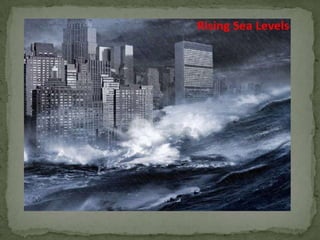
 Rising Sea levels
 Climate change refers to general shifts in climate,
  including temperature, precipitation, winds, and other
  factors.

 Factors are sun’s output, changes in the earth’s orbit
  and tilt, and volcanic activity etc.
 Human Causes
 Increase green house gasses(emulsion from buning
  fossils fuels-oil, coal etc)
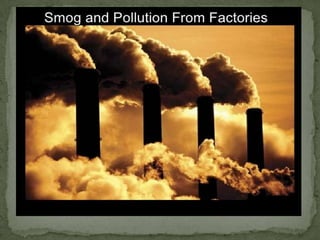
 Pollution, smog from factories.
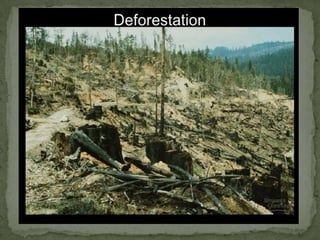
 Deforestation
 Increasing Population (More people more CO2)
 Natural Causes
 The arctic tundra and wetlands release methene, a
  greenhouse gas
 Earth naturally has a cycle of climate change that
  occurs every 40,000 years
 The sun’s solar energy output is changing and
  naturally increases Earth average temperature by
  about 1’C every century
 Earth’s orbit and tilt alter in relation to the sun, which
  changes solar energy output.
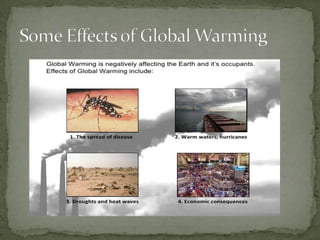
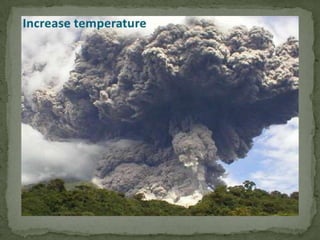
 An average increase in temperature and during the last
  century
 Melting of polar ice-polar bears and others animals are
  drowning
 Migrating birds are forced to change their time and
  place of migration
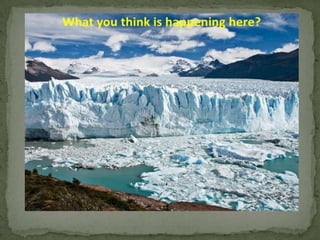
 Melting of glaciers will lead to higher sea level, which
  will cause floods and put many low elevation reginons
  at risk of disappearing under water
 Longer summers can disrupt animal habitaion
 New and widespread diseases because of warm climate
 Damaged crops due to sudden climate change and
  floods
 Average Precipitation increase around the world
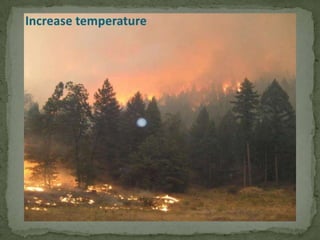
 More wildfires
 Droughts, heat waves, extreme winter and stroms,
  hurricanes, typhoons
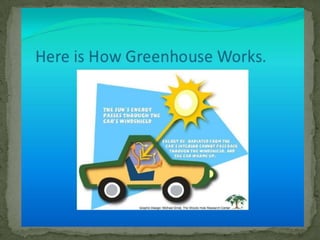
 A glass building in which palnts are kept to protect
  then from cold weather is known as green house.
 And the trapping of the sun’s warmth in the earth’s
  lowest atmosphere , because visible radiation from the
  sun passes through the atmosphere more radily
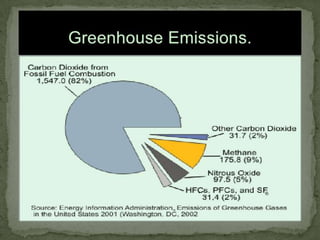
 Carbon Dioxide from Fossil fuel Combustion: (82%)
  Carbon Dioxide emitted from Cars, Trains.
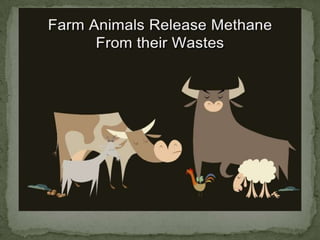
 Methane: (9%) methane, comes form landfills, coils,
  oil and gas operations and agriculture
 Nitrous Oxide: (5%) Emitted from burning fossils fuels
  and through the use of certain fertilizers and
  industrial processes
 Human Made gases: (2%) Released as byproducts of
  industrial processes and through leakage.
 Rising concentration of greenhouse gases generally
  produce an increase in the average temperature of the
  Earth
 Rising temperature may , in turn , produce changes in
  weather, sea levels and land use patterns, commonly
  referred to as “climate Change”
 Stop fossils fuels          Use clean coal and oil
 Stop factories pollution    Drive low emission and
 Which will cause lack of     fuel efficiency vehicle
  oxygen                      Plant trees
 Reduce Waste
 Use solar power energy
 Sijnce stopping the burning of fossil fuels would have t
  great of a negative effect on our economy
 We must investigate other forms dof energy that
  would be just as affordable as fossil fuels without the
  negative effects or harmful gasses that contribut to
  global warming. (Solar , Wind)
Presentation on green house effect/Climate Change/Global Warming

Presentation on green house effect/Climate Change/Global Warming

  • 1.
  • 2.
    Group Members 1. Mir Atikur Rahman 09106063 2. Nur Islam 08306014 3. Faia Jahan 10106062 4. Md Hachnayen Ahmed 10106063
  • 4.
     The terms“Greenhouse Effect”, “Climate Change”, and “Global Warming” are often used interchangeably, yet they really refer to three separate and distinct processes. In this presentation we will show how the world environment/ weather getting warmer.  Gases responsible for green house effect.  Its effect and possible remedy.
  • 5.
     Firstly let’slook at how the earth atmosphere is heated.  The energy that heats the atmosphere comes from the Sun , which is the source of huge energy  The sun sends its solar radiation out into space and the earth intercepts only a small portion of it, about one part in two billion which is tremendous amount.  ½ of that energy that reaches the earth's atmosphere is reflected back out into space and about ½ reaches the surface.  Once the sun's energy reaches the earth's surface, it is absorbed and the temperature of the earth’s surface increases.
  • 6.
     The abilityof the earth's atmosphere to allow the passage of visible light, but absorb reradiated heat energy emitted from the earth's surface is known as the greenhouse effect.  Climate is the long-term average conditions of weather.  Global warming refers to a rise of a temperature of the surface of the earth.  Currently the total world’s population is approx. 6,973,738,433
  • 7.
     The earthwas formed  Earliest human was born about 4.5 billion years ago. about 4.1 million ago  At that time the earth  The population was contained about 1% oxygen doubled from 3 billion to 6 pressure billion from the year of  The Plants were developed 1959 to 1999 first about 2.7 billion years ago  The first animal was develop around 600 millions year ago
  • 9.
     Slowly, theability of the earth’s atmosphere to absorb heat from the surface has increased and, with it, the temperature of the atmosphere. This is known as global warming.
  • 10.
     Increase inthe amount of greenhouse gasses in the atmosphere attributed mainly to human activity. Which is caused an unbalanced in the process called the green house effect.  Burning fossil fuels  Cutting down trees  Burning forest  Factories Pollulaion  Coal  Oil  Natural Gases  Rising Sea levels
  • 13.
     Climate changerefers to general shifts in climate, including temperature, precipitation, winds, and other factors.  Factors are sun’s output, changes in the earth’s orbit and tilt, and volcanic activity etc.
  • 14.
     Human Causes Increase green house gasses(emulsion from buning fossils fuels-oil, coal etc)  Pollution, smog from factories.  Deforestation  Increasing Population (More people more CO2)
  • 15.
     Natural Causes The arctic tundra and wetlands release methene, a greenhouse gas  Earth naturally has a cycle of climate change that occurs every 40,000 years  The sun’s solar energy output is changing and naturally increases Earth average temperature by about 1’C every century  Earth’s orbit and tilt alter in relation to the sun, which changes solar energy output.
  • 19.
     An averageincrease in temperature and during the last century  Melting of polar ice-polar bears and others animals are drowning  Migrating birds are forced to change their time and place of migration  Melting of glaciers will lead to higher sea level, which will cause floods and put many low elevation reginons at risk of disappearing under water  Longer summers can disrupt animal habitaion
  • 20.
     New andwidespread diseases because of warm climate  Damaged crops due to sudden climate change and floods  Average Precipitation increase around the world  More wildfires  Droughts, heat waves, extreme winter and stroms, hurricanes, typhoons
  • 21.
     A glassbuilding in which palnts are kept to protect then from cold weather is known as green house.  And the trapping of the sun’s warmth in the earth’s lowest atmosphere , because visible radiation from the sun passes through the atmosphere more radily
  • 24.
     Carbon Dioxidefrom Fossil fuel Combustion: (82%) Carbon Dioxide emitted from Cars, Trains.  Methane: (9%) methane, comes form landfills, coils, oil and gas operations and agriculture  Nitrous Oxide: (5%) Emitted from burning fossils fuels and through the use of certain fertilizers and industrial processes  Human Made gases: (2%) Released as byproducts of industrial processes and through leakage.
  • 25.
     Rising concentrationof greenhouse gases generally produce an increase in the average temperature of the Earth  Rising temperature may , in turn , produce changes in weather, sea levels and land use patterns, commonly referred to as “climate Change”
  • 30.
     Stop fossilsfuels  Use clean coal and oil  Stop factories pollution  Drive low emission and  Which will cause lack of fuel efficiency vehicle oxygen  Plant trees  Reduce Waste  Use solar power energy
  • 31.
     Sijnce stoppingthe burning of fossil fuels would have t great of a negative effect on our economy  We must investigate other forms dof energy that would be just as affordable as fossil fuels without the negative effects or harmful gasses that contribut to global warming. (Solar , Wind)