"I saw a woman crying in her flooded front room. I thought: if anything, you're making it worse love…"   Jimmy Carr
High and Dry ?  Geographical Lessons from the Yorkshire Floods of June 2007 Alan Parkinson Secondary Curriculum Development Leader Geographical Association [email_address]
Objectives… To outline the impact of the floods of June 2007 in Yorkshire To explore the issue of flooding and risk, and the concept of ‘resilience’ To summarise any “lessons learned” To discuss the question of whether this was a “natural hazard”.
http://animoto.com Make your own movies !
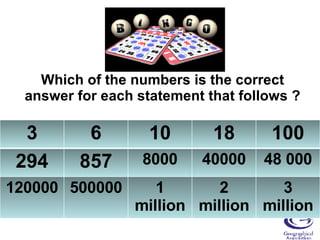
Which of the numbers is the correct answer for each statement that follows ? 3 6 10 18 100 294 857 8000 40000 48 000 120000 500000 1 million 2 million 3 million
Total amount of insurance claims (in billions of pounds) ? Number of schools damaged by the floods.  Number of INXS fans who turned up at Sheffield City Hall expecting the concert to go ahead.  Number of British homes currently at risk from flooding
Percentage of Hull’s population still living in temporary accommodation 9 months after the floods. Number of pupil days lost in schools in Rotherham Total number of household insurance claims. Number of millimetres of rainfall at Emley Moor, W. Yorks in June.
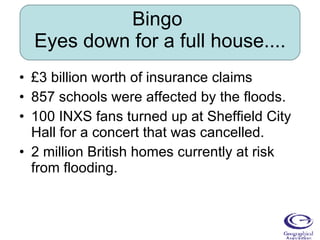
Bingo  Eyes down for a full house.... £3 billion worth of insurance claims 857 schools were affected by the floods. 100 INXS fans turned up at Sheffield City Hall for a concert that was cancelled. 2 million British homes currently at risk from flooding.
Bingo  Eyes down for a full house.... 120 000 total household insurance claims following the floods 10% of Hull’s population still living in temporary accommodation 294 mm of rainfall fell at Emley Moor in West Yorkshire 48 000 pupil days were lost at schools in Rotherham
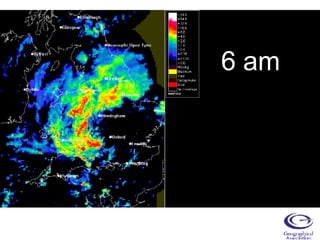
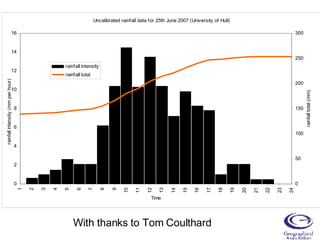
On Monday the 25 th  of June 2007, just after 6am, heavy rain started to fall across Yorkshire...
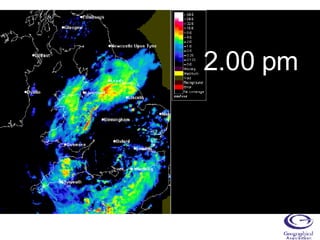
12 hours later, it was still raining...
6 am
8.30 am
2.00 pm
6.00 pm
With thanks to Tom Coulthard
Rivers broke their banks: the Don, the Sheaf, the Rother, the Ryton, the Hipper... Was this mainly a  fluvial  flooding event (from rivers) or a  pluvial  event (from rain)
What caused it ? 25 th  of June: torrential rain fell over a large area: the equivalent of the contents of over 20 Olympic sized swimming pools every second fell on the city of Hull The 2 weeks before the 25 th  were very wet, and the water table was close to the ground surface ( antecedent conditions ) Why so much rain ?
The wettest June on record Source: Met Office
20 - 30 000 feet high Jet Stream: aircraft pilots ‘Ribbon’ of wind – speeds of between 100 and 300 miles per hour Form where cold polar air meets warm tropical air. ‘Steer’ depressions What caused it ?
 
PFJS: moves from West to East Summer: normally veers North and leaves calmer HIGH pressure conditions over UK In 2007, Jet Stream stayed south What caused it ?
 
Forecast from http://www.metcheck.com
Why so much rain ?   The polar jet which steers our weather system was stuck further south than usual for the time of year, so we were more open to low pressure systems  Warm air, so more evaporation from ocean As a result, a month’s worth of rain fell in 24 hours in some parts of the country.   Same again this year...
Why was this a hazard ? Something becomes a hazard when it does one or both of the following things: endangers life and damages property or the environment threatens human societies and their welfare
What is the flood risk ? Risk: “ The probability of a hazard occurring and creating loss...” Types: Atmospheric Hydrological Geological Biological Technological
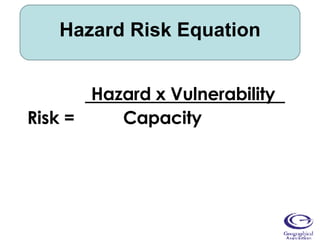
Hazard Risk Equation Hazard x Vulnerability Risk =    Capacity
Primary or Secondary ? Primary : Immediate – as a direct consequence of the hazard Secondary : Follows later – an indirect (but connected) consequence of the hazard.
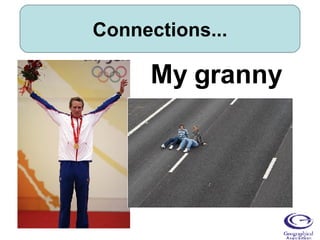
Connections... My granny
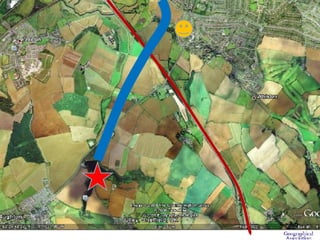
Ulley Reservoir Dam near Rotherham Earth bank retaining wall was being eroded away as the dam overflowed Dam was much fuller than usual Water started to leak out, and ran down the surface of the dam wall Landslide weakened the dam wall Engineers said “not if, but when...” 120 million gallons of water...
 
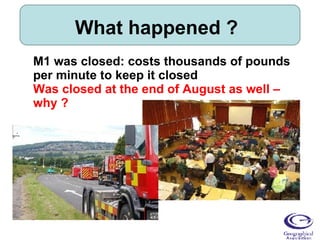
What happened ? M1 was closed: costs thousands of pounds per minute to keep it closed Was closed at the end of August as well – why ?
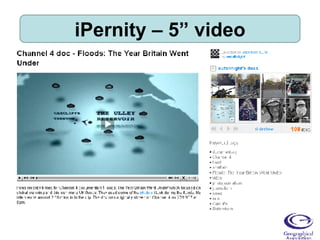
iPernity – 5” video
 
Google Earth file – pulls in videos and images...
 
Resilience
Flood resilience Kitchen units made of steel rather than wood Electrical sockets placed at higher level rather than the ‘usual’ level Tiled floors Raised foundations Flood doors and barriers Storage on high shelves
Flood Resilient Home
The resilient Kings Arms
Notice anything ?
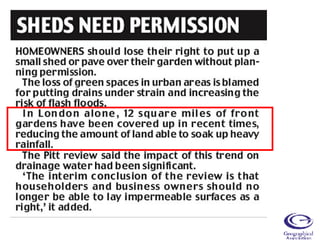
10 % of homes are built in areas at risk from flooding Flood defences of new buildings compound flooding downstream  We tend to like living near rivers and coasts
“ They’re called flood plains because they flood...” Philip Eden Royal Meteorological Society
Who are the  stakeholders  ? The Environment Agency The Police, Fire Brigade and Ambulance The Met Office The Army The RAF and Coastguard Agency Gold Command Local council Local churches Red Cross The Government Local shops and businesses Insurance companies
3  policy areas  to focus on: The annual spend on flood defences Where and how to build new houses Emergency response procedures
“ Britain’s biggest ever peace time rescue operation” Over 3500 people rescued by helicopters more used to rescuing people at sea...
12 months on… (June 2008) More than 10,000 people are still unable to return to their homes after last summer's flooding, figures obtained by BBC Radio 5 Live suggest.   “ Councils in England confirmed around 5,000 households remained affected, but added many may not be on lists because they rented or stayed with relatives.” A shortage of skilled workers, as well as problems caused by a cool, wet winter have slowed down repairs.  The worst affected area was Hull.
 
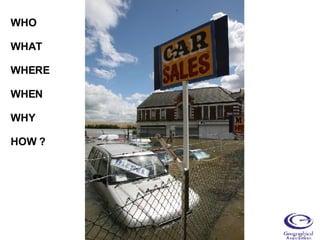
WHO WHAT WHERE WHEN WHY HOW ?
A flood hits the following businesses… Which one is able to open first... Bookshop Fish and Chip Shop Hairdressers Carpet Shop Thanks to Simon Oakes via Waterworlds blog
Flickr user: wip-hairport
Who  benefits  from flooding ? Look at the list below. Who is going to benefit ? Plumbers Plasterers Electricians Vehicle and equipment hire firms: dryers Carpet fitters Skip Hire firms... Geography teachers ?
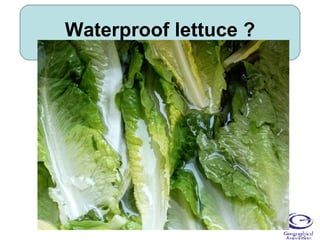
Waterproof lettuce ?
Waterproof letters FLOOD PLANNING 6 elements...
1. Check your  insurance  cover, and where your policy is... There were 165 000 insurance claims after the floods.
2. Know how to turn off gas,  electricity and water. Flickr user: earthfromtheground, Amir. S
3. Prepare a flood kit of essential items: a ‘ready bag’ Important documents e.g. Passport, driving license and  important phone numbers  Home and car keys  Toiletries and personal first aid kit  A wind-up or battery radio  Spare batteries  A torch or a candle and matches  Mobile phone  Cash and Credit cards  Spare clothes and blankets  Bottled water and any easy food, e.g. tinned food or biscuits .
4. Know who to contact and how  Flickr user: absolutwade
5. Think about what you can move now. 6. Think about what you would want to move to safety during a flood.
The analysis started.... Professor Tom Coulthard Hull University Flickr: tuck 1981
Hull: hit harder than anywhere else... Hull built in basin – “like New Orleans” Water has to be pumped into River Humber Heavy rain meant that the river was already swollen Pumps were not at sufficient capacity to remove all the water. Following slides by Professor Tom Coulthard
What caused the 25 th  June 2007 floods? Pumps and drains could not cope with volumes of water Too much water falling on the city for the network of drains, sewers and pumps to cope with Like a bath with the plug left in… The water had no-where else to go Were the pumps and sewers correctly designed?
Hull has the largest number of households and people affected by the summer floods for any one area in the UK.  Over 8600 households were damaged by the June floods, home to over 20 000 people. Of these, 6 300 were forced to live in alternative accommodation with over  1400 people living in caravans.  The immediate impact
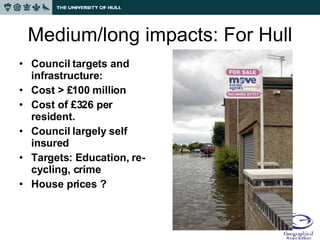
Medium/long impacts: For Hull Council targets and infrastructure: Cost > £100 million Cost of £326 per resident. Council largely self insured Targets: Education, re-cycling, crime House prices ?
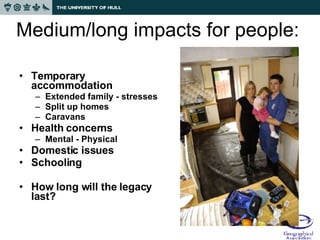
Medium/long impacts for people: Temporary accommodation Extended family - stresses Split up homes Caravans Health concerns Mental - Physical Domestic issues Schooling How long will the legacy last?
No ‘Pluvial’ Flood Warning System EA Floodline only warns of River and Tidal flooding No predictive system to forecast for the impacts of ‘pluvial’ flooding Who is responsible for warning from these events? “ The Environment Agency provides flood warnings online 24 hours a day. From this page you can view warnings in force in each of our eight regions covering England and Wales. You can also search for your local area and its current warning status using the panel on the right. The information is updated every 15 minutes.”
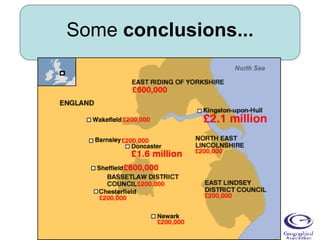
Some  conclusions...
 
 
Hazard Risk Equation Hazard x Vulnerability Risk =    Capacity
Why are floods not  natural  hazards ? Flickr  user: Chris Malcolm
 
http://www.cabinetoffice.gov.uk/thepittreview/interim_report.aspx The Pitt Review Individuals Businesses
 
Have a go yourself http://floodsim.com... Can also be downloaded .
 
“ For every  £1 further we can spend, we would be able to save the country £6 in repair costs.” Mark Tinnion Regional Flood Risk Manager Environment Agency
2007 137 million people affected worldwide by flooding...
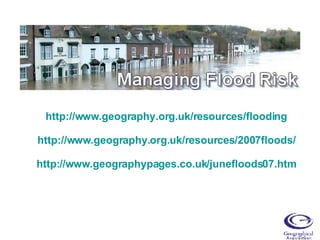
http://www.geography.org.uk/resources/flooding http://www.geography.org.uk/resources/2007floods/ http://www.geographypages.co.uk/junefloods07.htm
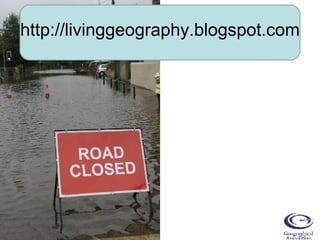
http://livinggeography.blogspot.com
Extra reading...
Acknowledgements John Lyon, Professor David Lambert and other GA colleagues “ The Great Flood” – Martin Smith (2007) – published by At Heart Ltd and ‘The Star’ newspaper Newspaper articles from newspapers: The Independent, The Times, The Guardian, Daily Mail Dr. Simon Oakes, Bancroft School Professor Tom Coulthard, Hull University Ernie Savage – for inviting me... FLICKR Users for images
Acknowledgements Environment Agency http://www.environment-agency.gov.uk/subjects/flood/1867303/?version=1&lang=_e The Met Office: Rainfall statistics UKResilience website http://www.ukresilience.gov.uk/response/recovery_guidance/case_studies/p2_3_10-y1_2_yandh_flooding.aspx Images of Ulley and Catcliffe area by Mark Lomas (made available on Flickr) Hazard pyramid by Dr. Fiona Tweed, Staffordshire University http://www.metoffice.gov.uk/weather/seasonal/summer2007/index.html
Acknowledgements FloodSim simulation game:  http://floodsim.com BBC News website – particularly Have your Say The Pitt Review (can be downloaded) iPernity: can see the 5 minute clip of the Ulley Dam http://www.ipernity.com/doc/outallnight/1167732/ Flood Resilient Home website (Norwich Union) Tom Austen of RIDO for his Flood Map using Google Earth Stuart Lane article in ‘Geography’ (Vol. 93,2,2008)

High And Dry

  • 1.
    "I saw awoman crying in her flooded front room. I thought: if anything, you're making it worse love…"   Jimmy Carr
  • 2.
    High and Dry? Geographical Lessons from the Yorkshire Floods of June 2007 Alan Parkinson Secondary Curriculum Development Leader Geographical Association [email_address]
  • 3.
    Objectives… To outlinethe impact of the floods of June 2007 in Yorkshire To explore the issue of flooding and risk, and the concept of ‘resilience’ To summarise any “lessons learned” To discuss the question of whether this was a “natural hazard”.
  • 4.
  • 5.
    Which of thenumbers is the correct answer for each statement that follows ? 3 6 10 18 100 294 857 8000 40000 48 000 120000 500000 1 million 2 million 3 million
  • 6.
    Total amount ofinsurance claims (in billions of pounds) ? Number of schools damaged by the floods. Number of INXS fans who turned up at Sheffield City Hall expecting the concert to go ahead. Number of British homes currently at risk from flooding
  • 7.
    Percentage of Hull’spopulation still living in temporary accommodation 9 months after the floods. Number of pupil days lost in schools in Rotherham Total number of household insurance claims. Number of millimetres of rainfall at Emley Moor, W. Yorks in June.
  • 8.
    Bingo Eyesdown for a full house.... £3 billion worth of insurance claims 857 schools were affected by the floods. 100 INXS fans turned up at Sheffield City Hall for a concert that was cancelled. 2 million British homes currently at risk from flooding.
  • 9.
    Bingo Eyesdown for a full house.... 120 000 total household insurance claims following the floods 10% of Hull’s population still living in temporary accommodation 294 mm of rainfall fell at Emley Moor in West Yorkshire 48 000 pupil days were lost at schools in Rotherham
  • 10.
    On Monday the25 th of June 2007, just after 6am, heavy rain started to fall across Yorkshire...
  • 11.
    12 hours later,it was still raining...
  • 12.
  • 13.
  • 14.
  • 15.
  • 16.
    With thanks toTom Coulthard
  • 17.
    Rivers broke theirbanks: the Don, the Sheaf, the Rother, the Ryton, the Hipper... Was this mainly a fluvial flooding event (from rivers) or a pluvial event (from rain)
  • 18.
    What caused it? 25 th of June: torrential rain fell over a large area: the equivalent of the contents of over 20 Olympic sized swimming pools every second fell on the city of Hull The 2 weeks before the 25 th were very wet, and the water table was close to the ground surface ( antecedent conditions ) Why so much rain ?
  • 19.
    The wettest Juneon record Source: Met Office
  • 20.
    20 - 30000 feet high Jet Stream: aircraft pilots ‘Ribbon’ of wind – speeds of between 100 and 300 miles per hour Form where cold polar air meets warm tropical air. ‘Steer’ depressions What caused it ?
  • 21.
  • 22.
    PFJS: moves fromWest to East Summer: normally veers North and leaves calmer HIGH pressure conditions over UK In 2007, Jet Stream stayed south What caused it ?
  • 23.
  • 24.
  • 25.
    Why so muchrain ?   The polar jet which steers our weather system was stuck further south than usual for the time of year, so we were more open to low pressure systems  Warm air, so more evaporation from ocean As a result, a month’s worth of rain fell in 24 hours in some parts of the country.   Same again this year...
  • 26.
    Why was thisa hazard ? Something becomes a hazard when it does one or both of the following things: endangers life and damages property or the environment threatens human societies and their welfare
  • 27.
    What is theflood risk ? Risk: “ The probability of a hazard occurring and creating loss...” Types: Atmospheric Hydrological Geological Biological Technological
  • 28.
    Hazard Risk EquationHazard x Vulnerability Risk = Capacity
  • 29.
    Primary or Secondary? Primary : Immediate – as a direct consequence of the hazard Secondary : Follows later – an indirect (but connected) consequence of the hazard.
  • 30.
  • 31.
    Ulley Reservoir Damnear Rotherham Earth bank retaining wall was being eroded away as the dam overflowed Dam was much fuller than usual Water started to leak out, and ran down the surface of the dam wall Landslide weakened the dam wall Engineers said “not if, but when...” 120 million gallons of water...
  • 32.
  • 33.
    What happened ?M1 was closed: costs thousands of pounds per minute to keep it closed Was closed at the end of August as well – why ?
  • 34.
  • 35.
  • 36.
    Google Earth file– pulls in videos and images...
  • 37.
  • 38.
  • 39.
    Flood resilience Kitchenunits made of steel rather than wood Electrical sockets placed at higher level rather than the ‘usual’ level Tiled floors Raised foundations Flood doors and barriers Storage on high shelves
  • 40.
  • 41.
  • 42.
  • 43.
    10 % ofhomes are built in areas at risk from flooding Flood defences of new buildings compound flooding downstream We tend to like living near rivers and coasts
  • 44.
    “ They’re calledflood plains because they flood...” Philip Eden Royal Meteorological Society
  • 45.
    Who are the stakeholders ? The Environment Agency The Police, Fire Brigade and Ambulance The Met Office The Army The RAF and Coastguard Agency Gold Command Local council Local churches Red Cross The Government Local shops and businesses Insurance companies
  • 46.
    3 policyareas to focus on: The annual spend on flood defences Where and how to build new houses Emergency response procedures
  • 47.
    “ Britain’s biggestever peace time rescue operation” Over 3500 people rescued by helicopters more used to rescuing people at sea...
  • 48.
    12 months on…(June 2008) More than 10,000 people are still unable to return to their homes after last summer's flooding, figures obtained by BBC Radio 5 Live suggest. “ Councils in England confirmed around 5,000 households remained affected, but added many may not be on lists because they rented or stayed with relatives.” A shortage of skilled workers, as well as problems caused by a cool, wet winter have slowed down repairs. The worst affected area was Hull.
  • 49.
  • 50.
    WHO WHAT WHEREWHEN WHY HOW ?
  • 51.
    WHO WHAT WHEREWHEN WHY HOW ?
  • 52.
    WHO WHAT WHEREWHEN WHY HOW ?
  • 53.
    WHO WHAT WHEREWHEN WHY HOW ?
  • 54.
    A flood hitsthe following businesses… Which one is able to open first... Bookshop Fish and Chip Shop Hairdressers Carpet Shop Thanks to Simon Oakes via Waterworlds blog
  • 55.
  • 56.
    Who benefits from flooding ? Look at the list below. Who is going to benefit ? Plumbers Plasterers Electricians Vehicle and equipment hire firms: dryers Carpet fitters Skip Hire firms... Geography teachers ?
  • 57.
  • 58.
    Waterproof letters FLOODPLANNING 6 elements...
  • 59.
    1. Check your insurance cover, and where your policy is... There were 165 000 insurance claims after the floods.
  • 60.
    2. Know howto turn off gas, electricity and water. Flickr user: earthfromtheground, Amir. S
  • 61.
    3. Prepare aflood kit of essential items: a ‘ready bag’ Important documents e.g. Passport, driving license and important phone numbers Home and car keys Toiletries and personal first aid kit A wind-up or battery radio Spare batteries A torch or a candle and matches Mobile phone Cash and Credit cards Spare clothes and blankets Bottled water and any easy food, e.g. tinned food or biscuits .
  • 62.
    4. Know whoto contact and how Flickr user: absolutwade
  • 63.
    5. Think aboutwhat you can move now. 6. Think about what you would want to move to safety during a flood.
  • 64.
    The analysis started....Professor Tom Coulthard Hull University Flickr: tuck 1981
  • 65.
    Hull: hit harderthan anywhere else... Hull built in basin – “like New Orleans” Water has to be pumped into River Humber Heavy rain meant that the river was already swollen Pumps were not at sufficient capacity to remove all the water. Following slides by Professor Tom Coulthard
  • 66.
    What caused the25 th June 2007 floods? Pumps and drains could not cope with volumes of water Too much water falling on the city for the network of drains, sewers and pumps to cope with Like a bath with the plug left in… The water had no-where else to go Were the pumps and sewers correctly designed?
  • 67.
    Hull has thelargest number of households and people affected by the summer floods for any one area in the UK. Over 8600 households were damaged by the June floods, home to over 20 000 people. Of these, 6 300 were forced to live in alternative accommodation with over 1400 people living in caravans. The immediate impact
  • 68.
    Medium/long impacts: ForHull Council targets and infrastructure: Cost > £100 million Cost of £326 per resident. Council largely self insured Targets: Education, re-cycling, crime House prices ?
  • 69.
    Medium/long impacts forpeople: Temporary accommodation Extended family - stresses Split up homes Caravans Health concerns Mental - Physical Domestic issues Schooling How long will the legacy last?
  • 70.
    No ‘Pluvial’ FloodWarning System EA Floodline only warns of River and Tidal flooding No predictive system to forecast for the impacts of ‘pluvial’ flooding Who is responsible for warning from these events? “ The Environment Agency provides flood warnings online 24 hours a day. From this page you can view warnings in force in each of our eight regions covering England and Wales. You can also search for your local area and its current warning status using the panel on the right. The information is updated every 15 minutes.”
  • 71.
  • 72.
  • 73.
  • 74.
    Hazard Risk EquationHazard x Vulnerability Risk = Capacity
  • 75.
    Why are floodsnot natural hazards ? Flickr user: Chris Malcolm
  • 76.
  • 77.
  • 78.
  • 79.
    Have a goyourself http://floodsim.com... Can also be downloaded .
  • 80.
  • 81.
    “ For every £1 further we can spend, we would be able to save the country £6 in repair costs.” Mark Tinnion Regional Flood Risk Manager Environment Agency
  • 82.
    2007 137 millionpeople affected worldwide by flooding...
  • 83.
  • 84.
  • 85.
  • 86.
    Acknowledgements John Lyon,Professor David Lambert and other GA colleagues “ The Great Flood” – Martin Smith (2007) – published by At Heart Ltd and ‘The Star’ newspaper Newspaper articles from newspapers: The Independent, The Times, The Guardian, Daily Mail Dr. Simon Oakes, Bancroft School Professor Tom Coulthard, Hull University Ernie Savage – for inviting me... FLICKR Users for images
  • 87.
    Acknowledgements Environment Agencyhttp://www.environment-agency.gov.uk/subjects/flood/1867303/?version=1&lang=_e The Met Office: Rainfall statistics UKResilience website http://www.ukresilience.gov.uk/response/recovery_guidance/case_studies/p2_3_10-y1_2_yandh_flooding.aspx Images of Ulley and Catcliffe area by Mark Lomas (made available on Flickr) Hazard pyramid by Dr. Fiona Tweed, Staffordshire University http://www.metoffice.gov.uk/weather/seasonal/summer2007/index.html
  • 88.
    Acknowledgements FloodSim simulationgame: http://floodsim.com BBC News website – particularly Have your Say The Pitt Review (can be downloaded) iPernity: can see the 5 minute clip of the Ulley Dam http://www.ipernity.com/doc/outallnight/1167732/ Flood Resilient Home website (Norwich Union) Tom Austen of RIDO for his Flood Map using Google Earth Stuart Lane article in ‘Geography’ (Vol. 93,2,2008)