Objectives: in this section, you will ....
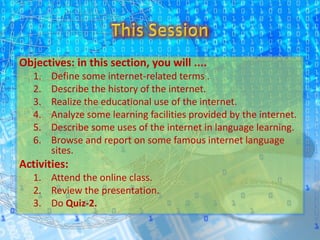
1. Define some internet-related terms .
2. Describe the history of the internet.
3. Realize the educational use of the internet.
4. Analyze some learning facilities provided by the internet.
5. Describe some uses of the internet in language learning.
6. Browse and report on some famous internet language
sites.
Activities:
1. Attend the online class.
2. Review the presentation.
3. Do Quiz-2.
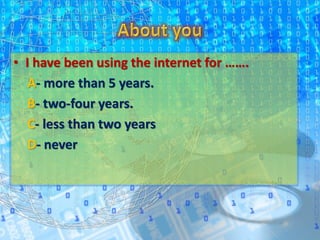
• I have been using the internet for …….
A- more than 5 years.
B- two-four years.
C- less than two years
D- never
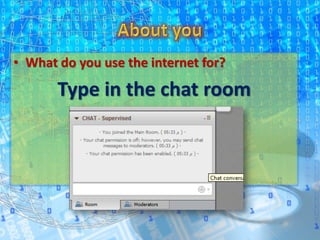
• What do you use the internet for?
Type in the chat room
• There are many educational uses of the
internet.
• The internet can be used in language
learning.
• The Internet is a global system of
interconnected computer networks that use
the standard Internet protocol suite (TCP/IP)
to serve several billion users worldwide.
• It is a network of networks that consists of
millions of private, public, academic, business,
and government networks, of local to global
scope, that are linked by a broad array of
electronic, wireless and optical networking
technologies.
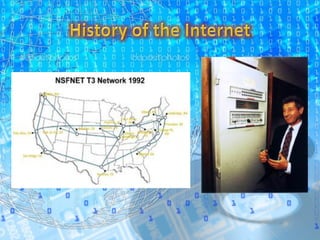
• The origins of the Internet reach back to the
1960s in USA.
• There is no consensus on the exact date when
the modern Internet came into being, but
sometime in the early to mid-1980s is
considered reasonable.
• The Internet has enabled entirely new forms
of social interaction, activities, and organizing,
thanks to its basic features such as widespread
usability and access.
• In the first decade of the 21st century, the first
generation is raised with widespread
availability of Internet connectivity, bringing
consequences and concerns in areas such as
personal privacy and identity, and distribution
of copyrighted materials.
• These "digital natives" face a variety of
challenges that were not present for prior
generations.
• The Internet is a medium for teachers to find
authentic and infinite resource files of texts,
visual stimuli, listening materials, vocabulary,
cultural information, video files, live TV and
radios, newspapers from around the world.
• The Internet also allows for contextualized
real time communication via voice-chat, chat,
e-mails and forums.
• Browsing the Internet creates various
opportunities for learners to take control of
their own learning, especially in foreign
language learning classes, learners can benefit
from
– the authentic content,
– vocabulary and various language practice
opportunities while filling forms for registration,
– searching for e-mail pals and posting questions to
experts,
– writing reviews for movies, books and etc. on
various blogs and websites,
– looking for perfect holiday places,
– sharing their own views and learning about the
views of others,
– preparing Web-based Projects in collaboration,
– finding images relating the classroom topics;
these in return enable contextual practice and
real time discourse instances to be mastered.
• The Internet provides language learners with
the opportunity to create their own materials
and share these with public in collaborative
contexts as well as real life, Scenario-based
and Problem-based learning environments.
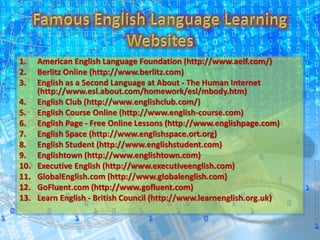
1. American English Language Foundation (http://www.aelf.com/)
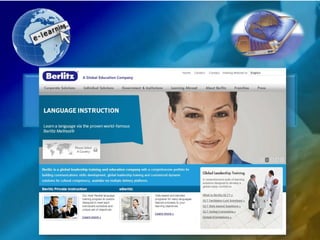
2. Berlitz Online (http://www.berlitz.com)
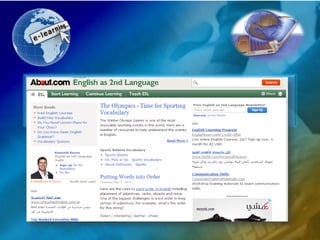
3. English as a Second Language at About - The Human Internet
(http://www.esl.about.com/homework/esl/mbody.htm)
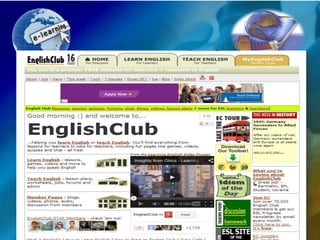
4. English Club (http://www.englishclub.com/)
5. English Course Online (http://www.english-course.com)
6. English Page - Free Online Lessons (http://www.englishpage.com)
7. English Space (http://www.englishspace.ort.org)
8. English Student (http://www.englishstudent.com)
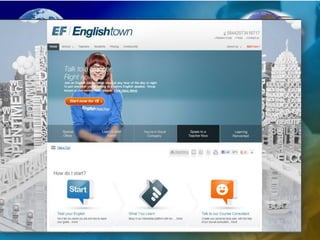
9. Englishtown (http://www.englishtown.com)
10. Executive English (http://www.executiveenglish.com)
11. GlobalEnglish.com (http://www.globalenglish.com)
12. GoFluent.com (http://www.gofluent.com)
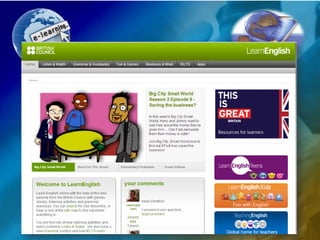
13. Learn English - British Council (http://www.learnenglish.org.uk)
Lesson 2  internet language learning

Lesson 2 internet language learning

  • 2.
    Objectives: in thissection, you will .... 1. Define some internet-related terms . 2. Describe the history of the internet. 3. Realize the educational use of the internet. 4. Analyze some learning facilities provided by the internet. 5. Describe some uses of the internet in language learning. 6. Browse and report on some famous internet language sites. Activities: 1. Attend the online class. 2. Review the presentation. 3. Do Quiz-2.
  • 3.
    • I havebeen using the internet for ……. A- more than 5 years. B- two-four years. C- less than two years D- never
  • 4.
    • What doyou use the internet for? Type in the chat room
  • 5.
    • There aremany educational uses of the internet.
  • 6.
    • The internetcan be used in language learning.
  • 7.
    • The Internetis a global system of interconnected computer networks that use the standard Internet protocol suite (TCP/IP) to serve several billion users worldwide.
  • 8.
    • It isa network of networks that consists of millions of private, public, academic, business, and government networks, of local to global scope, that are linked by a broad array of electronic, wireless and optical networking technologies.
  • 9.
    • The originsof the Internet reach back to the 1960s in USA. • There is no consensus on the exact date when the modern Internet came into being, but sometime in the early to mid-1980s is considered reasonable.
  • 11.
    • The Internethas enabled entirely new forms of social interaction, activities, and organizing, thanks to its basic features such as widespread usability and access.
  • 12.
    • In thefirst decade of the 21st century, the first generation is raised with widespread availability of Internet connectivity, bringing consequences and concerns in areas such as personal privacy and identity, and distribution of copyrighted materials. • These "digital natives" face a variety of challenges that were not present for prior generations.
  • 13.
    • The Internetis a medium for teachers to find authentic and infinite resource files of texts, visual stimuli, listening materials, vocabulary, cultural information, video files, live TV and radios, newspapers from around the world. • The Internet also allows for contextualized real time communication via voice-chat, chat, e-mails and forums.
  • 14.
    • Browsing theInternet creates various opportunities for learners to take control of their own learning, especially in foreign language learning classes, learners can benefit from – the authentic content, – vocabulary and various language practice opportunities while filling forms for registration, – searching for e-mail pals and posting questions to experts,
  • 15.
    – writing reviewsfor movies, books and etc. on various blogs and websites, – looking for perfect holiday places, – sharing their own views and learning about the views of others, – preparing Web-based Projects in collaboration, – finding images relating the classroom topics; these in return enable contextual practice and real time discourse instances to be mastered.
  • 16.
    • The Internetprovides language learners with the opportunity to create their own materials and share these with public in collaborative contexts as well as real life, Scenario-based and Problem-based learning environments.
  • 17.
    1. American EnglishLanguage Foundation (http://www.aelf.com/) 2. Berlitz Online (http://www.berlitz.com) 3. English as a Second Language at About - The Human Internet (http://www.esl.about.com/homework/esl/mbody.htm) 4. English Club (http://www.englishclub.com/) 5. English Course Online (http://www.english-course.com) 6. English Page - Free Online Lessons (http://www.englishpage.com) 7. English Space (http://www.englishspace.ort.org) 8. English Student (http://www.englishstudent.com) 9. Englishtown (http://www.englishtown.com) 10. Executive English (http://www.executiveenglish.com) 11. GlobalEnglish.com (http://www.globalenglish.com) 12. GoFluent.com (http://www.gofluent.com) 13. Learn English - British Council (http://www.learnenglish.org.uk)