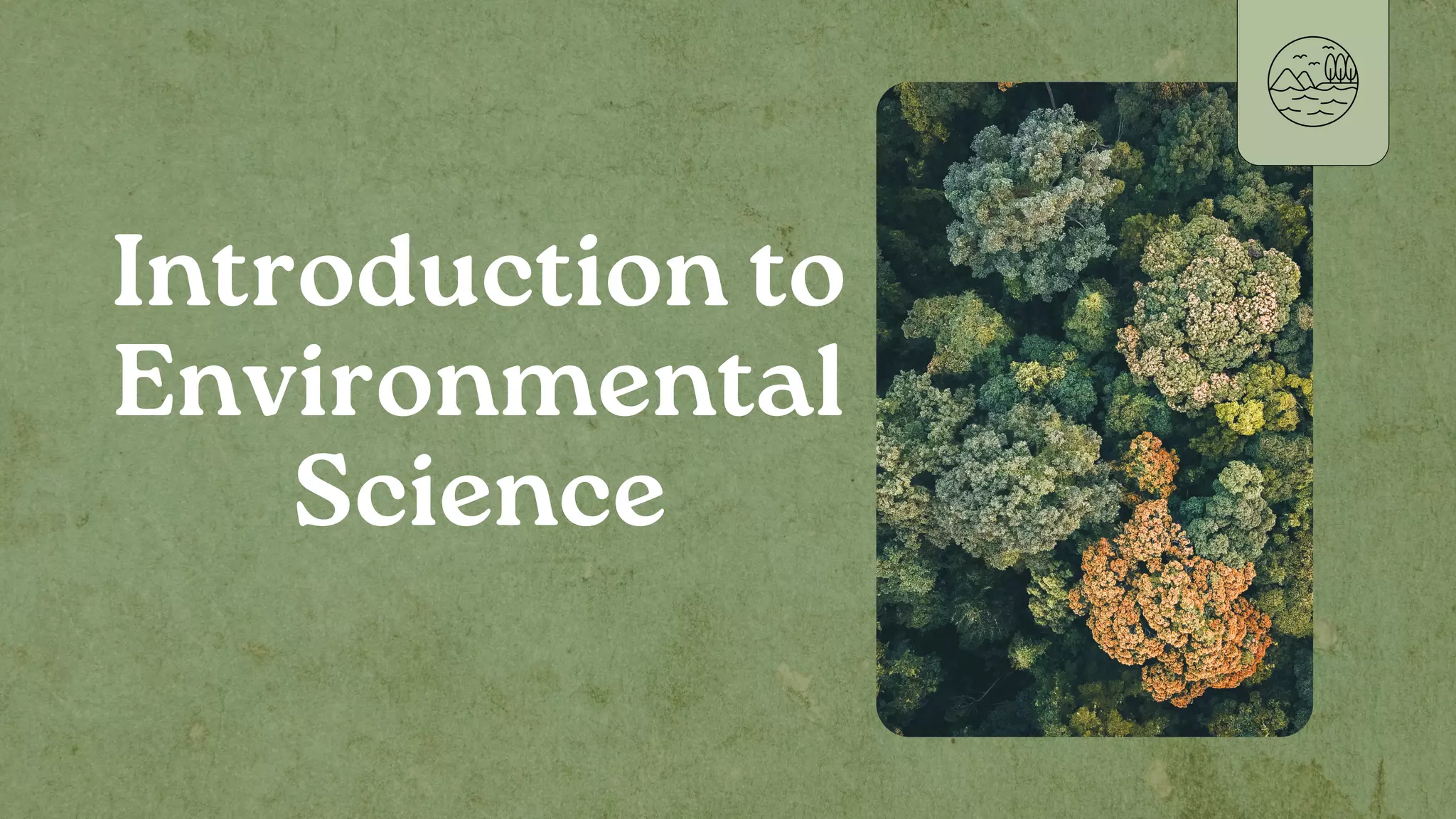
Introduction to
Environmental
Science
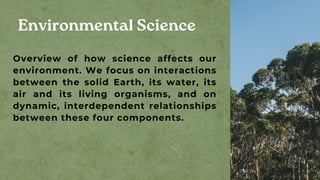
Environmental Science
Overview of how science affects our
environment. We focus on interactions
between the solid Earth, its water, its
air and its living organisms, and on
dynamic, interdependent relationships
between these four components.
Environmental Science
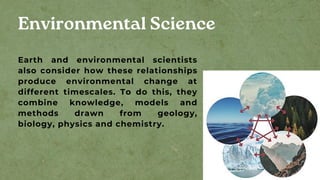
Earth and environmental scientists
also consider how these relationships
produce environmental change at
different timescales. To do this, they
combine knowledge, models and
methods drawn from geology,
biology, physics and chemistry.
Environmental
Scientist
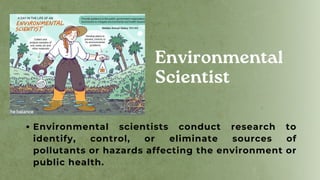
Environmental scientists conduct research to
identify, control, or eliminate sources of
pollutants or hazards affecting the environment or
public health.
Environmental
Science
Determining data collection
methods.
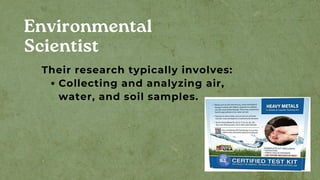
Their research typically involves:
Environmental
Scientist
Collecting and analyzing air,
water, and soil samples.
Their research typically involves:
Environmental
Science
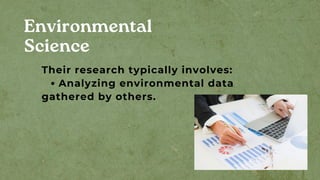
Analyzing environmental data
Their research typically involves:
gathered by others.
Environmental
Scientist
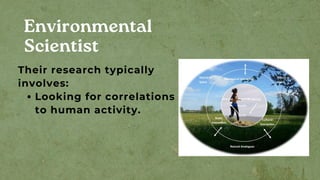
Looking for correlations
to human activity.
Their research typically
involves:
Environmental
Science
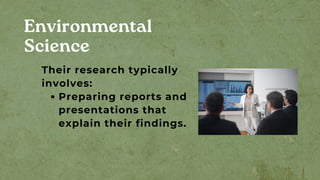
Preparing reports and
presentations that
explain their findings.
Their research typically
involves:
Environmental Science
Some environmental specialists focus on
environmental issues while others focus on issues
relating to human health. Either way, they work on
critical issues, solving some of the most important
problems of our day.
Environmental Scientist
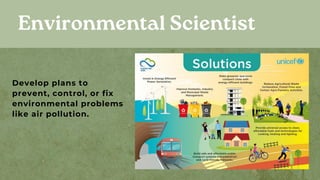
Develop plans to
prevent, control, or fix
environmental problems
like air pollution.
ENVIRONMENTAL SCIENCE
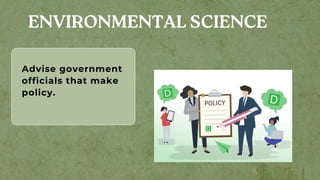
Advise government
officials that make
policy.
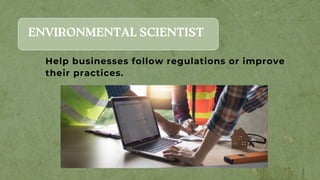
ENVIRONMENTAL SCIENTIST
Help businesses follow regulations or improve
their practices.
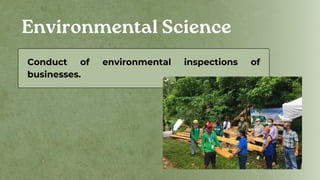
Environmental Science
Conduct of environmental inspections of
businesses.
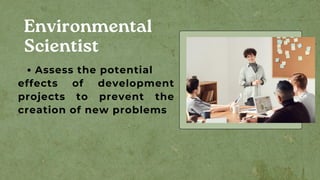
Environmental
Scientist
Assess the potential
effects of development
projects to prevent the
creation of new problems
Thank
you very
much!

Lesson 1 Introduction to Environmental Science.pdf