Proper Etiquette
and Behavior
Revised By:
Ms. Fleming
Objectives
1. Identify employer expectations.
2. Discuss appropriate work habits.
3. Identify good citizenship skills.
4. Identify appropriate interviewing skills.
Good Manners and Etiquette
 Difference:
 Good manners are rules for common actions of
courtesy and politeness.
 Etiquette describes the use of proper customs
in social and business life; these may change
over time
General Manners
 Be considerate of
others
 show respect
 use “excuse me”
 listen to people
before making
suggestions
 be patient
 Offer assistance
 compliment good
work
 learn, remember and
use people’s names
 be courteous, kind,
polite, and fair
General Etiquette
 Personal Manners When Meeting New
Friends
 Telephone Courtesy
 Personal Relations
 Table Manners
Personal Manners When Meeting
New Friends
DO
 Smile
 Firm handshake
 stand for a lady
 repeat a new name
 use “you” more than “I”
 introduce new friends to
others
DO NOT
 use “knuckle-buster”
handshakes
 do all the talking
 use foul language
 try to always be funny
and the center of
attention
 say bad things about
others
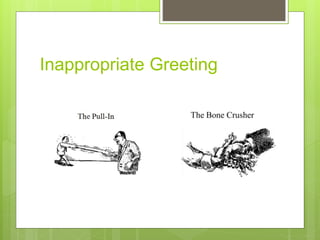
Inappropriate Greeting
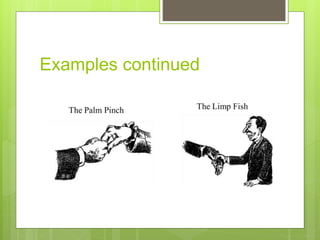
Examples continued
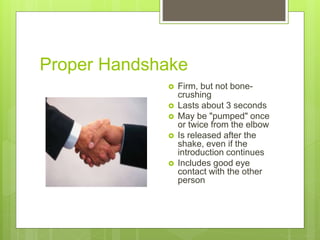
Proper Handshake
 Firm, but not bone-
crushing
 Lasts about 3 seconds
 May be "pumped" once
or twice from the elbow
 Is released after the
shake, even if the
introduction continues
 Includes good eye
contact with the other
person
Telephone Courtesy
 “Hello, this is ________ speaking. May I help
you?”
 Stay away from negative comments.
 “May I ask who’s calling?”
 When taking a message, include the date and
time of call, caller’s name and telephone
number.
Personal Relations
 Important to the success of anything.
 First look at yourself
 Attitude is one’s outlook on life, may be
positive or negative.
 Should try to maintain a positive attitude
Reasons to have a positive
attitude
 The future depends largely on the opinion of
others.
 More motivating and makes one more
energetic, productive, and alert.
 More pleasant to be around.
 Effect co-workers
 Builds self-confidence
Objectives
1. Identify employer expectations.
2. Discuss appropriate work habits.
3. Identify good citizenship skills.
4. Identify appropriate interviewing skills.

Proper Etiquette and Behavior in ESP Education

  • 1.
  • 2.
    Objectives 1. Identify employerexpectations. 2. Discuss appropriate work habits. 3. Identify good citizenship skills. 4. Identify appropriate interviewing skills.
  • 3.
    Good Manners andEtiquette  Difference:  Good manners are rules for common actions of courtesy and politeness.  Etiquette describes the use of proper customs in social and business life; these may change over time
  • 4.
    General Manners  Beconsiderate of others  show respect  use “excuse me”  listen to people before making suggestions  be patient  Offer assistance  compliment good work  learn, remember and use people’s names  be courteous, kind, polite, and fair
  • 5.
    General Etiquette  PersonalManners When Meeting New Friends  Telephone Courtesy  Personal Relations  Table Manners
  • 6.
    Personal Manners WhenMeeting New Friends DO  Smile  Firm handshake  stand for a lady  repeat a new name  use “you” more than “I”  introduce new friends to others DO NOT  use “knuckle-buster” handshakes  do all the talking  use foul language  try to always be funny and the center of attention  say bad things about others
  • 7.
  • 8.
  • 9.
    Proper Handshake  Firm,but not bone- crushing  Lasts about 3 seconds  May be "pumped" once or twice from the elbow  Is released after the shake, even if the introduction continues  Includes good eye contact with the other person
  • 10.
    Telephone Courtesy  “Hello,this is ________ speaking. May I help you?”  Stay away from negative comments.  “May I ask who’s calling?”  When taking a message, include the date and time of call, caller’s name and telephone number.
  • 11.
    Personal Relations  Importantto the success of anything.  First look at yourself  Attitude is one’s outlook on life, may be positive or negative.  Should try to maintain a positive attitude
  • 12.
    Reasons to havea positive attitude  The future depends largely on the opinion of others.  More motivating and makes one more energetic, productive, and alert.  More pleasant to be around.  Effect co-workers  Builds self-confidence
  • 13.
    Objectives 1. Identify employerexpectations. 2. Discuss appropriate work habits. 3. Identify good citizenship skills. 4. Identify appropriate interviewing skills.