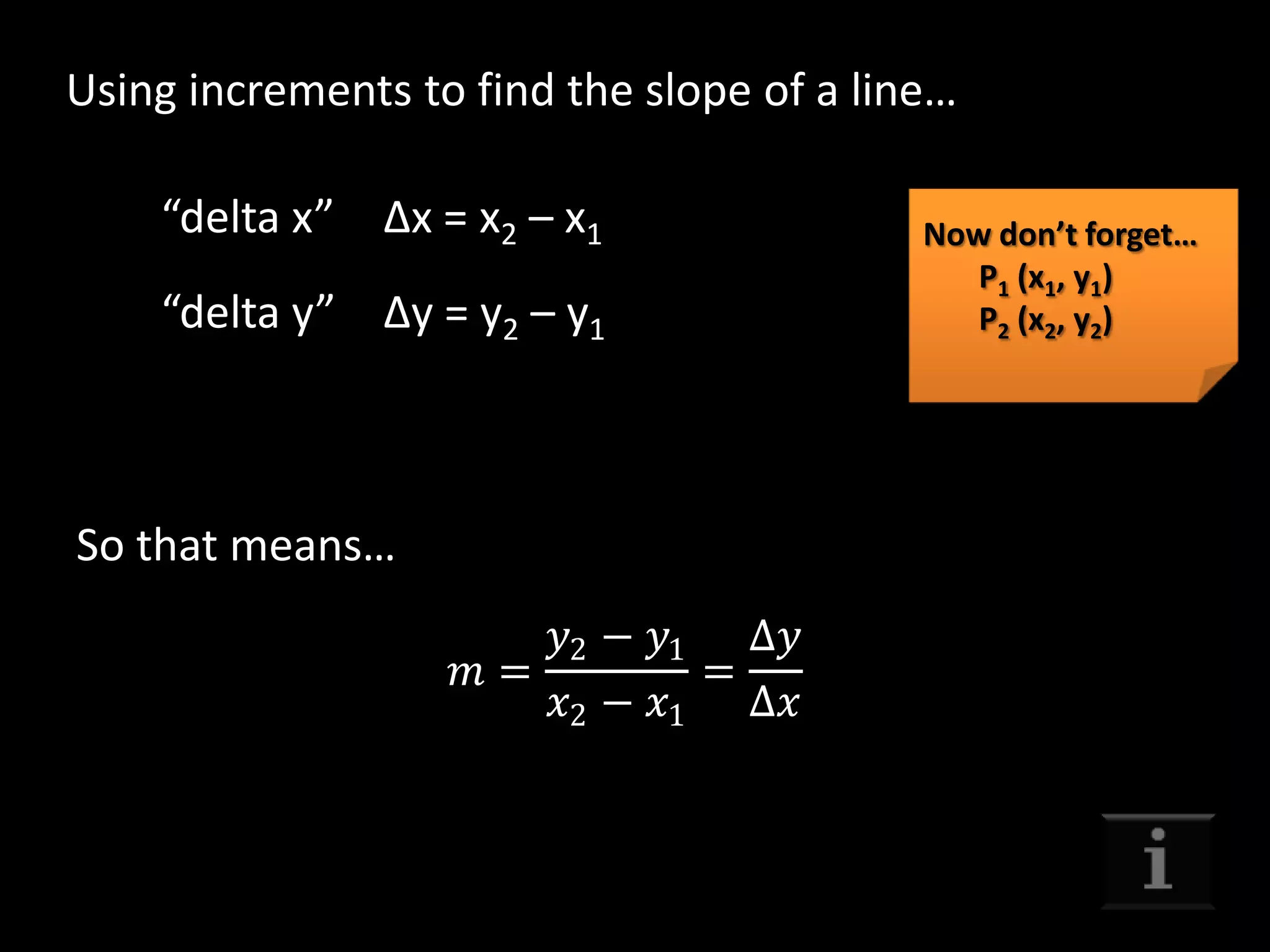
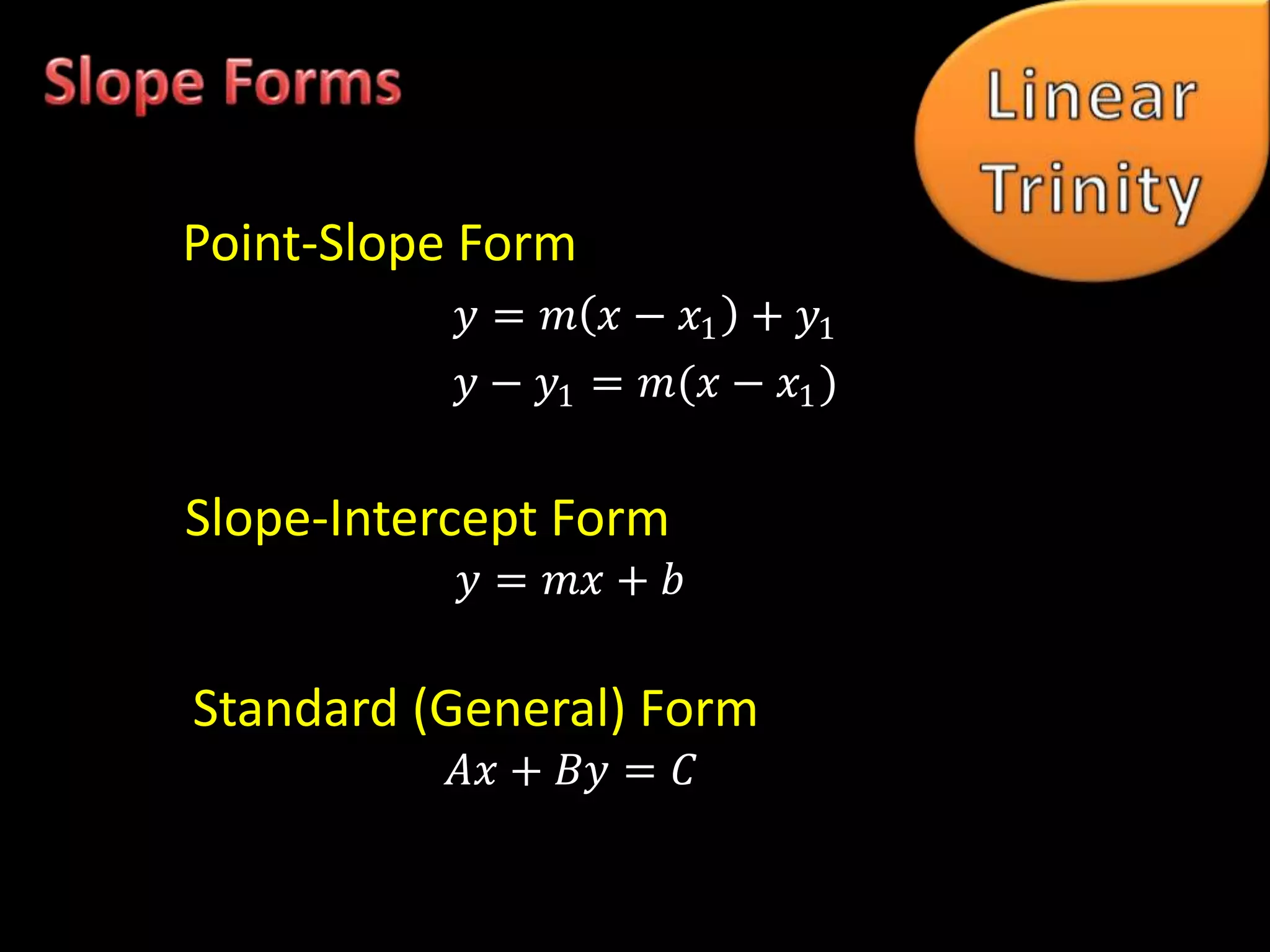
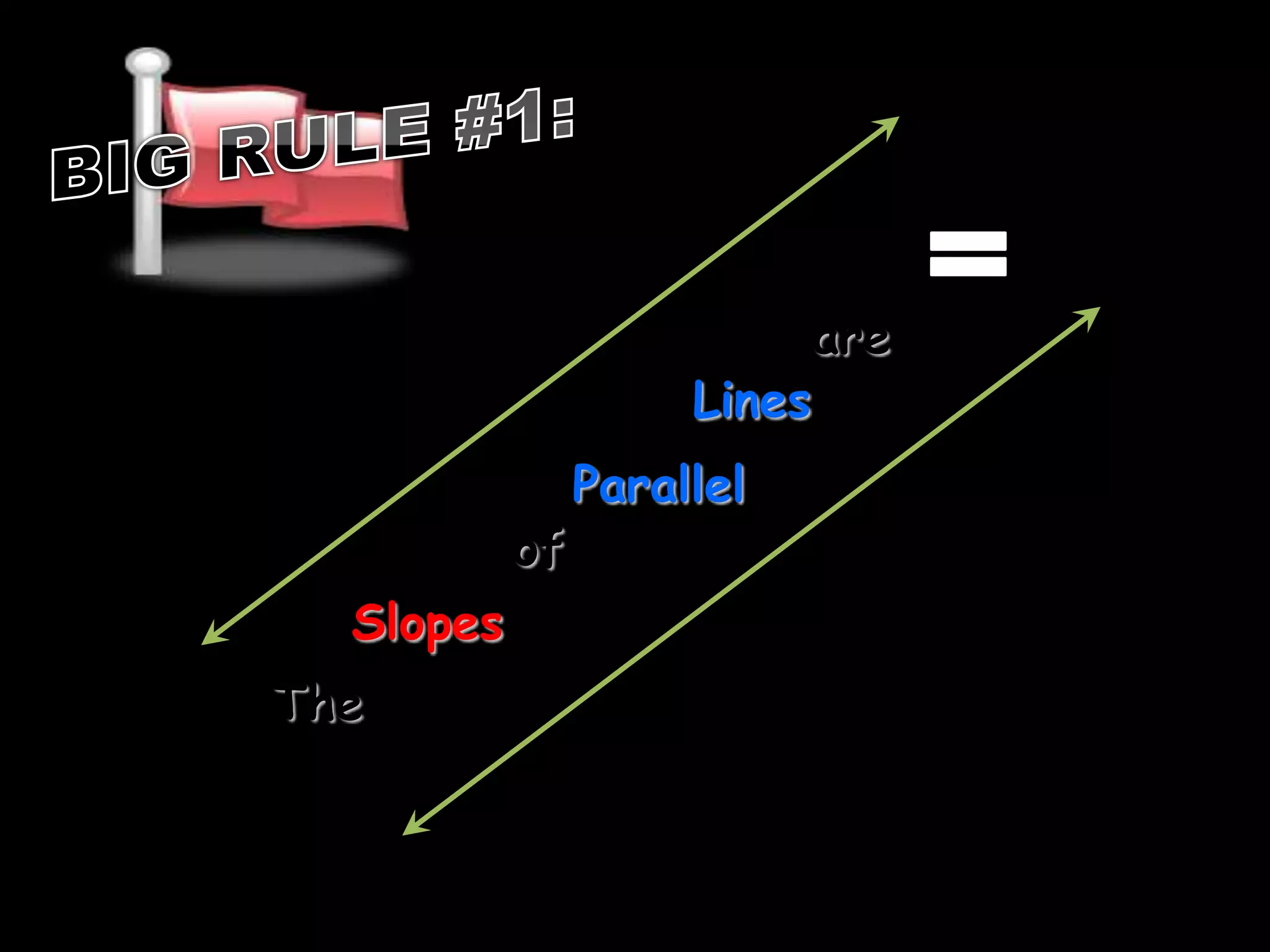
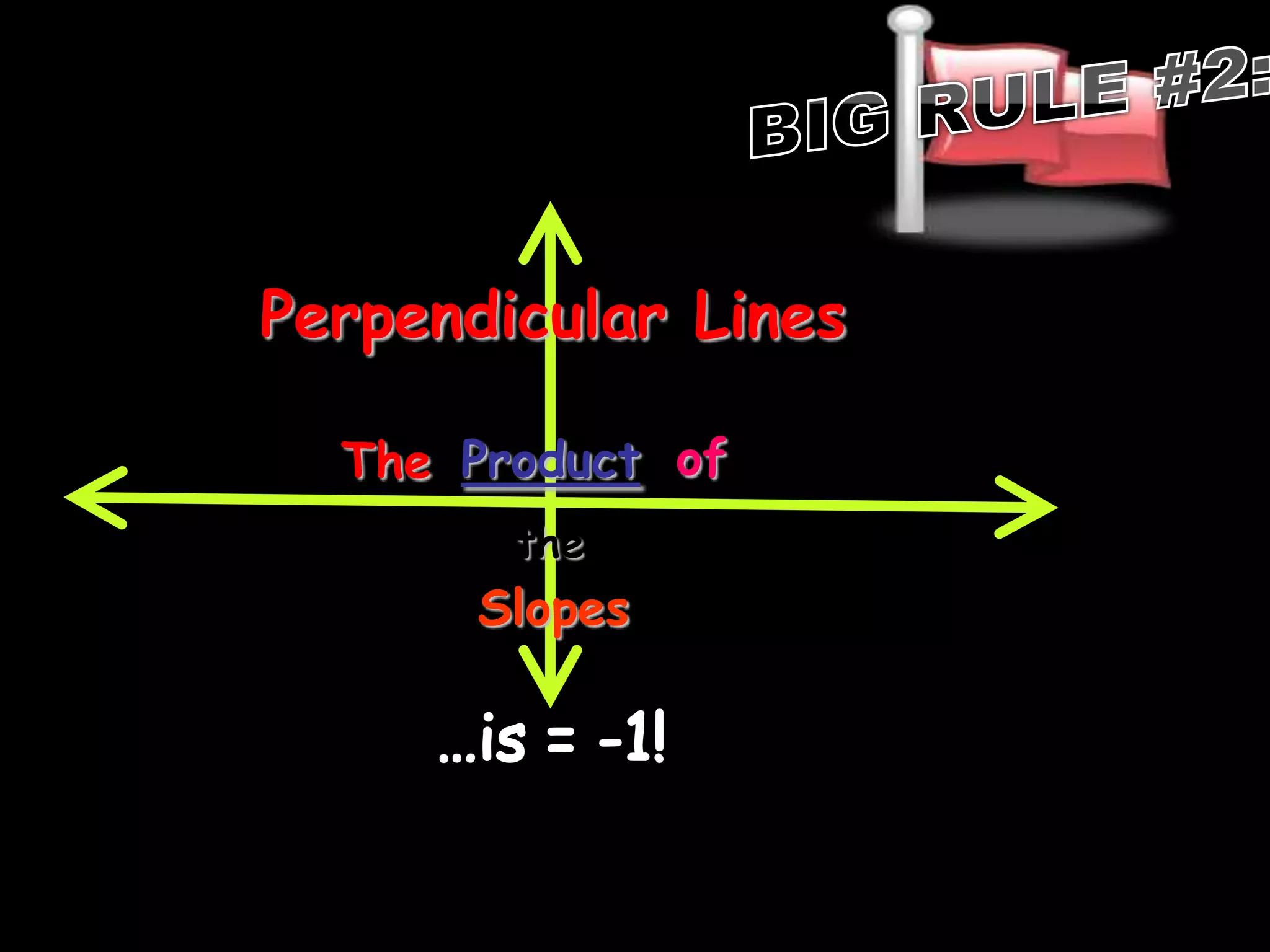
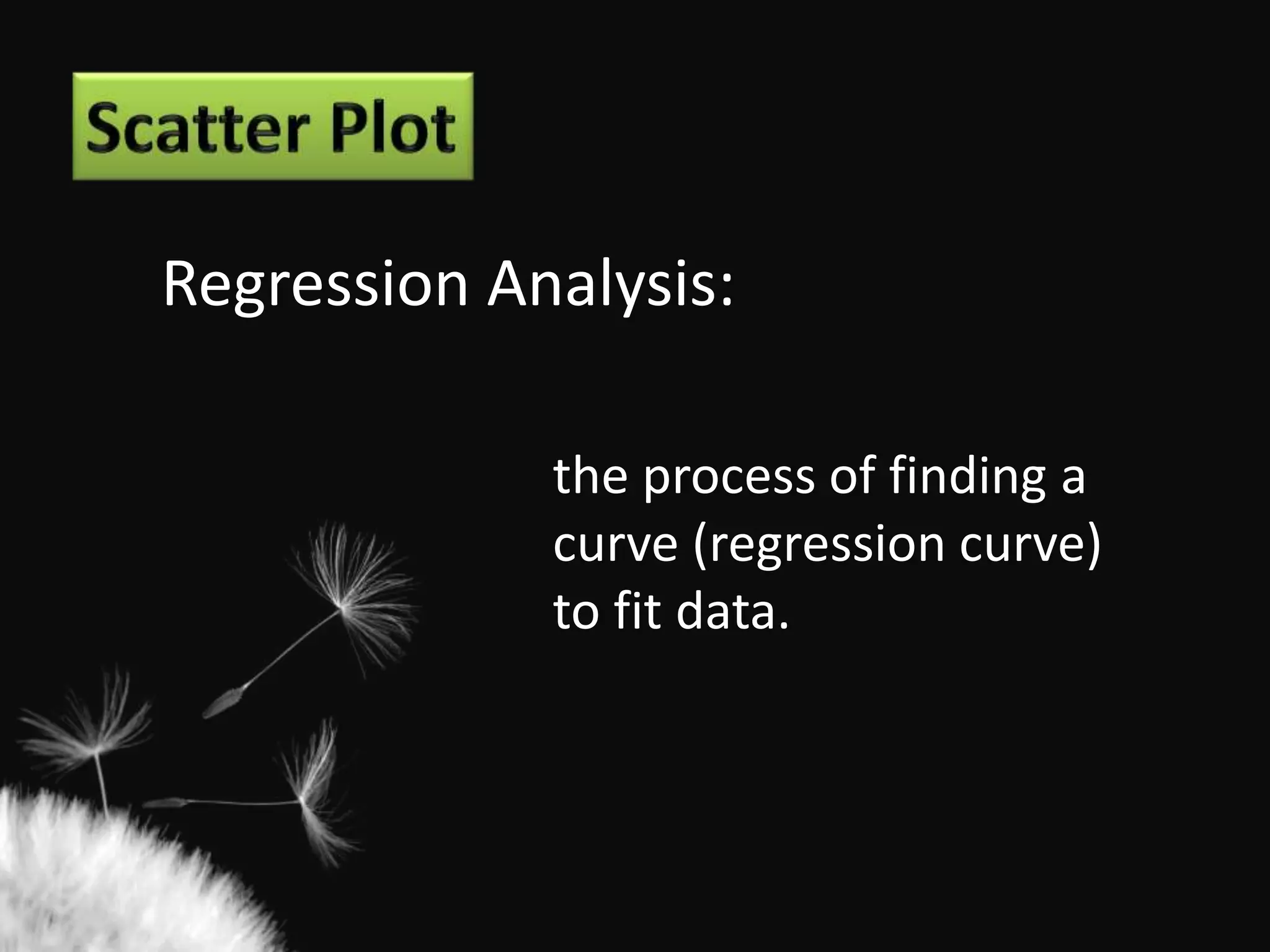
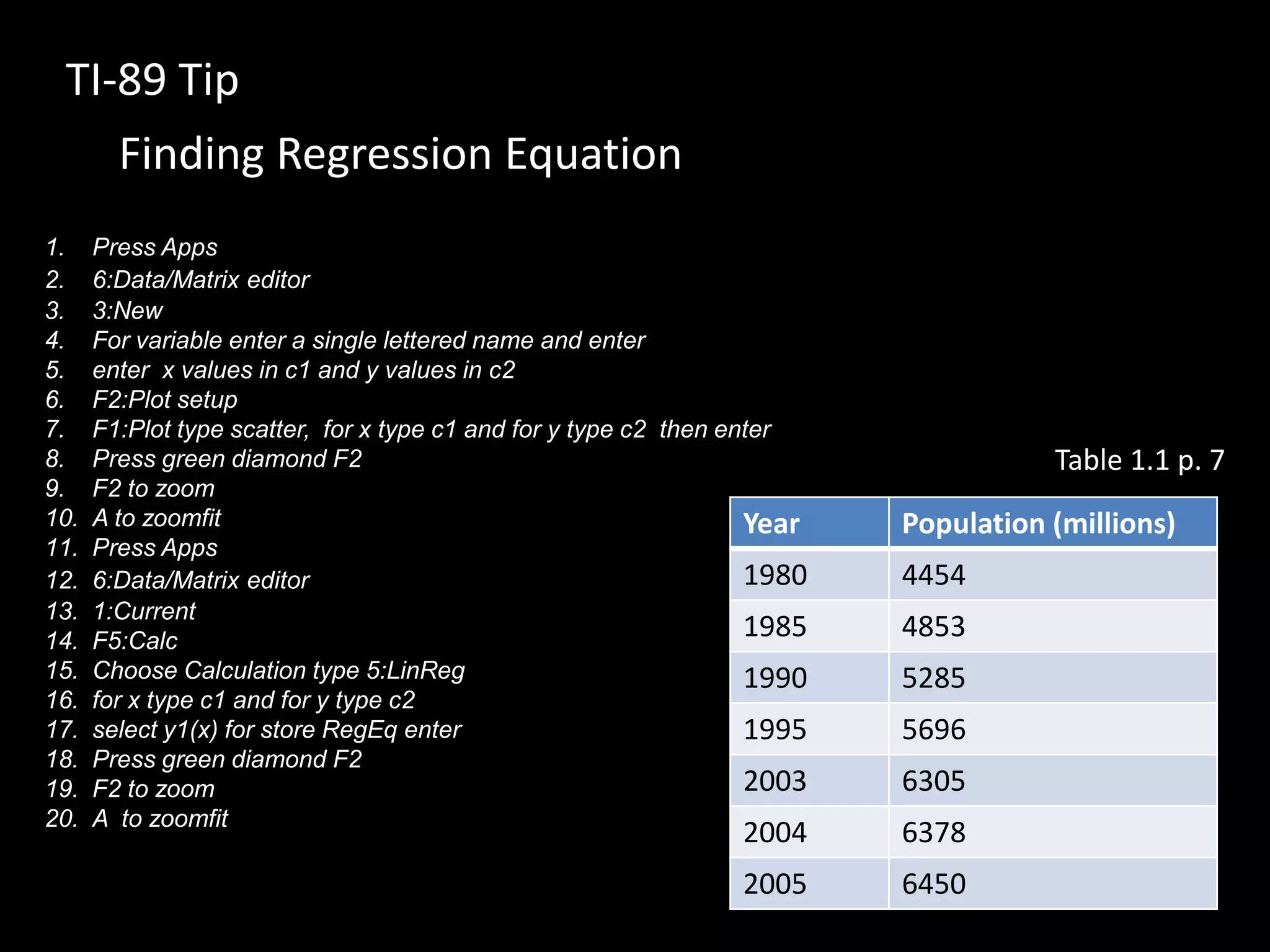
The document provides instructions on calculating slopes of lines and identifying relationships between parallel and perpendicular lines. It discusses using increments to find the slope of a line using the change in x and y between two points. It also discusses the different forms of linear equations (point-slope, slope-intercept, and standard form) and defines the key rules that parallel lines have the same slope and perpendicular lines have slopes that multiply to -1. The document demonstrates how to perform linear regression on a TI-89 calculator to generate a linear equation from a scatter plot. It provides example problems and homework questions for students to practice these skills.




![Linear graph[1]edit](https://cdn.slidesharecdn.com/ss_thumbnails/lineargraph1edit-101116085957-phpapp01-thumbnail.jpg?width=640&height=640&fit=bounds)


